NASA’s Artemis II mission results confirm the Orion capsule survived Mach 33 reentry, a redesigned heat shield, and two onboard anomalies after 10 days in deep space. This is not a mission recap. It’s an engineering post-mortem on the data that will greenlight or delay every crewed Moon landing through the 2030s.
Anthropic’s Claude Mythos Preview — a frontier AI model withheld from public release — autonomously discovered thousands of critical zero-day vulnerabilities hiding in every major OS and browser, some dormant for nearly three decades. Project Glasswing gives 50+ organizations including AWS, Microsoft, and CrowdStrike early access to deploy it defensively. Here’s what it found, what it means for your threat model, and how to respond.
Meta’s Muse Spark AI model leads every major competitor on visual reasoning and health benchmarks — but trails on coding and agentic tasks. This deep-dive covers the full benchmark picture, the closed-source pivot, and a clear decision framework for CTOs and developers evaluating the model right now.
Anthropic’s Claude Mythos AI model preview outperforms every prior Claude model on cybersecurity benchmarks and has already found thousands of high-severity vulnerabilities across every major OS and browser. It is restricted to a closed coalition of 11 partners including AWS, Microsoft, Google, and Apple under Project Glasswing. Here is what it can do, why access is locked down, and what every CISO needs to do before the end of 2026.
Intel officially joined Elon Musk’s Terafab AI chip project on April 7, 2026, alongside SpaceX, xAI, and Tesla, bringing its 18A process node to the most ambitious semiconductor factory ever announced. But what does a 1 terawatt-per-year compute target actually mean in practice, and when can anyone outside Musk’s companies access these chips? NeuralWired breaks down the technology, the stakes, and the honest risk assessment.
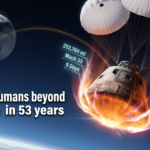 NASA’s Artemis II mission results confirm the Orion capsule survived Mach 33 reentry, a redesigned heat shield, and two onboard anomalies after 10 days in deep space. This is not a mission recap. It’s an engineering post-mortem on the data that will greenlight or delay every crewed Moon landing through the 2030s.
 Anthropic’s Claude Mythos Preview — a frontier AI model withheld from public release — autonomously discovered thousands of critical zero-day vulnerabilities hiding in every major OS and browser, some dormant for nearly three decades. Project Glasswing gives 50+ organizations including AWS, Microsoft, and CrowdStrike early access to deploy it defensively. Here’s what it found, what it means for your threat model, and how to respond.
 Meta’s Muse Spark AI model leads every major competitor on visual reasoning and health benchmarks — but trails on coding and agentic tasks. This deep-dive covers the full benchmark picture, the closed-source pivot, and a clear decision framework for CTOs and developers evaluating the model right now.
 Anthropic’s Claude Mythos AI model preview outperforms every prior Claude model on cybersecurity benchmarks and has already found thousands of high-severity vulnerabilities across every major OS and browser. It is restricted to a closed coalition of 11 partners including AWS, Microsoft, Google, and Apple under Project Glasswing. Here is what it can do, why access is locked down, and what every CISO needs to do before the end of 2026.
 Intel officially joined Elon Musk’s Terafab AI chip project on April 7, 2026, alongside SpaceX, xAI, and Tesla, bringing its 18A process node to the most ambitious semiconductor factory ever announced. But what does a 1 terawatt-per-year compute target actually mean in practice, and when can anyone outside Musk’s companies access these chips? NeuralWired breaks down the technology, the stakes, and the honest risk assessment.