Category: Science

NeuralWired’s Science section covers research breakthroughs, space exploration, and emerging discovery across every scientific field with global relevance. We report daily on new research findings, space missions and astronomy, climate and environmental science, physics and materials science, and the broader scientific developments shaping how we understand the world.

Scientific claims move quickly from press release to public conversation, and our role is to slow that process down enough to get it right. Every article involving a new study or finding is checked against the original peer reviewed research or primary source data, and we are careful to distinguish preliminary findings from established scientific consensus. We explain not just what a discovery is, but what it actually means and how far it is from real world application.

This section is built for curious, informed readers around the world, from students and researchers to professionals who want to stay current on scientific developments without wading through jargon or overstated claims. NeuralWired updates this section daily with original coverage of the science stories generating global interest.

  • White House Quietly Shelves Plan to Give Political Appointees Veto Power Over NIH Grants

    White House Quietly Shelves Plan to Give Political Appointees Veto Power Over NIH Grants

    For a few tense days last week, the question of who gets to decide which cancer studies and Alzheimer’s trials receive federal funding was not being settled in a laboratory or a peer-review panel. It was being fought over in the Oval Office, and then in a series of increasingly pointed letters between the White House and the Senate.
    White House Quietly Shelves Plan to Give Political Appointees Veto Power Over NIH Grants

    By September 25, the fight appears to have gone quiet, though not because anyone in the administration said so publicly.

    A Meeting That Set Off Alarms

    The trouble began on Friday, September 19, when President Trump met with Office of Management and Budget Director Russell Vought and NIH Director Jay Bhattacharya to discuss a draft executive order that would have reshaped how the National Institutes of Health awards its money. Under the proposal, a new external review committee, co-chaired by Vought and Bhattacharya, would have gained the power to veto individual NIH grants even after they had already survived the agency’s scientific peer-review process.

    According to reporting first published by The Washington Post and later confirmed by The New York Times, Bhattacharya pushed back on the idea during that meeting. He also declined a separate request from Trump to specifically cut NIH funding to Harvard University.

    News of the draft order leaked out over the weekend, and it did not take long for Capitol Hill to respond.

    Congress Pushes Back, Fast and From Both Sides

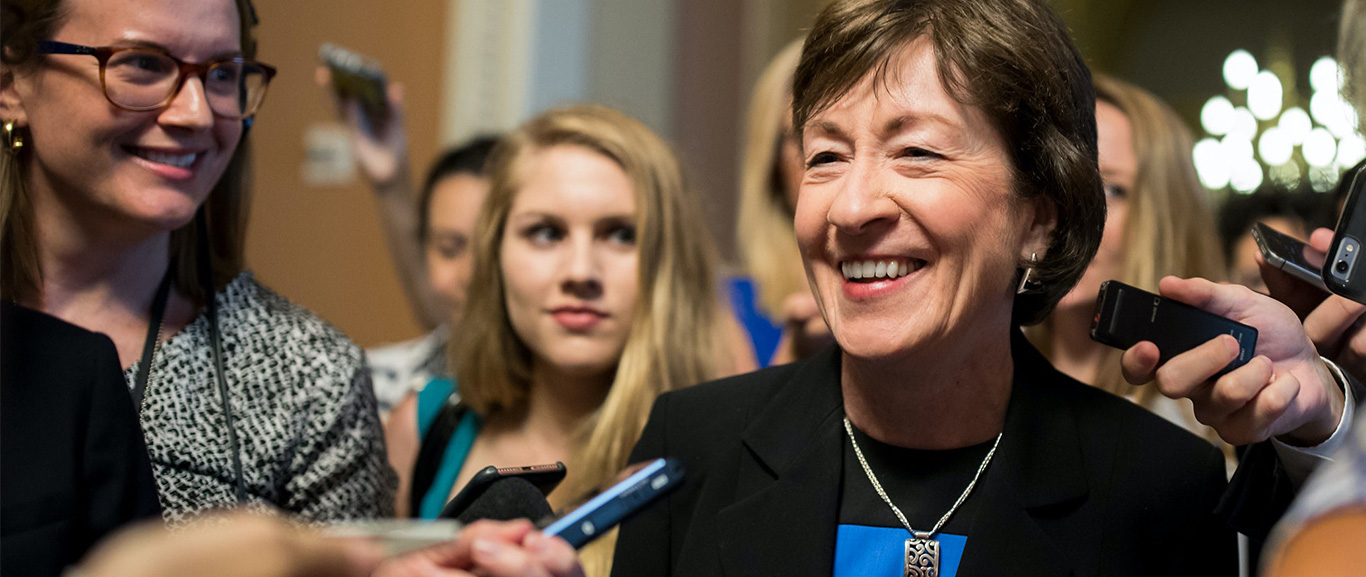
    On Monday, September 21, Senate Appropriations Committee Chair Susan Collins, a Republican from Maine, issued a public statement making her position unambiguous. “The Office of Management and Budget (OMB) should not be involved in agency decisions on the awards of grants,” she said, according to the committee’s official release.

    That same day, the committee’s Democratic vice chair, Patty Murray of Washington, along with Senator Tammy Baldwin of Wisconsin, issued their own statements condemning the plan. Murray’s language was sharper. “Whether lifesaving medical research gets funded or not should be determined by experts at the NIH, not a panel of lackeys chosen by Donald Trump and Russ Vought,” she said. “Under this scheme, a single political appointee could kill a cancer study or an Alzheimer’s trial with no scientific reason at all.” She added a line that captured the stakes as she saw them: “NIH funding doesn’t belong to Donald Trump. It belongs to the patients and families waiting on the next medical breakthrough.”

    The bipartisan nature of the objection mattered. It is one thing for the opposition party to criticize a White House proposal. It is another for the Republican chair of the Senate committee that controls NIH’s purse strings to say, on the record, that the plan conflicted with what Congress had already decided.

    Collins followed her public statement with something more formal. On Tuesday, September 22, she sent a letter directly to Vought and Bhattacharya, arguing that the executive order would accomplish through a different route something Congress had already explicitly blocked. “Any attempt to politicize grantmaking at the National Institutes of Health (NIH), or any other agency, by another means, whether an Executive Order or guidance, is contrary to congressional intent,” she wrote. She urged the administration to pursue any further NIH reforms through legislation rather than executive action, telling them plainly: “If the administration seeks additional reforms of NIH, I urge you to submit a legislative proposal to Congress rather than pursue an executive order.”

    Her letter, posted in full by the Senate Appropriations Committee, also included a striking figure meant to underscore what was at stake: 174 scientists who worked at NIH or were supported by its funding have gone on to receive, individually or jointly, 104 Nobel Prizes. It is worth noting that figure comes from Collins herself, in a letter written specifically to oppose the plan, rather than from an independent NIH accounting, though it is an on-the-record claim from a sitting committee chair.

    Why This Fight Was Really About a Rule Congress Already Settled

    To understand why Collins framed this as a matter of “congressional intent,” it helps to rewind a few months. Her objection to White House control over NIH grants did not start with the September executive order. It started in July, when she wrote to OMB opposing a proposed revision to federal grant-making rules, known as “Uniform Guidance,” that would have let political appointees screen discretionary grants for alignment with the president’s priorities.

    Congress ultimately settled that dispute directly. The Fiscal Year 2027 Continuing Resolution, signed into law on September 2, 2026, blocked that rule, along with anything “substantially similar” to it. From Collins’ perspective, the September executive order looked like an attempt to revive, through a different mechanism, exactly what lawmakers had just voted to prohibit.

    The dispute also did not emerge in a vacuum. Since the start of Trump’s second term, NIH has cancelled hundreds of grants it said conflicted with executive orders ending diversity, equity, and inclusion programming. That pattern of cancellations led to a class-action lawsuit filed September 16 by the Center for Science in the Public Interest, the ACLU, the ACLU of Northern California, Protect Democracy, and the Jacobson Lawyers Group, accusing NIH, the Department of Health and Human Services, and the U.S. DOGE Service of unconstitutional, viewpoint-based screening of grant applications. That case is proceeding separately from the executive order fight, but it reflects the same underlying tension over how much political judgment should shape what gets funded.

    There is also a personal dimension reported alongside the policy dispute. Vought and Bhattacharya’s working relationship has reportedly been strained for months, with Vought accusing the NIH director of funding research that runs counter to administration priorities, a backdrop that helps explain why Bhattacharya was said to have resisted the plan discussed in that Friday Oval Office meeting.

    The Money at Stake

    NIH is not a minor line item. Its spending authority for fiscal year 2026 stands at $48.7 billion, according to reporting from STAT News and Chemical & Engineering News, though other figures closer to $47 billion have circulated depending on which funding stream or fiscal framing is used. That budget funds research into cancer, Alzheimer’s, diabetes, and infectious disease across thousands of universities and hospitals nationwide, and its data and collaborations ripple outward to researchers well beyond U.S. borders.

    The financial context adds another layer. Trump’s original FY2026 budget request had proposed cutting NIH funding by roughly 40 percent, a reduction Congress rejected. For FY2027, the administration’s request calls for a smaller but still significant cut of about 12 percent, or roughly $5 billion. Seen against that backdrop, the fight over veto power was not simply about process. It touched a much larger and ongoing argument about how much control the executive branch should have over the nation’s biomedical research budget.

    Where Things Stand Now

    By Wednesday, September 23, the tone from Capitol Hill had shifted from alarm to something closer to relief. STAT News, Roll Call, and Chemical & Engineering News, the last citing reporting from Semafor, all reported that the executive order plan appeared to have stalled. Collins told reporters that White House officials, including Chief of Staff Susie Wiles, shared her concerns about the proposal.

    But nothing about this is final in any official sense. As of this writing, no executive order has been signed, and no one in the White House or OMB has gone on the record to confirm the plan is dead. OMB has consistently declined to comment on its status. NIH’s own public posture has stayed studiously neutral throughout; a spokesperson, Joshua Pradko, told reporters only that the agency “remains committed to its mission of funding biomedical research to benefit the health of the American people.”

    That gap between what anonymous officials are signaling and what the administration is willing to say publicly is worth watching closely. So is the possibility that OMB pursues the same underlying goal through a narrower rule or a different administrative channel rather than the executive order that reportedly got shelved this week. The Uniform Guidance dispute from July shows this is not the first time the administration has tried to expand political oversight of NIH grants, and Collins’ own framing suggests she does not expect it to be the last.

    The more durable story here may be less about one draft order and more about what its apparent defeat says about the limits of executive reach when Congress, across party lines, decides a line has been crossed. For now, that line held. Whether it holds the next time this question comes up, in whatever form it takes, is the thing to watch as FY2027 appropriations negotiations move forward.


  • Can Disorder Make Networks More Stable? Northwestern Physicists Say Yes

    Can Disorder Make Networks More Stable? Northwestern Physicists Say Yes

    Diagram of network disorder: regular lattices and random graphs to complex networks with varied nodes and links
    Northwestern’s Adilson Motter and his team argue that networks with varied nodes and links can be more stable than uniform ones.Image credit: Camila Felix, via Northwestern University and EurekAlert!

    For decades, the engineer’s instinct has been to make the parts match. Identical generators, identical neurons, identical birds in a flock: uniformity looked like the safest route to a system that behaves. A team at Northwestern University now argues that instinct is often wrong, and that a little mess can be exactly what holds a network together.

    The work, titled “Disorder-promoted stability,” appeared Thursday in the journal Science. It offers a general mathematical explanation for why variation among a network’s components can make it more stable, not less. The full paper is available through Science.

    A long-held assumption, tested

    The study was led by Adilson Motter, the Charles E. and Emma H. Morrison Professor of Physics and Astronomy at Northwestern and director of its Center for Network Dynamics. Postdoctoral researcher Arthur Montanari and graduate student Pietro Zanin are co-first authors.

    Their starting point was a question that had gone unanswered. Researchers had seen hints that variation could help in individual systems, but nobody knew whether those cases were curiosities or evidence of a broader rule. Motter’s group had reported in a 2020 Nature Physics study that power generators can synchronize better when they operate slightly differently from one another. A 2025 Nature Communications study by Montanari found comparable effects in models of flocking and drone swarms.

    The new paper argues these were pieces of a larger pattern. The team built a framework for analyzing how a network, made of nodes (the components) and links (the interactions between them), responds when it is nudged away from a stable state. They then compared networks of identical components with networks whose nodes or connections differ, and worked out the general conditions under which the varied version wins.

    Where the disorder helps

    To see how far the idea travels, the researchers tried it on models of power grids, neurons, flocking behavior, architected materials and ecological networks. The stabilizing effect can come from differences among the nodes themselves or from differences among the links that connect them.

    There is a catch, and it matters. Disorder is not a free lunch. The researchers found an optimal range: with too little variation, a network behaves much like a uniform one and gains nothing, while too much pushes it into instability. Between those extremes sits a zone where the system is more stable than a uniform version could be.

    Perhaps the most striking result is how forgiving that zone can be. In many of the cases studied, variation introduced at random still beat the best possible uniform arrangement. Nobody had to tune the differences carefully for the benefit to appear.

    Montanari put the practical upshot bluntly. “If you make the system more homogeneous, you lose stability,” he said. He also pointed out that real systems, whether birds, neurons or social relationships, are rarely uniform, and that those differences can strongly shape how the whole behaves.

    Why the effect stayed hidden

    If the effect is this broad, why did it take so long to pin down? Part of the answer lies in how network science has traditionally been done. Many analyses lean on simplified models, such as the widely used Kuramoto model, that describe each node with a single variable. That keeps the math tractable, but it can erase the very behavior the Northwestern team was hunting for.

    Motter noted that disorder only stabilizes a network when the internal dynamics of its nodes are “rich enough.” Strip the nodes down too far and the benefit disappears. In other words, the field may have been looking for the effect with instruments too blunt to detect it.

    A possible answer to an ecological puzzle

    The finding lands in an old debate. Ecological modeling work dating to the 1970s predicted that large, complex ecosystems should be fragile and prone to collapse. Yet nature is full of highly diverse ecosystems that persist. That gap between theory and observation has nagged at researchers for half a century.

    The Northwestern framework offers one possible way through. If variation among species and their interactions can promote stability rather than undermine it, then diversity may be part of what keeps such systems standing. The authors present this as a candidate explanation, not a settled resolution.

    Science thought the result significant enough to commission an independent expert commentary for the same issue. Raissa D’Souza, associate dean for research at the UC Davis College of Engineering and a member of the journal’s Board of Reviewing Editors, wrote a Perspective piece on the work. UC Davis has published a write-up of her take. It is worth remembering that a Perspective invited by the publishing journal is expert context rather than an adversarial critique, and no unaffiliated critical response has surfaced yet.

    What this does not yet show

    The limits of the study deserve as much attention as its promise. This is a theoretical and computational result. The framework was tested against models, and none of the sources describe a trial on a real power grid, material or ecosystem. Talk of rewiring infrastructure with deliberate imperfection is a possibility for the future, not something under way.

    The paper also does not offer a universal number. There is no figure for how much more stable a network becomes, because the answer depends on the system and on how much disorder is present. What the work provides is a map of the conditions under which variation helps.

    What comes next

    Motter says the next challenge is learning to design beneficial disorder on purpose. That is a harder problem than observing it, since engineers would need to know which differences to build in, and how much, for a given system. If that can be solved, it could reshape how researchers think about resilient power grids, drone swarms and architected materials, as well as how they read the persistence of diverse natural systems.

    The team has also released an interactive website, built by Montanari, that lets visitors adjust parameters and watch network components interact, synchronize and form patterns. For a result this abstract, it is a useful way to see the idea in motion.

    The work was supported by the Army Research Office and the National Science Foundation, with additional backing from the NSF–Simons National Institute for Theory and Mathematics in Biology. The Northwestern press release lays out the full funding details.

    The real test will be what happens when other groups apply the framework to messier, real-world data. If the pattern holds outside the models, decades of design thinking built around uniformity may need a second look. For more on how researchers are rethinking complex systems, browse the Science coverage at NeuralWired and our Technology section.


  • A Planet Younger Than a Million Years Just Broke Astronomy’s Rulebook

    A Planet Younger Than a Million Years Just Broke Astronomy’s Rulebook

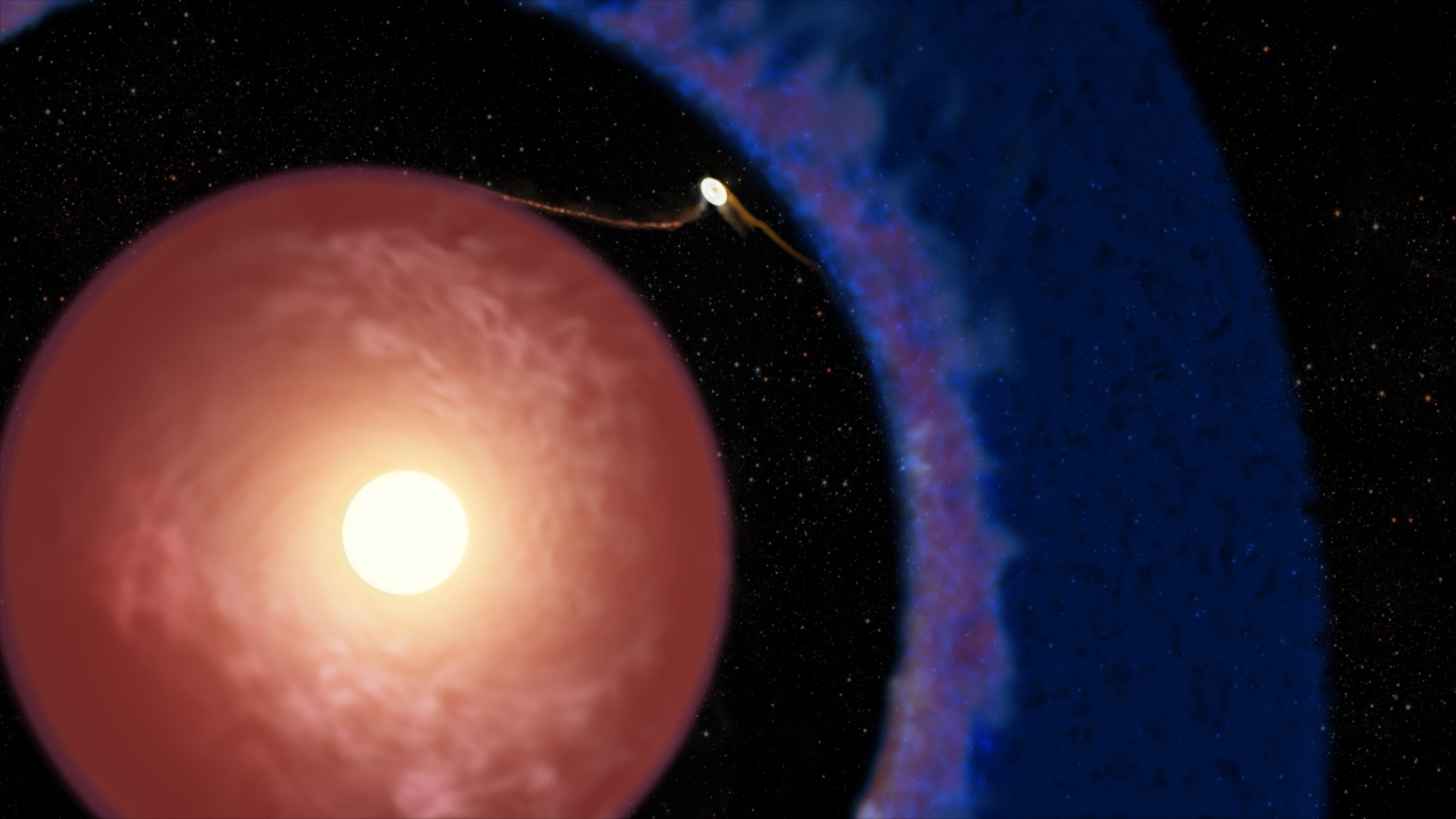
    This artist’s concept of Elias 2-24 b, showing the Jupiter-mass planet actively accreting material within a gap in its host star’s disk, was created by Adam Makarenko for the W. M. Keck Observatory and published alongside NASA’s official announcement of the discovery. The original image and full article can be viewed at science.nasa.gov.

    Somewhere in the constellation Ophiuchus, 450 light-years from Earth, a gas giant the size of Jupiter is still being born. Astronomers have now confirmed it as the youngest planet ever found outside our solar system, and its very existence is forcing scientists to rethink how quickly planets can actually form.

    The world, designated Elias 2-24 b, is less than 1 million years old. In cosmic terms, that is barely a blink, and it shatters the previous record by a wide margin. The discovery, led by Andrea Bernardi, a doctoral candidate at the Universidad Diego Portales in Chile, was published Sept. 16, 2026, in The Astrophysical Journal Letters.

    Found Hiding in Its Own Nursery

    Elias 2-24 b still orbits within the swirling disk of gas and dust that formed it, a disk that surrounds its host star, a young K5-type star also called Elias 2-24. That star sits inside the Ophiuchus Molecular Cloud, one of the nearest regions of active star formation to Earth, and it has drawn scientific attention for years because its disk is unusually large and bright.

    About a decade ago, observations from the Atacama Large Millimeter/submillimeter Array and the European Southern Observatory’s Very Large Telescope, both located in Chile, revealed something puzzling: a gap carved into that dusty disk. Something was clearly clearing out material along that ring, and a faint point of light turned up inside it. But nobody could confirm what that light actually was. Prevailing theory at the time held that a planet simply could not have formed that early, or that far from its star, so the case remained open for years.

    Bernardi’s team went looking for an answer in an unlikely place: the archive. Working with co-author Lucas Cieza, a professor at the Instituto de Estudios Astrofísicos in Chile, the researchers combed through years-old coronagraph images of seven young stars held at the Keck Observatory Archive, a partnership between the W. M. Keck Observatory and NASA’s Exoplanet Science Institute at Caltech. Using the coronagraph built into the Keck Observatory’s NIRC2 instrument in Hawaii, which blocks out a star’s overwhelming glare so that faint nearby objects can be seen, they found that same point of light sitting inside the disk gap, this time in images captured in 2018 and 2020.

    By comparing the object’s position across those two years, the team could see it moving the way an orbiting planet would, not drifting like a background star or lingering like an imaging glitch. That motion was the proof they needed.

    “The planets should be found within the gaps, since they are carving them. And that’s exactly where we found Elias 2-24 b,” Bernardi said.

    Why the Timing Breaks the Models

    The scale of what Bernardi and Cieza found is what makes this discovery so disruptive. Elias 2-24 b sits roughly 55 times farther from its star than Earth sits from the sun, about ten times more distant than the star’s other known disk features. Current planet-formation models estimate that building a Jupiter-mass planet at Jupiter’s own distance from a star, roughly five times the Earth-sun distance, takes about 5 million years. Forming one even farther out should, in theory, take longer still.

    Elias 2-24 b did it in under a fifth of that time, at a distance where formation should be slower, not faster. The previous youngest confirmed exoplanets, a four-way tie among worlds orbiting the stars PDS 70 and WISPIT 2, were each more than 5 million years old, and even those had already strained existing theory.

    “Our planet-formation models already struggled to explain the previous record holders for the youngest known planet, a four-way tie between two planets orbiting the star PDS 70 and two planets orbiting the star WISPIT 2, which are all more than 5 million years old. Elias 2-24 b shows us that even our best planet-formation models are still missing some important processes,” Cieza said.

    That gap between theory and observation is exactly why this single planet matters so much to the broader field. Of the roughly 6,000 exoplanets confirmed so far, the overwhelming majority are billions of years old, essentially fully grown worlds observed long after the fact. Astronomers rarely get to watch a planet actually forming, which makes direct evidence like this exceptionally rare and valuable.

    “The galaxy churns out new stars and planets continuously, so there are many in every stage of evolution. That means we can see the entire process in theory, but there is a large gap in what most telescopes can detect. We are mostly blind to these baby planets right now,” Cieza said.

    A Preview of What Comes Next

    Part of what makes this confirmation notable is how it was done. Rather than relying on a single instrument or a single observing run, the team stitched together archival data across years and cross-referenced it with earlier ALMA and Very Large Telescope observations, essentially reconstructing a decade-old mystery using tools that were not originally built to solve it together.

    “We usually hear about telescopes working separately, but this confirmation was possible only by using multiple telescopes together. Elias 2-24 b is at the limit of what current telescopes can detect, but with new instruments like NASA’s Nancy Grace Roman Space Telescope, such detections should become easier,” Bernardi said.

    That telescope, which launched Aug. 30, 2026, carries a more advanced coronagraph than any NASA has flown before. Researchers expect it to make discoveries like this one easier to confirm and to eventually allow direct imaging of planets in tighter orbits, including true analogs of Jupiter that remain hidden today in the glare of their host stars. For more on the mission, NeuralWired’s Space and Astronomy coverage has tracked Roman’s rollout, and our recent piece on exoplanet detection methods breaks down how coronagraphs like the one used here actually work.

    It is worth being precise about what “youngest” means in this case. Elias 2-24 b is the youngest planet astronomers have been able to confirm, not necessarily the youngest planet that exists anywhere in the galaxy. Bernardi’s own description, that this find sits “at the limit of what current telescopes can detect,” is a reminder that the record reflects the boundaries of current instruments as much as it reflects the universe itself.

    Cieza framed the discovery as the start of something larger rather than a singular event. “This is just the beginning of a new era of discovery. It’s incredible that with modern technology, we are actually able to see planet formation in action, and Roman will take planet hunting to the next level,” he said.

    For now, Elias 2-24 b remains a rare, direct snapshot of a gas giant still pulling itself together from the raw material of its birth disk, a process that likely shaped every planet in our own solar system billions of years ago. The team has not announced a specific follow-up observation, but with archival data from multiple observatories still to sift through and a new generation of coronagraphs coming online, this is unlikely to be the last planet found hiding in plain sight. NeuralWired’s science desk will continue following what Roman turns up next.