Tag: AINews

  • Google vs Microsoft AI 2026: Who’s Actually Winning?

    Google vs Microsoft AI 2026: Who’s Actually Winning?

    Google vs. Microsoft AI Strategy 2026: Who’s Actually Winning? | NeuralWired
    NeuralWired — Big Tech Intelligence for Founders, Investors & CTOs
    Big Tech · AI Strategy · May 29, 2026

    Google vs. Microsoft AI 2026:
    Two Winners, Two Very Different Wars

    Google’s AI Mode just crossed 1 billion users. Microsoft’s AI revenue run rate hit $37 billion. After Google I/O 2026 — and three days before Microsoft Build opens — here’s a clear-eyed breakdown of who’s winning what, where each is quietly failing, and what it means if you’re building, investing, or deploying AI right now.

    By NeuralWired Research Desk Published: May 29, 2026 Updated post-Build: June 3, 2026 ~3,800 words · 14 min read
    +63% Google Cloud YoY Growth, Q1 2026
    $37B Microsoft AI Annualized Run Rate
    2.5B Google AI Overviews Monthly Users
    $190B Each Company’s 2026 Capex Guidance

    The Setup: Two Simultaneous Bets

    On April 29, 2026, both Alphabet and Microsoft reported quarterly earnings on the same day. Both beat estimates. Both announced record AI capital expenditure. Both claimed momentum. The headlines were nearly interchangeable.

    Then Google I/O 2026 happened on May 19–20 — and the picture sharpened dramatically. Sundar Pichai walked onto the stage and declared “the agentic Gemini era,” framing the entire Google product stack — Search, Android, Workspace, Cloud — as a single AI agent platform in motion. Three days from now, Satya Nadella takes the stage at Fort Mason in San Francisco for Microsoft Build 2026, the first Build held outside Seattle, capped at 2,500 attendees. He’s expected to answer in kind.

    But here’s what’s easy to miss when two giants announce record numbers on the same day: they’re not fighting the same war. Google is fighting for the consumer mind. Microsoft is fighting for the enterprise wallet. And both are winning — just in entirely different arenas. The question worth asking in May 2026 isn’t “who’s ahead?” It’s “ahead on what, exactly?”

    Our Read
    The AI race has moved from Phase 1 (who has the best model?) through Phase 2 (who can deploy at scale?) into Phase 3: who can monetize AI while retaining user trust and surviving regulatory pressure? Both Google and Microsoft are in Phase 3 now. Phase 3 is harder, slower, and far more expensive to lose.


    Google’s AI Strategy in 2026: The Agentic Gemini Era

    Google’s 2026 AI strategy centers on what CEO Sundar Pichai calls “the agentic Gemini era” — transforming Gemini from a chatbot into an autonomous agent that acts on users’ behalf across Search, Android, and Workspace. At I/O 2026, Google announced Gemini 3.5 Flash, Gemini Omni, and Gemini Spark, while AI Overviews reached 2.5 billion monthly users. The core thesis: Google already owns distribution at a scale no other company can replicate. Now it’s layering intelligence on top of it.

    The New Gemini Family: Three Distinct Bets

    Gemini 3.5 Flash is the flagship launch — the first model in a new family Google calls “frontier intelligence with action.” It’s available from day one in the Gemini app, Search, the Gemini API, Android Studio, and a new agent development platform called Google Antigravity. This isn’t a model release; it’s a distribution play disguised as a model release.

    Gemini Omni is the multimodal play: accepting image, audio, video, and text input and outputting video grounded in real-world knowledge. Gemini Omni Flash is the first version. The implication for media, education, and e-commerce is significant — this is Google’s answer to every competitor building specialized video or audio AI tools.

    Gemini Spark is the most consequential announcement for enterprise. Google’s new personal AI agent integrates directly with Gmail, Google Docs, Calendar, and Workspace apps — then extends to third-party tools via MCP. Unlike a traditional assistant that waits to be asked, Spark takes autonomous actions proactively. It launches first for Google AI Ultra subscribers in the US. This puts Gemini Spark in direct competition with Microsoft’s Copilot agents — on Google’s own turf.

    “Ten years since we pivoted the company to be AI-first, we still see AI as the most profound way to advance our mission.”

    — Sundar Pichai, CEO, Alphabet / Google · Google I/O 2026 Keynote, May 2026 · Source

    Search: The “AI Kills Google” Thesis Is Currently Losing

    The most important number from Google I/O 2026 isn’t a model name. It’s this: AI Mode in Search crossed 1 billion monthly users — one year after launch, making it the fastest consumer AI feature to reach that threshold in Google’s history. AI Overviews now reaches 2.5 billion users monthly.

    Meanwhile, Q1 2026 Alphabet earnings showed Search revenue growing 19% year-over-year to $60.4 billion, even as AI Overviews scaled massively. Management confirmed AI Overviews monetize at rates comparable to traditional search. The “AI kills Search revenue” thesis — dominant in analyst circles through 2024 — is losing its empirical footing.

    Google Cloud: The Fastest-Growing Major Cloud This Quarter

    Google Cloud hit $20.03 billion in Q1 2026 revenue, up 63% year-over-year — the fastest growth of any major cloud provider this quarter, outpacing AWS (approximately 17%) and Azure (40%). Operating income reached $6.6 billion at a 32.9% margin, dismantling the prior narrative that Google Cloud was buying growth without economics.

    The cloud order backlog nearly doubled quarter-over-quarter to $462 billion. Sundar Pichai confirmed on the earnings call that enterprise AI solutions became the primary growth driver for cloud for the first time in Q1. Gemini Enterprise paid monthly active users grew 40% quarter-over-quarter. Total paid subscriptions across Alphabet: 350 million.

    The one catch Pichai admitted openly: Google Cloud revenue “would have been higher if it had more capacity.” The $180–190 billion capex guidance for 2026 — with 2027 capex slated to “significantly increase” again — is catch-up spending as much as growth investment.


    Microsoft’s AI Strategy in 2026: The Enterprise Flywheel

    Microsoft’s 2026 AI strategy focuses on converting its installed enterprise base — 70%+ of Fortune 500 companies already running Microsoft 365 — into paying AI subscribers. Copilot is now an agent-first, multi-model platform, and with $37 billion in annualized AI revenue running at 123% year-over-year growth, the flywheel is clearly spinning. But it has a friction problem.

    The Numbers Are Real — and So Is the Trust Gap

    Microsoft Q3 FY2026 earnings reported revenue of $82.9 billion (up 18% year-over-year). Intelligent Cloud revenue hit $34.7 billion, up 30%. Azure specifically grew 40% year-over-year. Microsoft 365 Copilot now has 20 million+ paid seats — up 250% year-over-year in seat adds — with Accenture holding the largest single deployment at 740,000 seats. Copilot monthly active users reached 420 million, up from 230 million a year ago.

    But Recon Analytics, a tracking firm that has been monitoring Copilot accuracy sentiment across enterprise users, found that Copilot’s accuracy Net Promoter Score stood at -19.8 in January 2026 — recovering from a low of -24.1 in September 2025, but still negative. A negative NPS means more enterprise users are actively discouraging Copilot adoption than recommending it. And 44.2% of lapsed Copilot users cited distrust of answers as the primary reason they stopped using it.

    Risk Signal
    Seat count and active daily use are not the same metric. At 20 million paid seats with a negative accuracy NPS, Microsoft’s next 12 months are about retention engineering, not acquisition. If the trust deficit doesn’t close before renewal cycles, churn risk in enterprise accounts is real.

    The Multi-Model Architecture: GPT + Claude in the Same Workflow

    The most operationally significant Microsoft AI development of Q2 2026 is structural, not statistical. Microsoft 365 Copilot is now multi-model: its Researcher agent uses OpenAI’s GPT to draft responses and Anthropic’s Claude to review for accuracy and citations. This is not a hedge — it’s an architectural decision. Microsoft is betting that model diversity improves output quality in ways no single model can achieve.

    “We intentionally want a diversity of opinions. Two heads are better than one when they come together.”

    — Steve Gustavson, Corporate VP of Design & Research, Microsoft · GeekWire, April 2026 · Source
    This matters beyond the technical. It signals that Microsoft’s Copilot platform is becoming model-agnostic infrastructure — not a GPT delivery vehicle. If Anthropic’s Claude, Google’s Gemini, or Meta’s Llama offer better performance on specific enterprise tasks, Microsoft can route to them. The enterprise relationship is with Microsoft, not with any single AI lab.

    Microsoft Build 2026: What to Expect June 2–3

    Microsoft Build 2026 opens in three days at Fort Mason Center in San Francisco — the first Build held outside Seattle, deliberately capped at 2,500 attendees for an intimate developer-focused format. Satya Nadella will headline. Based on pre-Build signals, expect announcements around: GitHub Copilot autonomous coding agents, Azure AI Foundry updates, and Copilot Studio governance enhancements. Microsoft has already open-sourced its multi-agent framework AutoGen; a commercial version codenamed “Project Orchard” is understood to be in development.


    Head-to-Head: Google vs. Microsoft AI by the Numbers

    One table, everything that matters, as of May 29, 2026.

    Metric Google / Alphabet Microsoft Edge
    Q1/Q3 FY2026 Revenue $109.9B (+22% YoY) $82.9B (+18% YoY) Google
    Cloud Revenue (Quarterly) $20.03B (+63% YoY) $34.7B (+30% YoY) Growth vs. Scale
    Cloud Market Share ~14% ~21% (Azure) Microsoft
    AI Revenue Run Rate Not separately disclosed $37B (+123% YoY) Microsoft
    2026 Capex Guidance $180–190B $190B Matched
    Consumer AI Scale 2.5B AI Overviews users; 1B AI Mode users 420M Copilot MAUs Google
    Enterprise AI Seats (Paid) Gemini Enterprise +40% QoQ MAUs 20M+ paid Copilot 365 seats Microsoft
    Fortune 500 Deployment Not disclosed 70%+ have ≥1 Copilot service Microsoft
    Search Market Share ~90% (down from 92.9% in 2023) Bing: minimal gain Google
    Key New AI Product (2026) Gemini Spark (personal agent) Copilot Researcher (multi-model) Different bets
    Regulatory Risk High — DOJ Chrome divestiture push Medium — OpenAI relationship shift Microsoft
    Brand Valuation (Kantar 2026) $1.484T (ranked #1 globally) #3 globally Google

    Where Each Company Is Quietly Failing

    The bullish case for both companies is well-covered. Here’s what the earnings calls and press releases underplay.

    The Case Against Microsoft’s Narrative

    Former Microsoft senior executive André Velloso has been publicly critical of the company’s AI execution in May 2026, arguing that Copilot enterprise adoption is “far lower than expected” despite aggressive rollout — and that Bing failed to gain even one full percentage point of search market share despite billions invested in the OpenAI partnership. The NPUs built into Copilot+ PCs still lack compelling workloads, meaning hardware investment ran well ahead of software reality.

    There’s a deeper structural risk: OpenAI, Microsoft’s key AI partner, is evolving from an exclusive partner into a direct enterprise competitor. As OpenAI pursues its own enterprise relationships, it’s disintermediating Microsoft from the services layer where future AI revenue lives. The revised Microsoft–OpenAI relationship isn’t a breakup — but normalization means Microsoft no longer holds exclusivity on the most powerful models. That’s a different strategic position than the one Satya Nadella described in January 2023.

    And the product itself has had a fragmented history. The multi-model rebuild announced in April 2026 is a quality correction — not a victory lap. You don’t need two AI models checking each other’s work unless the first model’s work was unreliable enough to warrant it.

    The Case Against Google’s Narrative

    AI Overviews are good for users and good for Google’s engagement metrics. They are destructive for the web ecosystem Google depends on. An antitrust filing documented a 58% decline in publisher click-through rates attributable to AI Overviews. Publishers losing traffic means less incentive to produce content, which means less high-quality data for Google’s own training pipeline. This is a slow-moving but compounding problem.

    Google’s search market share has declined from 92.9% in 2023 to approximately 90% in 2026. That 3-point drop sounds negligible. At Google’s advertising scale, each percentage point represents billions in potential revenue — and AI search referrals grew 5x year-over-year across the industry, meaning the structural pressure isn’t easing.

    Then there’s the DOJ. Judge Amit Mehta’s September 2025 remedies ruling banned exclusive search distribution deals and required Google to share its search index. The DOJ cross-appealed in February 2026, pushing for Chrome divestiture. Morgan Stanley analysts estimated that mandatory choice screens alone could cost Google 5–8% of search traffic — translating to $15–25 billion in annual advertising revenue at risk. Most market models aren’t pricing this tail risk.

    “Our enterprise AI solutions have become our primary growth driver for cloud for the first time in Q1.”

    — Sundar Pichai, CEO, Alphabet · Q1 2026 Earnings Call, April 29, 2026 · Source

    The Shared Risk Both Companies Underplay

    Google and Microsoft are together spending roughly $350–380 billion on AI infrastructure in 2026–2027. If enterprise AI adoption plateaus before that capacity is absorbed — or if a breakthrough from Anthropic, Meta, or a frontier Chinese lab disrupts the current Gemini/GPT duopoly — both companies face a compute glut, compressed cloud pricing, and the exact scenario Satya Nadella himself cautioned about when comparing AI investment cycles to early cloud buildout.

    Neither company’s “agentic AI” vision is widely proven in production at scale. The shift from demo to enterprise deployment is where the vast majority of AI agent projects fail. The gap between I/O keynote and IT-approved production workflow is measured in quarters, not weeks.


    What This Means for Founders, Investors, and CTOs

    If You’re a Founder

    The AI stack war is now decided at the distribution layer, not the model layer. Google owns consumer distribution at a scale that can’t be replicated. Microsoft owns enterprise distribution through relationships that predate AI by two decades. The middle — challenger AI applications and new AI startups — is being squeezed from both sides simultaneously.

    If you’re building for consumers, you’re now competing against Google’s “information agents” and Gemini Spark, which run proactively in the background inside the apps billions of people already use. The window for standalone consumer AI apps in Google’s addressable market is narrowing by the quarter.

    If you’re building B2B, Microsoft’s multi-model Copilot stack — with GPT and Claude already integrated — means your fastest go-to-market may be as a plugin or agent within Copilot, not as a standalone product competing against it. The opportunity neither giant has locked down: verticalized, domain-specific agents in legal, healthcare, finance, logistics, and other regulated industries. That’s the white space both companies’ horizontal platforms can’t efficiently fill.

    If You’re an Investor

    Google’s Q1 2026 is the clearest proof yet that AI is not cannibalizing Search revenue — Search grew 19% year-over-year while AI Overviews scaled to 2.5 billion users. The “AI kills Google” thesis is currently losing empirically. Microsoft’s $37 billion AI run rate is real, but the negative Copilot NPS and the structural OpenAI-as-competitor dynamic signal that the next 12 months are about retention, not just acquisition. Watch renewal cycles closely.

    The cloud market share math is the clearest long-term thesis: Google Cloud at 14% growing at 63% versus Azure at 21% growing at 40%. If growth rates hold, the gap narrows meaningfully by 2028. That’s a specific, testable thesis for GOOGL over MSFT on cloud infrastructure specifically — entirely separate from the search or AI product battles.

    If You’re a CTO or Enterprise Decision-Maker

    Microsoft’s multi-model Copilot architecture — where GPT drafts and Claude reviews — is worth replicating internally as a governance pattern. Don’t bet your enterprise workflows on any single model’s reliability. Build model-agnostic layers with quality-checking loops baked in.

    Google Workspace now ships Gemini Spark and AI agent features as defaults for paid subscribers. If your organization runs Google Workspace, AI agent activity is incoming whether or not your IT policy currently addresses it. Data governance frameworks built for “AI answers questions” need updating now for the reality of “AI takes actions.”

    On vendor selection: Google Cloud at 14% market share still requires winning a technical argument before winning a budget conversation, because Microsoft already holds the budget relationship through Office and Azure agreements. If you’re evaluating cloud vendors for AI workloads, factor in the negotiating dynamics, not just the benchmark numbers.


    FAQ: Google vs. Microsoft AI 2026

    Answers optimized for featured snippets and AI search overviews.

    What is Google’s AI strategy in 2026?
    Google’s 2026 AI strategy centers on what CEO Sundar Pichai calls “the agentic Gemini era” — transforming Gemini from a chatbot into an autonomous agent that acts on users’ behalf across Search, Android, and Workspace. Google launched Gemini 3.5 Flash, Gemini Omni, and Gemini Spark at I/O 2026, while AI Overviews now reach 2.5 billion monthly users and AI Mode has crossed 1 billion monthly users. Source: Google I/O 2026 keynote, May 2026.

    What is Microsoft’s AI strategy in 2026?
    Microsoft’s 2026 AI strategy focuses on building Copilot into an agent-first, multi-model enterprise platform. Copilot now integrates both OpenAI’s GPT and Anthropic’s Claude within the same workflow. Azure AI revenue runs at $37 billion annualized, up 123% year-over-year, and over 70% of Fortune 500 companies have deployed at least one Copilot service. Source: Microsoft Q3 FY2026 earnings, April 2026.

    Is Google or Microsoft winning the AI race in 2026?
    The answer depends on the battlefield. Google is winning on consumer AI scale — 2.5 billion AI Overviews users and 90% search market share. Microsoft is winning on enterprise monetization — $37 billion AI run rate, 20 million+ paid Copilot seats, and 70% Fortune 500 deployment. Neither company is dominant across both fronts simultaneously. The race in 2026 has shifted from model quality to monetization and agent deployment at scale.

    How much is Google spending on AI in 2026?
    Alphabet raised its 2026 capital expenditure guidance to $180–190 billion, primarily for AI infrastructure including servers, networking, and data centers. In Q1 2026 alone, Google spent $35.7 billion on capex. The company also signaled that 2027 capex will “significantly increase” again beyond 2026’s record levels. Source: Alphabet Q1 2026 earnings call, April 29, 2026.

    How much is Microsoft spending on AI in 2026?
    Microsoft plans to invest approximately $190 billion in capital expenditures in 2026 — up 61% from 2025 — driven by demand for cloud and AI compute infrastructure. The company flagged an additional $25 billion cost impact from rising memory component prices tied to the global AI-driven memory crunch. Source: Microsoft Q3 FY2026 earnings, April 29, 2026.

    What did Google announce at I/O 2026?
    At Google I/O 2026 (May 19–20), Google announced Gemini 3.5 Flash (its new agent-focused model), Gemini Omni (multimodal video generation grounded in real-world knowledge), Gemini Spark (a personal AI agent for Workspace), a redesigned AI-first Search interface described as Search’s biggest upgrade in 25 years, and “information agents” that monitor topics in the background. AI Mode crossed 1 billion monthly users and AI Overviews reached 2.5 billion. Source: Google Blog, May 2026.

    What is Gemini Spark?
    Gemini Spark is Google’s personal AI agent, announced at I/O 2026, that takes autonomous actions on behalf of users — integrating with Gmail, Google Docs, Calendar, and other Workspace apps before expanding to third-party tools via MCP. Unlike a traditional assistant that waits to be prompted, Spark acts proactively to complete tasks. It launched for Google AI Ultra subscribers in the US the week following I/O 2026. Source: 9to5Google, May 2026.

    Is Microsoft Copilot better than Google Gemini?
    Microsoft Copilot and Google Gemini serve different primary audiences: Copilot targets enterprise productivity within Microsoft 365 (Word, Excel, Teams), while Gemini integrates across Google Search, Android, and Workspace. Copilot has 20 million paid enterprise seats; Gemini Enterprise saw 40% quarter-over-quarter paid MAU growth in Q1 2026. For enterprise document workflows, Copilot has deeper integrations; for search and consumer AI, Gemini operates at considerably greater scale.

    How is AI affecting Google Search revenue?
    Google Search revenue grew 19% year-over-year to $60.4 billion in Q1 2026, even as AI Overviews reached 2.5 billion monthly users. Google management stated AI Overviews monetize at rates comparable to traditional search. However, AI search referrals grew 5x year-over-year industrywide and Google’s market share has declined from 92.9% in 2023 to approximately 90% in 2026, signaling early-stage structural pressure alongside strong near-term results. Source: Alphabet Q1 2026 earnings.


    What Comes Next: 6–18 Months

    What you now understand that most coverage misses: Google and Microsoft are not in the same race. Google is defending and monetizing the world’s largest distribution surface while building agent infrastructure on top of it. Microsoft is converting its installed enterprise base into an AI subscription revenue stream, using model diversity as a quality hedge. Both strategies are working. Both have specific, underappreciated failure modes.

    The next 18 months will be defined by three things worth watching closely.

    First, the DOJ outcome. If the Chrome divestiture push succeeds, it removes Google’s ability to route 3.4 billion Chrome users to its search engine by default. That is not a recoverable distribution advantage. It’s the most consequential regulatory risk in tech right now, and most equity models aren’t pricing it.

    Second, Copilot retention rates. Microsoft’s 20 million paid seats need to convert to renewed, active, expanding deployments. A negative accuracy NPS heading into the enterprise renewal cycle is a warning sign that paid seats and genuine value delivery are not yet fully aligned. Watch the NPS trajectory through Q3 and Q4 2026.

    Third, whether either company’s agent vision translates to production. Both Google’s information agents and Microsoft’s Copilot agents are architecturally compelling. Agents that take actions — not just generate text — are a fundamentally different risk profile for enterprise IT teams. The winners in 2027 and beyond will be the companies that solved enterprise agent governance, not just enterprise agent demos. That problem is still wide open.

    Three Things to Watch
    1. DOJ Chrome divestiture proceedings — the structural risk most models ignore.
    2. Microsoft Copilot NPS and renewal cycle data through Q3–Q4 2026.
    3. Microsoft Build 2026 (June 2–3): Satya Nadella’s answer to the agentic Gemini era.

    Stay ahead of the AI strategy curve.

    The Neural Loop delivers deep-signal intelligence on AI, Big Tech, and enterprise technology — weekly, for founders, investors, and CTOs who need to act on it.

    Subscribe to The Neural Loop →
  • Elon Musk OpenAI Trial 2026: Brockman’s $30B Stake Revealed

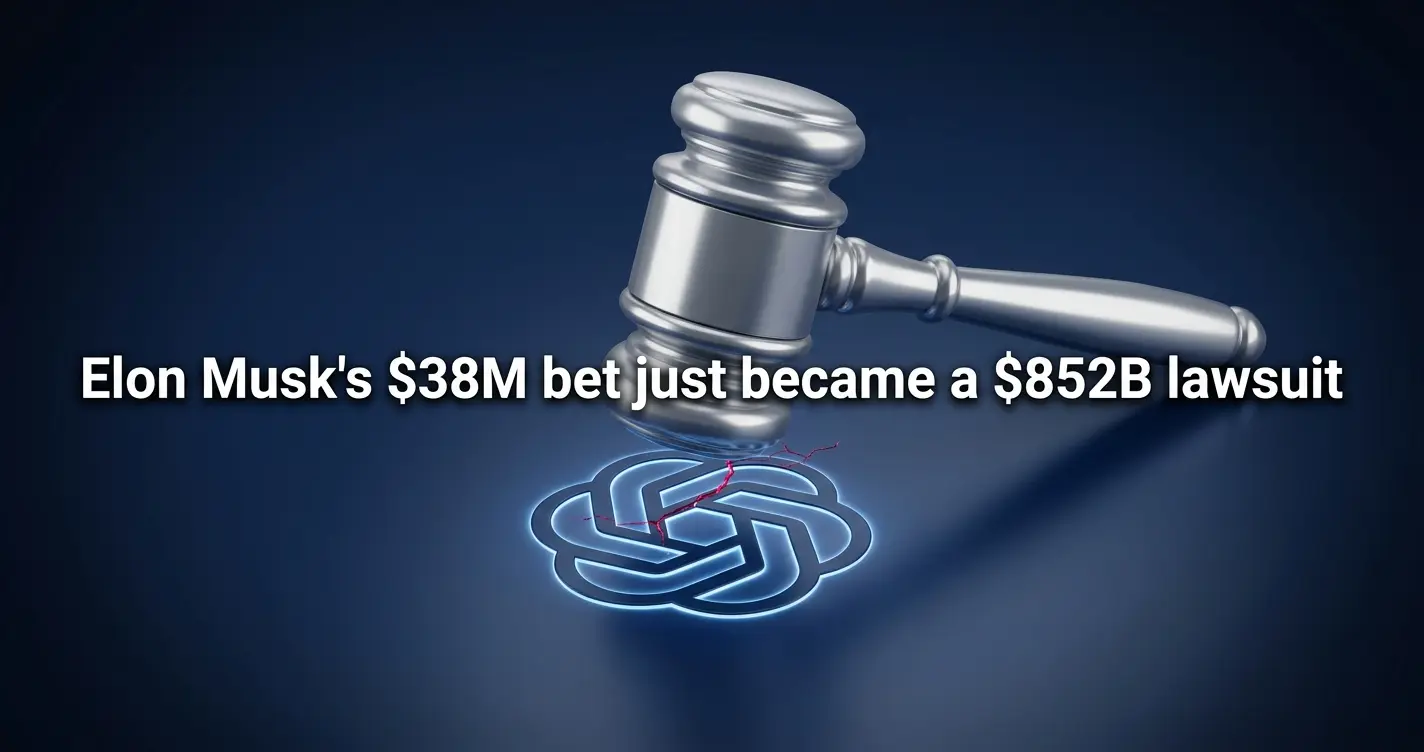
    Elon Musk OpenAI Trial 2026: Brockman’s $30B Stake Revealed

    Elon Musk vs. OpenAI: Inside the Trial That Could Reshape AI | NeuralWired

    Elon Musk’s Trial Against OpenAI Is the Biggest Governance Fight in AI History

    An Oakland federal courtroom is now the arena where Elon Musk is trying to prove that OpenAI betrayed the nonprofit mission he helped fund in 2015. With Greg Brockman disclosing a nearly $30 billion stake he built without investing a dollar of his own money, the case has moved far beyond a billionaire grudge match into a reckoning over who owns the soul of the most valuable AI company on earth.


    The Founding Promise Elon Musk Says OpenAI Broke

    When OpenAI was incorporated as a nonprofit in 2015, the pitch was straightforward and idealistic: build artificial general intelligence for the benefit of humanity, not shareholders. Elon Musk was one of the earliest backers, contributing roughly $38 million in its early years, according to CNBC reporting on court filings. He sat on the board. He helped recruit talent. Then he left.

    What happened next is the entire dispute. OpenAI built ChatGPT, signed a partnership worth billions with Microsoft, restructured into a capped-profit entity, and is now valued at approximately $852 billion according to Associated Press trial coverage. Musk’s argument is that the transformation from nonprofit lab into a commercial juggernaut violated the founding agreement he signed on to.

    OpenAI’s position is that none of that is true and that Musk’s claims are baseless. The company has publicly characterized the lawsuit as a competitive weapon wielded by a rival who runs his own AI operation.

    Trial Opens in Oakland and Elon Musk Calls Himself “A Fool”

    The trial began April 27, 2026, in Oakland federal court. Within days, it became clear this wasn’t going to be a quiet proceeding of dry legal arguments. Musk took the stand on April 29 and 30, describing himself as “a fool” for funding OpenAI. That phrase landed everywhere, and for good reason: it’s an unusual posture for a plaintiff who also happens to be one of the wealthiest people alive.

    Coverage from the BBC framed the hearing as a “toxic AI row” between two of the most powerful figures in technology. That framing undersells the legal stakes. The case touches on whether courts can second-guess the governance decisions of a heavily capitalized, commercially active AI company, based on the text of a decade-old founding charter. That’s genuinely novel legal territory.

    Context: Elon Musk also leads xAI, the AI company he founded in 2023 and which directly competes with OpenAI’s products. That conflict of interest underlies OpenAI’s central counterargument: that the lawsuit is strategy dressed up as principle.

    Greg Brockman Discloses a $30 Billion Stake He Didn’t Pay For

    The single most arresting fact to emerge from the trial so far isn’t anything Musk said on the stand. It’s what OpenAI president Greg Brockman revealed in testimony on May 4. His stake in OpenAI is worth nearly $30 billion, per Reuters. He did not invest any of his own money to get it.

    That’s not a scandal, legally speaking. Founder equity built through participation in a company’s growth is entirely standard in Silicon Valley. But it’s a vivid illustration of what OpenAI’s transformation from nonprofit to for-profit structure actually produced: extraordinary personal wealth for insiders, accumulated without the cash-in-cash-out logic that normally governs investment returns.

    Brockman’s disclosed financial ties to Sam Altman also drew attention in the Reuters reporting. Those relationships matter to the case because Musk is arguing that the leadership structure concentrates control and benefit in ways that betray the original mission.

    “His stake is worth nearly $30 billion, and he said he did not invest personal cash.”

    Greg Brockman testimony, as reported by Reuters and the Associated Press, May 4, 2026
    Think about the governance signal that number sends. A company founded as a nonprofit, explicitly to prevent the concentration of AI’s benefits in a small group of people, has produced one of the largest founder equity positions in the history of technology. Whether that’s evidence of mission betrayal or simply the consequence of extraordinary execution is precisely what the court is being asked to decide.

    The Text That Undercuts Both Sides’ “Pure Principle” Story

    Two days before the trial opened, Elon Musk texted Greg Brockman about settling the case. Brockman responded by proposing that both sides drop their claims entirely. Then, according to CNBC’s reporting on the court filing, Musk replied with a warning: by the end of the week, he and Altman would be “the most hated men in America.”

    That exchange is significant for what it says about each man’s self-awareness going into this proceeding. Musk was the one who reached out. He knew this trial would produce bad optics all around. That’s not the behavior of someone who views this purely as a principled stand on AI governance.

    It also doesn’t mean his underlying legal argument is wrong. Both things can be true: a lawsuit can be tactically motivated and still raise legitimate questions worth adjudicating. But the text is important evidence that the “mission defender” framing has limits.

    Key Numbers at a Glance

    Data Point Figure Source
    OpenAI valuation (cited in trial) $852 billion AP, May 4, 2026
    Greg Brockman’s stake value ~$30 billion Reuters / Bloomberg, May 4, 2026
    Brockman’s personal cash invested $0 AP / Bloomberg, May 4, 2026
    Elon Musk’s early OpenAI contributions ~$38 million CNBC, May 4, 2026
    Trial start date April 27, 2026 Reuters / BBC / AP
    Musk settlement text (days before trial) 2 days prior CNBC / court filing, May 4, 2026

    What Elon Musk Is Actually Trying to Win

    The remedies Musk is seeking go well beyond financial damages. His legal team wants the court to potentially unwind OpenAI’s for-profit restructuring and remove Sam Altman and Greg Brockman from control. That’s an aggressive ask.

    Even if you accept every premise of Musk’s argument, translating those premises into a judicial order that dismantles an $852 billion business is a different problem entirely. Courts deal in remedies that are proportionate and enforceable. “Turn this company back into a nonprofit” is neither simple nor without precedent concerns. What happens to Microsoft’s multi-billion-dollar partnership? What happens to the investors who poured money into a for-profit entity in good faith?

    ⚖️
    Governance Claim

    Musk argues OpenAI’s shift to a for-profit structure violated its founding nonprofit charter and the mission he funded.

    🏛️
    Structural Remedy

    The suit seeks to unwind the for-profit restructuring and potentially remove Altman and Brockman from leadership.

    💰
    Market Precedent

    A ruling against OpenAI could force frontier AI labs to rethink how they convert from mission-driven orgs into commercial companies.

    The more realistic legal outcome, if Musk wins anything, is probably some form of injunctive relief around disclosures, board composition, or governance accountability rather than a wholesale dismantling. But even that narrower win could shake how investors and partners think about OpenAI’s structural legitimacy.

    The Strongest Case Against Elon Musk’s Lawsuit

    OpenAI’s defenders make two arguments that deserve to be taken seriously. The first is competitive motive. Musk runs xAI, which competes directly with OpenAI across consumer and enterprise AI products. Slowing a rival through prolonged litigation is a rational business strategy, regardless of whether the underlying legal claims have merit. The timing matters too: Musk filed suit after OpenAI had already achieved massive commercial scale, not when the restructuring first happened.

    The second argument is practical. Courts are generally reluctant to reorganize live, heavily capitalized businesses after the fact. OpenAI isn’t a shell; it employs thousands of people, has active contracts with one of the largest companies in the world, and is developing technology that governments and enterprises depend on. A judge ordering it back to nonprofit status would be without real precedent in American corporate law.

    Both counterarguments are strong. Neither is decisive. The legal merits of the underlying governance question, specifically whether a nonprofit’s mission can be enforced by a donor after the fact, remain genuinely unresolved.

    Market and AI Industry Fallout: Who Wins If OpenAI Loses

    The immediate business consequences for ChatGPT users are probably limited unless the court orders injunctive relief that disrupts operations. Product development continues. Model training continues. The lights stay on.

    The medium-term consequences are more interesting. If this trial produces a serious legal constraint on OpenAI’s structure, Microsoft’s exposure rises sharply. Its entire AI strategy is built around a partnership with a company whose commercial legitimacy is now being actively contested in federal court. Governance risk is real risk when you’re trying to price multi-year infrastructure deals.

    Beyond Microsoft, the case sends a signal to every frontier AI lab that has taken a nonprofit-to-commercial path or might consider one. Anthropic, Google DeepMind, and others are watching. So are their investors. Read our analysis of AI governance structures across frontier labs to understand why this matters beyond OpenAI.

    The companies most likely to benefit from ongoing negative press around OpenAI’s governance are exactly who you’d expect: xAI (Musk’s own firm), Anthropic, and Google, all of whom have an interest in a narrative that highlights concentrated AI power and asks whether OpenAI’s commercial architecture is legitimate. That doesn’t make the narrative wrong. It just means the incentives are complicated for everyone involved.

    Industry Watch: For a broader look at how AI governance structures affect capital formation and lab strategy, see our feature on the governance models shaping frontier AI development and our breakdown of the Microsoft-OpenAI partnership and its structural risks.

    Frequently Asked Questions

    What is Greg Brockman’s stake in OpenAI worth, and how did he get it?
    Court testimony on May 4, 2026 put Brockman’s stake at nearly $30 billion. He testified that he contributed no personal cash to earn it. The position accrued through founder equity participation as OpenAI grew from a small nonprofit lab into one of the most valuable technology companies in the world, primarily through its corporate restructuring into a capped-profit entity.
    Will Elon Musk win and force OpenAI back to being a nonprofit?
    That outcome is legally possible to argue for but extremely difficult to achieve in practice. Courts rarely unwind live, heavily capitalized businesses on the basis of founding mission documents. The more likely scenario, if Musk prevails on any claims, is narrower remedies around governance disclosures, board structure, or mission accountability rather than a full restructuring.
    How does the trial affect ChatGPT and future AI models?
    Short-term product disruption is unlikely unless the court issues injunctive relief. ChatGPT continues to operate normally. The bigger effects are indirect: governance uncertainty raises partner risk, can complicate capital raises, and affects how rivals and regulators think about OpenAI’s legitimacy as a commercial AI developer.
    What did Elon Musk text Greg Brockman before the trial started?
    According to a court filing reported by CNBC, Musk reached out to Brockman about a settlement two days before the trial opened. Brockman proposed that both sides drop all claims. Musk then replied with a warning that by the end of the week, he and Altman would be “the most hated men in America.”
    What is the impact on Microsoft if OpenAI loses?
    Microsoft’s AI strategy is deeply tied to OpenAI’s commercial structure. A court-ordered restructuring or serious governance constraint could complicate the terms of their partnership, affect Microsoft’s ability to integrate OpenAI models into its enterprise products, and create pricing and contractual uncertainty across a multi-billion-dollar relationship.

    What Elon Musk’s Trial Means: Four Things to Watch

    NeuralWired Watch List
    01 The remedy question. If the court finds in Musk’s favor, what it actually orders matters enormously. Anything touching OpenAI’s corporate structure will have downstream effects on Microsoft, its investors, and every frontier AI lab watching.
    02 Brockman’s full testimony. The $30 billion stake disclosure is only the beginning. How he characterizes OpenAI’s governance decisions under cross-examination will shape the legal narrative around mission drift.
    03 OpenAI’s nonprofit conversion timeline. The company is in the middle of converting to a standard for-profit structure. A court ruling could accelerate, delay, or complicate that process in ways that affect its next funding round.
    04 Regulatory spillover. Congress and the EU are both watching AI governance closely. A high-profile courtroom loss for OpenAI could hand regulators the narrative hook they need to push harder on AI company accountability rules.
    Elon Musk’s trial against OpenAI is genuinely unprecedented. No court has ever been asked to adjudicate the soul of a frontier AI lab mid-flight, while it’s still building, still raising money, still releasing models, and still influencing how governments think about artificial intelligence. Whatever the verdict, the testimony, the disclosed numbers, and the settlement texts that have already surfaced will inform AI governance debates for years. Musk may not win in court. He may already have won the argument.

    Stay ahead of AI’s biggest stories. NeuralWired covers the decisions, deals, and disputes shaping the future of artificial intelligence.
    Subscribe Free
  • OpenAI Ends Microsoft Exclusivity: AWS & Google Cloud 2026

    OpenAI Ends Microsoft Exclusivity: AWS & Google Cloud 2026

    OpenAI Ends Microsoft Exclusivity: The Deal That Reshapes AI’s Cloud War | NeuralWired

    OpenAI Drops Microsoft Exclusivity, Opens Doors to AWS and Google Cloud

    After seven years, the most consequential partnership in AI history just got a major rewrite — and the ripple effects will touch every enterprise that builds on foundation models.

    The deal that made Microsoft the indisputable winner of the first AI gold rush is over. Not the partnership itself — that continues — but the exclusive clause that locked OpenAI’s models to Azure and handed Microsoft a structural advantage no competitor could touch. As of today, OpenAI and Microsoft have announced a revised agreement that strips away that exclusivity, freeing OpenAI to serve its full product portfolio across any cloud platform it chooses.

    That means AWS. That means Google Cloud. The two companies that watched the Azure exclusivity clause with visible frustration for years now have a direct path to OpenAI’s models — and OpenAI, freshly valued at north of $300 billion and accelerating its enterprise push, has every incentive to take it.

    The announcement lands weeks after AWS confirmed a massive OpenAI infrastructure deal and days after OpenAI shipped GPT-5.5 with native agentic capabilities. The timing isn’t coincidental. This is a company executing a deliberate multi-cloud strategy, and today’s announcement is the formal permission slip for what was already being built.


    What Actually Changed — and What Didn’t

    The word “exclusivity” does a lot of work in AI business reporting, and it’s worth being precise about which exclusivity ended and which parts of the relationship remain intact. OpenAI’s products can now be deployed across any cloud provider. Microsoft’s licensing rights to OpenAI’s IP, previously exclusive, are now non-exclusive. That’s the core change.

    What didn’t change: Microsoft remains OpenAI’s primary cloud partner. Per the Microsoft blog post published April 26 detailing the amended terms, OpenAI products will continue to ship first on Azure — unless Microsoft can’t or chooses not to support the required capabilities. Microsoft also retains its 27% ownership stake in OpenAI, currently valued at approximately $135 billion.

    The key structural shift: Microsoft’s license to OpenAI’s models and products runs through 2032, but it’s now non-exclusive. OpenAI continues paying Microsoft a capped revenue share through 2030, independent of any AGI milestone. Microsoft, in turn, stops making revenue-share payments to OpenAI.

    The financial logic cuts both ways. Microsoft trades exclusivity for economic certainty and reduced complexity. OpenAI gains the distribution freedom its enterprise ambitions require. Both companies get to stop arguing about revenue-share math tied to AGI definitions that were always going to be contested.

    “The greater predictability in the amended agreement strengthens our joint ability to build and operate AI platforms at scale while providing both companies the flexibility to pursue new opportunities.”

    Microsoft and OpenAI, Joint Statement — Microsoft Blog, April 27, 2026

    The Revised Terms, Point by Point

    Strip away the diplomatic language and the agreement has five core components. Here’s what each one actually means for the companies involved:

    Term Old Arrangement New Arrangement Who Benefits
    IP License Exclusive Microsoft Non-exclusive through 2032 OpenAI (more distribution)
    Cloud Exclusivity Azure only Azure-first, any cloud allowed OpenAI, AWS, Google Cloud
    Microsoft Revenue Share Active payments to OpenAI Eliminated Microsoft (lower costs)
    OpenAI Revenue Share ~20%, ongoing ~20%, capped, through 2030 Microsoft (cap adds certainty)
    Microsoft Ownership 27% stake 27% stake, unchanged Microsoft (upside preserved)
    AGI-linked clauses Revenue-share tied to AGI Payments independent of AGI Both (removes ambiguity)
    Unconfirmed: The exact dollar cap on OpenAI’s revenue share payments to Microsoft has not been publicly disclosed. The 20% rate has been widely reported since TechMonitor’s May 2025 reporting, but the April 27 announcement did not independently confirm that figure.


    The Amazon Factor: $50 Billion and 2 Gigawatts

    Today’s announcement doesn’t happen in isolation. Two months ago, Amazon Web Services confirmed a strategic OpenAI partnership that includes a staggering 2 gigawatts of compute capacity on AWS infrastructure. The total Amazon investment commitment reaches $50 billion, $15 billion deployed immediately, with an additional $35 billion conditional on performance benchmarks.

    That partnership — announced February 26, confirmed in an AWS blog post March 1, was always going to stress-test the Microsoft exclusivity clause. OpenAI committed to running its Stateful Runtime Environment on Amazon Bedrock. That’s not a minor integration. It’s infrastructure at a scale that effectively required renegotiating the old terms.

    “In exchange for ending that exclusivity, which helped boost Microsoft’s cloud sales in the early years of the AI boom — the world’s largest software maker will no longer pay a revenue share on OpenAI products it resells on its cloud.”

    Associated Press Technology Correspondent, Business Times Singapore, April 27, 2026
    The sequence matters. OpenAI closed its $110 billion funding round in late February, signed the Amazon deal almost simultaneously, and now formalizes the multi-cloud framework with Microsoft. This is a coordinated expansion play, not a reactive one.


    How Markets Read the Move

    Microsoft shares slipped roughly 1% in premarket trading Monday. Amazon dipped less than 1%. Neither reaction suggests panic, or euphoria. Investors appear to be treating this as a clarification of an already-shifting dynamic rather than a sudden change.

    Analyst reaction from the firms that cover Microsoft closely was notably calm. Evercore ISI reiterated its Outperform rating on Microsoft with a $580 price target, implying 38% upside from current levels, within hours of the announcement.

    “At a high level, the new agreement simplifies the relationship, with Microsoft giving up some exclusivity in exchange for greater clarity, flexibility, and economic certainty.”

    Kirk Materne, Senior Technology Analyst, Evercore ISI — Morningstar/MarketWatch, April 27, 2026
    “We do not believe this revised agreement should come as a major surprise to investors at this point. Microsoft has increasingly signalled interest in a broader multi-model strategy, while OpenAI has clear incentives to expand distribution more broadly across the market.”

    Evercore ISI Analyst Team — Morningstar/MarketWatch, April 27, 2026
    The Evercore note crystallizes the bull case for Microsoft’s position. Yes, exclusivity is gone. But Microsoft still gets first-mover access on new OpenAI products, retains the IP license through 2032, holds a 27% stake in a company that could be worth significantly more by the time any real competition from Google or Amazon materializes, and no longer has to subsidize OpenAI’s operations through outbound revenue-share payments.


    GPT-5.5 Lands Four Days Earlier: Why It Matters Here

    The timing of OpenAI’s latest model release — GPT-5.5, shipped April 23isn’t incidental context. It’s directly relevant to why the exclusivity clause needed to go.

    GPT-5.5 isn’t just a better language model. It ships with native agentic capabilities, computer-use, and multi-step workflow execution baked in at the model level. It arrived just six weeks after GPT-5.4. The development cadence is accelerating, and each new release carries new infrastructure requirements, requirements that a single-cloud constraint makes increasingly difficult to meet at the scale OpenAI is now operating.

    Pricing tells its own story. GPT-5.5 standard API access runs $5 per million input tokens and $30 per million output tokens. The Pro tier costs $30/$180. Token costs dropped approximately 35x compared to prior versions, which dramatically expands the addressable enterprise market, and, consequently, the infrastructure demands OpenAI needs to meet.

    🤖
    Agentic by Default

    GPT-5.5 ships with native multi-step execution and computer-use, no wrapper required. A fundamental shift in what “an API call” actually means.

    💰
    35x Cheaper

    Token costs collapsed relative to prior models. Lower prices at scale mean explosive volume growth, and serious infrastructure pressure across any single cloud provider.

    6-Week Release Cycles

    GPT-5.5 followed GPT-5.4 by just six weeks. At this cadence, locking model deployment to one cloud’s approval and provisioning timelines becomes a genuine bottleneck.

    🌐
    Multi-Cloud Imperative

    Enterprise buyers want redundancy, data residency options, and preferred-vendor relationships. OpenAI’s growth path runs through meeting customers where they already operate.


    What Microsoft Actually Keeps

    The framing of this deal as a Microsoft loss deserves scrutiny. The premarket stock dip is real, but the underlying position Microsoft holds after this amendment is more durable than the headlines suggest.

    Consider the full picture of what Microsoft retains:

    • First-access rights to every new OpenAI product on Azure, unless Microsoft explicitly passes
    • Non-exclusive IP license through 2032 — six more years of access to whatever OpenAI builds
    • A 27% ownership stake now worth roughly $135 billion, with no obligation to exit
    • A capped, predictable revenue stream from OpenAI through 2030
    • Elimination of its own outbound revenue-share obligations — a real cost reduction
    • Freedom to pursue a multi-model strategy without being exclusively bound to OpenAI’s roadmap
    That last point is underappreciated. Microsoft has been building relationships with other model providers — Mistral, Phi, others, as a hedge. The old exclusive arrangement implicitly constrained how aggressively Microsoft could position competing models. That constraint is now gone in both directions.

    CNBC’s reporting on the revenue cap frames this as OpenAI taking back control of its commercial destiny. That’s accurate. But it’s not a zero-sum extraction from Microsoft, it’s a restructuring that acknowledges both companies have grown beyond the terms that made sense in 2019.


    The Cloud War: What This Means for AWS and Google

    AWS and Google Cloud have been building toward this moment for two years. Both companies have invested heavily in AI infrastructure, custom silicon, inference optimization, data center buildouts, partly in anticipation of winning OpenAI workloads that were previously locked to Azure.

    The Amazon deal confirmed in March gives AWS the most concrete near-term opportunity. Two gigawatts of committed compute capacity isn’t theoretical, it’s infrastructure being actively provisioned. OpenAI’s Stateful Runtime Environment on Bedrock creates a native integration layer that enterprise developers can build against without treating AWS as a second-class citizen.

    Google Cloud’s path is less defined publicly, but the competitive logic is identical. Google has its own foundation models (Gemini) and its own enterprise AI platform (Vertex AI), which creates an interesting tension: Google is simultaneously a competitor to OpenAI and a potential infrastructure partner. The ending of Microsoft exclusivity doesn’t resolve that tension, but it removes the formal barrier that prevented any serious conversation.

    The enterprise reality: Most large organizations already run on multiple clouds. Procurement, compliance, and vendor risk teams have been pushing back on single-cloud AI dependencies for 18 months. OpenAI’s ability to meet customers on their preferred infrastructure is now a selling point rather than a gap.

    The enterprise AI market is still in formation. Contracts are being signed, platforms are being chosen, and incumbency advantages are being established right now. OpenAI’s multi-cloud freedom changes the competitive dynamics for every vendor in that space, including the hyperscalers themselves, who now compete with each other to be OpenAI’s preferred infrastructure partner while simultaneously competing with OpenAI’s products at the application layer.

    This is the structural tension that will define the next phase of enterprise AI adoption. Reuters noted that the change frees OpenAI’s path to Amazon and Google deals, but framing it purely as pipeline expansion misses the deeper shift. OpenAI is now positioning itself as cloud-neutral infrastructure, not a Microsoft-native product. That’s a different GTM motion entirely, and it puts every other foundation model provider on notice about what “enterprise ready” actually requires.

    The partnership history also bears noting. Microsoft first invested $1 billion in OpenAI in 2019, became its exclusive cloud provider, and followed with an additional $10 billion in 2023. That $13 billion total was the foundation for Azure’s AI advantage. The exclusivity clause was the return Microsoft extracted for that bet. As of today, the bet paid off, and both parties are moving to the next chapter.


    Frequently Asked Questions

    Is Microsoft still partnered with OpenAI after this announcement?
    Yes. Microsoft remains OpenAI’s primary cloud partner. OpenAI products continue to ship first on Azure, Microsoft retains a non-exclusive IP license through 2032, and Microsoft holds a 27% ownership stake in OpenAI. Only the exclusivity clause ended, the partnership itself continues.

    Can OpenAI now deploy models on Google Cloud?
    Yes. The amended agreement allows OpenAI to serve its products across any cloud provider, including Google Cloud and Amazon Web Services. OpenAI still commits to shipping first on Azure when Microsoft can support the required capabilities.

    How much is Microsoft’s stake in OpenAI worth?
    Microsoft holds a 27% stake in OpenAI Group PBC, valued at approximately $135 billion based on OpenAI’s most recent valuation. Microsoft’s total investment since 2019 is approximately $13 billion.

    What is the revenue-share arrangement between OpenAI and Microsoft?
    OpenAI continues paying Microsoft a revenue share, widely reported as approximately 20%, through 2030, subject to a total cap. Microsoft will no longer pay a revenue share to OpenAI. The exact cap amount has not been publicly disclosed.

    What is OpenAI’s deal with Amazon?
    OpenAI and AWS announced a strategic partnership in February 2026 involving a total Amazon investment commitment of up to $50 billion ($15 billion initial, $35 billion conditional). AWS confirmed OpenAI will deploy 2 gigawatts of compute on AWS infrastructure, with OpenAI’s Stateful Runtime Environment available on Amazon Bedrock.

    How did markets react to the announcement?
    Microsoft shares fell approximately 1% in premarket trading on April 27, 2026. Amazon dipped less than 1%. Evercore ISI reiterated its Outperform rating on Microsoft with a $580 price target, implying 38% upside from current levels.

    What is GPT-5.5 and why is it relevant to this deal?
    GPT-5.5, released April 23, 2026, is OpenAI’s latest model with native agentic capabilities, computer-use, and multi-step workflow execution. Its dramatically lower token costs and accelerating release cadence created infrastructure demands that made multi-cloud deployment a practical necessity rather than a strategic preference.

    When does Microsoft’s IP license to OpenAI’s models expire?
    Microsoft’s non-exclusive license to OpenAI’s intellectual property, covering models and products, runs through 2032. The license is no longer exclusive to Microsoft, meaning OpenAI can grant similar rights to other companies, but Microsoft retains access for six more years.


    The Architecture of What Comes Next

    The Microsoft-OpenAI relationship didn’t end today. It matured. Seven years after a $1 billion bet that most observers treated as a curiosity, the partnership produced a paradigm-defining suite of products, handed Microsoft a structural competitive advantage through the entire first phase of enterprise AI adoption, and is now converting from an exclusive arrangement to something more like a preferred-vendor framework with a significant equity component.

    For OpenAI, multi-cloud access isn’t just a distribution play. It’s the precondition for the kind of enterprise scale that justifies its valuation and funds the compute requirements of whatever comes after GPT-5.5. For Microsoft, the clarity of a capped revenue stream and eliminated outbound payments makes the P&L math cleaner while the 27% stake preserves exposure to OpenAI’s continued growth. For AWS and Google Cloud, the door is open, but first-mover advantages on Azure won’t dissolve overnight, and OpenAI’s “Azure-first” commitment ensures Microsoft’s infrastructure remains the default path for new deployments.

    The cloud war for foundation model infrastructure just entered a new phase. The rules changed. The players remain the same.

    Watch For
    01 First confirmed OpenAI production deployments on Google Cloud infrastructure — likely within Q3 2026, signaling the pace at which multi-cloud becomes operational reality rather than contractual possibility.
    02 Microsoft’s multi-model strategy acceleration, now that the exclusive commitment is gone, watch for more aggressive Azure partnerships with Mistral, Cohere, and others as Microsoft defends infrastructure market share.
    03 The cap amount on OpenAI’s revenue share to Microsoft, if and when it becomes public, this single figure will determine how much financial upside Microsoft has actually traded away, and will reshape analyst models significantly.
    Stay ahead of the curve. More on AI business and cloud strategy at NeuralWired.
    Explore AI Business