







Frontier Technology · Deep Analysis · Professional Decision-Makers
Microsoft Copilot Cowork: The $99 Bet on Agentic AI
Microsoft just rewrote the enterprise productivity contract. With Copilot Cowork powered by Anthropic’s Claude, a new $99/user M365 E7 tier, and a May GA for Agent 365, the company is betting that autonomous multi-step work is finally enterprise-ready. Whether buyers agree is the $52 billion question.
Only 3% of Microsoft’s 450 million commercial users currently pay for Copilot. That number, quietly acknowledged in enterprise AI circles, is the uncomfortable backdrop to Microsoft’s biggest productivity announcement in years. On March 9, 2026, the company unveiled Microsoft 365 Copilot Wave 3, a sweeping update that includes a new autonomous work tool called Copilot Cowork, a top-tier M365 E7 bundle priced at $99 per user per month, and a control plane for enterprise AI agents called Agent 365. The message is explicit: the demo era is over. The enterprise automation era starts now.
For CTOs and CIOs, this announcement demands an immediate read. The pricing is aggressive, the architecture is genuinely novel, and the competitive implications reach well beyond Microsoft’s own install base. But the 97% of commercial users who haven’t yet upgraded to Copilot represent a real question about whether enterprises are ready to pay a 65% premium over E5 for agentic capabilities that are still rolling out in preview.
This analysis breaks down what Copilot Cowork actually does technically, what the E7 bundle includes and what it costs, how the Anthropic partnership changes Microsoft’s AI model strategy, and what smart enterprise buyers should do before committing to an upgrade cycle. We’ll also flag the risks that Microsoft’s own blog posts quietly skip over.
What Copilot Cowork Actually Does (And Why It’s Different)
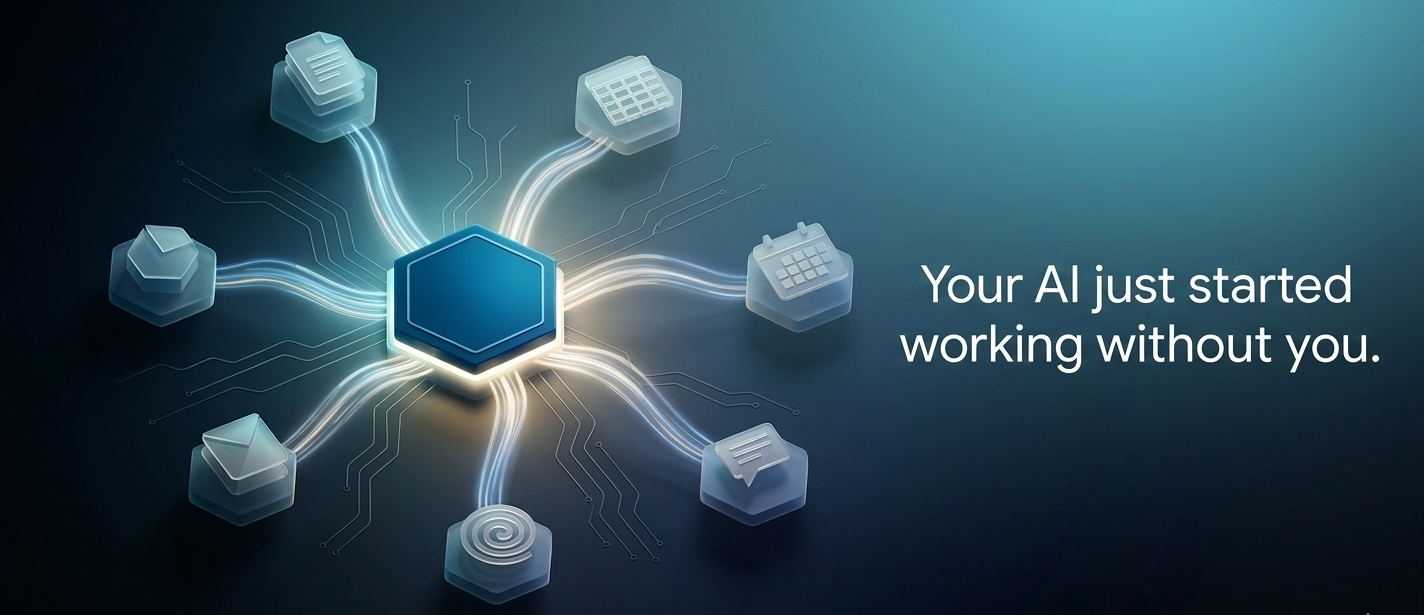
Most enterprise AI tools today are glorified autocomplete. You give them a prompt, they give you a response, and a human reviews, edits, and forwards the output. Copilot Cowork is designed to break that loop. According to Microsoft’s dedicated Cowork blog post, the product delegates multi-step tasks across your M365 environment, pulling context from Outlook, Teams, and Excel through a layer Microsoft calls Work IQ, then executing compound workflows autonomously.
A concrete example makes this tangible. A user describes a task: “Prepare a competitive briefing from the last 30 days of analyst emails, build a slide deck summary, and schedule a 45-minute review with the strategy team.” In a traditional Copilot workflow, that involves three separate prompts, three separate reviews, and manual handoffs between applications. Cowork handles the chain end to end, reasoning across context, choosing tools, and producing deliverables without requiring the user to babysit each step.
By combining Anthropic’s agentic model for multi-step tasks with Microsoft 365, Cowork delivers a managed, enterprise-grade experience that goes well beyond single-turn AI assistance.
Microsoft 365 Blog, March 9, 2026
The architecture behind this matters to technologists. Work IQ functions as a personalized context engine, maintaining a structured model of your calendar patterns, communication priorities, and document history across the M365 graph. That context gets passed to Anthropic’s Claude model, which handles multi-step reasoning and task execution. The combination of enterprise context depth and frontier reasoning capability is what Microsoft is betting will justify the premium pricing.
Critically, Cowork is cloud-only and runs in a managed security boundary. That’s not a limitation so much as a deliberate enterprise trust signal: no data leaves Microsoft’s compliance perimeter, and every agent action is logged for audit. For regulated industries, that architecture choice matters more than the AI capability itself.
The E7 Pricing Math: Who Should Upgrade?
The M365 E7 bundle, announced simultaneously with Cowork, is priced at $99 per user per month, according to National Today’s pricing breakdown. That’s a 65% premium over the current E5 tier. The bundle bundles M365 E5, Copilot, Agent 365 (also available standalone at $15/user/month), Entra Suite identity management, Defender for Endpoint, Intune device management, and Microsoft Purview compliance tools.
| Tier | Price/User/Month | Key Additions | Target Buyer |
|---|---|---|---|
| M365 E5 | ~$60 | Advanced security, compliance, voice | Security-led enterprises |
| M365 E7 | $99 | Copilot, Agent 365, Entra Suite, Cowork access | “Frontier Worker” organizations |
| Agent 365 (standalone) | $15 | Agent control plane only | E5 orgs testing agentic workflows |
The ROI case for E7 depends entirely on how you count productivity gains. Microsoft frames Cowork as a tool for “frontier workers,” knowledge workers who spend the majority of their time in complex, cross-application workflows. For a 1,000-person enterprise, the delta between E5 and E7 is approximately $468,000 per year. To break even on that premium, the organization needs meaningful, measurable productivity gains per knowledge worker per month, a bar that requires serious workflow automation rather than occasional AI queries.
The standalone Agent 365 at $15/user/month is a smarter entry point for most organizations. It provides the control plane for governing AI agents across your M365 environment without the full E7 commitment. For enterprises that want to test agentic workflows while maintaining their E5 security posture, that path makes more economic sense than a full SKU upgrade before Cowork exits preview.
Microsoft Copilot Cowork and the Anthropic Partnership
The most strategically significant detail in Microsoft’s announcement isn’t Cowork itself. It’s the model powering it. ChatAI’s analysis of the announcement confirms that Copilot Cowork runs on Anthropic’s Claude model for multi-step agentic reasoning, while Microsoft’s own blog posts confirm that Claude is now available in full Copilot Chat (having previously been limited in scope). This is Microsoft deliberately building a multi-model strategy into its enterprise productivity stack.
The implications for buyers and competitors run in several directions. For enterprises, multi-model availability means Microsoft isn’t betting everything on a single AI provider’s reliability or capability trajectory. If OpenAI’s models stagnate or pricing shifts, Microsoft has Claude as an alternative execution layer. That redundancy has real value for procurement teams worried about vendor lock-in within the AI layer.
For the broader market, the Microsoft-Anthropic arrangement signals that frontier AI model companies aren’t necessarily competing with productivity software vendors. They’re embedding into them. Claude doesn’t compete with Copilot; it powers part of Copilot. That architecture creates a new class of dependency in enterprise software stacks, one where AI model quality becomes a factor in evaluating productivity suite renewals.
Microsoft’s strategy centers on embedding AI inside the productivity tools workers already use every day. The Anthropic integration isn’t a partnership announcement; it’s an infrastructure decision.
Market analysts cited in ChatAI coverage, March 2026
Microsoft has described this as a “multi-model” approach, a term worth examining carefully. In practice it means the underlying AI engine can be selected or switched based on task type, data sensitivity, or capability requirements. For technologists building on top of M365 APIs, this introduces new variables in application design: you can no longer assume a single model’s behavior, strengths, or failure modes across all Copilot-powered workflows.
Rollout Timeline and What’s Actually Available Now
There’s a real gap between what Microsoft announced on March 9 and what enterprise buyers can deploy today. Clarity on the timeline matters before any procurement conversation happens.
As Fortune’s coverage of the announcement notes, Cowork is currently being piloted with select customers, not broadly available. Organizations evaluating E7 are essentially making a forward commitment on capabilities that aren’t yet in production. That’s a normal posture for enterprise software, but it’s worth naming explicitly when the 65% pricing premium is already live.
The Risks Microsoft Won’t Highlight
Every major enterprise AI announcement generates its own gravity. The press cycles, the analyst notes, the internal slack messages from the board asking “what’s our Microsoft AI strategy?” create pressure to move fast. Here’s what careful buyers should evaluate before the enthusiasm peaks.
The adoption gap is the first honest signal. At roughly 15 million Copilot seats out of 450 million commercial users, Microsoft hasn’t yet proven that knowledge workers will consistently integrate AI into daily workflows at scale. Cowork raises the cognitive and financial stakes. An autonomous agent that takes multi-step actions across your enterprise data environment requires more organizational readiness than a chat-based assistant. If your org hasn’t nailed Copilot adoption basics, Cowork is a premature purchase.
Governance is the second risk. Agent 365 doesn’t reach GA until May 1. That means any Cowork pilot before that date runs without the production-grade control plane Microsoft designed to manage agent permissions, audit trails, and policy enforcement. Running agentic AI in an enterprise environment without those guardrails is how you create data exposure incidents, not productivity wins.
The third risk is price sensitivity in renewal cycles. The jump from E5 to E7 will hit procurement committees during the next enterprise software review. ChatAI’s analysis flags that the 65% premium could drive churn among organizations that adopted E5 for security reasons but have no immediate automation mandate. Watch renewal rates in Q3 2026 as a leading indicator of whether E7 pricing is sustainable or will require adjustment.
A CTO’s Framework for Evaluating Microsoft Copilot Cowork
Before committing to E7 or requesting Frontier preview access for Cowork, work through these evaluation criteria:
- Baseline adoption: Do at least 40% of your knowledge workers use Copilot Chat weekly? If not, solve adoption before adding agentic complexity.
- Workflow mapping: Can you name three specific multi-step workflows today that would benefit from autonomous execution? If you can’t identify them clearly, Cowork won’t find them for you.
- Governance posture: Do you have an AI policy covering data access, agent permissions, and audit requirements? Agent 365 needs that framework in place before GA.
- Security bundling value: Does the inclusion of Entra Suite, Defender, and Purview in E7 actually consolidate spend, or do you already have those capabilities under existing contracts?
- Pilot structure: Are you prepared to run a structured 90-day pilot with measurable productivity outcomes rather than anecdotal impressions?
- Finance alignment: Has the CFO signed off on the per-user delta at scale? At 1,000 seats, E7 vs. E5 costs ~$468,000 per year in additional spend.
For organizations that check four or more of these criteria, Frontier preview access for Cowork is worth pursuing now. For those with fewer, the smarter path is Agent 365 standalone at $15/user/month as a governance and readiness investment ahead of a potential E7 decision post-GA.
What Comes Next for Enterprise Agentic AI
Microsoft Copilot Cowork represents something more than a feature launch. It’s the first time a dominant enterprise productivity platform has shipped a tool designed to operate autonomously across your entire work context, not just respond to individual prompts. Powered by Anthropic’s Claude and grounded in the Work IQ context layer, it’s architecturally different from anything Microsoft has shipped before. That distinction is real, and it matters to anyone thinking seriously about where enterprise software is going in the next three years.
What this signals beyond Microsoft is a broader pattern: frontier AI model companies are becoming infrastructure providers for enterprise software, not standalone product competitors. The Anthropic-Microsoft arrangement won’t be the last of its kind. Expect Google DeepMind and Gemini to follow the same embedding pattern with Workspace, and for enterprise buyers to face increasingly complex multi-model governance questions as a result.
Watch for three specific developments in the months ahead: (1) Cowork pilot results from Frontier program customers, which will either validate or complicate Microsoft’s autonomous work thesis by late Q2; (2) Agent 365 GA adoption rates after May 1, which will reveal how seriously enterprises are treating agentic governance as a priority; (3) competitive responses from Google and Salesforce, both of whom have agentic roadmaps that directly contest the productivity workflow space. The organizations that build AI governance frameworks now, before agentic tools reach full GA, will capture the productivity gains. Those waiting for the technology to mature will be implementing during the most competitive talent market for AI-enabled workflows in history.