Biggest Data Breaches of 2026: Complete List + What They Cost You
Cybersecurity
Biggest Data Breaches of 2026: The Complete List Updated May 2026
By NeuralWired Research Desk | May 31, 2026 | 14 min read
300+Organizations breached in one campaign
$10.22MAvg. U.S. breach cost (all-time high)
275MRecords claimed in Canvas LMS breach
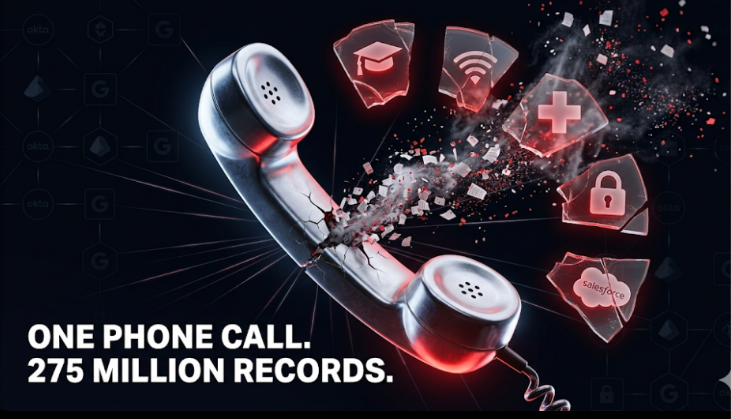
One phone call. One convincing impersonation of an IT helpdesk agent. That is all ShinyHunters needed to begin dismantling the security of some of the largest organizations on earth in 2026. The biggest data breaches of 2026 share a single, uncomfortable origin story: not a zero-day exploit, not nation-state malware, but a human being who answered a phone call and handed over the keys to an entire enterprise.
From Canvas LMS to Charter Communications, from Oracle Health to the identity protection company Aura, the 2026 breach landscape is a masterclass in what happens when modern enterprises consolidate authentication onto a single sign-on platform without building defenses around the human layer that protects it. This article covers every major confirmed breach, the real numbers behind each incident, the statistics that define the year, and the specific actions security leaders and executives need to take right now.
The ShinyHunters Factor: One Group, Hundreds of Breaches
To understand the biggest data breaches of 2026, you need to understand one group. ShinyHunters, a cybercriminal extortion operation active since 2020, briefly pulled back in late 2024 following a high-profile arrest. Their 2026 return has been something the security industry has not seen before: a single threat actor operating at industrial scale, with a repeatable playbook, across hundreds of organizations simultaneously.
Their method is disturbingly simple. A vishing call, which is a voice phishing attack, targets an employee who has access to a company’s single sign-on (SSO) platform, such as Okta, Microsoft Entra, or Google Workspace. The attacker impersonates IT support, an identity vendor, or internal helpdesk. The employee hands over their credentials or approves an MFA push request in real time. The attacker now has the keys to every application integrated with that identity provider, and in most modern enterprises, that means everything.
By March 2026, ShinyHunters claimed to have breached between 300 and 400 organizations through their Salesforce Experience Cloud campaign alone, with approximately 100 described as high-profile. Mandiant (Google Threat Intelligence Unit) tracked and documented the campaign. The group then weaponized AuraInspector, a legitimate open-source Salesforce auditing tool Mandiant released in January 2026, to automate scanning for misconfigured guest user permissions at scale. Defensive research converted into an offensive weapon within weeks of publication.
“The Charter breach is a reminder that the most sophisticated security stack in the world can be undone by a convincing phone call.”
This is not a technology failure story. Every organization that ShinyHunters successfully breached in 2026 had technology. Most had MFA. Several had dedicated security teams. The consistent failure point was a human being on a phone call, authenticated in real time, tricked into providing access. The security industry’s reflex toward tool-buying as the primary response misses the actual gap entirely.
The 10 Biggest Data Breaches of 2026 (So Far)
1. Instructure / Canvas LMS — The Largest Educational Breach in History
Confirmed275 Million Records ClaimedApril 2026
Canvas, the learning management platform used by 41% of U.S. higher education institutions, became the epicenter of the most significant educational data breach ever recorded. ShinyHunters exploited Instructure’s Free-For-Teacher (FFT) account program, a low-friction onboarding feature that created weak trust boundaries between FFT accounts and the institutional tenants sharing the same infrastructure.
The timeline moved fast. Instructure detected the intrusion on April 29, publicly confirmed unauthorized activity on May 1, and ShinyHunters formally launched a public extortion campaign with a May 7 deadline. When the deadline arrived, the group defaced Canvas login portals at approximately 330 institutions and began extorting individual schools directly. Instructure took Canvas offline on May 8, restored service the same day, and permanently shut down the Free-For-Teacher program.
On May 11, Instructure confirmed they paid a ransom, stating they received “digital confirmation” of data destruction. The Bitdefender Technical Advisory (May 9, 2026) provides the most detailed forensic breakdown of the attack vector available publicly. ShinyHunters’ claimed scale: 3.65 TB of data, approximately 275 million records, across 8,809 educational institutions worldwide. Independently confirmed exposed data included names, email addresses, student ID numbers, and private messages between Canvas users.
FBI warning: Within weeks of the Canvas breach payment, the FBI issued specific guidance warning organizations not to pay ransoms to ShinyHunters. Paying offers no guarantee stolen data will not be sold or used for future extortion. ShinyHunters’ claims of data destruction are cryptographically unverifiable.
2. Charter Communications (Spectrum) — 42 Million Customer Records
Confirmed42 Million Records ClaimedApril–May 2026
Charter Communications, which operates the Spectrum brand and serves tens of millions of U.S. cable and internet customers, confirmed a cybersecurity incident on May 23, 2026. The attack began on April 1, when ShinyHunters executed a vishing attack that compromised an employee’s Microsoft Entra SSO account. From there, the attacker moved into Charter’s Salesforce instance and began exfiltrating customer records.
ShinyHunters’ ransom deadline expired May 27 without payment. The group published the data on their dark web portal the same day. Their claimed dataset: 42 million records including names, email addresses, physical addresses, phone numbers, plan information, support ticket data, and some Customer Proprietary Network Information (CPNI). Charter’s official position contested that sensitive personal information or CPNI was exfiltrated. BleepingComputer’s reporting covers the conflicting claims in detail.
The attack vector is textbook ShinyHunters 2026: one vishing call, one SSO credential, one Salesforce instance, tens of millions of records.
3. Oracle Health (Formerly Cerner) — Up to 80 U.S. Hospitals
Confirmed by OracleUp to 80 HospitalsJan 2025, Ongoing Through 2026
This breach started quietly and escalated slowly. On or after January 22, 2025, a threat actor used compromised customer credentials to access legacy Cerner data migration servers on Oracle Cloud Classic infrastructure. Oracle Health became aware of the breach on February 20, 2025. The full scope did not emerge until 2026, as individual hospital notifications rolled out and class action lawsuits accumulated.
Per statements Oracle Health’s attorneys made in class action proceedings, up to 80 U.S. hospitals were potentially affected. Confirmed victims include Munson Healthcare (100,000+ patients notified), Lake Regional Health System, OSF Saint Clare Medical Center, Aultman Health System, and NKC Health. The data compromised is a complete EHR profile: names, dates of birth, Social Security numbers, medical record numbers, diagnoses, medications, test results, and medical images.
Oracle’s response generated significant controversy. The company told affected hospitals it would not notify patients directly, placing the HIPAA notification obligation on individual hospital systems. Security researcher Kevin Beaumont publicly challenged Oracle’s language describing the breached servers as “obsolete,” noting they were Oracle-managed Gen1 cloud services still actively holding patient data. This is not a trivial distinction. HIPAA Journal’s ongoing coverage tracks each hospital notification as they are filed.
4. Match Group (Tinder, Hinge, OkCupid) — 10 Million Dating Records
Confirmed by Company10 Million Records ClaimedJanuary 2026
Match Group, the parent company of Tinder, Hinge, OkCupid, and Match.com, confirmed a security incident on January 28, 2026, after ShinyHunters posted claims of “over 10 million lines” of data. The attack vector was a vishing campaign targeting Okta SSO credentials, with data extracted from an AppsFlyer marketing analytics instance and cloud storage.
Match Group confirmed that login credentials, financial information, and private communications were not accessed. What was accessed: user IDs, IP addresses, transaction records for Hinge subscriptions, and internal corporate documents (1.7 GB compressed). The company disputed that Google Drive and Dropbox files were exfiltrated. The breach occurred as two other major platforms faced simultaneous incidents: Bumble confirmed a contractor’s account was compromised via phishing, and Panera Bread confirmed a breach of 14 million claimed records through a Microsoft Entra SSO compromise.
5. McGraw-Hill — 13.5 Million Accounts
Confirmed13.5 Million Accounts2026
ShinyHunters claimed access to McGraw-Hill’s Salesforce environment as part of their broader Salesforce Experience Cloud campaign. Breach trackers confirm 13.5 million accounts affected. The publisher joins Canvas LMS in a pattern of ShinyHunters specifically targeting the education and educational technology sector, where student and instructor data sits in large, multi-tenant SaaS platforms often managed by lean IT teams.
Confirmed185,300 Individuals (Have I Been Pwned)April 2026
On April 8, 2026, an unauthorized third party accessed 7-Eleven systems storing franchisee application documents. ShinyHunters posted the claim on April 17 with a stated count of 600,000+ Salesforce records. When 7-Eleven declined to pay by the April 21 deadline, the group published a 9.4 GB archive. Have I Been Pwned’s verified count: 185,300 individuals, with names, dates of birth, email addresses, phone numbers, and physical addresses. Some records also included Social Security numbers and driver’s license numbers.
7-Eleven CISO Jim Kastle confirmed the breach was limited to “certain 7-Eleven systems used to store franchisee documents.” This is an important distinction: the victims here are franchise applicants, not general store customers. Their exposed data, including government identity documents, makes them targets for synthetic identity fraud and targeted phishing for years after this headline fades.
7. ADT — 5.5 Million Records, SEC Filing Triggered
ADT, the home security company, filed an SEC 8-K disclosure following a breach confirmed on April 20, 2026. The attack vector was social engineering. With 5.5 million records affected, ADT’s filing is one of the few 2026 breaches that triggered the SEC’s four-business-day material cybersecurity incident disclosure requirement, serving as a practical example of how that regulatory obligation now functions in practice.
8. Aura — 900,000 Records from an Identity Protection Company
Confirmed~900,000 RecordsMarch 2026
The irony here is undeniable. Aura, a Burlington, Massachusetts company that sells identity theft protection and credit monitoring to consumers, was itself breached by ShinyHunters via a single targeted vishing attack that compromised one employee’s account. The attacker had access for approximately one hour before Aura’s security team removed them.
Have I Been Pwned confirmed approximately 900,000 records: names, home addresses, telephone numbers, email addresses, and additional marketing database fields. Aura’s breach drew immediate and widespread attention less for its scale than for its symbolism. If a company whose entire product is protecting people from this exact threat can be undone by one phone call in under an hour, no organization should feel comfortable with its current posture.
9. CarGurus — 12 Million Records, Class Actions Filed
Confirmed12 Million2026
CarGurus confirmed a breach affecting 12 million records attributed to social engineering. Class action lawsuits have been filed. The auto marketplace joins a growing list of consumer-facing platforms where the breach impact extends well beyond the company into long-tail identity fraud risk for affected users.
10. Harvard University Alumni Affairs — 115,000 Records
Attributed to ShinyHunters~115,000 RecordsFebruary 4, 2026
Harvard University’s Alumni Affairs office was targeted on February 4, 2026, with approximately 115,000 records attributed to ShinyHunters via vishing and SSO compromise. The breach continues the group’s pattern of targeting institutional data stores with large alumni and donor datasets, which carry high social engineering value for future targeting of high-net-worth individuals.
Additional 2026 Breaches at a Glance
Beyond the ten incidents above, a second tier of confirmed and reported breaches rounds out the 2026 picture. The volume is the story: this is not a bad year with a few high-profile incidents. It is a sustained, industrialized campaign.
Target
Date
Records Claimed
Status
Attack Vector
Crunchbase
Jan 2026
2+ million
ShinyHunters claimed
Hacking
Match Group (Bumble)
Jan 2026
Undisclosed
Confirmed
Contractor phishing
Panera Bread
Jan 2026
5.1M published
Confirmed
Microsoft Entra SSO
Telus (Canada)
March 2026
700 TB claimed
Unverified
Unauthorized access
Vercel
April 2026
API keys, tokens
Confirmed
OAuth supply-chain / Lumma Stealer
Medtronic
April 2026
Up to 9 million (claimed)
Attributed
ShinyHunters claimed
Mansura University
May 29, 2026
1 million students
Disclosed
Cloud misconfiguration
Data Breach Statistics 2026: What the Numbers Actually Mean
U.S. Breach Costs Hit an All-Time Record
The IBM Cost of a Data Breach Report 2025 put the global average cost of a data breach at $4.44 million, down 9% from $4.88 million in 2024. That headline decline is accurate. It is also misleading. The decline reflects AI-powered detection improvements at large, security-mature organizations, while U.S. breach costs actually rose 9% to a record $10.22 million per incident. That is 2.3 times the global average, driven by state-level regulations, HIPAA penalties, litigation costs, and mandatory notification requirements. Healthcare led all sectors for the 14th consecutive year at $7.42 million per breach.
Third-Party Involvement in Breaches Doubled
The Verizon 2025 Data Breach Investigations Report analyzed a record 22,052 incidents and 12,195 confirmed breaches across 139 countries. The most significant structural finding: third-party involvement in breaches rose from approximately 15% to 30%, doubling year-over-year. This is the exact attack pattern ShinyHunters has operationalized at scale in 2026. Supply chain breaches now cost an average of $4.91 million and take 267 days to resolve, above the global average on both metrics.
Ransomware Is Now in 44% of All Breaches
The Verizon DBIR also found ransomware or extortion present in 44% of all breaches, up 37% year-over-year, and in 88% of breaches affecting small and medium businesses. ShinyHunters’ extortion-as-a-service model is not an edge case. It is the dominant breach pattern of the era, and it is not confined to large enterprises.
“Organizations accumulate sensitive data faster than they track it. It spreads across CRM platforms, document stores, and franchisee systems, often without clear ownership, often without anyone knowing exactly what’s there. By the time a breach surfaces, the data has already been living somewhere it probably shouldn’t have been for months or years.”
Most Security Tools Cannot See the Attack Layer Being Exploited
The 2026 CISO Report found that 84.8% of CISOs considered their security tools insufficient to detect OAuth token or API key abuse. This is the attack layer ShinyHunters is operating at in 2026. Most organizations are running blind against the precise vector that is actively being used against them.
“84.8% of CISOs considered their security tools to be lacking in their ability to detect OAuth token or API key abuse, meaning most organizations have limited ability to detect or contain a compromise at this layer.”
Mean Breach Detection Time Is 241 Days (Still Far Too Long)
IBM found the mean time to identify and contain a breach at 241 days, the lowest in nine years. It still costs organizations enormously. Breaches detected under 200 days cost $3.87 million on average. Those exceeding 200 days cost $5.01 million, a $1.14 million premium for slow detection. Oracle Health ran from January 22, 2025, through at least early 2026. The Vercel breach had a two-month dwell time before discovery. Speed of detection is not an abstract metric. It is a direct financial variable.
What CISOs and Executives Must Do Right Now
For Security Leaders: Five Immediate Actions
Audit all Salesforce Experience Cloud sites for guest user permissions on the /s/sfsites/aura API endpoint. This is the specific endpoint ShinyHunters scanned at scale using AuraInspector. If guest user queries are not restricted, this is an open door.
Commission a full OAuth grant inventory. Map every application your employees have authorized across Google Workspace, Microsoft 365, and Salesforce. Most enterprises have no complete picture of this. This is now a first-tier gap, not a backlog item.
Run voice phishing simulations targeting SSO helpdesk scenarios. ShinyHunters scripts impersonate IT support and identity vendors convincingly. Generic phishing simulations using email will not close this training gap.
Disable device code flow and legacy authentication protocols in Microsoft Entra if this has not already been done. Both are exploited routinely in 2026-era SSO attacks.
Upgrade MFA to FIDO2 hardware keys or passkeys where possible. Time-based OTP MFA is defeated routinely by ShinyHunters through real-time phishing proxies. FIDO2 or passkeys are the minimum effective control against this specific attack pattern.
For Executives and Boards: Three Risk Realities
The average U.S. breach now costs $10.22 million. That is not a technology line item. It is a material financial risk that belongs on the board agenda, not buried in the CISO’s quarterly report. Boards need breach disclosure protocols in place before an incident occurs, not after. The SEC requires 8-K disclosure of material cybersecurity incidents within four business days, as ADT demonstrated in April 2026.
Paying ransoms creates legal and reputational risk with no guarantee of outcome. Instructure’s decision to pay ShinyHunters is already a case study in crisis management tradeoffs. The FBI issued specific guidance in May 2026 warning against paying ransoms to this group. “Digital confirmation” of data destruction is not cryptographically verifiable. It is the attacker’s word.
The Oracle Health incident also reveals a critical contract risk: SaaS vendor agreements must explicitly address breach notification obligations. Oracle Health’s decision to push patient notification responsibility to individual hospitals created legal ambiguity and eroded hospital trust. Any organization that relies on SaaS vendors to handle sensitive regulated data needs to audit those contracts now.
The Critical Perspective: What the Mainstream Narrative Gets Wrong
Most coverage of the 2026 breach wave tells a simple story: ShinyHunters is exploiting human weakness, and organizations need better security awareness training. That framing is accurate at the surface, but it obscures several harder truths worth taking seriously.
The “Skills Gap” Narrative Sells Certifications, Not Security
The frequent claim that 2026’s breaches reflect a cybersecurity skills gap is used heavily by training vendors. The Canvas breach was not caused by an untrained security team. It was caused by an architectural flaw: weak trust boundaries between a freemium account tier (Free-For-Teacher) and institutional tenants sharing the same infrastructure. No security certification closes a multi-tenant isolation bug. When products are architected with trust boundary failures, no amount of employee training compensates.
The IBM 9% Cost Decline Headline Obscures the Real Trend
The 9% global cost decline in IBM’s 2025 report is real, but it is driven by AI-powered improvements at large, security-mature organizations. U.S. costs rose 9% simultaneously. Total breach volume continued rising even as per-breach costs declined in some regions. Supply chain breaches, the dominant 2026 vector, cost above the global average on both cost and dwell time. Reading the headline without the underlying data produces false comfort.
“No Passwords or Financial Data Accessed” Is Not Reassurance
Match Group, Instructure, and Charter all issued statements emphasizing that passwords and financial data were not accessed. Security professionals should read these statements carefully, not as reassurance. Names, email addresses, student IDs, IP addresses, phone numbers, and physical addresses are precisely the inputs needed for highly targeted spear phishing, SIM swapping, and synthetic identity fraud. The downstream risk from a 2026 breach typically materializes 6 to 18 months after the headline, not in the week of disclosure.
Kevin Beaumont’s Oracle Challenge Remains Unanswered
Security researcher Kevin Beaumont publicly challenged Oracle’s breach notification language as “engaging in wordplay,” noting the company described actively used, Oracle-managed cloud servers as “obsolete” to minimize the perceived severity of the breach. If cloud providers can selectively describe infrastructure to manage breach perception, HIPAA’s notification framework becomes substantially harder to enforce. This accountability gap has not been adequately addressed in mainstream coverage of the Oracle Health incident.
Our read: the 2026 breach environment is not primarily a story about one skilled threat actor. It is a story about the structural fragility of modern enterprise authentication, built on SSO consolidation that was designed for usability and was never hardened against a group willing to spend weeks profiling individual employees before a single phone call.
FAQ: Data Breaches 2026
What is the biggest data breach of 2026?
The largest data breach of 2026 is the Canvas LMS breach affecting Instructure’s platform. ShinyHunters claimed exfiltration of 3.65 TB of data across approximately 275 million records at 8,809 educational institutions globally. Instructure confirmed the breach in May 2026, shut down its Free-For-Teacher program, and paid a ransom with a May 11 announcement. Independently confirmed exposed data included names, emails, student IDs, and private messages.
Has there been a data breach in 2026?
Yes. Multiple major breaches have been confirmed in 2026, including Canvas LMS (275 million records claimed), Charter Communications (42 million records claimed), Match Group (10 million confirmed), Oracle Health (up to 80 hospitals), 7-Eleven (185,300 confirmed), Aura (900,000 confirmed), McGraw-Hill (13.5 million), CarGurus (12 million), ADT (5.5 million), and Harvard University Alumni Affairs (115,000), among hundreds of others.
How much does a data breach cost in 2026?
The global average cost of a data breach is $4.44 million, per IBM’s Cost of a Data Breach Report 2025, down 9% from 2024’s $4.88 million. U.S. organizations face a record average of $10.22 million per breach, more than double the global figure and up 9% year over year. Healthcare remains the highest-cost sector at $7.42 million per breach for the 14th consecutive year.
Who is ShinyHunters?
ShinyHunters is a cybercriminal extortion group active since 2020 that has become the dominant breach actor of 2026. The group specializes in vishing attacks targeting SSO credentials, then exfiltrating data from SaaS platforms, particularly Salesforce, before demanding ransoms. By March 2026, they claimed to have breached 300 to 400 organizations in a single Salesforce Experience Cloud campaign, with approximately 100 described as high-profile.
What was the Canvas data breach?
In late April 2026, ShinyHunters exploited Instructure’s Free-For-Teacher account program to access Canvas LMS, the platform used by 41% of U.S. higher education institutions. The group claimed 275 million records across 8,809 institutions. Instructure detected the intrusion April 29, confirmed it publicly May 1, and shut down the Free-For-Teacher program permanently after paying a ransom on May 11, 2026.
What industries are most affected by data breaches in 2026?
Healthcare leads with an average breach cost of $7.42 million, a title it has held for 14 consecutive years, followed by financial services at $5.56 million. By incident frequency, Public Administration led with 543 breaches in the past 12 months, representing 21% of all confirmed incidents. Education was heavily targeted in 2026 following the Canvas LMS and McGraw-Hill breaches.
How can I check if I was affected by a 2026 data breach?
Use Have I Been Pwned to check whether your email address appears in known breach databases. The service has already indexed the 7-Eleven, Aura, Canvas, and Match Group incidents from 2026. Enabling breach alerts ensures you are notified automatically if your email appears in future disclosures.
What You Now Know That Most People Don’t
The biggest data breaches of 2026 are not a technology story. The organizations that were breached had firewalls, had MFA, had dedicated security teams. What they did not have was a hardened human layer around the single most valuable asset in their entire security architecture: the SSO credential. ShinyHunters understood that before most defenders did.
In the 6 to 18 months ahead, watch for three things. First, the downstream fraud wave from this year’s breaches. The names, emails, phone numbers, and partial identity data exposed in 2026 will fuel SIM swapping, spear phishing, and synthetic identity fraud campaigns well into 2027. Second, regulatory response: the Oracle Health notification controversy and the FBI’s anti-ransom payment guidance both point toward stricter vendor accountability requirements taking shape. Third, AI-enabled voice phishing escalation. ShinyHunters has been attributed with using deepfake voice technology to enhance vishing credibility. As voice synthesis improves and access costs fall, the attack that defined 2026 will get harder to defend against with existing controls.
The three things to act on before this week ends: audit your Salesforce Experience Cloud guest user permissions, commission an OAuth grant inventory, and schedule a voice phishing simulation specifically targeting your SSO helpdesk scenario. The group that caused most of the damage on this list is still active. The phone is still ringing.
Stay Ahead of the Next Breach
The Neural Loop delivers weekly intelligence on cybersecurity, AI, and enterprise technology to 50,000+ professionals across 80 countries. No noise. No filler.
Subscribe to The Neural Loop
US AI Regulation 2026: The State-vs-Federal Battle Every Company Must Understand Now
NeuralWired
Policy & Compliance
US AI Regulation in 2026: The State vs. Federal Battle Every Company Must Understand Now
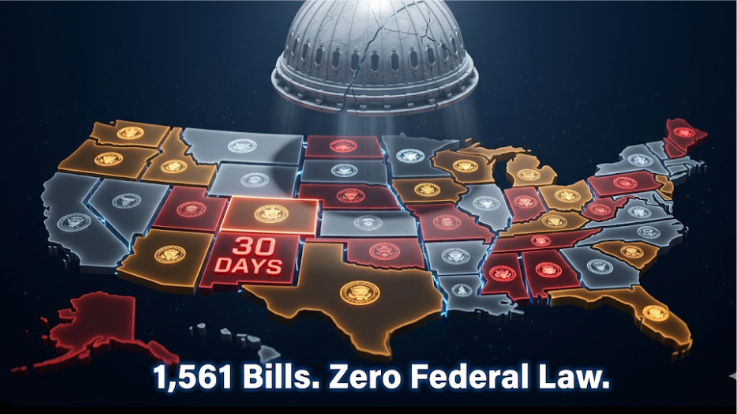
1,561 state bills, zero federal law, and a DOJ task force set to sue states into compliance. Here is the full picture, and what your legal team needs to do before June 30.
May 31, 2026 • NeuralWired Research Desk • 14 min read
1,561State AI bills introduced in 2026
45States with active AI legislation
$42BFederal broadband funds used as leverage
Your company’s AI hiring tool went live in Q1. It operates in eight states. By June 30, it will be non-compliant in at least three of them, and the enforcement machinery is already running. This is not a hypothetical risk buried in a regulatory horizon document. It is the operational reality of AI regulation in the United States right now, and most compliance teams are structurally behind.
While Washington debates preemption, Sacramento, Denver, Hartford, and Albany are already writing the rules your products must live by. As of March 2026, lawmakers in 45 states had introduced 1,561 AI-related bills, surpassing the entire volume from all of 2024. Six weeks into the year, more than 300 had already landed. This is not a wave. It is a flood with no federal levee in sight.
This article gives you the complete picture: every major law currently in force or about to be, the real scope of the federal vs. state collision, and the specific actions compliance, legal, and product teams must take now. If you are building or deploying AI in the United States, nothing here is optional reading.
The Federal Framework: What It Is (and Is Not)
On December 11, 2025, President Trump signed Executive Order 14365, titled “Ensuring a National Policy Framework for Artificial Intelligence.” The EO asserts broad federal authority over state AI laws the administration considers obstructive. It establishes a DOJ AI Litigation Task Force to challenge state requirements in court, threatens to condition $42 billion in BEAD broadband funding on states repealing “onerous” AI statutes, and instructs the Commerce Department to publish a review identifying state laws for potential federal challenge.
The stated ambition is sweeping. The legal reality is considerably narrower.
Critical Distinction
Executive orders cannot directly preempt state laws. That requires an Act of Congress. EO 14365 is a policy declaration backed by funding threats and litigation intent, not a self-executing legal override of existing state statutes.
On March 20, 2026, the administration followed the EO with its National Policy Framework for Artificial Intelligence, a legislative recommendation document built around seven pillars: child protection, AI infrastructure, intellectual property, free speech and censorship, innovation, workforce preparation, and preemption of state AI laws. It is a wish list for Congress, not a binding regulatory framework.
Congress has not delivered. The most telling signal came when the Senate voted 99-1 to strip a 10-year state AI law freeze from the “One Big Beautiful Bill Act.” The 2026 National Defense Authorization Act, signed the day before EO 14365, excluded preemption language entirely. A unified federal AI law before the 2026 midterms is, by any credible reading of congressional bandwidth, extremely unlikely.
The DOJ AI Litigation Task Force: Operational Since January 10, 2026
This is the mechanism with the most immediate legal consequence. The Task Force, operational since January 10, 2026, is responsible for challenging state AI laws in federal court on grounds including unconstitutional burden on interstate commerce and federal preemption conflicts. Legal teams must now model compliance scenarios that include the possibility of states they are currently complying with facing federal injunctions. That kind of scenario uncertainty is genuinely new territory for corporate AI governance.
One federal consumer protection development worth noting: on April 23, 2026, the Protecting Consumers From Deceptive AI Act was introduced in Congress, directing NIST to develop guidelines for watermarking AI-generated content. It has not been enacted.
State Laws Now in Force: The Compliance Map
This is the table that should be on the wall of every compliance team operating in the United States. These are not proposed bills. They are enacted laws with active or imminent enforcement dates.
Law
State
Effective Date
Who It Covers
Key Requirement
Status
AB 2013 / SB 942
California
Jan 1, 2026
Generative AI developers
Training data disclosure; latent provenance disclosures in AI-generated content
Active
ADMT Regulations
California
Compliance by Jan 1, 2027
Companies using AI for significant decisions (hiring, lending, housing, healthcare)
Impact assessments; consumer opt-out rights
Compliance Due
TRAIGA
Texas
Jan 1, 2026
Developers and deployers
Prohibits specific intentional misuses; 36-month regulatory sandbox
Active
RAISE Act
New York
Dec 19, 2025
AI developers and deployers in NY
Stricter incident reporting; new oversight office within Dept. of Financial Services
Active
Colorado AI Act
Colorado
June 30, 2026
Developers and deployers of “high-risk” AI systems
Transparency, safety, consumer protection obligations across AI lifecycle
Oct 2026
Healthcare AI Laws
Indiana, Utah, Washington
2026
Health insurers using AI for claims
AI cannot be sole basis for denying or modifying insurance claims
Active
Mental Health AI Laws
Tennessee, Delaware
2026
AI system providers
Prohibits AI from being marketed as licensed mental health professionals
Active
California’s ADMT Rules: The One Closest to Breaking Most Companies
California’s Automated Decision-Making Technology regulations cover any company that uses AI to “substantially replace” human decision-making in what the law defines as “significant decisions.” The list is broad: financial services, lending, housing, education, employment, independent contracting, and healthcare. These regulations took effect January 1, 2026, but the compliance deadline lands January 1, 2027. That sounds like time. It is not. Impact assessments, documentation infrastructure, and opt-out mechanisms take months to implement correctly.
Colorado AI Act: June 30, 2026 Is 30 Days Away
Colorado’s AI Act is the most aggressive algorithmic accountability law in the country. Originally set for February 1, 2026, Governor Polis signed a delay to June 30, 2026. Developers and deployers of “high-risk” AI systems must exercise reasonable care to prevent algorithmic discrimination, conduct impact assessments, and provide consumer disclosures. The Trump administration’s EO specifically names Colorado’s law as the kind of state regulation it intends to challenge, but no federal injunction has been issued. The law is enforceable on June 30.
Connecticut SB 5: The Latest Domino
On May 1, 2026, the Connecticut legislature passed SB 5 with a 131-17 House vote and 32-4 Senate majority, a level of bipartisan support that underscores how politically durable state AI regulation has become. The law imposes obligations on developers, deployers, and providers across the AI technology lifecycle, with most provisions effective October 1, 2026. Governor Lamont is expected to sign.
The Federal vs. State Collision
The core tension playing out right now is a preemption fight with no clear legal resolution timeline. The Trump administration wants a single national standard. Thirty-six state attorneys general have told the federal government to stay out. States read the 99-1 Senate vote stripping preemption from the One Big Beautiful Bill as a direct political endorsement of their authority to keep legislating.
What makes this operationally complicated for companies is the gap between federal aspiration and legal enforceability. Every state AI law currently in force remains fully enforceable. The DOJ Task Force can file lawsuits, seek injunctions, and apply funding pressure, but until courts rule or Congress acts, companies cannot responsibly treat the federal posture as a compliance substitute for state obligations.
“Compliance strategies for AI-enabled products and services must be nimble to accommodate diverging state and federal requirements. As these recommendations are not yet binding law, and the legal durability of executive actions remains uncertain, stakeholders should remain vigilant, monitor legislative and litigation developments, and be prepared to adapt compliance strategies as the regulatory environment evolves.”
Stephanie A. Webster, Jamie E. Darch & Chetan A. Patil, Ropes & Gray LLP (March 30, 2026)
The EO’s most coercive mechanism is the $42 billion BEAD broadband funding threat: states that maintain AI regulations the administration deems onerous risk losing previously allocated broadband infrastructure money. That is real financial leverage. It has not yet changed a single enacted state AI law.
One scenario that deserves more attention than it typically receives: even if the administration successfully challenges explicit AI-specific statutes, states will simply route AI regulation through pre-existing consumer protection, unfair competition, and civil rights frameworks. Paul Hastings flagged this plainly: “We do not believe this Executive Order will eliminate state involvement in AI regulation altogether. Instead, we think that states will diffuse AI regulation by applying existing consumer protection, unfair competition, deceptive practices and civil rights laws to AI-related conduct.”
That is not a speculative scenario. It is already happening.
The Numbers Behind the Crisis
The volume figures are striking enough on their own. 1,561 state AI bills introduced by March 2026, already surpassing all of 2024. Over 300 dropped in the first six weeks of the year alone. In 2025, states introduced over 1,100 bills total, meaning 2026 is tracking at a 42-plus percent acceleration year over year.
The compliance cost projections are also concrete, if contested. A Common Sense Institute study projects that Colorado’s AI Act alone will cost 40,000 jobs and $7 billion in economic output by 2030. The U.S. Chamber of Commerce extended that methodology nationally: a 1 percent productivity decline caused by state AI law fragmentation could cost the U.S. economy up to 713,000 jobs and $53.7 billion in GDP by 2030.
Global Context
Stanford HAI’s 2026 AI Index found that 47 countries are now legislating AI, with compliance costs varying as much as eightfold between jurisdictions. U.S. multinationals face the domestic patchwork and a 47-country global patchwork simultaneously. The compliance surface area is expanding in both directions at once.
The lobbying environment reflects how much is at stake. More than 640 companies engaged at the federal level on AI in 2024, a 141 percent increase from the prior year. The regulatory outcome is still genuinely contested, and companies not engaged in the policy process have no standing to complain about what emerges.
Public sentiment is also working against the federal “light touch” posture. In Pew Research data cited by Stanford HAI, 41 percent of U.S. respondents said federal AI regulation will not go far enough, versus 27 percent who said it will go too far. The political economy is asymmetric. The public wants more regulation than Washington is providing, which is precisely why states keep legislating regardless of federal pressure.
Expert Views: What the Lawyers and Researchers Say
Gary Marcus: “1,200 Bills, No Good Test for Any of Them”
“The U.S. now has 1,200 AI bills with no good test for any of them. Legislative volume without evaluative rigor is itself a governance failure.”
Gary Marcus, Professor Emeritus, NYU; Author, Taming Silicon Valley (2024), writing in Fortune with Jeffrey Sonnenfeld, May 15, 2026
Marcus is not anti-regulation. His argument is more pointed: the current approach fails on both ends simultaneously. Federal inaction leaves real harms unaddressed. State legislative proliferation without quality controls produces volume without accountability. Writing with Yale’s Jeffrey Sonnenfeld and Stephen Henriques, Marcus proposed a “counterfactual durability test” for evaluating AI bills, asking whether harm would occur anyway through unregulated substitutes. Almost no current bill passes that test.
EY C-Suite Survey: Non-Compliance Risk Is Now the Primary AI Risk
Ernst & Young’s 2026 global C-suite survey found that the majority of senior leaders identify non-compliance with AI regulations as the most common AI risk they face. Not model failure. Not reputational risk. Regulatory non-compliance. The boardroom has accepted this as a primary operational reality. The question is now how to manage compliance across a fragmented, rapidly evolving landscape, not whether it matters.
Paul Hastings: Federal Preemption Will Fail at the Edges
“We do not believe this Executive Order will eliminate state involvement in AI regulation altogether. Instead, we think that states will diffuse AI regulation by applying existing consumer protection, unfair competition, deceptive practices and civil rights laws to AI-related conduct.”
Paul Hastings LLP, Client Alert, December 2025
This is the contrarian view that actually deserves more mainstream attention. Even if EO 14365 succeeds in neutralizing Colorado’s explicit AI statute, companies deploying AI in Colorado still face consumer protection enforcement under pre-existing Colorado law. The EO attacks the label, not the underlying regulatory authority.
The Case Against the Mainstream Narrative
Our read: the dominant corporate narrative around AI regulation in 2026 has a blind spot. Too much attention is focused on the federal-state jurisdiction fight, and not enough on what happens if the federal side wins.
If preemption succeeds, the regulatory arbitrage problem gets worse, not better. If the administration neutralizes California and Colorado, AI companies concentrate deployments in low-regulation states. Algorithmic discrimination does not disappear. It just becomes geographically uneven, with the least-protected populations concentrated in states that did not legislate.
The economic cost figures are methodologically aggressive. The U.S. Chamber’s $53.7 billion GDP loss estimate extrapolates a Colorado-specific CSI study to the entire national economy. That is a significant methodological leap built on worst-case implementation assumptions with no discount for compliance adaptation or technology adjustment. It is the industry’s primary quantified argument against state regulation, and it deserves more scrutiny than it typically receives in policy coverage.
“Minimally burdensome” arrives at the wrong moment. AI incidents are rising, transparency scores are falling, and companies still report knowledge gaps and regulatory uncertainty as their top barriers to responsible AI implementation. A light-touch federal framework is landing precisely when governance gaps are measurably widening. The regulatory timing is backwards relative to the actual risk curve.
Open-source evasion is structurally unaddressed. A national rule that does not contemplate open-source alternatives has a built-in evasion route. Banning a frontier model within a state may not stop the underlying capability. It may shift it to jurisdictions with looser rules or to open-source systems that no regulatory framework currently reaches. The 2026 NDAA recognized this dynamic in its DeepSeek provisions, prohibiting specific systems from operating within defense networks rather than attempting to regulate adversary jurisdictions.
The litigation gridlock scenario is real. DOJ Task Force challenges could create years of legal uncertainty in which neither federal nor state standards are clearly enforceable. Compliance professionals would have no stable foundation to build on during that period, exactly when the practical need for governance infrastructure is most acute.
What Your Organization Must Do Now
Deadline Alert
Colorado’s AI Act takes effect June 30, 2026. That is approximately 30 days from publication. If you deploy “high-risk” AI systems and have not begun impact assessment documentation, you are already behind.
Across every active and pending state AI law in California, Colorado, Texas, New York, and Connecticut, documented risk assessments, bias testing results, transparency disclosures, and governance decisions are the common compliance thread. Organizations that lack documented evidence of anti-bias testing face enforcement exposure across multiple states simultaneously, not one at a time.
Compliance Actions Required Before Q3 2026
AI system inventory: Catalog every AI system by state of deployment and use case before June 30. Colorado’s “high-risk” definition is broad.
Documentation infrastructure: Impact assessments, bias testing records, and governance decisions must be written down. Verbal compliance does not survive enforcement.
Cross-functional governance committee: Legal, product, and engineering must be in the same room. Compliance built by lawyers alone will break in implementation.
Weekly legislative monitoring: The bill environment is changing faster than monthly briefings can capture. Use MultiState or BCLP’s interactive tracker on a weekly cadence.
Scenario planning for DOJ litigation outcomes: If a state law you are currently complying with faces a federal injunction, what is your posture? Model this now.
Healthcare and financial services audit: Indiana, Utah, and Washington laws now prohibit AI from being the sole basis for insurance claim denials. Automated underwriting systems require immediate review.
One thing is unambiguous: companies that pause compliance planning in anticipation of federal preemption are accepting real enforcement risk today in exchange for speculative relief tomorrow. White & Case has confirmed that all current state AI laws remain enforceable absent specific court orders or congressional action. Neither has occurred.
Frequently Asked Questions: AI Regulation USA 2026
Is there a federal AI law in the United States?
No. As of mid-2026, the United States has no comprehensive federal AI law. The Trump administration released a National Policy Framework on March 20, 2026, recommending Congress pass a unified standard, but it has not been enacted. Companies must currently comply with a fragmented patchwork of state laws while monitoring federal legislative developments.
What AI laws are in effect in the US in 2026?
Multiple state laws are active or taking effect in 2026: California’s ADMT and transparency rules (January 1, 2026), Texas TRAIGA (January 1, 2026), New York RAISE Act (December 2025), Colorado AI Act (June 30, 2026), and Connecticut SB 5 (October 1, 2026). Healthcare AI laws are also active in Indiana, Utah, and Washington. No federal AI law has been passed.
What is the Trump administration’s AI policy?
The Trump administration’s AI policy prioritizes “minimally burdensome” regulation and U.S. global AI dominance. Key elements include Executive Order 14365 (December 11, 2025) targeting state AI laws, a DOJ AI Litigation Task Force to challenge them in court, $42 billion in BEAD broadband funding conditioned on repealing “onerous” AI statutes, and a March 2026 legislative framework urging Congress to preempt state laws.
Can federal law override state AI regulations?
Not automatically. Executive orders cannot directly preempt state laws. That requires an Act of Congress. EO 14365 directs the DOJ to litigate against onerous state AI laws and threatens $42 billion in BEAD funding, but existing state laws remain enforceable absent specific court orders or congressional action. Neither has occurred as of publication date.
What is the Colorado AI Act and when does it take effect?
Colorado’s AI Act is the most comprehensive state AI law in the U.S., requiring developers and deployers of “high-risk” AI systems to conduct impact assessments, provide consumer disclosures, and exercise reasonable care to prevent algorithmic discrimination. It takes effect June 30, 2026, after being delayed from the original February 1, 2026 date.
How does US AI regulation compare to the EU AI Act?
The EU AI Act is a single, comprehensive risk-tiered framework covering all EU member states. The U.S. has no equivalent federal law, instead relying on 1,561 state bills with no harmonized definitions or enforcement mechanisms. In a 25-country Pew survey cited by Stanford HAI, 53% of respondents trusted the EU on AI regulation versus just 37% for the United States.
What is the DOJ AI Litigation Task Force?
Created by Executive Order 14365 on December 11, 2025, and operational since January 10, 2026, the DOJ AI Litigation Task Force is a federal unit established to challenge state AI laws in court on grounds including unconstitutional burden on interstate commerce or federal preemption conflict. No successful federal challenge has been completed as of this publication.
Where This Goes in the Next 12 to 18 Months
What this article should have made clear is something that was not obvious even six months ago: the enforcement phase of U.S. AI regulation has already begun. The years of proposed bills and watched legislation are over. California’s ADMT rules, Texas TRAIGA, and New York’s RAISE Act are active. Colorado hits in 30 days. Connecticut follows in October. Compliance is not a future planning exercise. It is a present operational requirement.
The next 12 to 18 months will likely resolve into one of two patterns. Either Congress passes a federal AI law with real preemption teeth, ending the patchwork at enormous political cost, or the state-by-state landscape hardens into a permanent multi-jurisdictional compliance environment that rewrites how AI products are built, tested, and deployed in the United States. The DOJ Task Force litigation will take years to produce definitive court rulings. States will not stop legislating in the meantime.
Three things to watch closely: the outcome of the first major DOJ Task Force lawsuit against a state AI law (it will set the legal temperature for every subsequent challenge); whether any state facing BEAD funding threats actually repeals AI legislation (no state has done so yet, which is the real measure of the EO’s leverage); and whether Connecticut’s SB 5 prompts a similar multi-state wave in Q3 and Q4, as Colorado did in 2025.
The companies that will navigate this environment are the ones that treat AI governance documentation as infrastructure, not overhead. The companies that will not are the ones waiting for federal clarity that may arrive three years too late.
Get AI Policy Intelligence Every Week
The Neural Loop delivers the regulatory, research, and business developments that matter to AI-forward organizations. No noise. No padding.
Subscribe to The Neural Loop
Generative AI in Cybersecurity 2026: The Weapon Defending and Attacking You at the Same Time
NeuralWired | AI & Technology Intelligence for Security Leaders
Cybersecurity Intelligence / Deep Analysis
Generative AI in Cybersecurity: The Weapon Defending and Attacking You at the Same Time
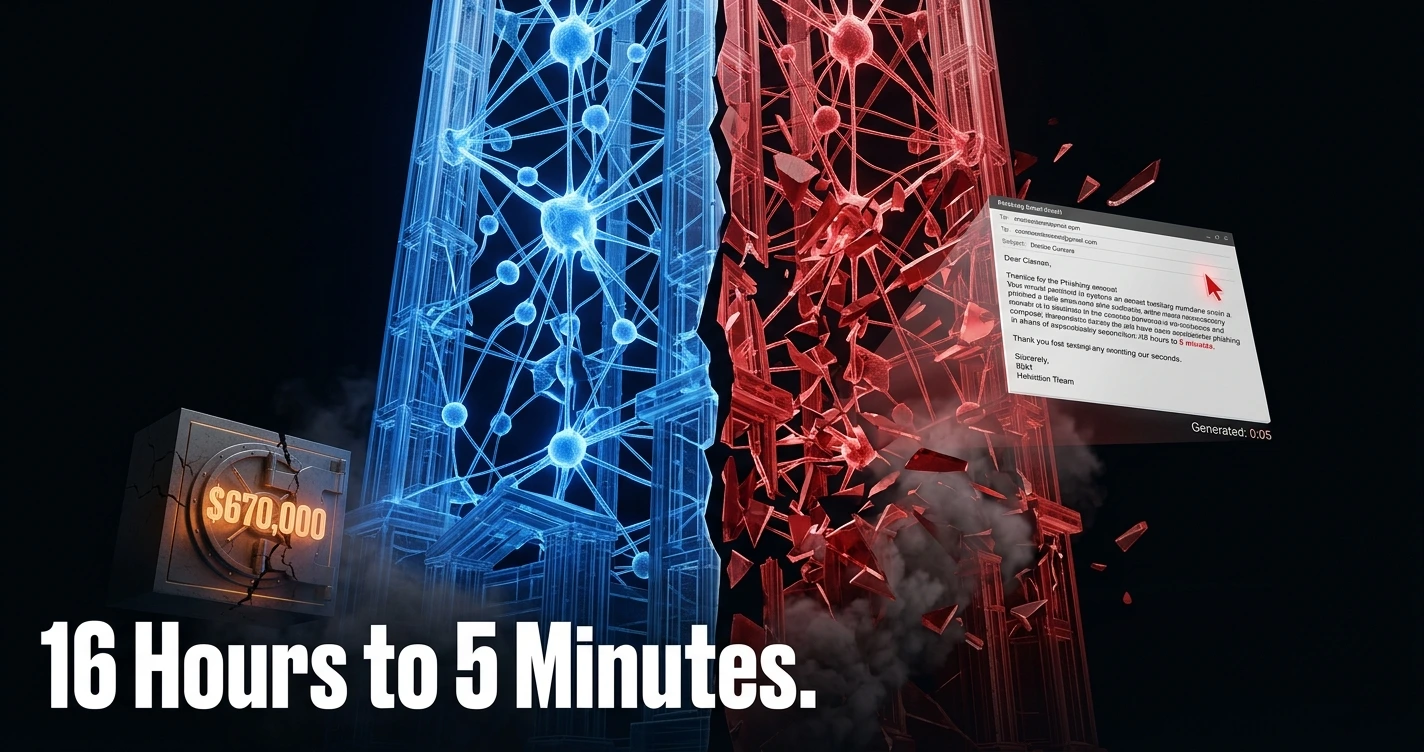
Generative AI has fractured cybersecurity into two simultaneous realities. It is the most powerful defensive tool deployed at enterprise scale, and the cheapest offensive weapon ever handed to criminals. Here is the honest picture, with numbers.
By NeuralWired Research Desk • Published: May 31, 2026 • Last Updated: May 31, 2026 • 14 min read