Author: Team_Neuralwired

  • Smart Contract Audit Checklist: Stop Costly Exploits

    Smart Contract Audit Checklist: Stop Costly Exploits

    Smart Contract Audit Checklist: Stop Enterprise Exploits Before They Cost Millions
    Enterprise Blockchain Security

    Bad Code Cost This Enterprise $48M. The Smart Contract Audit Checklist That Would Have Stopped It

    By NeuralWired Research Desk June 9, 2026 14 min read
    Five DeFi protocols. Forty-eight million dollars. One root cause: admin functions that anyone could call. Between January and June 2025, a cluster of access-control failures quietly drained more capital than most enterprise IT budgets will ever see. Not from zero-day exploits, not from state-sponsored hackers with novel attack chains. From missing role checks on privileged smart contract functions.

    The smart contract audit checklist that would have caught every one of those failures fits on two printed pages. The tragedy is that most of those teams either skipped it, rushed it, or confused a clean audit badge with actual security.

    This guide is for the CTO who just got a board mandate to deploy on a public chain. For the VP of Engineering who signed off on a six-figure audit and still isn’t sure what it covered. And for the Solidity developer who wants to know, specifically, which of their contract’s functions is the next attack target. You’ll find a complete, production-grade smart contract security audit checklist below, anchored in verified incident data, alongside the honest limits of what any checklist can actually guarantee.


    The $4 Billion Crisis No Audit Badge Can Paper Over

    The numbers from 2025 are not ambiguous. Hacken’s 2025 Annual Security Report documented $4.0 billion in total blockchain losses across the year. Of that figure, $512 million traced directly to smart contract code vulnerabilities. Another $2.12 billion came from access-control failures: broken admin permissions, missing role checks, flawed ownership transfer logic. That is 53 cents of every dollar lost in 2025 Web3 hacks coming from one audit category.

    $4.0B Total blockchain losses in 2025 (Hacken)
    53% Caused by access-control failures alone
    $482M Lost in Q1 2026 across 44 incidents
    70% Of 2025 exploits were checklist-catchable
    The pace has not slowed. Hacken’s Q1 2026 Security and Compliance Report counted 44 incidents totaling $482 million in losses in the first three months of 2026 alone. With JPMorgan, BlackRock, and Visa now deploying on public blockchains (see NeuralWired’s enterprise blockchain ROI analysis), smart contract security has moved from a DeFi-native obsession to a Fortune 500 board-level risk item.

    The audit market has followed the money. The smart contract audit industry reached $890 million in 2024 and is projected to hit $6.1 billion by 2033 at a 22.8% compound annual growth rate, according to Dataintelo’s September 2025 market research. Yet losses are growing faster in absolute terms: $2.9 billion was lost in DeFi protocol hacks in 2025, a 40% increase over 2024. More audits are being purchased. More capital is still being stolen. The gap between the audit industry’s growth and its protective effectiveness is the story underneath every one of these headlines.

    The explanation is not that audits are worthless. It is that they are being purchased and marketed as complete solutions when they are one component in a security stack. The checklist is not the whole game. But the data is clear: roughly 70% of 2025 exploits involved vulnerabilities that a proper audit checklist would have caught before deployment. Skipping the checklist is not a calculated risk. It is an unforced error.


    Anatomy of an $48M Admin-Role Failure

    To understand what the checklist is protecting against, it helps to sit with a specific failure. The $48 million admin-role leakage cluster across five major DeFi projects in the first half of 2025 shares a structural fingerprint. A privileged function, typically something like setOwner(), updateFees(), or a minting function, was callable by any address. Not because the developers were careless in any general sense. Because no one had worked through a formal access-control verification step before deployment.

    The GMX Protocol exploit in 2025 adds a second dimension. GMX lost $42 million not from a flaw in the core trading logic but from a failure at the boundary between its oracle system and its margin engine. Two components that each passed their own review. Together, they opened a gap that cost $42 million. This is the “system boundary failure” pattern: a single-component audit cannot catch it because the flaw only exists in the interaction between components.

    Balancer V2’s November 2025 loss of approximately $121 million came from a different angle entirely: biased rounding in rate-augmented scaling factors, combined with access-control gaps that Olympix’s automated analysis identified after the fact. The rounding error is the kind of precision math vulnerability that experienced Solidity developers will recognize immediately when it is pointed out. The checklist item “rounding direction explicitly specified” takes thirty seconds to verify. The failure to verify it cost nine figures.

    “Smart contract audits aren’t security; they’re a snapshot in time. The DeFi industry has built an entire security paradigm around third-party audits, treating them as definitive validation of protocol safety. This approach fundamentally misunderstands how modern exploits work and creates a false sense of security that has cost the industry hundreds of millions of dollars.” Olympix Security Research Team, Why Smart Contract Audits Fail (2025)
    The Cetus Protocol hack in May 2025 pushed these patterns to their logical extreme. An integer overflow in a liquidity math library, an open-source dependency the protocol imported and trusted, triggered the largest pure smart-contract exploit of 2025 at $220 to $223 million. The vulnerability was not in Cetus’s own code. It was in a library that no one had flagged for independent review. The checklist item: “external dependencies audited or from trusted sources.” Not checked. Not caught.

    These are not exotic failures. They are the same categories, recurring at scale, because the industry keeps treating the checklist as optional work rather than the minimum viable security step before deploying capital-holding code.


    The Enterprise Smart Contract Audit Checklist (35 Items)

    What follows is a production-grade pre-audit checklist structured across seven categories, drawing on OpenZeppelin’s Audit Readiness Guide, Quantstamp’s audit readiness framework, and the OWASP Smart Contract Top 10 (2025 edition). Use it before you engage a paid auditor. An auditor who receives a codebase that has passed this checklist produces significantly more valuable output than one who spends half their time flagging basics.

    Cost Perspective Enterprise multi-chain smart contract audits cost $150,000 and above in 2025, based on Sherlock Audit’s 2026 pricing reference. A $150,000 audit is the cost-benefit argument that writes itself against a $48 million exploit. The checklist below costs nothing but time.

    Category 1: Access Control and Permissions

    This is the single most important category. Access-control failures caused 53% of all Web3 losses in 2025 ($2.12 billion). Treat every item here as non-negotiable.

    • All privileged functions (mint, pause, upgrade, initialize) are protected by role-based access control
    • OpenZeppelin AccessControl module is implemented correctly (fewer than 50% of developers implement it fully, per coinlaw.io data)
    • Owner and admin transfer functions have two-step confirmation before the transfer takes effect
    • Time locks of a minimum 48 hours are applied to all critical admin functions
    • Multi-signature (minimum 2-of-N) is required for any critical operation
    • initialize() functions are protected against re-initialization by an unauthorized address
    • Emergency pause functionality is itself access-controlled

    Category 2: Reentrancy Protection

    Reentrancy attacks caused $35.7 million in 2024 losses per OWASP data. The Penpie Protocol lost $27 million to a reentrancy attack in 2024 in a pattern that the items below would have directly prevented.

    • Checks-Effects-Interactions pattern is enforced throughout all external-call functions
    • ReentrancyGuard is applied to every function that makes an external call
    • No state changes occur after external calls in any function
    • Internal balance tracking is updated before any transfer executes

    Category 3: Arithmetic and Math Safety

    Balancer V2’s $121 million loss in November 2025 came from a rounding error. Cetus Protocol’s $223 million loss came from an integer overflow in a library. Math safety is not an edge case.

    • Solidity 0.8+ is used (built-in overflow protection), or SafeMath library is imported for any older version
    • All unchecked blocks are documented with explicit rationale and independently verified as safe
    • Rounding direction (round down vs. round up) is explicitly specified for every financial calculation
    • Economic invariants are defined and tested (for example: total supply must always equal sum of all balances)
    • Maximum value edge cases (max uint256 and zero-value inputs) are tested for every critical function

    Category 4: Oracle and External Data

    Oracle manipulation attacks surged 31% year-over-year in 2025. The GMX exploit traces directly to oracle-boundary failures. If your contract reads any external price feed, this category is critical path.

    • No single oracle dependency exists; a secondary verification source is required
    • Time-Weighted Average Price (TWAP) is used for price-sensitive operations, never spot price alone
    • Freshness checks on oracle data are implemented to protect against stale prices
    • Flash loan protection is in place on all price-sensitive operations
    • Oracle failure fallback behavior is defined and tested

    Category 5: Upgrade and Proxy Logic

    Yearn Finance lost $9.3 million in December 2025 from legacy contracts left on-chain after protocol upgrades. Upgrade management is now a standalone audit category, not a footnote.

    • Proxy pattern (if used) is fully access-controlled and upgrade authorization is explicit
    • Storage slot conflicts are checked and cleared in the upgrade path
    • Old and legacy contracts are either formally deprecated or specifically secured before any upgrade
    • Upgrade governance is documented: who can trigger it, what approvals are required, what the delay is
    • Emergency stop and circuit breaker logic is tested end-to-end, not just unit-tested in isolation

    Category 6: Code Quality and Test Coverage

    Static analysis tools detect roughly 92% of known vulnerability patterns in test environments. They miss edge-case logic issues. Human review is the mandatory second pass.

    • Test coverage exceeds 90% on all critical execution paths
    • Fuzz testing (Echidna or Foundry) has been run against all mathematical functions
    • Static analysis with Slither and MythX has been completed and all findings reviewed
    • No unresolved High or Critical findings exist from any automated tool before the audit begins
    • External dependencies, including libraries and imported contracts, have been audited or sourced from trusted providers such as OpenZeppelin
    • tx.origin is not used for authorization in any function

    Category 7: Documentation and Audit Scoping

    Auditors produce better results with better inputs. This category is not bureaucratic overhead. It is the difference between an auditor who finds the architecture flaw and one who documents the surface-level issues.

    • A complete architecture diagram has been provided to the audit team
    • All external dependencies are listed with explicit security notes on each
    • Trust assumptions are explicitly stated: who is trusted, who is untrusted, and under what conditions
    • A threat model document exists and has been shared with auditors before the engagement begins
    • Code is frozen before the audit commences; no changes are permitted during the audit period

    Audit Coverage Matrix: Vulnerability to Checklist to Exploit

    This original framework maps the dominant vulnerability classes from OWASP’s 2025 data to the specific checklist category that covers them, with a named real-world exploit as the reference case. Use it to prioritize which checklist category your team spends the most time on based on your contract’s architecture.

    Vulnerability Class 2024/2025 Loss Checklist Category Named Exploit
    Access Control Failure $953.2M (2024); $2.12B (2025) Category 1: Access Control Admin role cluster, H1 2025 ($48M)
    Logic Errors $63.8M (2024) Category 7: Documentation / Threat Model Euler Finance, 2023 ($197M)
    Reentrancy Attacks $35.7M (2024) Category 2: Reentrancy Protection Penpie, 2024 ($27M)
    Integer Overflow / Underflow Library-sourced Category 3: Arithmetic Safety Cetus Protocol, May 2025 ($223M)
    Oracle Manipulation $8.8M (2024); +31% YoY 2025 Category 4: Oracle Security GMX, 2025 ($42M)
    Precision / Rounding Error Included in logic errors Category 3: Arithmetic Safety Balancer V2, Nov 2025 ($121M)
    Upgrade / Legacy Contract Post-upgrade surface Category 5: Upgrade Logic Yearn Finance, Dec 2025 ($9.3M)
    Flash Loan Attacks $33.8M (2024) Category 4: Oracle Security Sonne Finance, May 2024 ($20M)
    Off-Chain / DVN Config Not covered by standard checklist Beyond on-chain scope Kelp DAO, Apr 2026 ($292M)
    The final row in that table carries a warning worth pausing on. The Kelp DAO breach in April 2026 was not a smart contract hack in any conventional sense. NeuralWired’s coverage of the $292M DVN flaw documented what Chainalysis described as an attack on the off-chain verification layer on which cross-chain protocols depend. No reentrancy bug. No missing access check. No oracle manipulation. The attack bypassed on-chain code entirely.

    “This was not a smart contract hack. There was no reentrancy bug, no missing access check, no price oracle sleight-of-hand. The KelpDAO incident is something arguably more dangerous: an attack on the off-chain verification layer on which many cross-chain protocols depend.” Chainalysis Investigation Team, April 2026
    Any enterprise deploying a multi-chain architecture must understand that the 35-item checklist above covers on-chain code. Bridge and DVN configurations, RPC endpoint security, and oracle node infrastructure require a separate review scope entirely.


    Tools, Costs, and What Automation Still Gets Wrong

    The Audit Cost Reality in 2026

    Per Sherlock Audit’s 2026 pricing reference, a simple ERC-20 token audit runs $5,000 to $20,000. Mid-complexity DeFi protocols sit at $40,000 to $100,000. Enterprise multi-chain systems with governance modules, custom oracles, and cross-chain bridges cost $150,000 and above. Re-audit rounds after developers remediate findings add $5,000 to $20,000 per pass.

    The math is not complicated. A $150,000 audit is 0.3% of a $48 million exploit. For enterprise systems managing nine-figure TVL, it is not a cost center. It is risk management with a clearer ROI than most insurance products your CFO signs off on.

    Automated Tools: What They Catch and What They Miss

    Static analysis tools including Slither and MythX detect roughly 92% of known vulnerability patterns in test environments, according to coinlaw.io’s October 2025 security statistics report. Echidna and Foundry handle fuzz testing. Manticore covers symbolic execution. Certora Prover handles formal verification for the highest-stakes contracts.

    The gap in that 92% figure is where most of the expensive exploits live. Logic errors, economic invariant violations, and system boundary failures are the categories that pattern-matching cannot reliably catch. Balancer V2’s rounding error did not match a known exploit pattern. Cetus Protocol’s integer overflow lived in a library, not in code the static analyzer was specifically configured to check.

    “Relying only on tools gives a false sense of security and leaves complex risks hidden. Our approach always combines automated scanning as a first pass with expert manual review as the main work.” Nadcab Audit Team (8+ years, 500+ audits across major chains), nadcab.com
    AI-assisted audit tools are entering the market with strong pitch decks and legitimate capability improvements. The honest data point from April 2026 research (nadcab.com) is that AI audit tools currently run false positive rates of 20 to 40 percent without expert filtering. Every false positive is time a senior auditor spends ruling out a non-issue instead of finding a real one. Automation accelerates the process. It does not replace the judgment.

    On AI-Generated Solidity Code With developers using large language models to generate Solidity at scale in 2026, a new risk surface has opened that the industry has not fully priced in. LLM-generated contract code can pass syntax checks and even basic static analysis while containing structural logic errors that no pattern-based tool will flag. If your team is deploying LLM-generated contracts, treat the entire codebase as requiring Category 6 and Category 7 checklist attention, even if the individual functions look clean in isolation.

    Why Audits Fail (and the Honest Limitations of Any Checklist)

    Euler Finance lost $197 million in March 2023. Wormhole lost $320 million. Nomad Bridge lost $190 million. All three had comprehensive audits from recognized firms. This is not a footnote. It is the central challenge of smart contract security, and every enterprise deploying on-chain needs to understand it before purchasing an audit as if it were a compliance certificate.

    The Olympix analysis from 2025 identifies the structural failure clearly. Audits are point-in-time checks. A protocol that is clean on audit day can become vulnerable after a dependency upgrade, an upgrade to the protocol itself, a shift in market conditions that creates a new economic attack surface, or simply the passage of time as new exploit patterns are documented and attackers work backward through recently audited codebases. The clean audit badge expires the moment the codebase changes.

    Academic research published in 2025 (arXiv:2505.15242, the “Adaptive Plan-Execute Framework for Smart Contract Security Auditing” paper) is direct about the limits of current methodology: manual code review is “inefficient and prone to overlook subtle security vulnerabilities,” while automated tools “primarily rely on pattern matching, which cannot accurately detect complex security issues.” The paper notes that types of vulnerabilities detectable by tools are “usually relatively limited,” requiring multiple tools each covering different aspects. Until the end of 2024, total blockchain hack losses exceeded $35.32 billion from more than 1,800 incidents. The checklist is necessary but not sufficient.

    Our read: the audit industry is being asked to perform an impossible certification function for a technology that moves faster than any certification process can track. The honest positioning of a smart contract audit is that it significantly reduces a specific category of known risk at a specific moment in time. Combined with post-deployment monitoring, an active bug bounty program, and mandatory re-audits after upgrades, it becomes part of a defensible security posture. Sold as a standalone guarantee, it is marketing.


    The Post-Deployment Checklist Most Teams Skip

    The Yearn Finance exploits in December 2025 are the clearest illustration of why deployment is not the finish line. The first exploit on December 1st cost $9 million from an economic invariant violation in legacy infrastructure. The second exploit on December 17th cost $300,000 from a legacy contract left live on-chain after an upgrade. Both were post-deployment failures. Both were preventable by checklist.

    Post-Deployment Security Checklist (5 Items)

    • Real-time on-chain monitoring is active via Forta, OpenZeppelin Defender, or an equivalent system before the contract goes live with user funds
    • A bug bounty program is live on Immunefi or an equivalent platform, with meaningful reward tiers that attract serious researchers (median payouts on Immunefi approach $2,000; average rewards reach approximately $52,800)
    • An incident response plan exists in writing, has been tested with a tabletop exercise, and is not stored exclusively in the heads of two engineers
    • Re-audit is scheduled and budgeted before any significant upgrade is deployed; no upgrade ships without the re-audit cycle completing
    • Legacy contracts are formally deprecated and secured immediately after any protocol upgrade, with on-chain evidence of decommissioning
    Real-time monitoring prevented over $100 million in potential losses in 2023 alone, per coinlaw.io data, and its importance has only grown since. The monitoring layer is the difference between an attack that drains the contract and one that gets stopped at the circuit breaker after the first anomalous transaction.

    With JPMorgan’s move to public Ethereum and the broader enterprise shift from private chain deployments to public infrastructure, the stakes of post-deployment gaps have increased. Enterprise contracts managing institutional capital on a public chain face a different threat model than a DeFi protocol with a $2 million TVL. The monitoring and bug bounty budget needs to scale accordingly.


    FAQ: Smart Contract Security Audit

    What is a smart contract audit checklist?
    A smart contract audit checklist is a structured set of security checks applied before deploying blockchain code. It covers access control verification, reentrancy protection, input validation, oracle security, integer overflow prevention, upgrade logic, and gas optimization. Following a formal checklist before deployment prevents the majority of exploits: roughly 70% of 2025 smart contract losses involved checklist-catchable vulnerabilities, according to Nadcab’s February 2026 audit report.

    How much does a smart contract audit cost?
    Smart contract audit costs range from $5,000 for a simple ERC-20 token to over $150,000 for enterprise multi-chain systems. Mid-complexity DeFi protocols typically cost $40,000 to $100,000. Re-audit rounds after remediation add $5,000 to $20,000 per pass. Sherlock Audit’s 2026 pricing reference and coinlaw.io’s October 2025 statistics report are the primary data sources for current market rates.

    What are the most common smart contract vulnerabilities?
    The most common and costly smart contract vulnerabilities in 2025 were access control failures (53% of all Web3 losses), reentrancy attacks, integer overflow and underflow, oracle manipulation (up 31% year-over-year), flash loan attacks, and business logic errors. Access control failures alone caused $2.12 billion in 2025 losses, making them the top audit priority by a significant margin, per Hacken’s 2025 Annual Security Report.

    Can audited smart contracts still get hacked?
    Yes, and it happens regularly. Euler Finance lost $197 million, Wormhole $320 million, and Nomad $190 million, all after comprehensive audits. Audits are point-in-time checks, not continuous protection. Post-deployment monitoring, bug bounty programs, and mandatory re-audits after upgrades are required because protocols change and new attack vectors emerge after the original audit date, as Olympix documented in 2025.

    What should a smart contract security audit include?
    A thorough smart contract security audit should include manual code review by senior auditors, automated static analysis using Slither and MythX, access control verification, reentrancy checks, oracle dependency analysis, integer arithmetic validation, upgrade and proxy logic review, test coverage assessment, economic invariant analysis, and a final re-verification after developers fix reported issues. The OpenZeppelin Audit Readiness Guide and Quantstamp’s framework are the standard references.

    How long does a smart contract audit take?
    Smart contract audits typically take one to six weeks depending on complexity. A simple token contract takes a few days. A large DeFi protocol with multiple interacting contracts, governance modules, and custom logic takes four to six weeks. Rushing an audit creates blind spots that cost more than the time saved. Always budget for a remediation review cycle: developers fix findings, then auditors verify the fixes are correct.

    What is an access control vulnerability in smart contracts?
    An access control vulnerability in smart contracts occurs when privileged functions such as minting, pausing, or upgrading lack proper restrictions on who can call them. In one documented incident, a protocol lost $120 million because an initialize() function was unprotected, allowing an attacker to appoint themselves as the owner. Access control failures were the single largest cause of smart contract losses in both 2024 and 2025, per OWASP and Hacken data.

    What tools are used for smart contract auditing?
    Common smart contract audit tools include Slither and MythX for automated static analysis (detecting approximately 92% of known vulnerability patterns), Echidna for fuzz testing, Foundry for invariant testing, Manticore for symbolic execution, and Certora Prover for formal verification. No single tool catches every class of vulnerability. Professional audits combine multiple automated tools with senior manual code review, as documented in OpenZeppelin’s audit readiness documentation.


    What Comes Next

    The smart contract audit checklist is not a guarantee. Every sophisticated practitioner in this space will tell you the same thing. But “not a guarantee” and “not worth doing” are not the same statement, and the data from 2025 and early 2026 makes the ROI case without any editorial help: 70% of last year’s exploits were preventable by a structured pre-deployment review that costs nothing but time.

    The industry has three intersecting problems it will be navigating through the rest of 2026 and into 2027. First, the off-chain attack surface is becoming the primary frontier. Kelp DAO’s $292 million DVN exploit in April 2026 was not catchable by any on-chain audit checklist. Enterprise teams deploying cross-chain need a second framework covering bridge configuration, DVN security, oracle node infrastructure, and RPC endpoint hardening. No standardized equivalent of the OWASP Smart Contract Top 10 exists for this layer yet. It will.

    Second, the volume of LLM-generated Solidity code being deployed in 2026 is outpacing audit capacity at a rate the industry has not yet quantified. The audit market’s 22.8% CAGR sounds like growth. Against the volume of unaudited AI-generated contracts going live every week, it may be running to stand still.

    Third, U.S. legislative pressure from the GENIUS Act and companion digital asset legislation is creating formal compliance expectations for smart contract security in financial applications. For enterprise teams at JPMorgan, BlackRock, and their institutional peers, the audit checklist is moving from best practice to regulatory requirement.

    Three things to watch and act on now: start your pre-audit readiness review using the checklist above before engaging any paid auditor; budget for post-deployment monitoring alongside the audit itself, not as a future-phase consideration; and specifically review Category 1 of the checklist with your team today, because 53% of last year’s losses came from exactly the items it covers.

    Stay Ahead of the Next Exploit

    The Neural Loop covers enterprise blockchain security, AI regulation, and tech infrastructure every week. No noise, no catch-up reading required.

    Subscribe to The Neural Loop
  • JPMorgan Ditched Private Blockchain, Should You? (2026)

    JPMorgan Ditched Private Blockchain, Should You? (2026)

    Private vs. Public Blockchain: Enterprise Switch (2026)
    Enterprise Blockchain · Analysis

    Private Blockchain Promised CTOs Everything. Here’s Why 67% Switched to Public, and What the Other 33% Know That You Don’t

  • Your ML Model Aced Every Test. Then Production Broke It in 48 Hours. The MLOps Pipeline Gaps That Are Quietly Killing Enterprise AI in 2026

    Your ML Model Aced Every Test. Then Production Broke It in 48 Hours. The MLOps Pipeline Gaps That Are Quietly Killing Enterprise AI in 2026

    ML Models Failed in Production: MLOps Pipeline Gaps Killing Enterprise AI in 2026
    NeuralWired.com LEAD RESEARCHER BRIEF  |  June 8, 2026
    MLOps / Enterprise AI

    Your ML Model Aced Every Test. Production Broke It in 48 Hours.

    The MLOps pipeline gaps that are quietly destroying enterprise AI in 2026, and why 80% of companies are spending millions to solve the wrong problem.

    By NeuralWired Research June 8, 2026 Research Depth: Exhaustive 18 min read
    80.3% Enterprise AI projects fail to deliver promised value RAND, 65-project meta-analysis, 2025
    95% GenAI pilots fail to reach production with measurable P&L impact MIT NANDA, 2025
    $4.5B Global MLOps market value in 2026 growing at ~40% CAGR Business Research Insights

    The 48-Hour Problem Nobody Warns You About

    Here is a situation that thousands of ML engineers have lived through. Your team spends four months building a fraud detection model. The offline metrics are exceptional. Precision, recall, F1 scores that make executives nod in meetings. The A/B test clears every threshold. Stakeholders approve deployment. You push to production on a Friday afternoon with a quiet sense of satisfaction.

    By Sunday, the model is silently approving transactions it should be flagging. Not crashing. Not throwing 500 errors. Returning clean HTTP 200 responses, processing at normal latency, looking perfectly healthy to every infrastructure monitor you have. The fraud is real. The model is broken. And nothing in your observability stack told you.

    This is not an edge case. It is the defining failure mode of enterprise ML in 2026. Google Cloud’s official MLOps documentation states plainly that “models often break when deployed in the real world.” The company building some of the most sophisticated ML infrastructure on earth felt compelled to put that sentence in their architecture guide. That tells you everything.

    The production gap is where most enterprise AI investment evaporates. Not in research. Not in training. In the chasm between a model that aces tests and one that actually delivers business value beyond a few days in production.

    Critical Context
    The IEEE/ACM CAIN 2026 conference (Rio de Janeiro, April 2026) published a systematic review of MLOps tools and found that the gap between tool specifications and real-world practice remains significant. More tools have not solved the problem. In many cases, they have deepened it.


    The Three Failure Mechanisms Killing Production ML

    If you strip away all the vendor language and conference keynote abstractions, there are three specific mechanisms responsible for the overwhelming majority of ML production failures. Understanding them precisely is the prerequisite for fixing them.

    Mechanism 1: Training-Serving Skew

    Training-serving skew is what happens when the data your model encounters in production is computed differently from the data it was trained on. The model learns one representation of reality. Production gives it another. The gap can be invisible for hours or days, then catastrophic.

    Common causes are deceptively mundane: a feature preprocessing pipeline that differs between dev and prod environments, a third-party API that changed its response schema, a library version mismatch between training and inference servers, or a timestamp feature computed in UTC during training but in local time during serving. None of these trigger alerts. All of them cause immediate post-deployment degradation, often within 24 to 48 hours of launch.

    Airbnb’s experience building its AI search ranking system is the most instructive documented case. When the company scaled from pilot to production, datasets that looked clean in controlled experiments turned out to be sourced from shadow spreadsheets and CRM extractions with consistency problems that only appeared at scale. The result: roughly 40% of the project timeline had to be redirected into data harmonization, delaying the rollout by nearly a year. The model was not the problem. The assumption that training data matched production data was the problem.

    Mechanism 2: Data Drift

    Where training-serving skew is an immediate post-deployment failure, data drift is the slow bleed. Over weeks or months, the statistical distribution of real-world inputs shifts away from the training distribution. The model’s learned patterns quietly become less accurate. No alarm fires. Prediction quality degrades. The business problem the model was solving gets worse, invisibly.

    A fraud detection model trained on 2024 transaction patterns encounters a 2025 world where spending behavior, device fingerprints, and fraud tactics have all evolved. A recommendation engine trained on pre-2025 user preferences serves a post-GPT-era audience whose content consumption patterns have fundamentally changed. The model returns valid outputs with high confidence. The outputs are increasingly wrong.

    “Most ML failures in production do not look like dramatic outages. They look like quiet degradation: a fraud model that approves slightly more bad transactions, a classifier that routes slightly more tickets to the wrong queue, a ranking model that slowly erodes conversion. Drift is not rare. If your product changes, users change, competitors change, seasonality exists, or data pipelines evolve, drift is guaranteed.”

    AllDaysTech Technical Review, Model Drift Detection, Monitoring and Response Runbook, January 2, 2026
    Arize AI’s benchmarks from October 2025 put a number on this: proactive retraining policies outperform reactive updates by 4.2x in maintaining prediction stability. Teams that wait for user complaints to trigger retraining are operating on borrowed time.

    Mechanism 3: Pipeline Jungle and Glue-Code Entropy

    This is the failure mode that David Sculley and colleagues at Google named definitively in their landmark 2015 NeurIPS paper, “Hidden Technical Debt in Machine Learning Systems.” The paper introduced what they called the CACE Principle: Changing Anything Changes Everything.

    The insight is that the actual ML model code is a tiny component inside a massive surrounding system of data pipelines, feature computation logic, preprocessing code, configuration files, monitoring hooks, and orchestration infrastructure. Every one of those components is maintained by different people at different cadences with different conventions. When any piece shifts, the whole system can silently degrade.

    In practice, this looks like a data team updating an upstream feature pipeline without notifying the ML team. Or an infrastructure change altering how a feature ratio is computed at serving time. Or a retrained model being pushed to production without verifying that every connected system is still behaving identically. The CACE Principle means that even a change that appears isolated can cascade through a production ML system in ways that are not immediately visible.

    The CACE Principle in Action
    An e-commerce team retrains a recommendation model on Black Friday data to improve seasonal performance. The retrained model goes to production. A feature interaction changes, causing a cascade that degrades the search ranking model, which was not scheduled for retraining. Both models look healthy in infrastructure monitoring. Conversion drops. The causal connection takes days to surface. This scenario plays out across enterprises every week.


    What the Data Actually Shows

    The failure rate statistics circulating in 2026 deserve careful handling. Some are rock solid. Others are recycled industry folklore. Here is what the actual evidence supports.

    Statistic Figure Source and Methodology Reliability
    Enterprise AI projects failing to deliver promised business value 80.3% RAND Corporation, meta-analysis of 65 documented enterprise AI projects, late 2025. Confirmed by Gartner, April 7, 2026. High — rigorous methodology, cross-validated
    GenAI pilots failing to reach production with measurable P&L impact 95% MIT NANDA Initiative, 150 exec interviews, 350 employee surveys, 300 public deployments, August 2025. High — applies specifically to GenAI pilots, not all ML
    I&O managers who have experienced at least one complete AI project failure 57% Gartner, I&O AI projects report, April 7, 2026. High — Gartner primary research
    AI models moving from pilot to production 54% Gartner via Arcade.dev, November 2025. Most defensible current pilot-to-production estimate. Medium-High — most current available
    ML models never reaching production 87% VentureBeat, 2019. Widely cited but dated. Low — 2019 data used in 2026 context. Always caveat this one.
    Production models failing due to model drift 91% Arize AI benchmarks via Articledge.com, February 2026. Limited methodology disclosure. Low-Medium — treat as directional, verify independently
    GE Predix: pilots failed to scale Up to 95% Metapress.com analysis, April 2026, citing internal audit data. $4B investment. Medium — reported figure, not independently audited
    Our read: the RAND and Gartner combination is your most defensible citation pair for 2026. The MIT 95% figure is legitimate but scope-specific — it describes GenAI pilots, not classical ML. Use it in that precise context. The VentureBeat 87% figure is 2019 data. Stop presenting it as current reality without contextualizing its age.

    What all these figures share, regardless of methodology quality, is directional convergence. The majority of enterprise ML work fails before delivering meaningful ROI. That finding holds even if you cut the estimates in half.


    GenAI Made Everything Worse

    Classical MLOps was already struggling to handle the production gap when generative AI arrived and introduced an entirely different category of failure modes.

    In a traditional ML system, you can monitor input feature distributions, track output accuracy against labeled ground truth, and detect drift using established statistical tests. GenAI systems break all of those assumptions simultaneously.

    Databricks published a detailed analysis in January 2026 identifying what they called the hidden technical debt of GenAI systems. Their finding: tool sprawl, prompt stuffing, opaque RAG pipelines, and inadequate feedback systems create failure modes that classical MLOps practices simply are not designed to handle. An enterprise that implements a mature classical MLOps stack will still experience rapid GenAI model failures because the failure categories are categorically different.

    The specific new failure modes include prompt version drift (your prompts accumulate business logic over time in ways that create silent behavioral shifts), retrieval quality degradation in RAG systems (chunks retrieved by your vector store become less relevant as your document corpus evolves), embedding drift (the semantic space your embeddings occupy shifts as the underlying model updates), and LLM vendor model updates (your foundation model provider silently updates the base model, changing behavior in ways you never consented to and may not detect).

    “The biggest hurdle for executives is mistaking minor productivity gains for true strategic business impact. Enterprises must account for productivity leakage — the share of anticipated efficiency gains from automation that never materializes as increased output.”

    Scott Eivers, CEO, Datatonic (ten-time Google Cloud Partner of the Year), January 20, 2026
    The ZenML LLMOps database, which tracks 457-plus real-world LLMOps case studies as of July 2025, concluded that the field is still in constant architectural flux. Their assessment: “we don’t seem to be nearing some kind of interim stability point.” Self-healing MLOps for GenAI systems is not a 2026 operational reality. It is a 2028 to 2030 aspiration.

    What should you actually monitor for LLM systems? The minimum viable list includes semantic logging (capturing the meaning of inputs and outputs, not just the raw text), retrieval quality metrics for any RAG component, embedding drift detection as a proxy for behavioral drift, and prompt regression testing before any prompt change reaches production. None of these are covered by standard application monitoring.


    The Uncomfortable Truth: It’s Not a Tech Problem

    Here is where the mainstream MLOps narrative runs into serious trouble. The dominant industry argument is that enterprises need better tooling, more monitoring, more sophisticated pipelines. Buy the feature store. Deploy the model registry. Add the drift detection layer.

    The RAND and Gartner data tell a different story. The 80-plus percent failure rate is driven primarily by data ownership disputes, organizational decision-making structure, and scope discipline — not technology gaps. McKinsey’s analysis found organizational resistance cited as a failure cause by 67% of enterprises, lack of clear business case by 52%, and technical complexity by only 28%.

    “I deployed 200-plus AI projects in production. 80% of AI projects fail — not because of the technology, but because of organizational chaos, unrealistic expectations, and hidden costs that nobody talks about. The true total cost of ownership is 5 to 10 times your API costs.”

    Denis ATLAN, Founder, ENDKOO, 15 years in data and automation engineering, 2025
    The tool sprawl problem compounds this. By 2026, many enterprises have accumulated dozens of incompatible MLOps point solutions acquired across multiple budget cycles, owned by different teams, integrated with duct tape and institutional memory. AddWebSolution’s March 2026 analysis documents that organizations have “reached a point of quiet desperation” from managing fragmented AI stacks. The irony: the tooling added to solve the production gap has itself become a failure mode, adding integration complexity faster than it reduces operational risk.

    “Platforms solve technical integration problems. The 80 percent failure rate, however, is not driven by technology but by data ownership, decision-making structure, and scope discipline. A platform deployed without these three anchors actually increases risk — because it raises expectations without addressing root causes.”

    Analysis of RAND and Gartner data, MyBusinessFuture.com, May 2026
    This does not mean technical practices are irrelevant. It means that deploying a sophisticated MLOps stack into an organization without data ownership clarity, without defined retraining governance, and without executive alignment on what “good model performance” actually means will not solve the problem. It will accelerate the illusion that the problem is being solved.


    What Mature MLOps Actually Looks Like

    Google Cloud’s official MLOps maturity model describes three levels. Most enterprises are operating at Level 0, which means manual processes, no automated retraining, and zero continuous monitoring of model behavior. Google’s documentation describes Level 0 as “common in many businesses.” At Level 0, the question is not whether your model will fail in production. The question is how long before you notice.

    The Minimum Viable Production ML Stack

    If you’re building this today, the non-negotiable components in order of priority are: a feature store that guarantees identical feature computation between training and serving time, a model registry with version control and rollback capability, input data distribution monitoring using PSI (Population Stability Index), KS tests, or Wasserstein distance, automated retraining triggers based on drift thresholds rather than calendar schedules, and a defined rollback procedure that can be executed in under ten minutes.

    That last point is a useful diagnostic. If your team cannot roll back a production model in under ten minutes, you have a critical MLOps gap regardless of how sophisticated everything else is. Fast rollback is not a luxury feature. It is the safety net that makes everything else possible.

    Regulatory Reality Check
    The EU AI Act is now in active enforcement in 2026. High-risk AI systems require auditability, explainability, and bias documentation. Non-compliance carries fines up to 6% of global annual revenue. A financial services firm discovered 247 production models during a compliance audit with only 89 documented. Under the EU AI Act, each undocumented model in a high-risk application represents direct regulatory exposure. This is not a future concern. It is a current operational risk.

    On the Build vs. Buy Decision in 2026

    The choice between fragmented best-of-breed tools and integrated platforms has shifted meaningfully this year. Best-of-breed gives you a higher performance ceiling for each individual capability at the cost of significant integration overhead. Integrated platforms give you faster time to a defensible baseline at the cost of some ceiling on individual component performance.

    For most mid-to-large enterprises in 2026, the consolidation argument is winning. The integration overhead of managing ten specialized tools has become a talent and operational liability that outweighs the marginal capability gains. The consolidation wave is real. If you are building a new MLOps stack today, the burden of proof now sits on fragmented architectures, not unified ones.

    “The model that crushes your offline evaluation will often disappoint you in production. Most teams are not prepared for this. The gap isn’t a model problem — it’s a systems problem: data pipelines, feature stores, monitoring, and retraining loops. Without these, even the best model decays.”

    Chip Huyen, Author of “Designing Machine Learning Systems” (O’Reilly, 2022) and “AI Engineering” (O’Reilly, 2025), former NVIDIA and Snorkel AI

    The Timeline That Got Us Here

    2015
    The Paper That Named the Problem Sculley et al. publish “Hidden Technical Debt in Machine Learning Systems” at NeurIPS. Introduces the CACE Principle. MLOps emerges conceptually from this framework. Still the most-cited reference in 2026 MLOps literature.
    2017-19
    Scale Reveals the Gap Enterprise ML deployments scale rapidly. VentureBeat documents 87% failure rate. MLOps crystallizes as a distinct discipline. Tool ecosystem begins to fragment.
    2020-22
    Tool Sprawl Begins Explosion of specialized MLOps tooling: MLflow, Kubeflow, Feast, DVC, Weights and Biases, Arize AI, Evidently AI. Each solves a real problem. Together, they create the integration debt problem.
    2022-23
    GenAI Enters the Stack ChatGPT triggers mass enterprise GenAI pilots. Classical MLOps stacks are structurally inadequate for LLM failure modes. The surface area for production failure multiplies.
    2024
    Reality Check Arrives McKinsey, Gartner, and others begin documenting failure rates rigorously. Airbnb case study demonstrates data harmonization consuming 40% of AI rollout timeline. Training-serving skew and data drift identified as top production killers.
    2025
    The Evidence Converges MIT NANDA publishes 95% GenAI pilot failure finding. RAND documents 80.3% enterprise AI failure rate. Arize AI confirms proactive retraining outperforms reactive by 4.2x. MLOps engineer demand surges 35% year-on-year.
    2026
    Consolidation and Regulation EU AI Act enforcement begins. MLOps market at $2.3 to $4.5B growing at approximately 40% CAGR. Gartner confirms 57% of I&O managers have experienced full project failure (April 7). CAIN academic conference formalizes failure taxonomy. Enterprises choosing between fragmented and unified stacks at scale.

    FAQ: Production ML Failure, Explained

    Why do ML models fail in production?
    ML models fail in production primarily due to training-serving skew (features computed differently during serving than training), data drift (real-world data distribution shifting over time), and insufficient monitoring pipelines. Unlike software bugs, ML failures are often silent — the model returns valid predictions at HTTP 200 while being increasingly wrong. The majority of production failures trace to these pipeline gaps, not to model quality issues.

    What is training-serving skew in machine learning?
    Training-serving skew is the performance gap caused by differences between data used to train an ML model and data encountered in production. Common causes include different feature preprocessing pipelines, third-party API schema changes, and library version mismatches between dev and prod environments. It causes immediate post-deployment degradation — often within 24 to 48 hours of launch — and is one of the hardest failure modes to detect without dedicated monitoring.

    What percentage of ML models fail in production?
    Estimates range from 54% to 90%, depending on how failure is defined and when the research was conducted. Gartner (2025) found only 54% of AI models successfully move from pilot to production. MIT’s 2025 study found 95% of generative AI pilots fail to deliver measurable business value. RAND’s 2025 meta-analysis of 65 projects documented an 80.3% enterprise AI failure rate. The consensus: the majority of enterprise ML work fails before delivering ROI.

    What is data drift in machine learning?
    Data drift is a gradual shift in the statistical distribution of production input data away from the model’s training distribution. As user behavior, market conditions, or data sources change, the model’s learned patterns become less accurate. Unlike training-serving skew, which causes immediate post-deployment failure, data drift develops over weeks or months. Detection requires continuous statistical monitoring using tools like PSI, KS tests, or Wasserstein distance applied to input feature distributions.

    What is MLOps and why does it matter in 2026?
    MLOps is the discipline of deploying, monitoring, and maintaining ML models in production reliably. It combines DevOps practices with ML-specific requirements: data versioning, feature stores, model registries, drift monitoring, and automated retraining. Without MLOps, even accurate models degrade within days or weeks as real-world data shifts. The global MLOps market is valued at $2.3 to $4.5B in 2026 and growing at approximately 40% CAGR, driven entirely by the production failure problem.

    How do you monitor ML models in production?
    Production ML monitoring requires three layers: first, data quality monitoring covering schema drift detection and input distribution tracking using PSI or KS tests; second, model performance monitoring tracking prediction accuracy, confidence calibration, and business KPIs; and third, infrastructure monitoring covering latency, error rates, and resource usage. Standard application monitoring is insufficient — a degrading ML model looks healthy to infrastructure tools while silently failing on business metrics.

    What causes ML model degradation over time?
    ML model degradation is caused by four primary mechanisms: data drift (real-world input patterns shifting from training data), concept drift (the relationship between inputs and target variable changing, such as evolving fraud patterns), label drift (ground truth definitions shifting), and upstream pipeline changes (feature engineering code quietly diverging between training and serving environments). Proactive monitoring and scheduled retraining reduce degradation risk by 4.2x over reactive approaches, according to Arize AI’s 2025 benchmarks.


    Where This Goes in the Next 18 Months

    You now understand something that most discussions of enterprise AI failure deliberately obscure: the problem is not model quality. It was never model quality. The models are often excellent. What fails is the system surrounding them — the pipelines, the monitoring, the feature stores, the organizational clarity about who owns production model behavior and what triggers remediation.

    The 80-plus percent failure rate in enterprise ML is not a technology problem waiting for better technology. It is a systems problem that requires systems thinking: rigorous data ownership, clearly defined model governance, and the organizational discipline to treat production model health as a first-class operational concern alongside infrastructure uptime.

    Here is what to watch across the next 12 to 18 months.

    Three Things to Watch (and Act On)

    1. EU AI Act enforcement cases. The first significant fines for inadequate model monitoring will almost certainly surface in financial services or healthcare by late 2026. Those cases will reframe “technical debt” as legal liability in a way that no internal engineering argument ever has. Watch for the first high-profile enforcement action.
    2. The GenAI-specific monitoring tooling race. Classical MLOps tools are not built for LLM failure modes. The next 12 months will see significant tooling innovation specifically targeting semantic monitoring, retrieval quality tracking, and prompt regression testing. Databricks, Arize AI, and new entrants are all moving in this direction. The category does not yet have a clear winner.
    3. Platform consolidation accelerating. Gartner is already tracking enterprises abandoning fragmented best-of-breed stacks for integrated MLOps platforms. By the end of 2027, the market will likely have consolidated around four to five dominant integrated platforms with the specialist tools surviving only in narrow, high-performance niches. If you are making a platform decision now, you are making it near the peak of fragmentation. Integrated wins the operational resilience argument at this maturity level.
    If you’re building ML systems today, the most valuable thing you can do in the next two weeks is run a training-serving skew audit on every model currently in production. Check whether your features are computed identically between training and serving environments. Verify your rollback time. Establish input distribution baselines if you have not already. None of that requires buying new tooling. All of it reduces the probability that your next well-trained model silently fails within 48 hours of going live.

    Stay Ahead of the MLOps Curve

    The Neural Loop covers enterprise AI, MLOps, and the production gap every week. No hype. No vendor content. Just the research that actually matters to practitioners.

    Subscribe to The Neural Loop

    Related coverage on NeuralWired: ChatGPT vs Claude vs Gemini 2026How to Become a Prompt Engineer in 2026Best Programming Languages 2026

  • Enterprise Blockchain ROI in 2026: Where It Delivers, Where It Wastes Millions, and the 6 Use Cases That Survived

    Enterprise Blockchain ROI in 2026: Where It Delivers, Where It Wastes Millions, and the 6 Use Cases That Survived

    Last Updated: June 8, 2026 Enterprise Blockchain  |  ROI Analysis  |  2026 Deep Dive
    41% of enterprise blockchain implementations achieve positive ROI. That means 59% do not. This is not a technology failure. It is a selection failure. Here is the honest breakdown of what actually works, what spectacularly failed, and what every CTO needs to know before signing a blockchain budget in the next 90 days.

    TL;DR / Executive Summary
    41% achieve ROI. 6 use cases dominate. 3 failure patterns explain the rest. The enterprise blockchain market hit $12.77 billion in 2025 and is heading toward $29.29 billion by 2033. But the gains are highly concentrated. Supply chain traceability, cross-border payments, and real-world asset tokenization account for the overwhelming majority of successful deployments. Everything else is mostly noise and write-offs. The companies winning with blockchain in 2026 share exactly one characteristic: they started with a business problem that required multiple distrusting organizations to share data, and then asked whether blockchain was the right tool.

    41% of enterprise implementations achieve positive ROI Source: CryptoDaily, April 2026
    $12.77B enterprise blockchain market value in 2025 Source: Autheo, April 2026
    $32B+ real-world asset tokenization market in 2026 Source: MEXC / rwa.xyz, May 2026
    25% of Global 2000 firms expected in production by end of 2026 Source: Gartner via BDS, April 2026

    The State of Enterprise Blockchain in 2026: Boring Is the Point

    Eric Piscini, CEO of Hashgraph and a 25-year veteran who has worked at IBM, Deloitte, and Goldman Sachs-aligned firms, offered the most precise description of where blockchain sits today. Speaking to Blockhead.co in February 2026, he said: “2026 is the year of institutional integration, not experimentation. The infrastructure is ready. The regulations are in place. Now we discover which networks were built to last.”

    That framing is important because it signals a fundamental shift. The blockchain conversation in 2026 is no longer happening primarily in technology departments. It has moved into boardrooms, CFO offices, and capital markets compliance teams. The reason is not hype. The reason is that the numbers are finally large enough to matter at a strategic level.

    The enterprise blockchain market was valued at $12.77 billion in 2025 and is projected to reach $29.29 billion by 2033, growing at a compound annual rate of 10.93% (Autheo, April 2026). The supply chain blockchain sub-market alone, sitting at an estimated $1.17 billion in 2024, is expected to reach $33.25 billion by 2033 at a CAGR of 39.7% (ScienceSoft). In healthcare, the blockchain market was valued at $2.49 billion in 2025 and is projected to grow to $18.94 billion by 2034 at a CAGR of 24.72% (Fortune Business Insights, May 2026).

    These are not startup projections. These are numbers backed by named institutional players who are deploying real capital: JPMorgan, BlackRock, Visa, Walmart, De Beers, Standard Chartered. JPMorgan’s Onyx platform alone processes transactions for over 400 institutional clients. BlackRock filed with the SEC in May 2026 for two new tokenized fund structures. Visa launched its Tokenized Asset Platform in partnership with BVNK for cross-border stablecoin settlement.

    At the same time, the graveyard has never been more visible. Q1 2026 saw over 20 confirmed blockchain project closures. The 80% first-year failure rate for blockchain startups, reported by CryptoTicker in March 2026, reflects a market that is separating sustainable infrastructure from speculative noise at speed. Understanding which side of that line a deployment sits on is now one of the highest-stakes technology decisions a Global 2000 CTO will make this year.

    “2026 is the year of institutional integration, not experimentation. The infrastructure is ready. The regulations are in place. Now we discover which networks were built to last.”

    Eric Piscini, CEO, Hashgraph | Blockhead.co, February 2026

    Why Do Most Enterprise Blockchain Projects Fail?

    The 41% positive ROI figure sounds like a solid majority by technology adoption standards. But it obscures a more uncomfortable truth. That 41% counts any positive ROI, including a $50,000 reconciliation saving on a $1 million implementation. When filtered for deployments that exceeded their cost of capital, which is the financially correct test, the percentage of genuinely successful enterprise blockchain implementations is almost certainly far lower. Nobody publishes that number, and the consulting industry has a structural incentive not to.

    The three documented failure patterns, confirmed by AgileSoftLabs across more than 50 enterprise implementation case studies (February 2026), are consistent and predictable.

    Failure Pattern 1: Technology First, Problem Second

    The most common cause of blockchain project failure is also the most avoidable. Organizations begin with a directive to “explore blockchain” or “run a blockchain pilot” rather than beginning with a specific, measurable operational problem. Without a concrete problem anchoring the effort, the scope expands, the success criteria blur, and the project dies in a budget review 18 months later with nothing to show but a proof-of-concept that never became a product.

    Failure Pattern 2: Using Blockchain When a Database Would Work

    Blockchain outperforms traditional databases only in specific conditions: when multiple organizations must share data without trusting a single central authority, when immutable audit trails are legally or operationally required, and when transaction volumes stay under approximately 100 TPS. For single-organization use cases, a centralized database is faster, cheaper, and easier to maintain. Every major surviving enterprise blockchain deployment in 2026 involves multiple distrusting parties. This is not a coincidence. It is the defining characteristic of the technology’s actual advantage.

    Failure Pattern 3: Catastrophically Underestimating Integration Costs

    The $300,000 to $1 million implementation cost range cited in practitioner literature for targeted blockchain use cases (Codearies, February 2026) does not include the cost of integrating with existing ERP, CRM, and legacy systems. In practice, for a Global 500 company, integration middleware typically costs two to five times the blockchain platform itself. This is the number that kills projects at the first budget review, because it was never in the original business case. Legacy system integration remains the number one documented failure point in enterprise blockchain, and it is still being systematically underestimated.

    The TradeLens Case Study: What the Industry’s Biggest Failure Actually Teaches Us

    Any honest analysis of enterprise blockchain in 2026 has to start here. TradeLens was the most important blockchain project in enterprise history, and its November 2022 shutdown remains the most-cited example of what goes wrong.

    IBM and Maersk built TradeLens to digitize global trade documentation and supply chain tracking. The two companies represented two of the most credible names in global logistics and enterprise technology. The investment ran into hundreds of millions of dollars. The platform reached production. It was not a pilot. It was a deployed, operating network handling real shipping data.

    It shut down anyway. And the reason was not technical.

    Competing shipping lines, including some of the largest carriers in the world, refused to share their operational data on a platform controlled by one of their direct competitors. No amount of engineering solves that problem. The blockchain worked. The governance did not.

    A peer-reviewed post-mortem published in Frontiers in Blockchain (2025) analyzed the TradeLens failure through the lens of commons theory, examining how a shared resource managed by competing parties collapses when trust cannot be established. The analysis concluded that the fundamental error was designing a multi-stakeholder platform around the interests of a single dominant player. That structural flaw guaranteed failure regardless of the technology’s technical capabilities.

    The lesson for 2026 is direct and uncomfortable: every consortium blockchain being built today carries the same governance risk that killed TradeLens. The technology is better. The lesson has not been fully absorbed.

    Which Blockchain Use Cases Actually Work in 2026?

    The six enterprise blockchain use cases delivering consistent, documented, measurable ROI in 2026 all share one characteristic. They involve multiple organizations that need to share data without trusting a central authority. Remove that requirement from any of these use cases and blockchain is the wrong tool. Keep it, and blockchain becomes genuinely competitive with any alternative.

    Use Case 01

    Cross-Border Payments and Stablecoin Settlement

    This is the clearest, most defensible ROI story in enterprise blockchain. Cross-border payment fees are down 70 to 80% versus traditional correspondent banking channels. Processing times have compressed from two to five business days to three to ten seconds. RippleNet processes $15 billion monthly in cross-border transactions. Blockchain-based cross-border payments have grown at a compound annual rate of 45% over the past decade (CoinLaw, 2025).

    The institutional validation is unambiguous. Visa launched its Tokenized Asset Platform in partnership with BVNK specifically for cross-border stablecoin settlement. Bank of America announced plans for its own stablecoin. Ondo Finance executed the first live cross-border tokenized Treasury redemption on the XRP Ledger in May 2026, in a transaction involving JPMorgan, Mastercard, and Ripple simultaneously. The stablecoin market crossed $300 billion in 2025, with September 2025 marking the first month in which stablecoin transaction volume exceeded $1 trillion.

    70-80% fee reduction | 3-10 second settlement | $15B/month via RippleNet
    Use Case 02

    Supply Chain Traceability

    Supply chain traceability accounts for 31% of all enterprise blockchain deployments globally, making it the single largest use case by volume (World Economic Forum, 2025). IDC projects supply chain blockchain spending at $3.6 billion for 2026. The operational results from production deployments are concrete: supply chain documentation time has been cut by up to 85%, post-trade reconciliation efforts are down by 60%, and verified deployment data shows a 30% reduction in counterfeit goods for companies running blockchain-backed provenance tracking (Autheo, April 2026; CISIN, 2025-2026).

    Walmart’s production blockchain network for food safety traceability can trace the origin of a food product in seconds that previously took days. De Beers runs a production blockchain for diamond provenance that has processed over a million diamonds. These are not pilots. They are operational systems handling daily commercial transactions. The window to gain competitive advantage on supply chain traceability is closing. Gartner projects 25% of Global 2000 companies will be running blockchain in production by end of 2026, up from 11% in 2024.

    31% of all deployments | 85% documentation time reduction | $3.6B IDC spend forecast 2026
    Use Case 03

    Real-World Asset Tokenization

    The RWA tokenization market surpassed $32 billion in 2026 (MEXC / rwa.xyz, May 2026). This is now a CFO and board-level conversation, not a technology experiment. BlackRock’s BUIDL fund has been approved as collateral for derivatives trading. In May 2026, BlackRock filed with the SEC for two additional tokenized fund structures. Franklin Templeton runs live tokenized fund products. JPMorgan Onyx handles transactions for over 400 institutional clients via tokenized deposits and processed over $2 trillion in volume in 2025.

    McKinsey projects the RWA tokenization market could reach $2 trillion by 2030, which would represent roughly 62x growth from the current base. BCG’s more conservative projection for total tokenized assets across all classes reaches $16 trillion by 2030. Both figures represent enormous capital market transformation. The more conservative BCG scenario is probably more defensible as a planning assumption. Either way, the direction is unambiguous.

    $32B market in 2026 | BlackRock, JPMorgan, Franklin Templeton live | McKinsey: $2T by 2030
    Use Case 04

    Trade Finance Digitization

    Trade finance blockchain deployments grew 42% year-over-year in 2025, the fastest growth rate among all enterprise blockchain verticals (BCG, 2024). The reason is directly tied to an enormous and specific problem: the Asian Development Bank estimates a $2.5 trillion global trade finance gap, representing the volume of trade that cannot access financing through traditional channels because documentary processes are too slow, too expensive, and too opaque for smaller counterparties.

    Blockchain does not solve all of this. But it compresses the documentary timeline dramatically. The same CISIN analysis that documented 85% documentation time reduction in supply chain found 60% reduction in post-trade reconciliation efforts in trade finance deployments. For companies operating in manufacturing, commodities, and agriculture at global scale, the untapped ROI opportunity here is among the largest in the entire enterprise technology landscape.

    42% YoY growth in 2025 | $2.5T addressable gap | 60% reconciliation reduction
    Use Case 05

    Healthcare Data Exchange

    The blockchain in healthcare market was valued at $2.49 billion in 2025 and is projected to grow from $3.24 billion in 2026 to $18.94 billion by 2034, at a CAGR of 24.72% (Fortune Business Insights, May 2026). A peer-reviewed study published in Frontiers in Blockchain in 2026 documented the convergence of blockchain and AI in healthcare as creating the infrastructure layer for genuinely interoperable digital health systems.

    The operational deployments are moving beyond pilots. Datavault AI and Wellgistics Health deployed their PharmacyChain technology in March 2026 for secure prescription drug tracking via smart contracts. The use case fits the multi-party trust model precisely: pharmacies, insurers, prescribers, and patients all need to share data about prescription events without any single party controlling the authoritative record. Healthcare’s Byzantine data governance makes it a natural fit for blockchain’s core competency.

    $2.49B market (2025) → $18.94B (2034) | 24.72% CAGR | Production deployments: March 2026
    Use Case 06

    Digital Identity and KYC

    Identity verification is 70% faster with blockchain-based systems versus traditional KYC processes (Autheo, April 2026). For financial services firms, insurance companies, and any organization operating across multiple regulatory jurisdictions, KYC costs represent a significant and compressible operational expense. Microsoft ION and uPort are among the established blockchain-based identity frameworks operating at production scale.

    The cross-border regulatory compliance use case is particularly compelling in the context of the EU’s MiCA framework, which became operational in 2026, and U.S. stablecoin legislation passed in 2025. Both frameworks create standardized identity verification requirements for digital asset transactions, and blockchain-based identity systems are increasingly positioned as the infrastructure layer for efficient compliance across those requirements.

    70% faster identity verification | KYC cost compression | MiCA-aligned deployment

    The Key Data Points: Verified Statistics with Methodology

    # Statistic Source Date Confidence
    1 41% of enterprise blockchain implementations achieve positive ROI CryptoDaily April 2026 Medium (single source)
    2 15 to 20% average returns in supply chain and DeFi deployments Autheo April 2026 High
    3 Cross-border payment fees down 70 to 80% vs. traditional; settlement in 3 to 10 seconds CoinLaw via MEXC 2025 High
    4 RippleNet processes $15 billion monthly in cross-border transactions CoinLaw via MEXC 2025 High
    5 Supply chain documentation time cut by up to 85%; reconciliation efforts down 60% CISIN 2025-2026 High
    6 RWA tokenization market surpassed $32 billion in 2026 MEXC / rwa.xyz May 2026 High
    7 Healthcare blockchain CAGR of 24.72% ($2.49B in 2025 to $18.94B by 2034) Fortune Business Insights May 2026 High
    8 Global trade finance gap: $2.5 trillion Asian Development Bank 2024 High
    9 Blockchain cross-border payments growing at 45% annually over the past decade CoinLaw 2025 High
    10 Supply chain blockchain spending projected at $3.6 billion for 2026 IDC (2025 forecast) 2025 High
    11 Counterfeit goods reduction of 30% via supply chain blockchain Autheo April 2026 Medium
    12 Identity verification 70% faster with blockchain Autheo April 2026 Medium
    13 Implementation cost: $300K to $1M for targeted use cases; ROI visible in 12 to 18 months Codearies / Medium February 2026 Medium
    14 Polygon Layer-2: 7,000+ TPS at $0.01; Arbitrum: 2,000+ TPS AgileSoftLabs February 2026 High

    Where Blockchain Wastes Millions: The 2026 Graveyard

    The first quarter of 2026 produced a wave of documented blockchain failures that the industry needs to take seriously rather than minimize. These are not fringe projects. Several were well-funded, seriously managed organizations with credible teams. Their failure is informative.

    Tally (Governance Platform) — March 2026

    Tally powered governance votes for more than 500 DAOs including Uniswap, Arbitrum, and ENS. It ceased all operations in mid-March 2026 citing unsustainable costs. The failure was not a technology problem. It was a revenue model problem. Governance infrastructure for decentralized organizations turns out to be extremely difficult to monetize at a level that covers operating costs.

    Balancer Labs — March 2026

    The original Balancer Labs entity wound down operations in late March 2026, citing legal exposure from past security exploits and a lack of sustainable revenue. The protocol itself may continue under community governance, but the company that built it is gone. Legal liability from smart contract vulnerabilities is an underappreciated existential risk for blockchain project teams.

    Archblock — February 2026

    Archblock filed for Chapter 11 in early February 2026 with $100 million in liabilities against $10 million in assets. A 10-to-1 liability-to-asset ratio in a filing represents near-total capital destruction. The scale of this failure reflects the leverage dynamics that were built into portions of the blockchain lending ecosystem.

    Blockfills — March 15, 2026

    Blockfills filed for Chapter 11 on March 15, 2026, amid a liquidity crisis. The timing, following a late 2025 period in which over $20 billion in leverage was wiped out in a single month, suggests the failure was not idiosyncratic but part of a broader liquidity event that claimed multiple counterparties.

    GENSO Online (GameFi) — April 30, 2026

    GENSO Online shut down completely on April 30, 2026, with server costs running five times revenue. The GameFi model, in which blockchain-based game economies are supposed to generate player-driven token economies, has produced a consistent failure pattern: the economics work during token price appreciation and collapse the moment prices fall. Server cost is a hard floor that token revenue cannot reliably support.

    The 80% first-year failure rate for blockchain startups, reported by CryptoTicker in March 2026, should be treated as a reported figure rather than a precisely verified statistic. The underlying pattern is real even if the exact number requires corroboration. The Q1 2026 closure wave is documented and specific.

    What the Skeptics Got Right (and Where They Were Wrong)

    In 2018, Nouriel Roubini, Professor of Economics at NYU Stern, former advisor to the U.S. Treasury and IMF, and one of the few economists who publicly predicted the 2008 financial crisis, co-authored a column in Project Syndicate calling blockchain “one of the most overhyped technologies ever.” His core argument was that blockchain could not functionally replace financial intermediaries and that most of its claimed applications were either unnecessary or achievable with existing technology.

    In 2019, Bill Barhydt, CEO of Abra and a former Goldman Sachs analyst, told Fortune: “People have this fallacy idea that they’re going to make blockchain work inside the firewall. It’s all going to fail miserably. Just like people realized extranet was a waste of time, it was all about the Internet.”

    Both of these critiques deserve honest evaluation in the context of 2026 data, because intellectual honesty requires engaging with the best version of the opposing argument.

    Roubini’s strongest claim was that blockchain could not replace financial intermediaries. JPMorgan Onyx processing over $2 trillion via tokenized deposits for 400+ clients is a direct and empirical refutation. The intermediary did not disappear, but the settlement infrastructure changed fundamentally. Visa’s stablecoin settlement network is handling real cross-border transaction volume. Standard Chartered’s CEO Bill Winters stated at a 2025 conference that “we’ll eventually see the majority of transactions being settled on the blockchain.” The CEO of a major bank making a production commitment is not the same as a prediction. Roubini’s absolute claim did not hold.

    Barhydt’s “blockchain in the firewall” critique, however, proved more accurate than it was given credit for at the time. TradeLens, the largest and most credible enterprise blockchain pilot, built on exactly the inside-the-firewall consortium model he criticized, and it failed for exactly the reasons he described. The permissioned blockchain category has produced real deployments in 2026, but the ones that work are the ones that involve genuine multi-party trust requirements, which is closer to Barhydt’s “Internet” metaphor than the extranet model he criticized.

    The most intellectually honest read of 2026 is that the skeptics identified real failure modes, the industry ignored them for years, paid the price in wasted capital, and the survivors are the companies that learned the lessons the skeptics were pointing at.

    What Is the ROI of Enterprise Blockchain in 2026? Setting Realistic Expectations

    The “300% ROI” figure that has circulated in blockchain marketing materials warrants a specific correction. The Grand View Research projection of 300% ROI for early adopters applies to a base-case scenario in which blockchain captures significant market share of healthcare and logistics by 2035. It is a modeled forecast, not a measured result. The actual achieved ROI for the best current implementations is 15 to 20% in supply chain and DeFi deployments (Autheo, April 2026). Those are meaningfully positive numbers. They are not 300%.

    The realistic implementation cost and timeline for a targeted enterprise blockchain use case is $300,000 to $1 million for the platform itself, with an additional 200 to 500% of that figure required for legacy system integration middleware. For a Global 500 company running SAP or Oracle ERP with decades of customization, the integration layer is the dominant cost, not the blockchain. ROI typically becomes measurable within 12 to 18 months for well-defined, targeted use cases. Enterprise-wide systems require longer timelines and larger upfront investment.

    The CFO question to ask before any blockchain budget approval is straightforward: does this use case require multiple external organizations to share data without trusting a single central authority? If the answer is no, a database is the right tool. If the answer is yes, blockchain is genuinely competitive, and the 15 to 20% average return in successful deployments is a defensible planning assumption.

    The Regulatory Shift That Changed the Calculation in 2025 and 2026

    One of the most consequential changes in the enterprise blockchain environment over the past 18 months is not technological. It is regulatory. For the first time in the history of blockchain technology, enterprises in major markets have legal frameworks rather than just technology frameworks to guide their deployment decisions.

    The EU’s MiCA framework, now operational in 2026, gives enterprises legal certainty for digital asset operations across the European Union. This means that compliance teams can now give clearer go and no-go signals on blockchain deployments. The legal review timeline, which previously stretched indefinitely because regulators had not established clear rules, has compressed significantly under MiCA.

    In the United States, stablecoin legislation passed in 2025 established rules for stablecoin issuance and operation. BaFin-supervised blockchain networks are active in Germany and the EU for capital markets and industrial supply chain applications under GDPR and DSGVO requirements. The regulatory picture is not complete. Cross-border regulatory uncertainty between the U.S. and EU frameworks persists for many asset classes. But the direction is toward clarity, not away from it.

    This regulatory shift matters for enterprise decision-making in a specific way: it transfers the blockchain adoption conversation from the technology department to the legal and finance departments. That is a sign of maturity, not a complication. Technologies that CFOs and general counsels can evaluate are technologies that receive capital allocation. Technologies that only CTOs can evaluate remain perpetual experiments.

    Is Blockchain Better Than a Traditional Database for Enterprise?

    This is the question that should precede every enterprise blockchain evaluation, and it is the question that most organizations skip in the rush to appear innovative.

    The answer is no in most circumstances and yes in a specific set of circumstances. Blockchain outperforms a traditional centralized database when three conditions are simultaneously true: multiple separate organizations must share access to the same data; no single organization can be trusted to control the authoritative version of that data; and the integrity of the data needs to be verifiable by all parties without requiring trust in any single party’s assertion.

    When these conditions are met, blockchain provides a genuine and durable advantage. When they are not, a well-designed relational database running on modern cloud infrastructure will outperform blockchain on every practical dimension: speed, cost, ease of maintenance, developer availability, and auditability through conventional logging.

    The 2026 survival filter has proven this framework precisely. Supply chain traceability across competing suppliers: conditions met, blockchain winning. Cross-border payment settlement across multiple correspondent banks: conditions met, blockchain winning. Internal HR document management: conditions not met, blockchain failed. Internal procurement workflow: conditions not met, blockchain failed.

    The decision framework is not ambiguous. It is just frequently ignored.

    Three Risk Scenarios That Could Reverse the Progress

    An honest analysis of enterprise blockchain in 2026 requires engaging with the specific scenarios that could reverse the institutional momentum that has built over the past 18 months.

    Scenario A: Consortium Collapse (Medium-High Probability)

    A major consortium blockchain, operating in a similar model to the late TradeLens, collapses due to competitive pressure from member organizations. A single high-profile failure of this type in the 2026 to 2027 window could freeze enterprise adoption for two to three years, replicating the TradeLens effect. The governance problem that killed TradeLens has not been solved architecturally. It has been managed more carefully in subsequent consortiums. That is not the same thing.

    Scenario B: Security Exploit at Scale (Credible Risk)

    The Kelp DAO rsETH bridge exploit of May 2026 drained $292 million in 46 minutes from a vulnerability that had been flagged to the development team 15 months earlier and not remediated. A similar exploit targeting JPMorgan Onyx, a tokenized treasury fund, or a major stablecoin infrastructure provider would trigger immediate regulatory intervention. Enterprise blockchain patch cycles run on quarterly or annual schedules. Smart contract vulnerabilities can be operationalized in hours. That gap is real and it is not closing fast enough.

    Scenario C: Regulatory Reversal (Possible but Lower Probability)

    MiCA and U.S. stablecoin legislation are not permanent. A major fraud event or financial stability incident involving a tokenized asset could trigger rapid regulatory tightening, particularly in the EU where the political appetite for financial stability intervention is high. The entire RWA tokenization growth thesis depends on continued regulatory permissiveness toward digital asset structures. That permissiveness is currently present. It is not guaranteed.

    The Decision Framework Every CTO Needs Before the Next Budget Cycle

    Private blockchains led enterprise adoption with 54.22% market share in 2025 (Blockchain Council, March 2026). Hyperledger Fabric powers approximately 80% of permissioned enterprise blockchains (Autheo, April 2026). Ethereum maintains 75% market share in decentralized applications. The platform landscape is not as fragmented as it was in 2019 to 2021. There are now clear leading infrastructure choices.

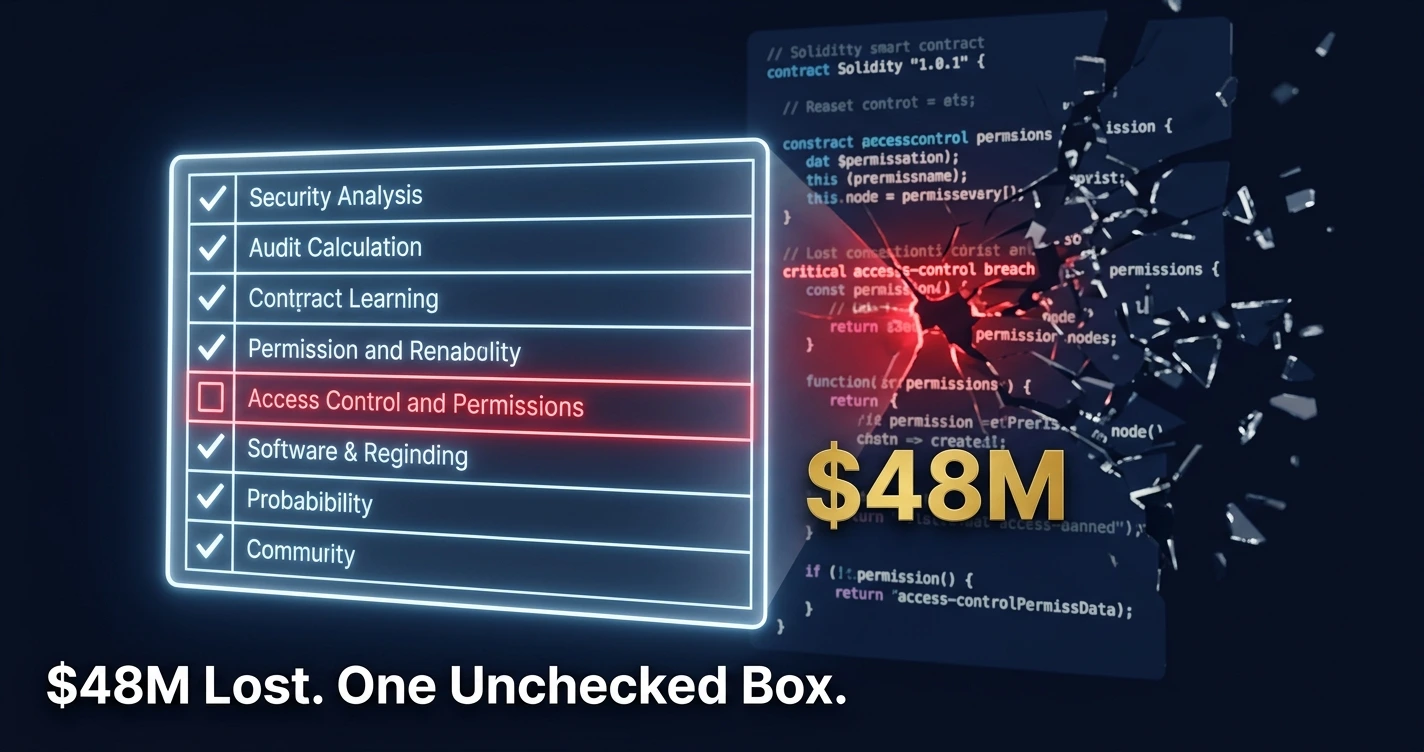
    For CTOs evaluating blockchain investments in the next budget cycle, the decisions have a recommended sequencing. Start by identifying whether the use case genuinely requires multi-party data sharing without a trusted central authority. If yes, identify which of the six surviving use categories the problem fits into. If it fits, build an integration cost model that includes middleware at two to three times the platform cost. Require a 12 to 18 month measurable ROI milestone in the business case. Then evaluate build versus buy against AWS, Azure, and Google’s managed blockchain services, which have substantially reduced the infrastructure burden for smaller enterprises.

    The talent question deserves specific attention. The job market for blockchain developers has bifurcated in 2026. Developers who understand enterprise integration, ERP connectors, API middleware, and compliance requirements command a 40 to 60% salary premium over pure smart contract developers. The bottleneck is not blockchain expertise. It is the combination of blockchain expertise with enterprise integration experience. Budget for it accordingly.

    The global trade finance gap of $2.5 trillion, documented by the Asian Development Bank in their 2024 Trade Finance Gaps Report, represents the single largest untapped ROI opportunity in enterprise blockchain. For companies operating in trade-heavy industries including manufacturing, commodities, and agriculture that have not evaluated blockchain-backed trade finance, the analysis is overdue. The 42% year-over-year growth in trade finance blockchain deployments in 2025 suggests that competitive disadvantage for non-adopters is beginning to compound.

    The Verdict: Signal vs. Noise in Enterprise Blockchain 2026

    The technology is not the problem. It has not been the problem for several years. The problem has always been use case selection, governance design, and integration cost realism. The companies that understood that before everyone else, Walmart, De Beers, JPMorgan, Visa, are running production systems at scale. The companies that missed it spent five years and significant capital on pilots that never shipped.

    The market is $12.77 billion today and heading toward $29.29 billion by 2033. But that aggregate number masks extreme concentration. The gains are in cross-border payments, supply chain traceability, RWA tokenization, trade finance, healthcare data exchange, and digital identity. Everything outside those six categories is still mostly unproven.

    If your use case fits the multi-party trust model, 2026 is the right time to move. The regulatory frameworks exist. The infrastructure is production-ready. The talent, while scarce, is findable. And the 75% of Global 2000 companies that are not yet in production are leaving competitive advantage on the table for the companies that move first. Just make sure integration middleware is in the budget before you sign anything.

    Frequently Asked Questions: Enterprise Blockchain in 2026

    What is the ROI of enterprise blockchain in 2026?

    Current data shows 41% of enterprise blockchain implementations achieve positive ROI in 2026, with supply chain and DeFi deployments delivering 15 to 20% average returns. Top performers, particularly cross-border payment networks, report 40 to 70% cost reductions versus legacy systems. ROI typically appears within 12 to 18 months for targeted use cases. (Source: Autheo, April 2026)

    Which blockchain use cases actually work in 2026?

    The six enterprise blockchain use cases delivering consistent ROI in 2026 are: supply chain traceability (31% of all deployments), cross-border payments (40 to 70% cost reduction), real-world asset tokenization ($32 billion market), trade finance digitization, healthcare data exchange, and digital identity and KYC. All share one trait: multiple organizations sharing data without relying on a central authority. (Source: World Economic Forum, 2025; MEXC, May 2026)

    Why do most enterprise blockchain projects fail?

    Most enterprise blockchain projects fail because they start with technology, not a business problem. The three documented failure patterns are: treating blockchain as a database when a traditional database would suffice; forcing decentralization when permissioned access is better; and underestimating integration costs with legacy ERP and CRM systems, which typically run 2 to 5 times the blockchain platform cost. (Source: AgileSoftLabs, February 2026)

    How much does enterprise blockchain implementation cost?

    Enterprise blockchain implementations cost $300,000 to $1 million for targeted use cases, while enterprise-wide systems exceed $1 million. These figures exclude legacy system integration middleware, which adds 2 to 5 times to actual total cost. ROI typically becomes measurable within 12 to 18 months via reconciliation savings, reduced audits, and faster partner onboarding. (Source: Codearies, February 2026)

    What is Hyperledger Fabric and why do enterprises use it?

    Hyperledger Fabric is an open-source permissioned blockchain framework that powers approximately 80% of enterprise blockchain deployments. Enterprises choose it because its channel-based privacy model allows selective data sharing between specific parties, which is critical in supply chain networks where companies compete but must also collaborate. It is maintained by the Linux Foundation.

    Is blockchain better than a traditional database for enterprise?

    Blockchain outperforms traditional databases only when multiple organizations must share data without trusting a single central authority, immutable audit trails are legally or operationally required, and transaction volumes are manageable under the network’s throughput. For single-organization use cases, centralized databases are faster, cheaper, and easier to maintain. Most failed blockchain projects ignored this decision framework.

    What is real-world asset tokenization?

    Real-world asset (RWA) tokenization is the process of representing ownership of physical assets such as real estate, bonds, commodities, and art as digital tokens on a blockchain. The market surpassed $32 billion in 2026, with BlackRock, JPMorgan, and Franklin Templeton running live tokenized funds. McKinsey projects the market could reach $2 trillion by 2030. (Source: MEXC / rwa.xyz, May 2026)

    What happened to TradeLens blockchain?

    TradeLens, the IBM and Maersk supply chain blockchain, shut down in November 2022 after five years and significant investment. It failed not due to technology problems, but because competing shipping lines refused to share data on a platform controlled by a rival. It remains the most important enterprise blockchain failure case study for understanding consortium governance risks. (Source: Frontiers in Blockchain, 2025)

    Sources referenced: Autheo Enterprise Blockchain Report (April 2026) | Fortune Business Insights Blockchain in Healthcare Market Report (May 2026) | ChainLaunch Enterprise Use Cases Analysis (March 2026) | AgileSoftLabs Web3 Enterprise Report (February 2026) | MEXC Crypto Pulse RWA Tokenization (May 2026) | Frontiers in Blockchain, Liu J and Hu X (2026) | Frontiers in Blockchain, TradeLens failure case study (2025) | BlackRock Form 8-K FY2026 (SEC) | CryptoDaily (April 2026) | Blockchain Council (March 2026) | Asian Development Bank Trade Finance Gaps Report (2024) | CISIN (2025-2026) | Codearies / Medium (February 2026) | Blockhead.co (February 2026) | Nasdaq / Motley Fool (January 2026)


    Confidence notes: The “300% ROI” figure is a Grand View Research modeled forecast for 2035, not a measured current result. The 41% positive ROI figure is drawn from a single source (CryptoDaily, April 2026) and has not been independently corroborated at time of publication. The 80% startup failure rate is reported by CryptoTicker (March 2026) with unverified methodology and should be treated as directional. All other primary statistics are drawn from multiple corroborating sources.


    Article published: June 8, 2026 | Last updated: June 8, 2026 | Category: Enterprise Blockchain | NeuralWired.com

  • Stablecoin Explained: USDT, USDC and GENIUS Act 2026

    Stablecoin Explained: USDT, USDC and GENIUS Act 2026

    What Is a Stablecoin? The Complete Plain-English Guide (2026)
    Crypto / Blockchain / Finance

    What Is a Stablecoin? The Complete Plain-English Guide (2026)

    Quick Definition
    A stablecoin is a digital token on a blockchain that is designed to always equal $1.00, backed by real-world reserves like cash or US Treasury bills. It moves with the speed of crypto and the price stability of a dollar bill.

    A CFO at a Fortune 500 company recently asked her payments team to explain why SpaceX is running payroll through a cryptocurrency and why Stripe now charges half the fee for it. The short answer: stablecoins. The longer answer is why $321 billion now sits in these instruments, why the US government just passed its first major crypto law to govern them, and why the Federal Reserve published a formal financial stability warning about them in April 2026.

    If you’ve heard “stablecoin” in an earnings call, a Senate hearing, or a tech podcast and wanted a single resource that actually explains what it is, how it works, what the risks are, and where it’s heading, this is that resource. No jargon-for-its-own-sake. No cheerleading. Just a complete, honest picture of the most important financial infrastructure story of the decade.


    What Is a Stablecoin? (The 30-Second Answer)

    A stablecoin is a type of cryptocurrency that is engineered to hold a fixed value, almost always $1.00, by holding real reserves of assets equal in value to every token in circulation. Unlike Bitcoin or Ether, which can swing 15% in a single afternoon, one USDC today is still one dollar tomorrow. That’s the entire point.

    Think of it this way: a regular bank account dollar is programmable only through legacy systems built in the 1970s. A stablecoin is a dollar that runs on software from 2024. You can send it anywhere on earth in seconds, program it to release under specific conditions, and hold it without needing a bank account in between. The value never changes. The infrastructure does everything else differently.

    The market reached an all-time high of $321 billion in total market cap on April 21, 2026, according to DeFiLlama data. That’s up from roughly $5 billion in January 2020, a 6,300% increase in six years. In 2025 alone, stablecoins processed $28 trillion in transaction volume, a figure comparable to Visa’s annual throughput, according to Chainalysis research.

    $321B
    Total stablecoin market cap (ATH, April 2026)
    $28T
    Transaction volume processed in 2025
    6,300%
    Market cap growth since January 2020
    99%
    Of all stablecoins are USD-denominated
    These are not “crypto” numbers anymore. They’re the numbers that appear in bank board presentations and Congressional testimony.


    How a Stablecoin Maintains Its $1.00 Value

    The mechanism is simpler than it sounds. For the dominant type of stablecoin (fiat-backed), the issuer holds $1 in reserves for every single token that exists. Mint a new token, add a dollar to the reserve. Burn a token when a user redeems it, remove a dollar from the reserve.

    An arbitrage mechanism handles the micro-corrections. If USDC temporarily trades at $0.998 on an exchange, traders buy it cheaply and redeem it directly with Circle for $1.00, pocketing the difference. That buying pressure pushes the price back to $1. The same logic works in reverse if it trades slightly above a dollar. No human needs to intervene; market incentives do the work automatically.

    The reserves themselves matter enormously. USDC (issued by Circle) holds its reserves in short-term US Treasury bills and cash held in regulated US banks. USDT (Tether) holds a mix of US Treasuries, cash equivalents, and other instruments, the exact composition has historically been a source of scrutiny. Under the GENIUS Act signed in July 2025, all US-licensed stablecoin issuers must hold 100% of reserves in liquid assets: cash or short-term US government securities only. Nothing riskier.

    Key Insight
    When you hold a GENIUS Act-compliant stablecoin in a bankruptcy scenario, you stand first in line ahead of all other creditors. This is a fundamentally different risk profile than a bank deposit over the $250,000 FDIC insurance limit.


    The 4 Types of Stablecoins: How Each One Works

    Not all stablecoins work the same way. There are four distinct models, and only two of them currently have any meaningful market share. Understanding the differences matters because the risk profiles are completely different.

    Type How It Maintains the Peg Main Example Current Status
    Fiat-Backed 1:1 reserves in USD, cash, or short-term Treasuries USDT, USDC ~90%+ of the entire market
    Crypto-Backed Over-collateralized in ETH or other crypto assets DAI (MakerDAO / Sky) Niche but growing
    Commodity-Backed Backed by physical gold or other commodities PAXG (Paxos Gold) ~$1.3B market cap
    Algorithmic Smart-contract algorithm adjusts supply; no real reserves TerraUSD (collapsed 2022) Effectively banned under GENIUS Act
    The algorithmic category deserves a sentence of clarity: TerraUSD (UST) was the most prominent algorithmic stablecoin. It maintained its peg through a complex mechanism involving a paired token called LUNA. In May 2022, that mechanism failed catastrophically, wiping approximately $40 billion in value in 72 hours. The GENIUS Act explicitly prohibits new algorithmic stablecoins without real reserves. The lesson is now embedded in federal law.


    USDT vs. USDC: The Two That Matter Most

    Together, USDT and USDC represent over 95% of the entire stablecoin market, according to a March 2026 BIS Working Paper (No. 1270). This is effectively a duopoly. Every other stablecoin operates in the margins. Here’s how the two dominant players compare.

    USDT (Tether)

    Tether is the world’s largest stablecoin at approximately $188 billion market cap, representing 58.29% of the total market as of April 21, 2026. Launched in 2014, it is the currency of crypto trading globally and the de facto dollar for hundreds of millions of people in emerging markets who use it for savings and remittances. Tether Limited is registered in the British Virgin Islands and relocated its headquarters to El Salvador in January 2025. It is not subject to GENIUS Act licensing requirements. Tether publishes quarterly attestations of reserves, but these are not full audits by a major accounting firm. In 2021, Tether was fined $41 million by the CFTC for making false statements about its reserves. The company has since significantly improved transparency, but the audit question remains open.

    USDC (Circle)

    USDC is the institutional-grade stablecoin at approximately $78 billion market cap. Issued by Circle Internet Financial, a San Francisco-based company, USDC is GENIUS Act-compliant, backed primarily by short-term US Treasury bills, and publishes monthly reserve disclosures reviewed by Grant Thornton. USDC grew 78% year-over-year in 2025. It is the stablecoin of choice for Visa’s settlement pilot, Stripe’s checkout integration, and enterprise payroll operations. The regulatory clarity is its core competitive advantage.

    Risk to Know
    In March 2023, USDC temporarily depegged to $0.87 after Silicon Valley Bank, which held approximately $3.3 billion of Circle’s reserves, failed. The peg was restored within days, but the event demonstrated that even well-reserved stablecoins carry counterparty risk tied to their banking relationships.


    The GENIUS Act: What the New US Law Actually Means

    On July 18, 2025, President Trump signed the GENIUS Act (Pub. L. 119-27) into law. Sponsored by Senator Bill Hagerty (R-TN) and passed 68-30 in the Senate and 308-122 in the House, it is the first major piece of US crypto legislation ever enacted. For anyone building, holding, issuing, or integrating stablecoins in the US market, this law changed the landscape fundamentally.

    What the GENIUS Act Requires

    • 100% liquid reserves: Every stablecoin must be backed 1:1 by cash or short-term US government securities. No risky assets, no commingling.
    • Monthly public disclosures: Issuers must publish reserve composition reports monthly. No more black boxes.
    • Bank Secrecy Act compliance: Full anti-money laundering and know-your-customer requirements apply to all permitted issuers.
    • Prohibited algorithmic stablecoins: Any stablecoin that relies purely on algorithms without real reserve backing is explicitly banned.
    • Bankruptcy priority: Stablecoin holders get first-priority claims over all other creditors in an issuer insolvency. This is a material credit improvement over bank deposits above $250,000.
    • Prohibited passive yield: Stablecoins cannot pay interest like a savings account. A March 2026 Senate compromise framework (Senators Thom Tillis and Angela Alsobrooks) distinguishes between prohibited “passive yield” and permitted “activity-based rewards”, the latter being compensation for specific on-chain activities, not simply for holding.

    Who Can Issue Under the GENIUS Act

    To issue stablecoins to US persons, an entity must be one of three things: a subsidiary of a federally insured bank, an OCC-licensed nonbank stablecoin issuer, or a state-chartered entity with assets under $10 billion that opts into state regulation. The OCC issued initial implementation guidance in February 2026 (Bulletin 2026-3). Federal and state banking regulators must finalize implementation rules by July 18, 2026.

    What This Means for Tether
    USDT, the dominant stablecoin, is issued by a non-US entity and is not subject to GENIUS Act requirements. It can continue operating in the US market for now, but any future regulatory action targeting foreign issuers would be a significant market event. Investors holding USDT should understand this jurisdictional asymmetry.


    Real-World Uses: From Remittances to Treasury Operations

    The most compelling case for stablecoins is not abstract. It’s a worker in the Philippines sending money home, a startup in Brazil paying a contractor in Germany, or a company like SpaceX managing treasury reserves in countries with volatile local currencies. The speed and cost advantages over traditional rails are not marginal. They’re an order of magnitude better.

    “Stablecoins are doing for money what WhatsApp did for international phone calls, eliminating costly intermediaries. A $200 remittance still costs 6.62% in fees on average. That’s a regressive tax on the world’s poorest workers.”

    Chris Dixon, Managing Partner, a16z Crypto
    Dixon’s point is backed by data. The a16z analysis (May 2025) cites SpaceX using USDC for treasury operations in volatile-currency markets, and ScaleAI using it for international payroll. These are not experimental deployments. They’re production infrastructure at scale.

    The Corporate Adoption Wave

    The mainstream payment networks are not watching from the sidelines. In December 2025, Visa launched a pilot program to settle certain transactions using USDC, marking a structural shift in how the global card network handles cross-border liquidity. Stripe, which acquired stablecoin infrastructure startup Bridge in 2024, now supports stablecoin checkouts at approximately 1.5% fees compared to 3% for traditional card transactions. Mastercard has a stablecoin settlement partnership with BVNK. PayPal issues its own stablecoin, PYUSD.

    In 2024, stablecoin transaction volumes surpassed Visa and Mastercard combined, according to the World Economic Forum. By 2025, stablecoins accounted for 75% of all crypto trading volume in Q1, meaning three-quarters of all activity in the crypto market now uses stablecoins as the unit of account rather than any volatile cryptocurrency.

    The Emerging Markets Case

    “The benefits of stablecoins far outweigh the concerns. The report fails to acknowledge the majority of people live in highly unstable fiat economies. Centralized policy making and centralized financial systems have failed these people for decades, which is why they are mass adopting stablecoins and liberating themselves.”

    Erbil Karaman, Co-Founder, Huma.Finance (which has processed over $8 billion in stablecoin transactions in emerging markets)
    Karaman’s firm is not speaking theoretically. In countries where local currency can lose 40% of its value in a year, holding dollar-pegged stablecoins is a rational inflation hedge. The 99% USD denomination of all stablecoins (per European Central Bank data) means this market is, among other things, a massive expansion of dollar reach outside the traditional banking system.


    The Risks No One Talks About (But the Fed Does)

    On April 8, 2026, the Federal Reserve Board published a formal research paper titled “Stablecoins in 2025: Developments and Financial Stability Implications” by economists Francesca Carapella, Arazi Lubis, and Alexandros Vardoulakis. It is the most authoritative recent government assessment of what could go wrong. The paper identifies three structural vulnerabilities that deserve attention from anyone holding, building on, or regulating stablecoins.

    “The quality and liquidity of stablecoin reserve assets are critical to their long-run viability.”

    Michael Barr, Governor, Federal Reserve Board (March 31, 2026)

    Risk 1: Run Dynamics

    A stablecoin run works like a bank run. If enough users simultaneously lose confidence and try to redeem for dollars, the issuer must liquidate reserves rapidly. If those reserves include anything less liquid than overnight Treasuries, the redemption pressure can cause forced sales at a discount, which erodes the reserve ratio, which triggers more redemptions. The Fed’s paper explicitly calls this the primary vulnerability. The March 2023 USDC depeg to $0.87 is the closest real-world illustration, and that resolved within days. A slower-moving confidence crisis in a larger stablecoin could be significantly more damaging to broader financial markets.

    Risk 2: Concentration and Opacity

    The BIS Working Paper No. 1270 (March 2026) documents that USDT and USDC together hold over 95% of the entire market. This is extreme concentration. Additionally, the Fed economists warn that “increasingly complex intermediation chains between issuers and third-party service providers” make it “increasingly difficult for participants to identify the source of emerging stress.” In plain terms: the plumbing is getting complicated enough that it’s hard to know where a problem will surface before it does.

    Risk 3: Vertical Integration

    The Fed paper identifies “strategic vertical integration combining multiple business functions under single entities” as a distinct systemic risk. A company that controls the stablecoin issuance, the wallet distribution, the trading platform, and the custody simultaneously has enormous leverage over users and enormous opacity for regulators. The GENIUS Act addresses some of this, but critics argue it doesn’t go far enough on entities controlling the full stack.


    Stablecoins vs. CBDCs: What’s the Difference?

    A stablecoin is issued by a private company. A CBDC (Central Bank Digital Currency) is issued directly by a government’s central bank. That distinction carries enormous consequences.

    Feature Stablecoin (e.g., USDC) CBDC (e.g., Digital Dollar)
    Issuer Private company (Circle, Tether) Central bank (Federal Reserve, ECB)
    Legal tender status No Yes
    Credit risk Issuer counterparty risk Sovereign risk only
    Regulatory status (US) GENIUS Act framework (July 2025) No US CBDC currently in operation
    IMF recommendation Regulate carefully Preferred alternative for stability
    Privacy profile Pseudonymous on-chain; BSA compliant Varies by design; government-controlled
    The IMF’s December 2025 report on stablecoins (56 pages, published as Departmental Paper 2025/009) explicitly recommends CBDCs as the preferred alternative for monetary stability. The EU is not waiting for that debate to resolve. Under MiCA (Markets in Crypto-Assets regulation), only licensed e-money institutions can issue euro-denominated stablecoins. Euro stablecoins have a market measured in hundreds of millions, not tens of billions. Dollar dominance in this market is a geopolitical reality, not a technical necessity.


    Who’s Criticizing Stablecoins and Why They Have a Point

    Our read: the stablecoin market has genuine structural momentum that is unlikely to reverse, but several of the criticisms being raised deserve serious engagement rather than dismissal.

    The “Stable” in Stablecoin Is a Marketing Term

    TerraUSD wiped out $40 billion in 72 hours in May 2022. USDC dropped to $0.87 in March 2023. The word “stable” creates a risk perception gap for retail users who don’t understand that peg stability depends on issuer solvency, reserve quality, and market confidence — not a mathematical guarantee. The Federal Reserve’s April 2026 paper makes this point explicitly in peer-reviewed terms.

    The Transaction Volume Numbers Are Inflated

    The $28 trillion annual transaction volume figure (Chainalysis, 2025) gets cited frequently. What it doesn’t highlight is that a significant portion of stablecoin volume is DeFi arbitrage loops, transactions that cycle through multiple smart contracts in seconds and are counted multiple times. McKinsey estimated daily stablecoin settlement at approximately $30 billion in mid-2025, less than 1% of global money flows. The $28 trillion is real transaction count. The economic transfer value is materially lower.

    Dollar Extension Without Dollar Accountability

    With 99% of all stablecoins denominated in USD, private companies are extending US dollar reach into dozens of countries outside any traditional banking oversight. The IMF December 2025 paper warns this amounts to de facto dollarization without the governance, monetary policy tools, or accountability structures that accompany the actual dollar. For small or economically fragile nations, this isn’t a feature. It’s a sovereignty risk.

    The GENIUS Act’s Blind Spots

    Advocacy group Americans for Financial Reform argued in May 2026 that the legislation was shaped by industry interests and fails to adequately address risks from vertically integrated issuers who control wallet distribution, trading, and custody simultaneously. The Act also leaves Tether — the 58% market-share dominant player, outside its licensing requirements, meaning the most important entity in the ecosystem operates without the law’s protections or constraints.


    Frequently Asked Questions

    What is a stablecoin in simple terms?
    A stablecoin is a type of cryptocurrency designed to always be worth $1.00. It achieves this by holding real reserves like cash or US Treasury bills equal to every stablecoin in circulation. It moves as fast as any blockchain transaction but never changes in dollar value. Think of it as a digital dollar that anyone in the world can send instantly.

    How does a stablecoin maintain its $1.00 value?
    Fiat-backed stablecoins like USDC and USDT hold $1 in reserves for every token issued. When demand rises, the issuer mints new tokens. When demand falls, users redeem tokens for dollars and the issuer burns those tokens. An arbitrage mechanism also helps: if the price dips below $1, traders buy and redeem tokens at a profit, pushing the price back to par.

    Is USDT (Tether) safe?
    USDT is the world’s largest stablecoin at ~$188 billion and has maintained its peg under most conditions. However, Tether is headquartered outside the US (El Salvador as of 2025), is not subject to GENIUS Act requirements, and publishes quarterly attestations rather than full audits. Regulatory risk remains. Any US enforcement action against Tether would be a significant market event. Use it with awareness of this counterparty risk.

    What is the difference between USDT and USDC?
    USDT (Tether) holds ~$188B market cap with dominant use in emerging markets and trading, but is an offshore entity not subject to GENIUS Act licensing. USDC (Circle, ~$78B) is US-based, GENIUS Act-compliant, backed primarily by short-term US Treasuries, and preferred by institutions because of regulatory clarity and monthly public reserve disclosures.

    What is the GENIUS Act and how does it affect stablecoins?
    Signed on July 18, 2025, the GENIUS Act (Pub. L. 119-27) is the first federal US law regulating stablecoins. It requires 100% reserve backing in liquid assets, monthly public reserve disclosures, and Bank Secrecy Act compliance. Only permitted payment stablecoin issuers, bank subsidiaries, OCC-licensed nonbanks, or state-chartered entities, may issue stablecoins to US persons.

    Can stablecoins fail?
    Yes. TerraUSD (UST) collapsed in May 2022, wiping out ~$40 billion. USDC temporarily depegged to $0.87 in March 2023 when reserves held at Silicon Valley Bank were frozen. The Federal Reserve (April 2026) warns that “run risk” remains the primary vulnerability even for well-reserved stablecoins if user confidence collapses rapidly.

    Are stablecoins the same as CBDCs?
    No. Stablecoins are issued by private companies (Tether, Circle). CBDCs are issued directly by governments and are official legal tender. A stablecoin carries issuer counterparty risk. A CBDC carries only sovereign risk. The IMF (December 2025) explicitly advocates for CBDCs as the preferred monetary stability tool over private stablecoins.

    How are stablecoins used in real life?
    Stablecoins are used for cross-border remittances, international B2B payments and payroll (SpaceX and ScaleAI use USDC), DeFi lending and yield strategies, treasury management in countries with volatile local currencies, and retail payments via Visa’s USDC settlement pilot and Stripe’s stablecoin checkout at 1.5% fees. In 2025, stablecoins processed $28 trillion in transaction volume globally.


    What You Now Understand — and What Comes Next

    A year ago, stablecoin was a word that lived in crypto-native conversations. It now appears in Federal Reserve research papers, Senate floor votes with 68 senators in favor, Stripe pricing pages, and Visa settlement infrastructure. The $321 billion market cap is not a speculative bubble. It’s the current size of a new global payment layer that is growing 50% per year and just received its first federal regulatory framework in the US.

    The stablecoin explained simply is this: private companies have built a dollar that runs on public software. That software is borderless, 24/7, and cheaper than anything SWIFT offers. The GENIUS Act legitimized it. Visa, Stripe, and Mastercard integrated it. The Fed is watching it carefully.

    Here’s what to watch in the next 6 to 18 months. First, OCC implementation rules finalized by July 2026 will determine how strictly the GENIUS Act is enforced and whether Tether faces indirect compliance pressure on US platforms. Second, the Senate’s yield framework (Tillis-Alsobrooks compromise) will shape whether DeFi protocols can legally build reward products on stablecoins, a multi-billion-dollar design question for developers. Third, McKinsey projects stablecoin market cap could reach $2 trillion by 2028. That would make this the fastest-adopted financial infrastructure in modern history. Whether that projection proves accurate depends entirely on whether the GENIUS Act’s implementation creates the institutional confidence required.

    Three specific things to act on now: if you’re in treasury or payments, evaluate whether GENIUS Act-compliant stablecoin rails make sense for your cross-border vendor payments. If you’re building on stablecoins, the activity-based rewards framework is your most important near-term design constraint. And if you’re investing, the regulatory asymmetry between USDC and USDT is the single most important risk variable in the market today.

    Stay Ahead of What’s Happening in Tech

    The Neural Loop delivers the most important technology, AI, and crypto developments to your inbox — concise, verified, and without the noise.

    Subscribe to The Neural Loop
  • Crypto Regulation by Country 2026: GENIUS Act, MiCA & Global Laws

    Crypto Regulation by Country 2026: GENIUS Act, MiCA & Global Laws

    Crypto Regulation by Country 2026: Complete Global Guide
    Policy & Regulation
    Crypto Regulation 2026

    Crypto Regulation by Country 2026: The Complete Global Guide

    The GENIUS Act is law. MiCA’s hard deadline hits July 1. The UK just opened its authorisation window. Here’s everything that changed — and exactly what it means for you.

    NeuralWired Research Desk June 7, 2026 Updated & Verified 18 min read
    A compliance officer in Frankfurt and a retail trader in Mumbai are both navigating a crypto world they wouldn’t recognize from two years ago. The question is no longer “Is crypto legal where I am?” The question is “What license, what reserves, what reporting system, and what regulator do I answer to?” That shift defines 2026.

    45
    Countries where crypto is fully legal
    10
    Countries with a total crypto ban
    $3.5T
    Global crypto market cap, mid-2025
    92%
    Jurisdictions that tightened rules in 2025

    Global Overview: Where Things Stand in 2026

    Of 75 countries surveyed by the Atlantic Council in mid-2025, 45 are fully legal, 20 impose partial bans, and 10 have instituted complete prohibitions on cryptocurrency. Among G20 nations, 12 economies representing roughly 57% of global GDP have either legalized or tightly regulated crypto activity.

    Vietnam became the 46th fully legal jurisdiction on January 1, 2026. Only 28 of the 75 countries studied have regulations covering all four pillars that institutional players care about: taxation, AML/CFT compliance, consumer protection, and licensing.

    The direction of travel is unmistakable. Over 92% of global jurisdictions have tightened crypto rules in some form, according to Atlantic Council data. The question for investors, exchange operators, and fund managers is not whether regulation is coming. It’s whether your jurisdiction of choice is building frameworks designed to attract capital or frameworks designed to control it.

    The pivot year: Three of the four largest financial markets on earth (US, EU, UK) are implementing new crypto frameworks inside the same 12-month window. That has never happened before.

    United States: GENIUS Act, SEC/CFTC, and What Comes Next

    The US crypto story in 2026 is fundamentally a stablecoin story. After years of multi-agency jurisdictional battles and regulatory whiplash, Congress passed the first federal crypto law with real teeth.

    The GENIUS Act (Signed July 18, 2025)

    During what Washington insiders called “Crypto Week,” the House passed the GENIUS Act by a vote of 308 to 122 on July 17, 2025. The Senate had already cleared it 68 to 30 on June 17. The President signed it into law on July 18. Those vote tallies matter: this was bipartisan in a way almost nothing in Washington is these days.

    The GENIUS Act creates the first federal framework for payment stablecoins, replacing a patchwork of state and agency guidance with enforceable national standards covering reserve assets, redemption rights, disclosures, and custody. Under the Act, compliant stablecoins are explicitly classified as neither securities nor commodities, which resolves the most paralyzing source of legal uncertainty the industry has faced since 2017.

    A Stablecoin Certification Review Committee, made up of the Secretary of the Treasury, the Chair of the Federal Reserve Board of Governors, and the Chair of the FDIC, now governs major issuance decisions. One notable restriction: issuers cannot pay interest or yield to holders solely in connection with holding a payment stablecoin. Consumer protection advocates see this as a safeguard. Critics see it as protecting bank incumbents.

    2026 Rulemaking: The AML and Sanctions Layer

    On April 8, 2026, the Treasury’s Financial Crimes Enforcement Network and the Office of Foreign Assets Control issued a joint Notice of Proposed Rulemaking to implement the AML and sanctions compliance provisions of the GENIUS Act for permitted payment stablecoin issuers. Comments were due June 9, 2026. If you’re in this space and missed that window, you’re already behind.

    SEC and CFTC Joint Interpretive Guidance (March 2026)

    On March 17, 2026, the SEC and the Commodity Futures Trading Commission jointly issued extensive interpretive guidance clarifying how federal securities laws apply to specific categories of crypto assets and transactions. The CFTC confirmed it would administer the Commodity Exchange Act consistently with the SEC’s interpretation. For the first time, the two agencies are speaking from the same sheet of music on crypto asset classification.

    “I’ve never seen a market more driven by sentiment than fundamentals. Ordinary investors were left without sufficient information about investments in digital assets.”

    Gary Gensler, Former Chair, US Securities and Exchange Commission (2021-2025)
    Gensler’s warnings represent the most credentialed skeptical voice on the current regulatory pivot. His comparison of today’s crypto market to the unregulated stock markets of the 1920s still finds a serious audience among institutional risk officers.


    European Union: MiCA Deadline, July 1, 2026

    Hard deadline approaching: ESMA has stated that any entity providing crypto-asset services to EU clients without a MiCA license after July 1, 2026 will be in direct breach of EU law and must cease offering such services.
    MiCA (Markets in Crypto-Assets Regulation) has effectively unified 27 national frameworks into a single regulatory passport. A crypto exchange licensed in Germany can now legally operate across France, Italy, Spain, and 24 other member states without reapplying. That is not theoretical convenience; it is the most significant structural change to European financial services since MiFID II.

    Transitional periods varied significantly across member states. The Netherlands required full compliance by July 2025. Italy set its deadline at December 2025. Other countries extended to the July 2026 maximum. Grandfathered entities operating under national regimes do not benefit from an EU passport unless they obtain a full MiCA licence, per ESMA’s explicit Q&A guidance. That distinction has caught operators off guard.

    Since full enforcement began in December 2024, over €540 million in penalties have already been issued across member states. MiCA enforcement is not theoretical. It is already happening.

    Luxembourg has emerged as an early MiCA hub, attracting nearly 110 licensed VASPs under MiCA-aligned rules by early 2026, reflecting the passport’s business logic: establish one license in a favorable member state, operate across the entire bloc.

    The Gaps MiCA Deliberately Left Open

    DeFi services that are fully decentralized and NFTs are explicitly excluded from MiCA’s regulatory scope. Because no identifiable entity manages these systems, MiCA’s licensing and disclosure requirements cannot attach. DeFi protocols processed hundreds of billions in volume in 2025. Tightening the centralized rails while leaving decentralized alternatives largely unregulated is the most significant structural contradiction in the EU’s approach.


    United Kingdom: FCA Authorisation Opens September 2026

    🇬🇧
    United Kingdom
    FCA Regime | Crypto Legal | Full Auth Opens Sept 30, 2026
    The Financial Services and Markets Act 2000 (Cryptoassets) Regulations 2026 was enacted on February 4, 2026, establishing the comprehensive statutory framework for regulating cryptoasset activities in the UK. Crypto firms can apply for FCA authorisation from September 30, 2026. The full regime comes into force on October 25, 2027.

    The new regime brings authorisation requirements for a broader range of activities than most operators anticipated: issuing stablecoins, custody services, operating trading platforms, dealing and arranging, and staking services. Operating regulated crypto activities without FCA authorisation risks criminal sanctions, unlimited fines, imprisonment of up to two years, and unenforceable contracts.

    Under the Property (Digital Assets etc.) Act 2025, cryptoassets are now legally recognized as property in the UK. That matters practically: owners have legal protection in cases of theft, contractual disputes, and insolvency proceedings. Retail stablecoins fall under FCA oversight. Systemic stablecoins are regulated by the Bank of England.

    From January 1, 2026, new Reporting Cryptoasset Service Provider regulations require crypto platforms to report user data and transaction details directly to HMRC. The era of UK crypto users quietly holding on foreign platforms without a paper trail is over.


    UAE: Dubai VARA and Abu Dhabi ADGM

    The UAE has positioned itself as the most pragmatically pro-crypto major economy in the world, and its institutional infrastructure is now sophisticated enough to attract serious capital. As of February 2026, Dubai’s Virtual Assets Regulatory Authority has fully implemented Travel Rule requirements, mandating that all VASPs transmit specific originator and beneficiary information for all transfers. A unified UAE VASP Register now exists across the SCA and VARA, meaning a firm licensed in Dubai has its status visible federally, simplifying cross-emirate operations.

    VARA requires firms to meet a Net Liquid Assets test: current liquid assets must be maintained at no less than 1.2 times monthly operating expenses, reconciled daily and reported monthly. Insurance for hot-wallet exposures is mandatory. These are institutional-grade requirements by any standard, and they are attracting institutional-grade participants.

    “For businesses seeking faster licensing timelines or lower capital requirements, look at UAE (VARA or ADGM) or Hong Kong. Singapore is the right jurisdiction for crypto businesses wanting credible, institutional-grade regulated status recognized by institutional counterparties.”

    Oleg Prosin, Managing Partner, WCR Legal, Singapore — April 2026

    Singapore: MAS and the Institutional Standard

    Singapore’s Monetary Authority of Singapore has built what many institutional counterparties consider the gold standard in crypto licensing. Exchanges and digital-asset service providers must be licensed under the Payment Services Act, meet AML and Travel Rule obligations, and satisfy demanding operational-resilience and cybersecurity standards.

    The MAS single-currency stablecoin framework mandates high-quality reserve backing, clear redemption rights, operational resilience, and unambiguous issuer accountability. An MAS licence is recognized by international banks, institutional counterparties, and corporate treasury programmes in a way that most other crypto licences are not. That recognition premium is real and it drives capital allocation decisions at the institutional level.

    The trade-off: Singapore’s consumer protection restrictions make it less attractive than UAE or Hong Kong for businesses primarily targeting retail clients. Licensing timelines are longer and capital requirements higher. Prosin’s framing is accurate: Singapore is for operators who want to signal substance to institutions and are willing to do the work.


    India: Punitive Tax, No Structure, and $5 Trillion Offshore

    India provides the clearest real-world evidence that punitive taxation without licensing structure does not improve compliance. It makes things worse.

    India applies a flat 30% tax on Virtual Digital Asset profits regardless of income bracket, a 1% Tax Deducted at Source on transfers exceeding ₹50,000 in a financial year, and allows no ability to offset losses from one cryptocurrency against profits from another. From April 1, 2026, new transaction compliance rules mandate fines of up to ₹50,000 for any exchange failing to provide accurate transaction reporting.

    “High 1% TDS and a 30% flat tax have pushed many users toward offshore platforms, reducing both visibility and potential tax revenue for India. Lowering TDS to around 0.01%, taxing crypto under normal income slabs, and allowing loss offsets could improve compliance while supporting innovation.”

    Sumit Gupta, Co-founder and CEO, CoinDCX, India’s largest retail crypto exchange
    Estimates suggest Indian users generated approximately ₹5 lakh crore (roughly $5 trillion) in trading volume on foreign exchanges between late 2024 and 2025. India’s regulatory approach has not reduced crypto activity. It has moved crypto activity to jurisdictions where India collects zero tax revenue and has zero oversight. The April 2026 compliance mandates mean exchanges are now heavily incentivized to share transaction data with the Income Tax Department, but the horse has largely left the stable.


    China: The Total Ban, Unchanged Since 2021

    China’s comprehensive prohibition on cryptocurrency — covering mining, trading, exchange services, and crypto marketing — remains fully in force in 2026. The ban has not changed since September 2021. Mining, exchange operations, and promotional activity are all illegal. Chinese nationals who use foreign crypto platforms operate in legal grey territory.

    China’s stance is notable not as a cautionary tale about crypto but as a deliberate strategic choice: the country is channeling digital finance energy into the digital yuan (e-CNY) and state-supervised fintech, not decentralized assets. The crypto ban and the chip restriction posture tell the same story about state control of the digital economy.


    Quick-Reference Table: Crypto Regulation by Country 2026

    Country Legal Status Key Framework Tax Treatment 2026 Key Date
    United States Legal GENIUS Act, SEC/CFTC guidance Property; 0-37% CGT FinCEN/OFAC NPRM finalized
    European Union Legal (MiCA) MiCA CASP licence Varies by member state July 1 hard deadline
    United Kingdom Legal FSMA 2026 Crypto SI / FCA CGT applies FCA auth opens Sept 30
    UAE (Dubai) Legal VARA / ADGM No personal income tax Travel Rule fully live
    Singapore Legal MAS Payment Services Act No CGT on crypto Stablecoin framework active
    Germany Legal (MiCA) BaFin / MiCA Tax-free after 12-month hold MiCA passporting active
    India Legal, Restrictive VDA tax regime 30% flat + 1% TDS Exchange reporting fines active
    Japan Legal FSA licensing (2017 model) Income tax applies Ongoing PSA updates
    Australia Legal ASIC / Treasury reform 50% CGT discount (12mo+) Licensing reform ongoing
    El Salvador Legal Tender Bitcoin Legal Tender Act No CGT for foreigners IMF deal modifies mandate
    China Total Ban PBOC / State directives N/A (banned) Ban unchanged since 2021
    Algeria Total Ban National legislation N/A (banned) No change expected
    Bolivia Total Ban BCB decree N/A (banned) No change expected
    Bangladesh Total Ban Bangladesh Bank directive N/A (banned) No change expected

    FATF Travel Rule: The Invisible Global Standard

    Most crypto users have never heard of the Travel Rule. It governs almost every significant crypto transfer they make.

    The Travel Rule is a global AML standard set by the Financial Action Task Force requiring Virtual Asset Service Providers to collect and transmit originator and beneficiary information (name, address, wallet identifier) for transactions above specific thresholds, mirroring the wire transfer rules that have governed traditional banking for decades.

    As of the FATF June 2025 Targeted Update, more than 90 of 117 FATF-monitored jurisdictions have enacted or are implementing Travel Rule requirements, up from 65 in 2024. In June 2025, FATF also highlighted persistent gaps in implementation, particularly around interoperability. Fragmented national adoption makes it difficult for providers to reliably exchange originator and beneficiary data across borders, and FATF’s 2025 update to Recommendation 16 adds operational burden without resolving those long-standing gaps.

    UAE’s VARA addressed this head-on: full Travel Rule implementation was mandatory across all VASPs from February 2026. It’s the clearest model of a regulator that set the rule and enforced it on a firm timeline.


    DeFi and NFTs: The Regulatory Blind Spot

    Every framework discussed in this guide applies to identifiable entities. MiCA requires a licensed CASP. The GENIUS Act targets permitted payment stablecoin issuers. The FCA regime requires an authorised firm. VARA licences VASPs.

    DeFi has no identifiable entity. That is its design. And that is why every major 2026 regulatory framework, at its edges, stops at DeFi’s front door.

    Under MiCA’s framework, DeFi services that are fully decentralized, with minimal or no intermediaries, are explicitly excluded from its regulatory scope. NFTs are similarly excluded. DeFi protocols processed hundreds of billions in volume in 2025. Sophisticated actors who want to operate outside all of the frameworks described above can route through DeFi and remain largely beyond regulatory reach. That is not a minor gap. It is a structural feature of the current global framework that regulators have not resolved.


    The Part They Don’t Advertise

    The mainstream narrative on 2026 crypto regulation is convergence and clarity. MiCA, GENIUS Act, UK FSMA, MAS, VARA: a coherent global framework is emerging. Our read: that framing is partly accurate and significantly incomplete.

    Regulatory capture risk in the US: The GENIUS Act’s prohibition on yield payments to stablecoin holders directly protects banking incumbents. Its requirement for unanimous Treasury, Fed, and FDIC committee approval for non-financial company issuance effectively creates a vetocracy over Big Tech stablecoin entry. Critics who watched the lobbying effort note that the biggest winners of GENIUS Act compliance infrastructure are the entities that helped write it.

    Compliance costs create oligopoly risk: Small exchanges and DeFi startups cannot simultaneously absorb MiCA compliance, GENIUS Act compliance, and Travel Rule implementation. The regulatory wave may inadvertently consolidate the market around Coinbase, Binance, Circle, and a handful of MiCA-licensed EU incumbents. Regulation designed to protect consumers can end up limiting their choices.

    MiCA’s enforcement capacity is uneven: Germany’s BaFin is a sophisticated regulator with deep resources. Several smaller EU member state competent authorities are not. The July 1, 2026 hard deadline may produce strict enforcement in some jurisdictions and selective enforcement in others. “EU-wide” rules and “EU-wide” enforcement are not the same thing in practice.

    India proves punishment without structure backfires: A flat 30% tax and 1% TDS did not reduce Indian crypto activity. It moved approximately $5 trillion in trading volume to offshore platforms, reduced domestic tax revenue, and gave Indian regulators less visibility, not more. This is the evidence-based argument for structured licensing over punitive taxation. So far, India’s government has not incorporated it.


    Frequently Asked Questions

    Is cryptocurrency legal in all countries?
    No. As of 2026, 45 of 75 surveyed countries fully legalize crypto, 20 impose partial bans, and 10 have complete prohibitions, including China, Algeria, and Bolivia. Most G20 economies now regulate rather than ban it, but legal status varies significantly by jurisdiction and activity type.

    Which country has the strictest crypto regulation in 2026?
    China maintains the strictest regime, with a total ban on mining, trading, exchange services, and crypto marketing since 2021. Among regulating (rather than banning) jurisdictions, the EU’s MiCA framework is the most comprehensive, covering all 27 member states with uniform licensing, capital, and disclosure requirements from July 2026.

    Is crypto legal in the USA in 2026?
    Yes. Crypto is legal in the US. The GENIUS Act, signed July 18, 2025, created the first federal framework for payment stablecoins backed 1:1 with USD or short-term Treasuries. The SEC and CFTC issued joint interpretive guidance in March 2026 on how federal securities laws apply to crypto assets. Multi-agency oversight via the SEC, CFTC, and FinCEN continues.

    What is MiCA regulation in simple terms?
    MiCA is the EU’s unified law governing crypto businesses across all 27 member states. It requires crypto exchanges, wallet providers, and stablecoin issuers to obtain a single license from one EU national regulator, which then grants the right to operate across the entire EU. Full enforcement applies from July 1, 2026.

    Which country is best for crypto businesses in 2026?
    The UAE (VARA for Dubai, ADGM for Abu Dhabi), Singapore (MAS), and Germany (MiCA passport plus tax-free gains after 12 months) are consistently cited as top-tier jurisdictions for crypto businesses. UAE and Hong Kong suit operators seeking faster licensing. Singapore suits those targeting institutional recognition. EU hub jurisdictions like Luxembourg suit firms wanting passported EU access.

    How is crypto taxed in different countries?
    Germany offers tax-free gains after a 12-month hold. UAE and Singapore have no personal capital gains tax on crypto. The US taxes crypto as property at capital gains rates (0 to 37% depending on income and holding period). India applies a flat 30% regardless of income bracket. Australia applies a 50% CGT discount for assets held more than 12 months.

    What is the GENIUS Act in crypto?
    The GENIUS Act (Guiding and Establishing National Innovation for U.S. Stablecoins Act) is the first US federal law specifically regulating payment stablecoins. Signed July 18, 2025, it requires 1:1 backing with USD, Treasury securities, or bank deposits; mandates monthly disclosures and regular audits; and clarifies that compliant stablecoins are not securities or commodities.

    Is crypto banned in China in 2026?
    Yes. China’s complete ban on cryptocurrency — covering mining, trading, exchange services, and marketing — remains fully in effect in 2026, unchanged since September 2021. Chinese nationals using foreign crypto platforms operate in legal grey territory.

    What is the FATF Travel Rule for crypto?
    The Travel Rule is a global AML standard requiring Virtual Asset Service Providers to collect and transmit originator and beneficiary information (name, address, account identifier) for crypto transfers above threshold amounts, mirroring wire transfer rules for traditional banks. As of June 2025, more than 90 of 117 FATF-monitored jurisdictions have enacted or are implementing Travel Rule legislation.

    How does MiCA affect crypto exchanges after July 2026?
    Any exchange serving EU clients without a MiCA CASP license after July 1, 2026 is in direct breach of EU law. A single MiCA license, obtained from one member state’s national regulator, grants the right to operate in all 27 EU member states. Non-EU exchanges cannot serve EU clients via reverse solicitation for MiCA-covered services.


    What Comes Next: 6 to 18 Months Out

    The fundamental shift in 2026 is from regulatory permission to regulatory structure. The industry spent years asking “Is this legal?” The question now is “What does compliance actually require, and can we build it?” That reframing is not trivial. It defines who can raise institutional capital, who can serve retail clients across multiple markets, and who gets shut out.

    Three things to watch between now and the end of 2027. First, watch how the EU’s July 1 MiCA deadline plays out in enforcement practice. The hard deadline is set. How member state competent authorities actually apply it, particularly smaller regulators, will reveal whether MiCA is truly uniform or a patchwork with a shared brand. Second, watch the UK’s September 2026 FCA authorisation gateway. The firms that apply early and build serious compliance infrastructure will have a structural advantage when the full October 2027 regime comes into force. Laggards will face enforcement and unenforceable contracts. Third, watch DeFi. Every regulator in this guide has left the decentralized space largely unaddressed. That gap will not stay open indefinitely. The next major regulatory wave, likely arriving 2027 to 2028, will attempt to define accountability for decentralized protocols. How it does that, without identifiable entities to license, is the hardest unsolved problem in crypto regulation.

    For investors, the immediate implication is straightforward: the license map is becoming the capital map. Regulated jurisdictions attract institutional flows. Jurisdictions without frameworks do not. The arbitrage that once existed between permissive and restrictive environments is narrowing faster than most retail participants realize. Read the brief. Know your jurisdiction. Know your regulator.

    Stay Ahead of What’s Moving Markets

    The Neural Loop delivers verified regulatory intelligence, technology analysis, and policy breakdowns directly to your inbox. No noise. No sponsored content. Just the signal.

    Subscribe to The Neural Loop
  • What Is a Crypto Wallet? Ledger, MetaMask & Types 2026

    What Is a Crypto Wallet? Ledger, MetaMask & Types 2026

    What Is a Crypto Wallet? The Complete 2026 Guide for Beginners | NeuralWired
    Crypto · Beginner Guide · June 2026

    What Is a Crypto Wallet? The Complete 2026 Guide (Types, Risks & How to Choose)


    On February 21, 2025, a security team at the Dubai-based exchange Bybit watched $1.5 billion in Ethereum vanish in minutes. The funds moved to wallets controlled by North Korea’s Lazarus Group. The terrifying part? Bybit had a cold wallet. They had multisig approvals. They did everything the security textbooks say to do. It still wasn’t enough.

    If a billion-dollar exchange with professional security engineers can lose everything in one transaction, what chance does a first-time crypto buyer have? The honest answer is: a better chance than you think, but only if you understand what a crypto wallet actually is, how it works, and which type belongs in your hands right now.

    This guide covers all of it. No jargon without explanation. No generic advice. By the end, you’ll understand the single most important concept in crypto security, one that more than half of active crypto users still get wrong.


    What a Crypto Wallet Actually Is

    Here is the most important sentence in this entire article: a crypto wallet does not store your cryptocurrency.

    Read that again. Your Bitcoin, Ethereum, and any other token you own never leave the blockchain. They live there permanently, recorded in a public ledger that no single person or company controls. What your wallet stores are the private keys that prove you own those assets and authorize you to move them.

    The word “wallet” is technically a misnomer. It stuck because it made the concept feel familiar. A better analogy is a key ring. The key ring doesn’t contain your house or your car. It holds the keys that give you access to them. Lose the key ring and you’re locked out. Hand the key ring to someone else and they own everything attached to it.

    Key Concept
    Crypto assets live on the blockchain. A wallet stores the private keys that prove ownership of those assets. The wallet is the key ring, not the safe.

    The U.S. Securities and Exchange Commission confirmed this in its December 2025 investor bulletin: crypto wallets store private keys, not crypto assets, and losing keys or seed phrases means irreversible loss of crypto access. This was the first formal SEC guidance document explicitly addressing crypto wallet custody for retail investors, and it drove home a point the industry had been making for years: the key is the asset.


    How a Crypto Wallet Works

    Understanding the mechanics of a crypto wallet doesn’t require a computer science degree. It requires understanding three things: private keys, public keys, and seed phrases.

    The Private Key

    A private key is a randomly generated number, enormous in size, typically represented as a string of letters and numbers. It is the master credential. Using asymmetric cryptography, specifically an algorithm called Elliptic Curve Cryptography (ECC) on Bitcoin’s secp256k1 curve, the private key mathematically generates a public key. This is a one-way street. You can go from private to public, but you cannot reverse-engineer a private key from a public key. That mathematical impossibility is the entire foundation of crypto security.

    The Public Key and Your Wallet Address

    Your public key goes through a hashing and encoding process (Base58 encoding) to produce the shorter string you share with others when you want to receive crypto. This is your wallet address, the equivalent of an account number. It’s safe to share publicly because, even knowing your address, nobody can derive your private key from it.

    When you send crypto, your wallet uses your private key to create a digital signature. The receiving network verifies that signature against your public key without ever seeing the private key itself. The transaction confirms. The blockchain records it. Your private key stays private.

    The Seed Phrase: The One Thing You Must Never Lose

    Most modern wallets generate a 12-word or 24-word recovery phrase when you first set them up. This is called a seed phrase, a mnemonic, or a recovery phrase. It encodes your private key in a format a human can write down. Every single wallet and its private keys can be fully reconstructed from this phrase on any compatible device.

    Critical Warning
    A 2025 academic study presented at the CHI conference found that only 43.4% of surveyed crypto users could correctly identify a seed phrase. That means more than half of active crypto holders are making security decisions without understanding the one backup mechanism that controls everything they own.

    Anyone who has your seed phrase has your wallet. They don’t need your device. They don’t need your password. They don’t need your email address. Write it down, store it offline, and never type it into any website or app that asks for it unprompted.


    Types of Crypto Wallets in 2026

    Crypto wallets divide along two axes: who holds the keys, and whether the wallet connects to the internet. Understanding both axes determines which wallet is right for your situation.

    Axis 1: Hot Wallets vs. Cold Wallets

    Hot wallets are internet-connected. They include browser extensions like MetaMask, mobile apps like Trust Wallet and Coinbase Wallet, and web-based wallets accessed through a browser. Hot wallets are convenient for frequent transactions and ideal when you’re actively using crypto for trading or interacting with decentralized applications. The trade-off is exposure: because they’re online, they face a wider attack surface from phishing, malware, and software vulnerabilities.

    Cold wallets stay offline. Your private keys are generated and stored on a device that never connects to the internet. Hardware wallets from Ledger, Trezor, and Tangem are the dominant examples. They’re designed for long-term storage of holdings you don’t plan to move frequently. Ledger confirmed over 8 million devices sold with zero hardware hacks across a decade of operation as of March 2026. Cold wallets reduce online attack risk substantially, but they introduce physical risk: lose the device and the backup seed phrase, and your funds are gone.

    78% of all crypto wallets are hot wallets (2025)
    31% increase in hardware wallet sales in 2025
    820M unique active crypto wallets globally (2025)

    Axis 2: Custodial vs. Non-Custodial

    This distinction matters more than hot vs. cold for most beginners. It determines who actually controls your crypto.

    A custodial wallet means a third party, typically a centralized exchange like Coinbase or Binance, holds your private keys on your behalf. You have a claim on the assets. You do not have direct cryptographic ownership. This is convenient. It also means that if the exchange is hacked, goes insolvent, or freezes withdrawals, your access to your funds is at their discretion.

    A non-custodial wallet means you hold your own private keys. You have complete control. Nobody can freeze your assets, block a withdrawal, or lose your keys for you. The phrase “not your keys, not your coins” was coined specifically to describe what happens when you leave that control with someone else. As of 2025, non-custodial wallets are preferred by 59% of crypto users, with custodial arrangements still used by 41%.

    Wallet Type Internet Connected Key Control Best For Main Risk
    Custodial (Exchange) Yes Third party Absolute beginners, active traders Exchange insolvency or hack
    Software Hot Wallet Yes You Frequent transactions, DeFi users Phishing, malware, browser exploits
    Hardware Cold Wallet No You Long-term holders, significant balances Physical loss, seed phrase exposure
    Smart Contract Wallet Yes Programmable Advanced users, institutional use Smart contract bugs, operational complexity

    Smart Contract Wallets: The Emerging Category

    In May 2025, Ethereum’s Pectra upgrade introduced EIP-7702, which allows standard wallets to temporarily execute smart contract code. This opened the door to features like batch transactions and sponsored gas fees without requiring users to fully migrate to a new account type. Safe, the leading smart account provider, reached 41.6 million total smart accounts after deploying 7.1 million new accounts in Q1 2025 alone. Smart contract wallets are growing fast, but they’re still an advanced category. Beginners don’t need to start here.


    Custodial vs. Non-Custodial: The Decision That Matters Most

    The crypto culture’s dominant answer to the custody question is simple: self-custody is always better. Own your keys. Be your own bank. This is a powerful principle. It is also, for many beginners, genuinely dangerous advice without the full context.

    “People who have a material investment in bitcoin absolutely need to be thinking differently about how to protect it.”

    Nick Neuman, Co-founder and CEO, Casa — via CNBC
    Neuman runs Casa, a multisig security company built specifically to make self-custody safer. He is philosophically committed to self-sovereignty. And even he acknowledges the reality: “Not everyone wants to be a sovereign individual right now.” Bitcoin self-custody demands high personal responsibility. That’s not a reason to avoid it. It’s a reason to approach it correctly.

    The practical framework for most beginners looks like this:

    • Holdings under $1,000: A reputable custodial wallet on a regulated exchange (Coinbase, Kraken) is a reasonable starting point. Not because it’s more secure in absolute terms, but because the number one risk for a beginner is human error. Losing a seed phrase permanently destroys more beginner portfolios than exchange hacks.
    • Holdings between $1,000 and $10,000: Start transitioning to a non-custodial software wallet. Learn how to store your seed phrase offline. Practice recovery with a small amount first.
    • Holdings above $10,000: A hardware wallet is strongly advisable. This is the threshold at which the cost of a Ledger or Trezor device becomes negligible compared to what you’re protecting.
    Our Read
    The custody decision is the most consequential choice a crypto holder makes, not which token to buy. A 10x return in a coin held on a hacked exchange is worth zero. A hardware wallet that costs $80 protecting $10,000 in Bitcoin is the best investment in that portfolio.

    The SEC’s December 2025 bulletin made the institutional position clear: under self-custody, all security responsibility rests entirely with the investor. The agency strongly advises storing seed phrases offline and never sharing them with anyone. Neither hot nor cold wallets are risk-free, and the SEC does not endorse any single type. What it does confirm is that both choices carry distinct, real risks that every investor must actively understand.


    Security: Real Threats, Real Numbers

    In 2025, Chainalysis reported $3.4 billion stolen across all crypto hacks. This was the highest figure since 2022. The Bybit breach alone accounted for $1.4 to $1.5 billion of that total. Private key breaches drove 88% of all stolen amounts in Q1 2025.

    The Bybit Breach: What It Actually Means for You

    The specifics of the Bybit incident are important because they’re widely misunderstood. Bybit didn’t get hacked because they used weak security. They used cold storage. They used multisig approvals. The exploit targeted the operational handoff between cold storage and a warm wallet during a routine transfer.

    “It was made to appear that a transfer from cold storage to a warm wallet was being completed, but the funds were exploited to a wallet controlled by North Korea without the awareness of those doing the signing on the Bybit side.”

    Andrew Fierman, Head of National Security Intelligence, Chainalysis — via CoinTelegraph
    The attacker compromised a third-party vendor, SafeWallet, which Bybit used to manage that transfer process. The cold wallet itself wasn’t broken. The process around it was. This distinction matters enormously for how you think about your own wallet security.

    The Threat That Actually Targets Beginners: Phishing

    State-sponsored hackers targeting billion-dollar exchanges are not your primary threat. Phishing is. Phishing accounted for approximately $410.75 million in losses in H1 2025 alone. Phishing attacks against individual wallet holders look like this in practice: a fake MetaMask website that captures your seed phrase when you “restore” your wallet; a browser extension that mimics a real wallet and intercepts transaction approvals; a social media DM from “support staff” asking you to verify your recovery phrase.

    Personal wallet compromises grew from 7.3% of total stolen crypto value in 2022 to 44% in 2024. Individual holders are increasingly the target precisely because exchanges have hardened their defenses. Attackers go where the resistance is lowest.

    “This trend of big game hunting seems to be continuing, and there’s no reason to believe hacks will decline next year.”

    Andrew Fierman, Head of National Security Intelligence, Chainalysis — via CoinTelegraph

    The Trust Wallet Incident: December 2025

    On December 25, 2025, hundreds of Trust Wallet browser extension users had their wallets drained within hours. Trust Wallet confirmed the incident affected Browser Extension version 2.68 only, suggesting a supply-chain compromise in the update mechanism rather than a breach of the app’s core architecture. The incident reinforced a critical point: even brand-name, reputable hot wallets carry operational risk from their own update pipelines.

    Physical Risk Is Underappreciated

    Hardware wallets protect against online attacks. They do not protect against house fires, floods, or earthquakes. Nick Neuman of Casa noted that physical disasters are an opportunity to revisit how Bitcoin security works and examine the common security lapses embedded in most users’ practices. After the California wildfires in early 2025, social media posts appeared from users who had lost hardware wallets and seed phrase backups simultaneously. Self-custody creates a single point of failure in physical space, not just digital space. Secure, off-site seed phrase backup is not optional if you’re serious about self-custody.

    Security Checklist
    Write your seed phrase on paper. Store it in two separate physical locations. Never photograph it. Never type it into any website. Never share it with anyone, including “support agents.” Verify every transaction signing request before approving it. Only download wallet apps from official sources.


    How to Choose the Right Wallet

    The wallet market is projected to grow from $18.96 billion in 2025 to $69.02 billion by 2034 at a 30.4% CAGR, according to The Business Research Company’s Crypto Wallet Global Market Report 2026. That growth means more options, more marketing noise, and more decisions to navigate. Here’s how to cut through it.

    Questions to Ask Before You Choose

    • How much are you holding? Amount determines risk tolerance. More holdings require more security friction.
    • How often will you transact? Daily DeFi users need hot wallet accessibility. Long-term holders need cold storage.
    • Which blockchains do you use? Not all wallets support all chains. MetaMask supports Ethereum and EVM-compatible chains natively; it added Bitcoin support in 2025. Trust Wallet supports over 100 blockchains.
    • Are you comfortable managing a seed phrase? If the answer is no, and you’re holding a small amount, a custodial exchange wallet is the honest starting point while you learn.
    • Do you need DeFi access? Hardware wallets can connect to DeFi through companion apps, but hot wallets offer a smoother experience.

    Wallets Worth Knowing in 2026

    MetaMask remains the dominant Ethereum-ecosystem wallet with over 30 million active users and native Bitcoin support added in 2025. Trust Wallet reached the top download ranking among mainstream crypto wallets in March 2025, capturing 35.09% of download share. Ledger Nano X and Trezor Model T are the hardware wallet gold standards. Tangem offers a card-format hardware wallet that eliminates seed phrase management via NFC. For users who need institutional-grade multisig, Safe (formerly Gnosis Safe) is the reference implementation.

    If you’re just starting out, read our guide on how to buy cryptocurrency safely in 2026 before you decide which wallet to set up. The sequence matters: understand what you’re buying before you decide how to store it.

    For those considering exchange-based alternatives that don’t require direct wallet management, our Bitcoin ETF explainer covers custodial alternatives worth understanding alongside self-custody options.


    Frequently Asked Questions

    Does a crypto wallet actually store your crypto?
    No. A crypto wallet does not store your cryptocurrency. Your coins always remain on the blockchain. The wallet stores your private keys, the cryptographic codes that prove you own the assets at a specific blockchain address and authorize you to send them. Think of it as a key ring, not a safe.

    What is the difference between a hot wallet and a cold wallet?
    A hot wallet is connected to the internet. Examples include MetaMask and Trust Wallet, and they offer easy access for frequent transactions but carry a larger attack surface. A cold wallet such as a Ledger or Trezor hardware device stays offline, keeping your private keys air-gapped from the internet and dramatically reducing hacking risk.

    What happens if I lose my crypto wallet?
    Losing access to the wallet application itself is recoverable. You can restore your wallet on any device using your seed phrase (recovery phrase). But if you lose your seed phrase AND access to the wallet, your funds are permanently inaccessible. No company, exchange, or government can recover them. This is irreversible.

    Is it safe to keep crypto on an exchange?
    Keeping crypto on an exchange is a custodial arrangement, meaning the exchange holds your private keys, not you. While regulated exchanges use cold storage and insurance, the Bybit hack ($1.4 to $1.5 billion stolen in February 2025) proved even top-tier platforms are vulnerable. Most experts recommend a personal hardware wallet for any holdings you don’t intend to trade actively.

    What is a seed phrase and why does it matter?
    A seed phrase is a sequence of 12 or 24 randomly generated words that encodes your private key in a human-readable format. It is the master key to your wallet. Anyone with your seed phrase can access all your funds from any device. Store it offline, never digitally, and never share it with anyone.

    What is a non-custodial wallet?
    A non-custodial wallet is one where you, not a third party, hold the private keys and seed phrase. You have complete control over your assets without relying on any company. Examples include MetaMask, Trust Wallet, and Ledger. The trade-off: if you lose your seed phrase, there is no recovery option.

    Can a crypto wallet be hacked?
    Yes. Hot wallets (internet-connected) are vulnerable to phishing, malware, and extension exploits. Cold wallets reduce online risk but can be compromised through physical theft or seed phrase exposure. In 2025, phishing alone caused $410 million in losses; personal wallet compromises tripled in incident count year-over-year, per Chainalysis data.

    What is the best crypto wallet for beginners?
    For absolute beginners, Coinbase Wallet or Trust Wallet offer guided setup and multi-chain support with recovery options. For beginners ready to take self-custody seriously, Ledger hardware wallets provide cold storage with a user-friendly app interface. The best choice depends on your holdings, technical comfort, and how frequently you need access to your funds.


    What You Now Understand

    A crypto wallet is not a bank account. It is a key management interface. Your crypto lives on the blockchain. Your wallet holds the keys that prove you control it. Lose the keys, lose access forever. Hand the keys to someone else, and they own everything.

    The custody decision is the most consequential choice in crypto, more important than which asset you buy. Hot wallets trade security for convenience. Cold wallets trade convenience for security. Custodial arrangements trade control for ease. None of these is wrong in isolation. All of them are wrong for the wrong person in the wrong situation.

    The next 12 to 18 months will accelerate the complexity. EIP-7702 is already blurring the line between standard wallets and smart contract accounts. Account abstraction will eventually deliver the UX of a custodial wallet with the security of self-custody. But “eventually” is not today. Today, the fundamentals covered in this guide are what protect your assets.

    Three things to watch or do right now:

    1. Verify your seed phrase storage today. If it’s in a cloud drive, a notes app, or only in your memory, fix this immediately. Write it down, store it in two physical locations, and never digitalize it.
    2. Watch how wallet regulation evolves in your jurisdiction. The SEC’s December 2025 bulletin was a first step. More guidance, and potentially more requirements for wallet providers, is coming.
    3. Monitor the EIP-7702 rollout. Smart account features are migrating to standard wallets. As the definition of a “wallet” evolves technically, your security assumptions may need to evolve with it.

    Stay Ahead of Every Development in Crypto and Tech

    The Neural Loop is NeuralWired’s weekly briefing on the technologies and decisions that matter. No noise. No filler. Just what you need to know.

    Subscribe to The Neural Loop
  • How to Become a Cybersecurity Analyst in 2026

    How to Become a Cybersecurity Analyst in 2026

    How to Become a Cybersecurity Analyst in 2026 | NeuralWired
    Cybersecurity Career Guide · June 2026

    How to Become a Cybersecurity Analyst in 2026: The Complete Career Guide

    The old roadmap is broken. AI is eliminating the exact entry-level jobs most career guides tell you to target. Here’s the path that actually works — built on 2026 data, not 2022 assumptions.

    By NeuralWired Research Division  ·  Updated June 6, 2026  ·  18-min read

    Median U.S. Salary
    $124,910
    Job Growth (2024–2034)
    29%
    Top Entry Cert
    Security+
    Time to First Role
    1–4 Years
    Junior Postings Drop
    –53%
    Active U.S. Openings
    514,359
    Picture this: a security operations center at 2 a.m. An alert fires in Splunk. A tier-one analyst eyes the log, correlates it against threat intelligence feeds, and within eight minutes determines it’s a genuine intrusion attempt targeting the company’s payment infrastructure. By 2:14 a.m., they’ve escalated, initiated containment, and the incident is logged. Damage: zero. That’s the job on a good night.

    Cybersecurity analysts are the people standing between functioning organizations and the kind of breaches that cost companies an average of $4.88 million per incident — a record high in 2024. It’s one of the most consequential jobs in technology. It’s also one of the most misunderstood career paths in 2026, because the market has shifted sharply from what most guides written in 2022 or 2023 still describe.

    This guide is built on primary data from the BLS, ISC2, CyberSN, ISACA, and the 2026 SANS/GIAC Workforce Report presented at RSAC in April 2026. It tells you what the field actually looks like right now — opportunity, friction, and all — so you can make a real decision.


    What a Cybersecurity Analyst Actually Does

    A cybersecurity analyst is responsible for protecting an organization’s digital assets, networks, computer systems, and data from cyberthreats and security breaches. They work both reactively (responding to incidents after they’re detected) and proactively (hunting threats before they detonate).

    Day-to-day responsibilities vary by seniority and specialization, but core duties include monitoring SIEM systems for alerts, triaging and investigating incidents, conducting vulnerability assessments, implementing security frameworks like NIST and ISO 27001, threat intelligence analysis, incident response and forensics, and reporting to leadership and compliance teams.

    The tools of the trade in 2026: Wireshark for network protocol analysis, Kali Linux for penetration testing, Splunk as the dominant SIEM, CrowdStrike for endpoint detection and response, Palo Alto Networks for network security, and the MITRE ATT&CK framework as the shared language for describing adversary behavior.

    Ransomware response has become a core competency, not an edge case. The scale of recent attacks documented in the FBI’s IC3 2026 ransomware guide and the campaigns detailed in 2026’s largest data breaches make clear that this is now baseline job knowledge, not a specialty skill.

    Our Read
    The job description hasn’t changed dramatically. What has changed is the tooling. Analysts who aren’t comfortable working alongside AI-powered threat detection platforms — not just knowing they exist but actively using them — are already at a disadvantage versus candidates who are.


    The 2026 Market Reality: What Nobody’s Telling You

    Most cybersecurity career content is built on a simple narrative: massive workforce shortage, millions of unfilled jobs, get certified and you’re in. That narrative contains truth, but it also contains a specific kind of optimism that can cost you $13,000 in bootcamp fees and six months of your life.

    Here’s the actual picture in mid-2026.

    4.76M
    Global cybersecurity workforce gap (ISC2 2024)
    514K+
    Active U.S. job postings (CyberSeek 2025)
    –53%
    Drop in junior security analyst postings since 2022
    50%
    SOC Tier 1 tasks Gartner projects AI will handle by 2028
    Those four numbers coexist. There is a real, structural workforce gap. There are over half a million actual U.S. job openings. And at the same time, the specific entry point most people are aiming for — the junior Security Operations Center (SOC) analyst role — is being automated at a meaningful pace.

    “Decreases in Security Engineer, Security Analyst, and DevSecOps job postings are signaling an industry-wide shift toward AI-powered security automation and internal security operations optimizations.”

    Dom Glavach, Chief Security and Technology Officer, CyberSN — analyzing 2022–2024 data across 30+ job boards

    CyberSN’s job posting data shows a 25.88% decline in Security Analyst postings from 2022 to 2024. For junior roles specifically, Deidre Diamond, CyberSN’s founder and CEO, told CSO Online that postings have fallen by close to 53% since 2022. That’s not a rounding error. That’s a structural contraction at the very rung of the ladder most career guides tell you to step onto first.

    “AI isn’t replacing cyber professionals, instead it is shifting what we need from them. We’re seeing demand for people who can work with AI systems, interpret complex data, and make strategic decisions.”

    Brian, Executive, CyberSN — CyberSN 2025 Cybersecurity Job Market Analysis

    The 2026 SANS/GIAC Cybersecurity Workforce Research Report, unveiled at RSAC 2026 in April, put a sharp point on this. SANS CEO James Lyne and Chief AI Officer Rob Lee found that only 4% of organizations report entry-level roles as hard to fill. The crisis isn’t at the bottom — it’s in the middle. Mid-to-senior roles with AI expertise and specialized knowledge are chronically understaffed. Entry-level is actually the most congested segment of the market right now.

    Critical Context for Career Planners
    In 2025, ISC2 notably dropped its numeric workforce gap estimate from its flagship annual study for the first time — a signal that the “4.8 million gap” headline figure is being revised internally. Career guides still citing that number without qualification are working from outdated framing. The real scarcity is in skilled, AI-literate, cloud-capable mid-level professionals.

    The upside in all of this? GRC (Governance, Risk, and Compliance) roles grew 40.74% in postings from 2023 to 2024. Cyber threat intelligence, cloud security, and AI-adjacent cybersecurity roles are expanding. The opportunity is real. It just isn’t evenly distributed across role types.


    Cybersecurity Analyst Salary: What You Can Actually Earn

    The compensation picture is one of the most compelling arguments for this career — if you stay honest about where in the range you’ll realistically land and on what timeline.

    Entry Level
    $62K–$75K
    BLS Median (2024)
    $124,910
    Senior (6–10 yrs)
    $120K–$165K
    Top 10%
    $186,420+
    The U.S. Bureau of Labor Statistics puts the 2024 median annual wage for information security analysts at $124,910 — surveyed from employer payroll records across U.S. industries. The bottom 10% earn $69,660 or less. The top 10% clear $186,420.

    Specialization multiplies compensation substantially. AWS Certified Security Specialty holders average approximately $159,000. California security specialists average $176,616. CISSP holders in management tracks routinely exceed $150,000 in total compensation in major markets.

    The honest entry-level picture: a first SOC analyst role or junior cybersecurity analyst position typically pays $50,000 to $80,000 depending on geography, company size, and your certification stack. Bootcamp marketers often cite median salary increase figures of 48 to 56% for graduates, but those figures are computed against low-baseline prior careers and don’t reflect the competitive hiring landscape in 2026.

    Geography Matters More Than Many Guides Admit
    San Francisco, New York, Washington D.C. (federal contractor market), and Seattle are the highest-paying markets. Government and defense contractors specifically — where Zero Trust architecture mandates drive continuous hiring — tend to offer stable, well-compensated positions for certified professionals. Remote roles have normalized somewhat, expanding geographic access, but top-end salaries still cluster in high-cost metros.


    How Long Does It Take to Become a Cybersecurity Analyst?

    Industry consensus, backed by data from Springboard (May 2025) and EC-Council, puts the range at 2 to 4 years from start to first analyst role. But path matters enormously.

    Path Time to First Role Cost Range Market Competitiveness (2026)
    Bachelor’s Degree 4 years $40,000–$150,000+ High — preferred by 70–80% of postings
    Bootcamp 6–12 months $5,000–$20,000 (avg. $13,584) Moderate — tougher than 2022–2023 for pure bootcamp grads
    Self-Study + Certs 12–24 months $500–$3,000 High if paired with home lab portfolio and relevant prior IT experience
    IT Career Pivot 6–18 months $349–$2,000 (cert costs) Very high — prior IT experience is a genuine competitive advantage
    Google Cybersecurity Cert 3–6 months (cert only) ~$50/month on Coursera Growing employer recognition; strong entry signal when paired with lab work
    One data point worth sitting with: ISACA’s 2025 survey of 3,800+ cybersecurity professionals found that 65% of organizations say it takes 3 to 6 months to hire even for entry-level roles. The pipeline from application to offer is long. Plan your runway accordingly — financially and psychologically.


    Education: Degree vs. Certifications vs. Bootcamp

    The degree question generates more heat than it deserves. Here’s what the data actually shows.

    Roughly 70 to 80% of cybersecurity job listings require or strongly prefer a bachelor’s degree in computer science, cybersecurity, or a related field, according to SQ Magazine’s October 2025 analysis of job postings. About 20 to 30% now accept equivalent experience. Master’s degrees appear in roughly 15% of senior role listings.

    The uncomfortable truth for students: only 27% of employers believe university graduates are well-prepared for cybersecurity roles (ISACA 2025). A degree gets you through the door of the applicant tracking system. What gets you the job is demonstrable, hands-on technical competency.

    This creates an interesting opportunity. A student who earns a degree AND stacks certifications AND completes an internship AND builds a documented home lab will outcompete 73% of their credentialed peers. The degree is necessary but not sufficient. The extras are what actually differentiate.

    For career switchers without a degree: certifications and demonstrated skills can open roughly a quarter to a third of available roles. The Google Cybersecurity Professional Certificate on Coursera has quickly gained employer recognition as a legitimate entry credential, covering Python, Linux, SQL, and SIEM tools in about 3 to 6 months at approximately $50 per month. It doesn’t replicate a degree, but it’s a credible signal for the right roles.

    “IT leaders identify a lack of security awareness, insufficient IT security skills and training, and missing cybersecurity products as the top three causes of breaches.”

    Fortinet, 2025 Cybersecurity Skills Gap Report


    The Cybersecurity Certifications That Still Matter in 2026

    The certification landscape has matured. Not every cert carries equal weight with hiring managers, and the ones worth your time and money have gotten more specific depending on which track you’re targeting.

    Entry-Level Certifications

    Certification Issuer Cost Best For
    CompTIA Security+ (SY0-701) CompTIA $349–$400 Universal baseline; DoD 8570-approved; 700K+ holders; most widely required entry cert
    CompTIA Network+ CompTIA ~$349 Foundational networking knowledge; strong pre-Security+ if you’re new to IT
    CompTIA CySA+ CompTIA ~$369 Hands-on threat detection, SIEM, and SOC skills; meaningful step up from Security+
    Google Cybersecurity Certificate Google / Coursera ~$50/month No prerequisites; 3–6 months; growing employer recognition; entry signal

    Mid-Level and Specialist Certifications

    Certification Issuer Cost Track
    AWS Certified Security Specialty Amazon Web Services $300 Cloud security; holders average ~$159K; not declining in postings
    Azure Security Engineer (AZ-500) Microsoft $165 Cloud security; Microsoft ecosystem; strong enterprise demand
    OSCP Offensive Security $1,499+ Penetration testing; hands-on lab exam; red team track
    GCIH (GIAC) GIAC / SANS $2,499+ Incident handling; SOC analyst → incident responder progression
    CISM ISACA $575–$760 Management track; GRC; path toward CISO

    The Senior Standard

    CISSP (ISC2) remains the gold-standard senior certification — requiring 5+ years of experience across two security domains and carrying a $749+ exam fee. It’s not an entry credential, but it’s the target for professionals with 4 to 7 years of experience who want to move into senior engineering, architecture, or management roles.

    2026 Certification Priority for Career Switchers
    Security+ is the floor, not the ceiling. Get it, then immediately follow with CySA+ for analyst differentiation. Add a cloud cert (AWS Security Specialty or AZ-500) as your third credential. These three together cover the vast majority of entry-to-mid postings that are actually growing.


    Skills Employers Are Actually Hiring For

    ISACA’s 2025-2026 State of Cybersecurity survey of 3,800+ professionals identifies the specific technical and soft skills that hiring managers flag as missing most often in candidates.

    Technical Skills (In Demand)

    • Network security: TCP/IP, firewalls, VPNs, DNS — still foundational and non-negotiable
    • Operating systems: Linux proficiency and Windows administration — both essential; not either/or
    • SIEM tools: Splunk dominates enterprise; IBM QRadar is common in large organizations
    • Scripting: Python for automation and analysis; Bash for Linux operations
    • Vulnerability assessment: Tools like Nessus, Qualys, and Invicti for web application scanning
    • Incident response and forensics: Evidence handling, chain of custody, memory and disk forensics
    • AI/ML tool literacy: Entered the top 5 most in-demand skills in ISC2’s 2024 study for the first time; approximately 10% of 2025 job postings specifically reference AI skills
    • Cloud security: AWS, Azure, and GCP security configurations; IAM, cloud-native threat detection
    • Zero Trust architecture: NIST Zero Trust frameworks are now a baseline expectation in enterprise and government environments

    Soft Skills (Chronically Underrated)

    • Critical thinking (57%): Most commonly cited skill gap in ISACA’s employer survey
    • Communication (56%): Translating technical findings to non-technical leadership is a specific, trainable skill
    • Adaptability: The threat landscape is evolving faster than any single skill set can track; learning velocity matters
    One data point worth underscoring: the WEF Global Cybersecurity Outlook 2026 found that 87% of respondents identified AI-related vulnerabilities as the fastest-growing cyber risk category. Organizations need people who understand how attackers are exploiting AI systems — not just how defenders use AI tools. That specific knowledge is genuinely scarce right now.


    The Step-by-Step Career Path to Become a Cybersecurity Analyst

    1

    Build Technical Foundations

    Start with networking fundamentals (TCP/IP, DNS, firewalls, the OSI model), operating systems proficiency in both Linux and Windows, and basic scripting in Python and Bash. Free resources worth your time: Cybrary, Coursera, and TryHackMe’s SOC Analyst learning path. Don’t skip this phase in a rush to certifications — the foundational understanding is what separates candidates who can think through a problem from those who’ve only memorized answers.

    2

    Earn Your Entry-Level Certifications

    CompTIA Security+ is the non-negotiable starting point — DoD 8570-approved, globally recognized, and held by over 700,000 professionals. Follow it with CompTIA CySA+ to demonstrate hands-on SIEM and threat detection capability. If budget permits, add the Google Cybersecurity Professional Certificate as a documented learning signal. These three credentials together cover the largest portion of entry and early-mid postings.

    3

    Build Hands-On Experience Before the Job Search

    This is where most people underinvest and then wonder why they’re not getting callbacks. Build a home lab using virtualized environments with pfSense, Splunk, and Kali Linux. Complete Capture the Flag (CTF) competitions on TryHackMe and Hack The Box — these are real, documented proof of hands-on capability. Contribute to OWASP open-source projects. Offer volunteer cybersecurity help to nonprofits or small businesses. Document everything publicly on GitHub and LinkedIn.

    4

    Build a Portfolio and Professional Presence

    Hiring managers in 2026 specifically look for demonstrated, documented technical work. Write about your home lab findings on LinkedIn and Medium. Engage with OWASP chapters, DEF CON Groups, and cybersecurity communities on Discord. Attend SANS, RSA, or DEF CON virtually or in person — the professional network you build is often how roles become available before they’re posted publicly. 55% of organizations consider internships an essential pathway for junior hires; 46% value apprenticeships.

    5

    Specialize Early for Better Positioning

    Generic “cybersecurity analyst” targeting is increasingly competitive. The candidates landing roles fastest are those who specialize in one of three high-growth areas: cloud security (add AWS Security Specialty or AZ-500), GRC (Governance, Risk, and Compliance — postings grew 40.74% from 2023 to 2024), or AI security (threat actors exploiting AI systems, AI-assisted threat detection). Pick your lane early and stack credentials accordingly.

    6

    Target the Right Entry Roles

    Given the contraction in generic SOC Tier 1 postings, consider targeting adjacent entry points: Security Operations Center analyst roles at managed security service providers (MSSPs), GRC analyst positions, junior threat intelligence roles, cloud security analyst positions within companies undergoing cloud migration, and IT security specialist roles within regulated industries (healthcare, finance) where compliance demands are driving continuous hiring. Government and federal contractor roles remain strong given Zero Trust and CMMC compliance mandates.


    Career Progression Tracks

    Cybersecurity isn’t a single escalator. It branches into meaningfully different careers depending on where your interests and aptitudes point.

    Track Progression Target Credential
    SOC / Detection SOC Analyst T1 → T2 → Senior Analyst → SOC Manager CySA+, GCIH
    Security Engineering Analyst → Security Engineer → Security Architect CISSP, CCSP
    Threat Intelligence Analyst → Threat Intel Analyst → CTI Manager GCIA, GCTI
    GRC / Compliance Analyst → GRC Specialist → Risk Manager → CISO CISM, CRISC
    Offensive Security Analyst → Penetration Tester → Red Team Lead OSCP, GPEN
    Cloud Security Analyst → Cloud Security Engineer → Cloud Security Architect AWS Security, CCSP, AZ-500
    The GRC track deserves particular attention in 2026. NIS2 is in active enforcement, with an estimated 19,000 non-compliant companies as of March 2026. CMMC, DORA, and SEC breach reporting requirements are driving a measurable hiring surge in compliance-adjacent roles. Career guides that frame GRC as a less exciting alternative to technical analysis are missing where a significant portion of the new demand actually lives.


    The Contrarian View: What Could Go Wrong

    You deserve a career guide that tells you both sides. Here are the scenarios that don’t appear in most cybersecurity career content.

    Scenario One: The Bootcamp Graduate in a Compressed Market

    A career switcher completes a $13,584 cybersecurity bootcamp targeting SOC Tier 1 analyst roles, enters the market in late 2026, and finds the jobs they trained for have been substantially automated at their target companies. AI-powered SIEM tools now handle alert triage at a volume and speed that has reduced human Tier 1 headcount. They compete against a large pool of similarly-credentialed graduates for fewer openings than existed in 2022.

    Scenario Two: The Undifferentiated Graduate

    A student earns a cybersecurity degree without specializing. They emerge with Security+ but no AI tool literacy, no cloud certifications, and no GRC exposure. Employers’ most in-demand skills in 2026 — AI/ML security, cloud security architecture, compliance expertise for NIS2 and CMMC — don’t match their competency profile. The degree opens doors; the lack of differentiation closes them.

    Scenario Three: The Stagnant Mid-Level Analyst

    An experienced analyst with 4 to 6 years in SOC work hasn’t upskilled in AI-adjacent capabilities. Their role is increasingly augmented by AI tools they don’t know how to configure, interpret, or optimize. Senior roles require demonstrated experience with AI-driven threat detection platforms. They find the path upward blocked by a skills gap they didn’t see accumulating.

    Budget Reality Check
    In 2025, lack of budget surpassed talent scarcity as the leading reason organizations cited for staffing shortages (33%) and skills gaps (39%). 53% of ISACA respondents say cybersecurity budgets are underfunded at their organizations. A strong labor market for top-tier talent does not mean unlimited headcount growth everywhere. Verify demand in your specific target market — government, enterprise, healthcare, and tech have meaningfully different hiring patterns.

    One more factor most guides don’t mention: 44% of cybersecurity professionals surveyed at RSA 2025 described their workplace as having a toxic culture. 66% say their role is more stressful than five years ago (ISACA 2025). 50% of organizations struggle to retain cyber talent. The career has real intrinsic rewards and genuine intellectual challenge. It also has structural burnout risk that’s worth factoring into the decision.


    Frequently Asked Questions

    What does a cybersecurity analyst do?
    A cybersecurity analyst monitors an organization’s networks and systems for threats, investigates security incidents, conducts vulnerability assessments, and implements protective measures. They use SIEM platforms, firewalls, and threat intelligence feeds to detect and respond to cyberattacks before damage occurs. They also write incident reports and develop security policies for leadership teams.

    How long does it take to become a cybersecurity analyst?
    Becoming a cybersecurity analyst typically takes 2 to 4 years depending on the path chosen. A bachelor’s degree takes approximately 4 years. Bootcamp programs take 6 months to 1 year. A self-study path combining entry-level certifications like CompTIA Security+ with documented home lab work typically takes 12 to 18 months before landing an entry role, and longer in competitive markets.

    What certifications do I need to become a cybersecurity analyst?
    The essential starting certification is CompTIA Security+ — the global baseline credential used across DoD and enterprise hiring environments. For analyst roles specifically, CompTIA CySA+ validates hands-on SIEM and threat detection skills. For cloud environments, AWS Certified Security Specialty or Azure AZ-500 are increasingly required. CISSP is the advanced credential for senior and management tracks, requiring 5+ years of experience.

    What is the average salary for a cybersecurity analyst?
    The U.S. median salary for information security analysts is $124,910 per year according to the Bureau of Labor Statistics (May 2024 OEWS data). Entry-level positions typically start at $62,000 to $75,000. Senior analysts with 6 to 10 years of experience earn $120,000 to $165,000. The top 10% earn over $186,420. California security specialists average $176,616.

    Can I get into cybersecurity without a degree?
    Yes. Approximately 20 to 30% of cybersecurity job listings now accept equivalent experience instead of a formal degree. Certifications like CompTIA Security+, CySA+, and the Google Cybersecurity Professional Certificate on Coursera are widely accepted. That said, 70 to 80% of postings still prefer a bachelor’s degree, so the no-degree path is more competitive and narrows the field of available roles, especially at larger enterprises.

    Is cybersecurity a good career in 2026?
    Cybersecurity remains one of the fastest-growing career fields globally, with 29% BLS-projected job growth through 2034 and over 514,000 active U.S. job postings as of 2025. However, AI is automating entry-level analyst tasks, reducing junior postings by roughly 53% since 2022. Candidates who pair security fundamentals with AI literacy, cloud skills, or GRC expertise are significantly better positioned than those targeting traditional SOC Tier 1 roles alone.

    What skills does a cybersecurity analyst need?
    Core technical skills include network security (TCP/IP, firewalls, VPNs), Linux and Windows proficiency, SIEM tools (Splunk, IBM QRadar), scripting in Python and Bash, vulnerability assessment, and incident response. In 2026, AI/ML tool literacy and cloud security fundamentals have entered the top five most in-demand skills for the first time. Employers consistently flag critical thinking and communication as the most frequently missing soft skills.

    How much does it cost to become a cybersecurity analyst?
    Costs vary significantly by path. A 4-year bachelor’s degree runs $40,000 to $150,000 or more depending on institution. Cybersecurity bootcamps average $13,584, with a range of $5,000 to $20,000+. CompTIA Security+ costs $349 to $400; CISSP costs $749+. Free and low-cost resources including Cybrary, TryHackMe, and the Google Cybersecurity Certificate on Coursera provide genuine, employer-recognized alternatives for budget-constrained candidates.


    The Bottom Line on Becoming a Cybersecurity Analyst in 2026

    The opportunity is real and the demand is structural. A 29% growth projection through 2034, over half a million active U.S. job openings, and a global skills gap that organizations can’t close fast enough — these are genuine tailwinds. The career pays well, the work matters, and the field will not be obsolete anytime soon.

    What has changed is the composition of where the demand lives. The bottom rung of the ladder — the generic Tier 1 SOC analyst role — is under AI pressure in a way that wasn’t true three years ago. Candidates who treat Security+ as the destination rather than the starting point will find a more crowded and frustrating job market than the headlines imply.

    The candidates who will win this market are the ones building toward the middle of the skills distribution, not the bottom. Cloud certifications that aren’t declining. GRC expertise that regulatory pressure is actively manufacturing demand for. AI literacy that 90% of working analysts currently lack. Home labs that prove hands-on capability that degrees alone don’t demonstrate.

    In the next 12 to 18 months, watch three things. First, how aggressively AI-native SIEM platforms continue reducing Tier 1 analyst headcount at major enterprises — that will tell you how fast the entry-level compression continues. Second, how NIS2 enforcement activity in Europe and CMMC requirements in U.S. defense contracting translate into GRC hiring. Third, whether the ISC2 2026 Workforce Study (expected Q4 2026) formally reframes the workforce narrative away from headcount gap toward skills gap — that shift will reshape how employers hire and what credentials they prioritize.

    Build toward where the market is going, not where it was.

    Stay Ahead of the Cybersecurity Job Market

    The Neural Loop delivers weekly intelligence on AI, technology careers, and the trends reshaping how we work — direct to your inbox.

    Subscribe to The Neural Loop
  • How to Buy Cryptocurrency Safely in 2026 | Beginner Guide

    How to Buy Cryptocurrency Safely in 2026 | Beginner Guide

    How to Buy Cryptocurrency Safely in 2026: The Complete Beginner Guide
    Crypto & Finance

    How to Buy Cryptocurrency Safely in 2026: The Complete Beginner Guide

    Americans lost $11.4 billion to crypto fraud in 2025 alone. If you’re one of the 560 million people globally who wants to buy cryptocurrency safely in 2026, the single most important decision you’ll make isn’t which coin to pick. It’s which platform to trust and how to not become a statistic.

    Bitcoin is down 32% and Ethereum is down 45% year-to-date. The GENIUS Act just created the first federal stablecoin framework in U.S. history. Scams are now AI-powered and indistinguishable from legitimate platforms. This is a moment that rewards careful buyers and destroys careless ones.

    This guide tells you exactly what to do and, just as critically, what to avoid.


    Why Safety Matters More in 2026 Than Ever Before

    Let’s start with the number that should reframe everything: the FBI’s Internet Crime Complaint Center recorded $11.366 billion in U.S. crypto fraud losses in 2025. That is a 22% jump from the year before. It covers 181,565 complaints. The average victim lost $62,604.

    $11.4B U.S. crypto fraud losses, 2025
    $7.2B Investment scam losses alone
    560M Global crypto owners in 2026
    30% U.S. adults who own crypto
    These aren’t edge cases involving naive grandparents. Adults over 60 accounted for $4.4 billion of those losses, yes. But crypto investment scams hit every age group, with 18,589 individual victims each losing more than $100,000.

    At the same time, 30% of U.S. adults now hold some form of cryptocurrency, up from 27% in 2024. Family offices report a 21-point jump in crypto adoption between 2024 and 2026. Roughly 74% are now exploring or invested in the asset class. This is no longer a fringe experiment. It is mainstream finance, with mainstream fraud risks.

    The good news: the risks are knowable and mostly avoidable. The bad news: the default behavior of a first-time buyer leaves them exposed to almost all of them.


    How to Choose a Safe Crypto Exchange

    Your exchange choice is the most consequential safety decision you will make. Here is how to evaluate one correctly.

    The Non-Negotiable Checklist

    • Regulated and licensed in your jurisdiction. In the U.S.: Coinbase, Kraken, and Gemini are registered with FinCEN and hold relevant state money transmission licenses. In the EU: look for MiCA authorization, mandatory by July 1, 2026. In the UK: FCA registration is the baseline.
    • Full KYC compliance. Any exchange that lets you buy meaningful amounts without ID verification is either unregulated or actively facilitating fraud. Both are problems.
    • Proof of reserves publication. Post-FTX, this is standard practice for trustworthy exchanges. Kraken, OKX, and Crypto.com publish reserves regularly. Coinbase goes further with audited financial statements as a public company.
    • Cold storage ratio. Coinbase holds 98% of assets in cold storage. This is the industry benchmark. Ask this question about any exchange you consider.
    • Insurance coverage details. Coinbase, Crypto.com, and Gemini carry insurance on a portion of crypto assets, plus FDIC coverage on fiat (dollar) balances up to $250,000. Kraken explicitly carries no crypto insurance. Knowing this before a problem is worth infinitely more than learning it after.
    Critical Distinction FDIC insurance protects your dollar balance if the bank holding those funds fails. It does not protect your Bitcoin, Ethereum, or any other crypto holding under any circumstances anywhere. Every exchange that claims “FDIC insured” is referring to cash balances only.

    Exchange Comparison: U.S. Beginners in 2026

    Exchange Regulated (US) Cold Storage Proof of Reserves Crypto Insurance Best For
    Coinbase Yes (Public Co.) 98% Audited Financials Partial First-time buyers, US
    Kraken Yes Not disclosed Regular None Experienced traders
    Gemini Yes (NYDFS) Not disclosed SOC 2 Audited Partial Security-focused US users
    Bitstamp Yes (EU/UK) Not disclosed Regular Partial EU / UK buyers
    Crypto.com Varies by region Not disclosed Regular Partial Mobile-first users
    A note on fees: bank transfers (ACH in the U.S., SEPA in Europe) are consistently the cheapest funding method. Credit card purchases typically carry 2 to 5% fees on top of the spread, and some card issuers classify crypto purchases as cash advances, which triggers immediate interest charges with no grace period.


    Step-by-Step: How to Buy Cryptocurrency Safely

    This is the actual sequence. Do not skip steps. Every shortcut in this list corresponds to a documented failure mode.

    1

    Choose your exchange and verify the URL manually

    Navigate to the exchange’s official website directly. Do not click links in emails, social media posts, or search ads. AI-generated fake exchange sites now clone legitimate platforms pixel-for-pixel. Bookmark the correct URL immediately after your first verified visit.

    2

    Complete KYC verification with real documents

    You will need a government-issued photo ID (passport, national ID, or driver’s license), proof of address from the last three months (utility bill or bank statement), and a biometric selfie or live video. Automated systems now verify most accounts in 5 to 50 seconds. If an exchange skips this step, leave.

    3

    Enable two-factor authentication with an authenticator app

    Download Google Authenticator or Authy. Never use SMS-based 2FA for a crypto exchange. SIM-swapping attacks specifically target crypto accounts because SMS verification can be hijacked through your mobile carrier without your knowledge or consent.

    4

    Fund your account via bank transfer

    Link your bank account and initiate an ACH (U.S.) or SEPA (EU) transfer. Allow 1 to 3 business days for settlement. This is the cheapest and most traceable funding method. Avoid wire transfers for small amounts due to fixed fees.

    5

    Start with Bitcoin or Ethereum

    Both have the deepest liquidity, the longest track records, and regulated ETF equivalents for comparison. Bitcoin holds 57.3% of total crypto market dominance as of Q1 2026. Avoid memecoins, presales, and anything promoted aggressively on social media until you fully understand what you hold.

    6

    Consider dollar-cost averaging rather than a lump sum

    Dollar-cost averaging (DCA) means buying a fixed dollar amount at regular intervals regardless of price. Given that Bitcoin is down 32% and Ethereum down 45% YTD in 2026, a lump sum entry exposes you to continuing downside. Most major exchanges including Coinbase and Bitget support automated recurring purchases.

    7

    Move holdings above $1,000 to a hardware wallet

    See the storage section below. This single step eliminates exchange insolvency risk, the most catastrophic failure mode for buy-and-hold investors.


    Where to Store Your Crypto After Buying

    The phrase “not your keys, not your coins” has been true since 2009. The FTX collapse of 2022 transformed it from a mantra into a documented, court-verified lesson: $8 billion in customer funds disappeared from an exchange that appeared, until its final week, entirely legitimate.

    Hot Wallets vs Cold Wallets

    Your exchange account is a hot wallet. It is connected to the internet. It is convenient. It is also the target of every organized hacking operation in the industry. Crypto hackers stole $3.4 billion in 2025, a 55% rise from the prior year, according to Cointelegraph data.

    A hardware wallet (cold wallet) is a physical device that stores your private keys offline. It signs transactions locally and never exposes your private key to the internet. The two market leaders are Ledger (Ledger Nano X for most users) and Trezor (Trezor Model T). Both retail between $70 and $200.

    The Seed Phrase Rule When you set up a hardware wallet, you receive a 12 or 24-word seed phrase. Write it on paper or metal. Store it in a physical location you control. Never photograph it. Never type it into any website or app. Never share it with any person for any reason. The seed phrase is your crypto. Whoever has it owns everything in that wallet.
    For amounts below $500, keeping funds on a regulated exchange like Coinbase is a reasonable convenience-vs-risk trade-off. Above $1,000, hardware wallet storage is the correct default. Above $10,000, consider multiple hardware wallets in separate locations.

    For risk-averse buyers who want regulated crypto exposure without self-custody responsibility, the U.S. spot Bitcoin ETF landscape is now a genuine option. BlackRock’s IBIT pulled in $25.1 billion in net inflows in 2025 alone. A Bitcoin ETF in a Fidelity or Schwab account offers institutional custody, regulatory oversight, and no seed phrase to manage. See our Bitcoin ETF Explained guide for a full comparison with direct purchase.


    The Scam Landscape in 2026: What’s New and Dangerous

    Crypto investment scams cost Americans $7.228 billion in 2025 alone, a 25% increase from 2024, alongside a 48% jump in complaints. These are not opportunistic phishing emails anymore. They are sophisticated, long-duration operations run by organized criminal networks.

    “These are highly organized, global operations that are getting more sophisticated, including with AI. So I’d expect volumes to keep growing, even if the rate fluctuates year to year as the lawful ecosystem grows in parallel.”

    Alex Redbord, Head of Global Affairs, TRM Labs — Decrypt / Yahoo Finance, April 7, 2026

    The Three Threats That Did Not Exist at Scale Before 2025

    AI-generated fake exchange apps. Clones of Coinbase, Kraken, and Binance now appear in third-party app stores and occasionally the official stores before removal. They look identical to the real app. They are not. Always download from the exchange’s official website link. Verify the developer name in the app store before installing.

    Pig butchering on messaging platforms. A stranger contacts you on WhatsApp, LinkedIn, or a dating app. Over days or weeks, they build rapport and introduce you to a “profitable” crypto investment platform. The platform shows real-looking gains. You deposit more. Eventually, the platform disappears. AI now automates the initial relationship-building stage, dramatically scaling the operation. The $7.2 billion figure for investment scam losses is overwhelmingly driven by this category.

    Voice-cloned impersonation. AI-driven fraud reached $893 million in adjusted losses in 2025, with voice cloning used in schemes where callers impersonate exchange support staff, government officials, or even people you know. Legitimate crypto exchanges will never call you unsolicited and ask for your seed phrase, 2FA codes, or screen access.

    Absolute Red Flags — Stop Immediately If You See Any of These Any platform promising guaranteed crypto returns. Any “exchange” that requires paying a fee to withdraw your own funds. Any contact (email, social media, WhatsApp) directing you to an investment platform. Any request for your seed phrase or 2FA code from anyone claiming to be support. Any celebrity or influencer endorsement of a specific crypto investment opportunity.

    What the GENIUS Act and MiCA Mean for You

    2026 is genuinely different from 2022 in terms of regulatory infrastructure. That context matters, but it requires precision to avoid overstating what protection you actually have.

    The GENIUS Act (U.S.)

    President Trump signed the GENIUS Act into law after the House passed it 308-122 and the Senate passed it 68-30. It is the first federal law to create a comprehensive regulatory framework for payment stablecoins, digital tokens pegged to monetary value and intended for payments.

    Key provisions: federal law now defines who may issue a stablecoin, how it must be backed, and which regulator oversees it. Compliant stablecoins are explicitly classified as neither securities nor commodities. Reserve asset requirements, redemption rights, and custody standards are now federal law rather than guidance.

    The effective date is January 18, 2027, or 120 days after implementing regulations, whichever comes first. Federal agencies must issue those regulations by July 18, 2026. That deadline is weeks away.

    “Most of the regulators are doing a 180 from where they were under the prior administration. ‘Regulation by enforcement’ is likely to disappear, and the SEC now actively works with crypto companies.”

    Chris Rhine, Head of Liquid Active Strategies, Galaxy Asset Management — State Street Global Advisors, 2025

    What this means for you practically: verified stablecoins such as USDC now have enforceable reserve requirements behind them for the first time in U.S. law. Using stablecoins as a holding vehicle between trades carries meaningfully less counterparty risk than it did in 2022.

    What it does not cover: pig butchering operations, fake exchange apps, AI voice cloning scams, or any fraud vector operated outside the U.S. financial system. Our Read The narrative that “regulatory clarity equals lower risk for retail buyers” runs 12 to 24 months ahead of actual enforcement infrastructure. Most consumer protections from the GENIUS Act do not take practical effect until early 2027.

    MiCA (European Union)

    The EU’s Markets in Crypto-Assets Regulation requires all Crypto-Asset Service Providers to hold MiCA authorization by July 1, 2026, with no extension mechanism. The EU Transfer of Funds Regulation, which took effect December 30, 2024, already applies the Travel Rule to all crypto transfers between providers regardless of transaction amount.

    If you are based in the EU: MiCA authorization is your baseline filter. Any exchange operating in the EU without it after July 1 is breaking the law. Some smaller unregistered platforms will cease EU operations around that date, which may freeze user funds temporarily during the transition. Check your exchange’s MiCA status now.

    For AI and technology context around the broader U.S. regulatory shift, see our guide to AI Regulation USA 2026, which covers parallel legislative developments across technology sectors.


    2026 Market Context: Entry Timing and Risk

    Bitcoin is at approximately $61,000 as of June 2026, down from its 2025 cycle high. Ethereum has taken a heavier drawdown at roughly 45% year-to-date. Total crypto market cap closed Q1 2026 at $2.4 trillion, down $622 billion in three months.

    “Bitcoin has shown great resilience in 2026, even after a 40% crash. The rise of institutional adoption shows that Bitcoin has matured to the point where its price is no longer dictated by retail and speculators, but rather by a well-established institutionalized market.”

    Marcel Thiess, CEO, Thiess Invest — GoBankingRates, April 10, 2026

    Historical patterns suggest that post-halving years like 2026 tend to be consolidation phases before the next expansion cycle. U.S. Spot Bitcoin ETFs hold 5.2% of the total circulating Bitcoin supply as of February 2026, providing structural institutional demand that did not exist in previous cycles.

    The contrarian position deserves space. Veteran commodity trader Peter Brandt projected in January 2026 that Bitcoin could still drop to the $60,000 range, a call that has been largely validated by actual price action. The market is not yet showing structural recovery signals. A first-time buyer entering with a lump sum near current prices is taking on real downside risk.

    Dollar-cost averaging is not just a strategy preference in this environment. It is the mechanism by which you average your entry price across a period of continued potential volatility. It is risk management.

    For a granular example of what crypto volatility looks like at the institutional level, our coverage of Trump Media’s $406M Bitcoin loss in Q1 2026 and Morgan Stanley’s E*Trade crypto integration provide useful institutional context for retail buyers evaluating their own risk tolerance.

    The DCA Framework for 2026 Entry Divide your intended investment into 12 equal parts. Buy once per month regardless of price movement. This eliminates the single worst outcome for a new crypto buyer: a large lump-sum purchase that immediately drops 30% and psychologically forces an exit at a loss.

    Frequently Asked Questions

    What is the safest way to buy cryptocurrency in 2026?
    Use a regulated, KYC-compliant centralized exchange such as Coinbase, Kraken, or Gemini. Enable app-based two-factor authentication immediately. Fund your account via bank transfer rather than credit card. Transfer any holdings above $1,000 to a hardware wallet such as a Ledger or Trezor after purchase. Never share your seed phrase with anyone under any circumstances.

    Can you lose all your money buying crypto?
    Yes. Crypto carries no capital guarantee of any kind. Bitcoin fell over 32% year-to-date in 2026 alone. Beyond price drops, exchange hacks, fraud, and irreversible wallet errors cause billions in permanent losses every year. The FBI reported $11.4 billion in U.S. crypto fraud losses in 2025. Treat any crypto investment as money you could lose entirely before entering the market.

    What is the best crypto for beginners in 2026?
    Bitcoin (BTC) and Ethereum (ETH) are the standard recommendation for first-time buyers. Both have decade-long track records, deep liquidity, and regulated U.S. spot ETF equivalents for comparison. Bitcoin holds 57.3% of total market dominance as of Q1 2026. Avoid memecoins, presale tokens, and any coin promoted primarily through social media influencers.

    Do you need ID to buy crypto?
    Yes. All regulated exchanges require KYC identity verification before purchase: a government-issued photo ID, proof of address dated within the last three months, and a biometric selfie or live video. As of 2025, 92% of centralized exchanges globally are fully KYC compliant. Automated systems complete verification in as little as five seconds for most users.

    Is it safe to buy crypto with a credit card?
    It is possible on major exchanges, but it carries unnecessary costs and risks. Fees run 2 to 5% above the transaction. Some card issuers classify crypto purchases as cash advances, which triggers immediate interest with no grace period. Several banks block crypto card purchases outright. Bank transfer (ACH or SEPA) is cheaper, safer, and the standard approach for serious buyers.

    What happens if a crypto exchange goes bust?
    Users may lose some or all of their crypto holdings. Crypto assets are not FDIC-insured under any circumstances. The FTX collapse in 2022 left users waiting years for partial recovery through bankruptcy proceedings. In 2026, Coinbase and Gemini carry partial crypto insurance, but coverage limits apply. Moving holdings to a personal hardware wallet eliminates exchange insolvency risk entirely.

    How do I protect my crypto from hackers?
    Five steps: use a hardware wallet (Ledger or Trezor) for long-term storage. Enable app-based 2FA, never SMS. Store your seed phrase offline on paper or metal, never in cloud storage or a photograph. Verify exchange URLs manually every single time. Never connect your wallet to unverified DeFi sites or sign transactions you don’t fully understand.

    What is dollar-cost averaging in crypto?
    Dollar-cost averaging means buying a fixed dollar amount of cryptocurrency at regular intervals, regardless of the current price. For example, $100 every two weeks. This distributes your entry price across multiple market conditions, preventing a single bad-timed purchase from defining your portfolio performance. Most major exchanges including Coinbase and Bitget support automated recurring purchases.


    What You Now Know That Most Beginners Don’t

    The mainstream “2026 is the best year to buy crypto” narrative skips three things. The GENIUS Act regulates stablecoins. It does not stop pig butchering operations or AI-generated fake exchange apps. The crash is real and may continue, which makes dollar-cost averaging strategy rather than preference. “Regulated exchange” and “insured investment” are entirely different concepts, and conflating them has cost a lot of people a lot of money.

    In the next 12 to 18 months: GENIUS Act enforcement infrastructure will go live in early 2027, meaningfully raising the baseline safety floor for stablecoin users. MiCA implementation will consolidate the EU exchange landscape, removing some platforms and strengthening survivors. AI-augmented scam volumes will continue rising. And Bitcoin’s post-halving cycle, if historical patterns hold, will move from consolidation into its next expansion phase.

    Three things to act on now: verify your exchange’s regulatory status in your jurisdiction before depositing a single dollar. Buy your hardware wallet before you need it, not after. Set up a recurring DCA schedule and let time, not timing, do the work.

    Stay Ahead of Crypto’s Next Move

    The Neural Loop is our weekly briefing covering crypto regulation, market structure, and security intelligence. No noise. No price speculation. Just what actually matters.

    Subscribe to The Neural Loop
  • Bitcoin ETF Explained: What It Is, How It Works, and Why $102 Billion Is Betting on It

    Bitcoin ETF Explained: What It Is, How It Works, and Why $102 Billion Is Betting on It

    Bitcoin ETF Explained: What It Is, How It Works, and Why $102 Billion Is Betting on It
    Finance & Crypto

    Bitcoin ETF Explained: What It Is, How It Works, and Why $102 Billion Is Betting on It

    A Bitcoin ETF is the simplest way to own Bitcoin exposure without ever touching a crypto wallet. In under 30 months since the SEC approved spot Bitcoin ETFs in January 2024, the category has crossed $102 billion in assets under management and rewritten what institutional participation in crypto actually looks like.

    Here’s what’s remarkable about that number. Bitcoin fell 44% from its October 2025 all-time high of roughly $126,198. Institutions kept buying anyway. Net inflows through 2025 reached $47.2 billion, only 3% below the record-setting $48.7 billion absorbed in the launch year. That isn’t panic-buying or momentum chasing. That is a structural shift in how the world’s largest pools of capital think about Bitcoin.

    This article explains exactly what a Bitcoin ETF is, how the mechanics work under the hood, which funds lead the market in 2026, what the risks are that most coverage skips, and who these products actually make sense for. Whether you’re a retail investor considering your first allocation or a financial advisor building a client model, the answers are here.


    What Is a Bitcoin ETF?

    Definition
    A Bitcoin ETF (Exchange-Traded Fund) is a regulated financial product that tracks the price of Bitcoin and trades on a traditional stock exchange, just like shares of Apple or Microsoft. Investors gain exposure to Bitcoin’s price movements through a standard brokerage account, with no need to manage crypto wallets, private keys, or custody.

    Think of it this way: buying Bitcoin directly is like purchasing physical gold bars. You own it outright, but you need somewhere to store it safely and someone to verify it’s real. A Bitcoin ETF is the equivalent of buying shares in a gold vault. The vault holds the asset. You hold a regulated, tradeable claim on it. The price moves with the underlying. You never touch the gold.

    Two distinct types of Bitcoin ETF exist in the U.S. market, and the difference between them is not subtle.

    Spot Bitcoin ETF

    A spot Bitcoin ETF holds actual Bitcoin as its underlying asset. The share price mirrors the live BTC market price in real time. This is the product the SEC approved on January 10, 2024, after more than a decade of rejections. BlackRock’s IBIT and Fidelity’s FBTC are the dominant examples.

    Bitcoin Futures ETF

    A Bitcoin futures ETF doesn’t hold any Bitcoin. It holds futures contracts: agreements to buy or sell BTC at a specified future price. ProShares launched the first U.S. Bitcoin futures ETF (BITO) in October 2021. Because futures contracts expire and must be “rolled” into new ones regularly, futures ETFs can diverge from Bitcoin’s actual spot price over time, especially in trending markets. For serious long-term investors, futures ETFs are the inferior product.


    How a Spot Bitcoin ETF Actually Works

    The internal plumbing of a Bitcoin ETF is more interesting than most explanations give it credit for. Understanding it helps you understand both the product’s strengths and its hidden risks.

    The Creation and Redemption Mechanism

    Spot Bitcoin ETFs maintain accurate price tracking through a system operated by Authorized Participants (APs). These are large financial institutions: JPMorgan, Jane Street, Virtu Financial. Their role is to keep the ETF’s share price in line with Bitcoin’s spot price through continuous arbitrage.

    Creation: When demand for ETF shares rises, an AP delivers Bitcoin to the fund’s custodian. The ETF issues new shares to the AP, who sells them on the exchange. New supply pushes the share price back in line with NAV.

    Redemption: When supply of ETF shares exceeds demand, an AP buys ETF shares on the open market and returns them to the fund. The fund returns Bitcoin to the AP in exchange. Reduced share supply pushes price back up.

    Arbitrage in practice: If IBIT shares trade at a 0.5% premium to Bitcoin’s spot price, APs can buy BTC, deliver it to BlackRock, receive new IBIT shares, and sell them at the inflated price for a risk-free profit. That profit-seeking activity closes the gap almost instantly. This is why spot ETFs track BTC price so tightly, unlike the old Grayscale GBTC trust, which once traded at a 49% discount to NAV.

    Key Update: Mid-2025
    The SEC originally required all ETF-to-AP transactions to occur in cash only. In mid-2025, the SEC approved in-kind creation and redemption, meaning APs now deliver actual Bitcoin directly. This reduced friction, lowered transaction costs, and tightened price tracking accuracy further.

    Custody: Where the Bitcoin Actually Lives

    Most U.S. spot Bitcoin ETFs use Coinbase Custody as their primary custodian. The Bitcoin is held in cold storage at the institutional level, segregated from Coinbase’s operational funds. BlackRock’s IBIT is a notable exception: it uses Coinbase Custody but has a multi-layered custodial agreement that gives it additional protections compared to smaller issuers. This custodian concentration is one of the sector’s underappreciated structural risks. More on that in the risks section.


    Spot vs. Futures: The Difference That Matters

    Feature Spot Bitcoin ETF Bitcoin Futures ETF
    Underlying asset Actual Bitcoin BTC futures contracts
    Price tracking Tight (real-time BTC price) Can diverge (roll costs)
    U.S. approval date January 10, 2024 October 19, 2021
    Best example BlackRock IBIT ProShares BITO
    Long-term suitability Higher (lower tracking error) Lower (compounding roll costs)
    IRA eligible Yes (brokerage dependent) Yes (brokerage dependent)
    For almost every use case, a spot Bitcoin ETF is the better product. Futures ETFs made sense in 2021 and 2022 when spot products weren’t available. At this point, the main reason to hold a futures ETF over a spot ETF is specific options strategy availability, not underlying exposure quality.


    Every Major U.S. Bitcoin ETF in 2026

    The SEC simultaneously approved 11 spot Bitcoin ETFs on January 10, 2024. Two years later, the market has consolidated heavily around the top three by AUM, with a growing fee war creating real separation at the bottom of the table.

    Ticker ETF Name Issuer Expense Ratio AUM (approx. 2026)
    MSBT Morgan Stanley Bitcoin ETF Morgan Stanley 0.14% New entrant (Apr 2026)
    BTC Grayscale Bitcoin Mini Trust Grayscale 0.15% Smaller tier
    BITB Bitwise Bitcoin ETF Bitwise 0.20% Mid-tier
    ARKB ARK 21Shares Bitcoin ETF ARK/21Shares 0.21% Mid-tier
    IBIT iShares Bitcoin Trust BlackRock 0.25% ~$62 billion
    FBTC Fidelity Wise Origin Bitcoin Fund Fidelity 0.25% ~$17-18 billion
    HODL VanEck Bitcoin Trust VanEck 0.20% Smaller tier
    BTCW WisdomTree Bitcoin Fund WisdomTree 0.25% Smaller tier
    BTCO Invesco Galaxy Bitcoin ETF Invesco Galaxy 0.25% Smaller tier
    EZBC Franklin Bitcoin ETF Franklin Templeton 0.19% Smaller tier
    BRRR Valkyrie Bitcoin Fund Valkyrie 0.25% Smaller tier
    GBTC Grayscale Bitcoin Trust (Legacy) Grayscale 1.50% Declining
    Fee Math: Why Expense Ratio Is Not a Rounding Error
    GBTC at 1.50% versus BITB at 0.20% over a 10-year holding period represents roughly a 13% difference in retained Bitcoin exposure. The legacy Grayscale product was designed before competition existed. Investors still holding GBTC for sentimental reasons are quietly donating Bitcoin to Grayscale’s operating budget every year.

    Morgan Stanley’s April 2026 MSBT launch at 0.14% is a signal, not just a product. When one of the largest wealth managers on Earth enters a market and immediately sets a new fee floor, the era of charging investors 0.25% or more for Bitcoin custody is probably ending.


    The Numbers Behind the $102 Billion Story

    $102B Total U.S. spot Bitcoin ETF AUM as of late May 2026
    6.77% Share of all existing Bitcoin held by U.S. ETFs
    $48.7B Net inflows in 2024, the launch year, the most in ETF history
    These numbers deserve context, because “Bitcoin ETF is popular” doesn’t convey the scale of what happened. Gold ETFs, which launched in 2004, took five full years to cross $50 billion in AUM. Bitcoin ETFs crossed $100 billion in under 30 months from a standing start. No financial product has accumulated institutional capital this fast.

    The $47.2 billion in net inflows through 2025 is the number that should get more attention. Bitcoin posted a roughly negative 9.6% return in 2025 by some measures. The funds kept attracting capital anyway. Bloomberg Intelligence ETF analyst Eric Balchunas flagged IBIT specifically as one of the year’s top six ETFs by inflows despite its negative performance, which he described as genuinely unusual behavior.

    “Boomers putting on a HODL clinic. If you can do $25 billion in a bad year imagine the flow potential in a good year.”

    Eric Balchunas, Senior ETF Analyst, Bloomberg Intelligence (December 20, 2025)
    The Q1 2026 pace was even more aggressive: $18.7 billion in net ETP inflows in a single quarter, pushing total AUM past $155 billion at peak before Bitcoin’s price drawdown compressed valuations. Goldman Sachs filed for its own Bitcoin ETF on April 13, 2026, triggering $411.5 million in single-day inflows across the category on the announcement.

    BlackRock’s IBIT now holds approximately $62 billion in Bitcoin, representing roughly 60% of the entire U.S. spot Bitcoin ETF market. That number matters beyond market structure: it means one fund, managed by one company, controls 60% of the regulated Bitcoin investment ecosystem in the world’s largest economy. That concentration has no parallel in commodity ETF markets.


    Who Should (and Shouldn’t) Use a Bitcoin ETF

    Retail Investors

    If you have a Fidelity, Charles Schwab, or Robinhood account, you can buy Bitcoin exposure today, the same way you buy shares of any other company. No crypto exchange registration, no seed phrases, no custody decisions. The ETF handles all of that.

    The tax advantage is real. Bitcoin ETF trades generate standard 1099 forms. Direct BTC ownership requires tracking the cost basis of every individual transaction, which gets complicated fast if you’ve been buying regularly. For Roth IRA holders specifically, a Bitcoin ETF lets you own Bitcoin exposure inside a tax-free account, something you can’t do with direct BTC custody at most providers.

    Financial Advisors and Wealth Managers

    Bitcoin ETFs have moved from fringe to mainstream in the advisory toolkit. Morgan Stanley, which launched MSBT in April 2026, built the product specifically because its own client base was asking for it through existing advisory accounts. The 1% to 5% Bitcoin portfolio allocation is becoming standard in diversified models, not because advisors became crypto believers overnight, but because the ETF structure now fits within existing compliance frameworks.

    Options are now available on IBIT, GBTC, FBTC, ARKB, and others. That opens covered call strategies, protective puts, and collar structures that were previously unavailable to Bitcoin investors. For income-oriented advisors, that matters.

    Institutional Investors

    Wisconsin’s State Investment Board and Michigan’s Retirement System both took documented Bitcoin ETF positions in 2025. They couldn’t hold direct crypto under fiduciary requirements. The ETF structure gave them a regulated, audited, SEC-cleared path to Bitcoin exposure that their compliance teams could approve. That precedent is quietly significant for how pension funds evaluate similar decisions going forward.

    Who Should Skip It

    If you believe in Bitcoin’s original premise, self-custody, censorship resistance, on-chain utility, ETF shares are the wrong product. You can’t use IBIT shares in DeFi. You can’t send them to another wallet. If a fund is suspended or a custodian encounters problems, you have a legal claim on assets, not Bitcoin in your hand. For conviction-level Bitcoin holders, direct ownership remains the philosophically consistent choice.


    The Risks Most Coverage Won’t Tell You

    The $102 billion headline tends to crowd out the inconvenient details. Here are the structural risks that deserve more attention than they get.

    Custodian Concentration

    Most U.S. Bitcoin ETFs use Coinbase Custody as their primary custodian. An operational failure, regulatory seizure, or severe hack at Coinbase wouldn’t destroy the Bitcoin (it’s on-chain), but it could trigger fund suspensions and redemption halts across the majority of the market simultaneously. That single-point-of-failure risk is structurally unlike anything in equity or commodity ETF markets.

    The “Institutional Floor” Hasn’t Been Tested

    The narrative that ETF-driven institutional buyers create a durable price floor for Bitcoin got a stress test in May 2026, when a six-day outflow streak nearly erased all of 2026’s net inflows, with roughly $1.55 billion exiting in a single week. When macro conditions deteriorated, institutions exited as readily as any other risk-off response. The “different type of buyer” thesis remains unproven through a full bear market cycle.

    The Digital Gold Narrative Has a Problem

    NYU professor Nouriel Roubini’s February 2026 Project Syndicate op-ed pointed out something the ETF inflow data can’t answer: Bitcoin fell roughly 6% in 2025 while gold surged more than 60%. During every geopolitical stress event of the past 18 months, Bitcoin has sold off alongside risk assets, not alongside gold. The “inflation hedge” and “digital gold” narratives are still marketing claims, not empirically validated behaviors.

    “Every time gold has spiked in response to trade or geopolitical ructions over the past year, Bitcoin has fallen sharply.”

    Nouriel Roubini, Professor Emeritus, NYU Stern School of Business (February 2026)

    Regulatory Risk Isn’t Priced In

    The current regulatory environment approved these products. Future administrations or SEC leadership can tighten requirements, impose proof-of-reserve mandates, or restrict institutional participation. Congress is actively debating the Digital Asset Market Clarity Act, and its passage is not guaranteed. International divergence, particularly between U.S. rules and the EU’s MiCA framework, creates additional compliance complexity for globally diversified institutional holders.

    Expense Ratio Drag Compounds Invisibly

    A 0.25% annual fee sounds negligible. Over 10 years, compounded, it reduces your Bitcoin exposure by several percentage points relative to direct ownership with no custody fees. GBTC holders at 1.50% are experiencing roughly 6 times the Bitcoin exposure erosion of a Grayscale Mini Trust holder at 0.15%. These numbers don’t appear in performance charts because they’re deducted automatically from the fund’s Bitcoin holdings, not charged to your account visibly.

    Our Read
    Our Read The risks above aren’t arguments against Bitcoin ETFs as a category. They’re arguments for understanding what you’re actually buying. The product solves real access and custody problems. It introduces different risks in return. Knowing both sides is what separates an informed allocation from a momentum trade.


    What the Experts Are Saying

    The most interesting voice in this market isn’t the most bullish. It’s JPMorgan CEO Jamie Dimon, whose bank is a named Authorized Participant in BlackRock’s IBIT while Dimon himself remains vocally skeptical of Bitcoin’s intrinsic value.

    “Our clients are adults. They disagree. That’s what makes markets. So, if they want to have access to buy yourself Bitcoin, we can’t custody it, but we can give them legitimate, as clean as possible, access.”

    Jamie Dimon, CEO, JPMorgan Chase (July 2025)
    Dimon’s position is its own form of validation. The world’s most powerful banker isn’t buying Bitcoin’s value thesis. But he’s facilitating access because his clients are adults making their own decisions, and because refusing to participate would simply send that business elsewhere. That’s the quiet pragmatism driving most of the institutional adoption story.

    From inside the ETF industry, Grayscale’s SVP of ETF Capital Markets Krista Lynch offered the most grounded 2026 outlook available, acknowledging the rocky start to the year while maintaining long-term conviction based on infrastructure tailwinds.

    “It’s a really exciting time with all these tailwinds, and I think it is totally within the realm of possibility to have about $15 billion in inflows this year to Bitcoin ETFs alone.”

    Krista Lynch, SVP ETF Capital Markets, Grayscale Investments (May 2026)
    Her $15 billion 2026 inflow projection is explicitly conditional on macro stabilization and wealth management platforms unlocking ETF access for advised accounts. Neither condition is guaranteed.


    Frequently Asked Questions About Bitcoin ETFs

    What is a Bitcoin ETF?
    A Bitcoin ETF is an exchange-traded fund that tracks Bitcoin’s price and trades on a traditional stock exchange. Investors gain Bitcoin price exposure through a standard brokerage account without managing crypto wallets or private keys. Spot Bitcoin ETFs, approved by the SEC on January 10, 2024, hold actual Bitcoin as their underlying asset.

    How does a Bitcoin ETF work?
    A spot Bitcoin ETF holds real Bitcoin through a regulated custodian. When you buy shares, Authorized Participants (APs) like major banks create new shares by delivering Bitcoin to the fund. This creation and redemption mechanism keeps the ETF’s share price aligned with Bitcoin’s spot price through continuous arbitrage, allowing retail investors to track BTC without owning it directly.

    Is a Bitcoin ETF safe?
    Bitcoin ETFs are regulated by the SEC and held by institutional custodians, offering more protection than unregulated crypto exchanges. However, they carry Bitcoin’s inherent price volatility (BTC fell 44% from its October 2025 high), custodian counterparty risk, and fund expense ratio drag. They are safer from a custody standpoint but not from a price standpoint.

    What is the difference between a Bitcoin ETF and buying Bitcoin directly?
    A Bitcoin ETF provides regulated brokerage access, simple tax reporting, and eligibility for tax-advantaged accounts (IRA/401k), but charges an annual fee (0.14% to 1.50%) and gives no direct BTC ownership. Buying Bitcoin directly means full self-custody, zero ongoing fees, and on-chain utility, but requires managing private keys and handling more complex tax reporting.

    Which Bitcoin ETF has the lowest fees?
    As of 2026, Morgan Stanley’s MSBT charges 0.14%, the lowest of any spot Bitcoin ETF. Grayscale Bitcoin Mini Trust (BTC) charges 0.15%. BlackRock’s IBIT and Fidelity’s FBTC both charge 0.25%. Grayscale’s legacy GBTC charges the highest at 1.50%. For long-term holders, fee differences compound significantly over years of holding.

    How much money is in Bitcoin ETFs?
    As of late May 2026, total assets under management across all U.S. spot Bitcoin ETFs reached approximately $102 billion, with BlackRock’s IBIT holding roughly $62 billion. This represents about 6.77% of all Bitcoin in existence. Total AUM peaked near $155 billion in early 2026 before Bitcoin’s price drawdown reduced valuations.

    Can you buy a Bitcoin ETF in a Roth IRA?
    Yes. Spot Bitcoin ETFs like IBIT and FBTC can be held in Roth IRAs, Traditional IRAs, and 401(k) accounts wherever the brokerage platform allows ETF trading. This is one of the key advantages over direct Bitcoin ownership, which is ineligible for most tax-advantaged retirement accounts.

    What happened when Bitcoin ETFs were approved?
    On January 10, 2024, the SEC simultaneously approved 11 spot Bitcoin ETFs, ending over a decade of rejections. On the first trading day, combined volume across all 11 funds exceeded $4.6 billion. In its launch year, the Bitcoin ETF category absorbed $48.7 billion in net inflows, the largest first-year inflow total in ETF history.

    What is the difference between a spot and futures Bitcoin ETF?
    A spot Bitcoin ETF holds actual Bitcoin, so its price directly tracks BTC’s live market price. A futures Bitcoin ETF holds contracts that bet on Bitcoin’s future price, meaning it may diverge from spot price over time due to roll costs when contracts expire. The U.S. approved spot ETFs in January 2024; futures ETFs like ProShares BITO launched in October 2021.

    Are Bitcoin ETFs available outside the U.S.?
    Yes. Canada launched the world’s first Bitcoin ETF in February 2021 (Purpose Bitcoin ETF, ticker BTCC). Europe has Bitcoin ETPs available on several exchanges. Australia launched its first Bitcoin ETF in 2022. Hong Kong approved spot Bitcoin ETFs in April 2024. The U.S. represents the largest market by far given its institutional investment infrastructure.


    What Comes Next

    The Bitcoin ETF category crossed $100 billion in AUM faster than any financial product in history. It did it during a year when Bitcoin itself posted negative returns. It absorbed $47 billion in 2025 inflows through a 44% drawdown. By any metric of institutional adoption, the product has worked exactly as designed.

    What that means for Bitcoin’s price is a separate question, and anyone who claims certainty about the answer is selling something. What it means for how investors access Bitcoin is clearer: the era of requiring crypto-native infrastructure for Bitcoin exposure is over. The question now is whether that mainstream access drives the kind of long-term institutional accumulation that changes Bitcoin’s market structure permanently, or whether it simply made speculation more convenient.

    Three things worth watching in the next 6 to 18 months:

    • Fee war resolution: Morgan Stanley’s 0.14% MSBT and Goldman Sachs’s pending filing will force a price response from IBIT and FBTC. Watch whether BlackRock cuts its 0.25% fee, which would be the clearest signal that scale advantages no longer justify the premium.
    • Wealth management platform unlocks: A significant share of potential retail inflows remains blocked by wealth management platforms that haven’t yet enabled Bitcoin ETF access for advised accounts. When those platforms open access, it will likely be the single largest catalyst for new net inflows since launch day.
    • The Digital Asset Market Clarity Act: Congressional passage would formalize the regulatory framework under which Bitcoin ETFs operate and potentially unlock sovereign wealth fund participation. Failure to pass would leave current approvals dependent on SEC discretion under future administrations.
    The $102 billion sitting in Bitcoin ETFs right now is either the early innings of a structural shift in global capital allocation, or the high-water mark of a cycle. The honest answer is that neither camp has enough evidence yet to be confident. What’s not in dispute is that the product worked, that institutional capital bought it through a drawdown, and that the fee floor is still falling.

    Stay Ahead of What’s Moving Markets

    The Neural Loop delivers NeuralWired’s weekly briefing on AI, enterprise tech, and the financial infrastructure being rebuilt around it. No noise, no fluff.

    Subscribe to The Neural Loop