
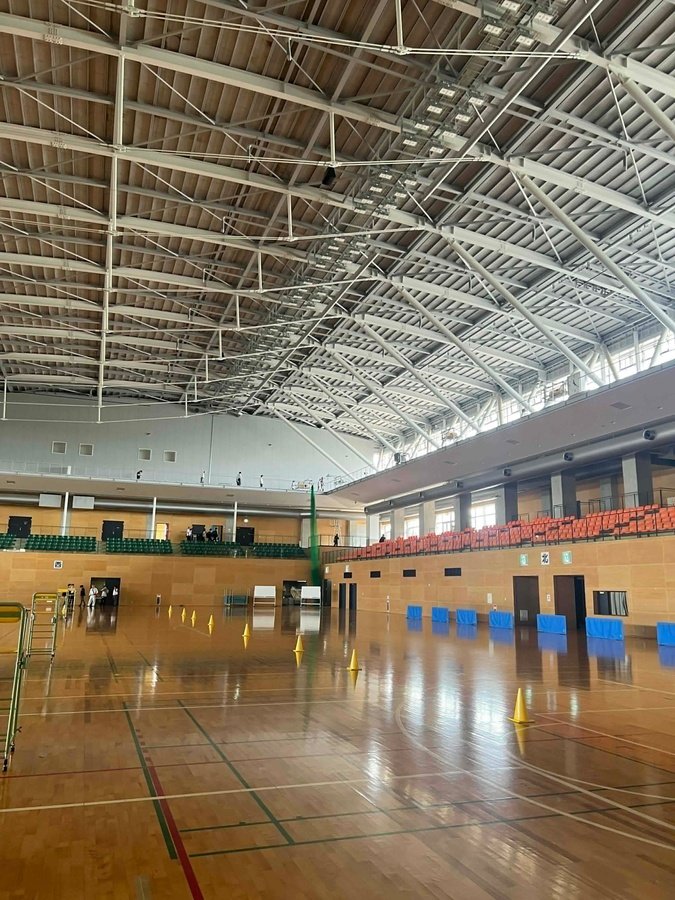
The 20th Asian Games opened Saturday in Nagoya with fireworks, a Blue Impulse flyover and a ceremony built around the theme “Harmonic Heart Beat.” But the weeks leading up to it were anything but harmonious, marked by record rainfall, cramped athlete housing and a last-minute standoff over Taiwan’s sports minister that delayed the flag-raising ceremony by more than an hour.
The Games, running from September 19 to October 4 across 43 sports and 54 venues, mark Japan’s third time hosting the continental event, after Tokyo in 1958 and Hiroshima in 1994. This time, organizers skipped building a dedicated athletes’ village to save money following the costs of Tokyo’s pandemic-delayed 2021 Olympics, a decision that has shaped much of the pre-Games conversation.
A Ceremony Delayed by Politics
Saturday’s opening ceremony, staged at Mizuho Park Athletic Stadium and directed by Yukihiko Tsutsumi, was scheduled to begin at 6 p.m. local time. But Friday’s flag-raising ceremony ran into trouble when Taiwan’s sports minister, Lee Yang, was initially blocked from entering. Taiwan’s delegation refused to participate in protest until he was admitted, pushing the ceremony more than an hour past schedule.
Taiwan’s account, reported by Radio Taiwan International, says organizers cited instructions from the Olympic Council of Asia in objecting to his entry. The OCA’s director general, Husain Al-Musallam, framed the objection differently, telling reporters the ceremony was “not for the delegation from the ministry or from the government.” OCA President Sheikh Joaan bin Hamad Al Thani said Friday that he was unaware of the specific incident, according to the same report.
Lee, quoted by the Taipei Times in translation, said his delegation was doing what it could to protect its position at the Games. Taiwan competes internationally as Chinese Taipei, a naming arrangement that has long shadowed its participation in Olympic-affiliated events, and the episode is the latest reminder of how quickly that arrangement can become a flashpoint.
A separate mix-up added to Thursday’s awkwardness. Before a men’s field hockey match at Green Stadium in Gifu, North Korea’s anthem played instead of South Korea’s. Organizers corrected the error, and South Korea went on to beat Bangladesh 5-0. Bangladesh’s delegation head, Imroze Ahmed, was matter-of-fact about it afterward, saying simply, “you can’t blame anyone for this.”
Housing Complaints and a Cruise Ship Solution
Perhaps the most persistent storyline heading into the Games has been accommodation. With no formal athletes’ village, organizers turned to the cruise ship Costa Serena, which can house up to 5,000 athletes and officials, alongside hotels and converted shipping containers for the rest.
The arrangement has drawn complaints from multiple delegations. South Korea said the containers were too cramped for its basketball players. India’s cricket board opted to book its men’s team into a separate hotel entirely. Registration delays and late or misdirected buses have added to the frustration, according to a Reuters dispatch carried by WBOW.
Weather compounded the housing headaches before the Games even began. On September 8, roughly 104 millimeters of rain fell on Nagoya in a single hour, forcing hundreds of athletes housed in container units at Garden Pier to evacuate to higher ground. Nagoya’s mayor and Games deputy president, Ichiro Hirosawa, sought to reassure the public at the time, saying the flooding was “not so serious that the opening on the 19th is in jeopardy.”
That reassurance is being tested again. Typhoon Dujuan is forecast to pass east of the Kanto region around the morning of September 21, though reporting from Business Standard, citing the Asahi Shimbun, suggests Nagoya’s exposure to the storm looks less severe than Tokyo’s. Whether that holds will matter quickly, since Sunday is expected to produce the Games’ first gold medal, likely in triathlon.
Why the Games Still Matter
Despite the rocky buildup, the scale of the event is hard to overstate. Organizers say more than 11,000 athletes are competing, alongside roughly 6,000 team officials, representing 45 countries and regions plus the OCA Refugee Team. That would put Nagoya on pace with the last edition in Hangzhou, which drew close to 12,000 athletes in 2023 after a year’s delay due to COVID-19.
Across 469 events in 71 disciplines, athletes are chasing 1,407 medals, with six sports making their Asian Games debut: surfing, freestyle BMX, mixed martial arts, padel, teqball and virtual taekwondo. For many competitors, the stakes extend well beyond the podium. The Games double as an Olympic qualifier in multiple sports, carrying direct quota spots and ranking points that will shape next year’s Olympic fields.
Star power is plentiful. Chinese swimmers Pan Zhanle and Yu Zidi headline a swimming program that begins in Tokyo, while gymnast Zou Jingyuan and table tennis players Wang Chuqin and Sun Yingsha are among the other names organizers are counting on to draw attention. South Korea has sent a delegation of 1,051 athletes and officials as it targets a third-place overall finish, while the Philippines is fielding its largest-ever team, with 464 athletes.
The Asian Games trace their origins to 1951 in New Delhi, and the event is often described as second in scale only to the Summer Olympics, a comparison that helps explain why Reuters has framed this edition’s difficulties as a test of Japan’s reputation for precision. That framing, and the ceremony’s solidarity-themed messaging, sit uneasily alongside an event that has historically been shaped by regional political tension, the very tension that surfaced again this week in Nagoya. For more on how host cities have navigated that balance, NeuralWired’s coverage of past Olympic and Asian Games logistics offers useful context.
What to Watch Next
The next 48 hours carry real weight for how this edition of the Games will be remembered. Sunday’s triathlon competition is expected to hand out the first gold medals, even as Typhoon Dujuan tracks toward the region and organizers monitor whether any events need to be delayed or moved. Athletics competition begins at Mizuho Park Stadium on September 23 and runs through the 29th, likely to be the Games’ most closely watched week.
Beyond the immediate schedule, larger questions remain unresolved. No formal review of the accommodation problems has been announced, and there has been no official ruling on the Taiwan flag-raising incident. Whether organizers address either in the coming days, or simply let the competition speak for itself, will go a long way toward determining if Nagoya is remembered for what happened before the Games opened, or for what athletes accomplish once they finally get underway. NeuralWired will continue tracking developments as the medal table takes shape.