Category: Defence

NeuralWired’s Defence section covers military affairs, security policy, and the geopolitical developments shaping global security. We report daily on defence spending and procurement, military strategy and operations, national security policy, defence technology, and the geopolitical tensions and alliances that shape international security.

Defence coverage requires particular care, and our editorial standards reflect that. We rely on verified figures from credible sources, including official government and defence ministry statements, established defence research organizations, and recognized news wires, rather than unverified claims. When reporting on conflict or defence related developments, we provide appropriate context, avoid sensationalism, and take care to accurately represent the human and strategic stakes involved.

This section is written for readers who follow global security seriously, including policy professionals, analysts, and anyone who wants to understand how military and security decisions shape the wider world. NeuralWired updates this section daily with original reporting on the defence and security stories drawing global attention.

  • Pentagon and Lockheed Martin Announce a 10-Year, 850-Jet F-35 Framework That Congress Has Not Yet Approved

    Pentagon and Lockheed Martin Announce a 10-Year, 850-Jet F-35 Framework That Congress Has Not Yet Approved

    The F-35 is the most expensive weapon system the Pentagon owns, and the fleet is increasingly hard to keep flying. This week, the government and its contractor proposed to fix both problems with a single decade-long promise. The promise comes with a catch: the people who would have to fund it have not agreed to it.

    On 22 October 2026, the US Department of War, the name now used in official Pentagon releases, and Lockheed Martin announced a 10-year framework agreement covering F-35 production and sustainment. Lockheed’s release was datelined Arlington, Virginia. It is a statement of intent, not a contract, and no jets have been ordered.

    What the framework actually covers

    The arrangement spans at least 850 aircraft for the United States across production Lots 21 through 30. It also bundles initial spares, ten years of modification kits and sustainment, and orders from international customers. Production would hold steady at 156 jets a year.

    That annual rate points to a larger total than the US share alone. Air & Space Forces calculated that 156 aircraft a year over a decade comes to roughly 1,560 jets, which would leave about 700 for foreign buyers. That figure is the outlet’s own arithmetic, not a number from the release.

    In return for the long-term commitment, Lockheed will put up at least $7 billion of its own money for program initiatives, according to the Pentagon statement as reported by Defense News, Stars and Stripes and Air & Space Forces. On the 22 October earnings call, CEO Jim Taiclet said supplier contracts would use a fixed-price structure with an escalator. Neither side has disclosed a total value or a price per aircraft.

    Why the money still has to be found

    Language matters here. Some headlines have said the deal was “finalized” or “locked,” but the primary documents describe a framework that depends on Congress. The Pentagon statement says execution remains subject to congressional authorization and appropriations. Lockheed has said it will negotiate terms, pricing and schedules with the F-35 Joint Program Office only if lawmakers grant authority and funding in the coming months.

    The funding picture is not simple. A stopgap spending law runs through 11 December and generally bars new multiyear purchases, and no full-year FY2027 appropriation exists. Both the House and Senate versions of the FY2027 defense policy bill would permit multiyear F-35 contracts, but the two versions must be reconciled before the framework can become a formal award.

    The yearly numbers do line up with what the Pentagon has already asked for. Congress funded 47 F-35s in FY2026, while the FY2027 request sought 85, which matches the framework’s average of 85 US jets a year.

    The readiness problem behind the deal

    Lockheed positions the agreement as a way to turn long-term demand into a healthier fleet, and the fleet’s condition is the strongest argument for it. A Government Accountability Office report released on 11 June found the F-35’s mission-capable rate fell from 67 percent in FY2021 to 44 percent in FY2025. The share of jets that were fully mission capable dropped from 38 percent to 25 percent over the same period.

    The same report found the Joint Program Office paid Lockheed more than $114 million of roughly $269 million in available incentive fees between 2020 and 2023, even though readiness measures stagnated or worsened. GAO also reported that the program office says it needs $13.7 billion more than planned through FY2031 to sustain the fleet. In late June, program chief Lt. Gen. Gregory Masiello told senators the fleet had outgrown the system built to support it.

    That history gives weight to a line in the Pentagon’s announcement. Michael Duffey, the Under Secretary of Defense for Acquisition and Sustainment, said the deal has “fundamentally changed how we stabilize the American defense industrial base.” He also spoke of aligning financial incentives with actual performance, but neither side has explained what those incentives would look like. Given the GAO’s findings on past fee payments, that is the detail to watch.

    A pattern of framework deals

    This is not the Pentagon’s first agreement of this kind in 2026. Lockheed reached a PAC-3 MSE production framework in January and a THAAD framework weeks later, and the THAAD agreement became a contract worth more than $35 billion in June. On 19 October, the Pentagon announced a framework with BAE Systems for APKWS guidance kits.

    The THAAD precedent shows that a framework can turn into money. It does not show that the F-35 version will, because this one is far larger and runs into a more contested budget fight. Earlier F-35 buying was done in smaller chunks, with the Lot 18 and 19 deal worth about $24.3 billion for 296 jets, according to Breaking Defense in September 2025.

    What each side stands to gain

    The Air Force has made its own case for volume. A force-structure report sent to Congress on 16 October says the service needs 1,509 combat-coded fighters by 2035, with F-35As making up about 40 percent of that. How the 850 jets would divide among variants and services has not been made public.

    Lockheed also points to the wider economy, estimating the deal would support 317,000 US jobs and about $79 billion in annual economic activity over the decade. Those are the company’s own projections and should be read that way. The company says more than 1,375 F-35s are in service, with over a million flight hours logged across 42 bases and 13 nations operating them on home soil. The framework would fold international orders into the same production plan, so allied buyers have a stake in how Congress responds.

    What to watch next

    The next few months will decide whether this announcement means anything. Lawmakers have to pass a defense policy bill that allows multiyear buys and then fund it, and only after that would the Joint Program Office and Lockheed sit down to settle prices and schedules. Those prices are still unknown, and so far the deal rests on a promise rather than a number.

    For allies planning around F-35 deliveries, and for crews trying to keep an aging, hard-to-maintain fleet in the air, the question is no longer whether the Pentagon wants a decade of certainty. It is whether Congress is willing to pay for it.
  • US Approves $2.68 Billion Air Defense Sale to Ukraine as Interceptor Shortage Bites

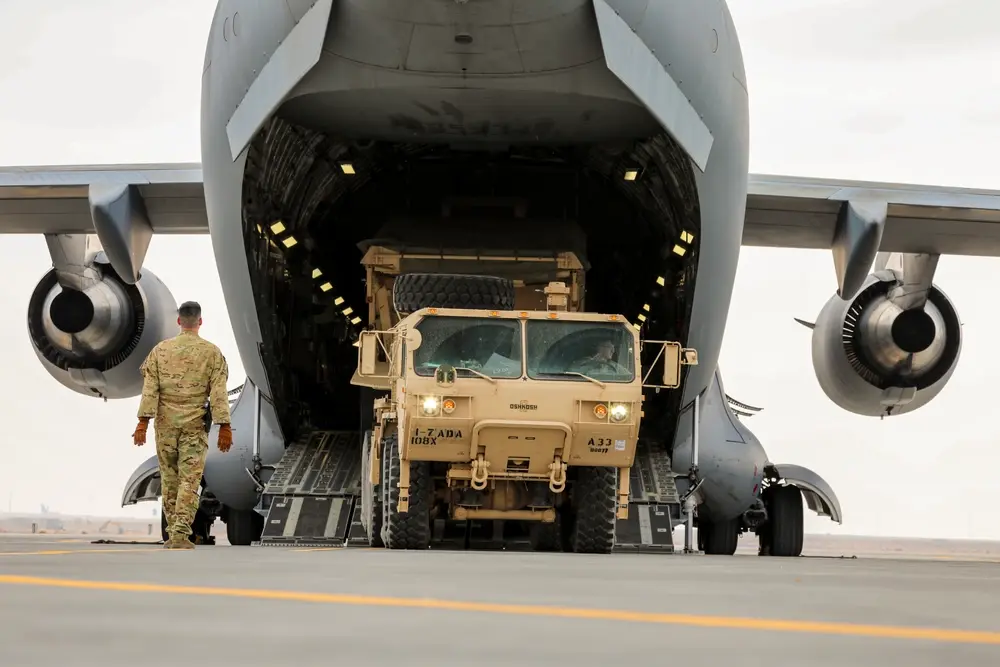
    US Army soldiers load Patriot air defense equipment onto C-17 amid $2.68B Ukraine sale
    U.S. Army Patriot air defense equipment being prepared for deployment, the same weapons category at the center of the new $2.68 billion Ukraine sale. Photo by Sgt. Christopher Neu / U.S. Army, via DVIDS

    Hours after Russian forces sent 174 drones and two Zircon anti-ship missiles across Ukraine in a single overnight barrage, the United States cleared the way for one of the largest air defense packages of the year: a proposed $2.68 billion sale that could reshape how Ukraine defends its skies through the winter ahead.

    The State Department’s Bureau of Political-Military Affairs notified Congress on September 18 of the possible Foreign Military Sale, formally titled an “Air Defense Development Upgrade.” The notification is not a signed contract. It is the required first step that clears a deal to move forward, and it lands at a moment when Ukraine’s air defenses are stretched thinner than at almost any point in the war.

    A Package Built for Layered Defense

    The proposed sale reads less like a single weapons purchase and more like an attempt to rebuild an entire defensive architecture. It includes S-300 Clone missiles, GAM-67 missiles, Range-Extended Air Defense Laser Guided Rocket systems, Improvised Transporter Erector Launcher 1.5 units, mobile launching system modification kits, RPS 202 counter-drone radars, erectable mast trailers, and the software, spare parts, and logistics support needed to keep it all running.

    That mix matters. Rather than concentrating resources on one interceptor type, the package spans missile systems, radar, and counter-drone technology, suggesting a shift toward redundancy across multiple layers of defense instead of dependence on any single platform. Given how visible Ukraine’s dependence on one system has become in recent months, that shift is not incidental.

    The U.S. Embassy in Kyiv framed the deal in similar terms, saying in a statement posted to X on September 19 that the equipment would help Ukraine “conduct self-defense and regional security missions with a more robust air defense capability.”

    Why the Timing Matters

    The notification did not arrive in a vacuum. Ukraine’s stock of Patriot interceptors, the only system in its arsenal capable of reliably shooting down Russian ballistic missiles, has been running critically low for months, and the shortage has already changed how the war is being fought and reported.

    President Volodymyr Zelensky told CNN in mid-August that Ukraine needed roughly 5 percent of the U.S. Patriot interceptor stockpile to survive the winter but had access to closer to 1 percent. Reuters reported around the same time that interceptor deliveries to Ukraine in 2026 had fallen to about a third of what they were the year before. By early August, Bloomberg reported that Ukraine’s air force had quietly stopped publishing nightly missile-count data altogether, following nights when its defenses failed to intercept a single incoming ballistic missile. Part of that squeeze traces back to the parallel conflict involving Iran, which drew heavily on the same shared pool of U.S. and allied Patriot stock, leaving less available for Kyiv even as Russian strikes continued.

    Against that backdrop, the overnight barrage that preceded this notification was a stark illustration of the stakes. Regional officials in Ukraine reported eight confirmed deaths from the attack, with Kharkiv region Governor Oleh Syniehubov citing five deaths and 15 injuries across 14 settlements, and Kherson region Governor Oleksandr Prokudin reporting three deaths and five injuries from shelling across 25 communities. Ukraine’s air force said on Telegram that the two Zircon anti-ship missiles launched in the barrage were intercepted, stating simply that the “[Zircon antiship] missiles did not reach the targets.”

    The attack also rippled beyond Ukraine’s borders. Poland’s military scrambled fighter jets and placed its air-defense systems on heightened alert as a precaution, a step it has now taken repeatedly in response to Russian activity near its frontier. The Polish Armed Forces Operational Command confirmed on X that “military aviation operations have begun in Polish airspace,” though officials later clarified that no actual violation of Polish airspace had occurred. NeuralWired has tracked this pattern of precautionary NATO responses closely as it has become a near-routine feature of the war’s later phases.

    The Money Behind the Deal

    If the sale is finalized, Ukraine would pay for it through a blend of European financial contributions and U.S. Foreign Military Financing funds that were appropriated under the prior administration. The structure is notable in its own right. The State Department specified that the FMF portion will count as a U.S. capital contribution to the Ukraine Reconstruction Investment Fund, applied through a one-to-one reimbursement arrangement.

    That financing model has become the standard route for U.S.-approved arms sales to Ukraine since the current administration curtailed new direct aid packages, relying instead on previously appropriated funds paired with European money. The notification itself was careful to state that the sale “will not alter the basic military balance in the region,” requires no additional American personnel on the ground in Ukraine, and carries “no adverse impact on U.S. defense readiness,” language typical of how the State Department frames sales of this scale.

    For readers following the broader trajectory of Western support, NeuralWired’s continuing coverage of Ukraine’s air defense gap offers more detail on how the interceptor shortfall developed over the course of 2026.

    What Happens Next

    A congressional notification is a procedural gate, not a finished deal. It opens a standard review period before any contract can be finalized, though the specific timeline for this particular review has not been made public. Once that stage clears, principal contractors will be selected through competitive procurement under Federal Acquisition Regulation rules, and the State Department’s notice indicates no offset agreement has been proposed at this point.

    A larger and unresolved question looms alongside this sale: Ukraine’s long-running push to secure a domestic license to produce Patriot interceptors with U.S. contractors, an ambition that would reduce its dependence on foreign stockpiles entirely. The White House has said no decisions or guarantees have been made on that front, and it remains, for now, aspirational rather than actual.

    What is clear is that the interceptor math has not fundamentally changed with this single notification. A $2.68 billion package, even if it clears every remaining hurdle, will take time to manufacture, deliver, and integrate, while the barrages are happening now. The gap between the two timelines, procurement measured in months and Russian strikes measured in nights, is likely to remain the defining tension of Ukraine’s air war through the winter, regardless of what Congress ultimately approves.

  • Trump Signs Russia and Iran Sanctions Act Named for Lindsey Graham: What the Law Does and What Happens Next

    Trump Signs Russia and Iran Sanctions Act Named for Lindsey Graham: What the Law Does and What Happens Next

    The law carries the name of a man who did not live to see it finished, and the president who signed it said nothing about it. On Friday, Donald Trump signed H.R. 5334, the Lindsey O. Graham Sanctioning Russia and Iran Act of 2026, at the White House. The White House confirmed the signing in a brief written statement, but Trump offered no public remarks on what the measure is meant to achieve, a silence that RFE/RL and Iran International both flagged.

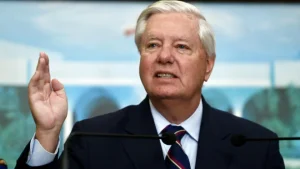
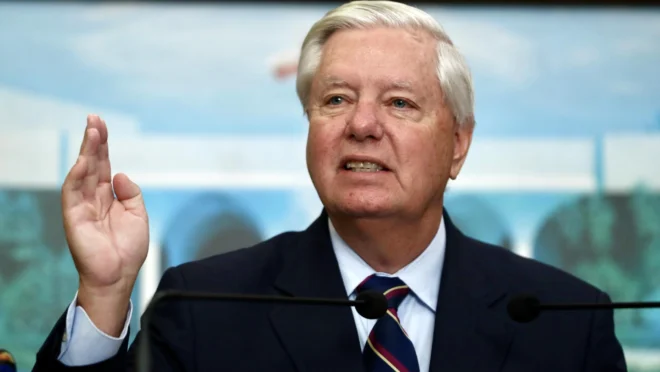
    Official U.S. Senate portrait of Sen. Lindsey Graham, namesake of the Russia and Iran sanctions law
    Sen. Lindsey Graham, shown in his official Senate portrait, championed the sanctions bill that now carries his name.

    Graham, the South Carolina Republican, spent more than a year pushing the package through Congress. He died unexpectedly in July, shortly after returning from a trip to Ukraine. Senator Richard Blumenthal, a Connecticut Democrat, helped draft the bill. The Senate approved it 86-11 in August, and the House followed 262-159 on Wednesday, sending a 61-page bill to the president’s desk.

    What the law actually does

    According to the official summary on Congress.gov, the act stacks several pressure points on Moscow at once. It requires the president to impose visa and property-blocking sanctions on named targets, including the Russian president and certain military commanders. It bars US energy and energy products from being exported, re-exported or transferred to or within Russia.

    The financial provisions go further. American persons can no longer make new investments in Russia or buy Russian sovereign debt, and securities of Russian government-owned, controlled or affiliated entities cannot trade on US national exchanges. The law also aims at the machinery that keeps Russian energy flowing, including the so-called shadow fleet of tankers, along with the owners, operators, managers and insurers behind it. Major Russian LNG projects, among them Yamal LNG and Arctic LNG, are named as targets.

    Iran gets a shorter but significant mention. The act extends the Iran Sanctions Act of 1996 through 2031. Tucked into the same bill is an unrelated tax change that widens a deduction for educator expenses to cover early-childhood teachers, a reminder of how Congress often carries unrelated provisions on larger legislation.

    The legislation is the most significant Russia-related sanctions law to reach the books since the 2017 Countering America’s Adversaries Through Sanctions Act. It also arrives while the war in Ukraine grinds on. Ukrainian officials reported fresh Russian missile and drone strikes on September 19, the day after the signing.

    The tariff clause that reaches Beijing and New Delhi

    The provision likely to matter most beyond Russia’s borders is the tariff mechanism. The president must raise tariffs by up to 100 percent on goods from any country that ranked among the five biggest importers of Russian crude oil or natural gas in the 12 months before enactment, if that country knowingly makes new purchases after the law takes effect.

    China and India are the two largest buyers of Russian crude, which is why the clause carries so much diplomatic weight. It also lands in a complicated moment for energy policy. The administration recently allowed purchases of Russian oil already at sea to continue, during a global oil crunch tied to the separate US-Iran conflict. A law that penalizes Russian energy buyers sits uneasily beside that earlier flexibility, and how the two reconcile is a question for the coming weeks in the world of global energy and trade.

    Nothing has changed at any border yet. No new tariffs are in force on Chinese or Indian goods as a result of the signing.

    Discretion is built into the law

    The law hands Congress a stated objective and hands the president the switch. He can waive its provisions by certifying to Congress that doing so serves the national interest. The administration must also reassess every 180 days which countries fall under the tariff provisions, creating a recurring checkpoint on enforcement.

    That design shapes how analysts read the moment. Luke Coffey, a senior fellow at the Hudson Institute, told RFE/RL that the law’s symbolism and timing are among its most important features, then added a caution: “I would not expect major new sanctions or tariffs to be implemented overnight as a result of this legislation.”

    Kerri Bitsoff, a former senior official at the Treasury Department’s Office of Foreign Assets Control, pointed to a more practical test. She noted that Treasury has shown no movement on existing Russia sanctions in almost eleven months. In her words, “Enforcement on those from Treasury will be a good indication of whether Trump will use this new authority or let it sit.”

    Reaction: relief in Kyiv, frustration over the silence

    Ukrainian President Volodymyr Zelenskyy responded on X, recalling Graham’s repeated message during his visits to Ukraine that pressure on Russia must not ease. He framed the law as a memorial that demands action: “The best way to honor Lindsey’s memory will be to implement the provisions of this law fully and swiftly.”

    Daniel Fried, a former State Department sanctions coordinator, welcomed the signature but questioned the way it happened. Speaking to RFE/RL, he said the absence of a public statement means Trump “has missed a chance to send a message to Putin that he needs to end the war.” Bitsoff, for her part, called the wide bipartisan votes an encouraging signal for Ukraine, evidence that support for pressure on Putin still crosses party lines in Congress.

    What to watch next

    The first real test comes quickly. Trump is scheduled to host Chinese President Xi Jinping at the White House on September 24, a visit reported by multiple wire services since May. China is one of the biggest buyers of Russian crude, so the new tariff authority now hangs over that meeting. Whether Trump raises it, leans on it or quietly sets it aside is an open question. As with any scheduled summit, the date could still shift, so the timing is worth confirming as the week develops.

    The longer arc will play out inside the executive branch. Treasury’s handling of the sanctions already on the books, the first 180-day review of which countries are covered, and any decision to use or waive the 100 percent tariff will show whether this law becomes a working instrument or a statement of intent. For readers following defence and security policy, the signature settled the legislative fight, but the harder decisions about enforcement now belong to the administration alone.


  • U.S. Says It Has Weapons in Orbit. China and Russia Aren’t Happy.

    U.S. Says It Has Weapons in Orbit. China and Russia Aren’t Happy.

    Photo by Andy Morataya / U.S. Air Force, via af.mil

    For the first time in the history of American spaceflight, a senior U.S. official has said out loud what analysts have suspected for years: the United States already has weapons in space, and they are operational right now.

    The admission came from Troy Meink, Secretary of the Air Force, during a keynote address at the Air, Space & Cyber Conference in National Harbor, Maryland, on September 14. “Today, we continue to ensure we remain ready to meet the challenge of evolving threats wherever they exist,” Meink told the audience. “This is why the Space Force now has on-orbit space control weapons capable of defending the joint force against hostile adversary action.”

    It was a short line, delivered without fanfare, but it broke decades of deliberate American ambiguity about whether the country had crossed the threshold from developing counter-space capabilities to actually deploying them in orbit. Within a day, Beijing and Moscow had both responded, and a story that started as a conference speech turned into the latest flashpoint in a rivalry that now extends roughly 250 miles above the Earth’s surface.

    What Meink Actually Said, and What He Didn’t

    Meink was careful. He confirmed the existence of the weapons but declined to describe them in any way that would reveal what they actually are. He did not say how many exist, when they were deployed, or whether they strike targets physically or disable them through jamming, cyberattacks, or directed energy.

    Pressed by reporters afterward, he made clear the vagueness was intentional. “We’re not going to talk about the specifics of what we’re doing, whether we’ve tested, not tested, or anything else,” he said, adding that the way the disclosure had been worded was “very well thought out.”

    A Space Force spokesperson filled in a little more shading, telling ABC News that the weapons “can be employed for offensive and defensive purposes.” The same spokesperson placed the announcement in a longer arc of American concern, noting that the U.S. has been warning about Russian and Chinese weapons testing in orbit since 2007, and argued that space has effectively already become “a warfighting domain.”

    Elsewhere in his keynote, Meink tied the announcement to the Pentagon’s sprawling Golden Dome missile-defense initiative. He said the program’s Space-Based Interceptor effort had moved “from initial contract to flight-ready hardware” in under a year, with an initial capability now targeted for 2028. He also confirmed that the first satellites in a $4.2 billion Space-Based Air-Moving Target Indication constellation, built by SpaceX under a contract awarded in May, were expected to launch this month.

    Why This Matters Beyond the Speech

    No government has ever officially confirmed fielding weapons in orbit before. The 1967 Outer Space Treaty, which both the United States and Russia have ratified, bans nuclear weapons and other weapons of mass destruction from space, but it says nothing about conventional weapons. That gap is exactly the space, in every sense, that Meink’s announcement now occupies.

    Juliana Suess, a space security expert at the German Institute for International and Security Affairs, told CNBC that the lack of detail leaves enormous room for interpretation. The undisclosed capability, she said, “could be anything,” ranging “from reversible interference, such as jamming, to kinetic, permanently destructive effects.” Her broader assessment was blunt: “In general this is a very destabilizing statement by the United States.”

    That framing gets at what makes this moment different from prior warnings about adversary capabilities. This is not the Pentagon flagging what Russia or China might be building. It is Washington confirming what it has already built and put into orbit, ending an era of strategic ambiguity that both sides of the U.S. political spectrum had, until now, generally preserved.

    Beijing and Moscow Respond

    The reaction from Beijing was swift and pointed. Asked directly about the U.S. announcement at a regular press briefing on September 15, Chinese Foreign Ministry spokesperson Guo Jiakun said China supports the peaceful use of space and opposes turning it into a battleground. “We urge the U.S. to stop expanding military build-up in outer space, and uphold global strategic stability with concrete actions,” he said, according to the ministry’s official transcript.

    Russia’s response followed a similar line but leaned more heavily on the language of disarmament. Kremlin spokesperson Dmitry Peskov said Moscow believes “space must be free of any weapon” and that Russia is “counting on broad international consolidation to continue working toward the complete demilitarisation of space.”

    The irony, noted by several outlets covering the story, is that both governments have spent years testing and developing their own counter-space capabilities, including what a 2024 U.S. intelligence assessment described as a new Russian anti-satellite capability, at the time characterized by the White House as not imminent. Diplomatic efforts to draw clear lines around military activity in orbit have already stalled once: in April 2024, Russia vetoed a joint U.S.-Japan resolution at the UN Security Council calling on states not to develop or deploy weapons of mass destruction in space, then proposed its own resolution banning all weapons in space outright, which also failed to pass.

    The Bigger Picture: Golden Dome’s Ballooning Price Tag

    Meink’s disclosure did not happen in isolation. It landed alongside a broader, and increasingly expensive, transformation of how the U.S. thinks about space as a military domain. President Trump signed an executive order in January 2025 directing the Pentagon to build what was originally called an “Iron Dome for America,” later rebranded Golden Dome. By May of that year, Trump had unveiled the program’s architecture, named Gen. Michael Guetlein as its director, and cited an initial price tag of $175 billion, with a goal of full operational capability by the end of his term in January 2029, according to reporting from Defense Scoop.

    That estimate has not held up well under outside scrutiny. In May 2026, the nonpartisan Congressional Budget Office published an analysis putting a comparable system’s real cost closer to $1.2 trillion over 20 years, a figure widely reported at the time, though the CBO itself cautioned the number reflected just one illustrative approach given how little program detail the Pentagon has released publicly.

    In December 2025, Trump signed a further executive order, “Ensuring American Space Superiority,” which formally expanded the Space Force’s mission beyond defense to include offensive operations, a policy shift that now looks directly connected to Meink’s announcement nine months later.

    What Comes Next

    The immediate next milestones are concrete. The first Space-Based AMTI satellites are expected to launch this month, though the eventual size of that constellation has not been disclosed. The Space-Based Interceptor program is moving through a staged prototype competition, with contractors having cleared the first of four planned gates as of August.

    What happens diplomatically is less predictable. Chinese and Russian officials are likely to keep pressing the issue, potentially at the UN Conference on Disarmament, and there will be close attention paid to whether either country responds by disclosing, or gets caught testing, comparable capabilities of its own. For now, the technical nature of America’s orbital weapons remains classified. What has changed, irreversibly, is that their existence no longer is.