Category: Health

NeuralWired’s Health section covers medical research, public health developments, and wellness trends with global relevance. We report daily on new medical research and clinical findings, public health policy and outbreaks, healthcare systems and access, and developments in wellness and preventive health that affect readers around the world.

Health reporting carries real consequences for readers, so our standards here are especially strict. We clearly distinguish preliminary research from established medical consensus, we avoid language that could cause unnecessary alarm or encourage unproven treatments, and every clinical or statistical claim is checked against peer reviewed research, public health authorities, or other credible primary sources before publication. Content published in this section is provided for informational purposes and is never a substitute for professional medical advice.

This section is written for a global readership that wants to stay informed about health developments that matter, from major research breakthroughs to public health issues affecting communities worldwide. NeuralWired updates this section daily with original coverage of the health stories generating global attention.

  • Pope Leo XIV Lung Cancer Surgery: How He Is Recovering and Whether the South America Trip Is Still On

    Three days after surgeons removed part of his right lung, Pope Leo XIV was back at an altar. The Vatican released the first images of him since the operation on Friday, showing the 71-year-old pontiff celebrating Mass in a makeshift chapel at Rome’s Gemelli Hospital, with no congregation but the people caring for him.

    The pictures answer one question about his recovery. They also sharpen another, which is how much the first major health challenge of this papacy will change what comes next.

    What Happened in the Operating Room

    Leo told the faithful himself. At the Sunday noon prayer on October 11, he said doctors had found a nodule in his lung and recommended an operation. He described it as being in “a very initial phase” and “well localized.” The Vatican later said it was found during routine medical examinations.

    He was admitted to Gemelli on October 13. Surgeons removed the lower lobe of his right lung using a minimally invasive, camera-guided technique. He spent about three hours in the operating room, and the surgery itself took roughly 90 minutes.

    Tissue examined during the procedure confirmed what preoperative tests had suggested: lung adenocarcinoma. The Vatican’s medical release, signed by Dr. Luigi Carbone and Prof. Stefano Margaritora, was brief. In its words, “The surgery was successful, and there were no complications.”

    The Vatican press office added that describing the removal as “radical” meant doctors took out all suspect tissue. It also said that chemotherapy and other treatments were not under discussion while further test results were pending.

    The language shifted from “nodule” to “cancer” within days. That reflects the sequence of events rather than any change in the story. The diagnosis was confirmed during the operation itself.

    Understanding the Diagnosis

    Adenocarcinoma is the most common form of non-small cell lung cancer, accounting for about 40 percent of cases according to the National Cancer Institute, as cited by ABC News. It typically forms in the outer part of the lungs and tends to grow relatively slowly. Readers who want to understand how doctors approach this disease can find the clinical framework in the National Cancer Institute’s treatment guide for non-small cell lung cancer.

    What the public does not know is as important as what it does. The Vatican has not disclosed the cancer’s stage, whether lymph nodes were involved, or its molecular profile. There are no survival or recurrence figures for this case, and any commentary offering them is speculation.

    A Steady Recovery, Reported Daily

    The hospital has issued regular bulletins, and they have followed a consistent pattern. On October 14, doctors reported normal blood tests and a normal chest X-ray. They said Leo was doing respiratory physiotherapy, walking around his room and eating a regular diet.

    The next day’s update said his tests remained normal and the operated lung was recovering well. By Friday, the medical team told reporters, as relayed by the Associated Press, that he could carry out “normal daily activities completely on his own.”

    The Mass came the same day. Vatican spokesman Matteo Bruni said the pope presided alone, gave Communion to medical staff and Vatican gendarmes, and used his homily to thank the hospital workers who had treated him.

    The Questions Still Open

    Doctors are still waiting on several results. They want to know the cancer’s molecular and genetic makeup, whether it spread beyond the removed lobe, and whether he will need any further treatment. Those answers will shape his medical path far more than the surgery’s smooth outcome can.

    Bruni confirmed that Leo intends to lead the Sunday Angelus on October 18, though it remains unclear whether he will do so from the hospital or from the Vatican. His audiences are canceled through Tuesday, October 20. When he goes home is a decision left to his doctors, who had initially estimated a stay of about a week.

    The Trip That Hangs Over Everything

    The largest open question is logistical and diplomatic. Leo is scheduled to travel to Uruguay, Argentina and Peru from November 6 to 17, a journey that would begin just 24 days after his operation.

    The signals have been mixed. On October 14, Bruni said no changes to the trip had been announced, and the spokesman said the pope “wants to go.” This week the Vatican also published the list of journalists accredited to cover the journey. The AP described that as a sign the trip is moving forward organizationally, while noting that plans can change at any time.

    Cardinal Pietro Parolin, the Vatican Secretary of State, has been more cautious. On October 15, he told reporters, “We can’t make any type of predictions.” (Parolin’s remarks were translated from Italian, and outlets render the wording slightly differently.) He also suggested the pope might have to “adjust” how he carries out his duties if needed. Asked on Friday what he meant, he said it was “with respect to this next trip.”

    Read together, those remarks do not amount to a cancellation. They do suggest the Vatican is leaving itself room.

    Why This Story Reaches Beyond Rome

    Leo leads a Catholic Church of roughly 1.4 billion people. He was elected the 267th pontiff in May 2025 and is the first American to hold the office. His illness is the first serious medical test of his time in the role.

    The Vatican’s handling of it has also stood out. It named the diagnosis, identified the surgeons and gave the length of the operation, a level of detail that Religion News Service described as new for papal health communication.

    The story also has a plain public-health lesson. A small nodule, found during routine checks and removed while still localized, is the kind of early catch that clinicians hope for.

    What to Watch Next

    The coming days will carry more weight than the surgery itself did. Sunday’s Angelus will show how much strength the pope has and where he wants to be seen. The pending pathology results will determine whether the Vatican’s careful language about further treatment holds.

    Then there is the calendar. If the November trip is still on the schedule once those results arrive, it will say as much about the medical picture as any bulletin.
  • Pennsylvania’s Measles Outbreak Nears 1,000 Cases as the State and CDC Disagree on the Death Toll

    Pennsylvania’s Measles Outbreak Nears 1,000 Cases as the State and CDC Disagree on the Death Toll

    Pennsylvania says five of its residents have died of measles this year. The CDC’s national tally lists two. Neither number has moved the other, and the gap between them has become one of the more revealing fights in American public health.

    The state’s latest update, dated October 2, counts 977 confirmed cases across 39 counties, with 195 people hospitalized. That is 34 more cases than the Pennsylvania Department of Health had reported just two days earlier. Only four of the cases involved vaccinated people, which is under 1% of the total.

    The fifth death

    On September 30, the Department of Health told the CDC that a Lancaster County resident who tested positive for measles had died. The person was unvaccinated. The department has said little else, pointing to privacy law and the family’s right to grieve in private.

    The details matter, because the death has not been independently confirmed locally. Lancaster County’s coroner told CBS 21 he could not confirm it, and the Philadelphia Inquirer reported that state officials called him but offered no specifics. The state maintains the person lived in the county, though it has not said where the death occurred.

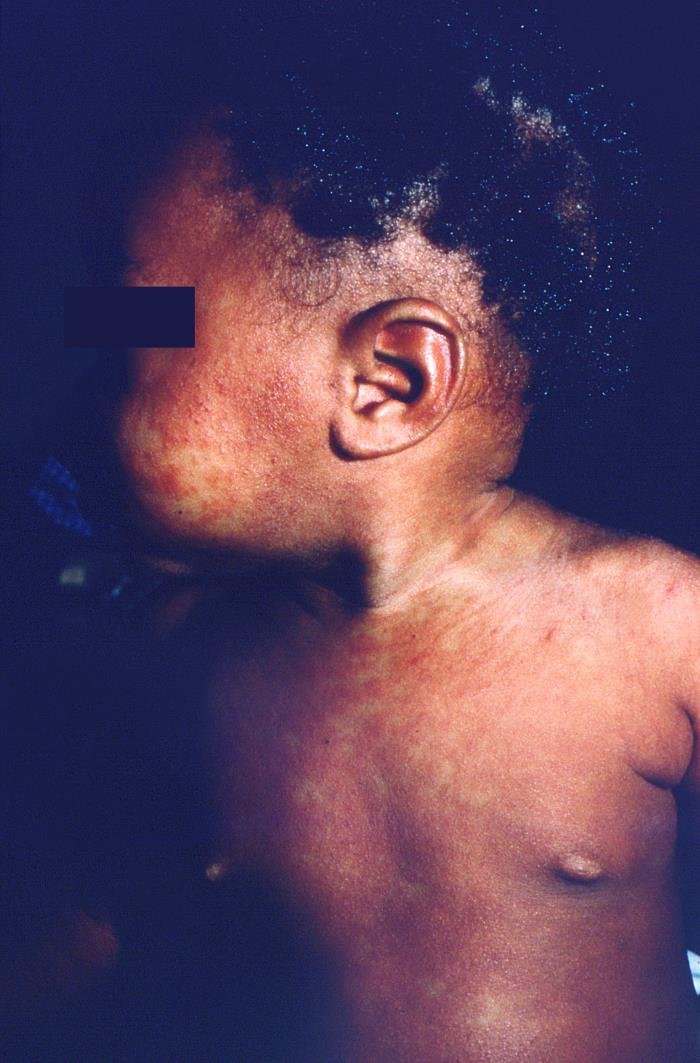
    The other four deaths were an unvaccinated 18-year-old in Mifflin County, a 40-year-old woman in Jefferson County, and two infants in Lancaster County. In the Jefferson County case, the coroner confirmed an active measles infection at the time of death, alongside severe asthma and COPD. A coroner also said one of the infants had a rare genetic disorder.

    Why the numbers don’t match

    Pennsylvania uses the term “measles-associated death.” It covers anyone with confirmed measles who dies within 30 days of symptom onset, unless something unrelated caused the death. The state acknowledges that measles may be present without being the immediate cause. Epidemiologists told Al Jazeera the metric has long been a standard at both the WHO and the CDC.

    The federal side has changed how it counts. The CDC now draws its measles death figures from National Center for Health Statistics data rather than from state notifiable-disease reports, and CIDRAP reports that this has caused a substantial delay in confirming Pennsylvania’s deaths. The CDC says it is working with state epidemiologists on a standard definition and that its count may change as reviews finish.

    A dispute that has turned political

    The disagreement began in August. Pennsylvania announced its first two deaths on August 25, and the CDC said its weekly update would leave them out while it reviewed the circumstances and causes.

    Health Secretary Kennedy suggested the first reported deaths may have been “altogether fabricated” by a staffer for Governor Josh Shapiro. Shapiro, for his part, said Kennedy personally directed the CDC not to report them. Kennedy has called that claim false, writing on X: “Governor Shapiro’s claim that I directed CDC to suppress Pennsylvania deaths is false.” He has said the CDC applies its own standard for deaths caused by measles.

    On September 16, Pennsylvania Health Secretary Debra Bogen wrote to CDC Director Erica Schwartz that the state had begun requesting Epi-Aid, the CDC’s emergency epidemiological support. In a letter reviewed by Reuters, she wrote: “The CDC’s choice not to publicly recognize the deaths undermines our response.” She said the state would rescind the request if the CDC did not communicate the deaths transparently. Schwartz had earlier said the agency was ready to help once the state formally asked. A department spokesperson says talks with CDC staff continue and nothing is finalized.

    The national picture

    Pennsylvania’s outbreak, which began in late April, sits inside a much larger one. The CDC’s latest weekly update, as reported by CIDRAP, puts the US total at 3,886 confirmed cases, up 228 in a week and the eighth straight week of triple-digit increases. About 95% of those cases were unvaccinated or of unknown status, and 9% resulted in hospitalization.

    The year’s total already exceeds 2025’s 2,289 cases, which was the highest count since 1991. The 4,000 mark could fall as soon as next week.

    Within Pennsylvania, the outbreak is concentrated. Lancaster County has 391 cases, Mifflin 117 and Chester 83, and 69% of cases are in adults. Kindergarten MMR coverage in Lancaster County is 85%, compared with 94.5% in Philadelphia. Nationally, kindergarten coverage has slipped from 95.2% in 2019-20 to 92.4% in 2025-26, which leaves about 280,000 kindergartners at risk.

    There are signs of a response. Pennsylvania providers gave more than 49,000 MMR doses in August and more than 53,000 in September, roughly double the 25,000 in a typical month. Two doses of the vaccine are 97% effective, according to the department.

    What to watch

    The immediate question is whether the CDC’s count changes as its reviews finish, and whether a shared definition of a measles death emerges. How the CDC resolves that will shape how severe this outbreak looks to the public.

    The longer-term stakes are international. The Pan American Health Organization will review US and Mexico measles-elimination status at its annual meeting in November. PAHO’s statement says the review was moved to harmonize the schedule. It will examine whether transmission has continued for a year from outbreaks that began in January 2025. With cases still climbing every week, the answer may be hard to avoid.

    For current figures, the Pennsylvania Department of Health dashboard updates Monday, Wednesday and Friday afternoons, and the CDC updates its national numbers weekly. The figures here reflect data through October 2.

  • First Blood Test for Multiple Cancers Clears Key FDA Hurdle as Advisory Panel Backs GRAIL’s Galleri

    First Blood Test for Multiple Cancers Clears Key FDA Hurdle as Advisory Panel Backs GRAIL’s Galleri

    A single blood draw that can flag signals for more than 50 types of cancer just cleared one of the biggest regulatory hurdles of its kind. On September 23, 2026, an FDA advisory panel voted to support GRAIL’s Galleri test, moving the company closer to what would be the first FDA-approved multi-cancer early detection test on the market.

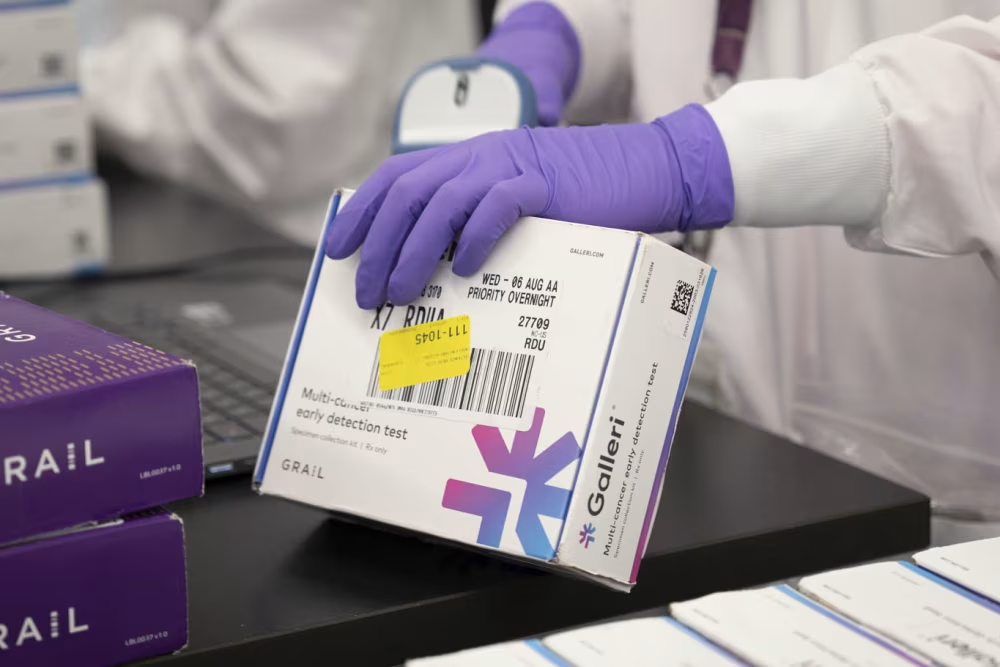
    GRAIL's Galleri multi-cancer blood test kit, the device reviewed in the 2026 FDA advisory panel vote

    The vote was not a landslide. It was close enough, in fact, to capture exactly where the science currently stands on a technology that has generated as much hope as skepticism.

    A Split Decision With High Stakes

    The FDA’s Molecular and Clinical Genetics Devices Panel considered GRAIL’s Premarket Approval application across three separate questions, and the results told three different stories. On safety, the panel was unanimous, voting 10-0 in favor. On whether the test actually works as intended, the vote narrowed sharply to 6-4. On whether its overall benefits outweigh its risks, the panel landed at 7-2, with one member abstaining.

    That spread matters. This marks the first time any multi-cancer blood test has come before an FDA advisory panel at all, and the panel’s job was to weigh in on a technology still working out its own definition of success. Galleri does not diagnose cancer. It scans cell-free DNA for methylation patterns that suggest a cancer signal is present, and if it finds one, it predicts where in the body that cancer likely originated so doctors know where to look next.

    The panel’s vote is advisory only. The FDA is not bound by it and will make the final call independently, though these votes often carry real weight in how the agency proceeds. GRAIL has said a decision is expected in the coming months, though the company has not given a firmer timeline than that.

    Dr. Victor van Berkel of UofL Physicians, who sat on the panel, may have summed up the room’s mood best. “Perhaps my yes is a hopeful rather than an accurate one,” he said, according to reporting from the Associated Press.

    What the Trials Actually Showed

    GRAIL built its case on two large studies, and their results published within a day of each other, on September 22, 2026, in Nature Medicine and the New England Journal of Medicine.

    The first, PATHFINDER 2, enrolled nearly 36,000 adults aged 50 and older across the U.S. and Canada, led by researchers at Oregon Health & Science University’s Knight Cancer Institute. Galleri flagged a cancer signal in 287 participants, and 173 of them were ultimately diagnosed with cancer, a positive predictive value of just over 60 percent. Specificity came in at 99.64 percent, meaning false positives were rare. When the test correctly identified a signal, it predicted the right site of origin in the body 91.3 percent of the time, and only a small fraction of participants, roughly 0.6 percent, went on to an invasive procedure after a positive result.

    Nima Nabavizadeh, the trial’s lead investigator at OHSU, framed the underlying problem the test is trying to solve. Cancers without a recommended screening pathway, he said, “cause up to 70% of cancer deaths.” That statistic sits at the heart of why a test like Galleri has generated so much interest in the first place. Routine screening in the U.S. currently covers just five cancers: breast, colorectal, cervical, lung for high-risk groups, and prostate. Some of the deadliest and hardest to catch, including pancreatic, ovarian, liver and bile duct cancers, have no standard screening test at all.

    The second study, NHS-Galleri, followed nearly 140,000 adults aged 50 to 77 in a randomized controlled trial run with England’s National Health Service. This is where the picture gets more complicated. The trial did not meet its primary endpoint, which was a statistically significant reduction in combined stage III and IV cancer diagnoses. There were more encouraging secondary signals, including a drop of more than 20 percent in stage IV diagnoses during later screening rounds across a dozen of the deadliest cancer types, and an overall detection rate roughly four times higher when Galleri was added to standard care. But the trial’s central goal, the one it was designed to prove, came up short.

    There is also a tradeoff buried in the data that deserves attention. FDA reviewer analysis found that Galleri’s 12-month sensitivity was 35.0 percent in PATHFINDER 2 and 31.6 percent in NHS-Galleri, meaning the test missed roughly two-thirds of cancers that were diagnosed within a year. Diana Zuckerman of the National Center for Health Research, one of the panel’s more pointed critics, argued the test’s stage-1 detection performance was “not as good as a coin toss.” That criticism sits alongside the test’s very low false-positive rate, and both numbers need to be read together to understand what Galleri can and cannot currently do.

    Why This Fight Over Definitions Matters

    According to briefing documents the FDA released ahead of the panel meeting on September 21, regulators had few concerns about the test’s safety, its analytical performance, or how the trials were designed. The real debate centered on something more conceptual: whether the data support calling Galleri an “early detection” test at all, given how the NHS trial’s primary result played out.

    That distinction may sound like semantics, but it carries enormous consequences. If the FDA grants full approval, Galleri would become the first FDA-approved multi-cancer blood test, putting it ahead of competitors such as Abbott’s Cancerguard test. Approval would also likely open the door to Medicare and private insurance coverage, expanding access well beyond the roughly 1 percent of Americans currently paying more than $700 out of pocket for the test, which has been sold commercially in the U.S. as a lab-developed test since 2018, when it first received FDA Breakthrough Device status. A law passed in February 2026 already requires Medicare to cover FDA-approved blood-based multi-cancer tests starting in 2028, meaning this decision has a built-in deadline attached to it regardless of what the FDA ultimately decides.

    Markets clearly understood the stakes. When the FDA’s briefing documents came out on September 21 without raising major red flags, GRAIL’s stock jumped roughly 34 percent in a single day, closing near $108, its best one-day performance in more than a year.

    GRAIL’s chief executive, Josh Ofman, cast the moment as a step toward something larger than one product. He described the company’s goal as building “an effective and efficient cancer screening program” in the U.S., and said GRAIL was “heartened” by the more than 200 physicians, nurses, professional societies, patients and advocates who submitted public comments backing the test.

    It is worth noting that both pivotal trials were designed and funded by GRAIL, which was also involved in analyzing and interpreting the data and preparing the published manuscripts. The PATHFINDER 2 lead author has disclosed a consulting relationship with the company. None of that invalidates the results, but it is relevant context for readers weighing how much confidence to place in them, much like ongoing scrutiny of FDA device approval standards more broadly.

    What Comes Next

    The FDA’s decision, whenever it lands, will do more than determine the fate of one test. It will set a precedent for an entire category of blood-based cancer screening that companies across the industry are racing to bring to market, a trend NeuralWired has tracked in its ongoing coverage of emerging diagnostic technology.

    OHSU is already looking past this decision. The institution is enrolling participants in a follow-on study called REACH, which will examine annual multi-cancer testing in Medicare beneficiaries, and is preparing to launch another study, INFORM, with Dana-Farber Cancer Institute focused on people with inherited cancer risk. Those studies suggest that however the FDA rules on Galleri specifically, the broader question of how this technology fits into everyday medical care is far from settled.

    For now, the 6-4 vote stands as an honest snapshot of where the evidence sits: promising enough to earn cautious support, uncertain enough that even panel members who voted yes described their votes as hopeful rather than definitive. Whether that hope translates into fewer late-stage cancer diagnoses, or simply more tests and more uncertainty for patients navigating a positive result, is the question the coming months are supposed to answer.

  • DRC’s Ebola Outbreak Tops 7,400 Cases as UN Warns Response Is Only Half Funded

    DRC’s Ebola Outbreak Tops 7,400 Cases as UN Warns Response Is Only Half Funded

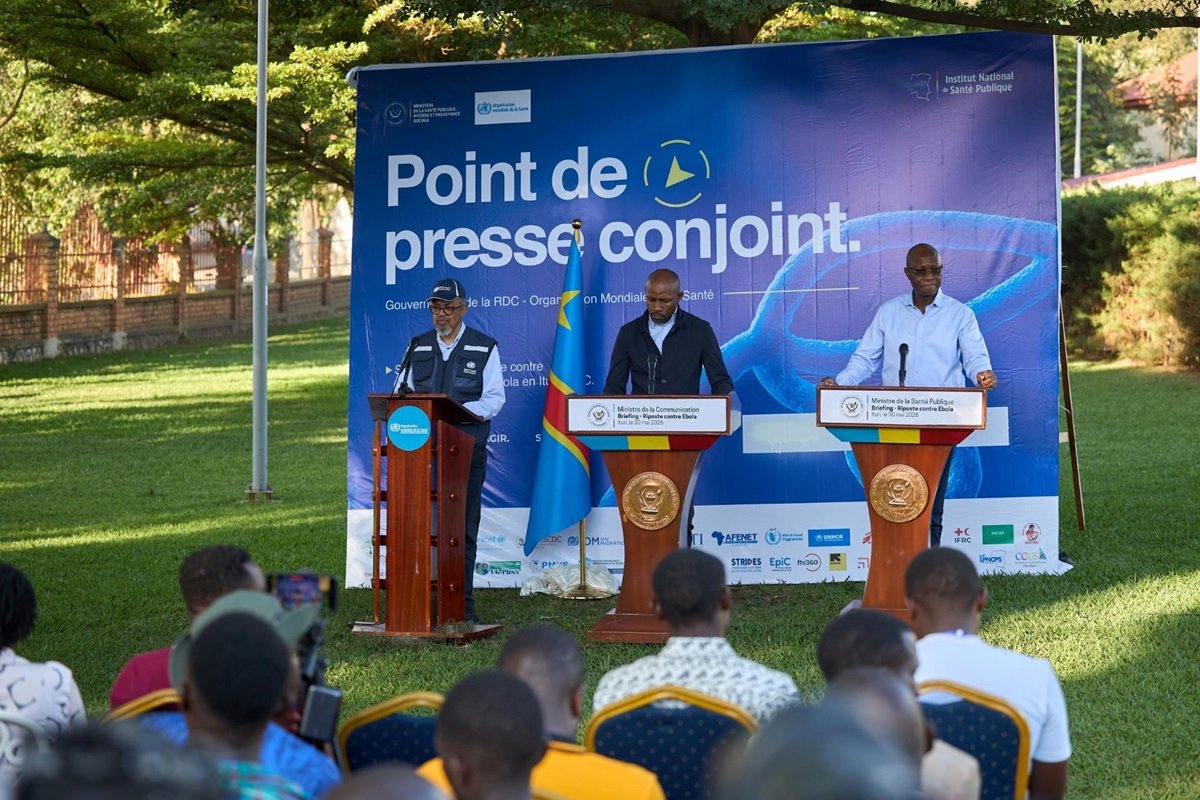
    Photo by Daniel Elombat / WHO, via WHO Newsroom.

    In a cramped isolation ward in Butembo, doctors are now watching for a pattern that has become grimly familiar this year: a cluster of fevers today usually means a cluster of deaths within the week. Nine months into an outbreak that has already killed more people than nearly any Ebola epidemic in recorded history, the numbers released by Congolese health authorities on September 16 make one thing clear. This crisis is not slowing down.

    The Democratic Republic of the Congo now has 7,404 confirmed cases and 3,577 deaths from Ebola disease caused by Bundibugyo virus, according to the country’s official situation report, cited by the European Centre for Disease Prevention and Control (ECDC). In just the 24 hours before that count was taken, 59 new cases and 32 new deaths were recorded, a pace that has held largely steady for months even as the international response has scaled up around it.

    A Rare and Especially Lethal Strain

    Most people who have followed past Ebola outbreaks know the virus by its most infamous form, the Zaire strain, for which the world now has licensed vaccines and treatments. This outbreak is different. It is being driven by Bundibugyo virus, a rarer species of Ebola that has appeared only twice before, in Uganda in 2007 and DRC in 2012, and for which no approved vaccine or specific therapy exists.

    That gap in medical countermeasures helps explain why the case fatality ratio has held near 48 percent since the outbreak began, roughly one in every two confirmed patients has died. It also explains why health officials describe this as more than a humanitarian emergency. It is, as one WHO scientist put it, a live test of how the global health system responds when it has almost none of the tools it would normally reach for.

    The outbreak was first detected in Ituri Province in May 2026, after DRC’s National Institute of Biomedical Research confirmed Bundibugyo virus disease following an alert about an unusually deadly cluster of illness in the Mongbwalu health zone. It was the country’s 17th Ebola outbreak since the virus was first identified in 1976, arriving just five months after the previous one had ended. On May 17, WHO Director-General Dr. Tedros Adhanom Ghebreyesus determined that the epidemic constituted a Public Health Emergency of International Concern, the organization’s highest level of alert short of declaring a pandemic emergency, a threshold he said the outbreak did not meet.

    From that initial cluster, the virus has spread into 62 of DRC’s 167 health zones across seven provinces, stretching from Ituri through North Kivu, South Kivu, Haut-Uélé, Tshopo, Bas-Uélé and Sud-Ubangi. Ituri remains the hardest-hit province by raw numbers, but it is North Kivu that is now drawing the most anxious attention from epidemiologists.

    Why North Kivu Is the New Flashpoint

    “Although the response has been unprecedented in its scale, the epidemic continues to expand,” said Dr. Olivier le Polain, WHO’s unit head for epidemiology and analytics for response, in comments reported by UN News on September 15. He said his team is watching North Kivu closely, “particularly Butembo and Katwa,” where weekly case counts have reportedly doubled from around 100 to around 200.

    Le Polain estimated the response would need “many, many months” to bring the outbreak fully under control, a sobering timeline for an epidemic the US Centers for Disease Control and Prevention has already called the second-largest Ebola outbreak ever recorded. At one point in August, tracking aggregators identified it as the fastest-growing Ebola outbreak on record, with the CDC noting the case count reached roughly 5,000 in its first 100 days alone, a pace it described in a MMWR report as unprecedented.

    The virus did briefly cross into Uganda, where 20 cases were confirmed between May and June. That linked outbreak was declared over by WHO on August 25 after 42 days passed without a new case, a rare piece of good news in an otherwise grim year. Three cases were exported outside Africa during the outbreak, two American aid workers evacuated to Germany and a French humanitarian doctor repatriated to France in late June. All three have recovered.

    The Money Isn’t There Yet

    Behind the case counts sits a second, quieter crisis: funding. Julien Harneis, the UN’s Special Ebola Coordinator, told reporters this week that the $1.3 billion humanitarian response plan for the outbreak is less than half funded, at 49 percent, with roughly $1 billion more needed to sustain operations beyond the first six months.

    “If we don’t have the resources, the epidemic will come back,” Harneis said, according to UN News. “It remains a deadly and massive epidemic.” He was blunt about what a funding shortfall would mean on the ground. “If you don’t provide the care, if you don’t finance the care, if you don’t provide the technical resources, then Ebola is a live enemy and will come back at us.”

    That warning lands against a backdrop of compounding hardship in eastern DRC, a region already strained by conflict. UN officials say the outbreak is worsening hunger, keeping people away from health facilities out of fear of exposure, driving up maternal mortality, and interrupting HIV treatment programs for patients who need consistent care to survive.

    Racing to Build Tools That Don’t Yet Exist

    With no licensed vaccine or treatment for Bundibugyo virus, researchers have spent the past several months trying to build one in real time. In July, the EBO-PEP trial launched in DRC and Uganda to test obeldesivir, an oral antiviral developed by Gilead Sciences, as a post-exposure prophylaxis for people who have had high-risk contact with confirmed patients. It is the first trial of this kind of drug for any filovirus, led by DRC’s biomedical research institute alongside French and international partners. No results have been reported publicly yet.

    A separate trial is testing whether the monoclonal antibody MBP134, combined with the antiviral remdesivir, can improve survival odds for patients already diagnosed, though outcomes from that trial have also not yet been confirmed. On the vaccine front, the Coalition for Epidemic Preparedness Innovations announced in June that it would accelerate development of three investigational Bundibugyo vaccines, including a candidate developed with the Oxford Vaccine Group.

    Tedros struck a note of cautious optimism when the post-exposure trial launched, saying that “every breakthrough begins with hope” and that a successful outcome “could mark a major step forward in preventing Bundibugyo Ebola.” For now, though, supportive care rather than any approved drug remains the only tool available to doctors treating patients in Ituri and North Kivu.

    What to Watch

    The coming weeks will likely turn on two questions that have nothing to do with each other and everything to do with whether this outbreak keeps growing. The first is scientific: whether the EBO-PEP and MBP134 trials produce results showing any real protective or therapeutic effect, which would be the first meaningful medical countermeasure this outbreak has had access to. The second is far more mundane and, right now, arguably more urgent: whether international donors close the gap on a response plan that is still less than half paid for.

    Until one of those things changes, the trajectory described by WHO’s own epidemiologists is likely to hold: an epidemic that keeps expanding despite an unprecedented response, with North Kivu’s Butembo and Katwa health zones the places most likely to determine what the next update looks like.