
Tag: HealthNews

  • Pope Leo XIV Lung Cancer Surgery: How He Is Recovering and Whether the South America Trip Is Still On

    Three days after surgeons removed part of his right lung, Pope Leo XIV was back at an altar. The Vatican released the first images of him since the operation on Friday, showing the 71-year-old pontiff celebrating Mass in a makeshift chapel at Rome’s Gemelli Hospital, with no congregation but the people caring for him.

    The pictures answer one question about his recovery. They also sharpen another, which is how much the first major health challenge of this papacy will change what comes next.

    What Happened in the Operating Room

    Leo told the faithful himself. At the Sunday noon prayer on October 11, he said doctors had found a nodule in his lung and recommended an operation. He described it as being in “a very initial phase” and “well localized.” The Vatican later said it was found during routine medical examinations.

    He was admitted to Gemelli on October 13. Surgeons removed the lower lobe of his right lung using a minimally invasive, camera-guided technique. He spent about three hours in the operating room, and the surgery itself took roughly 90 minutes.

    Tissue examined during the procedure confirmed what preoperative tests had suggested: lung adenocarcinoma. The Vatican’s medical release, signed by Dr. Luigi Carbone and Prof. Stefano Margaritora, was brief. In its words, “The surgery was successful, and there were no complications.”

    The Vatican press office added that describing the removal as “radical” meant doctors took out all suspect tissue. It also said that chemotherapy and other treatments were not under discussion while further test results were pending.

    The language shifted from “nodule” to “cancer” within days. That reflects the sequence of events rather than any change in the story. The diagnosis was confirmed during the operation itself.

    Understanding the Diagnosis

    Adenocarcinoma is the most common form of non-small cell lung cancer, accounting for about 40 percent of cases according to the National Cancer Institute, as cited by ABC News. It typically forms in the outer part of the lungs and tends to grow relatively slowly. Readers who want to understand how doctors approach this disease can find the clinical framework in the National Cancer Institute’s treatment guide for non-small cell lung cancer.

    What the public does not know is as important as what it does. The Vatican has not disclosed the cancer’s stage, whether lymph nodes were involved, or its molecular profile. There are no survival or recurrence figures for this case, and any commentary offering them is speculation.

    A Steady Recovery, Reported Daily

    The hospital has issued regular bulletins, and they have followed a consistent pattern. On October 14, doctors reported normal blood tests and a normal chest X-ray. They said Leo was doing respiratory physiotherapy, walking around his room and eating a regular diet.

    The next day’s update said his tests remained normal and the operated lung was recovering well. By Friday, the medical team told reporters, as relayed by the Associated Press, that he could carry out “normal daily activities completely on his own.”

    The Mass came the same day. Vatican spokesman Matteo Bruni said the pope presided alone, gave Communion to medical staff and Vatican gendarmes, and used his homily to thank the hospital workers who had treated him.

    The Questions Still Open

    Doctors are still waiting on several results. They want to know the cancer’s molecular and genetic makeup, whether it spread beyond the removed lobe, and whether he will need any further treatment. Those answers will shape his medical path far more than the surgery’s smooth outcome can.

    Bruni confirmed that Leo intends to lead the Sunday Angelus on October 18, though it remains unclear whether he will do so from the hospital or from the Vatican. His audiences are canceled through Tuesday, October 20. When he goes home is a decision left to his doctors, who had initially estimated a stay of about a week.

    The Trip That Hangs Over Everything

    The largest open question is logistical and diplomatic. Leo is scheduled to travel to Uruguay, Argentina and Peru from November 6 to 17, a journey that would begin just 24 days after his operation.

    The signals have been mixed. On October 14, Bruni said no changes to the trip had been announced, and the spokesman said the pope “wants to go.” This week the Vatican also published the list of journalists accredited to cover the journey. The AP described that as a sign the trip is moving forward organizationally, while noting that plans can change at any time.

    Cardinal Pietro Parolin, the Vatican Secretary of State, has been more cautious. On October 15, he told reporters, “We can’t make any type of predictions.” (Parolin’s remarks were translated from Italian, and outlets render the wording slightly differently.) He also suggested the pope might have to “adjust” how he carries out his duties if needed. Asked on Friday what he meant, he said it was “with respect to this next trip.”

    Read together, those remarks do not amount to a cancellation. They do suggest the Vatican is leaving itself room.

    Why This Story Reaches Beyond Rome

    Leo leads a Catholic Church of roughly 1.4 billion people. He was elected the 267th pontiff in May 2025 and is the first American to hold the office. His illness is the first serious medical test of his time in the role.

    The Vatican’s handling of it has also stood out. It named the diagnosis, identified the surgeons and gave the length of the operation, a level of detail that Religion News Service described as new for papal health communication.

    The story also has a plain public-health lesson. A small nodule, found during routine checks and removed while still localized, is the kind of early catch that clinicians hope for.

    What to Watch Next

    The coming days will carry more weight than the surgery itself did. Sunday’s Angelus will show how much strength the pope has and where he wants to be seen. The pending pathology results will determine whether the Vatican’s careful language about further treatment holds.

    Then there is the calendar. If the November trip is still on the schedule once those results arrive, it will say as much about the medical picture as any bulletin.
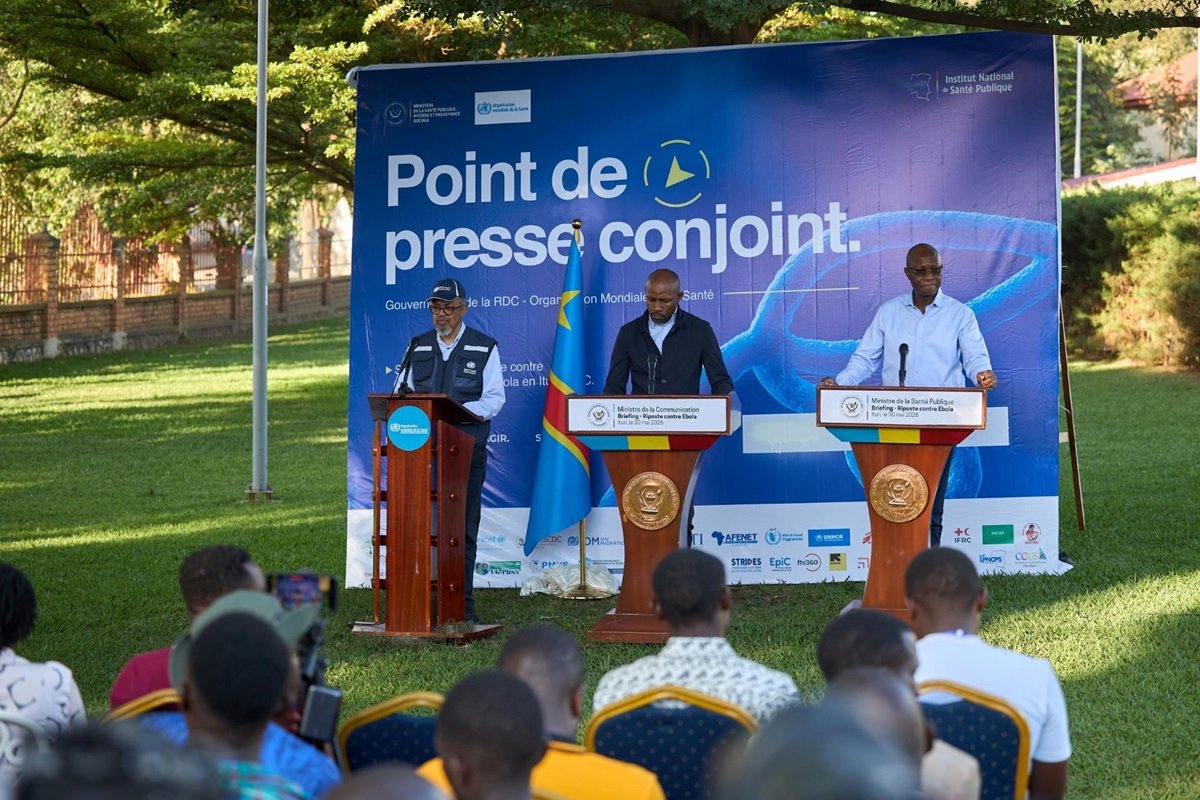
  • DRC’s Ebola Outbreak Tops 7,400 Cases as UN Warns Response Is Only Half Funded

    DRC’s Ebola Outbreak Tops 7,400 Cases as UN Warns Response Is Only Half Funded

    Photo by Daniel Elombat / WHO, via WHO Newsroom.

    In a cramped isolation ward in Butembo, doctors are now watching for a pattern that has become grimly familiar this year: a cluster of fevers today usually means a cluster of deaths within the week. Nine months into an outbreak that has already killed more people than nearly any Ebola epidemic in recorded history, the numbers released by Congolese health authorities on September 16 make one thing clear. This crisis is not slowing down.

    The Democratic Republic of the Congo now has 7,404 confirmed cases and 3,577 deaths from Ebola disease caused by Bundibugyo virus, according to the country’s official situation report, cited by the European Centre for Disease Prevention and Control (ECDC). In just the 24 hours before that count was taken, 59 new cases and 32 new deaths were recorded, a pace that has held largely steady for months even as the international response has scaled up around it.

    A Rare and Especially Lethal Strain

    Most people who have followed past Ebola outbreaks know the virus by its most infamous form, the Zaire strain, for which the world now has licensed vaccines and treatments. This outbreak is different. It is being driven by Bundibugyo virus, a rarer species of Ebola that has appeared only twice before, in Uganda in 2007 and DRC in 2012, and for which no approved vaccine or specific therapy exists.

    That gap in medical countermeasures helps explain why the case fatality ratio has held near 48 percent since the outbreak began, roughly one in every two confirmed patients has died. It also explains why health officials describe this as more than a humanitarian emergency. It is, as one WHO scientist put it, a live test of how the global health system responds when it has almost none of the tools it would normally reach for.

    The outbreak was first detected in Ituri Province in May 2026, after DRC’s National Institute of Biomedical Research confirmed Bundibugyo virus disease following an alert about an unusually deadly cluster of illness in the Mongbwalu health zone. It was the country’s 17th Ebola outbreak since the virus was first identified in 1976, arriving just five months after the previous one had ended. On May 17, WHO Director-General Dr. Tedros Adhanom Ghebreyesus determined that the epidemic constituted a Public Health Emergency of International Concern, the organization’s highest level of alert short of declaring a pandemic emergency, a threshold he said the outbreak did not meet.

    From that initial cluster, the virus has spread into 62 of DRC’s 167 health zones across seven provinces, stretching from Ituri through North Kivu, South Kivu, Haut-Uélé, Tshopo, Bas-Uélé and Sud-Ubangi. Ituri remains the hardest-hit province by raw numbers, but it is North Kivu that is now drawing the most anxious attention from epidemiologists.

    Why North Kivu Is the New Flashpoint

    “Although the response has been unprecedented in its scale, the epidemic continues to expand,” said Dr. Olivier le Polain, WHO’s unit head for epidemiology and analytics for response, in comments reported by UN News on September 15. He said his team is watching North Kivu closely, “particularly Butembo and Katwa,” where weekly case counts have reportedly doubled from around 100 to around 200.

    Le Polain estimated the response would need “many, many months” to bring the outbreak fully under control, a sobering timeline for an epidemic the US Centers for Disease Control and Prevention has already called the second-largest Ebola outbreak ever recorded. At one point in August, tracking aggregators identified it as the fastest-growing Ebola outbreak on record, with the CDC noting the case count reached roughly 5,000 in its first 100 days alone, a pace it described in a MMWR report as unprecedented.

    The virus did briefly cross into Uganda, where 20 cases were confirmed between May and June. That linked outbreak was declared over by WHO on August 25 after 42 days passed without a new case, a rare piece of good news in an otherwise grim year. Three cases were exported outside Africa during the outbreak, two American aid workers evacuated to Germany and a French humanitarian doctor repatriated to France in late June. All three have recovered.

    The Money Isn’t There Yet

    Behind the case counts sits a second, quieter crisis: funding. Julien Harneis, the UN’s Special Ebola Coordinator, told reporters this week that the $1.3 billion humanitarian response plan for the outbreak is less than half funded, at 49 percent, with roughly $1 billion more needed to sustain operations beyond the first six months.

    “If we don’t have the resources, the epidemic will come back,” Harneis said, according to UN News. “It remains a deadly and massive epidemic.” He was blunt about what a funding shortfall would mean on the ground. “If you don’t provide the care, if you don’t finance the care, if you don’t provide the technical resources, then Ebola is a live enemy and will come back at us.”

    That warning lands against a backdrop of compounding hardship in eastern DRC, a region already strained by conflict. UN officials say the outbreak is worsening hunger, keeping people away from health facilities out of fear of exposure, driving up maternal mortality, and interrupting HIV treatment programs for patients who need consistent care to survive.

    Racing to Build Tools That Don’t Yet Exist

    With no licensed vaccine or treatment for Bundibugyo virus, researchers have spent the past several months trying to build one in real time. In July, the EBO-PEP trial launched in DRC and Uganda to test obeldesivir, an oral antiviral developed by Gilead Sciences, as a post-exposure prophylaxis for people who have had high-risk contact with confirmed patients. It is the first trial of this kind of drug for any filovirus, led by DRC’s biomedical research institute alongside French and international partners. No results have been reported publicly yet.

    A separate trial is testing whether the monoclonal antibody MBP134, combined with the antiviral remdesivir, can improve survival odds for patients already diagnosed, though outcomes from that trial have also not yet been confirmed. On the vaccine front, the Coalition for Epidemic Preparedness Innovations announced in June that it would accelerate development of three investigational Bundibugyo vaccines, including a candidate developed with the Oxford Vaccine Group.

    Tedros struck a note of cautious optimism when the post-exposure trial launched, saying that “every breakthrough begins with hope” and that a successful outcome “could mark a major step forward in preventing Bundibugyo Ebola.” For now, though, supportive care rather than any approved drug remains the only tool available to doctors treating patients in Ituri and North Kivu.

    What to Watch

    The coming weeks will likely turn on two questions that have nothing to do with each other and everything to do with whether this outbreak keeps growing. The first is scientific: whether the EBO-PEP and MBP134 trials produce results showing any real protective or therapeutic effect, which would be the first meaningful medical countermeasure this outbreak has had access to. The second is far more mundane and, right now, arguably more urgent: whether international donors close the gap on a response plan that is still less than half paid for.

    Until one of those things changes, the trajectory described by WHO’s own epidemiologists is likely to hold: an epidemic that keeps expanding despite an unprecedented response, with North Kivu’s Butembo and Katwa health zones the places most likely to determine what the next update looks like.