
Tag: Knesset

  • Herzog Picks Eisenkot Over Netanyahu to Try to Form Israel’s Next Government

    Herzog Picks Eisenkot Over Netanyahu to Try to Form Israel’s Next Government

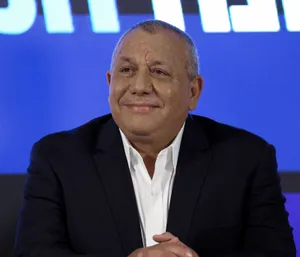
    On Saturday evening, Israel’s president told Gadi Eisenkot that the job of building the country’s next government was his. Isaac Herzog passed over Prime Minister Benjamin Netanyahu, whose Likud party won more seats than any other, and chose the leader of the Yashar party instead. The formal handover was scheduled for Sunday at 5 p.m. local time at the President’s Residence in Jerusalem.

    The decision comes at the end of a tense stretch that began with an election neither side won and has since turned bitter.

    Why Herzog chose Eisenkot

    The choice followed consultations with every Knesset faction. According to Al Jazeera’s report, factions representing 67 lawmakers recommended Eisenkot, while factions representing 46 backed Netanyahu. One seven-seat faction, United Torah Judaism, named no one.

    Herzog had said on Thursday that the decision was his to make, and that it was far from obvious because of what he described as “the mutual vetoes between the blocs and within the blocs themselves.” In other words, many parties had ruled out sitting with others, and the president had to weigh recommendations that did not add up to a workable coalition.

    Eisenkot responded on X, saying that “now is the time for the formation of a national emergency government.”

    The arithmetic is the problem

    Being handed the mandate and being able to use it are different things. A government needs 61 of the Knesset’s 120 seats, and the October 27 election did not give either camp that number.

    The final results published by the Central Elections Committee on October 30 (see the Israel National News report) put Likud on 27 seats and Yashar on 21. B’Yachad won 12, the Joint List 11, the Democrats 8, Ra’am 8, Yisrael Beytenu 7, Otzma Yehudit 7, United Torah Judaism 7, Shas 6 and the Religious Zionist Party 6.

    Grouped by camp, the outgoing coalition holds 53 seats, Eisenkot’s change bloc holds 48, and the two Arab-led parties hold 19 between them. Eisenkot cannot reach 61 from his own bloc alone.

    Adding the Arab-led parties would take him to 67, the same number that recommended him to Herzog. But Al Jazeera reports that Eisenkot has ruled out a government with those parties. He could still govern with fewer than 61 seats if he wins a confidence vote in the Knesset, which leaves the ultra-Orthodox parties and parts of the current coalition as the obvious places to look for support.

    What Eisenkot says he will and will not accept

    Yashar has set out four principles that any partner would have to accept:

    • Recognizing Hamas as a terrorist organization and committing to destroy its military and governing power.
    • Recognizing Israel as a Jewish and democratic state.
    • Accepting the values of the Declaration of Independence.
    • Backing mandatory service for all.

    Eisenkot has also said he will not partner with Netanyahu, and that anyone who held major power on October 7, 2023 must leave public life.

    The fourth principle goes straight to the issue most likely to decide the outcome: military conscription for ultra-Orthodox men. The brief identifies three sticking points for the coming negotiations, namely conscription for Haredi men, the role of the Arab parties, and Netanyahu’s own future. Yashar has invited “Likud and its friends” to join a government without “extremists,” while Netanyahu has called for a unity government that includes all his current allies.

    A bitter backdrop

    The mandate arrives after an unusually sour post-election fortnight. Between October 28 and 30, Likud claimed the election had been “stolen” by Arab parties and demanded a police and Shin Bet investigation. These are Likud’s allegations, and they should be read as such. The Times of Israel reports that the foreign-funding claims have not been substantiated, and the Jerusalem Post notes that no evidence of systematic manipulation has been made public.

    On October 29, the elections committee chairman, Justice Noam Sohlberg, instructed Shin Bet director David Zini to look into intelligence suggesting foreign entities may have financed improper election activity. That inquiry is reported as ongoing.

    On November 4, Sohlberg rejected Likud’s request to delay certification, writing that the committee has no authority to withhold it. Presenting the results, he said: “It is the voters, through their ballots, who determine the election results.” Likud’s lawyer has said the party is preparing to appeal the results in part or in whole and has not yet decided how far to take it.

    Netanyahu’s reaction to the president’s decision was sharp. In a video statement on November 7, he accused Eisenkot of intending to “hurriedly swear in a government with supporters of terrorism.” That is Netanyahu’s characterization, and it sits uneasily with Eisenkot’s reported refusal to rely on the Arab parties.

    What happens now

    Netanyahu remains prime minister until a new government wins a Knesset confidence vote. Eisenkot has 28 days to assemble one, and Herzog may grant an extension of up to 14 days. Details of the timetable are laid out in the Times of Israel’s coverage.

    If Eisenkot fails, Herzog has three days to decide whether to assign another Knesset member or to tell the Speaker that no one appears capable of forming a government. A second candidate would get 14 days. If every attempt fails, the Knesset is dissolved and Israelis go back to the polls. Netanyahu could also get another chance to form a government if Eisenkot comes up short.

    Several signals are worth watching in the coming days. Yisrael Beytenu’s leader has indicated he could accept “painful compromises” on enlistment, and United Torah Judaism has voiced openness to discussing a partnership. Whether either of those openings becomes something concrete, and whether any part of Likud is willing to deal with a prime minister who has vowed not to work with its leader, will say more about Eisenkot’s chances than the 67 recommendations did.

    Eisenkot holds the mandate, but not yet a majority. The next four weeks will show whether a bloc built mostly on opposition to the status quo can agree on anything else.
  • Israel Election Result: Netanyahu and Eisenkot Locked in a Deadlock, With Arab Parties Possibly Holding the Balance

    Israel Election Result: Netanyahu and Eisenkot Locked in a Deadlock, With Arab Parties Possibly Holding the Balance

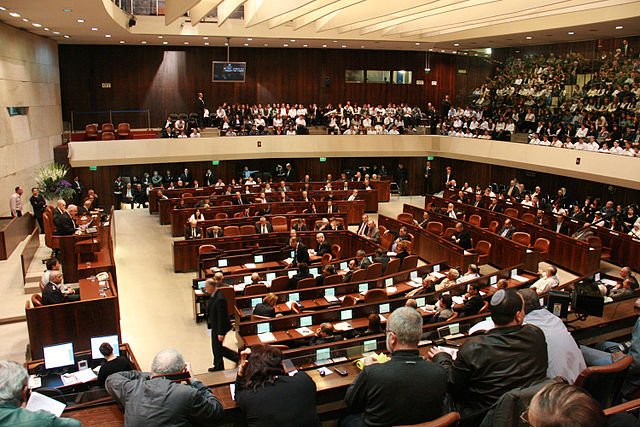
    Israel woke up on Wednesday without a winner. After a Tuesday vote that drew the largest turnout in more than a quarter century, the exit polls could not agree on who won, and the one thing they all pointed to was a long fight over who gets to form the next government.

    Benjamin Netanyahu, who has served more than 19 years as prime minister in total, and Gadi Eisenkot, the former military chief now leading the Yashar party, both claimed momentum. Neither has a clear path to the 61 seats needed for a majority in the 120-seat Knesset. The count is still under way, so everything below is a snapshot, not a final result.

    A Vote That Settled Almost Nothing

    About 7.3 million Israelis were eligible to vote for the 26th Knesset. According to the Central Elections Committee, turnout reached 77.7 percent when polls closed at 10 p.m., up 7.1 percentage points from 2022. TRT World reported that it was the highest since 1999.

    The three major Israeli television networks (Channels 11, 12 and 13) each projected that neither Netanyahu’s bloc nor the opposition bloc would reach 61. Reuters, as carried by ThePrint, likewise described a deadlock with no obvious route to power for either side.

    The early picture slightly favored the challengers, with the opposition bloc at 52 seats to Netanyahu’s 50. The numbers then moved. Channel 12’s update gave Netanyahu’s camp 52 and the opposition 49, while Kan 11 showed a 51 to 51 tie, and CNN reported that Channel 13 also showed a tie. Channel 14, which is strongly pro-Netanyahu, put his bloc at 60, a figure far outside the pack.

    Exit polls are estimates, not results. The gap between the channels, and the revisions made overnight, are a reminder not to treat any seat count as settled.

    Likud Leads, but Leading Is Not Governing

    One finding held steady across the polls. Likud is projected to be the largest single party, with estimates ranging from 24 to 27 seats, ahead of Eisenkot’s Yashar at 20 to 23.

    Being largest does not decide who governs in Israel. The party or bloc with the most votes has no guaranteed right to form a government, and the process can drag on. In 2022, Netanyahu’s bloc won a 64-seat majority even though it received fewer raw votes than its opponents. Two parties, Meretz and Balad, fell below the electoral threshold, and about 289,000 votes ended up unrepresented. This year’s threshold is 3.25 percent of valid votes, roughly four seats.

    The two sides are built from familiar parts. Netanyahu’s bloc includes Likud, Shas, United Torah Judaism, Otzma Yehudit and Religious Zionism-Zehut. The opposition bloc is made up of Yashar, Naftali Bennett’s B’Yachad, Yisrael Beytenu and the Democrats.

    The Arab Parties and the Arithmetic Problem

    The most consequential number may be the one in the middle. The two Arab-led parties, the Joint List and Ra’am, were projected to win a record combined 17 to 18 seats. That could make them pivotal, as Reuters also noted.

    Yet the opposition has largely ruled out relying on them. Democrats leader Yair Golan is the exception, and Avigdor Liberman of Yisrael Beytenu has publicly opposed such an arrangement. So a bloc can look like a majority on paper while having no practical way to govern.

    The election also left tension around how Arab-citizen voters were treated. Likud announced plans to send 2,000 “volunteers” to Arab polling stations over fraud allegations that had no substantiation, and critics called it intimidation. On election day, several parties filed complaints about irregularities, and the Central Elections Committee disputed some of them. Three people were arrested over an alleged scheme to bribe voters to support Ra’am. These are allegations and arrests, not findings, and the full picture is not yet clear.

    First Vote After October 7

    This was Israel’s first national election since the Hamas-led attack of October 7, 2023, and it was fought in that shadow. Netanyahu’s government was in power that day and then served out its full term. The opposition has demanded accountability and a state commission of inquiry.

    Eisenkot, 66, is a hawkish former military chief who lost a son and two nephews in the Gaza war. He has said he will not serve under Netanyahu, including in a rotation arrangement. On Tuesday night he pledged to act at once to carry out “the people’s decision” and to replace Netanyahu’s government. During the campaign he warned Netanyahu, “Don’t you dare to use Israel’s security for your own political gain,” according to Haaretz.

    Netanyahu’s reading of the night was different. He said the results showed his bloc has broad support among Jewish and Zionist Israelis. Eisenkot, former Prime Minister Yair Lapid and Golan all called the exit polls a defeat for him. In that dispute, Netanyahu has one real advantage. Reuters noted that a deadlock could let him stay on as caretaker prime minister while negotiations continue.

    The Count Is Not Over

    The early official count should be read with caution. By 5:20 a.m., just over 1.2 million ballots had been counted, with Likud at 23.36 percent of valid votes and Yashar at 15.74 percent. Early-counted ballots are not representative of the whole electorate, and a vote share is not a seat count.

    Ballots from soldiers and other “double envelope” voters are still to be counted. The Jewish Chronicle said a final result was unlikely before Thursday, while Yahoo expected a tally by Friday. Estimates of timing differ, and those late ballots could still move seats.

    What Happens Next

    The timeline set out in the Times of Israel’s election guide and the JTA explainer is long. Formal results are due by November 4, and parties can appeal until November 18. Within seven days of the formal results, President Isaac Herzog decides who gets the first chance to form a government.

    That candidate has 28 days, which can be extended by 14. If the effort fails, the president has three days to pick someone else, who then gets 28 days with no extension. After that, 61 members of the Knesset can petition for a particular lawmaker within a further 21 days. If every attempt fails, the Knesset dissolves and a new 90-day election cycle begins, with Netanyahu staying on as caretaker.

    The Times of Israel lists three realistic outcomes: a minority government, a unity government (which Eisenkot has ruled out) or another election. It also suggests that a renewed war with Iran, before or after the vote, could push the rival parties toward a unity deal. That remains scenario analysis, not a development.

    For now, the watch list is short. Look for the final seat counts once the soldiers’ ballots are in, whether Herzog turns to Netanyahu or Eisenkot first, and whether anyone on the opposition side changes their position on the Arab parties. Israel has voted, but the decision about who leads it is still weeks away, and may be months.