
Tag: Trump

  • US, China and Russia Issue a Joint Peace Declaration in Shenzhen: What It Says and What It Leaves Out

    US, China and Russia Issue a Joint Peace Declaration in Shenzhen: What It Says and What It Leaves Out

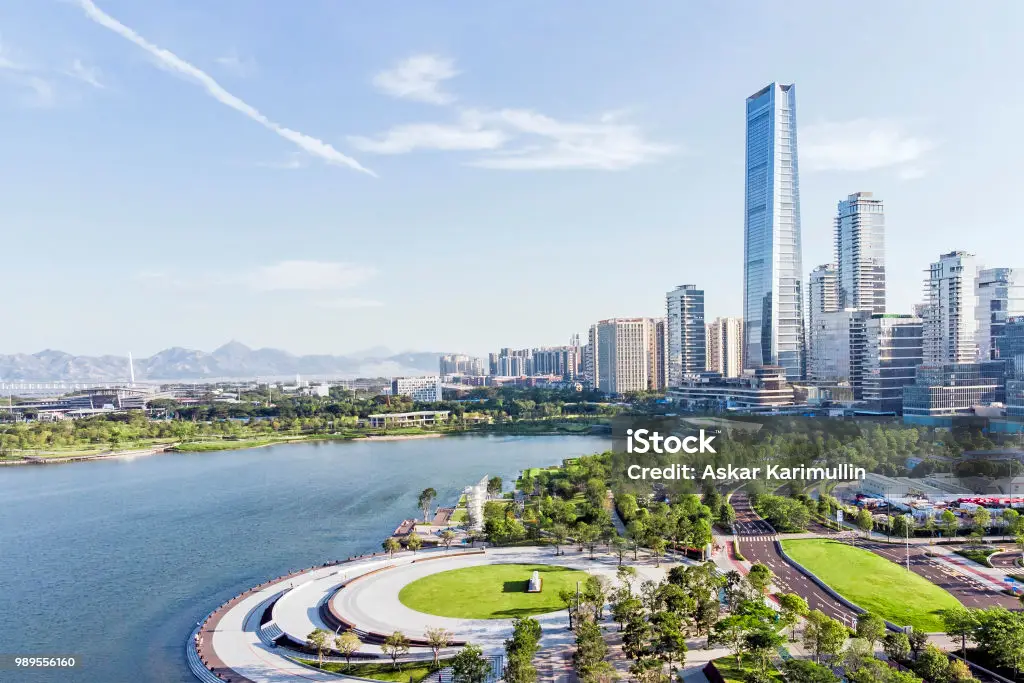
    The leaders of the three countries that hold the world’s largest nuclear arsenals sat down together on Thursday for the first time, and walked out with a four-point written statement. Donald Trump, Xi Jinping and Vladimir Putin met at Kylin Villa in Shenzhen, on the sidelines of the APEC Economic Leaders’ Meeting. They then issued a joint declaration on peace. Ukraine does not appear in it.

    A first, with careful labels

    Officials and media describe the 19 November session as the first formal meeting of the three heads of state together. American officials called it a “trilateral meeting” rather than a summit, a distinction that tells you how Washington wants it understood. Before the joint session, Trump met Xi and Putin separately.

    Reports differ on how long the joint meeting lasted. Accounts range from roughly 80 minutes to about 90 minutes, and CBC says it ran more than an hour. At the start, Trump said the participants were “really making history,” according to CBC.

    The four points

    The title varies by publisher. The White House calls it the “U.S.-Russia-China Heads of State Declaration toward Peace,” while Xinhua renders it as the “China-Russia-U.S. Heads of State Declaration toward Peace.” The White House and Xinhua texts both contain four points.

    UN reform. The three countries, all permanent members of the Security Council, commit to reforming the United Nations so it can answer global challenges more effectively. The declaration offers no detail on what changes they have in mind.

    Energy. They plan to raise production and supply of refined petroleum products and stress the value of steady energy flows. Some coverage has summarized this as increased fossil fuel production, but the text itself speaks of refined petroleum products, which is a narrower commitment.

    The International Criminal Court. The leaders treat state consent and the immunity of state officials as paramount. They add that the ICC and similar bodies must not overreach their jurisdiction.

    Nuclear risk. They reaffirm that “a nuclear war cannot be won and must never be fought,” and they pledge to hold a dialogue on lowering nuclear risks and preventing proliferation.

    Why the ICC clause stands out

    Of the four points, the court language carries the sharpest personal edge. The ICC has issued an arrest warrant for Putin over the war in Ukraine. Analysis in The Conversation argues that Putin has the most immediate stake in that wording.

    A joint statement from the American and Chinese presidents alongside the Russian one gives that position a weight it would not carry coming from Moscow alone. It also sets the three leaders against a court that has acted on events in Ukraine.

    What is missing

    The declaration makes no mention of Ukraine or of Europe. Reports say it also leaves out the war with Iran, which the White House had said Trump wanted to discuss, along with a possible three-way nuclear agreement.

    Those silences were noticed in Europe. Ukraine and the European governments were not at the table. German Chancellor Friedrich Merz, speaking in Berlin, said the “Yalta format” will not bring peace to Europe. The reference to the 1945 wartime conference was a pointed one: great powers settling matters in a room that excluded the countries most affected.

    Before the meeting, Volodymyr Zelensky had argued that the war could end quickly if the United States and China used their economic leverage against Moscow. The declaration does not say whether anyone in Shenzhen took up that idea. No confirmed next steps on Ukraine have emerged from the meeting itself.

    The commitment that could become real

    Strip away the broad language on the UN and energy, and the nuclear dialogue pledge is the only item that points toward concrete follow-up. Even there, nothing has been confirmed on format, venue or date. A promise to talk is not a negotiating framework, and the difference will matter in the coming weeks.

    The sentence that nuclear war cannot be won and must never be fought is familiar diplomatic ground for these governments. What is new is hearing all three say it together, in writing, in one document. Whether that produces any talks depends on what comes next.

    How the meeting fits a longer run of diplomacy

    The Shenzhen meeting follows a series of encounters. Trump and Xi held summits in Beijing in May 2026 and in Washington in September 2026. Their first in-person meeting of Trump’s second term came at the October 2025 APEC summit in South Korea, where China announced that Shenzhen would host APEC in 2026. Trump also hosted Putin in Alaska in August 2025 as part of efforts to end the war in Ukraine.

    Seen against that backdrop, Thursday’s session is the point where two separate sets of bilateral relationships were brought into a single room and a single text.

    What to watch next

    The next test comes quickly. Trump and Xi are scheduled to meet again at the G20 at Trump National Doral in Miami on 14 and 15 December, and Xi is expected to attend. Trump has invited Putin. Putin has said he would consider going but must weigh the situation in Russia.

    If Putin does appear in Doral, the question will be whether the Shenzhen declaration was an opening or a one-off. Watch for any announcement of a venue or date for the nuclear-risk talks, and for how Ukraine, European governments and ICC member states respond, since their reactions are still emerging. For a range of expert reaction, the Council on Foreign Relations roundup is a useful place to start.
  • Trump, Xi and Putin Will Meet in Shenzhen on November 19: What the First Three-Way Summit Means for Nuclear Arms

    Trump, Xi and Putin Will Meet in Shenzhen on November 19: What the First Three-Way Summit Means for Nuclear Arms

    On Thursday afternoon, in the Chinese city of Shenzhen, the presidents of the United States, China and Russia are scheduled to sit down together. No such meeting has ever happened. Two days before it begins, almost nothing about its outcome is known, including whether one of the three will even agree to discuss the subject Washington most wants on the table.

    How the meeting came together

    The White House announced on Friday, November 13, that President Donald Trump will meet jointly with Xi Jinping and Vladimir Putin. China’s Foreign Ministry confirmed the session, and the Kremlin confirmed Putin’s attendance the next day, Saturday, November 14. The talks will take place on the sidelines of the 33rd APEC Economic Leaders’ Meeting.

    Thursday’s schedule has a clear order. Trump begins with the multilateral session among APEC leaders. In the afternoon he holds a formal bilateral meeting with Xi, followed by a working lunch. The three-way conversation comes last.

    At Monday’s briefing, Chinese Foreign Ministry spokesperson Mao Ning called it the first face-to-face trilateral among the three leaders. She described the meeting as “of groundbreaking significance.”

    The agenda: nuclear arms first

    According to the White House, Trump intends to raise efforts to reduce nuclear weapons. White House spokesperson Olivia Wales said the president believes proliferation is “very dangerous.” A senior US official said Trump also plans to bring up the war in Iran, but not the war in Ukraine, in this forum. Details on the scope and status of the Iran conflict were not available for this report.

    Expectations in Washington are low. A senior US official, speaking to CNN on November 13, said: “We do not expect to get to any kind of agreement.” The summit, in other words, is being framed as a conversation rather than a negotiation.

    Why the arms-control gap matters now

    The urgency comes from what no longer exists. The New START treaty, which limited the US and Russian nuclear arsenals, expired on February 5, 2026, with no replacement. Signed in 2010 and extended once in 2021, it capped each side at 1,550 deployed strategic warheads. The Nuclear Threat Initiative maintains a fact sheet on the treaty for readers who want the full terms.

    Russia had signaled some willingness to bridge the gap. In late September 2025, Putin publicly proposed that both countries keep observing the treaty’s limits for one year after it lapsed. Since the expiry, however, there has been no formal framework in its place, and Thursday’s summit is the first high-level attempt to open a three-way discussion.

    A three-way discussion is the point, because the old model no longer matches reality. The treaty bound two nations, while a third has been growing its arsenal. The Stockholm International Peace Research Institute (SIPRI) estimated that China held at least 600 warheads as of January 2025, as laid out in its 2025 yearbook press release. Reporting based on SIPRI’s work puts the growth of China’s arsenal at about 100 warheads a year since 2023. The Washington Times has reported that the Pentagon projects at least 1,000 by 2030, though that figure rests on a single outlet.

    SIPRI’s most recent global estimate, as summarized by a secondary outlet, puts the world total at about 12,187 warheads as of January 2026, with roughly 9,745 in military stockpiles. These are estimates, not confirmed counts, and nuclear arsenal figures always carry that caveat.

    The question hanging over Beijing

    Of the three capitals, Beijing is the one that has said least about arms control. After New START lapsed, China rejected calls to join talks on a new nuclear treaty, and it has also turned away attempts to discuss nuclear arms with Russia and the US.

    That makes China’s behavior in the room the central question of the summit. A meeting that happens on Chinese soil, hosted by Beijing, with Xi at the table, is not an obvious setting for a country that has declined to talk. Whether Xi treats the occasion as an opening or simply as a courtesy is something no one outside the room can say yet. The senior US official’s comment to CNN suggests Washington is not betting on a breakthrough.

    The Kim Jong Un wildcard

    One side story could still change the shape of the trip. On November 16, Trump told reporters at the White House: “We may meet with Kim Jong Un also, so that’ll be good.” A White House official had said earlier that no such meeting was planned, and no party has confirmed one. North Korea has not responded publicly in anything reviewed for this report.

    Trump added that whether Kim is invited is “up to President Xi.” If a meeting did happen, it would be the first between Trump and Kim in about seven years and five months, since their last encounter at Panmunjom in June 2019. For now, it remains a possibility Trump has floated, not a plan.

    What to watch from here

    Before Shenzhen, Trump meets Philippine President Ferdinand Marcos and attends ASEAN events in Manila on November 16 and 17. APEC’s leaders’ meeting opens on November 18 and runs through November 19, when the three-way session is due to close the day.

    The first signal to watch is whether the leaders produce any joint statement at all, or whether each side describes the meeting differently afterward. The second is whether China’s language on arms control shifts even slightly from its recent refusals. The third is whether the Kim question gets an answer. Because the meeting is two days out, tone, outcomes and any agreement remain unknown until it happens. For the first time, three leaders who hold most of the world’s nuclear weapons will be in one room, and what they say, or decline to say, will shape the arms-control picture for a long time.

  • Houthi Strike on Riyadh Airport Kills at Least 12 as Trump Weighs Joining the War

    Houthi Strike on Riyadh Airport Kills at Least 12 as Trump Weighs Joining the War

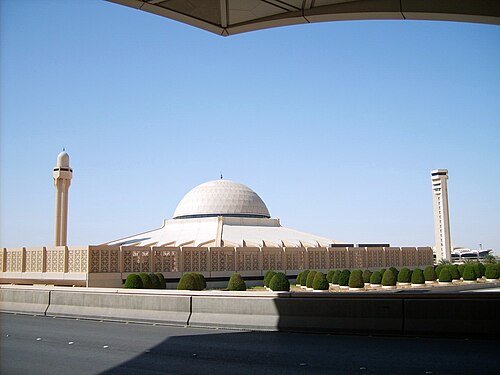
    An airport is supposed to be the one place in a capital where people are only trying to leave or arrive. On Saturday, a Houthi attack on King Khalid International Airport in Riyadh killed at least 12 of them and injured 309, according to Saudi Arabia’s General Authority of Civil Aviation (GACA). The toll is provisional, and some of the injured are in critical condition.

    The dead came from across the region and beyond: four Saudis, two Bangladeshis, and one person each from the United States, Egypt, Jordan, Syria, Palestine and Sudan, as reported by Al Jazeera. Secretary of State Marco Rubio confirmed that an American was among those killed. Now President Donald Trump says he is deciding whether Washington should enter the fight.

    A Week of Strikes on One Airport

    Reuters reported that this was the third attack on the airport in a single week, and described it as the deadliest in the kingdom in more than a decade. That characterization is Reuters’ own. Saudi Arabia’s public alert system, the outlet noted, issued no warning before the strike.

    The airport suspended operations afterward. Houthi media chief posted on X that the group had “shut down” the airport, a claim that comes from the Houthis themselves. The Saudi-led coalition separately reported that a projectile landed near King Fahd International Airport in Dammam, and said on Sunday that it intercepted a missile southeast of Riyadh, near the Prince Sultan airbase.

    The coalition has not held back on language. It called the Riyadh attack a “full-fledged war crime.” Coalition spokesperson Turki al-Maliki, speaking through the Saudi Press Agency, said the strike “will be met with a firm response.” No details of that response have been given.

    How Yemen Got Here

    The airport attacks sit on top of a sharply worsening war inside Yemen. UN special envoy Hans Grundberg told the Security Council on Friday that the country has slid back into “full-scale war,” according to Al Jazeera’s coverage of the briefing. The UN counts at least 46 civilians killed and more than 130 injured since August.

    Al Jazeera reports that the Yemeni government launched an offensive against the Houthis earlier this month, and that the Houthis answered by declaring Saudi airspace a military zone and warning airlines to stay away. The airlines listened. FlightAware data cited by CBC showed at least 124 Riyadh flights cancelled on Friday, after hundreds more the day before. Lufthansa Group has suspended its Riyadh flights through October 16, the US Embassy has urged people to avoid the airport, and Europe’s aviation safety agency, EASA, has widened its guidance on Saudi airspace.

    Grundberg described the strikes as “a grave escalation.” Mohammed al-Bukhaiti, a senior Houthi official, framed them differently, telling The Week that they enforce a policy of “blockade for blockade.” The Houthis are Iran-backed, but the reporting gathered so far does not establish direct Iranian involvement in Saturday’s attack.

    The Decision in Washington

    For the United States, the attack lands on a question it had been avoiding. In September, Axios reported that Trump turned down a request from Crown Prince Mohammed bin Salman for US strikes on the Houthis, offering intelligence and targeting data instead. That account reached NeuralWired through secondary reporting.

    His tone has changed. Trump called the attack “terrible” and “not acceptable,” said the United States “may” join the war against the Houthis, and said he “will be speaking” with the crown prince. He added that he would “move very quickly.” As of this writing, no completed call has been reported. Iran International has reported Trump saying Saudi Arabia can defend itself, which suggests his position is still moving rather than settled.

    The stakes extend past Yemen. Fortune described the airport attacks as a significant escalation on the latest front of the wider Iran war, a conflict that has kept energy markets on edge since it began in late February.

    What It Means for Oil

    The Gulf’s role in the oil market makes any threat to Saudi infrastructure a price story. The US Energy Information Administration says Brent crude averaged around $104 a barrel in the last two weeks of the third quarter, with supply disruption out of Saudi Arabia adding pressure. Brent had fallen to $72 on July 1 before rising again after military strikes resumed on July 7.

    Markets reopen Monday, and no verified Brent close for Friday or Saturday is available yet. Traders will be watching for any sign that the airport attacks are widening into a threat to Saudi energy facilities, not only its aviation.

    What to Watch Next

    Three things will shape the coming days. The first is the Saudi-led coalition’s promised retaliation, and whether it stays inside Yemen. The second is the outcome of Trump’s expected conversation with the crown prince, and whether “may join” becomes a decision. The third is the UN Security Council, where Saudi Arabia and Yemen’s government urged action on Friday.

    Riyadh has made its position plain at the UN. Saudi envoy Abdulaziz al-Wasil said the kingdom will not allow Yemen to be a staging ground for threats to its security or shipping. A civilian airport, a provisional death toll still climbing and a US president weighing his options have put that line to its first real test.