
More than 150 people, including roughly 120 children, died when Tomahawk missiles struck an elementary school in southern Iran on February 28, according to a new United Nations report that also documents a separate American strike, this one dispersing tungsten pellets over a sports complex and nearby homes, killing 22 civilians. Seven months later, the Pentagon still has not released its own account of how either target was chosen.
The findings come from the UN Independent International Fact-Finding Mission on Iran, an independent panel created by the Human Rights Council, in an 18-page report published as an advance version ahead of the Council’s 63rd session in Geneva. The mission concluded there are “reasonable grounds” to believe the United States committed a war crime by carrying out indiscriminate attacks on the Tayyiba Elementary School in Minab and on a sports facility and residential area in Lamerd, both of which the report describes as “clearly identifiable” civilian sites at the time they were hit.
What the Mission Found
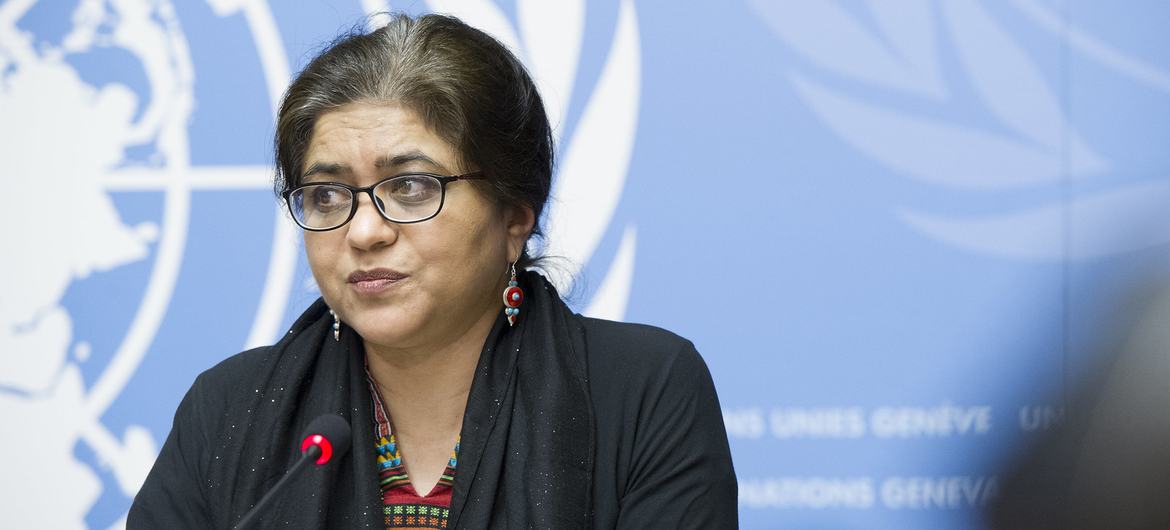
The panel, chaired by Bangladeshi jurist Sara Hossain alongside fellow commissioners Shaheen Sardar Ali and Viviana Krsticevic, was not investigating a hypothetical. The strikes it examined followed the joint military campaign the United States and Israel launched against Iran in February 2026, and the mission’s language is unusually direct for a body more often tasked with scrutinizing authoritarian governments than a NATO-aligned power.
According to the report, cited by UN News, the mission concluded that the United States committed a war crime by launching indiscriminate attacks that killed or injured civilians and damaged civilian property. A legal analysis published by Opinio Juris, drawing on specific paragraphs of the report, put the Minab toll at 157 dead, including 120 children and 26 school staff, with 95 more wounded, and the Lamerd toll at 20 killed and more than 100 injured. Other outlets, including NBC News and NPR, cited a combined figure of “at least 178” civilian deaths, while Democracy Now’s summary put it at 177. The variation appears to reflect differences in how each outlet aggregated the two incidents rather than any real dispute over what happened, and readers should treat any single combined number as an approximation drawn from a specific source rather than a settled count.
The Minab findings echo earlier reporting: an Associated Press investigation had separately identified at least one US missile strike on the school, then referred to as Shajareh Tayyebeh. The mission’s report is the first to formally attach a war crimes designation to it.
A Report That Cuts Both Ways
The mission’s mandate was never limited to scrutinizing the United States. It was originally established by the Human Rights Council in November 2022 to investigate Iran’s crackdown on protesters following the death of Mahsa Amini, and its mandate was renewed last year to cover ongoing violations inside the country. That original focus dominates much of the new report.
Investigators found that Iranian security forces carried out killings “on a massive scale in all provinces” during the government’s response to mass protests that began in late 2025 and continued into this year. At least 221 children, some as young as two, were among the dead, the mission said. It also documented tens of thousands of arbitrary detentions marked by torture, prolonged solitary confinement, and denial of access to legal counsel, along with at least 29 executions connected to the unrest. More than 70 people, including five women and three boys, remain at risk of execution over their alleged involvement in the protests, according to the report.
Taken together, the mission concluded these actions amount to crimes against humanity, including murder, imprisonment, and torture. Iran’s government disputes the scale of that accounting entirely. Tehran has released its own figure of 3,038 people killed and 25,000 injured during the crackdown, framing most of the dead as “rioters” it alleges were directed by exiled opposition groups working with the United States and Israel. The mission said it could not verify an exact death toll but believes the real number exceeds what the government has acknowledged.
Washington’s Response
The reaction from the United States was immediate and unequivocal in its rejection. Anna Kelly, a White House spokesperson, told the Associated Press, in a statement reported by CNBC, that Iran’s government is “the only party in this conflict that has committed war crimes.” A broader White House statement, reported by Democracy Now, dismissed the Human Rights Council itself, saying it “has accomplished nothing for human rights while spouting unserious nonsense for decades.”
A State Department official separately told CNBC that the department does not consider the report credible, and accused the Council of anti-American bias and of going easy on repressive governments elsewhere. That characterization was paraphrased by CNBC rather than presented as a verified direct quote from a named official, and should be read with that caveat.
What Washington has not done, as the report itself notes, is release its own military investigation into how the Minab school and the Lamerd sports complex came to be targeted. That leaves the American side of the story, at least officially, largely unaddressed nearly seven months after the strikes.
Why a UN Body Naming the US Matters
Fact-finding missions convened by the Human Rights Council have, in recent years, mostly turned their attention toward governments in Syria, Myanmar, and similar settings, places without the diplomatic weight to shape the Council’s own membership. A body using that same evidentiary process to allege war crimes by the United States, a permanent member of the international system’s most powerful institutions, tests how far UN human rights mechanisms can reach when the country in question pushes back as forcefully as Washington has here.
It also arrives at an awkward moment. The US-Israel-Iran conflict that produced these strikes remains unresolved, and a possible meeting between Gulf Arab states, the United States, and Iran has been floated around next week’s UN General Assembly session in New York, according to CNBC. Whether that diplomacy proceeds, and whether the Pentagon ever makes its targeting review public, will likely shape how much practical weight this report carries beyond Geneva.
For now, the findings sit alongside each other awkwardly but deliberately: a UN panel accusing a global power of war crimes in the same document where it accuses the Iranian government of crimes against humanity against its own people. Both governments have rejected the parts of the report aimed at them. Neither has offered the kind of independent accounting that might settle the questions the mission raised. The Human Rights Council’s full 47-member body was expected to take up the report formally as its 63rd session continues in Geneva through October 7, and how member states respond, particularly whether any push for further investigation or referral, is the next thing worth watching.