
For a few tense days last week, the question of who gets to decide which cancer studies and Alzheimer’s trials receive federal funding was not being settled in a laboratory or a peer-review panel. It was being fought over in the Oval Office, and then in a series of increasingly pointed letters between the White House and the Senate.
By September 25, the fight appears to have gone quiet, though not because anyone in the administration said so publicly.
A Meeting That Set Off Alarms
The trouble began on Friday, September 19, when President Trump met with Office of Management and Budget Director Russell Vought and NIH Director Jay Bhattacharya to discuss a draft executive order that would have reshaped how the National Institutes of Health awards its money. Under the proposal, a new external review committee, co-chaired by Vought and Bhattacharya, would have gained the power to veto individual NIH grants even after they had already survived the agency’s scientific peer-review process.
According to reporting first published by The Washington Post and later confirmed by The New York Times, Bhattacharya pushed back on the idea during that meeting. He also declined a separate request from Trump to specifically cut NIH funding to Harvard University.
News of the draft order leaked out over the weekend, and it did not take long for Capitol Hill to respond.
Congress Pushes Back, Fast and From Both Sides
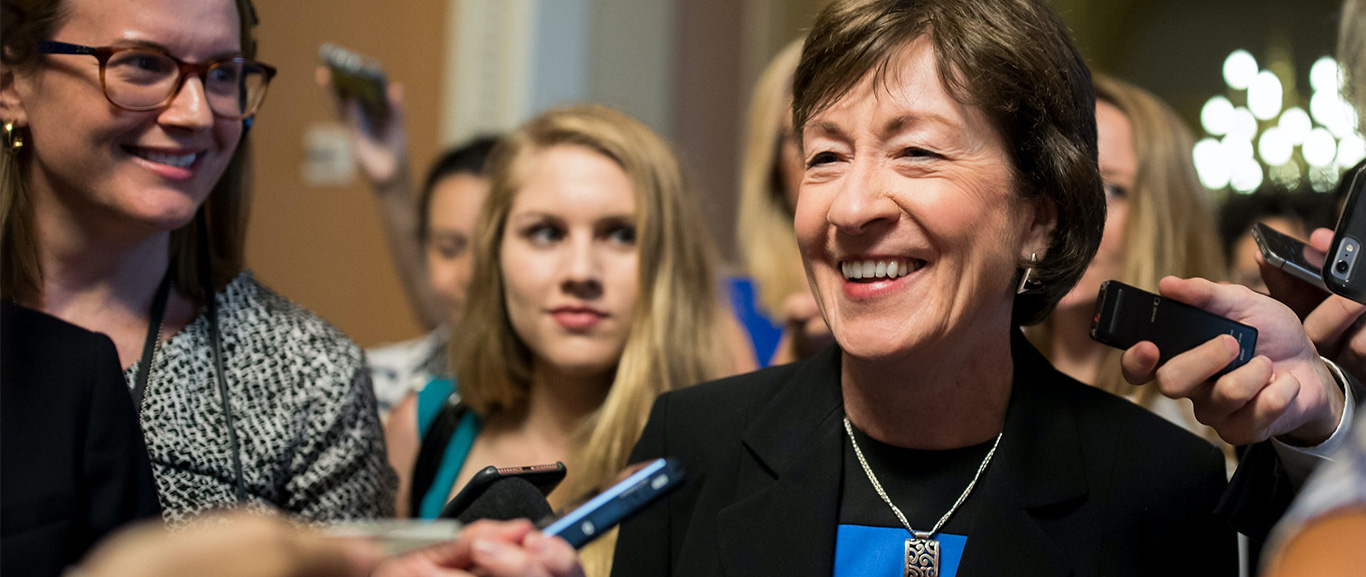
On Monday, September 21, Senate Appropriations Committee Chair Susan Collins, a Republican from Maine, issued a public statement making her position unambiguous. “The Office of Management and Budget (OMB) should not be involved in agency decisions on the awards of grants,” she said, according to the committee’s official release.
That same day, the committee’s Democratic vice chair, Patty Murray of Washington, along with Senator Tammy Baldwin of Wisconsin, issued their own statements condemning the plan. Murray’s language was sharper. “Whether lifesaving medical research gets funded or not should be determined by experts at the NIH, not a panel of lackeys chosen by Donald Trump and Russ Vought,” she said. “Under this scheme, a single political appointee could kill a cancer study or an Alzheimer’s trial with no scientific reason at all.” She added a line that captured the stakes as she saw them: “NIH funding doesn’t belong to Donald Trump. It belongs to the patients and families waiting on the next medical breakthrough.”
The bipartisan nature of the objection mattered. It is one thing for the opposition party to criticize a White House proposal. It is another for the Republican chair of the Senate committee that controls NIH’s purse strings to say, on the record, that the plan conflicted with what Congress had already decided.
Collins followed her public statement with something more formal. On Tuesday, September 22, she sent a letter directly to Vought and Bhattacharya, arguing that the executive order would accomplish through a different route something Congress had already explicitly blocked. “Any attempt to politicize grantmaking at the National Institutes of Health (NIH), or any other agency, by another means, whether an Executive Order or guidance, is contrary to congressional intent,” she wrote. She urged the administration to pursue any further NIH reforms through legislation rather than executive action, telling them plainly: “If the administration seeks additional reforms of NIH, I urge you to submit a legislative proposal to Congress rather than pursue an executive order.”
Her letter, posted in full by the Senate Appropriations Committee, also included a striking figure meant to underscore what was at stake: 174 scientists who worked at NIH or were supported by its funding have gone on to receive, individually or jointly, 104 Nobel Prizes. It is worth noting that figure comes from Collins herself, in a letter written specifically to oppose the plan, rather than from an independent NIH accounting, though it is an on-the-record claim from a sitting committee chair.
Why This Fight Was Really About a Rule Congress Already Settled
To understand why Collins framed this as a matter of “congressional intent,” it helps to rewind a few months. Her objection to White House control over NIH grants did not start with the September executive order. It started in July, when she wrote to OMB opposing a proposed revision to federal grant-making rules, known as “Uniform Guidance,” that would have let political appointees screen discretionary grants for alignment with the president’s priorities.
Congress ultimately settled that dispute directly. The Fiscal Year 2027 Continuing Resolution, signed into law on September 2, 2026, blocked that rule, along with anything “substantially similar” to it. From Collins’ perspective, the September executive order looked like an attempt to revive, through a different mechanism, exactly what lawmakers had just voted to prohibit.
The dispute also did not emerge in a vacuum. Since the start of Trump’s second term, NIH has cancelled hundreds of grants it said conflicted with executive orders ending diversity, equity, and inclusion programming. That pattern of cancellations led to a class-action lawsuit filed September 16 by the Center for Science in the Public Interest, the ACLU, the ACLU of Northern California, Protect Democracy, and the Jacobson Lawyers Group, accusing NIH, the Department of Health and Human Services, and the U.S. DOGE Service of unconstitutional, viewpoint-based screening of grant applications. That case is proceeding separately from the executive order fight, but it reflects the same underlying tension over how much political judgment should shape what gets funded.
There is also a personal dimension reported alongside the policy dispute. Vought and Bhattacharya’s working relationship has reportedly been strained for months, with Vought accusing the NIH director of funding research that runs counter to administration priorities, a backdrop that helps explain why Bhattacharya was said to have resisted the plan discussed in that Friday Oval Office meeting.
The Money at Stake
NIH is not a minor line item. Its spending authority for fiscal year 2026 stands at $48.7 billion, according to reporting from STAT News and Chemical & Engineering News, though other figures closer to $47 billion have circulated depending on which funding stream or fiscal framing is used. That budget funds research into cancer, Alzheimer’s, diabetes, and infectious disease across thousands of universities and hospitals nationwide, and its data and collaborations ripple outward to researchers well beyond U.S. borders.
The financial context adds another layer. Trump’s original FY2026 budget request had proposed cutting NIH funding by roughly 40 percent, a reduction Congress rejected. For FY2027, the administration’s request calls for a smaller but still significant cut of about 12 percent, or roughly $5 billion. Seen against that backdrop, the fight over veto power was not simply about process. It touched a much larger and ongoing argument about how much control the executive branch should have over the nation’s biomedical research budget.
Where Things Stand Now
By Wednesday, September 23, the tone from Capitol Hill had shifted from alarm to something closer to relief. STAT News, Roll Call, and Chemical & Engineering News, the last citing reporting from Semafor, all reported that the executive order plan appeared to have stalled. Collins told reporters that White House officials, including Chief of Staff Susie Wiles, shared her concerns about the proposal.
But nothing about this is final in any official sense. As of this writing, no executive order has been signed, and no one in the White House or OMB has gone on the record to confirm the plan is dead. OMB has consistently declined to comment on its status. NIH’s own public posture has stayed studiously neutral throughout; a spokesperson, Joshua Pradko, told reporters only that the agency “remains committed to its mission of funding biomedical research to benefit the health of the American people.”
That gap between what anonymous officials are signaling and what the administration is willing to say publicly is worth watching closely. So is the possibility that OMB pursues the same underlying goal through a narrower rule or a different administrative channel rather than the executive order that reportedly got shelved this week. The Uniform Guidance dispute from July shows this is not the first time the administration has tried to expand political oversight of NIH grants, and Collins’ own framing suggests she does not expect it to be the last.
The more durable story here may be less about one draft order and more about what its apparent defeat says about the limits of executive reach when Congress, across party lines, decides a line has been crossed. For now, that line held. Whether it holds the next time this question comes up, in whatever form it takes, is the thing to watch as FY2027 appropriations negotiations move forward.