Month: November 2026

  • Check Point Gateways Were Hacked Through PHP2Shell and a Root Exploit, Then a Wiper Hit the VMware Hosts Behind Them

    Check Point Gateways Were Hacked Through PHP2Shell and a Root Exploit, Then a Wiper Hit the VMware Hosts Behind Them

    Somewhere behind a perimeter firewall, an attacker logged into a VMware ESXi host over SSH and ran a program called destroy_v6. It deleted files without regard to their extension and, by default, tried to overwrite them with zeros first. The note left behind, named DREAM_ANNEXATION.txt, refused to negotiate a ransom.

    That is where a campaign against Check Point Security Gateways ended up, according to a Check Point Research report published on November 12. It matters well beyond one vendor, and it landed in a week when US federal agencies were ordered to act on part of it.

    How the attackers got in

    The way in was the Mobile Access portal, the remote-access front door on unpatched gateways. Attackers exploited PHP2Shell, the name for two critical flaws in PHP tracked as CVE-2026-109618 and CVE-2026-109619, to gain a foothold. They then used a separate privilege-escalation flaw in Check Point’s Gaia operating system, CVE-2026-123039, to become root.

    BleepingComputer describes that Gaia flaw as a newly disclosed zero-day. Once the attackers had root on the gateway, they installed PHP webshells, a backdoor called TSGA with a proxy component named TSProxy, and a scanner called gogo.

    From there they moved sideways. Using the vpxuser account, they connected over SSH to a VMware ESXi host, which is the kind of machine that runs many virtual servers at once. Destroying data there reaches far deeper than defacing a gateway.

    Two waves, one narrow window

    Check Point says the first wave began on October 30 and targeted Israeli organizations, with destructive activity against some of them. A broader second wave followed on November 2, hitting organizations across multiple countries and sectors, with no evidence of destructive activity. Exploitation stayed active until November 4.

    The scale, by Check Point’s own account, was modest. In its blog advisory, VP of Research Lotem Finkelstein said that “Only a couple of dozen unpatched systems, in a single region, were compromised.” Many of those gained a network foothold, and a limited number involved destruction. Affected customers have been notified.

    That figure comes from Check Point alone. No independent victim list exists, and no victims have been named publicly. The company’s blog says “systems” while its support advisory says “customers,” and neither names the region. Readers should be wary of turning “a single region” into a specific country.

    The patch timeline is messier than it looks

    A hotfix for PHP2Shell was available from October 23, and PHP itself shipped fixes on October 21 in versions 8.5.12, 8.4.27, 8.3.36 and 8.2.35. The fix for the Gaia flaw arrived later, in the November Jumbo Hotfix, after the attack window had closed. It is included in R82.20 Take 14, R82.10 Take 52, R82 Take 132 and R81.20 Take 174.

    So no single patch would have stopped the whole chain. An administrator who applied the October hotfix would have closed the entry point but not the route to root. Until the Jumbo Hotfix, the interim mitigation was to stop the dynamic_server process.

    One gap remains. Check Point’s advisory also lists R81.10 and R81, both past end of support, as affected, but names no fix for them.

    Why Washington is paying attention

    On November 13, CISA added CVE-2026-123039 to its Known Exploited Vulnerabilities catalog. The federal due date is today, November 16. The entry calls for forensic triage under BOD 26-04, which means agencies must check whether they were compromised, not just install an update. CISA lists ransomware use as “Unknown.”

    The agency’s alert also urges that all organizations “adopt risk-based vulnerability management.” CISA does not publish compliance results, and there is no reporting yet on how agencies fared.

    The PHP2Shell flaws had already been in the catalog since October 26, with a federal deadline of October 29. Exploitation was visible early too: a Perplexity researcher, Adel Karimi, recorded what appeared to be the first successful in-the-wild attacks on honeypots on October 24 and 25.

    Who is behind it remains unclear

    Check Point is cautious here, and so should everyone else be. Its research report says the evidence “does not allow us to assess with high confidence” the true nature of the operation. The company’s blog calls the destructive activity ideologically motivated, while the research report stops short of establishing a clear motive.

    The technical clues point in different directions. TSGA and TSProxy are Check Point-specific variants of PhiliKit, a framework previously documented in attacks on Ivanti VPN appliances. The tooling is linked to a malware family that ESET associated with a China-nexus group. But a destructive, Israel-focused campaign does not fit that group’s known behavior, according to Check Point.

    Separately, Dream Security published research in late October on China-nexus exploitation of PHP2Shell against Palo Alto Networks devices. The wiper note in the Check Point case uses the Dream Security name. Beyond that coincidence of branding, the evidence does not support firm conclusions. The note also references the Israeli-Palestinian conflict, which is one more reason to treat attribution claims with care until better evidence appears.

    The lesson sits at the edge of the network

    The details differ, but the pattern is familiar: a remote-access portal on a security appliance became the way in. PHP2Shell is a flaw in PHP itself that also affects Check Point gateways, so the exposure is not limited to one vendor. Check Point’s own blog advisory lists the affected versions and indicators for defenders.

    The destructive stage matters most. The attackers did not stop at the gateway. They reached a virtualization host, the kind of system many organizations treat as safely interior. For defenders, that is the part worth rehearsing: what an attacker can reach from a compromised gateway, and how fast data can disappear once they do.

    What to watch next

    Several questions are still open. The PHP Foundation has said a third PHP flaw, CVE-2026-115560, would be fixed in a regular release, and it is not yet confirmed whether that fix has shipped. Check Point has not attributed the campaign, and Israeli authorities and victim organizations have made no public statements that have surfaced.

    The first test of CISA’s forensic-triage requirement comes now that the deadline has arrived. If agencies find compromises, the outcome could say more about this campaign’s true reach than Check Point’s count of a couple of dozen. For anyone running Check Point gateways, the practical step is already clear: apply the November Jumbo Hotfix, and assume nothing about what happened behind the gateway until you have looked.
  • Zelensky Says the US Asked Whether Ukraine Would Leave Donbas in Exchange for NATO Membership

    Zelensky Says the US Asked Whether Ukraine Would Leave Donbas in Exchange for NATO Membership

    Volodymyr Zelensky says American negotiators put a question to him that Kyiv had not heard before: if Ukraine were offered a path into NATO, would it pull out of Donbas? The Ukrainian president described it to reporters on Friday, in remarks held until Saturday, and said it was the first time anyone had linked the two.

    His own words were plain: “This was the first time this had been raised.” What is not plain yet is whether Washington sees the exchange the way he does. The US has not commented on his account.

    What Zelensky Says He Was Asked

    Zelensky stressed that this was a question, not a formal proposal. He said no specifics have been put on the table, telling reporters “we need specifics, which are not yet available.” The distinction matters, because some headlines have called it an offer, and he has not.

    He also made clear that the areas of Donbas the Americans asked about are ones Russia does not currently control. In other words, the idea would have Ukraine give up ground it still holds, and he said flatly that he refuses to cede territory.

    There is one narrow condition under which he would let Ukrainians decide. He said he would put the question of ceding parts of Donbas to a national referendum, but only if the United States and NATO partners first confirmed a complete package. That package would include security guarantees, military and reconstruction funding, and a plan for recovery. Even then, he said, it would not amount to recognizing occupied land as Russian.

    He also turned down the idea of writing neutrality into Ukraine’s law. That, he noted, would require changing the constitution.

    Silence in Washington, a Careful Note From Kushner

    The US has not responded to the substance of Zelensky’s account. Jared Kushner, one of the American envoys involved, posted on X on Saturday without mentioning the Donbas question at all. He wrote that new ideas are being explored and that NATO remains a critical pillar of European security. The BBC reports that he also urged confidentiality around a sensitive process.

    That reply neither confirms nor denies what Zelensky described, so everything above rests on his word alone. Readers should weigh it accordingly, particularly because the setting is murky. Zelensky did not say when or where the question was raised, and reports differ on the venue.

    Why the Question Is So Loaded

    The reported question cuts against what US officials had said earlier. They had previously indicated that Ukrainian NATO membership was off the table, while suggesting that comparable security guarantees could still be possible. A question that ties membership to a territorial withdrawal reopens a door that had apparently been closed.

    For Moscow, NATO enlargement is one of the reasons it gives for the 2022 invasion. For Kyiv, handing over the small part of Donbas it still holds would carry heavy symbolic weight, whatever the military reality on the ground.

    None of this is entirely new ground. In Berlin on 14 December 2025, Zelensky said he was ready to drop the NATO bid in return for Western security guarantees, while rejecting any cession of territory. At that time he said the US had floated a withdrawal from Donetsk paired with a demilitarized free economic zone. That history is why his “first time” claim should be read narrowly. He is describing NATO membership tied to withdrawal, not the idea of withdrawal itself, which surfaced nearly a year ago without NATO membership attached.

    The Diplomacy Around It

    The remarks come days after talks in Abu Dhabi on 10 and 11 November, the first face-to-face negotiations between Russia and Ukraine since February, with the United States also taking part. Kushner and Steve Witkoff afterward met Putin and Zelensky separately. The round ended without a breakthrough, though the sides agreed in principle to a large prisoner exchange.

    The exchange has no confirmed date. Russian general Alexander Zorin, speaking through TASS, said more than 1,000 people on each side would be involved and that it could happen within two to three weeks. No official figure or date has been published.

    Europe is also working out its place. The team for future talks would include Britain, France, Germany, Italy and Poland, along with EU officials, and it would meet American and Ukrainian counterparts rather than Russian ones. The Kremlin has not fully backed European participation.

    Fighting Has Not Paused

    The war has carried on regardless. Russian officials said about 1,200 Ukrainian drones were fired at Russia on Friday, a figure that has not been independently verified and comes from a party to the war. Ukraine, for its part, reported strikes on a hospital and on the port of Odesa. Reports of civilian casualties, including children, have come from several regions, and Ukrainian and Russian claims alike should be treated with caution.

    What to Watch Next

    The calendar is crowded. The APEC summit opens in Shenzhen on 18 November, and a first three-way meeting of Donald Trump, Vladimir Putin and Xi Jinping is set for 19 November. Officials say Ukraine is not on its agenda, and a White House spokeswoman said the topics are nuclear arms and Iran. Even so, the meeting will show where the US-mediated process stands. CBS News has more on the trilateral.

    Three things will reveal whether Zelensky’s account turns into policy. One is whether Washington, NATO or the Kremlin responds publicly. Another is whether anything concrete follows the Abu Dhabi round, starting with the prisoner exchange. The third is whether the question of NATO membership for territory comes back in writing. For background on the framing of Donbas, NATO and Russia’s demands, see RFE/RL’s reporting, and for the Abu Dhabi outcome, Al Jazeera’s report from 11 November.

    For now, Zelensky has said what he was asked and what it would take for him to even consider an answer. The people who asked have not yet said anything on the record, and that silence will shape what happens next.

  • Nvidia After Jensen Huang: Who Runs the AI Chip Giant Now, and What Congress Wants to Know

    Nvidia After Jensen Huang: Who Runs the AI Chip Giant Now, and What Congress Wants to Know

    For 33 years, Nvidia and Jensen Huang were close to the same thing. On November 12, 2026, that ended. The company announced that Huang had resigned as president, chief executive and board member, effective immediately, and gave no reason.

    The filing offers more precision than the press release. Nvidia’s SEC filing shows the board accepted his resignation on November 11, a day before the public heard about it. By then the story had been building for four days.

    How the week unraveled

    On Sunday, November 8, the board announced an independent investigation, overseen by independent directors and outside counsel. The trigger was recent media reporting that Huang had been the target of a foreign intelligence effort. In the same statement, the board said it had no reason to believe that “either national security or NVIDIA secrets were compromised,” and that Huang supported the review.

    Huang then wrote to staff. He admitted to an affair with the woman at the center of the reports and said he had been “unfaithful to his wife.” He added: “I am deeply sorry.” That admission is the only personal detail in this story that is confirmed.

    The rest remains allegation. The New York Times and Financial Times reported that intelligence agencies suspect the woman, Alice Huang, of passing information to Beijing. The Chinese government has denied this. No charges or findings have been reported.

    Markets reacted at once. Nvidia stock closed 4.27% lower on Monday, November 9. The Wall Street Journal reported Wednesday night that the board was moving to remove Huang, and Nvidia confirmed his resignation Thursday morning.

    An interim CEO and an open search

    Chief financial officer Colette Kress is now interim CEO and keeps her finance role until a permanent successor is named. Board chair Harvey Jones said the board has “full confidence in Colette and the leadership team.” Kress, for her part, said she is committed to building on the “extraordinary foundation Jensen created over the last 33 years.”

    The search for a permanent chief is at an early stage. The Financial Times reported on November 13 that the board approached Arm chief executive Rene Haas as one of several candidates. There is no guarantee he will receive or accept an offer. The board told Reuters it is still choosing a search firm and has not formally engaged any candidate, adding that “any speculation regarding individual candidates, whether internal or external, is premature.”

    Haas would be an unusual choice, and a loaded one. He spent seven years at Nvidia before joining Arm in 2013, became Arm’s chief executive in 2022 and oversaw its 2023 Nasdaq listing. Nvidia itself tried to buy Arm in 2020, then abandoned the deal in 2022 amid regulatory opposition. A reunion would be a striking reversal of that history.

    Why this is bigger than one company

    Nvidia sells most of the advanced chips behind the AI boom, and on November 12 it ranked as the third-largest public company in the world by market value. A founder who led it for three decades leaving with no reported succession plan would shake any company of that size. Here, the departure is tangled up with US-China export policy.

    That is where Washington comes in. The Trump administration faces allegations that Nvidia did not get proper scrutiny over its advanced chip exports to China. Lawmakers also want to know whether Alice Huang, a major shareholder in the Singapore-based company Megaspeed, used that firm to divert Nvidia products to China. That is a question for Congress to answer. It is not an established finding.

    Senate Banking Chair Tim Scott has asked Huang to appear on December 3 and Commerce Secretary Howard Lutnick on December 10, threatening subpoenas if they refuse. A spokesperson for Lutnick said he has agreed to appear voluntarily. Three House committees have separately asked Huang and Nvidia general counsel Tim Teter to testify, also under threat of subpoena. Outlets report slightly different dates for the hearings, so the committee letters themselves are the safest guide.

    The market’s verdict so far

    Investors have not waited for answers. Nvidia closed at $162.85 on November 13, down 2%. Over the week, the stock fell 13%, according to Bloomberg, its worst week since April 2025. It was also the sixth straight weekly loss, the longest such run since 2012.

    The market value tells the same story. Nvidia was worth about $3.93 trillion at one point on November 13, against a peak of $5.75 trillion in October. At least ten analysts have cut the stock from Buy to Hold, HSBC among them.

    What to watch next

    The first hard test comes on November 17, when Nvidia reports earnings, its first results since Huang left. Investors will be listening for anything about who is really steering the company and whether the leadership vacuum is affecting customers or supply.

    After that, the calendar is crowded. The board’s independent investigation has no public timetable. The CEO search has barely started. Congressional hearings are expected in early December, and what Huang and Lutnick say there, or whether they appear at all, will shape the export-control debate well beyond Nvidia.

    For now, the picture is incomplete. A company built around one person has lost him in a matter of days, and the allegations around his exit are still unproven. The board’s own statement says secrets were not compromised, while lawmakers are asking whether chips found their way to China. Which of those accounts holds up will matter to far more than Nvidia’s shareholders.

  • Will Europe Join the Next Ukraine Peace Talks? What Witkoff and Kushner Said After Meeting Putin

    Moments after leaving the Kremlin on Thursday, Steve Witkoff went on Russian state television and said something Moscow has so far declined to repeat: “The Europeans will join at the next meeting.” The announcement from Washington’s special envoy, made after talks with Vladimir Putin, could change who sits at the table in the Ukraine negotiations. The Kremlin has not confirmed it.

    A Week of Diplomacy, and One Clear Result

    The sequence began in Abu Dhabi, where Russian and Ukrainian delegations met on Tuesday, November 10, in the first US-mediated talks between them in nine months. According to AP reporting on the Abu Dhabi session, the delegations talked for nearly four hours that day. The talks ended Wednesday with an agreement on a “large-scale” prisoner exchange. Nothing was announced on a ceasefire, on territory or on security guarantees.

    Witkoff and Jared Kushner then flew to Moscow and met Putin on Thursday, November 12. The prisoner exchange is the clearest tangible outcome so far. Details were still to be worked out in the coming days, according to an anonymous Ukrainian official quoted by AP. The humanitarian stakes are real, and the agenda also touches on prisoners of war and deported Ukrainian children.

    On the rest, the first sign of movement came from the Americans. Kushner posted a statement on X describing “meaningful progress.” He also told Putin that Washington had detected “a big change” on the European side, according to Reuters reporting carried by The Moscow Times.

    Who Said What About Europe

    The claim that Putin agreed to a European presence comes from the US envoys. It did not come from the Kremlin. Yuri Ushakov, the Kremlin aide who briefed reporters, did not confirm that Europeans would join the next round. Kremlin spokesperson Dmitry Peskov said Europe would first have to name a representative.

    That is a softer position than outright rejection, but not by much. AP reported on November 10 that Russia objected to European involvement now, while saying EU representatives could take part at a later stage. Russia has consistently preferred to keep European governments out of direct negotiations.

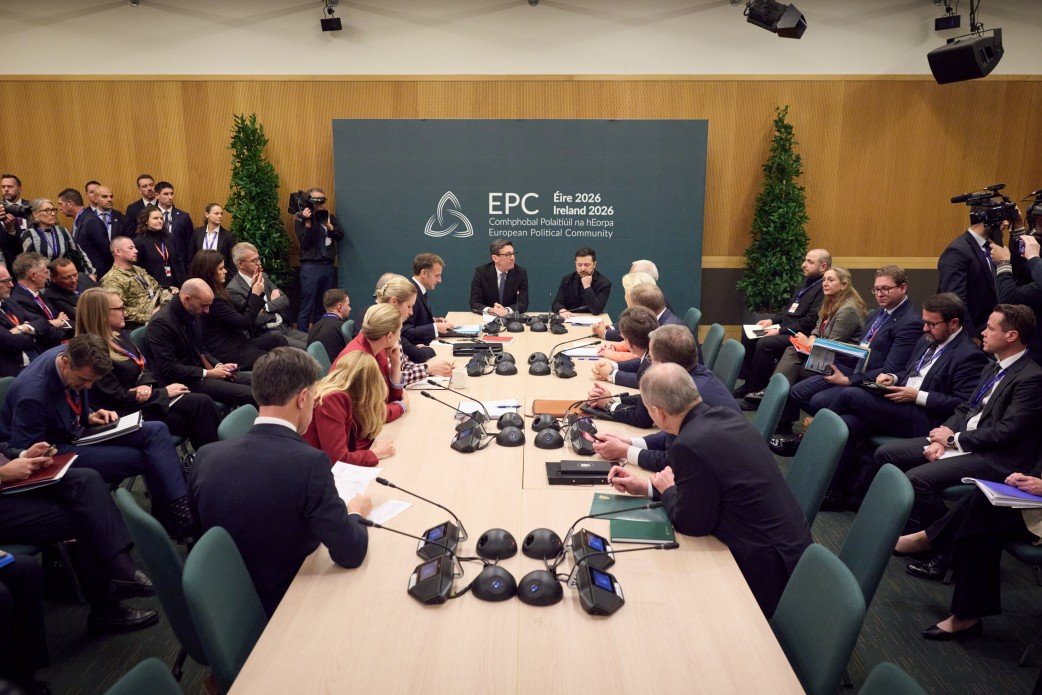
    Kushner and Ukrainian President Volodymyr Zelenskyy met in Dublin late Thursday. Kushner told Zelenskyy: “We cannot conclude this deal without the Europeans being at the table.” Zelenskyy said Europe would send a negotiating team, although no one has yet decided who would be on it.

    The Question Europe Has Not Yet Answered

    EU leaders were meeting in Dublin on Friday, and part of their task was to settle who would speak for the continent. By AP’s account, there was no consensus as of Friday. The EU has 27 members, and the Coalition of the Willing, the group that has pledged support for maintaining a future peace in Ukraine, includes more than two dozen countries. Choosing one voice from that crowd is a political problem in itself.

    Irish Prime Minister Micheál Martin said the question should be settled within a week or two. Italy’s Giorgia Meloni wants a decision made in Dublin and formalized in December. Those timelines could easily clash with a Russian insistence that Europe name its person first. No date has been announced for the next round of talks.

    The stakes are clear to European governments. They fear a process driven by Washington could leave them on the sidelines and Kyiv exposed. Kushner said the talks would cover broader European security alongside territorial questions, according to RFE/RL. Any post-war security arrangement for the continent would be shaped by whoever is in the room when it is written.

    The Gap That Has Not Closed

    The optimism from Washington sits against a hard backdrop. When Witkoff and Kushner met Putin in the Kremlin for about five hours on December 2, 2025, Putin told them Russia would not stop the war until it controlled the whole Donbas. Trilateral US-Ukraine-Russia talks followed in Abu Dhabi on January 23 and 24 and again on February 4 and 5, 2026.

    Today Russia holds about one-fifth of Ukraine. Kyiv refuses to give up the part of the Donbas it still controls. Putin continues to demand full control of four regions that Moscow claims to have annexed, and he has rejected any foreign peacekeeping force in Ukraine. On European troops deployed after a deal, he has said that “the war will resume immediately.”

    The fighting has not paused for diplomacy. Ukraine’s air force said Russia launched 162 drones and one ballistic missile overnight, just before the Abu Dhabi talks opened.

    A Smaller Proposal With Its Own Signal

    One thread from the Kremlin meeting is smaller but worth watching. Putin said that 400 to 500 residents remain in Kostiantynivka and that Russia would need five days to clear mines nearby, according to Reuters. Control of the town is disputed. Ushakov said the US envoys welcomed Putin’s proposal for a joint humanitarian mission to the town and would be in touch about it.

    If that mission goes ahead, it would be an early test of whether the two sides can cooperate on something concrete while the larger disputes stay unresolved.

    What to Watch Next

    Three questions will decide whether Thursday’s announcement turns into anything. The first is whether the EU can agree on a negotiator quickly enough to meet the one-to-two-week window Martin described. The second is whether Moscow, which has so far only said Europe must name someone, accepts that person once the name is known. The third is whether the prisoner exchange is actually carried out, since it is the one concrete outcome the week’s diplomacy has produced.

    All three could change before the next round is even scheduled. Until the Kremlin says in its own words that Europe is welcome, the seat remains an offer made on Moscow’s behalf by Washington.

  • Nvidia Opens Independent Probe Into Jensen Huang Over Alleged Chinese Intelligence Targeting

    Jensen Huang has told his employees he failed them. On the same weekend, the board of the world’s most important AI chip company announced an independent investigation into whether its chief executive was the target of a foreign intelligence operation.

    The board’s statement came on Sunday, November 8. It confirms the most serious chapter yet in a story that began on October 29, and it lands within days of an earnings report and a congressional deadline.

    What the board announced

    A committee of independent directors will oversee the inquiry, assisted by outside independent counsel. The board said it was acting after recent reporting that Huang had been targeted by a foreign intelligence effort. It said it has no reason to believe national security or Nvidia’s secrets were compromised, but that the review will examine all available information. Huang supports it and will cooperate, the statement said. No end date was given.

    The board also expressed confidence in the CEO, saying it has confidence in Jensen and his leadership team. The company told CNBC that Huang intends to keep running Nvidia without interruption.

    The memo to staff

    Alongside the board statement came a personal admission. In an email to employees, Huang acknowledged being unfaithful to his wife, according to NBC News and CBS News. “I have fallen short of that responsibility,” he wrote, in the version published by CNBC. CBS reported a separate statement in which he said, “There is no excuse for what I did,” along with an apology to his family.

    The affair is a personal matter, and the confirmed record on it is limited to those admissions. The questions that carry public weight are the ones about who else was involved and what they wanted.

    What the reporting alleges

    The allegations come from The New York Times and the Financial Times, both relying on anonymous US sources. None has been confirmed on the record by the US government, and no charges have been reported. They should be read as claims.

    The Times reported on October 29 that a Chinese citizen named Alice Huang, who is no relation to the Nvidia chief, sought a close relationship with him to learn about the company’s technology. US intelligence officials reportedly told the Trump administration she was working for a Chinese spy agency. The Financial Times reported on November 6 that a US government memo described a romantic relationship between the two. The Times also reported that Huang later told the board the relationship was with her, a claim that so far rests on that one outlet.

    China’s Foreign Ministry has rejected the allegations. Spokesman Guo Jiakun dismissed the October report as lacking substance on October 30. Nvidia said that day that diversion allegations connected to the matter had been investigated and debunked, and that Huang’s dealings with Alice Huang’s employer were not unusual.

    The Megaspeed connection

    Alice Huang was a senior executive at Megaspeed, a data-centre company based in Singapore. According to the Times, Megaspeed bought more than $4.8 billion of Nvidia chips over two years, making it one of the company’s largest customers in Southeast Asia. That figure comes from a single original source.

    The Times also reported that the US government has examined Megaspeed since 2024 over whether chips were being steered to China, and that Singapore authorities questioned Alice Huang in 2025. In December 2025, Megaspeed called an earlier Bloomberg report on the company misleading. This is why the story reaches beyond one executive’s private life. It sits on top of a long-running question about where advanced AI hardware ends up.

    A second scrutiny, on export licences

    A separate New York Times investigation, published November 7, added pressure from another direction. It reported that the Commerce Department had cleared roughly two dozen Chinese firms to buy or handle Nvidia’s H200 chips. One licensee, New Matrix, was reported to operate from an empty building, with owners tied to a fund that appears on the US entity list.

    The Times said its account does not establish that New Matrix ever received a chip. Commerce says it reviews licences carefully, and Nvidia says the sales support American jobs. Senator John Cornyn called the report “outrageous.” The licensing came after President Trump announced in December 2025 that Nvidia could sell H200 chips to approved Chinese customers under an arrangement that sends 25 percent of the payment to the US government.

    The two stories should not be merged. The H200 investigation is distinct from the Huang allegations, and nothing in it shows chips reaching New Matrix.

    Washington responds

    President Trump spoke about Huang on November 8. He told reporters he thinks Huang is an honorable guy, according to Reuters, and said he had not discussed the allegations with him. He also said he would “certainly” consider taking Huang on next week’s trip to Asia, though he did not yet know.

    Congress is moving more slowly but more pointedly. Representatives Mast, Moolenaar and Crawford wrote to Huang on November 4 asking for a joint closed-door briefing on November 18. They want to hear about Nvidia’s protections against foreign espionage and about his interactions with Alice Huang. The letter asks him to confirm that date or propose another by November 11. Analysts at Bernstein have described the briefing as a request, not a subpoena. Senator Warren is pressing for public testimony, and Senator Coons has indicated Congress will investigate.

    What to watch

    The calendar is tight. Huang’s reply to the House committees is due November 11. Nvidia reports quarterly earnings on November 17, where analysts are expected to press management on the investigation. The requested briefing follows on November 18. The board’s own inquiry, by contrast, has no schedule at all.

    The central question is whether anything beyond anonymous sourcing emerges. So far the board says it sees no compromise, Nvidia has pushed back on the central claims, and Beijing denies them, while US officials have said nothing on the record. Whichever way that resolves, a CEO whose company supplies much of the world’s AI computing is now under independent review. How the board, Congress and investors treat that will shape how Silicon Valley handles security risk at the top.

  • Herzog Picks Eisenkot Over Netanyahu to Try to Form Israel’s Next Government

    Herzog Picks Eisenkot Over Netanyahu to Try to Form Israel’s Next Government

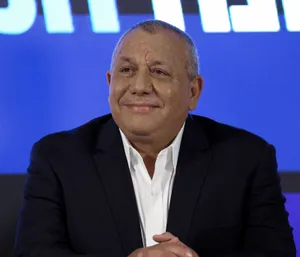
    On Saturday evening, Israel’s president told Gadi Eisenkot that the job of building the country’s next government was his. Isaac Herzog passed over Prime Minister Benjamin Netanyahu, whose Likud party won more seats than any other, and chose the leader of the Yashar party instead. The formal handover was scheduled for Sunday at 5 p.m. local time at the President’s Residence in Jerusalem.

    The decision comes at the end of a tense stretch that began with an election neither side won and has since turned bitter.

    Why Herzog chose Eisenkot

    The choice followed consultations with every Knesset faction. According to Al Jazeera’s report, factions representing 67 lawmakers recommended Eisenkot, while factions representing 46 backed Netanyahu. One seven-seat faction, United Torah Judaism, named no one.

    Herzog had said on Thursday that the decision was his to make, and that it was far from obvious because of what he described as “the mutual vetoes between the blocs and within the blocs themselves.” In other words, many parties had ruled out sitting with others, and the president had to weigh recommendations that did not add up to a workable coalition.

    Eisenkot responded on X, saying that “now is the time for the formation of a national emergency government.”

    The arithmetic is the problem

    Being handed the mandate and being able to use it are different things. A government needs 61 of the Knesset’s 120 seats, and the October 27 election did not give either camp that number.

    The final results published by the Central Elections Committee on October 30 (see the Israel National News report) put Likud on 27 seats and Yashar on 21. B’Yachad won 12, the Joint List 11, the Democrats 8, Ra’am 8, Yisrael Beytenu 7, Otzma Yehudit 7, United Torah Judaism 7, Shas 6 and the Religious Zionist Party 6.

    Grouped by camp, the outgoing coalition holds 53 seats, Eisenkot’s change bloc holds 48, and the two Arab-led parties hold 19 between them. Eisenkot cannot reach 61 from his own bloc alone.

    Adding the Arab-led parties would take him to 67, the same number that recommended him to Herzog. But Al Jazeera reports that Eisenkot has ruled out a government with those parties. He could still govern with fewer than 61 seats if he wins a confidence vote in the Knesset, which leaves the ultra-Orthodox parties and parts of the current coalition as the obvious places to look for support.

    What Eisenkot says he will and will not accept

    Yashar has set out four principles that any partner would have to accept:

    • Recognizing Hamas as a terrorist organization and committing to destroy its military and governing power.
    • Recognizing Israel as a Jewish and democratic state.
    • Accepting the values of the Declaration of Independence.
    • Backing mandatory service for all.

    Eisenkot has also said he will not partner with Netanyahu, and that anyone who held major power on October 7, 2023 must leave public life.

    The fourth principle goes straight to the issue most likely to decide the outcome: military conscription for ultra-Orthodox men. The brief identifies three sticking points for the coming negotiations, namely conscription for Haredi men, the role of the Arab parties, and Netanyahu’s own future. Yashar has invited “Likud and its friends” to join a government without “extremists,” while Netanyahu has called for a unity government that includes all his current allies.

    A bitter backdrop

    The mandate arrives after an unusually sour post-election fortnight. Between October 28 and 30, Likud claimed the election had been “stolen” by Arab parties and demanded a police and Shin Bet investigation. These are Likud’s allegations, and they should be read as such. The Times of Israel reports that the foreign-funding claims have not been substantiated, and the Jerusalem Post notes that no evidence of systematic manipulation has been made public.

    On October 29, the elections committee chairman, Justice Noam Sohlberg, instructed Shin Bet director David Zini to look into intelligence suggesting foreign entities may have financed improper election activity. That inquiry is reported as ongoing.

    On November 4, Sohlberg rejected Likud’s request to delay certification, writing that the committee has no authority to withhold it. Presenting the results, he said: “It is the voters, through their ballots, who determine the election results.” Likud’s lawyer has said the party is preparing to appeal the results in part or in whole and has not yet decided how far to take it.

    Netanyahu’s reaction to the president’s decision was sharp. In a video statement on November 7, he accused Eisenkot of intending to “hurriedly swear in a government with supporters of terrorism.” That is Netanyahu’s characterization, and it sits uneasily with Eisenkot’s reported refusal to rely on the Arab parties.

    What happens now

    Netanyahu remains prime minister until a new government wins a Knesset confidence vote. Eisenkot has 28 days to assemble one, and Herzog may grant an extension of up to 14 days. Details of the timetable are laid out in the Times of Israel’s coverage.

    If Eisenkot fails, Herzog has three days to decide whether to assign another Knesset member or to tell the Speaker that no one appears capable of forming a government. A second candidate would get 14 days. If every attempt fails, the Knesset is dissolved and Israelis go back to the polls. Netanyahu could also get another chance to form a government if Eisenkot comes up short.

    Several signals are worth watching in the coming days. Yisrael Beytenu’s leader has indicated he could accept “painful compromises” on enlistment, and United Torah Judaism has voiced openness to discussing a partnership. Whether either of those openings becomes something concrete, and whether any part of Likud is willing to deal with a prime minister who has vowed not to work with its leader, will say more about Eisenkot’s chances than the 67 recommendations did.

    Eisenkot holds the mandate, but not yet a majority. The next four weeks will show whether a bloc built mostly on opposition to the status quo can agree on anything else.

  • Why AI Chip Stocks Plunged After the Midterms, and What It Means for the Data Center Boom

    Why AI Chip Stocks Plunged After the Midterms, and What It Means for the Data Center Boom

    On Thursday, the Philadelphia semiconductor index lost 12.3% of its value in a single session, its worst day since March 2020. Nvidia fell more than 9%. AMD dropped 17.3%. Two days earlier, Democrats had won control of both chambers of Congress, and Wall Street spent the rest of the week trying to work out what that meant for the machines that power artificial intelligence.

    A Market That Shrugged, Then Flinched

    The midterms were held on November 3, and the first reaction was calm. Markets rose on Wednesday in their best day in three months, according to the Associated Press. Some outlets described the move as investors largely looking past the results.

    Then came Thursday. The S&P 500 fell 4.4%, or 334.89 points, to 7,353.73, its worst day since April 2025. The Dow shed 1,833.06 points to close at 51,523.06. The Nasdaq composite dropped 5.5% and finished 11.9% below its October record, which is the technical definition of a correction.

    The damage was not confined to chipmakers. CoreWeave fell 9.8% and GE Vernova, a supplier tied to the power demands of data centers, slid 7.5%. Overseas, South Korea’s Kospi lost 5.3% and Japan’s Nikkei 225 fell 1.8%.

    The Data Center Question

    The explanation most often offered by the AP, CBS News and Capital Economics is political. Democratic wins, they said, raised the odds that governments could force pauses in data center construction, on top of months of worry about borrowing costs and stretched valuations. That is the market’s interpretation, not a proven cause, and the AP itself noted that over the long run stock prices follow profits and interest rates far more than they follow who controls Washington.

    Still, the concern is not hard to understand. The AP reported that AI data center construction drives a large share of U.S. economic growth. A slowdown in building would mean fewer chip orders, and less demand for electricity and the services that surround the industry.

    Joe Maher, a markets economist at Capital Economics, told CBS News that the immediate risk was restrictions that “slow the pace of the AI infrastructure buildout.” Liz Ann Sonders, chief investment strategist at the Schwab Center for Financial Research, put the broader uncertainty differently, saying that markets are working out “what the speed limit is for this buildout.”

    Voters seemed to have the issue on their minds as well. An NBC exit poll reported by Time, and a CNBC poll, found that 56% of voters called AI and data centers a crucial or major factor in their decision.

    Texas Offers a Preview

    The clearest example of the policy risk came from Texas. Democrat Gina Hinojosa won the governor’s race after pledging a moratorium on new data center approvals until the legislature passes new rules. Her plan, as reported by the Texas Tribune, would last until lawmakers meet in January. She is scheduled to be sworn in that month.

    Federal action faces a steeper climb. Fox Business noted that President Trump retains veto power over any legislation Congress might send him. On the investor side, venture capitalist Chamath Palihapitiya offered a blunt view during an election livestream on the All-In podcast: “the only way to sink the AI trade is to sink the data centers.”

    Earnings and Jobs Data Added Pressure

    Politics was not the only thing on traders’ screens. Qualcomm and Arm both reported results after the close on Wednesday that investors viewed as mixed. Qualcomm’s handset chip revenue fell 26% to $5.14 billion in its fiscal fourth quarter, according to Reuters.

    On Friday, the Bureau of Labor Statistics reported that employers added 165,000 jobs in October, with unemployment at 4.1%. Schwab put the consensus forecast at 65,000, so the report landed well above expectations. A strong labor market can complicate the rate outlook, and borrowing costs were already one of the anxieties hanging over the AI trade. The BLS release carries the full employment figures.

    The bond and oil markets were moving too. The 10-year Treasury yield eased to 4.84% from 4.90% on Thursday, while Brent crude rose 3.9% to $98.29, with the U.S.-Iran war continuing to push up oil prices and inflation. The Bank of England also raised rates on Thursday for the first time in three years. Schwab, citing Bloomberg, reported that the high-yield credit spread widened by 15 basis points, a jump matched on only two other days in the past year.

    A Partial Rebound, but a Rough Week

    Friday brought some relief. The S&P 500 rose 0.32% to 7,376.86 and the Nasdaq climbed to 24,579.43, while the Dow slipped 237 points to 51,285.73, according to Reuters.

    The weekly numbers still tell the story. The Nasdaq fell 3.4%, the S&P 500 fell 2.7% and the Dow fell 0.9%. It was the Nasdaq’s fourth straight weekly decline, and the S&P’s drop was its worst week since the April 2025 tariff shock.

    The comparison to that spring is not incidental. The last sell-off of this size followed the “Liberation Day” tariffs, a deliberate and sweeping policy change. This one followed an election, and the policy it is reacting to has not been written yet.

    Context: A Long Run, Now Interrupted

    The AI trade has been rewarded handsomely. Nvidia had gained roughly 39%, 171% and 239% over the last three years, but after Thursday it was down 2.6% for 2026. Schwab reported that the stock sat more than 25% below its October 6 high, while the Nasdaq-100 was about 15% below its own October peak.

    That backdrop is part of why the reaction was so sharp. When a sector has priced in years of uninterrupted expansion, even the possibility of a speed limit can move prices quickly.

    What to Watch Next

    The coming week offers several tests. October consumer price data arrives Tuesday, November 10, the same day CoreWeave and Rigetti report earnings after the close. Cisco and Applied Materials report Thursday, November 12, and producer prices follow on Friday, November 13.

    The larger test is political rather than financial. Whether Texas moves from campaign promise to enforceable policy in January, and whether other states follow, will say more about the future of the data center boom than any single trading session. For now, the market has told us it takes the risk seriously, even if no one yet knows how much of it will materialize.