Month: November 2026

  • Paraguay’s President Announced His Resignation, but Congress Has Not Accepted It. Here Is What the Ueno Bank Collapse Set in Motion

    Paraguay’s President Announced His Resignation, but Congress Has Not Accepted It. Here Is What the Ueno Bank Collapse Set in Motion

    On Thursday, Paraguay’s president went on video to say he was stepping down. Within minutes, the lower house voted 78-0 to impeach him. By the end of the day, the country had a president who had said he was leaving, a Congress that had not agreed to let him go, and a bank that more than 60% of its adults had trusted with their money, shut and silent.

    The crisis around Santiago Peña began with that bank. Its collapse has reached the presidency, the courts and the country’s financial standing in the span of a few days.

    How a digital bank went dark

    On Tuesday, 3 November, Paraguay’s central bank announced it was seizing Ueno Bank. Regulators had found lending that was poorly documented and expenses that had been counted as assets. Once those were corrected, the bank’s capital came to less than half the legal minimum.

    Customers felt it immediately. The app, the cards and the transfer system stopped working, and the branches closed. For a lender that had built its brand on convenience, the shutdown was total.

    The scale is what makes this a national event rather than a banking story. Ueno claimed more than 60% of Paraguay’s adults as customers, which turns a failed lender into a freeze on everyday payments and savings. The bank also held roughly $800 million in public deposits, about a quarter of its total as of last month. That money included state pension and health funds as well as deposits from the operators of the country’s hydroelectric dams, according to AP reporting carried by PBS.

    The political fallout moves fast

    Opposition lawmakers filed impeachment articles on 4 November, alleging conflicts of interest, misuse of pension funds and cover-ups. The accusations pointed toward a relationship that critics say was too close. Peña held a stake until last year in a company linked to Ueno. He also appointed Carlos Carvallo, a former president of Ueno’s predecessor lender, to run the central bank.

    The timeline adds to the pressure. ABC Color reported that central bank inspectors found risky insider lending in June, and Peña was still defending Ueno last month. Carvallo has since resigned at Peña’s request.

    Then came Thursday. Peña announced his resignation in a video, and the lower house moved to impeach him almost at once, sending the charges to the Senate. Peña has said he will answer them “with arguments and evidence,” according to CNN.

    A resignation that is not yet a resignation

    The next step did not go as the opposition or the president may have expected. A joint session convened to accept Peña’s resignation lost its quorum when lawmakers from the Colorado Party walked out. Without a quorum, the resignation was not accepted, as Al Jazeera and the outlet Democrata both reported.

    So the Senate was set to resume the impeachment trial on Friday, 6 November, with Peña still formally in office. Removing him requires 30 of the Senate’s 45 members.

    If he is removed, Vice President Pedro Alliana would take over until August 2028. At the time of writing, there is no result from Friday’s session.

    One legal question hangs over the process: whether a president who resigns keeps lifetime senator status and the protections that come with it. That is the opposition’s argument, and the issue is part of why the manner of Peña’s exit matters as much as the fact of it.

    The criminal cases

    The impeachment is only one track. Attorney General Emiliano Rolón Fernández has ordered three criminal investigations, including allegations involving Peña and other current and former officials.

    The cases against the bank’s leadership are further along. A judge ordered six Ueno executives jailed pending trial, among them founder Miguel Vázquez and president Juan Manuel Gustale. Two others were placed under house arrest. Prosecutors have charged 27 bank officials and associates with breach of trust and attempted fraud.

    These are allegations, not findings. Peña says he will cooperate with the investigations, and Gustale’s lawyer disputes the charges against his client.

    What happens to the people with money in Ueno

    For ordinary customers, the most pressing question is whether they will get their money back. The deposit guarantee fund insures up to about $36,000 per customer. The central bank says that covers the full balances of an estimated 97% of clients.

    Payouts begin with the smallest accounts, those of up to about $1,600, and all are due within five business days. The process is expected to run through about 11 November.

    The Labor Ministry estimates that about 7,000 direct and indirect jobs are affected, a reminder that the bank’s reach extended well beyond its depositors. Ueno grew from a rebranded finance company, which won its banking license in 2023, to more than 70 locations, and it sponsored the national soccer team and the main stadium.

    Why markets and Washington are watching

    The collapse also lands on a government that had been enjoying good news abroad. Peña was welcomed in Washington only weeks ago, and Paraguay recently earned investment-grade ratings. After news of the resignation, the country’s sovereign bond prices fell, according to reports from AP and NBC News.

    That is the larger stake here. A government that had been presenting itself as stable now faces a question investors take seriously: whether the institutions that were supposed to oversee a fast-growing bank can be trusted to handle the fallout.

    What to watch next

    The immediate test is the Senate. Whether it reaches the 30 votes needed to remove Peña, and what that means for his resignation and any protections he might claim afterward, will shape the rest of the crisis.

    After that, attention turns to the courtroom. The three criminal investigations and the trials of the Ueno executives will determine who answers for the bank’s failure, and how far up the accountability reaches. For the many Paraguayans who woke up to a dead banking app this week, that answer matters as much as anything said in Congress.

  • Joshua Wong Sentenced to 10 Years in Hong Kong’s Second National Security Case

    Joshua Wong Sentenced to 10 Years in Hong Kong’s Second National Security Case

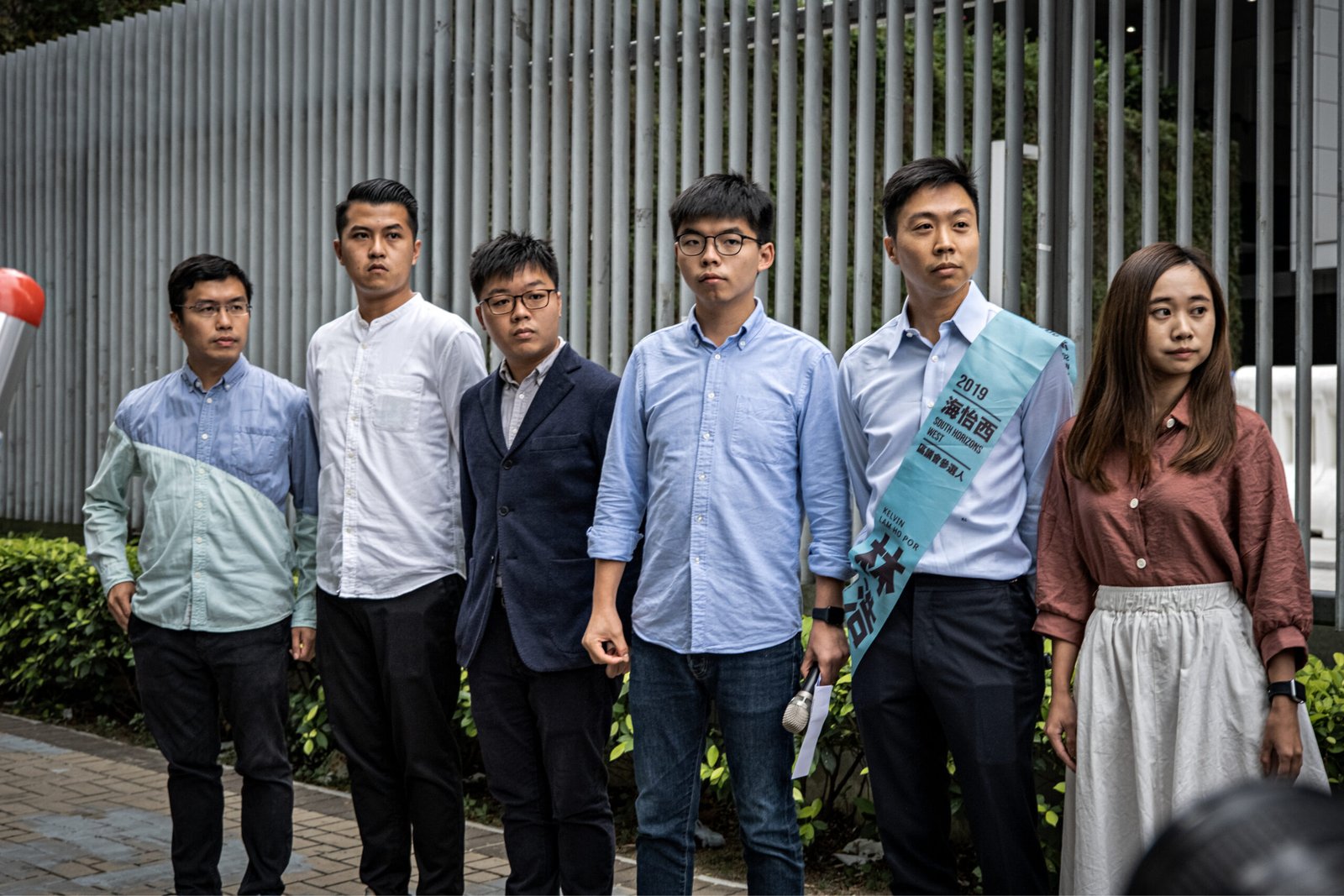
    A little more than two months before he was expected to walk out of prison, Joshua Wong was handed a new decade-long sentence. On Thursday, a Hong Kong High Court judge ruled that the 30-year-old activist would serve 10 years for collusion with foreign entities under the city’s national security law (NSL). It is his second conviction under the law, and it overshadows the release date that had seemed, until today, within reach.

    What the court decided

    Judge William Tam delivered the sentence, which Reuters, AP and The Standard all report. Wong had pleaded guilty in September, and that plea shaped the outcome. The judge began from a 13-year starting point and trimmed it to 10 years, citing the plea and mitigating factors including Wong’s remorse and his efforts to educate himself in prison. The offence carries a maximum of life imprisonment, so the term sits well below the ceiling.

    Reuters quotes Tam as saying, “The punishment must fit the gravity of the crime.” Foreign consuls attended the hearing, and police guarded the court.

    The case against him

    Prosecutors accused Wong of conspiring with Nathan Law, a self-exiled activist, and others to urge governments and bodies outside China to impose sanctions, blockades or other hostile measures on Hong Kong and China. AP and Reuters report that the prosecution described lobbying in Washington, including meetings with Nancy Pelosi and then-Senator Marco Rubio. In the prosecution’s telling, Law pressed the cause abroad while Wong amplified it at home through social media and commentary in foreign media.

    Reuters gives the charged period as 1 July to 23 November 2020, and says the court found the pair kept up their activities after the NSL took effect. AP adds that prosecutors also pointed to earlier meetings in 2016 and 2019, which were presented as evidence and context rather than as part of the charged period.

    In mitigation, Wong said he never advocated Hong Kong independence, regime change or the “collapse of China,” and never accepted foreign funding. According to Reuters, he also said he later realised his activities were not within the law. Steve Li, a chief superintendent in the police national security department, said Wong was not an “enemy” but needed to learn to respect the law.

    A release date that just moved

    The practical question is how much time this adds. Wong was already serving 4 years and 8 months in the “47 case,” the subversion prosecution tied to an unofficial pro-democracy primary. He was expected to be freed in January 2027, with about two months left on that term. He was arrested on the new charge in June 2025, while still in custody.

    AP reports that the judge said the two sentences could run concurrently. Coverage differs in emphasis, though. Human Rights Watch’s headline says “nearly 10 more years,” while Al Jazeera, CNN and Hong Kong Watch describe an additional 10 years. None of the reporting confirms a new release date, and no appeal or appeal deadline has been reported. Until the court’s written reasons are published or officials clarify, the date remains an open question.

    A pattern, or a coincidence

    Wong’s story has been tied to the city’s courts for years. In December 2020 he was sentenced to 13.5 months for organising and inciting an unauthorised assembly in 2019. Reuters says he has been detained since November 2020. The Beijing-imposed NSL came into force that same year, after protests that were at times violent.

    Today’s ruling follows the February 2026 sentencing of media tycoon Jimmy Lai to 20 years. AFP reports that two of those years overlap with his existing term, leaving 18 additional years. Together, the two cases show the law being applied to the most prominent names of the 2019 era.

    Observers quoted by AP read the pattern as a determination to keep leading activists behind bars for as long as possible. Eric Lai of Georgetown’s Center for Asian Law told AP that NSL charges can be used again and again to keep a political prisoner jailed. Hong Kong authorities take the opposite view, describing the law as crucial for stability after the 2019 unrest.

    The international response

    Reaction came quickly. The US consulate in Hong Kong said, according to AFP, that it “strongly condemns” the sentence and called for Wong’s immediate release. Taiwan’s top China policy body, as reported by Al Jazeera, described Beijing and Hong Kong as pursuing “endless political persecution.”

    Rights groups were just as blunt. Al Jazeera reports that Human Rights Watch’s Elaine Pearson called the sentence cruel and unjust and the charges baseless, while Amnesty International called it another grim reminder of the NSL being used to punish dissent. Megan Khoo, policy and advocacy director at Hong Kong Watch, said in the group’s own statement that the case showed the “weaponisation of the Hong Kong National Security Law.” These groups are advocacy organisations, and their statements reflect that position.

    What to watch next

    The first thing to look for is the court’s written reasons for sentence, which should clarify how the judge weighed the plea and whether the two terms will truly run together. The second is whether Wong’s side files an appeal. Neither had been reported at the time of writing.

    Beyond the courtroom, more government reactions may follow, with none yet reported from the UK or the EU. Nathan Law remains abroad, and no further proceedings were reported today. For readers following the fuller account, AP’s report and Al Jazeera’s coverage lay out the day’s events in detail. What happens to the date in January 2027 will be the clearest sign of what this sentence actually means.

  • Marvell’s $115 Billion Lumentum Deal: What It Means for AI Data Center Networking

    Marvell’s $115 Billion Lumentum Deal: What It Means for AI Data Center Networking

    Investors gave Marvell Technology and Lumentum a rough Monday. Within hours of announcing the largest deal either company has ever attempted, Marvell’s shares had fallen about 13% and Lumentum’s nearly 19%. The market’s verdict on a $115 billion all-stock merger was not applause.

    What Marvell and Lumentum Agreed To

    On November 2, 2026, the two companies said Marvell will acquire Lumentum in a deal valued at $115 billion including debt. Lumentum shareholders will receive 4.500 Marvell shares for each Lumentum share they hold. That works out to roughly $1,132 per share, a premium of about 23.9% to the October 28 closing prices, the last trading day before deal speculation began.

    When the deal closes, Marvell shareholders would own about 67% of the combined company and Lumentum shareholders about 33%, on a fully diluted basis. Both boards approved the agreement unanimously. Matt Murphy stays on as Chairman and CEO, and three Lumentum directors, including CEO Michael Hurlston, would join Marvell’s seven-member board.

    The timeline is long. The companies expect to finish in the first half of calendar 2028, subject to approval from both sets of stockholders, regulatory clearance and customary conditions.

    Why Copper-to-Optical Is the Real Story

    Marvell is best known for the electrical side of data movement. Lumentum builds the optical side. The pitch is that AI systems increasingly need both, with light replacing copper for links inside and between the machines that train and run large models. Marvell describes the combination as covering “scale-up” and “scale-in” connectivity.

    The companies put a number on the prize: a combined addressable market of $550 billion. They also say they see more than $1 billion in annual run-rate cost savings, and expect the deal to add to Marvell’s non-GAAP earnings per share in the first year after closing. Those are company projections, not independent estimates.

    Murphy called it, in the press release, “an opportunity that comes along once in a generation.” On CNBC’s Squawk on the Street he went further: “We are going to create a new category of company here.” Hurlston framed it from the optical side, saying Lumentum is “uniquely positioned to capitalize on a market opportunity of $550 billion.”

    Lumentum Arrived With Momentum

    The target is not a struggling business. On the same day as the announcement, Lumentum reported first-quarter fiscal 2027 results with revenue of $1.26 billion, up 136.5% from a year earlier. GAAP net income came in at $360.3 million, or $3.54 per diluted share. For the second quarter, the company guided to revenue between $1.575 billion and $1.625 billion, with operating margin above 45%.

    Hurlston described the expected sequential growth of about $350 million as “a figure greater than the quarterly revenue of the whole company just two years ago.” That pace helps explain the price. Reports say Lumentum’s stock had climbed more than 450% over the prior year.

    There is also an Nvidia connection. In March 2026, Nvidia announced a strategic partnership with Lumentum, including a $2 billion investment to expand manufacturing and research. Analysts and commentators have tied that relationship to broader scrutiny of how Nvidia backs its own suppliers, though the deal documents themselves do not address it.

    Why Wall Street Flinched

    The sell-off was not confined to the smaller partner. On November 3, Bank of America downgraded Marvell to Neutral from Buy and cut its price target to $225 from $400. TD Cowen moved to Hold from Buy with a target of $175, down from $350.

    Bank of America analyst Vivek Arya pointed to a gap in the company’s own messaging: “There was no mention of any large M&A in MRVL’s recent analyst day.” Reporting on the firm’s concerns also cited dilution of roughly 50% in the share count against about $1 billion in cost cuts, a possible regulatory review in China, and the risk of conflicts with customers who buy from both companies.

    The skepticism is not universal. UBS kept its Buy rating with a $350 target, and about 40 of 45 analysts tracked by LSEG still rate Marvell Buy or Strong Buy, according to CNBC. The downgrades are individual views, not a consensus.

    A Price Tag That Moves

    Because this is an all-stock deal, the headline number is a snapshot. The $115 billion and $1,132 figures were based on prices before the announcement, and both companies’ shares fell sharply afterward. The value Lumentum holders actually receive will depend on where Marvell trades when the deal closes, which is more than a year away by the companies’ own estimate.

    What to Watch Next

    The first formal step is a Form S-4 filing from Marvell, which will include a joint proxy statement. Stockholders of both companies will vote only after the filing is declared effective. Regulators will weigh in separately, and the possible China review flagged by Bank of America is the item most likely to shape the timetable.

    Rival optical suppliers, with Coherent the most frequently mentioned by analysts, and customers who buy parts from both companies will be watching for what a merged supplier does with its pricing and bundling. Analysts have raised those possibilities, but nothing in the filings confirms them. The final test is whether AI infrastructure spending keeps climbing at the pace both companies are betting on, because a $550 billion market only exists if the buildout continues.


  • Who Will Control Congress? What to Watch as Americans Vote in the 2026 Midterms

    Who Will Control Congress? What to Watch as Americans Vote in the 2026 Midterms

    Republicans can lose three Senate seats tonight and still run the chamber. Lose a fourth, and Democrats take it. That narrow margin is why Tuesday’s midterm elections, held November 3, are being watched so closely.

    Voters are deciding control of both the House and the Senate, along with a slate of governorships. Results will arrive through the night, and some races may stay undecided into Wednesday.

    The Senate math

    Republicans hold a 53-47 Senate majority. Because Vice President JD Vance can break a tie, they keep control even if they drop to 50 seats. Democrats therefore need a net gain of four seats to flip the chamber.

    Republicans are defending seats in Iowa, Texas, Ohio, Alaska, Maine and Kansas. Democrats are defending open seats in Minnesota and Michigan, which means they must hold their own ground while reaching into Republican territory.

    Seven states are considered especially competitive, and two of them use ranked-choice voting, a system that can stretch out the counting. Alaska’s Senate race is among those where a ranked-choice tally could delay a final call. If the chamber comes down to one or two close contests, the country may wait a while to learn who controls it.

    Why the House and Senate tell different stories

    The two chambers are not viewed the same way. The House is widely expected to flip to Democrats, and because margins there tend to be larger, its outcome could become clear sooner. The Senate is seen as closer to a toss-up. One forecasting model gives Democrats strong odds in the Senate, but that figure sits against the view of forecasters who widely describe the chamber as a true toss-up, so it is best treated as one projection rather than a consensus.

    The consequences of a Senate flip reach well beyond the chamber floor. According to a Yahoo News analysis, a Democratic Senate would gain an effective veto over high-ranking Cabinet nominees and could block new Supreme Court appointments. Control of key committees would also let Democrats open investigations of the administration.

    A last-minute fight over California’s ballots

    While campaigns made their final pushes, the Supreme Court weighed in on a dispute that touches the mechanics of voting itself. On Monday, November 2, the Court turned down a Trump administration request to temporarily block California from counting mail-in ballots from more than 20,000 registered voters. Federal officials allege those voters are likely non-citizens.

    The order was brief and unsigned. It offered no reasoning, and no justice publicly dissented.

    How the case got there

    The Justice Department sued California and Los Angeles County officials in mid-October. It alleged the state had obstructed enforcement of a 1996 federal law that bars non-citizens from voting. The list of roughly 20,000 voters was compiled by the Department of Homeland Security and sent to state and county officials.

    Lower courts had already said no. A district judge denied the request first. A federal appeals court rejected it on Friday, October 30, with a third appeals judge, also a Trump appointee, dissenting. By then, voting had been under way since early October. The Supreme Court had also rebuffed an administration effort to restrict mail voting back in September.

    The Justice Department was not limiting itself to California. It made a similar request in Washington state, seeking to sequester ballots from hundreds of people it suspects are non-citizens.

    What is actually in dispute

    The list itself is contested. California says its safeguards are robust and that the list is inaccurate. U.S. District Judge Carter, according to reporting on his ruling, noted that people flagged as non-citizens in other states have repeatedly turned out to be naturalized citizens. Reuters reports that confirmed instances of non-citizens voting remain rare. The Justice Department, for its part, argued in its emergency application that once challenged ballots are mixed in with lawful ones, they cannot be retrieved.

    The Supreme Court’s order does not settle the larger argument about federal versus state authority over how elections are run, including federal oversight of voter registration. Only the immediate request was denied, and the California case continues. The Court’s official orders and docket are posted at supremecourt.gov.

    What to watch as the results come in

    The House is likely to be called first, if forecasts hold. The Senate is the harder call. Watch the competitive states where Republicans are defending seats, the two Democratic-held open seats in Minnesota and Michigan, and any race that goes to a ranked-choice count. Official Senate composition is listed at senate.gov, and the Associated Press maintains running Supreme Court coverage for the legal fights that may follow.

    Race calls will shift through the night, so the only calls worth trusting are those from established outlets that say plainly who made them. If control of the Senate hangs on a count that takes days, the next two years of nominations, investigations and court appointments will hang with it.


  • Binance Hack: How $6.3 Billion Disappeared in 20 Minutes, and Why the FBI Points to North Korea

    Binance Hack: How $6.3 Billion Disappeared in 20 Minutes, and Why the FBI Points to North Korea

    Most of the money left in about twenty minutes. Starting at 20:05 UTC on October 29, an attacker drained roughly $6.36 billion from Binance wallets spread across ten blockchains, according to TRM Labs’ technical analysis. TRM calls it the largest crypto theft on record, about four times the size of the $1.5 billion Bybit hack in February 2025.

    Binance, which AP describes as the world’s largest crypto exchange, put the damage at about $6.3 billion and froze all deposits and withdrawals while it worked with law enforcement. Four days later, the exchange is reopening in phases, the FBI has named a culprit, and the harder questions about how this happened are still open.

    What Binance Says Happened

    Binance’s early account pointed to a compromised laptop belonging to a DevOps engineer. That machine, the company said, gave an attacker a way into a service container that could submit unauthorized withdrawals. It reported no evidence that any wallet private key had leaked.

    That explanation has already grown. Binance later said investigators had found additional points of breach beyond the laptop, without saying what they were. Co-CEO Richard Teng said the attacker did not simply borrow one engineer’s permissions. No root cause has been published, and Binance has said its investigation has not attributed responsibility to any individual.

    What the Blockchain Shows

    TRM’s analysis suggests this was patient work. The attacker’s wallet received three small withdrawals from Tornado Cash on the morning of October 28, at least 36 hours before the main theft. That staging pattern is a signature TRM says it has seen before.

    On Ethereum, the attacker used an EIP-7702 delegation, backed by 50 pre-signed authorizations, to turn a Binance hot wallet into a sweeper under the attacker’s control. On the other nine chains, Binance wallets simply sent funds through ordinary signed transfers. TRM reads that as evidence that Binance’s hot-wallet signing infrastructure itself was compromised, rather than individual keys being stolen.

    Blockchain analytics firm Elliptic reached a similar conclusion: the attacker appears to have gotten Binance’s own systems to sign the transactions. Elliptic’s framing is worth underlining. As with Bybit, it was the infrastructure and the people around the wallets that failed, not the cryptography.

    The North Korea Question

    TRM attributed the attack to North Korea’s TraderTraitor group and said it made that judgment with high confidence. Chainalysis CEO Jonathan Levin said the group likely carried it out. On October 31, the FBI made it official, stating that North Korea stole more than $6 billion on or about October 29. The FBI, Secret Service and IRS-CI asked crypto services to block transactions tied to a published list of addresses. BleepingComputer counts 628 of them: 608 on Ethereum, 19 on Bitcoin and one on Solana.

    Elliptic also assessed that North Korea-linked actors were involved, but urged caution. The speed and method of the laundering differ from past cases, it noted, and without a confirmed root cause, certainty is premature. Binance itself has not named an attacker.

    For Cynthia Kaiser, a former deputy director of the FBI’s Cyber Division, the attribution changes how the theft should be understood. She called it a national security issue, not just a financial crime.

    There is also a possible link to an earlier incident. Chainalysis and Elliptic both say funds from a Bitget exploit in October, reported at about $387 million or $388 million depending on the source, were sent to the same Ethereum address as Binance funds.

    Freezes, Recovery and Reopening

    The scale of the theft was matched by an unusually fast response from stablecoin issuers. TRM counts about $2.7 billion frozen, including roughly 1.77 billion USDT from Tether, about 825 million USDC from Circle, and smaller amounts of RLUSD and USD1. Arbitrum’s Security Council froze about $30 million in ETH and ARB. Elliptic counts $2.84 billion frozen, while Binance says about $3 billion.

    Not everything could be reached. TRM estimates around $2.4 billion sits beyond any issuer’s power to freeze, including more than 420,000 ETH and 18,270 BTC. Elliptic puts the figure at about $3.33 billion across roughly 43 addresses. These totals differ because tracing is ongoing and prices keep moving.

    Meanwhile, Binance moved to make users whole. It said it had replenished 80% of affected assets by Friday, 90% by Saturday and about 95% by November 1. Teng said, “Our users will not bear the financial impact of this incident.” Founder Changpeng Zhao said, “As a shareholder, I expect all user funds will be fully covered.” The remaining 5% covers less-liquid tokens that are harder to buy.

    Withdrawals restarted in phases at 06:00 UTC on November 1, and all 15 networks and assets in the first phase were live by 12:36 UTC. The first day tested confidence. Between 06:00 and 15:30 UTC, Binance processed $4.649 billion in withdrawals against $1.01 billion in deposits, a net outflow of about $3.64 billion. That is 2.1% of the $171 billion in assets shown in its latest proof-of-reserves data as of October 28.

    Markets, Regulators and an Uncomfortable Debate

    Bitcoin fell to about $77,000, and shares of Coinbase and Robinhood slid on Friday. Fundstrat’s Sean Farrell said the hack does not currently appear to create meaningful solvency risk for Binance.

    The policy fallout has begun. CFTC Chair Michael Selig said the hack “proves our exact point” about offshore exchanges, arguing it supports the agency’s push for a federal registration option. The CFTC proposed a framework for exchange registration and leveraged retail crypto trading on October 5.

    A quieter argument concerns freezing power itself. Experts are asking why issuers acted so quickly here, when Circle was criticized for not freezing USDC during April’s roughly $290 million Drift hack. Tether CEO Paolo Ardoino said protecting the industry and its partners was his company’s main priority, which sidesteps the question of consistency. How much power stablecoin issuers should wield, and when, is now a live issue.

    What to Watch Next

    Binance has promised a post-incident report once its investigation concludes, and it says details of the next withdrawal phase are coming soon. That report matters more than any single dollar figure. It will say whether the “DevOps laptop” was the entry point or only the first thread, and whether the weakness was one engineer’s machine or the way the exchange approves transactions.

    On the money, TRM expects the attacker’s next stage to rely on cross-bridges, swap services and OTC brokers, while the FBI expects conversion through DeFi and instant-swap services. Roughly $2.4 billion or more is still in the attacker’s hands, and how much of it can be traced, blocked or recovered will define whether this theft ends as a record loss or as a record success for a state-backed hacking program.