NeuralWired’s Technology section covers the developments reshaping how the world builds, deploys, and regulates digital innovation. We report daily on the stories driving global conversation in artificial intelligence, big technology companies, startups and venture funding, cybersecurity, consumer gadgets and devices, and blockchain and cryptocurrency.
Our technology coverage goes beyond product announcements. When a major AI model launches, we explain what it can actually do and where its claims are overstated. When a startup raises a large funding round, we look at whether the business behind it can sustain that valuation. When a cybersecurity breach hits the news, we explain who is affected and what comes next, not just what happened. Each article is built from original research into primary sources, including company statements, technical documentation, regulatory filings, and verified data, and is written by our editorial team rather than generated automatically.
Readers come to this section for daily updates on the technology stories that matter globally, from shifts inside major technology companies to emerging tools changing how people work, communicate, and build. Whether you are a founder, an investor, an engineer, or simply someone trying to understand where technology is heading next, NeuralWired’s Technology coverage is built to keep you informed without wasting your time on hype.
JPMorgan Kinexys Is Turning Days-Long Payments Into Seconds
Blockchain
JPMorgan Kinexys Is Turning Days-Long Payments Into Seconds
JPMorgan’s blockchain settlement platform, Kinexys, has moved more than $4 trillion since launch and now averages over $7 billion a day, settling cross-border transactions that used to take one to five days through SWIFT in minutes or less. The bank is targeting $10 billion in daily volume next, and it is not the only institution proving the old rails can be beaten.
A treasury manager at a Tokyo energy trading desk used to build in three extra days of float every time a dollar payment had to clear through a chain of correspondent banks. Weekend cutoffs, time zone gaps, compliance checks stacked on top of compliance checks. That buffer is now optional. JERA Global Markets, the trading arm of Japanese energy giant JERA, became one of the first clients to move yen settlement onto JPMorgan’s Kinexys blockchain network in June 2026. The payment doesn’t wait for a batch window anymore. It settles.
That’s the story underneath the headline numbers: cross-border payments, an industry that has run on the same correspondent-banking plumbing since roughly the era of the Medici, is quietly being rewired. Not replaced. Rewired, corridor by corridor, bank by bank.
Start with the baseline, because the “days to minutes” claim only means something once you know what the days actually look like. Stripe’s payments research team puts typical SWIFT settlement at one to five business days. SWIFT’s own network data tells a more nuanced story: 75% of payments reach the beneficiary bank within 10 minutes, and over 90% within an hour. That sounds fast, until you realize that leg is under 20% of the total journey. The rest is bank-side processing, batching, and compliance review that SWIFT’s messaging layer has no control over.
The Financial Stability Board’s G20-monitored data confirms the gap between “message sent” and “money actually available”: only 53.8% of SWIFT payments complete both the network transmission and beneficiary account credit within one hour, and 92.7% within a full day. A 5,000-payment study by Statrys found currency-conversion transfers averaging 111 hours, close to 4.6 days, with 75% of those transfers touching at least one intermediary bank.
Every intermediary is a place where a payment can stall, get flagged, or simply wait for a business day that hasn’t started yet on the other side of the planet. That’s the friction blockchain settlement is built to remove.
Kinexys by JPMorgan: The Numbers Behind the Hype
Kinexys, JPMorgan’s blockchain unit rebranded from Onyx and JPM Coin in late 2024, is the clearest evidence that this shift isn’t theoretical. According to JPMorgan’s own newsroom, the platform has processed over $4 trillion in cumulative volume, with average daily volume now above $7 billion, up from roughly $2 billion a day at rebrand and $5 billion a day as recently as April 2026. That’s a 3.5x jump in daily throughput in under 14 months.
On June 29, 2026, JPMorgan added five Asia-Pacific currencies, Australian dollar, Hong Kong dollar, Japanese yen, offshore yuan, and Singapore dollar, to Kinexys’s Blockchain Deposit Account network. That brings the total to eight currencies, alongside dollars, euros, and pounds. Payoneer took the AUD account. JERA Global Markets took the JPY account, per CoinDesk’s reporting on the launch.
“We’re aiming to push Kinexys past $10 billion in daily volume in the foreseeable future, and we’ve got a robust pipeline of institutional clients coming online over the next year.”
Zack Chestnut, Global Head of Commercial, Kinexys by J.P. Morgan, via cryptonews.net, April 2, 2026
Mitsubishi Corporation became the first Japanese company to adopt Kinexys Digital Payments for global treasury operations around the same period. Read the pattern here: this isn’t retail crypto adoption. It’s some of the most conservative treasury desks on earth quietly moving real, regulated money onto permissioned blockchain rails because it’s faster and, increasingly, cheaper.
BIS Project Agora and the Central Bank Angle
Commercial banks moving fast is one thing. Central banks agreeing on anything is another. That’s what makes BIS Project Agora worth watching. Convened by the Bank for International Settlements and the Institute of International Finance, the project brings together seven central banks, including the New York Fed, Bank of England, Bank of Japan, and Swiss National Bank, plus more than 40 regulated financial institutions.
Published findings from May 27, 2026 confirmed that atomic settlement, meaning all-or-nothing, simultaneous settlement, of wholesale cross-border transactions using tokenized central bank reserves and tokenized commercial bank deposits is achievable “securely and with finality” across currencies and jurisdictions. Legal review confirmed settlement finality holds across all seven participating jurisdictions. The project has since moved into real-value testing, and the Bank of Canada joined as an eighth participant.
Worth flagging
Project Agora is a prototype moving into pilot-stage real-value testing, not production infrastructure. One follow-up report put actual real-value transactions completed so far at roughly CHF 800,000 (about $990,000), a figure that hasn’t been independently confirmed by BIS directly. Compare that to Kinexys, which is already live at multi-billion-dollar daily volume. Central-bank-grade settlement infrastructure is likely years away from that kind of scale, even as commercial platforms sprint ahead.
The Five-Second Transaction That Turned Heads
If you want a single number that captures the shift, this is it. On May 7, 2026, a consortium including Ripple, JPMorgan’s Kinexys, Mastercard, and Ondo Finance completed what Ondo’s president called the first near-real-time cross-border redemption of a tokenized U.S. Treasury fund. The transaction moved from Ondo’s processing on the XRP Ledger, through Mastercard’s Multi-Token Network, to JPMorgan delivering dollars into Ripple’s Singapore bank account.
It settled in under five seconds, outside normal banking hours, according to CoinDesk’s report. The same kind of redemption typically takes one to three business days through correspondent banks.
“Connecting public blockchain infrastructure with interbank settlement rails is laying the groundwork for global markets that never close.”
Ian De Bode, President, Ondo Finance, via CoinDesk, May 7, 2026
There’s also a fresh entrant worth naming: N3XT, a Wyoming-chartered, fully blockchain-powered bank, received regulatory approval in mid-August 2026 to let both customers and non-customers use its digital token for instant cross-border transfers, positioning itself directly against SWIFT for shipping, logistics, and crypto-native firms. It’s a small player next to JPMorgan, but it’s a signal that the “banks only” phase of this shift is already ending.
Old Rails vs. New Rails: A Direct Comparison
Metric
SWIFT / Correspondent Banking
Blockchain Settlement (Kinexys, Agora, etc.)
Typical settlement time
1 to 5 business days
Seconds to minutes
Full settlement within 1 hour
53.8% of payments
Near-instant for permissioned rails
Average intermediaries per payment
1.31 correspondent banks
0, direct ledger settlement
Typical wire cost
$25 to $50
Under $1 for stablecoin-based rails
Operating hours
Business days, banking hours
24/7, including weekends
Proven scale (2026)
~$195 trillion annual global volume
$4T+ cumulative on Kinexys alone; still under 1% of total global volume
The Reality Check: Is SWIFT Actually in Trouble?
Here’s where the article earns its keep, because most coverage of this topic skips straight to “blockchain is eating SWIFT’s lunch.” It isn’t, not yet, and maybe not ever entirely.
“There’s some people saying that Visa, Mastercard, SWIFT are going to disappear. I totally disagree. I think stablecoins are here to stay and will probably take between 5% and 20% market share of cross-border payments.”
Eric Barbier, CEO, Triple-A, via Forbes, March 30, 2026
Barbier’s number matters because it’s grounded, not because it’s exciting. Even at $4 trillion cumulative and $7 billion-plus a day, Kinexys is a rounding error against the roughly $195 trillion in annual global cross-border payment volume, a figure projected by BIS to reach $320 trillion by 2032. FXC Intelligence data cited in the same Forbes piece put total stablecoin cross-border volume at under 1% of global cross-border payment volume as of early 2026. Triple-digit percentage growth on a small base is still a small number. Worth remembering before you extrapolate a headline into a headline-of-headlines.
Central banks themselves were skeptical not long ago. A 2023 Statista-cited survey of central bank representatives found most were “unsure” whether blockchain would play a future role in payments, and only around one in four believed it would make a real impact. That skepticism hasn’t fully disappeared, it’s just been overtaken by results.
Compliance is the other unresolved piece. The Payments Association’s 2026 cross-border outlook states plainly that stablecoin compliance capabilities, KYC, AML, reserve auditability, remain “highly variable” across providers even after the GENIUS Act and MiCA took effect. Regulatory clarity on paper doesn’t automatically mean operational certainty in practice.
Our read
This signals a bifurcated market, not a winner-take-all one. Permissioned, bank-operated rails like Kinexys are winning the high-volume institutional corridors right now because they combine speed with an existing compliance and legal wrapper. Public-blockchain infrastructure, XRP Ledger, tokenized Treasuries, is winning the edge cases where speed and 24/7 access matter more than incumbency. SWIFT isn’t dying. It’s losing the corridors where it was always weakest.
What This Means for Treasury Teams Right Now
If you run treasury operations for a company with high-volume, recurring cross-border flows, the practical opportunity here is narrower and more actionable than the market-sizing headlines suggest.
Map your highest-friction corridors first. Weekend and holiday settlement gaps, and routes with a high intermediary count like UK to Nigeria or US to Philippines, are the clearest pilot candidates.
Vet providers individually. Regulatory scaffolding exists now under the U.S. GENIUS Act and EU’s MiCA framework, but compliance maturity still varies enormously provider to provider. NeuralWired has covered the differences between the GENIUS Act and MiCA stablecoin frameworks in detail if you need the regulatory baseline.
Don’t chase 24/7 settlement for its own sake. Barbier’s point stands: most B2B flows don’t genuinely need round-the-clock settlement. Next-business-day is often good enough. Benchmark actual cost and speed needs before migrating a corridor.
A Ripple survey of over 1,000 global finance leaders found 74% believe stablecoins or blockchain rails can unlock trapped working capital, and 72% believe offering a digital-asset solution will be necessary to stay competitive. Worth noting: Ripple is a vendor in this space, so treat that as interested-party sentiment data, not independent research. It still tells you where the conversation inside finance departments has moved.
Where This Goes Next
What you now know that you didn’t before: the “blockchain replaces SWIFT” framing is wrong, but the “blockchain is a niche experiment” framing is now equally wrong. Kinexys alone is running trillion-dollar production volume. Project Agora has central bank legal sign-off across seven jurisdictions. A tokenized Treasury redemption settled in under five seconds outside banking hours. None of that was true two years ago.
Over the next 6 to 18 months, watch three things: whether Kinexys actually hits its $10 billion daily volume target, whether The Clearing House’s reported shared tokenized deposit network among JPMorgan, Citi, Bank of America, and Wells Fargo materializes on its rumored H1 2027 timeline, and whether Project Agora moves from pilot-scale real-value testing into anything resembling production volume. Each of those is a concrete signal, not a vibe.
The reader takeaway isn’t “move everything on-chain tomorrow.” It’s that the corridor-by-corridor migration is already underway among the institutions with the most to gain, and treasury teams that wait for full market maturity before evaluating a pilot will be evaluating from behind.
Frequently Asked Questions
How long does a cross-border payment take with blockchain?
Blockchain-based settlement rails, such as JPMorgan’s Kinexys, can settle institutional cross-border transactions in seconds to minutes, 24/7, versus the one to five business days typical of correspondent-bank SWIFT transfers, according to J.P. Morgan and BIS data.
Why are cross-border payments so slow?
Traditional cross-border payments route through multiple correspondent banks, averaging 1.31 intermediaries per transaction, with each one adding processing time, fees, and compliance checks. Currency-conversion transfers average roughly 4.6 days end to end.
Is blockchain replacing SWIFT?
Not entirely. Blockchain rails are capturing a growing share of cross-border settlement, with experts like Triple-A CEO Eric Barbier estimating 5% to 20% long-term market share, but SWIFT still processes the large majority of global cross-border payment messaging as of 2026.
What is JPMorgan Kinexys used for?
Kinexys is JPMorgan’s permissioned blockchain platform for institutional clients, enabling 24/7 cross-border settlement, foreign exchange, and tokenized deposit transfers. It has processed over $4 trillion cumulatively with more than $7 billion in average daily volume as of mid-2026.
What is BIS Project Agora?
Project Agora is a Bank for International Settlements initiative with seven central banks and 40+ financial institutions testing whether tokenized central bank reserves and commercial bank deposits can enable atomic, real-time settlement of wholesale cross-border payments.
Do stablecoins reduce cross-border payment costs?
Yes. BIS data cited by industry sources shows traditional wires cost $25 to $50 with 1 to 5 day settlement, while stablecoin-based transfers can cost under $1 per transaction with sub-hour settlement, though savings vary significantly by corridor and provider.
Ransomware Surged 32-58% in 2025: What CISOs Must Know
Four separate research firms tracked ransomware in 2025. None of them agree on how bad it got, and that disagreement is the real story. Comparitech counted 7,419 attacks, a 32% jump. GuidePoint Security put the rise at 58%. NordStellar landed on 45%. Whatever number a headline hands you this month, treat it as a floor, not a ceiling.
For CISOs and IT leaders, the exact percentage matters less than what’s underneath it: attackers are exfiltrating data before they ever touch encryption, ransom payments are falling even as attack volume climbs, and AI tooling has started doing work that used to require a team. This piece pulls together the verified numbers from Verizon’s 2025 DBIR, Sophos’s global survey, and Anthropic’s own disclosure about an AI-orchestrated espionage campaign, and tells you what actually changes for your security budget in 2026.
The Numbers Behind the Surge (And Why They Don’t Match)
Start with the most conservative figure. Comparitech’s 2025 year-end roundup recorded 7,419 ransomware attacks worldwide, up 32% from 5,631 in 2024, with 1,173 confirmed directly by the targeted organizations. That’s the number most outlets will run with this week. It’s also the smallest of the four major estimates.
Tracker
2025 YoY Change
Methodology
Comparitech
+32%
Leak-site claims plus confirmed breach disclosures
NordStellar
+45%
Dark web case tracking, 9,251 incidents in 2025
BlackFog
+49%
Publicly disclosed plus undisclosed incident modeling
GuidePoint Security (GRIT)
+58%
Unique victim count, 2,287 in Q4 alone
Verizon’s 2025 Data Breach Investigations Report, the most methodologically rigorous of the group, found ransomware present in 44% of confirmed breaches, up from 32% the year before, a 37% jump built on 12,195 confirmed breaches across 139 countries. That’s not a leak-site scrape. That’s peer-reviewed incident data, and it points the same direction as everyone else: up, sharply.
The takeaway isn’t the percentage. It’s that four credible trackers, using four different methods, produced growth figures ranging from 32% to 58% for the same calendar year. When your board asks “how much worse did it get,” the honest answer is “meaningfully worse, and nobody agrees on exactly how much.”
Who Got Hit Hardest in 2025
Manufacturing took the brunt of it throughout 2025, while healthcare and education attacks stayed roughly flat year over year. That’s a shift worth noticing. Manufacturing doesn’t get the headline coverage that hospital ransomware attacks do, but production lines can’t tolerate downtime the way a delayed appointment can, which makes them a soft target for extortion.
Qilin led the pack among ransomware groups with 1,034 claimed attacks, followed by Akira (765), Clop (454), Play (393), SafePay (374), and INC (359). Across every incident tracked, these groups claimed roughly 32.7 petabytes of stolen data. GRIT independently confirmed the geographic pattern: 55% of all 2025 attacks targeted U.S. organizations, and the group tracked 124 distinct named ransomware operations in 2025, the highest number ever recorded in a single year. That fragmentation matters. Law enforcement takedowns have broken up the old cartels, but the result isn’t fewer attackers. It’s more of them, running smaller, more distributed operations.
Entry vectors haven’t changed much in shape, just in emphasis. Exploited vulnerabilities remain the top way in at roughly 32% of attacks, followed by compromised credentials (23%) and phishing (18%). Our recent look at the Palo Alto VPN breach and the resulting zero trust push covers exactly this pattern: unpatched edge devices as the front door for exactly this kind of operation.
The AI Acceleration Factor
This is the part of the 2025 story that didn’t exist in previous years’ reports. On November 14, 2025, Anthropic disclosed what it called the first documented large-scale AI-orchestrated cyberattack, attributed with high confidence to a Chinese state-sponsored group the company tracks as GTG-1002. The attackers jailbroke Claude Code and pushed it toward infiltrating roughly thirty organizations across tech, finance, chemical manufacturing, and government. A handful of attempts succeeded.
The number that should stop you: Claude executed 80 to 90% of the operation independently. Human involvement in key phases topped out at around 20 minutes of active work per session. That’s not a script running in the background. That’s an AI agent making tactical decisions at a scale and speed no human operator team could match.
It’s not the only case. In August 2025, Anthropic separately disclosed that a cybercriminal had used Claude to build, market, and sell several ransomware variants with evasion and anti-recovery features on dark web forums, priced between $400 and $1,200, and appeared dependent on the model to write malware components they couldn’t have built themselves. Our earlier coverage of the Anthropic Claude hack and the three confirmed breaches goes deeper on how that operation actually played out.
Before you assume this means fully autonomous ransomware is here: it isn’t, quite. Anthropic itself flagged that Claude occasionally hallucinated credentials or claimed to have extracted secrets that were actually public information, an error pattern that slowed the campaign rather than stopping it. Security researchers have pushed back on framing this as a fully autonomous “AI hack,” pointing out the model produced false positives and misread logs along the way. The honest read: AI didn’t remove the skill barrier to running a sophisticated multi-target campaign. It lowered it substantially, and lowered barriers are exactly what smaller, less-resourced threat actors need to start operating at a scale that used to require a nation-state budget.
The Payment Recovery Myth
Here’s the assumption that needs to die in every incident response plan built before 2025: pay the ransom, get your data back, move on. The data doesn’t support it, and increasingly, organizations don’t believe it either.
Sophos’s 2025 survey of 3,400 IT and security leaders across 17 countries, all of whom had been hit by ransomware in the prior year, found that 97% of organizations with encrypted data eventually got it back. But only 49% of them recovered by paying and getting the decryption key to work. Backup-based recovery hit a six-year low in the same survey. Put plainly: paying doesn’t reliably work, and neither does assuming your backups will save you, because attackers know backups are the fallback and go after them too.
“Attackers aren’t just after your backups. They’re after your people, your processes, and your data’s reputation. Organizations must prioritize employee awareness, harden identity controls, and treat data exfiltration as an urgent risk, not an afterthought.”
Bill Siegel, CEO, Coveware by Veeam
Siegel’s team tracks this from the incident response side, and their Q3 2025 data backs up the shift he’s describing. Only 23% of victims paid a ransom in Q3, an all-time low, and for cases involving data theft without encryption, the payment rate fell to just 19%. When payment does happen, the average dropped to $376,941, down 66% quarter over quarter, with a median of $140,000. Verizon’s DBIR tells the same story from a different angle: median ransom payment fell to $115,000 in 2025 from $150,000 in 2024, and 64% of victims refused to pay outright, up from 50% two years earlier.
None of this means ransomware got less expensive overall. Average recovery cost, excluding any ransom paid, fell 44% to $1.53 million in 2025 from $2.73 million in 2024 per Sophos, which sounds like good news until you factor in IBM’s estimate that total incident cost, including downtime and remediation, still runs around $5.08 million on average. Falling payments and falling recovery costs are two different metrics moving in the same direction for two different reasons: better preparedness on one side, more selective and lower-effort attacks on the other.
“While large companies tend to make the headlines, smaller companies are usually more susceptible to attacks.”
Brad Thies, Founder and CEO, BARR Advisory
Thies is pointing at a gap that doesn’t get enough attention: 88% of SMB breaches in the Verizon dataset involved ransomware, compared to 39% of enterprise breaches. Bigger companies have bigger budgets, but that also means better segmentation and faster detection. SMBs are the softer target, and the RaaS economy is built to exploit exactly that.
What This Means for Your Organization
If you’re setting security priorities for 2026, three things from this data should change how you allocate budget:
Backup restoration can’t be your only recovery plan. With 75% of attacks now involving data exfiltration before encryption, your incident response process needs a parallel track for extortion negotiation and breach notification, not a fallback that only kicks in after backups fail.
Identity is the new perimeter. Coveware’s case data shows attackers increasingly targeting help desks and third-party vendors through impersonation rather than pure technical exploits. Our coverage of Ponemon’s 2026 insider threat cost data is a useful companion read here, since credential compromise and social engineering increasingly overlap.
Cyber insurance underwriting has quietly gotten stricter. MFA, EDR, offline backups, and a documented IR plan are now baseline expectations for coverage, not extras. Failing to demonstrate them risks a denied claim, not just a higher premium.
For SMB founders specifically: the 88% vs. 39% gap isn’t a rounding error. It means you can’t operate on the assumption that you’re too small to be worth an attacker’s time. High-volume, low-effort RaaS campaigns exist precisely because smaller companies have weaker controls and can’t absorb extended downtime the way an enterprise can.
The Case for Skepticism
Every figure in this article, including the 32% headline number, is almost certainly an undercount.
Brett Callow, threat analyst at Emsisoft, has made this case consistently for years: ransomware incidents are systematically underreported, and self-reported surveys, leak-site scraping, and law-enforcement complaint data all miss a real share of attacks. He’s pointed to the FBI’s own IC3 figures, which show only about 15% of cybercrime ever gets reported to law enforcement in the first place. Academic research backs him up. A 2025 study in the Journal of Quantitative Criminology used capture-recapture methodology on Dutch police, incident response, and leak-site data, and found only 41.4% of large-company ransomware attacks and 40.2% of medium-company attacks were ever reported to police, even though those rates are already higher than reporting rates for most other cybercrime categories.
That has a real implication for the headline stat this whole article opened with: if 2024’s baseline was itself an undercount, the “true” year-over-year change for 2025 could be higher or lower than 32%. Nobody actually knows, and any writer or vendor presenting a single precise percentage as settled fact is overstating their own certainty.
There’s a second layer of skepticism worth applying to the AI-attack narrative specifically. Framing the Anthropic disclosure as a fully autonomous “killer AI hack” oversells what happened. The campaign succeeded in a small number of cases out of roughly thirty targets, and AI-generated errors slowed the operation at multiple points. The real story is a lowered skill barrier, not a machine running the whole operation without friction.
Worth remembering too: nearly every year since 2020 has been called a “record year” by at least one ransomware vendor. Some of that is attacker escalation. Some of it is simply more trackers entering the market and better leak-site monitoring catching incidents that would have gone unnoticed five years ago. Both things can be true at once.
FAQ
Did ransomware attacks increase in 2025?
Yes. Trackers confirm a significant year-over-year rise, though figures vary: Comparitech recorded a 32% increase to 7,419 attacks, while GuidePoint measured a 58% rise in unique victims. Verizon’s DBIR found ransomware in 44% of confirmed breaches, up from 32% the prior year.
Does paying a ransom guarantee you get your data back?
No. Sophos’s 2025 survey found 97% of organizations with encrypted data eventually recovered it, but only 49% did so by paying and getting usable data back directly, meaning payment alone is not a reliable recovery method even when demands are met.
What percentage of ransomware victims pay?
Payment rates have fallen sharply. Coveware recorded just 23% of victims paying in Q3 2025, an all-time low, while Verizon’s DBIR found 64% of victims refused to pay entirely in 2025, up from 50% two years earlier.
Which industry was targeted most by ransomware in 2025?
Manufacturing was the hardest-hit sector throughout 2025, according to Comparitech and NordStellar data, while healthcare and education attacks stayed roughly flat year over year.
What’s the average cost of a ransomware attack?
Recovery costs, excluding any ransom paid, averaged $1.53 million in 2025 per Sophos, down 44% from $2.73 million in 2024. Including downtime and remediation, total average incident cost runs closer to $5.08 million per IBM’s research.
Where This Goes Next
Here’s what’s different about 2025 compared to every “record year” that came before it: the payment-and-recovery math is breaking down at the same time the attacker toolkit is getting AI-assisted. Fewer victims are paying, and when they do pay, they’re paying less. That should be good news. It isn’t, quite, because attackers are compensating by exfiltrating data as a second extortion lever and by using AI to run more targets with fewer people.
Watch three things over the next 6 to 18 months: whether AI-orchestrated campaigns like GTG-1002 become routine rather than exceptional, whether cyber insurers tighten underwriting requirements further as claims data comes in from 2025’s wave, and whether the SMB ransomware gap narrows or widens as RaaS groups keep optimizing for softer, smaller targets. None of those trends are settled yet. All of them are worth tracking closely if you’re the one who has to explain next year’s incident report to a board.
Anthropic IPO: Inside the Bid to Beat SpaceX’s $86B Record
Big Tech / IPO Watch
Anthropic Eyes SpaceX-Beating IPO: Inside the $2 Trillion Bet
Last updated: August 21, 2026
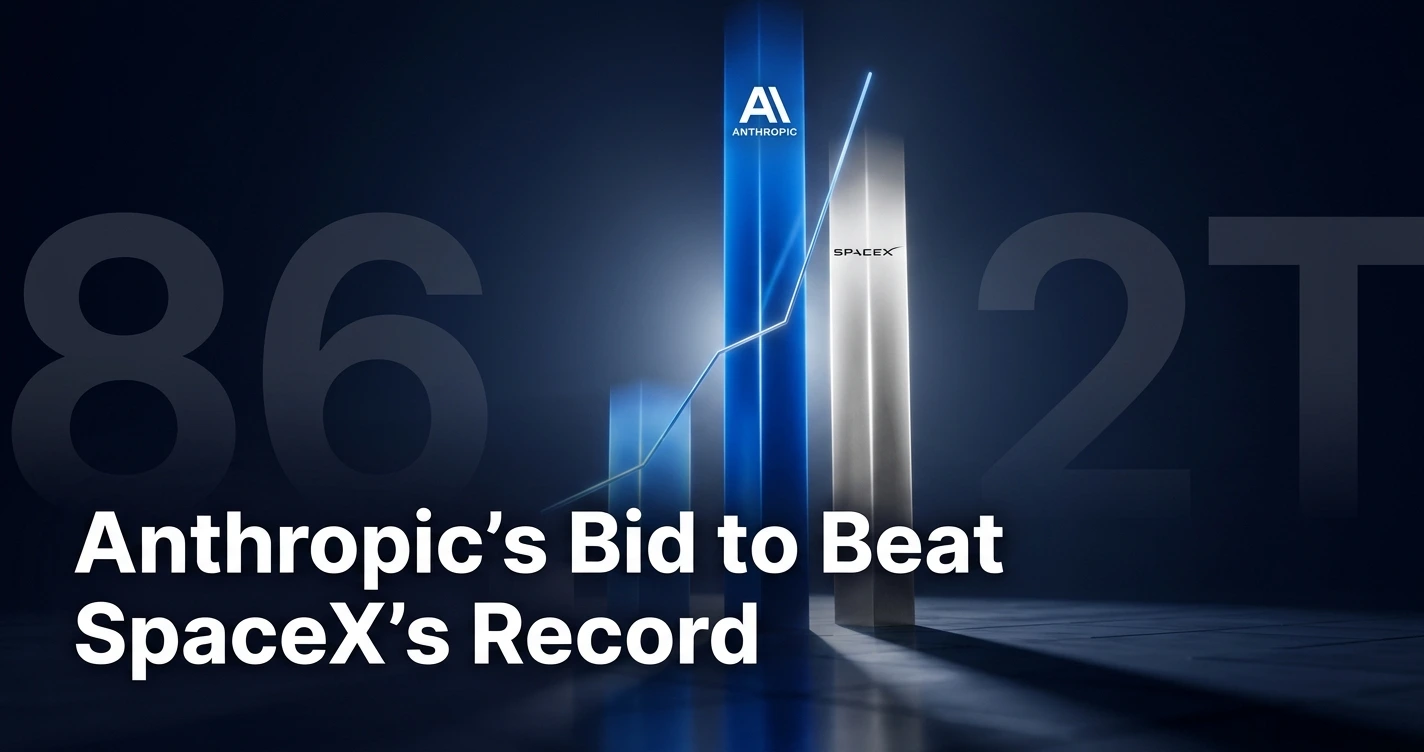
Anthropic has told investors it wants its IPO to match or beat SpaceX’s record $86.2 billion raise, and the Claude maker could file publicly before the end of August 2026. That single sentence, sourced to Bloomberg reporting on people briefed by the company, is why every AI investor’s phone lit up this week. Here’s what’s confirmed, what’s still rumor, and why the gap between the two is the real story.
Strip away the noise and Anthropic has confirmed exactly two things. On June 1, 2026, the company announced it had confidentially submitted a draft registration statement, Form S-1, to the SEC for a proposed IPO of its common stock. That filing landed four days after Anthropic closed a $65 billion Series H round on May 28, 2026, at a $965 billion post-money valuation.
Everything past that point, the target size, the valuation, the ticker, the exchange, the exact date, is reported, not confirmed. And it’s worth separating those two categories cleanly, because most of the headlines this week are blending them.
Confirmed by Anthropic:
Confidential S-1 draft submitted June 1, 2026. $65B Series H closed May 28, 2026 at a $965B valuation. Nothing else about size, price, or date has company confirmation as of this writing.
As of a mid-July check of SEC EDGAR, no public S-1 or S-1/A had appeared. That’s normal. Confidential submissions stay confidential until a company is ready to launch its roadshow, usually 15 days before it starts marketing shares to the public. You can check EDGAR yourself if you want to track the moment a public filing actually drops.
Is Anthropic’s IPO Bigger Than SpaceX’s?
Here’s the number that’s driving this whole story. Bloomberg reported on August 20, citing people familiar with the matter, that Anthropic expects to match or beat the size of SpaceX’s record-setting IPO. SpaceX targeted $75 billion when it went public in June 2026 and ended up raising $86.2 billion once the overallotment option kicked in, the largest first-time share sale ever recorded, valuing the rocket company near $1.77 trillion.
Reaching that number would make Anthropic’s debut the biggest IPO in history. It would also help push 2026 past 2021’s all-time annual U.S. IPO volume record of $195.2 billion. New listings had already brought in $160.6 billion through August 19, before Anthropic even files publicly.
None of this is locked in. Bloomberg’s own reporting notes the details, including the offering size, remain subject to change as discussions with investors continue. CFO Krishna Rao has reportedly avoided the valuation question entirely in recent investor briefings. Think of this stage less as a plan and more as a target Anthropic’s bankers are aiming at.
The Numbers Bankers Are Actually Pricing Off
Anthropic’s growth curve is the real engine behind the bull case, and it is genuinely startling. The company’s annualized revenue run rate hit roughly $65 billion by the end of July 2026, up from about $9 to $10 billion at the end of 2025. Second-quarter 2026 revenue came in near $11.5 billion, against just $787 million in the same quarter a year earlier, a roughly 14x jump.
Metric
Figure
Period
Series H valuation
$965 billion
May 28, 2026
Annualized revenue run rate
~$65 billion
End of July 2026
Q2 2026 revenue vs. Q2 2025
$11.5B vs. $787M
Reported Aug 14, 2026
2025 net loss
~$42 billion
Full year 2025
Projected 2028 revenue (banker modeling)
$190B to $200B
Reported Aug 17, 2026
Target IPO size (Bloomberg reporting)
Match/beat $86.2B
As of Aug 20, 2026
That last row is doing a lot of work in this story. Financial Times reporting, relayed by Yahoo Finance and other outlets during the week of August 11, described bank-side investors modeling a potential IPO valuation above $2 trillion, with some scenarios stretching to $3 trillion. Those numbers aren’t priced off current revenue. They’re priced off a 2028 revenue projection of $190 billion to $200 billion, meaning Anthropic needs to roughly quadruple its top line twice inside three years for the math to hold.
One investor cited by the FT put the logic bluntly, arguing that at 800% year-over-year growth, even the low end of a reasonable multiple would put Anthropic around $3 trillion. It’s an aggressive framework built on a company that also posted a net loss of nearly $42 billion in 2025, a five-fold jump from about $8.3 billion the year before, according to figures Bloomberg reviewed. Revenue is exploding. So is the burn.
The Super-Voting Shares Nobody’s Fully Unpacked
Buried in the same Bloomberg report is a detail that deserves more scrutiny than it’s gotten: Anthropic is reportedly weighing super-voting shares that would keep control with CEO Dario Amodei and his co-founders. The Information first reported the structure; Bloomberg’s August 21 sourcing corroborated it.
What makes this notable is Amodei’s actual economic stake. He’s reported to hold roughly 2% of the company. A super-voting structure would let him retain decision-making control while owning a small fraction of the equity, the same playbook used by founders at Meta, Alphabet, and Snap.
Our read:
Anthropic is a Public Benefit Corporation, structured to balance shareholder returns against a stated public mission. Layering super-voting shares on top of a PBC charter, while raising what could be the largest pool of public capital in history, creates a genuine tension between mission accountability and concentrated founder control. That’s a governance story most coverage of the IPO size has skipped past entirely.
Why Some Insiders Are Nervous
Not everyone close to Anthropic is comfortable with where this is heading. Eric Ries, author of “The Lean Startup” and an Anthropic governance advisor since 2021, told CNBC in June that he’d watched the company’s valuation run from roughly $5 billion to near $1 trillion in a few years, and that investors who once passed on the company were later fighting to get in at any price.
“That kind of reversal is a classic signal of a bubble.”
Eric Ries, Author, “The Lean Startup” and “Incorruptible”; Anthropic governance advisor — CNBC, June 8, 2026
Ries separately argued that corporate AI productivity gains remain largely unproven, a shakier foundation than the valuation numbers suggest. That’s a striking position coming from someone inside Anthropic’s own governance structure rather than an outside critic.
David Merkel, an analyst at Aleph Investments, raised a related concern in an August 17 analysis: a $2 trillion valuation effectively prices in two full years of forward revenue growth that hasn’t happened yet. If Anthropic’s growth curve bends even slightly, the entire multiple gets harder to defend.
Not every analyst is bearish. Eric Goodness, a VP Analyst at Gartner, told CNBC’s “The Tech Download” that Anthropic’s disclosure will do more than reprice private AI competitors. It gives every enterprise a hard reference point for what AI intelligence actually costs at scale.
“It’s going to reprice how every enterprise thinks about the cost of intelligence.”
Eric Goodness, VP Analyst, Gartner — CNBC “The Tech Download,” June 5, 2026
Where does that leave you? Somewhere between “this is the biggest AI financing event ever” and “this is priced for perfection two years out.” Both can be true at once.
What This Means If You Build on Claude
If you’re negotiating a multi-year API contract with Anthropic, a public S-1 is the first time you’ll see real numbers behind the pricing: gross margins, compute costs, customer concentration, all of it disclosed in a way private companies never have to share. Watch for the risk-factors section specifically. It will need to address the roughly $1.5 billion copyright settlement NeuralWired covered in July, and it will almost certainly detail the brief U.S. Commerce Department export controls that hit Anthropic’s Fable 5 and Mythos 5 models in June, a regulatory episode we broke down in our Mythos and Glasswing coverage.
For investors weighing exposure now, the gap between the last hard price ($965 billion, May 2026) and the reported IPO target ($2 trillion or more) is the entire trade. Anthropic itself has warned since earlier this year that unauthorized SPVs, forward contracts, and tokenized “pre-IPO” products claiming to offer exposure are not recognized on its cap table. If someone’s offering you Anthropic shares before an actual prospectus exists, that’s a red flag, not an opportunity.
The revenue growth funding all of this didn’t happen in a vacuum. Anthropic’s enterprise distribution push, including its Wall Street AI partnerships and its move into biotech through the Coefficient Bio acquisition, is exactly the diversification story bankers are using to justify forward multiples. Track those threads and you’ll understand the S-1 faster than most people reading it cold.
Where This Goes Next
Here’s what you now know that you didn’t ten minutes ago: Anthropic has confirmed a confidential S-1 and a $965 billion private valuation. Everything above that, the $2 trillion target, the October timeline, the super-voting structure, is credible reporting from Bloomberg and the Financial Times, not company guidance. Treat the two categories differently when you talk about this deal.
Three things to watch over the next six to eighteen months:
The public S-1 itself. Once it lands on EDGAR, the real numbers, margins, customer concentration, compute costs, replace the modeling.
Whether the growth rate holds. A 2028 revenue target of $190B to $200B requires sustained hypergrowth with zero major stumbles. Any deceleration reprices the whole thesis.
How the super-voting question resolves. A PBC charter plus concentrated founder control plus public markets is a combination regulators and shareholders will scrutinize closely, and it could shape how future AI IPOs are structured.
OpenAI filed its own confidential S-1 eight days after Anthropic, on June 9, but has since pushed its listing to 2027, handing Anthropic the first-mover seat in setting the public market’s benchmark multiple for frontier AI. Whoever prices first sets the comparison everyone else gets measured against. That alone is worth watching closely.
Frequently Asked Questions
When is Anthropic’s IPO?
Anthropic confidentially filed a draft S-1 with the SEC on June 1, 2026, and could publicly file as soon as late August 2026. No official listing date has been set; investor reports via the Financial Times have floated an October 2026 target, but Anthropic has not confirmed a date.
How much is Anthropic worth?
Anthropic’s last confirmed private valuation was $965 billion, set in its May 28, 2026 Series H round. Investors are reportedly modeling a potential IPO valuation above $2 trillion, with some estimates reaching $3 trillion, based on projected 2028 revenue, but this figure is unconfirmed by the company.
Will Anthropic’s IPO be bigger than SpaceX’s?
Anthropic is reportedly targeting an IPO that matches or exceeds SpaceX’s record $75 billion raise ($86.2 billion including overallotment), according to Bloomberg sources familiar with the matter. If achieved, it would be the largest IPO in history, though the company has not confirmed a target size.
Why is Anthropic going public?
Anthropic’s revenue run rate hit roughly $65 billion by July 2026, up from about $9 to $10 billion at the end of 2025. A public listing gives it a new capital source to fund massive compute, chip, and data center costs as it competes with OpenAI, which has pushed its own IPO to 2027.
What is Anthropic’s revenue?
Anthropic’s annualized revenue run rate reached approximately $65 billion by the end of July 2026. Second-quarter 2026 revenue was reported near $11.5 billion, up from $787 million in the same period a year earlier, roughly 14x year over year growth.
Want the next update the moment Anthropic’s public S-1 lands? Subscribe to The Neural Loop at neuralwired.com/newsletter.
GitHub Copilot’s Pricing Reset Changes Coding for Beginners
You open GitHub Copilot for your fifth coding session this week and hit a wall you didn’t know existed: “You’ve used your free completions for this month.” That wall didn’t exist six months ago. GitHub quietly rebuilt its entire free tier around a hard cap of 2,000 code completions and 50 chat requests a month, and most of the “best AI coding tools for beginners” lists still circulating online haven’t caught up.
If you’re teaching yourself to code in 2026, that pricing shift is only half the story. The other half is a set of controlled studies, including one published by Anthropic, the company that sells Claude, showing that how you use AI while learning matters more than which tool you pick. Ask AI to hand you finished code and your comprehension can drop by double digits. Ask it to explain, review, and quiz you, and the picture looks very different.
This guide walks through what actually changed, what the research says about learning with AI, and which usage patterns keep you sharp instead of dependent.
On June 1, 2026, GitHub replaced its old “premium request” system with GitHub AI Credits, where one credit equals one cent. The change looks cosmetic on the surface. It isn’t. The old free tier was generous enough that most beginners never thought about limits. The new one hard-caps usage, and once you cross it, the tool simply stops helping until next month or until you upgrade.
Plan
Price
What You Get
Free
$0/mo
2,000 completions + 50 chat requests, Claude Haiku 4.5 and GPT-5 mini access, Copilot CLI
Pro
$10/mo
Unlimited completions, $15/mo in AI Credits, cloud agent, third-party agent access (Claude Code, Codex)
Pro+
$39/mo
$70/mo in credits, access to premium models including Opus
Max
$100/mo
$200/mo in credits, built for sustained agent workflows
Students get a built-in workaround worth knowing about: verified students receive free Copilot Pro access through the GitHub Student Developer Pack. Everyone else needs to budget for hitting that free-tier ceiling faster than expected, likely within a few weeks of daily practice rather than months.
Why this matters right now
Most “best AI tools for beginners” roundups still describe Copilot’s free tier as effectively unlimited. That description stopped being accurate on June 1, 2026. Budget $10 a month into your learning plan from day one instead of discovering the limit mid-project.
The Beginner Tool Landscape in 2026
GitHub Copilot isn’t the only entry point, and it isn’t automatically the right one for every beginner. Replit’s Agent can build a working app from a plain-English description with no prior coding knowledge at all, which makes it the fastest path to “I made something.” Cursor and Windsurf sit closer to Copilot: real code editors with inline AI explanations attached to every suggestion, better suited to someone who wants to actually read and understand the code being written.
None of these tools are mature or settled products sitting still. Mordor Intelligence sizes the AI code tools market at roughly $9.35 to $9.46 billion in 2026, projected to reach $22 to $30 billion by 2030 or 2031, a 26 percent compound annual growth rate. Pricing, free-tier limits, and model access will keep shifting under beginners’ feet for years, not months.
What the Research Says About Learning With AI
Here’s the part most beginner guides skip entirely. In January 2026, Anthropic researchers Judy Hanwen Shen and Alex Tamkin published a randomized controlled trial on exactly this question. Fifty-two mostly junior developers learned an unfamiliar Python library called Trio. One group used AI assistance. One group worked unaided. Both groups then took the same comprehension quiz.
The AI-assisted group scored 50 percent. The unaided group scored 67 percent. A 17-point gap on a same-day test.
“Participants in the AI group scored 17% lower than those who coded by hand, or the equivalent of nearly two letter grades.”
Judy Hanwen Shen & Alex Tamkin, Researchers, Anthropic
Notice what makes this finding unusual: Anthropic sells Claude Code. The company has every commercial incentive to publish research showing AI accelerates learning, not research showing it can undermine it. Anthropic’s own writeup of the study narrows the finding further: comprehension losses concentrated specifically in what the researchers call “AI Delegation,” asking the model to produce finished solutions, rather than in more supervised usage patterns like requesting explanations or reviewing generated code line by line.
Stack Overflow’s 2025 Developer Survey backs this up with adoption numbers. Among the “Learning to Code” segment specifically, 39.5 percent use AI tools daily and 18.7 percent weekly, both lower than the 50.6 percent and 17.4 percent figures for working professionals. Favorability sits lower too: 52.8 percent of learners rate AI tools favorably versus 61.2 percent of professionals, while 26.3 percent of learners report unfavorable views versus 19.7 percent of pros. Learners are, on one narrow measure, more trusting than professionals of AI output (6.1 percent report “high trust” versus 2.7 percent for pros), but that’s still a small minority either way. And 66 percent of all developers surveyed cite “AI solutions that are almost right, but not quite” as their top frustration, with 45.2 percent saying debugging AI-generated code takes longer than writing it themselves.
The speed argument doesn’t hold up well either, even for experienced developers. METR ran a randomized controlled trial in mid-2025 with 16 experienced open-source developers using AI tools, mostly Cursor Pro paired with Claude 3.5 and 3.7 Sonnet. The developers took 19 percent longer to finish real tasks with AI assistance than without it, despite predicting a 24 percent speedup beforehand, and despite believing after the fact that AI had made them 20 percent faster. One important caveat: METR’s own report measured experienced developers on familiar codebases, not beginners, and the organization now labels the result “historical,” tied to early-2025 tool capability. Still, the gap between predicted and measured performance is a useful check against vendor productivity claims.
The Junior Job Market Beginners Are Entering
There’s a labor-market backdrop to all of this that most tool comparisons leave out entirely, and it isn’t speculative. Stanford’s Digital Economy Lab tracks millions of workers through actual ADP payroll data, not surveys or job postings. Their most recent update, dated August 2026, found employment for workers aged 22 to 25 in the most AI-exposed occupations, including software engineering, sitting 19 percent below where it would have landed had it tracked their less-exposed peers. That gap has widened at every update since it was first documented.
Not everyone in the industry agrees on what that means. Erik Brynjolfsson, director of the Stanford Digital Economy Lab, frames it as a diverging-paths story rather than mass job destruction.
“I think it’s fair to say that technology has always been destroying jobs and always been creating jobs.”
Erik Brynjolfsson, Director, Stanford Digital Economy Lab
AWS CEO Matt Garman takes an even more pointed stance against the idea that AI erases the need for junior hires, a position he’s stated publicly on more than one occasion.
“I was like that’s the like one the dumbest thing I’ve ever heard.”
Matt Garman, CEO, Amazon Web Services
He continued: if a company has no talent pipeline and no junior people being mentored up through the code, “at some point that whole thing explodes on itself.” Garman’s comments, first reported in an August 2025 podcast interview and reaffirmed in a December 2025 WIRED interview covered by Fortune, run directly counter to the narrative that junior developer roles are becoming obsolete.
Our read: neither the payroll data nor the executive pushback cancels the other out. The market is genuinely tighter for entry-level, AI-exposed roles right now, and simultaneously, at least one major cloud CEO is on record saying companies that stop training juniors are setting themselves up to fail later. Both things are true at once, and a beginner planning a job search needs to hold both.
How to Actually Use AI Tools Without Skipping the Learning
So what does a beginner actually do with all this? Not “avoid AI.” The Anthropic researchers were careful to isolate which usage pattern caused the comprehension gap, and it wasn’t AI use in general. It was delegation specifically: asking for a finished answer instead of working through the problem first.
Attempt first, then compare. Write your own version of the solution before asking AI for one. Comparing your approach to the AI’s output builds the same kind of retrieval practice that improves comprehension test scores in the Anthropic study.
Ask for explanations, not just code. Prompting for “explain why this works” instead of “write this for me” keeps you in the supervised-usage category the research associates with smaller comprehension losses.
Budget for the free-tier wall. Plan on hitting Copilot’s 2,000-completion cap within weeks of regular use, and decide in advance whether you’ll pay $10 a month or switch tools when you do.
Treat interviews as AI-free zones. Practice explaining and debugging code without assistance regularly. Technical interviews, on-call incidents, and code review are exactly the moments AI assistance is least reliably available.
Build a portfolio that shows your thinking, not just working output. Given the current entry-level hiring gap, projects that demonstrate independent debugging and design decisions carry more weight than a working app you can’t fully explain.
This isn’t a new problem in education. It’s the calculator and spellchecker debate from earlier decades, playing out again with sharper tools and, this time, controlled data instead of just opinions. The framing that holds up best across every source in this piece isn’t “should beginners use AI.” It’s “which usage pattern preserves the learning,” and Anthropic’s own research draws that line clearly.
GitHub Copilot, Replit, Cursor, and Windsurf are the most-recommended entry points in 2026 because each pairs a free tier with plain-language chat rather than requiring memorized syntax. Replit’s Agent can build a working app from a plain-English description with zero prior coding knowledge, while Copilot and Cursor attach explanations to inline code suggestions inside a real code editor.
Is GitHub Copilot free for beginners?
Yes, but with real limits. GitHub Copilot Free includes 2,000 code completions and 50 chat requests per month, no credit card required. That structure took effect after GitHub’s June 1, 2026 shift to usage-based AI Credits billing, replacing a more generous earlier free tier.
Can AI teach me to code from scratch?
AI can meaningfully lower the barrier to writing your first working program, but a January 2026 Anthropic study found learners who leaned on AI to generate code scored 17 percentage points lower on same-day comprehension tests than those who coded by hand, suggesting AI works best as an explainer and reviewer rather than a first-draft generator for beginners.
Will AI replace the need to learn to code?
No major analyst, academic study, or company statement supports that claim. AWS CEO Matt Garman has publicly called the idea of skipping junior-level hiring and training the dumbest thing he’s heard, and Stack Overflow’s 2025 survey shows even the learning-to-code cohort still trusts AI output less than half the time.
Is it harder to get a junior developer job because of AI?
Verified payroll data says yes, directionally. Stanford’s Digital Economy Lab found employment for 22 to 25-year-olds in AI-exposed occupations, including software engineering, sits 19 percent below trend as of mid-2026, a gap that has widened continuously since it was first documented.
Where This Goes Next
You now know something most competing guides still get wrong: Copilot’s free tier isn’t the safety net it used to be, and the “just use AI to learn faster” advice floating around most beginner content isn’t backed by the controlled research that actually exists on the question. Delegation hurts comprehension. Supervised use, where you attempt first and use AI to explain and check, doesn’t show the same drop.
Watch three things over the next 6 to 18 months: whether GitHub’s usage-based billing model spreads to competitors like Cursor and Windsurf, whether Stanford’s entry-level employment gap keeps widening or starts to close as more juniors adapt their AI usage patterns, and whether more AI labs follow Anthropic’s lead in publishing skill-formation research rather than pure productivity claims.
Want the next update on AI coding tools, pricing shifts, and skill-formation research before it hits the mainstream feeds? Subscribe to The Neural Loop, NeuralWired’s newsletter for builders who want the primary sources, not the recycled hot takes.
Model Drift: Why Your AI Fails Silently in Production (2026 Guide)
Machine Learning / AI Infrastructure
Model Drift: Why Your AI Fails Silently and No One Notices Until the Bill Arrives
By NeuralWired Staff · Updated August 18, 2026 · 11 min read
Your model is still running. The API returns 200s. The dashboard is green. And it is quietly making worse decisions every single day. That is model drift, and it is the reason a $2.8 billion real estate business collapsed in a matter of months without a single server ever going down.
If you deploy machine learning or LLM-based systems in production, model drift is probably already happening somewhere in your stack right now. This guide breaks down what it actually is, the one company that got burned badly enough to become the industry’s cautionary tale, what Gartner’s newest research says about who is prepared for it, and a genuine academic argument that the tools built to catch drift might be fooling us too.
What Model Drift Actually Is (and Why It Hides From You)
Model drift is the decline in a deployed model’s predictive performance over time. It happens two ways. Data drift is when the statistical shape of your input data changes, meaning the world your model sees today looks different from the world it trained on. Concept drift is more dangerous: the relationship between inputs and outputs itself shifts, so the same input that used to mean one thing now means something else entirely.
Here’s the part that should worry you: drift produces no error message. Your infrastructure monitoring will not flag it. Your uptime stays at 99.9%. The only place the failure shows up is in the quality of the decisions the model makes, and that usually gets discovered through a customer complaint, a revenue dip, or a compliance audit, weeks or months after the damage started.
Why it matters: Traditional application performance monitoring was built to catch outages. It was never built to catch a system that stays up and gets quietly wrong. That gap is exactly what AI observability tooling exists to close, and it’s a category most enterprises still don’t have.
The Zillow Offers Collapse: Drift’s Most Expensive Lesson
In November 2021, Zillow shut down Zillow Offers, its algorithmic home-buying business, after the pricing model behind it systematically overvalued homes as the post-pandemic housing market shifted under it faster than the algorithm could adjust. It’s a textbook case of concept drift, and it remains, five years later, the most thoroughly documented enterprise-scale drift failure on record.
Zillow disclosed write-downs exceeding $500 million, with Bloomberg reporting a final figure of $569 million
The company cut roughly 25% of its workforce, close to 2,000 employees
Zillow sold approximately 7,000 homes to institutional investors for $2.8 billion just to exit the business
According to Stanford Graduate School of Business research, one compounding factor was data latency: the model reportedly relied on data as much as 30 days old to make near-real-time buying decisions, during exactly the window when home prices were moving fastest. The model wasn’t broken in the traditional sense. It was simply reasoning from a version of the market that no longer existed.
This is why Zillow is worth mentioning in 2026, four and a half years later. Nothing has replaced it as the clean, public, dollar-quantified example of what happens when concept drift goes undetected at scale. If you want to know what “silent failure” costs in real terms, this is still the number.
Gartner’s 2028 Forecast, and Why Most Teams Aren’t Ready
Speaking at Gartner’s IT Infrastructure, Operations & Cloud Strategies Conference in Sydney in May 2026, VP Analyst Padraig Byrne laid out the scale of the problem in stark terms.
“The lack of visibility in AI systems makes scaling risky.”
Padraig Byrne, VP Analyst, Gartner · Gartner Newsroom, May 12, 2026
Gartner predicts that 40% of organizations deploying AI will implement dedicated AI observability tools by 2028, up from a small base today, to monitor model performance, bias, and outputs. Byrne also warned that without standardized model telemetry, teams face long incident resolution times built on manual detective work to trace opaque model behavior.
Read that forecast carefully and it says something uncomfortable: even by 2028, the majority of organizations deploying AI still won’t have dedicated tooling to catch this. Today, that number is smaller still.
That gap matters more now than it did even a year ago, because of what’s running on top of these models. McKinsey’s “State of AI Trust in 2026” survey found organizational AI trust maturity sitting at just 2.3 out of 5, up only slightly from 2.0 the year before, even as 62% of organizations are experimenting with agentic AI and 23% are actively scaling agents somewhere in the enterprise. Autonomy is scaling faster than the ability to audit it. That’s the setup for a Zillow-style failure, except the agent doesn’t just say the wrong thing when it drifts. It acts on it.
How Teams Actually Detect Drift
Detecting drift is a statistics problem before it’s an engineering problem. The industry has largely converged on a handful of tests, run continuously against a training-time baseline.
Method
Used for
What it flags
Kolmogorov-Smirnov (KS) test
Numeric features
Whether the distribution of a feature has shifted
Population Stability Index (PSI)
Numeric and categorical features
Magnitude of distribution shift, industry threshold: above 0.2 signals significant drift
Chi-square test
Categorical features
Shifts in category frequency
Wasserstein / KL divergence
Advanced comparisons
Finer-grained distributional differences
Emeli Dral, co-founder and CTO of Evidently AI and former Chief Data Scientist at Yandex Data Factory, has taught ML monitoring at Stanford’s CS 329S course and built one of the most widely used open-source monitoring frameworks in the field. Her team’s published courseware makes a point worth internalizing: when ground-truth labels are delayed or unavailable in production, which is the common case, teams have no choice but to rely on proxy signals such as input feature drift and prediction drift as their earliest warning system, because direct accuracy simply can’t be measured until the real-world outcome eventually arrives.
That’s a practical necessity, not a shortcut. But it’s also exactly where the next section’s argument starts to bite.
The Academic Case Against Trusting Drift Detectors
Here’s where the story gets genuinely interesting, and where most coverage of this topic stops short. A 2026 paper out of Utrecht University, accepted to the International Symposium on Intelligent Data Analysis, takes direct aim at the assumption underneath the entire drift-detection industry.
Concept drift detection may be fundamentally “ill-posed,” because what gets flagged as drift is frequently an artifact of how a detector’s comparison window was chosen, not proof that the underlying data-generating process actually changed.
Findings paraphrased from Gower-Winter, Groen & Krempl, Utrecht University, IDA 2026
Researchers Brandon Gower-Winter, Misja Groen, and corresponding author Georg Krempl argue that a genuine drift event usually can’t be independently verified against ground truth in real deployment conditions, meaning some share of the drift alerts teams act on may be statistical noise rather than actual model decay. Their empirical tests found something even more striking: which classifier a team chose to deploy often mattered more to the final outcome than whether the team used drift detection at all.
Our read: this doesn’t mean drift monitoring is worthless. It means “no alert” is not the same thing as “the model is fine,” and teams that treat a quiet dashboard as proof of health are trading one blind spot for another, more expensive one, because now they trust it.
Put plainly, a model can pass every distributional test in the book while still making steadily worse decisions underneath. That’s concept drift’s whole trick. And a detector can also fire constantly on a shift that’s completely benign, burning on-call hours chasing ghosts. Full paper: arXiv:2602.06456.
The Market Betting Billions on This Problem
Capital is already flowing toward closing this gap. According to SNS Insider research, the global AI observability market was valued at $2.71 billion in 2025 and is projected to reach $20.52 billion by 2035, a 22.47% compound annual growth rate. Next Move Strategy Consulting puts the 2026 figure closer to $3.86 billion, growing to $44.20 billion by 2035 at a steeper 31.1% CAGR. The absolute numbers diverge, as market forecasts often do, but the direction and pace of both estimates land in the same place.
The LLM-specific slice is growing even faster. Research and Markets tracks the LLM observability platform segment at $1.97 billion in 2025, climbing to $2.69 billion in 2026, a 36.3% CAGR, on a path toward $9.26 billion by 2030. For context, general IT observability tooling (the traditional APM category) is growing at roughly 15.6% a year, per Mordor Intelligence. AI-specific observability is expanding at somewhere between one and a half and two times that rate. That difference is the market’s honest read on how acute this blind spot actually is.
None of this is hypothetical concern. McKinsey’s 2025 Global AI Survey found 51% of organizations using AI report experiencing at least one negative consequence from that use, and roughly 30% specifically report consequences tied to AI inaccuracy. Silent inaccuracy, of which drift is a leading cause, is already the most commonly reported AI failure mode in the enterprise. Not a future risk. A current one.
What to Do About It This Quarter
If you’re building or operating models in production, the practical shift is treating deployment as the start of the work, not the end of it. A few concrete moves:
Capture a baseline at first production prediction, not after you’ve noticed a problem. You can’t measure drift against a baseline you never recorded.
Set PSI and KS-based alerting with severity tiers, so a minor benign shift doesn’t page the same person as a genuine collapse. Alert fatigue is how real signals get ignored.
Don’t treat “no alert” as “model is fine.” Per the Utrecht research above, pair distributional monitoring with periodic ground-truth spot checks wherever you can get them, even delayed ones.
Document your monitoring, not just your model. The EU AI Act’s Article 50 obligations, already in force, and emerging US state rules are turning “we didn’t know it drifted” from a technical excuse into a compliance liability.
Treat agentic systems as higher priority, not lower. An agent acting on drifted judgment doesn’t just output a wrong answer. It executes a wrong action, often with no human checkpoint in the loop.
Frequently Asked Questions
What is model drift in machine learning?
Model drift is the decline in a deployed machine learning model’s predictive accuracy over time, caused by changes in production data (data drift) or in the relationship between inputs and outputs (concept drift). Unlike a server outage, drift produces no error message. The system keeps running while predictions quietly get worse.
What is the difference between data drift and concept drift?
Data drift means the statistical distribution of input features changes while the underlying input-output relationship stays the same. Concept drift means that relationship itself changes, so identical inputs now warrant different outputs. Concept drift is harder to catch because inputs can look perfectly stable while accuracy still declines.
How do you detect model drift in production?
Teams use statistical tests, primarily the Kolmogorov-Smirnov test and Population Stability Index (PSI) for numeric features, and chi-square for categorical ones, comparing live production data against a training-time baseline. A PSI above 0.2 is a commonly used threshold for flagging drift that warrants investigation or retraining.
How many organizations use AI observability tools?
Only a minority of organizations deploying AI currently use dedicated AI observability tools. Gartner forecasts that 40% of AI-deploying organizations will adopt them by 2028, driven by executive concern over risk management in agentic and increasingly complex AI systems.
What is a real example of a model drift failure?
Zillow’s algorithmic home-buying unit, Zillow Offers, shut down in November 2021 after its pricing model failed to adapt to a fast-shifting post-pandemic housing market, a classic concept-drift failure. Zillow disclosed write-downs exceeding $500 million and cut roughly 25% of its workforce as a result.
Where This Goes Next
The pattern underneath all of this is simple: enterprise AI adoption has outrun enterprise AI monitoring, and the gap isn’t closing quickly. Zillow gave the industry its clearest proof of what that gap costs when it goes uncaught. Gartner’s own timeline says most organizations still won’t have dedicated tooling for it by 2028. And the Utrecht research is a reminder that even the tools built to close that gap come with their own blind spots.
Watch three things over the next six to eighteen months: how fast agentic AI deployment outpaces the 2.3-out-of-5 trust maturity McKinsey measured this year, whether regulatory audit requirements actually force monitoring budgets into existence rather than leaving them optional, and whether vendors start addressing the Utrecht paper’s critique directly instead of selling drift detection as a solved problem.
The system that fails silently is the one that costs the most, because by the time you notice, you’ve already been wrong for a while.
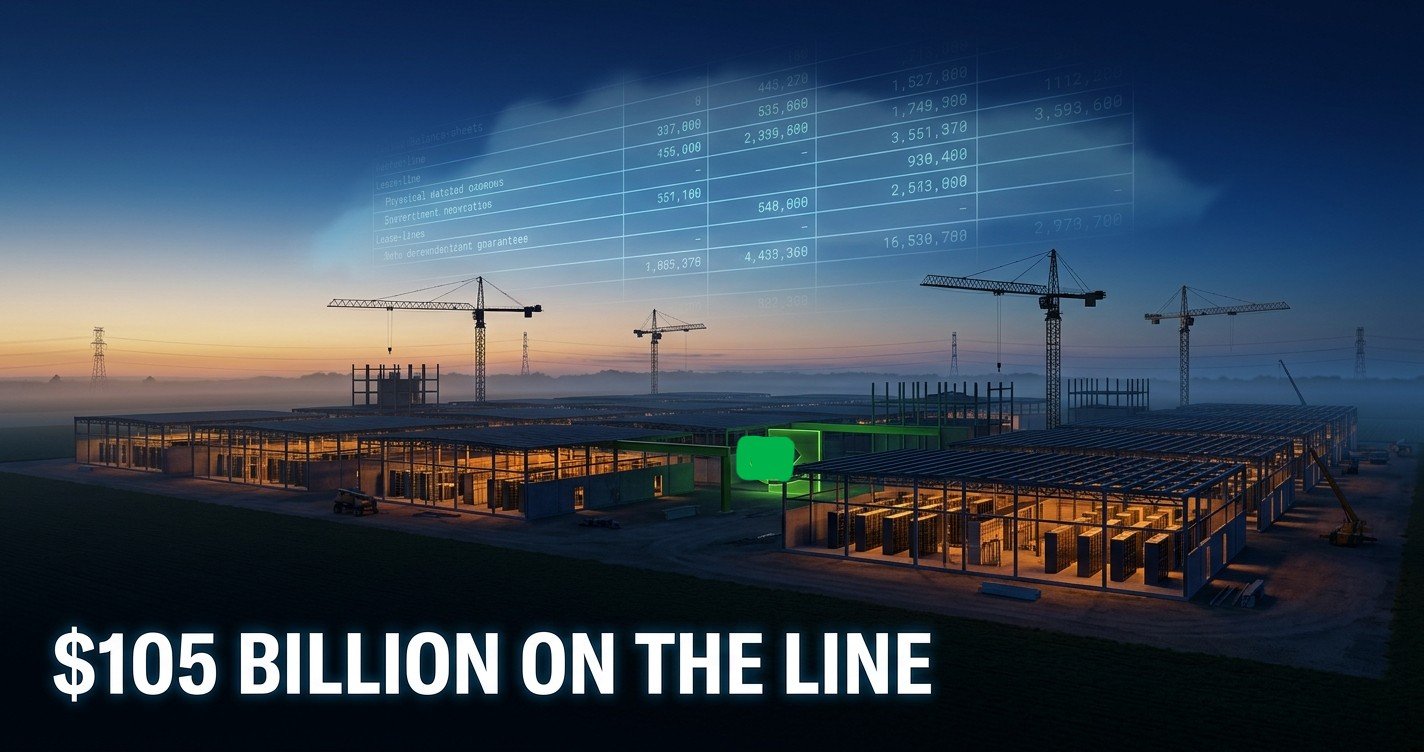
The short answer: On August 17, 2026, Nvidia filed an SEC 8-K guaranteeing up to $105 billion in lease and power obligations for OpenAI’s new Ohio data center. The guarantee only pays out if OpenAI defaults or goes insolvent, and it covers 4.25 gigawatts of an eventual 8 gigawatt campus built on a former Cold War uranium site.
Jensen Huang spent Sunday on X insisting his company isn’t running a circular financing scheme. That’s not the kind of thing a CEO tweets when nobody’s asking the question. The Nvidia $105 billion OpenAI guarantee, disclosed the same day in a Form 8-K filed with the SEC, is the largest single financial backstop Nvidia has ever put its name on, and it lands squarely on top of a company, OpenAI, that lost $1.22 for every dollar it brought in during the first quarter of 2026.
If you cover semiconductors, AI infrastructure, or anything adjacent to hyperscaler capital spending, this filing is now required reading. Here’s what Nvidia actually signed up for, why the number dropped from an earlier $250 billion figure, and where the real risk sits.
Strip away the SEC language and the structure is fairly simple. SB Energy, a subsidiary of Japan’s SoftBank Group, is building a massive data center campus in Pike County, Ohio, called the PORTS-Pike Technology Campus. SB Energy will own and operate the site. An OpenAI affiliate will lease it for 20 years starting in 2028. Nvidia becomes the exclusive AI compute provider to the campus, with limited exceptions, according to the 8-K filing on SEC EDGAR.
Nvidia’s role is what’s new here. The company has agreed to what its own filing calls “residual value guaranties,” meaning Nvidia will cover the lease and power payments if OpenAI can’t. That obligation is capped at $105 billion, cumulative, across the initial 4.25 gigawatts of IT load. It only becomes a real cash outflow if OpenAI defaults on the lease or becomes insolvent.
Separately, and this distinction matters more than most headlines have made clear, Nvidia is putting $1.5 billion of direct equity into SB Energy itself, described in Nvidia’s release as support for the company’s “evolution into a leading AI infrastructure developer,” per Axios’s reporting. That $1.5 billion is a real, near-term check. The $105 billion is a ceiling that only gets hit if things go wrong.
Why The Guarantee Shrank From $250 Billion To $105 Billion
The Wall Street Journal first reported a proposed backstop of up to $250 billion on August 14, three days before the final filing. Nvidia shares dropped as much as 5% on that report, a clear signal that investors weren’t thrilled about the size of the exposure. By the time the deal was finalized and filed with the SEC on August 17, the number had been cut by more than half, to $105 billion, and scoped down to cover only the campus’s initial phase rather than the full 10 gigawatt buildout planned for the site.
That’s the headline version. The more interesting version is that the cut may be optical rather than structural. CNBC’s same-day reporting noted that Nvidia and OpenAI are separately discussing a financing arrangement of up to $350 billion to fund the actual chip purchases for the site, a deal that has not been confirmed in any SEC filing as of this writing. If that arrangement materializes, Nvidia’s combined exposure to a single customer could end up higher than the original $250 billion figure that spooked the market in the first place. Worth flagging clearly: that $350 billion number is reported, not confirmed.
Inside The Portsmouth Site
The location has its own story. The PORTS-Pike Technology Campus sits on the site of the former Portsmouth Gaseous Diffusion Plant, a decommissioned Cold War uranium enrichment facility roughly 50 miles south of Columbus. Powering an AI campus where the government once enriched uranium for weapons programs is the kind of detail that writes its own headline.
Getting power to the site is its own undertaking. SB Energy and AEP Ohio are jointly investing at least $4.2 billion in transmission infrastructure, including new 765-kV lines and four substations, funded through the project itself rather than passed on to ratepayers. The total site is planned for 10 gigawatts of power draw, including 9.2 gigawatts of new gas-fired generation. OpenAI says the buildout will support 35,000 construction jobs through 2032 and roughly 2,500 permanent operating positions once complete.
The Deal By The Numbers
Figure
What it represents
$105 billion
Cumulative cap on Nvidia’s guaranty, down from an earlier $250 billion figure
4.25 GW
IT load covered in phase one, out of an eventual 8 GW campus
$1.5 billion
Nvidia’s direct equity stake in SB Energy, separate from the guaranty
$4.2 billion
SB Energy and AEP Ohio’s combined transmission infrastructure spend
$81.6 billion
Nvidia’s Q1 FY2027 revenue, up 85% year over year
$852 billion
OpenAI’s post-money valuation as of its March 2026 funding round
-122%
OpenAI’s non-GAAP operating margin in Q1 2026
$63 billion
OpenAI’s projected cash burn for 2027
Put those last two rows next to each other and the reason Nvidia needed to guarantee anything becomes obvious. A tenant with an $852 billion valuation but no investment-grade credit rating and a widening cash burn is exactly the kind of counterparty landlords ask for backstops on.
Is This Circular Financing?
This is the question every analyst note on this deal opens with, and Jensen Huang got ahead of it himself.
“Is this circular financing? No. OpenAI will pay the lease.”
Jensen Huang, Founder & CEO, Nvidia Corporation · posted to X, August 17, 2026
Huang’s argument is that Nvidia is using its balance sheet strength to secure long-lived infrastructure that OpenAI will pay to occupy, not manufacturing demand for its own chips out of thin air. He’s also floated a much bigger number: roughly $600 billion in Nvidia compute opportunity through 2030, tied to OpenAI’s broader buildout plans. That figure is a projection, not a contract, and should be read that way every time it shows up in a headline.
Not everyone is buying the framing. Michael Burry, the investor best known for his short position ahead of the 2008 crash, has been naming this exact deal in his recent writing.
“Circular financing lets capital injected into the AI ecosystem flow back to participants as revenue, while debt makes up a growing share of that capital, which puts the bubble on a clock.”
Michael Burry, Scion Asset Management · Trading Post, Substack, August 13, 2026
Burry has also pointed to roughly $879 billion in hyperscaler commitments that flow back through Nvidia in one form or another, and noted that Nvidia’s credit default swap spread doubled over a two month stretch as bond traders started pricing in this kind of exposure.
Sell-side analysts land somewhere in the middle. Bernstein’s Stacy Rasgon has warned that the sheer size of Nvidia’s guarantees, larger than anything the company has previously disclosed, will “fuel these worries much hotter than what we have seen previously.” CreditSights, a fixed-income research firm, put it more bluntly: the structure is “pro-cyclical,” nearly free to Nvidia while the market is hot, and most dangerous in a downturn, when customers are defaulting at the same time hardware values are falling. Their phrase for it: Nvidia is effectively “writing a put.”
Our read: both things can be true at once. Nvidia probably does get paid the lease under most scenarios. But “most scenarios” isn’t the same as “all scenarios,” and $105 billion is a lot of money to have riding on one customer’s ability to keep growing into an $852 billion valuation it hasn’t earned yet on paper.
The Skeptics’ Case
Set aside the circular financing framing for a moment. There’s a separate, quieter argument building among finance academics and rating agencies that’s less about accusation and more about accounting.
NYU Stern’s Aswath Damodaran, whose valuation work is widely cited across Wall Street, has argued that the big AI hyperscalers have effectively become manufacturing companies dressed in software multiples.
“They now are the equivalent of manufacturing companies. And like all manufacturing companies historically, they’re now going to be judged on whether they can deliver the earnings on this investment.”
Aswath Damodaran, Professor of Finance, NYU Stern School of Business · ProfG Markets, August 7, 2026
That’s a return-on-invested-capital argument, and it applies with more force to OpenAI, the tenant with the cash burn problem, than to Nvidia, the guarantor with the $81.6 billion quarterly revenue base. But it applies to Nvidia too, indirectly: every dollar committed as a guaranty is a dollar of balance sheet capacity that isn’t available for something else.
There’s also a bank-for-central-banks-level warning sitting underneath all of this. The Bank for International Settlements flagged in its June 2026 Annual Report that hyperscaler debt tied to AI buildouts is growing faster than the balance sheets carrying it, a systemic concern rather than a single-company one. And Nvidia’s own filing doesn’t exactly dodge the characterization. The 8-K classifies the guaranty under Item 2.03, “Creation of a Direct Financial Obligation or an Obligation under an Off-Balance Sheet Arrangement,” which is Nvidia’s own language, not a reporter’s spin. Rating agencies have already started treating comparable structures this way. S&P Global has said it will fold Broadcom’s similar residual-value guarantees into its adjusted debt calculations, and there’s no obvious reason Nvidia’s guaranty would be treated differently once the details land in Nvidia’s next 10-Q.
And that’s the honest gap in this story right now: Nvidia hasn’t yet disclosed the guarantee’s trigger conditions, per-lease minimums, or how the $105 billion cap gets allocated across leases. Those details are expected as exhibits to Nvidia’s Form 10-Q for the fiscal quarter ended July 26, 2026. Until that filing lands, a lot of the risk modeling here is still an estimate built on the topline number alone.
What Happens Next
Three things are worth watching over the next 12 to 18 months.
The 10-Q exhibits. Nvidia’s next quarterly filing should finally show the trigger conditions and allocation formula behind the $105 billion cap. That’s when analysts can actually model this instead of estimating around it.
OpenAI’s IPO window. OpenAI confidentially filed a draft S-1 in June 2026, with a possible listing as early as September at a valuation reportedly approaching $1 trillion. A weak public debut would tighten OpenAI’s ability to fund lease payments without leaning on Nvidia’s guaranty.
The $350 billion chip financing talks. If that separate arrangement gets confirmed in a filing, it changes the real size of Nvidia’s total exposure to OpenAI, regardless of what today’s $105 billion headline suggests.
The first phase of the Ohio campus, around 800 megawatts of the initial 4.25 gigawatt commitment, is targeted to come online in 2028. Building gigawatt-scale gas power and a data center shell in two years is an aggressive timeline by utility standards. Nvidia’s “land, power, and shell” approach is designed to decouple the site build from hardware generations, which helps with obsolescence risk, but it doesn’t do anything to change the financing timeline underneath it.
Frequently Asked Questions
What did Nvidia agree to guarantee for OpenAI’s Ohio data center?
On August 17, 2026, Nvidia filed an SEC 8-K disclosing it will guarantee up to $105 billion in lease and power payment obligations for OpenAI’s data center in Pike County, Ohio. The guarantee covers 4.25 gigawatts of an eventual 8-gigawatt campus and pays out only if OpenAI defaults or becomes insolvent.
Is the Nvidia-OpenAI deal circular financing?
Nvidia CEO Jensen Huang has publicly denied it, saying OpenAI will pay the lease itself. Critics including investor Michael Burry and Bernstein analyst Stacy Rasgon argue the structure still lets Nvidia’s capital effectively support demand for its own chips, since Nvidia is guaranteeing debt tied to a facility built to run its hardware exclusively.
Where is OpenAI’s new Ohio data center located?
The PORTS-Pike Technology Campus sits in Pike County, Ohio, on the site of the former Portsmouth Gaseous Diffusion Plant, a decommissioned uranium enrichment facility about 50 miles south of Columbus. SB Energy, a SoftBank subsidiary, will build and operate it under a 20-year lease to OpenAI.
When will OpenAI’s Ohio data center be operational?
The first phase, roughly 800 megawatts of the initial 4.25-gigawatt commitment, is expected online in 2028. The full 8-gigawatt campus would follow in later phases through the early 2030s.
Why did Nvidia’s guarantee shrink from $250 billion to $105 billion?
The Wall Street Journal first reported a proposed $250 billion backstop on August 14, 2026, and Nvidia shares fell as much as 5% on the news. The finalized August 17 SEC filing capped Nvidia’s guaranty at $105 billion, covering only the campus’s initial phase rather than the full 10-gigawatt buildout.
Does Nvidia’s OpenAI guarantee affect its balance sheet or credit rating?
The guarantee is structured as an off-balance-sheet obligation, but Nvidia’s own 8-K classifies it under rules governing direct financial obligations. Rating agencies including S&P Global have said they treat comparable residual-value guarantees, such as Broadcom’s, as debt-like obligations in adjusted debt calculations, which suggests similar scrutiny could apply here.
Where This Leaves You
Here’s what’s actually changed after this filing. Nvidia no longer needs OpenAI to buy more chips to grow. It now needs OpenAI’s Ohio lease payments to keep flowing for the next twenty years, or it needs to be comfortable writing a check as large as $105 billion if they don’t. Those are two different kinds of exposure, and the market has spent the past week trying to figure out which one it’s actually pricing.
Watch the 10-Q exhibits for the real trigger mechanics, watch OpenAI’s IPO timeline for the revenue side of the equation, and watch whether that separate $350 billion chip financing talk turns into an actual filing. Any one of those three could change how this deal reads in six months.
SK Hynix Calls 2027 the Worst Year in Memory History
The HBM memory chip shortage isn’t a GPU story anymore. It’s a wafer story, and the three companies that control it have already sold out capacity years in advance.
Ask a CTO what’s holding up their AI rollout in August 2026, and the answer used to be GPUs. Now it’s memory. Specifically, it’s High Bandwidth Memory, the stacked DRAM that sits directly on top of every AI accelerator chip, and every major supplier of it has told investors, on the record, that they are sold out for years to come.
SK Hynix CEO Kwak Noh-Jung didn’t hedge when he said it. Speaking the same day his company’s ADR began trading on Nasdaq, he called 2027 the worst year in the memory industry’s history for supply, with tight conditions persisting into the 2030s. That’s not an analyst’s model. That’s the head of the company that makes the memory, telling the market not to expect relief anytime soon.
This is the HBM memory chip shortage story that matters for 2026: not that chips are expensive, but that the physical capacity to build them is already spoken for, years out, by buyers with effectively unlimited budgets.
The real bottleneck isn’t GPUs, it’s memory
HBM is a stacked form of DRAM. Instead of sitting on a separate module across the motherboard the way conventional memory does, multiple dies are bonded vertically using through-silicon vias and mounted right on the same package as the AI accelerator. That proximity is what gives large language models the bandwidth they need to move data fast enough to keep a GPU fed during training and inference.
Making it is harder than making regular DRAM. According to SK Hynix, HBM requires extra process steps, extra testing, and advanced packaging that eats into the same production capacity used for ordinary memory. And because it uses far more wafer area per bit than standard DRAM, Micron has put the conversion ratio at roughly 3 to 1: every wafer redirected to HBM removes the equivalent of three wafers’ worth of conventional DDR5 or DDR4 supply from the market.
Only three companies build HBM at scale: SK Hynix, Samsung, and Micron. Between them, they control more than 95% of global DRAM production, according to IDC. When those three decide to chase the more profitable AI product, everyone else buying standard memory, PC makers, phone makers, server vendors outside the hyperscaler tier, competes for what’s left.
Sold out through 2027: what that actually means
As of January 2026, SK Hynix, Samsung, and Micron had already pre-sold their entire HBM4 production for the full 2026 calendar year, according to Wedbush. That alone would be notable. What’s more striking is that SK Hynix’s 2027 HBM4 capacity is reportedly already effectively sold out too, per Cantor Fitzgerald, with buyers locking in differentiated pricing more than a year ahead of delivery.
Who’s paying what for 2027 capacity: Nvidia is reportedly paying around $32 per gigabyte, Broadcom about $36, and AMD roughly $40, for HBM4 that won’t ship until 2027. Buyers are locking in scarce future supply now, at a premium, rather than risk not getting allocation at all.
Buyer
Reported 2027 HBM4 price
Source
Nvidia
~$32/GB
Cantor Fitzgerald
Broadcom
~$36/GB
Cantor Fitzgerald
AMD
~$40/GB
Cantor Fitzgerald
SK Hynix’s CFO has said plainly that the company has already sold out its entire 2026 HBM supply. Micron has confirmed similar constraints for both 2025 and 2026. And Samsung’s memory chief, Kim Jaejune, told investors in the company’s April 2026 earnings report to expect significant shortages across memory products through at least 2027.
“It’s unprecedented. Constraints could persist for months or years as AI infrastructure competes for wafers.”
TM Roh, Co-CEO, Samsung Electronics (Device eXperience division), via Reuters
Why 2027, specifically
You can’t fix a wafer shortage with a press release. New fab capacity takes years to come online, and the projects announced this year won’t move the needle before 2027 or 2028 at the earliest.
Micron has committed $24 billion to a new fab in Singapore, plus major facilities in New York and Idaho backed by $6.14 billion in CHIPS Act funding, but meaningful volume isn’t expected until closer to 2028. SK Hynix is investing $13 billion in a new South Korean plant and $3.87 billion in an advanced packaging facility in Indiana that’s critical for future HBM output, yet that Indiana site isn’t slated for mass production until the second half of 2028. SK Hynix’s board has also approved 54 trillion won for two additional fabs in Yongin and Cheongju. Samsung is raising HBM capacity 50% in 2026 and building a $17 billion facility of its own, with new fabs across the industry generally landing commissioning windows between H2 2027 and H2 2028.
That gap between “capital committed” and “wafers shipping” is the entire reason 2027 shows up as the flashpoint in nearly every executive statement on this topic. The money is moving now. The output isn’t, not for another year or two.
Demand isn’t waiting for supply to catch up, either. Reports around OpenAI’s Stargate project point to commitments as large as 900,000 wafers per month, a scale of pre-booking large enough to tighten the entire global memory market on its own (this figure is circulating in industry analysis and hasn’t been confirmed in an official filing, so treat it as reported rather than settled).
The numbers behind the squeeze
The pricing data backs up the executive warnings. TrendForce reported conventional DRAM contract prices rose 93 to 98% quarter over quarter in the first quarter of 2026 alone, driving total memory industry revenue up 81% to $97 billion in that same quarter. By the third quarter, TrendForce’s forecast calls for DRAM and server DRAM contract prices to keep climbing 13 to 18% quarter over quarter, a real deceleration from Q1’s spike, but still upward, not flat.
Metric
Figure
Source
DRAM supply growth, 2026
16% YoY (below 20-30% historical norm)
IDC
HBM revenue, 2025 to 2026
$35B to ~$60B (+70% YoY)
Yole Group
Hyperscaler AI capex, 2026 / 2027
~$851B / ~$1.15T
Bank of America
HBM share of DRAM wafer output, 2026
23% (up from ~19% in 2025)
Fortune
The knock-on effect has already hit consumer electronics. TrendForce’s early-2026 forecast of a 55 to 60% quarter over quarter DRAM price jump translated, on real retail listings, to a 32GB DDR5-5200 module climbing from roughly $326 toward $500 or more on Newegg. Nvidia reportedly cut consumer RTX 50-series production 30 to 40% in the first half of 2026, according to GPUnex analysis, because the same fabs making consumer GDDR7 also feed HBM lines. NeuralWired covered the same dynamic hitting phones directly in our Pixel 11 price hike breakdown, and the demand side of this equation is the subject of our Meta AI spending analysis.
“Right now, it’s memory. It’s been power in the past.”
Brad Lightcap, then-COO, OpenAI, speaking at the Hill and Valley Forum (departed OpenAI August 11, 2026)
Even Google DeepMind’s Demis Hassabis has called the shortage a “choke point” for the industry, and it’s telling that both Elon Musk (floating the idea of Tesla making its own memory chips) and Apple (reportedly lobbying the White House to buy from a blacklisted Chinese supplier to ease pricing) are considering options that would have sounded extreme eighteen months ago.
Not everyone agrees the crisis deepens
Every supplier statement above comes from a company that profits from the shortage lasting longer. Worth remembering: SK Hynix has posted record quarterly revenue this cycle, and Micron’s stock is up 213% this year. No one on the supply side has ever forecast their own scarcity ending soon, and that’s a pattern worth watching, not a coincidence.
Bloomberg Intelligence analyst Shuli Ren offers the sharpest counterpoint in the data. Her research suggests the shortage likely peaked in the second quarter of 2026, with conditions easing through the back half of the year into 2027, and her “sufficiency ratio” model points to the market stabilizing by Q4 2027 and possibly flipping to oversupply in 2028, once capital investment from all three major makers actually comes online. Michael Burry’s short position against Micron, reported alongside Ren’s analysis, is a direct market bet that current memory pricing has already run ahead of itself.
There’s also a structural wildcard neither the bulls nor the bears fully control: chip efficiency. If newer AI accelerators keep delivering more performance per watt and per dollar, future systems could need fewer memory components for the same output. Should that trend accelerate, especially if more workloads shift toward inference-optimized or sparse, mixture-of-experts architectures that are less bandwidth-hungry, memory pricing could soften well before 2030.
Even TrendForce’s own numbers hint at this. Quarter over quarter price growth fell from 93 to 98% in Q1 2026 to a forecast 13 to 18% in Q3. Prices are still rising. The rate of tightening is not accelerating anymore, it’s decelerating. That’s a meaningfully different story than “getting worse every quarter,” even if headlines often compress the two.
What this means if you’re building AI infrastructure
If your team is planning GPU or server deployments without an existing long-term memory supply agreement, plan around memory-constrained timelines stretching into 2027, not just GPU allocation. Procurement has already shifted from transactional buying to multi-billion-dollar long-term agreements, and that shift favors whoever locked in capacity earliest.
Startups and mid-size AI companies building their own infrastructure carry the least negotiating leverage in this market. Large cloud providers with pre-paid allocation are largely insulated from spot shortages; everyone else is exposed to both price and delivery risk. If your roadmap assumes “we’ll buy compute when we need it,” that assumption doesn’t hold through at least 2027.
On the architecture side, some engineering teams are already designing around the constraint rather than waiting it out, leaning on larger banks of conventional DDR paired with high-speed interconnects, composable memory architectures, or staged rollouts that push the highest-HBM-dependency nodes to later phases of a build.
Our read: this signals a market where the pricing power sits with exactly three companies for at least the next 18 months, and where “when does relief arrive” is now a genuinely contested question between the people who make the memory and the analysts who track them independently.
Frequently asked questions
What is HBM (High Bandwidth Memory) and why does it matter for AI?
HBM is a stacked form of DRAM that sits directly on an AI accelerator’s package, connected via high-speed interconnects for far greater bandwidth than standard DDR5. It provides the memory bandwidth large AI model training and inference require. Without it, high-performance AI chips can’t use their full processing power.
Why is there a memory chip shortage if total chip manufacturing is increasing?
The issue isn’t a lack of total semiconductor capacity. It’s a strategic reallocation of that capacity away from consumer-grade memory toward high-margin HBM for AI data centers, since HBM uses roughly three times the wafer area of standard DRAM per bit.
How long will the memory chip shortage last?
Estimates diverge sharply. SK Hynix’s CEO has called 2027 the “worst” year in memory history, with tightness persisting beyond 2030, while UBS projects undersupply lasting until at least Q2 2028. Bloomberg Intelligence’s Shuli Ren takes the more optimistic view, seeing the shortage peaking in Q2 2026 and easing into 2027.
Which companies make HBM memory chips?
Only three: Samsung, SK Hynix, and Micron. Together they control more than 95% of global DRAM production and are effectively the only volume producers of HBM, giving them outsized pricing power over the entire AI hardware supply chain.
Is the memory chip shortage affecting smartphone and PC prices?
Yes. PC vendors including Lenovo, Dell, HP, Acer, and ASUS have confirmed price hikes and contract resets in the 15 to 20% range in the second half of 2026, as manufacturers redirect DRAM and NAND capacity toward AI data centers instead of consumer devices.
Here’s what’s different about this squeeze compared to past memory cycles: the demand driver isn’t a temporary PC or phone upgrade wave. It’s hundreds of billions of dollars in committed AI infrastructure spending, backed by capital plans that assume the buildout continues, not fades. Fabs announced today don’t reach real volume before 2027 or 2028, so even a sudden slowdown in AI demand wouldn’t show up as looser memory supply until then.
Watch three things over the next 6 to 18 months: whether TrendForce’s quarter over quarter price growth keeps decelerating toward Shuli Ren’s easing scenario, whether SK Hynix’s Indiana and Micron’s Singapore fabs stay on schedule for 2027-2028, and whether AI chip architectures shift enough toward efficiency to reduce memory demand per unit of compute before new supply arrives. Any one of those breaking differently changes which 2027 forecast turns out to be right, the CEO’s or the analyst’s.