NeuralWired’s Technology section covers the developments reshaping how the world builds, deploys, and regulates digital innovation. We report daily on the stories driving global conversation in artificial intelligence, big technology companies, startups and venture funding, cybersecurity, consumer gadgets and devices, and blockchain and cryptocurrency.
Our technology coverage goes beyond product announcements. When a major AI model launches, we explain what it can actually do and where its claims are overstated. When a startup raises a large funding round, we look at whether the business behind it can sustain that valuation. When a cybersecurity breach hits the news, we explain who is affected and what comes next, not just what happened. Each article is built from original research into primary sources, including company statements, technical documentation, regulatory filings, and verified data, and is written by our editorial team rather than generated automatically.
Readers come to this section for daily updates on the technology stories that matter globally, from shifts inside major technology companies to emerging tools changing how people work, communicate, and build. Whether you are a founder, an investor, an engineer, or simply someone trying to understand where technology is heading next, NeuralWired’s Technology coverage is built to keep you informed without wasting your time on hype.
Qwen’s 3 Billion Download Claim vs. the Real Hugging Face Number
Open Source AI · Data Report
Qwen’s 3 Billion Downloads: What Hugging Face Actually Found
By NeuralWired Staff · Published August 16, 2026 · 9 min read
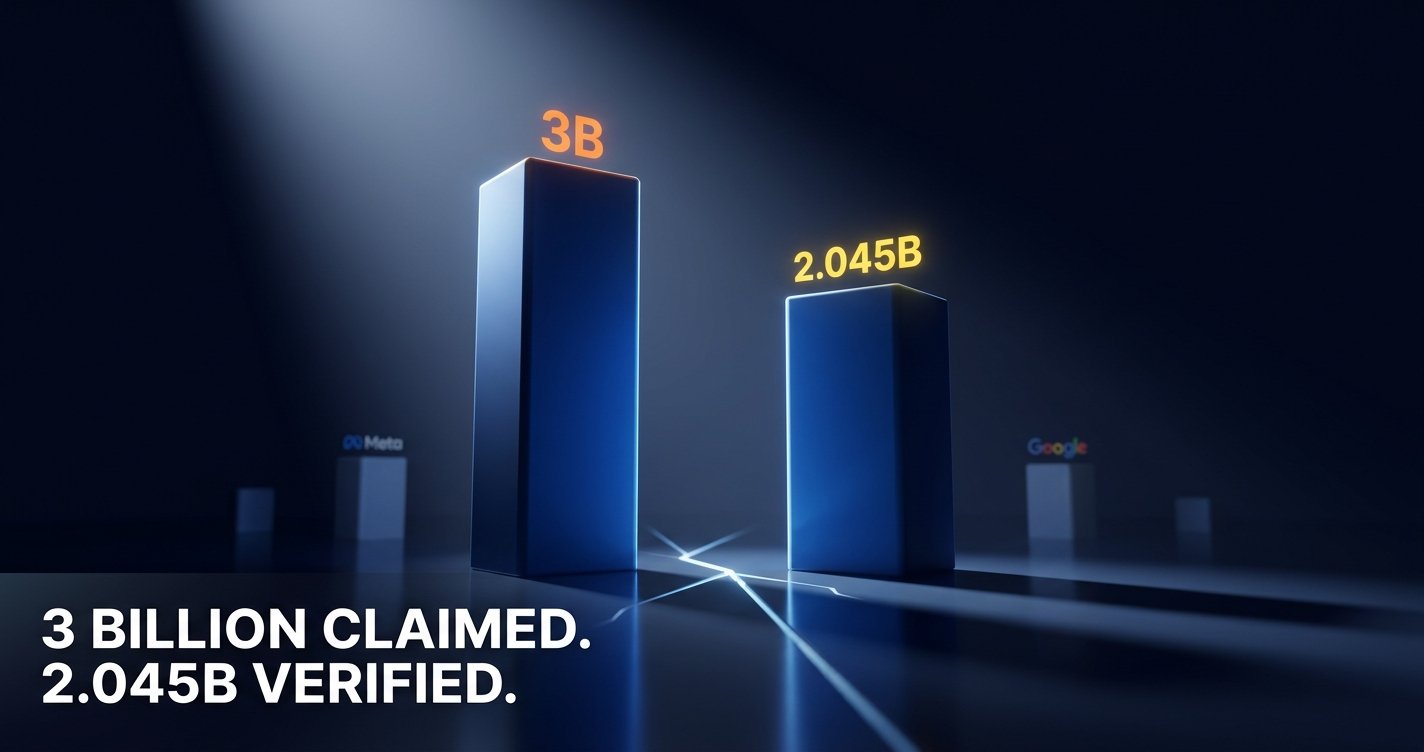
Alibaba says its Qwen models just crossed 3 billion downloads, beating Meta and Google combined. The number making headlines this week comes from a company press statement. The number that came from an independent audit, published one day earlier by Hugging Face, is 2.045 billion. Nobody covering this story has reconciled the two, and the gap tells you more about how AI companies market themselves in 2026 than either figure does on its own.
If you’re a developer, CTO, or ML lead deciding which open model family to build on, the headline number is the least useful part of this story. The methodology behind it, and what Hugging Face’s full report says about where Qwen’s lead actually comes from, matters a lot more.
On August 14, 2026, Hugging Face published its biannual State of Open Models: Summer 2026 Observations report, a survey of Hub activity from January through July authored by staff researchers Adina Yakefu, Apolinário Passos, Irene Solaiman, and roughly 70 contributors. Its number for Qwen: 2,045,000,000 downloads on the Hugging Face Hub, against 418 million for Google and 227 million for Meta over the same window.
One day later, Alibaba sent out an emailed statement, first reported by Bloomberg and syndicated by Business Standard, claiming Qwen had passed 3 billion downloads globally across 460-plus open-sourced models, with 300,000-plus derivative models built on top of them. That figure folds in ModelScope, Alibaba Cloud, and third-party mirrors, none of which Hugging Face’s report can see or verify.
Measurement
Qwen
Google
Meta
Hugging Face Hub (independently logged, Jan-Jul 2026)
The core problem: Every major outlet that covered this story, Fortune, Bloomberg, China Daily, ran the 3 billion figure and the 2.045 billion figure in the same breath, as though they measured the same thing. One is server-side telemetry from a neutral platform. The other is a company’s own count, with no disclosed methodology, covering channels nobody outside Alibaba can audit.
That distinction matters because Hugging Face’s own report contains a direct warning against the interpretation most coverage encouraged. Its methodology notes state plainly that downloads reflect Hub activity, not API usage, private deployments, or distribution through other channels, and should not be read as a proxy for model quality or market share. Almost none of the news coverage repeated that caveat.
What Hugging Face’s Report Actually Measured
Strip away the 3-billion headline and the audited numbers still tell a real story. Qwen’s ecosystem depth, not just its raw download count, is where the report gets interesting.
151,448 Qwen-based derivative models exist on the Hub, roughly 2.6 times Meta’s total derivative count across all its models and 4.7 times Llama’s derivative count specifically. Google’s Gemma family trails with 82,506 derivatives.
New Qwen derivatives are appearing at 180 to 210 repositories per day, sustained through the first seven months of 2026.
Of 28,531 GGUF conversions (the quantized format that lets Qwen run locally on consumer hardware) only 54 came from the Qwen team itself. The rest is unpaid community work.
Qwen pulls 39.6 million GGUF downloads a month for local, on-device inference, nearly double Gemma’s 20.8 million and more than five times Llama’s 7.5 million.
Hugging Face’s own researchers were careful to credit the right party for that lead:
“This position was built largely by the community.”
Hugging Face research team, State of Open Models: Summer 2026 Observations, Aug 14, 2026
Read that sentence again next to Alibaba’s press release. The derivative count, the GGUF conversions, the documentation, most of the infrastructure that makes Qwen usable on a laptop instead of a data center rack, came from developers who don’t work for Alibaba and were never asked to.
The Headline Hides a Small-Model Story
Here’s the number that should reframe the entire “Qwen beat Meta and Google” narrative: 83% of all-time downloads across the entire Hugging Face Hub go to models under 1 billion parameters. And 1.5% of all repositories account for 99.2% of total downloads.
Translation: this isn’t really a story about frontier reasoning models slugging it out for AGI supremacy. It’s a story about which company ships the widest range of small, boring, deployable utility models, the kind that get embedded into a search pipeline or a classification task and never make headlines. Qwen’s flagship 2.4-trillion-parameter Qwen3.8-Max, released July 19, 2026 with 95 billion active parameters per query, is impressive engineering, but it is not what most of those 2.045 billion downloads are for.
If your team is benchmarking frontier capability, Hub download share is close to irrelevant. If your team is trying to figure out where the community troubleshooting, quantized builds, and tooling density will actually be a year from now, it’s the most useful number in the report.
The License Reversal Almost Nobody Is Covering
This is the part of the story that got buried under the download headline, and it’s the part that should worry anyone planning to build a commercial product on the assumption that Qwen stays free forever.
Qwen3.7-Plus, unlike earlier releases in the family, shipped without open weights, a detail first flagged in technical discussion on Hacker News rather than in mainstream coverage. Multiple outlets, citing unnamed sources, now report Alibaba is preparing a revenue-sharing license for Qwen3.8-Max aimed at large commercial users, a structural shift away from the fully permissive Apache 2.0 approach that built the download lead in the first place. It would mirror a move already made by rival Chinese lab Moonshot AI, whose Kimi K3 model requires authorization above $20 million in annual revenue, a licensing detail a Hugging Face Hub community member flagged as inconsistent with the report’s claim that no 20B-plus Chinese release carries non-commercial restrictions. Hugging Face has not issued a correction.
Alibaba’s own researchers, in a January 2026 statement carried by state outlet Xinhua, framed the company’s intent around continued openness:
“…keep pushing the performance frontier of LLMs…”
Unnamed Qwen team researcher, Tongyi Lab, via Xinhua, Jan 13, 2026
Whether that commitment survives contact with a revenue-sharing license for the flagship model is an open question, and one that the “3 billion downloads” framing this week conveniently sidesteps. If Alibaba confirms the shift around its August 20 earnings call, every “Qwen wins open source” piece published this week needs a follow-up within days.
The US-China Framing Problem
Coverage of Chinese open-weight models rarely stays purely technical for long, and this story is happening against a backdrop of congressional scrutiny into Chinese AI generally. Independent technology writer Karl Bode has been one of the more pointed critics of that framing, arguing that national security concerns raised about Chinese open models function to protect incumbent commercial interests more than they reflect a substantiated threat, describing the pattern as built on “a fake concern for national security.”
That’s one side of the argument. It’s not the only one. Anthropic and OpenAI have separately accused Chinese open-weight developers of unauthorized model distillation, a claim distinct from the download-count story but part of the same broader tension over how open the “open” in open-weight Chinese models really is, as detailed in The Conversation’s August 2026 analysis. Readers evaluating the download headline should hold both positions in mind rather than picking whichever confirms an existing view of Alibaba.
What This Means If You’re Building on Qwen
For engineering teams actually shipping product, three things from this report matter more than the topline number.
1. Community tooling really is denser around Qwen
Five times the local-inference download volume of Llama and nearly double Gemma’s isn’t a vanity metric. It means more GGUF builds, more Discord and GitHub troubleshooting threads, and more prebuilt quantizations to pull from when something breaks at 2 a.m.
2. Audit your license before you scale
Apache 2.0 legacy Qwen models are unaffected by anything reported here. But if you’re on a newer flagship variant, or planning to be, check the license terms attached to that specific model version now, not after you’ve built a revenue-generating product around the assumption that it’s free forever.
3. Don’t confuse Hub downloads with frontier capability
With 83% of downloads going to sub-1B models, a high Qwen download count tells you almost nothing about how a 2.4-trillion-parameter Qwen3.8-Max will perform against GPT or Gemini on your specific reasoning task. Benchmark separately.
Frequently Asked Questions
How many downloads does Qwen actually have?
Hugging Face independently measured 2.045 billion Qwen downloads on its Hub for 2026. Alibaba separately claims 3 billion-plus across all distribution channels, including ModelScope and Alibaba Cloud, using a methodology it hasn’t disclosed.
Is Qwen better than Llama?
Qwen leads Llama by a wide margin in Hub downloads and derivative models built on top of it. “Better” still depends on your use case; benchmark against your own task rather than relying on download share as a quality signal.
Is Qwen open source or open weight?
Most Qwen releases use the permissive Apache 2.0 license. Recent exceptions exist: Qwen3.7-Plus shipped without full open weights, and Alibaba is reportedly moving its newest flagship model toward a revenue-sharing license for large commercial users.
Why does Qwen have more downloads than Google or Meta?
Hugging Face credits a wider size range of published models, a faster release cadence, and permissive licensing terms, which together encouraged heavy community-driven derivative and quantization work that Qwen’s own team didn’t have to build itself.
Where This Goes Next
Two numbers came out forty-eight hours apart this week, and only one of them was audited. That doesn’t make Alibaba’s claim false, but it does mean the “Qwen beat Meta and Google” story running across tech media right now is built on a company press release stacked next to an independent report, presented as if they’re interchangeable.
What we now know for certain: Qwen’s community-built infrastructure lead is real and independently verified. What we don’t know: whether the licensing terms that built that lead survive the next flagship release. Watch three things over the next six to eighteen months: Alibaba’s August 20 earnings commentary on AI monetization, whether Qwen3.8-Max ships under the reported revenue-sharing terms, and whether Hugging Face’s next report shows the derivative growth rate holding at 180 to 210 repositories a day or slowing as licensing tightens.
Want stories like this before they hit the feed? Subscribe to The Neural Loop at neuralwired.com/newsletter.
EU AI Act Article 50 Is Live: Who’s Exposed to the €15M Fine
Policy · EU AI Act
EU AI Act Article 50 Is Live: Who’s Actually Exposed Now
Published August 16, 2026 · NeuralWired
Two weeks ago, the label on every AI-generated image, chatbot reply, and deepfake video circulating in the EU stopped being optional. Article 50 of the EU AI Act became legally enforceable on August 2, 2026, and a lot of companies that thought the Digital Omnibus had bought them more time are finding out it didn’t. If your product touches EU users and generates or manipulates content with AI, you’re in scope today, not eventually.
This isn’t a “rule is coming” story anymore. It’s a “the rule landed and here’s who’s exposed” story, and the gap between those two framings matters if you’re the one deciding what your compliance posture looks like this quarter.
Article 50 of Regulation (EU) 2024/1689, the EU AI Act’s transparency provision, bundles four separate obligations under one article number. Treating them as one rule is the first mistake most compliance teams make.
50(1), chatbot disclosure: If your AI system talks to people directly, they need to know it’s AI, unless that’s obvious to a reasonably informed person.
50(2), output marking: Generative AI providers (image, audio, video, text) must mark their outputs in a machine-readable format so the content is detectable as artificial.
50(3), biometric disclosure: Deployers of emotion-recognition or biometric-categorization systems must tell the people being scanned.
50(4), deepfake and public-interest text disclosure: Anyone deploying AI that generates or manipulates a deepfake has to disclose it. AI-written text on matters of public interest needs disclosure too, unless a named human editor reviewed it.
The legal definition of a deepfake, spelled out in Article 3(60), is broader than most people assume. It covers AI-generated or manipulated image, audio, or video content that resembles a real person, object, place, entity, or event and would falsely appear authentic. Per the Commission’s final Guidelines, intent doesn’t matter. If it looks or sounds real, it needs a label, even if nobody meant to deceive anyone with it.
The exemptions are narrower than they sound. Law enforcement use is exempt. Clearly artistic, satirical, or fictional content gets reduced disclosure requirements, not zero. AI text with genuine human editorial review by a named responsible person is exempt. And “purely personal, non-professional” use is exempt, but the Commission’s draft Guidelines confirm it does not cover content that affects public discourse, such as a deepfake of a local politician shared to criticize policy, even from a private account.
The Compressed Timeline That Caught Teams Off Guard
Here’s why so many companies are behind: the rulebook itself was barely finished before enforcement started. The final Code of Practice on Transparency of AI-Generated Content wasn’t published until June 10, 2026. The Commission’s final Guidelines followed on July 20, 2026. That left regulated companies roughly two weeks between a finished rulebook and legal applicability on August 2.
Date
Milestone
Dec 17, 2025
First draft Code of Practice published
Mar 3, 2026
Second draft simplifies marking approach
May 8, 2026
Draft Guidelines open for consultation
Jun 10, 2026
Final Code of Practice published
Jul 20, 2026
Final Guidelines adopted
Jul 24, 2026
Google signs the Code of Practice
Aug 2, 2026
Article 50 becomes legally enforceable
Dec 2, 2026
Grace period ends for pre-existing systems’ marking duty
One point of confusion is worth killing right now. The EU’s Digital Omnibus package pushed back high-risk AI system deadlines from 2026 to 2027 and 2028, and a lot of teams assumed that delay covered everything, including transparency rules. It didn’t. Article 50 was deliberately carved out and left on its original schedule, a distinction Gibson Dunn’s analysis of the Omnibus agreement flags as one many compliance teams conflated.
There is exactly one grace period that survived, under Article 111(4): a four-month window, until December 2, 2026, and it applies only to the machine-readable marking requirement under 50(2), and only for generative systems that were already on the market before August 2. Anything you launch after August 2 gets no cushion at all.
Penalties and Who’s Exposed
Article 99 puts Article 50 violations in the mid-tier penalty band: up to €15 million or 3% of total worldwide annual turnover, whichever is higher. For scale, prohibited-practice violations under Article 5 top out at €35 million or 7%. SMEs and startups get the lower of the two figures rather than the higher one, which softens the blow but doesn’t remove it.
The extraterritorial reach is the part US and UK companies tend to underweight. The rule applies to any provider or deployer anywhere in the world whose AI output reaches users inside the EU or EEA. No EU office required. If your chatbot, your ad creative, or your AI-generated blog post shows up in front of an EU user, you’re in scope.
Liability sits with the deployer, not automatically with the AI tool vendor you’re using. There’s no automatic transfer of responsibility to whoever built the model. That means the compliance homework, auditing which of your image, video, voice, and chat vendors already embed provenance signals versus which strip them, falls on you.
How Google, TikTok, and X Are Already Handling It
The platform-level response has been uneven, and that unevenness is the story most coverage misses.
Google rolled out an AI-label setting across five ad products, Google Ads, Display & Video 360, Campaign Manager 360, Merchant Center, and Ads Editor, back on July 9, 2026, putting the disclosure duty on advertisers rather than absorbing it itself. Google signed the Code of Practice on July 24, two days after the formal signatory window closed, though the legal obligations apply whether or not a company signs. Google’s SynthID has now watermarked more than 20 billion images. TikTok has labeled over 1.3 billion videos with C2PA-based provenance data. Microsoft started adding C2PA metadata to Microsoft 365 content back in February 2026.
Then there’s X. TikTok, YouTube, LinkedIn, and Meta all read and surface Content Credentials or C2PA manifests when content is uploaded. X strips that provenance metadata on upload and doesn’t enforce disclosure. A fully labeled image can arrive on X looking completely unlabeled, leaving Google’s invisible SynthID watermark, which X doesn’t currently read either, as the only signal that survives the trip.
Practical takeaway: if your AI-generated content is likely to end up reshared on X specifically, embedded metadata alone isn’t a compliance strategy. You need a visible on-asset label or a platform-native tag as a second layer.
What the Experts Are Saying
J. Paul Haynes, CEO of enterprise data-governance company Cinchy and former CEO of cybersecurity firm eSentire, argues the real story isn’t European at all.
“The EU isn’t exporting regulation. It’s exporting customer expectations.”
J. Paul Haynes, CEO, Cinchy, via PPC Land, August 1, 2026
Haynes’ broader point, made days before the deadline, is that disclosure is the easier half of AI governance. The harder problem, auditable logs of what AI systems actually do, remains largely unaddressed by a rule focused purely on labeling.
Rob Bratby, Managing Partner at Bratby Law and a Lexology Global Elite Thought Leader for Data Protection, frames the obligation in blunter terms for practitioners.
“It asks one thing of any business putting AI in front of people: say so.”
Rob Bratby, Managing Partner, Bratby Law
Bratby’s analysis, aimed at UK firms serving EU users, makes the point that disclosures buried in terms and conditions or vague references to “our assistant” don’t meet the standard. It has to be clear.
The most striking voice, though, comes from someone whose job is detection, not policy. Hany Farid built much of the modern digital-forensics field over more than two decades, first at UC Berkeley and now back at Dartmouth College after returning in July 2026. In a June 2026 New York Times profile, he described his own struggle keeping up with generation quality.
“I feel like I am going blind.”
Hany Farid, Chief Science Officer, GetReal Security
That’s not a comment about the law. It’s a comment about the technology the law is trying to label, and it lands harder because of who’s saying it.
The Enforcement Problem Nobody’s Pricing In
Here’s the part of this story that headlines about “€15 million fines” tend to skip: the fine only matters if someone actually issues it.
Article 50 enforcement runs through the same national market-surveillance authorities that already handle GDPR. GDPR’s own track record isn’t encouraging. Between 2018 and 2023, only 1.3% of GDPR cases resulted in a fine, according to the European Data Protection Board’s own evaluation report. Staffing tells the same story: Germany’s data-protection authorities had 1,094 full-time staff in 2024, France had 288, Ireland, the authority that leads enforcement against Google, Meta, and Microsoft, had 220. Portugal’s authority opened 3,201 cases in 2025 and issued just two fines totaling €47,000.
Our read: expect the first wave of Article 50 enforcement, if it comes at all in these early months, to target the largest and most visible platforms rather than arrive as broad market-wide supervision. Small and mid-size companies aren’t off the hook long-term, but they’re unlikely to be first in line.
The technical layer has its own gap. Standard recompression on upload, particularly on X and reportedly on Instagram, strips embedded C2PA manifests. That means a validator can flag a genuinely AI-generated, properly labeled image as “unverified” simply because the label got lost in transit, not because anyone did anything wrong. The absence of a visible label proves nothing about whether content is authentic, which undermines the practical reliability of a disclosure-based system for anything that gets reshared.
There’s also a live scope dispute. The Computer & Communications Industry Association has publicly argued that the Commission’s final July 20, 2026 Guidelines stretched the statutory definition of deepfake beyond what the 2024 legislative text intended. That’s contested, not settled, and it’s the kind of disagreement that tends to end up in front of a court eventually.
Frequently Asked Questions
What is Article 50 of the EU AI Act?
Article 50 is the EU AI Act’s transparency provision. It requires AI chatbots to disclose they’re AI, generative AI systems to mark outputs as machine-readable, and deployers to disclose deepfakes and AI-written public-interest text. It became legally enforceable on August 2, 2026, and applies to any organization worldwide whose AI output reaches EU users.
When did the EU AI deepfake labeling law take effect?
Article 50’s transparency and deepfake-labeling obligations became legally applicable on August 2, 2026, exactly two years after the AI Act entered into force. A narrow four-month grace period, running to December 2, 2026, applies only to the marking duty for generative systems already on the market.
What is the fine for not labeling AI-generated content in the EU?
Non-compliance carries fines of up to €15 million or 3% of a company’s total worldwide annual turnover, whichever is higher. Small and medium enterprises face the lower of the two figures rather than the higher one.
Does Article 50 apply to companies outside the EU?
Yes. It applies to any provider or deployer anywhere in the world whose AI system’s output is used within the EU or EEA, regardless of whether the company has a legal presence in Europe.
What counts as a deepfake under the EU AI Act?
Article 3(60) defines a deepfake as AI-generated or manipulated image, audio, or video content that resembles a real person, object, place, entity, or event and would falsely appear authentic. Disclosure is required even without intent to deceive.
Are there exemptions to the labeling rule?
Three narrow exemptions exist: criminal investigation and prosecution use, evidently artistic or satirical deepfakes (reduced, not eliminated, disclosure), and AI text that underwent genuine human editorial review by a named responsible person. Purely personal use is exempt too, unless it affects public discourse.
What to Watch Next
Three things worth tracking over the next six to eighteen months: whether any national authority actually issues an Article 50 fine before year-end, which would set the real tone for enforcement; whether the CCIA’s scope dispute over the deepfake definition moves toward litigation; and whether the December 2, 2026 grace-period deadline produces a second wave of scrambling similar to what happened around August 2.
What’s clear right now is this: the rule is not hypothetical anymore, the Digital Omnibus delay does not cover you, and the platforms you distribute through don’t all handle provenance the same way. Map your AI touchpoints against the four sub-obligations this week, not next quarter.
GENIUS Act vs MiCA: Stablecoin Rules Fracture in 2026
Crypto / Policy
GENIUS Act vs MiCA: Stablecoin Rules Fracture in 2026
A compliance lead at a payments company spent June building one integration for USDT across every market the company served. By July, that single build had turned into a liability. The European Union’s stablecoin authorization deadline hit, the exchanges her company routed through pulled USDT for EU users, and she had a weekend to figure out which coins were still legal where. That scramble is the real story behind the headline that “seven major economies now mandate 100% stablecoin reserves.” The mandates exist. The convergence does not, at least not yet.
Stablecoin regulation in 2026 is the closest thing crypto has had to a coordinated global crackdown since the TerraUSD collapse. The United States, the European Union, the United Kingdom, Singapore, Hong Kong, the UAE, and Japan have each built frameworks that require full reserve backing and ban the undercollateralized, algorithmic designs that wiped out billions in 2022. But read past the press releases and the picture splits apart fast: one region’s toughest rule has zero users, another country’s flagship law missed its own deadline, and a third hasn’t actually turned its rules on yet. If you’re building products on stablecoin rails, the gap between “mandated” and “enforced” is where your compliance risk actually lives.
Start with what’s genuinely real. By mid-2026, regulators in the US, EU, UK, Singapore, Hong Kong, UAE, and Japan had each landed on a similar core design for stablecoin regulation: issuers must hold reserves equal to 100% of coins in circulation, those reserves have to sit in cash or short-term government securities rather than corporate paper, and holders get a legal right to redeem at par value, typically within five business days. Purely algorithmic stablecoins, the kind that collapsed with TerraUSD, are effectively banned for any regulated issuer.
That’s a real regulatory shift, and it traces back to a single event. TerraUSD’s collapse in May 2022 discredited the algorithmic model so completely that the Financial Stability Board formalized a “same activity, same risk, same regulation” doctrine in 2023, and national legislatures spent the next three years turning that doctrine into statute. The result: MiCA’s stablecoin provisions in the EU, the GENIUS Act in the US, and Hong Kong’s Stablecoin Ordinance all converge on the same reserve-quality logic, even though they were written by entirely separate legislatures with no formal coordination mechanism.
So the direction of travel is real. What’s overstated is the idea that these rules are simultaneously live, equally enforced, and functionally identical. They aren’t.
Seven jurisdictions, seven different timelines
Here’s where the framing breaks. Mid-2026 looks like a coordinated global moment because three major deadlines happened to land in the same six-week window: the EU’s authorization cutoff on July 1, the US statutory rulemaking deadline on July 18, and the Bank of England’s policy statement on June 22. That clustering created the appearance of synchronized global action. The actual substance is a staggered rollout that started in 2025 and won’t finish until 2027 at the earliest.
Jurisdiction
Framework
Status as of August 2026
United States
GENIUS Act (Public Law 119-27)
Signed July 2025. Ten proposed rules issued, zero finalized by the July 18, 2026 deadline. Fallback effective date: January 18, 2027, or 120 days after final rules, whichever comes first.
European Union
MiCA
Live. Around 20 e-money token issuers authorized, zero asset-referenced token issuers. Full authorization mandatory since July 1, 2026.
United Kingdom
Bank of England systemic stablecoin regime
Draft Code of Practice open for consultation until September 22, 2026. Expected to finalize by end of 2026. Regime not expected to operate until 2027.
Hong Kong
Stablecoin Ordinance
Live since August 1, 2025. Only two issuers approved in the first licensing batch.
Singapore
MAS stablecoin framework
Live. Requires MAS license and full backing.
Japan
Revised Payment Services Act
Live. Issuance restricted to banks and trust companies.
UAE
Payment Token Regulation
Live. Requires CBUAE licensing for non-Dirham tokens.
The number that undercuts the headline
Ten proposed rules under the GENIUS Act, zero finalized, as of the law’s own statutory deadline. The US “mandate” that gets cited in most convergence coverage exists in statute, not yet in enforceable regulation. (Source: Chapman and Cutler LLP rulemaking tracker)
Where the convergence story breaks down
Three gaps matter more than the headline lets on.
The US mandate isn’t finalized law
Federal agencies, including Treasury, the OCC, the FDIC, and the NCUA, issued ten proposed rules under the GENIUS Act. None were finalized by the statute’s own one-year deadline. Calling US reserve backing “mandated” today skips past the fact that the enforceable regulatory machinery doesn’t exist yet. Under the fallback provision, the law’s actual effective date is January 18, 2027, or 120 days after final rules land, whichever comes first.
The EU’s toughest tier is functionally empty
MiCA created two tiers: e-money tokens (EMTs) and asset-referenced tokens (ARTs). By early 2026, national authorities had authorized roughly 20 EMT issuers and exactly zero ART issuers. Tether never pursued EMT authorization for USDT, so Binance, Coinbase, and Kraken all pulled or restricted the world’s most-traded stablecoin for EU users rather than risk noncompliance. A regime the dominant market player simply exits is a weaker convergence story than “the EU mandates reserves” suggests.
The UK hasn’t launched anything
The Bank of England’s regime caps systemic sterling stablecoins at roughly £40 billion (about $50.6 billion) per coin, with up to 70% of backing assets allowed in short-term UK government debt. But the draft Code of Practice stays open for consultation until September 22, 2026, and regulated stablecoins aren’t expected to operate under the new regime until 2027. Industry commentary has already described the UK framework as arriving years behind its EU and US counterparts, with critics arguing the cap-based approach could cede market dominance to dollar-denominated stablecoins before UK-regulated coins even launch.
What regulators and economists are actually saying
Not everyone agrees full reserve backing solves the underlying problem, and the disagreement runs from central bankers to law professors.
“I’ve always just looked at stablecoins as a payment instrument; there’s nothing evil about it, nothing dangerous about it.”
Christopher Waller, Governor, Federal Reserve Board of Governors, remarks at the Dubrovnik Economics Conference, via Reuters, June 1, 2026
Waller represents the consensus pro-clarity position among US policymakers, and he’s gone further elsewhere, arguing that stablecoin adoption abroad functions like a fixed exchange rate system that extends the reach of US monetary policy into countries that use dollar-pegged tokens.
Not every central banker shares that read. Megan Greene, an external member of the Bank of England’s Monetary Policy Committee, told the same Dubrovnik panel that tokenized deposits could overtake stablecoins within five years as banks defend their deposit bases, a direct institutional counter-narrative from inside a G7 central bank: stablecoins as a transitional technology, not a permanent fixture, even under full reserve backing.
The sharpest academic critique comes from Arthur E. Wilmarth, Professor Emeritus at George Washington University Law School, whose Delaware Journal of Corporate Law article argues that the GENIUS Act institutionalizes nonbank stablecoin issuance in a way that carries severe economic risks without offsetting benefits, according to a summary in The Regulatory Review. His argument: reserve backing alone doesn’t fix the structural problem of nonbank entities performing bank-like functions without deposit insurance or a lender of last resort standing behind them.
Financial-stability researchers push the critique further. The Bank Policy Institute has warned that a current US federal proposal wouldn’t guarantee retail holders a right to redeem their stablecoins, and would let issuers honor redemption requests in whatever order they choose, an approach that could favor large institutional customers over retail holders during a stress event. In other words: 1:1 backing on paper doesn’t automatically mean orderly redemption in a crisis. Separately, Federal Reserve economist Jessie Jiaxu Wang’s December 2025 research, tracking on-chain data linked to Fedwire payments, found that partner banks saw roughly 67% higher interbank payments and a 14-percentage-point drop in loans-to-assets ratios after entering stablecoin partnerships, a credit-contraction effect that full reserve backing does nothing to mitigate. If anything, mandating Treasury-heavy reserves may accelerate it, since a New York Fed staff report projects a shift of $200 billion to $1 trillion in deposits into stablecoins could contract US bank lending by $65 billion to $1.26 trillion.
What this means if you’re building on stablecoin rails
For engineering and compliance teams integrating USDC, USDT, or any regulated stablecoin, the practical shift is this: a single global integration no longer works. Sovereignty protections are showing up in the fine print of every framework, the EU restricts non-euro stablecoins in certain contexts, the UAE requires CBUAE licensing for non-Dirham tokens, and jurisdiction-aware compliance logic is now a baseline requirement, not an edge case.
The near-term risk is concrete, not theoretical. Any product still routing USDT through EU-facing rails needs an audit now, since three major exchanges already delisted or restricted it there. Longer term, enterprises should build vendor-risk criteria around reserve composition, attestation quality, redemption terms, licensing posture, enforcement history, and market-access resilience, and avoid single-issuer dependency for anything mission-critical. That’s a genuinely new procurement discipline in 2026, not boilerplate risk language copied from a vendor questionnaire template.
One more thing worth flagging for anyone modeling risk purely around reserve adequacy: Hacken’s Q2 2026 Security and Compliance Report found 67 stablecoin-related incidents totaling $764 million in losses, and 88% of those losses came from operational failures, not reserve shortfalls. Full reserve backing addresses one failure mode. It does nothing for custody bugs, key management errors, or smart contract exploits, which is where most of the actual money is still being lost.
Our read
The “seven economies mandate stablecoin reserves” framing is directionally accurate and practically premature. Treat 2026 as the year the rules were written, not the year they were enforced uniformly. Build your compliance roadmap around each jurisdiction’s actual effective date, not its headline mandate.
Frequently asked questions
What is the GENIUS Act for stablecoins?
The GENIUS Act (Public Law 119-27), signed July 18, 2025, is the first US federal law regulating payment stablecoins. It requires 1:1 reserve backing in cash, insured deposits, or short-term Treasuries, but its implementing regulations were still not finalized as of the July 2026 statutory deadline.
Does MiCA require 100% reserve backing for stablecoins?
Yes. MiCA requires e-money token and asset-referenced token issuers to hold 100% reserves in high-quality liquid assets, largely at EU banks, and bans purely algorithmic stablecoins outright. Full authorization became mandatory for EU-operating issuers by July 1, 2026.
Which countries regulate stablecoins in 2026?
As of mid-2026, the US, EU, UK, Singapore, Hong Kong, UAE, and Japan each have stablecoin frameworks requiring full reserve backing and licensed issuance, though implementation stages differ significantly by jurisdiction.
Why was Tether (USDT) delisted in the EU?
Tether never obtained e-money token authorization under MiCA, so major exchanges including Binance, Coinbase, and Kraken pulled or restricted USDT trading for EU users to remain compliant.
What is the current stablecoin market cap?
The total stablecoin market capitalization was approximately $314.68 billion as of June 21, 2026, according to DefiLlama, with Tether’s USDT and Circle’s USDC together accounting for roughly 83% of the market.
When do UK stablecoin rules take effect?
The Bank of England intends to finalize its Code of Practice for systemic sterling stablecoins by the end of 2026, with the regime expected to launch in 2027, later than the US and EU frameworks.
What to watch next
Three things will tell you whether this convergence story holds up or fractures further. First, watch whether US agencies finalize GENIUS Act rules before the January 2027 fallback date, or whether the deadline slips again. Second, watch whether any issuer actually clears MiCA’s asset-referenced token bar, since a continued zero would confirm that tier is unworkable as written. Third, watch how the UK’s consultation period closes in September, since the final Code of Practice will determine whether sterling stablecoins launch with a competitive structure or a defensive one.
None of this means the reserve-backing shift isn’t real. TerraUSD’s collapse permanently discredited the algorithmic model, and every major regulator that’s built a framework since has converged on the same core idea: full backing, liquid assets, redemption rights. What’s still unsettled is whether “mandated” becomes “enforced” on anything close to the timeline the 2026 headlines implied.
Gemini 3.7 Flash: Half Price Now, Full Price in 2027AI & Enterprise Tech
Gemini 3.7 Flash Is Half Price. Read the Footnote First.
By NeuralWired Staff | Published August 15, 2026
Google DeepMind shipped Gemini 3.7 Flash on August 13, 2026, its fourth Flash-tier model in nine weeks, at half the price of its predecessor. That discount expires December 31, 2026. And the model everyone actually asked for at I/O in May, Gemini 3.5 Pro, still hasn’t shipped.
If you’re choosing a model for coding agents or budgeting inference spend into 2027, both of those facts matter more than the launch headline. Here’s what Google’s own numbers say, what independent testing confirms, and what the pricing footnote is quietly telling you.
Gemini 3.7 Flash went generally available in the Gemini API, Google AI Studio, Vertex AI, and Antigravity, Google’s coding-agent platform, on August 13, 2026, according to Google’s own Gemini API release notes. It also now powers Gemini Spark, Google’s productivity agent.
That’s four Flash-tier releases since Gemini 3.5 Flash debuted at I/O in May: 3.5 Flash, then 3.5 Flash-Lite and 3.6 Flash together on July 21, then 3.7 Flash on August 13. Twenty-three days between the last two. Google says the speed comes from algorithmic improvements, not a bigger base model.
Google AI Studio product lead Logan Kilpatrick framed it as a fast, targeted push rather than a ground-up rebuild.
“A strong intelligence increase, delivered in roughly three weeks through algorithmic work across Google DeepMind teams, focused on making the model feel more usable for real work.”
Logan Kilpatrick, Product Lead, Google AI Studio, Google DeepMind, August 2026 launch announcement
Google’s own positioning line calls it “our most intelligent workhorse model yet for coding and agents.” Positioning aside, the two numbers worth caring about are what it costs and what it can actually do, and the answers to both come with asterisks.
The Pricing Trap: Half Price Until January 1
Gemini 3.7 Flash launched at $0.75 per million input tokens and $3.75 per million output tokens. That’s exactly half of what Gemini 3.6 Flash charges. It’s a genuinely good rate, and it’s live right now.
The part most launch-day coverage skipped:
This pricing runs through December 31, 2026 only. On January 1, 2027, Gemini 3.7 Flash reverts to $1.50 input / $7.50 output per million tokens, the identical permanent rate Gemini 3.6 Flash has charged since its own July launch. The “half price” headline is a five-month promotional window, not a durable cost advantage.
If your team is modeling 2027 inference spend on today’s rate card, that model is wrong by roughly 2x. Build your cost projections around $1.50/$7.50, not $0.75/$3.75, for anything shipping past year-end.
There’s a second cost change buried in the same release: Google removed the “minimal” thinking tier, the cheap setting older Flash models used for high-volume classification work. “Low” is now the floor, and thinking tokens bill at the output rate even though the API only returns a summary of that reasoning. If your pipeline leaned on minimal-tier Flash for bulk, low-stakes calls, re-benchmark it. The effective cost floor just moved up even as the headline price moved down.
Gartner analyst Will Sommer flagged exactly this pattern months before this launch, and it applies directly here.
“Chief Product Officers should not confuse the deflation of commodity tokens with the democratization of frontier reasoning.”
Will Sommer, Senior Director Analyst, Gartner, LLM inference economics forecast, March 2026
Sommer’s point is sharper once you factor in agentic workflows, which is exactly what Google is tuning 3.7 Flash for. Agent loops can multiply token consumption 5 to 30 times per task compared to a single chat completion. Cheaper tokens don’t necessarily mean a cheaper bill when the model is calling itself in a loop.
What Google’s Own Benchmarks Really Show
The capability jump from 3.6 Flash to 3.7 Flash is real, per Google’s own evals methodology page. DeepSWE v1.1 climbed from 49.0% to 65.3%. AutomationBench nearly doubled, from 17.0% to 30.4%.
Independent testing backs up at least the speed claim. Artificial Analysis clocked 3.7 Flash at 340.1 tokens per second in its standardized benchmarking workload, the fastest model the firm currently measures.
But read Google’s own head-to-head comparison table against GPT-5.6 Terra in full, not cherry-picked, and the frontier-leadership framing softens fast.
Notice which four rows it loses: the hardest agentic and terminal-use benchmarks, the exact category Google is marketing this model for. It’s a real value trade-off, not a clean win, and it’s Google’s own chart saying so.
There’s also a small but telling inconsistency worth flagging. Google’s 3.6 Flash model card lists its own DeepSWE v1.1 score as 48.6%. The 3.7 Flash launch blog rounds that same baseline to 49.0%. Minor on its own, but it’s a reminder that even single-vendor self-reported numbers are worth cross-checking against the vendor’s other documents, not just against competitors.
METR, the group that runs independent AI capability evaluations, has warned about a broader version of this problem.
“Benchmarks run without live human interaction can cause models to fail at tasks they could complete with minimal human guidance, making benchmarks unreliable proxies for real capability.”
METR, Experienced Developer Study, July 2025
Translation for anyone building on this: treat DeepSWE and AutomationBench jumps as lab signals worth investigating, not as production-readiness guarantees. Run your own workload against it before you migrate.
The Elephant in the Room: Gemini 3.5 Pro
None of the Flash-tier sprint makes sense without the model that isn’t here. At I/O in May, Sundar Pichai told developers to give Google “until next month” for Gemini 3.5 Pro, implying a June release. It didn’t happen. As of this article’s publication, it still hasn’t.
Bloomberg reported on July 16, citing ten current and former Google employees, that 3.5 Pro was running months behind schedule, largely over coding-capability shortfalls. A late-June training-data update meant to fix that reportedly made results worse, not better. Later reporting sourced to the same chain indicates the problems ran deeper than a bad update: DeepMind concluded the original 3.5 Pro base model had structural failures in recursive tool-calling and SVG generation, scrapped it, and restarted pretraining from a native Gemini 3 foundation. That same reporting says DeepMind has already begun pretraining an entirely new flagship, Gemini 4, mentioned almost in passing in the July 21 announcement.
Pichai himself gave the first public crack in the story, back in May.
“A bit behind on agentic coding.”
Sundar Pichai, CEO, Alphabet/Google, remarks at Google I/O, May 2026
Kilpatrick’s current line on 3.5 Pro is that the team is “testing with partners” and hopes to “land it soon.” That “soon” has now stretched past a second informal window with no date attached.
Wall Street has already priced in the uncertainty. Alphabet shares fell roughly 4.4% the day the Bloomberg delay report landed, an estimated $200 billion in market cap, on top of an earlier ~$225 billion drop in June tied to senior DeepMind researchers leaving for Anthropic and OpenAI. Combined, that’s close to $425 billion in Alphabet market value lost since late June with no change to reported revenue or earnings. Alphabet’s Q1 2026 results were strong (Google Cloud revenue up 63% year over year to $20 billion), which makes the point sharper: this is a narrative problem right now, not yet a fundamentals problem.
Our read: shipping four Flash models in nine weeks while the flagship reasoning tier stalls out looks less like a coincidence and more like a deliberate holding pattern, cover the volume segment on cost and speed while the harder model gets rebuilt underneath it. Google hasn’t confirmed that as strategy though, and it’s worth treating that framing as the most defensible inference from public facts, not as a confirmed internal decision. It could just as easily be ordinary engineering triage under deadline pressure.
What EU and UK Teams Need to Know
Buried in the model card, not the launch announcement, is a jurisdictional exclusion: Gemini 3.7 Flash is not available on the only consumer-facing surface it runs on in the EEA, UK, Switzerland, and Nigeria.
The timing isn’t nothing. The European Commission’s enforcement powers over general-purpose AI providers under the EU AI Act activated on August 2, 2026, penalties up to €15 million or 3% of global annual turnover, whichever is greater. Eleven days later, Google’s newest consumer AI model quietly excludes those exact jurisdictions from that surface. Google hasn’t stated a causal link publicly, but if you’re evaluating this model for an EU-facing product, plan around the exclusion now rather than discovering it in deployment.
The Bottom Line for Engineering Teams
If you’re on Gemini 3.6 Flash today, this is a real upgrade at a genuinely good price, for now. Three things to actually do with that:
Model your 2027 costs at $1.50/$7.50, not $0.75/$3.75. The current rate expires December 31, 2026.
Re-benchmark anything that ran on the old “minimal” thinking tier. It’s gone, and “low” now bills thinking tokens at the output rate.
Don’t lock a roadmap to a Gemini Pro milestone right now. Google has shipped zero Pro-tier models since Gemini 3 Pro in November 2025, despite promising 3.5 Pro for June 2026.
The broader question is whether this efficiency pivot holds. If Gemini 4, reportedly already in early pretraining, also slips, Google will have gone potentially 18 months or more between flagship releases while Anthropic and OpenAI keep a faster cadence. That’s a gap that compounds on reputation even if Flash-tier usage and revenue stay healthy in the meantime. Our related coverage on why enterprise AI inference costs aren’t actually falling and on Google’s agentic AI enterprise adoption gap both dig further into the pieces of this story we didn’t have room for here.
FAQ: Gemini 3.7 Flash and Gemini 3.5 Pro
Is Gemini 3.7 Flash actually cheaper than Gemini 3.6 Flash?
Only through December 31, 2026. Gemini 3.7 Flash launched at $0.75/$3.75 per million tokens, half of 3.6 Flash’s rate, but on January 1, 2027 it reverts to $1.50/$7.50, the same permanent rate 3.6 Flash has charged since July 2026.
When is Gemini 3.5 Pro coming out?
No confirmed date. Google promised it for June 2026 at I/O, but Bloomberg reported in July that coding-performance issues forced a delay, and later reporting indicates Google scrapped the original base model and restarted pretraining. As of August 15, 2026, it remains unreleased.
Is Gemini 3.7 Flash better than GPT-5.6 Terra for coding?
It’s close, not a clear win. On Google’s own 13-row comparison table, 3.7 Flash wins 7 rows but loses on the hardest agentic and terminal-use benchmarks to GPT-5.6 Terra, which costs over three times as much per token.
Why is Gemini 3.7 Flash not available in the EU or UK?
Google’s model card excludes the EEA, UK, Switzerland, and Nigeria from the consumer surface the model runs on. The exclusion lands 11 days after the EU AI Act’s enforcement powers over general-purpose AI providers activated on August 2, 2026.
What happened to Gemini Flash’s “minimal” thinking mode?
Gemini 3.7 Flash removed the “minimal” thinking tier used for cheap, high-volume classification tasks. “Low” is now the cheapest tier, and thinking tokens bill at the output rate even though only a summary is returned, raising the effective cost floor for simple workloads.
Gemini 3.7 Flash is a real, well-priced upgrade for teams already on the Flash tier, for the next four and a half months. What it isn’t is a replacement for the flagship model Google promised in May and still hasn’t shipped. Watch three things over the next 6 to 18 months: whether Gemini 3.5 Pro actually lands, whether the January price reset changes adoption at all, and whether Gemini 4’s pretraining run stays on schedule.
Want the next update the moment Gemini 3.5 Pro ships, or when the pricing resets in January? Subscribe to The Neural Loop at neuralwired.com/newsletter.
LiteLLM Breach 2026: Why Your SDLC Checklist Failed
Cybersecurity
LiteLLM Breach 2026: Why Your SDLC Checklist Failed
Published August 14, 2026 | NeuralWired Cybersecurity Desk
One credential from February didn’t get rotated. Five months later, that single oversight had cascaded through a vulnerability scanner, a code analysis tool, and an AI gateway used by thousands of companies, exposing an estimated 2,500 organizations and roughly 434,000 CI/CD pipelines. If your team runs LiteLLM, Trivy, or Checkmarx KICS anywhere in its build process, this story isn’t background reading. It’s an open incident.
Two threat intelligence firms independently confirmed the scale of the damage this week. On August 11, 2026, CloudSEK published its exposure dataset. Two days later, Hudson Rock corroborated it from a completely separate 153GB archive. Neither firm was working from the other’s data. That’s what makes this LiteLLM breach different from the usual single-source security scare: the numbers hold up.
LiteLLM is a popular open-source gateway that lets developers call dozens of large language model APIs through one unified interface. It sits in front of, or alongside, a huge number of production AI workloads. That’s exactly why the FBI’s Internet Crime Complaint Center formally named the threat group behind this campaign: TeamPCP, in a July 2, 2026 advisory that confirmed Trivy, Checkmarx KICS, LiteLLM, and the Telnyx Python SDK as compromised links in one escalating campaign.
The breach itself happened back in March. The public reckoning is happening now, in real time, which is why this is the story to understand this week rather than next month.
The Attack Chain: One Credential, Three Tools, Thousands of Companies
Strip away the acronyms and the sequence is almost mundane, which is what makes it unsettling.
A credential from a late-February 2026 breach never got fully rotated. TeamPCP used it to hijack the service account behind Aqua Security’s Trivy vulnerability scanner.
March 19, 2026: the group force-pushed malicious code across 76 of the 77 version tags in the aquasecurity/trivy-action GitHub repository.
Two days later: Checkmarx’s KICS scanner was compromised using stolen GitHub tokens, extending the campaign to a second widely used security tool.
LiteLLM’s own CI pipeline auto-installed the compromised Trivy version, and two malicious LiteLLM releases, versions 1.82.7 and 1.82.8, went live on PyPI.
Forty minutes doesn’t sound like much until you understand what version 1.82.8 actually shipped: a file called litellm_init.pth that executes automatically the moment Python starts up. Teams that thought running --ignore-scripts protected them were wrong. That flag blocks install-time scripts. It does nothing against a file designed to fire on interpreter startup, which is the detail that should worry anyone who assumed a single defensive habit was sufficient.
“Trivy, then the build system, then the release: one unrotated token, three tools deep. That chain is what turns a single credential leak into ecosystem-wide exposure.”
CloudSEK, via SecurityWeek, August 12, 2026
By the Numbers: Third-Party Breaches Are Accelerating
The LiteLLM breach isn’t a one-off. It’s the loudest recent data point in a trend that’s been building for two years. Here’s what the most credible sources actually say, since the headline stats floating around social media don’t all agree.
Source
Figure
What it measures
Verizon 2025 DBIR
30% of breaches, double the 15% a year earlier
Confirmed breaches with third-party involvement, across 12,195 incidents globally
SecurityScorecard / HIPAA Journal
35.5% in 2024, up from 29% in 2023
Breaches that originated from a third-party compromise
IBM Cost of a Data Breach 2025
30%, described as doubling year over year
Corroborates Verizon’s directional finding
SecurityScorecard / Secureframe
75% of third-party breaches
Specifically hit the software and technology supply chain
Which number should you actually cite?
A widely repeated “29% of breaches start with a third party” figure is outdated. It’s SecurityScorecard’s 2023 baseline, and it climbed to 35.5% by 2024. If you need one number to anchor a board conversation or a budget request, use Verizon’s 30%, doubled from 15% the prior year, drawn from the largest DBIR dataset on record. It’s the most methodologically transparent figure in the industry right now.
Sonatype’s 2026 State of the Software Supply Chain report adds scale to the picture: 1.233 million malicious open source packages have now been identified, with open source malware up 75% year over year and 454,648 new malicious packages found in the past twelve months alone, based on analysis of more than 10 trillion downloads across Maven Central, PyPI, npm, and NuGet. And 86% of Maven Central traffic in 2025 came from cloud service providers rather than humans, which tells you something important: the attack surface has moved from developers clicking “install” to automated build systems pulling dependencies at machine speed, unsupervised, thousands of times a day.
This Isn’t Isolated: The Shai-Hulud npm Worm Wave
If LiteLLM feels like an isolated AI-ecosystem incident, it isn’t. It’s the PyPI chapter of a story that’s been unfolding in npm for almost a year.
September 2025: “Shai-Hulud,” the first documented self-replicating npm worm, compromised more than 500 packages, according to a CISA advisory.
November 24, 2025: “Shai-Hulud 2.0” backdoored 796 unique npm packages representing over 20 million weekly downloads, per Datadog Security Labs. It self-replicates without needing a command-and-control connection back to the attacker.
March 2026: a related campaign, tracked by StepSecurity and CloudSEK, exfiltrated 78,330 secrets from CI/CD pipelines across 2,186 organizations in five days.
April 2026: a “Shai-Hulud: The Third Coming” variant compromised the official @bitwarden/cli package, which had more than 250,000 monthly downloads, through a malicious preinstall hook.
Between August 2025 and May 2026, npm went from occasionally hosting malware to becoming one of the most actively exploited software supply chains anywhere. A maintainer-phishing wave briefly poisoned a combined 2.6 billion weekly downloads across the chalk and debug packages alone. The pattern connecting npm’s worm wave to the LiteLLM breach is the same: attackers no longer need to compromise your code. They just need to compromise something your code trusts.
Why Your Secure SDLC Checklist Didn’t Catch This
Here’s the uncomfortable part. LiteLLM’s own development practices weren’t the failure point. The breach succeeded because of one unrotated credential, several hops upstream, inside a security scanner that most engineering teams never think to audit as an attack surface in the first place. A checklist that only covers your own code and your direct dependencies would not have caught this. The failure happened inside the tooling that exists specifically to provide security assurance.
Not everyone agrees this is an AI story at all, and that disagreement matters.
Ordinary DevOps hygiene failures under pressure to ship AI features quickly, not novel AI risk, is how independent researcher Kevin Beaumont frames the root cause.
Reported via Help Net Security, August 13, 2026
Beaumont’s contribution goes beyond commentary. He personally tested a major tech company’s public claim that it had rotated every exposed credential, and found working credentials still active months after the company said the issue was closed. That’s arguably the single most concrete finding to come out of this story: a “we already fixed it” statement from March may still be false in August.
Alon Gal, Co-Founder and CTO of Hudson Rock, described the scale of the credential archive as demanding a genuinely different tier of industry response than incidents like this have typically drawn.
Help Net Security, August 13, 2026
There’s a counterpoint worth holding onto, though, because it complicates the “the industry is failing” narrative that’s easy to reach for. GitHub’s Octoverse 2025 report found that average fix time for critical severity vulnerabilities improved 30%, dropping from 37 days to 26 days, and that 26% fewer repositories received critical security alerts over the same window. Dependabot adoption climbed to more than 2.6 million projects. Automation is working, where teams actually use it.
Our read: this isn’t a uniform industry failure. It’s a bifurcation. Teams running automated software composition analysis and enforced dependency gates are getting measurably safer. Teams without that tooling remain exposed to worm-class threats that spread faster than a human reviewer can react. The gap between those two groups is widening, not narrowing.
One counterweight worth flagging in the other direction: Broken Access Control overtook Injection as the most common CodeQL security alert in 2025, appearing in more than 151,000 repositories, a 172% year-over-year jump that GitHub’s own engineers link partly to misconfigured CI/CD permissions and AI-generated code scaffolds that skip authorization checks by default.
NIST, CISA, and the EU’s SBOM Mandate
Institutional responses exist, and they’re maturing, but nobody serious is calling them sufficient yet.
NIST SP 800-218, the Secure Software Development Framework, remains the most-referenced U.S. framework, required for FedRAMP and federal vendors. CISA’s Secure by Design pledge now has 68 signatory manufacturers, including AWS, Cisco, GitHub, GitLab, and Microsoft, all committing to specific security-by-default practices. And the EU’s Cyber Resilience Act is pushing Software Bills of Materials from a nice-to-have into a legal requirement for anyone selling software into the EU.
Saša Zdjelar, Chief Trust Officer at ReversingLabs, has credited CISA’s Secure by Design work with maturing the industry conversation on software security, while noting that current guidelines don’t yet fully address the complexity of the modern software supply chain.
ReversingLabs, “CISA’s Secure by Design Pledge”
Read between the lines and the honest assessment is this: these frameworks were largely built before ecosystem-scale, self-replicating worm attacks were a realized threat rather than a theoretical one. They’re catching up, not leading.
One caution flag before you cite this story elsewhere
A widely circulating quote calling the LiteLLM incident “the AI era’s SolarWinds moment” traces back to an April 2026 press release from a competing AI-gateway vendor promoting its own product, not to CloudSEK, Hudson Rock, Unit 42, or the FBI. A “36% of all cloud environments” statistic attached to that same quote appears in none of the independent datasets. Treat it as marketing, not research.
What Engineering and Security Teams Should Do Now
If your organization touches LiteLLM, Trivy, or Checkmarx KICS anywhere in a build pipeline, here’s the practical checklist, drawn directly from the FBI’s own recommended mitigation in FLASH-20260702-01.
Pin to commit hashes, not version tags. Floating tags are exactly what let TeamPCP force-push malicious code across 76 of 77 Trivy release tags in one move.
Audit your security tooling as an attack surface, not just your application code. The scanner meant to protect you is now a documented entry point.
Don’t trust a “credentials rotated” announcement at face value. Beaumont’s test proved a major company’s public claim was false months after the fact. Verify independently.
Check whether your org appears in the CloudSEK or Hudson Rock datasets. Inclusion means exposure evidence was found, not confirmed compromise. Treat it as an investigation trigger, not a panic button, and not a dismissal either.
If you’re not already running automated SCA scanning and dependency pinning enforcement, this incident is the concrete, current justification to get budget approved. GitHub’s own data shows it works.
FAQ
What percentage of data breaches involve third parties?
Verizon’s 2025 Data Breach Investigations Report found third-party involvement in 30% of breaches, double the 15% reported the prior year, based on 12,195 breaches, the largest dataset in the report’s history.
What happened in the LiteLLM supply chain attack?
In March 2026, threat group TeamPCP compromised the Trivy security scanner through an unrotated credential, which cascaded into LiteLLM’s build pipeline. Two malicious LiteLLM versions sat live on PyPI for roughly 40 minutes, later linked to over 2,500 exposed organizations.
What is a Secure Software Development Lifecycle?
An SSDLC builds security activities, like threat modeling, automated scanning, and code review, into every development phase instead of treating security as a final gate before release. NIST SP 800-218 is the most widely referenced U.S. framework for this.
How many npm packages did the Shai-Hulud worm compromise?
Shai-Hulud 2.0, identified in November 2025, backdoored 796 unique npm packages representing more than 20 million combined weekly downloads, and it self-replicates without needing a command-and-control connection.
Does pinning dependencies to a version number protect against this kind of attack?
No. TeamPCP force-pushed malicious code across 76 of 77 version tags in one Trivy repository. Pinning to an immutable commit hash, not a floating version tag, is the mitigation the FBI explicitly recommends.
Where This Goes Next
What’s changed after this week isn’t just the exposure count. It’s the assumption that “we fixed it in March” means anything in August. TeamPCP’s campaign proved that a compromise several tools upstream, in software meant to secure you, can sit undetected for months while credentials stay valid and reusable. That’s a longer blast radius than most incident response plans are built for.
Watch three things over the next six to eighteen months: whether the EU’s Cyber Resilience Act SBOM requirement actually forces vendors to disclose dependency provenance in a way that would have caught this earlier, whether the gap between automated and manual security teams keeps widening the way GitHub’s Octoverse data suggests, and whether more organizations quietly confirm they’re still exposed the way Beaumont’s test did. Five months of silence between compromise and disclosure was too long. The next one probably won’t be different unless the incentives change.
LiteLLM Breach: CloudSEK and Hudson Rock Diverge on Scale
Cybersecurity / Supply Chain
LiteLLM Breach: CloudSEK and Hudson Rock Diverge on Scale
Updated August 13, 2026 · 9 min read
Headline options considered:
★ LiteLLM Breach: CloudSEK, Hudson Rock Diverge on Scale
LiteLLM Hack: 2,500+ Firms Named, Credentials Still Live
Inside the LiteLLM Supply Chain Breach, Five Months Later
Two threat intelligence firms just published two different datasets about the same breach, and the numbers almost, but don’t quite, agree. If your organization runs the LiteLLM AI gateway anywhere in your CI/CD pipeline, that gap between “almost” and “exactly” is the part you need to understand today.
On August 11, 2026, CloudSEK published a victim-exposure dataset claiming more than 2,500 organizations and roughly 434,000 CI/CD pipelines were potentially exposed by the LiteLLM supply chain breach. Two days later, Hudson Rock came back with its own numbers, pulled from a separately obtained archive, and they landed close but not identical. That’s not a rounding error. It’s two independent forensic teams checking each other’s work in public, and the small gaps between their findings are as newsworthy as the breach itself.
Strip away the marketing language from both firms’ blog posts and the underlying story is a fairly classic dependency-chain compromise, just with an AI gateway as the final target instead of a bank or a pipeline operator.
The threat group known as TeamPCP first got in through Aqua Security’s Trivy vulnerability scanner, not LiteLLM itself. According to Unit 42’s research, the group used a credential from an earlier late-February breach that hadn’t been fully rotated to hijack Trivy’s service account, then force-pushed malicious code across 76 of 77 version tags in the widely used aquasecurity/trivy-action repository on March 19. Two days later, the same group used stolen GitHub tokens to do the same thing to Checkmarx’s KICS scanner.
LiteLLM was next. Its own incident report confirms that two malicious versions, 1.82.7 and 1.82.8, sat live on PyPI for roughly 40 minutes on March 24, between 10:39 and 11:19 UTC, before being pulled. Version 1.82.8 shipped a file called litellm_init.pth, a mechanism that runs automatically the moment Python starts, regardless of whether a team thought --ignore-scripts was protecting them at install time.
Then came the long silence. The FBI didn’t issue its public advisory, FLASH-20260702-01, until July 2, more than three months after the initial compromise. It formally named TeamPCP and confirmed Trivy, KICS, LiteLLM, and the Telnyx Python SDK as compromised vectors in a single, escalating campaign.
It took another five weeks after that for named-victim-level detail to surface publicly, first from CloudSEK on August 11, then from Hudson Rock and independent researcher Kevin Beaumont on August 13. Nearly five months passed between the original compromise and the point where affected companies could actually see whether they were on a list.
The numbers: CloudSEK vs. Hudson Rock
Here’s where the story gets more interesting than a standard “breach affects X companies” writeup. Both firms say they worked from separately obtained data, and their headline totals are close enough to corroborate each other, but different enough that neither should be treated as the final word.
Metric
CloudSEK
Hudson Rock
Organizations identified
2,500+
2,488 corporate domains
Underlying scope
~434,000 CI/CD pipelines
118,829 CI runner dumps
Source archive
Confidential intelligence sources
153GB archive, 433,909 files
Published
August 11, 2026
August 13, 2026
Notice that CloudSEK’s “434,000” figure and Hudson Rock’s “433,909 files” figure are suspiciously close in raw count, even though one is labeled pipelines and the other is labeled files. Cyber Kendra flagged this directly in its own analysis, arguing the widely repeated pipeline figure may actually describe leaked files or records rather than distinct pipelines, a distinction that changes how any single company should estimate its own exposure.
Why this matters for your risk math
Appearing in either dataset means information tied to your organization was identified in leaked material, not that an intrusion into your systems was confirmed. CloudSEK, Hudson Rock, and the FBI advisory all draw that line explicitly. Treat inclusion as a trigger for investigation, not a verdict.
What security researchers are saying
Hudson Rock co-founder and CTO Alon Gal framed the scale of the finding in blunt terms, telling Help Net Security that the size of this dataset demands a genuinely different tier of response from the security industry than incidents of this kind have typically drawn.
Independent researcher Kevin Beaumont pushed back on the framing that AI itself is the villain of this story. In the same Help Net Security piece, he argued the real failure is ordinary DevOps hygiene under pressure to ship AI features fast, not some novel danger inherent to AI systems. That reframe matters because it shifts the accountability conversation from “AI is scary” toward “your credential rotation policy is the problem,” which is a much more actionable takeaway for engineering leadership.
“The LiteLLM supply chain attack is the AI era’s SolarWinds or NotPetya moment.”
Craig Alberino, CEO and Co-Founder, APERION · BusinessWire, April 2, 2026
One caveat worth stating plainly: Alberino’s comparison came from a press release tied to the launch of his own company’s competing AI-gateway product, and it included a “36% of all cloud environments” claim that appears in no independent dataset from CloudSEK, Hudson Rock, Unit 42, or the FBI. Read that quote as vendor commentary, not as verified research.
Beaumont also did something more concrete than commentary. He personally tested a major tech company’s public assurance that it had already rotated all exposed credentials, and per the same reporting, found working credentials still active despite that claim. That’s the single most damning, verifiable data point in the entire story, and it’s a preview of what security teams should expect when they audit their own “we already fixed this” statements from March.
What to check in your own pipeline right now
If you’re a DevOps engineer, platform lead, or CISO reading this, the patch-and-move-on instinct doesn’t apply here. Confirming you’re not currently running LiteLLM 1.82.7 or 1.82.8 tells you nothing about whether credentials exposed in March are still sitting active somewhere five months later.
Audit CI/CD logs and Docker build history for any install of LiteLLM 1.82.7 or 1.82.8 on March 24, 2026, specifically between 10:39 and 16:00 UTC.
Search your site-packages directory for a leftover litellm_init.pth file, which persists even after the package itself is upgraded.
Search your GitHub organization for unexpected repositories named tpcp-docs or docs-tpcp, a known artifact of the malware’s fallback exfiltration path.
Rotate everything that touched an affected build: cloud IAM keys, SSH keys, Kubernetes service-account tokens, package-publishing tokens, and any AI-provider API keys.
Pin GitHub Actions and dependencies to verified commit hashes instead of floating version tags, per the FBI’s own recommended mitigation in FLASH-20260702-01.
Confirmed safe by LiteLLM’s own postmortem: anyone on the official LiteLLM Proxy Docker image, LiteLLM Cloud, or any self-hosted version at 1.82.6 or earlier who didn’t upgrade during the 40-minute window. Versions 1.78.0 through 1.82.6 and 1.83.0 onward were independently SHA-256 verified against Git commits, with Google Mandiant assisting the forensics.
What’s still unresolved
Reporting on this cleanly means resisting the urge to present a single tidy mechanism, because the primary sources themselves don’t agree on one. CloudSEK, LiteLLM’s own team, and Unit 42 each describe the path from the Trivy compromise to the malicious PyPI publish slightly differently, whether it was the poisoned build process itself producing the release, a direct unauthorized upload that bypassed CI/CD entirely, or stolen publishing tokens harvested during the Trivy breach. When asked about the discrepancy, CloudSEK told The Hacker News these were different stages of one attack chain rather than competing explanations, which is a reasonable answer but not the same as a confirmed one.
There’s also an unreconciled figure floating around secondary coverage: some outlets have cited an archive size as large as 195TB for what may be the same or a related dataset, against Hudson Rock’s own stated 153GB. Until one of the primary sources clarifies that gap, treat it as unverified.
Our read: this signals that “responsible disclosure” as a framing is starting to strain under its own timeline. Five months between compromise and named-victim transparency is a long runway for stolen credentials to be resold, reused, or simply forgotten by the teams who should have rotated them.
Frequently asked questions
What is the LiteLLM supply chain attack?
A March 2026 breach in which the threat group TeamPCP compromised the Trivy security scanner used in LiteLLM’s build pipeline, then published two malicious LiteLLM versions, 1.82.7 and 1.82.8, to PyPI for about 40 minutes before they were pulled.
How many companies were affected by the LiteLLM breach?
CloudSEK’s dataset lists more than 2,500 organizations as potentially exposed. Hudson Rock, working from a separately obtained archive, independently identified 2,488 corporate domains. Both figures describe potential exposure, not confirmed intrusion.
Is LiteLLM safe to use now?
Yes, if you’re on version 1.82.6 or earlier, or 1.83.0 and later, all of which BerriAI verified via SHA-256 hashing against Git commits with Google Mandiant’s help. Versions 1.82.7 and 1.82.8 remain compromised and were removed from PyPI.
How do I check if my organization was affected?
Audit CI/CD logs for installs of the two malicious versions on March 24, 2026, check for a leftover litellm_init.pth file, and search your GitHub organization for repositories named tpcp-docs or docs-tpcp.
What is TeamPCP?
A financially motivated group active since at least September 2025 that shifted in 2026 from ransomware toward compromising trusted developer and security tools, including Trivy, Checkmarx KICS, LiteLLM, and the Telnyx Python SDK.
Where this goes next
What’s clear five months in: this wasn’t a LiteLLM problem so much as a trust problem in the tools that sit upstream of nearly every AI deployment pipeline. TeamPCP didn’t need to break LiteLLM’s own defenses. It needed one unrotated credential in a scanner most teams never think about.
Three things worth watching over the next six to eighteen months: whether CloudSEK and Hudson Rock ever formally reconcile their overlapping-but-different datasets, whether regulated industries named in either list face disclosure obligations tied to insurance or compliance frameworks, and whether “pin to commit hash, not floating tag” becomes a default CI/CD posture industry-wide rather than a lesson learned twice.
If your team touched LiteLLM, Trivy, or KICS anywhere in a build process this year, the credential rotation audit isn’t optional. Five months of exposure is a long time for a stolen key to sit around waiting to be used.
Editorial note: An earlier NeuralWired piece referenced a “4TB exposed in under 3 hours” figure tied to LiteLLM and Mercor. That figure does not appear in CloudSEK’s, Hudson Rock’s, Unit 42’s, the FBI’s, or LiteLLM’s own reporting, and this article’s numbers should be treated as the current, sourced account of the breach’s scale.
Big Tech’s $760B AI Bet: Who’s Cashing In, Who Isn’t
Meta’s free cash flow just fell to $784 million. SpaceX’s AI capex grew sixfold in a single quarter. Amazon’s cloud arm is finally showing the receipts. Q2 2026 earnings season didn’t answer whether AI spending is a bubble. It answered something more useful: which companies can prove it, and which ones are still asking investors to trust them.