
Tag: Defence

  • Trump, Xi and Putin Will Meet in Shenzhen on November 19: What the First Three-Way Summit Means for Nuclear Arms

    Trump, Xi and Putin Will Meet in Shenzhen on November 19: What the First Three-Way Summit Means for Nuclear Arms

    On Thursday afternoon, in the Chinese city of Shenzhen, the presidents of the United States, China and Russia are scheduled to sit down together. No such meeting has ever happened. Two days before it begins, almost nothing about its outcome is known, including whether one of the three will even agree to discuss the subject Washington most wants on the table.

    How the meeting came together

    The White House announced on Friday, November 13, that President Donald Trump will meet jointly with Xi Jinping and Vladimir Putin. China’s Foreign Ministry confirmed the session, and the Kremlin confirmed Putin’s attendance the next day, Saturday, November 14. The talks will take place on the sidelines of the 33rd APEC Economic Leaders’ Meeting.

    Thursday’s schedule has a clear order. Trump begins with the multilateral session among APEC leaders. In the afternoon he holds a formal bilateral meeting with Xi, followed by a working lunch. The three-way conversation comes last.

    At Monday’s briefing, Chinese Foreign Ministry spokesperson Mao Ning called it the first face-to-face trilateral among the three leaders. She described the meeting as “of groundbreaking significance.”

    The agenda: nuclear arms first

    According to the White House, Trump intends to raise efforts to reduce nuclear weapons. White House spokesperson Olivia Wales said the president believes proliferation is “very dangerous.” A senior US official said Trump also plans to bring up the war in Iran, but not the war in Ukraine, in this forum. Details on the scope and status of the Iran conflict were not available for this report.

    Expectations in Washington are low. A senior US official, speaking to CNN on November 13, said: “We do not expect to get to any kind of agreement.” The summit, in other words, is being framed as a conversation rather than a negotiation.

    Why the arms-control gap matters now

    The urgency comes from what no longer exists. The New START treaty, which limited the US and Russian nuclear arsenals, expired on February 5, 2026, with no replacement. Signed in 2010 and extended once in 2021, it capped each side at 1,550 deployed strategic warheads. The Nuclear Threat Initiative maintains a fact sheet on the treaty for readers who want the full terms.

    Russia had signaled some willingness to bridge the gap. In late September 2025, Putin publicly proposed that both countries keep observing the treaty’s limits for one year after it lapsed. Since the expiry, however, there has been no formal framework in its place, and Thursday’s summit is the first high-level attempt to open a three-way discussion.

    A three-way discussion is the point, because the old model no longer matches reality. The treaty bound two nations, while a third has been growing its arsenal. The Stockholm International Peace Research Institute (SIPRI) estimated that China held at least 600 warheads as of January 2025, as laid out in its 2025 yearbook press release. Reporting based on SIPRI’s work puts the growth of China’s arsenal at about 100 warheads a year since 2023. The Washington Times has reported that the Pentagon projects at least 1,000 by 2030, though that figure rests on a single outlet.

    SIPRI’s most recent global estimate, as summarized by a secondary outlet, puts the world total at about 12,187 warheads as of January 2026, with roughly 9,745 in military stockpiles. These are estimates, not confirmed counts, and nuclear arsenal figures always carry that caveat.

    The question hanging over Beijing

    Of the three capitals, Beijing is the one that has said least about arms control. After New START lapsed, China rejected calls to join talks on a new nuclear treaty, and it has also turned away attempts to discuss nuclear arms with Russia and the US.

    That makes China’s behavior in the room the central question of the summit. A meeting that happens on Chinese soil, hosted by Beijing, with Xi at the table, is not an obvious setting for a country that has declined to talk. Whether Xi treats the occasion as an opening or simply as a courtesy is something no one outside the room can say yet. The senior US official’s comment to CNN suggests Washington is not betting on a breakthrough.

    The Kim Jong Un wildcard

    One side story could still change the shape of the trip. On November 16, Trump told reporters at the White House: “We may meet with Kim Jong Un also, so that’ll be good.” A White House official had said earlier that no such meeting was planned, and no party has confirmed one. North Korea has not responded publicly in anything reviewed for this report.

    Trump added that whether Kim is invited is “up to President Xi.” If a meeting did happen, it would be the first between Trump and Kim in about seven years and five months, since their last encounter at Panmunjom in June 2019. For now, it remains a possibility Trump has floated, not a plan.

    What to watch from here

    Before Shenzhen, Trump meets Philippine President Ferdinand Marcos and attends ASEAN events in Manila on November 16 and 17. APEC’s leaders’ meeting opens on November 18 and runs through November 19, when the three-way session is due to close the day.

    The first signal to watch is whether the leaders produce any joint statement at all, or whether each side describes the meeting differently afterward. The second is whether China’s language on arms control shifts even slightly from its recent refusals. The third is whether the Kim question gets an answer. Because the meeting is two days out, tone, outcomes and any agreement remain unknown until it happens. For the first time, three leaders who hold most of the world’s nuclear weapons will be in one room, and what they say, or decline to say, will shape the arms-control picture for a long time.
  • Pentagon and Lockheed Martin Announce a 10-Year, 850-Jet F-35 Framework That Congress Has Not Yet Approved

    Pentagon and Lockheed Martin Announce a 10-Year, 850-Jet F-35 Framework That Congress Has Not Yet Approved

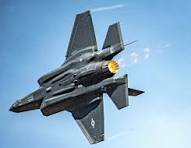
    The F-35 is the most expensive weapon system the Pentagon owns, and the fleet is increasingly hard to keep flying. This week, the government and its contractor proposed to fix both problems with a single decade-long promise. The promise comes with a catch: the people who would have to fund it have not agreed to it.

    On 22 October 2026, the US Department of War, the name now used in official Pentagon releases, and Lockheed Martin announced a 10-year framework agreement covering F-35 production and sustainment. Lockheed’s release was datelined Arlington, Virginia. It is a statement of intent, not a contract, and no jets have been ordered.

    What the framework actually covers

    The arrangement spans at least 850 aircraft for the United States across production Lots 21 through 30. It also bundles initial spares, ten years of modification kits and sustainment, and orders from international customers. Production would hold steady at 156 jets a year.

    That annual rate points to a larger total than the US share alone. Air & Space Forces calculated that 156 aircraft a year over a decade comes to roughly 1,560 jets, which would leave about 700 for foreign buyers. That figure is the outlet’s own arithmetic, not a number from the release.

    In return for the long-term commitment, Lockheed will put up at least $7 billion of its own money for program initiatives, according to the Pentagon statement as reported by Defense News, Stars and Stripes and Air & Space Forces. On the 22 October earnings call, CEO Jim Taiclet said supplier contracts would use a fixed-price structure with an escalator. Neither side has disclosed a total value or a price per aircraft.

    Why the money still has to be found

    Language matters here. Some headlines have said the deal was “finalized” or “locked,” but the primary documents describe a framework that depends on Congress. The Pentagon statement says execution remains subject to congressional authorization and appropriations. Lockheed has said it will negotiate terms, pricing and schedules with the F-35 Joint Program Office only if lawmakers grant authority and funding in the coming months.

    The funding picture is not simple. A stopgap spending law runs through 11 December and generally bars new multiyear purchases, and no full-year FY2027 appropriation exists. Both the House and Senate versions of the FY2027 defense policy bill would permit multiyear F-35 contracts, but the two versions must be reconciled before the framework can become a formal award.

    The yearly numbers do line up with what the Pentagon has already asked for. Congress funded 47 F-35s in FY2026, while the FY2027 request sought 85, which matches the framework’s average of 85 US jets a year.

    The readiness problem behind the deal

    Lockheed positions the agreement as a way to turn long-term demand into a healthier fleet, and the fleet’s condition is the strongest argument for it. A Government Accountability Office report released on 11 June found the F-35’s mission-capable rate fell from 67 percent in FY2021 to 44 percent in FY2025. The share of jets that were fully mission capable dropped from 38 percent to 25 percent over the same period.

    The same report found the Joint Program Office paid Lockheed more than $114 million of roughly $269 million in available incentive fees between 2020 and 2023, even though readiness measures stagnated or worsened. GAO also reported that the program office says it needs $13.7 billion more than planned through FY2031 to sustain the fleet. In late June, program chief Lt. Gen. Gregory Masiello told senators the fleet had outgrown the system built to support it.

    That history gives weight to a line in the Pentagon’s announcement. Michael Duffey, the Under Secretary of Defense for Acquisition and Sustainment, said the deal has “fundamentally changed how we stabilize the American defense industrial base.” He also spoke of aligning financial incentives with actual performance, but neither side has explained what those incentives would look like. Given the GAO’s findings on past fee payments, that is the detail to watch.

    A pattern of framework deals

    This is not the Pentagon’s first agreement of this kind in 2026. Lockheed reached a PAC-3 MSE production framework in January and a THAAD framework weeks later, and the THAAD agreement became a contract worth more than $35 billion in June. On 19 October, the Pentagon announced a framework with BAE Systems for APKWS guidance kits.

    The THAAD precedent shows that a framework can turn into money. It does not show that the F-35 version will, because this one is far larger and runs into a more contested budget fight. Earlier F-35 buying was done in smaller chunks, with the Lot 18 and 19 deal worth about $24.3 billion for 296 jets, according to Breaking Defense in September 2025.

    What each side stands to gain

    The Air Force has made its own case for volume. A force-structure report sent to Congress on 16 October says the service needs 1,509 combat-coded fighters by 2035, with F-35As making up about 40 percent of that. How the 850 jets would divide among variants and services has not been made public.

    Lockheed also points to the wider economy, estimating the deal would support 317,000 US jobs and about $79 billion in annual economic activity over the decade. Those are the company’s own projections and should be read that way. The company says more than 1,375 F-35s are in service, with over a million flight hours logged across 42 bases and 13 nations operating them on home soil. The framework would fold international orders into the same production plan, so allied buyers have a stake in how Congress responds.

    What to watch next

    The next few months will decide whether this announcement means anything. Lawmakers have to pass a defense policy bill that allows multiyear buys and then fund it, and only after that would the Joint Program Office and Lockheed sit down to settle prices and schedules. Those prices are still unknown, and so far the deal rests on a promise rather than a number.

    For allies planning around F-35 deliveries, and for crews trying to keep an aging, hard-to-maintain fleet in the air, the question is no longer whether the Pentagon wants a decade of certainty. It is whether Congress is willing to pay for it.

  • Trump Signs Russia and Iran Sanctions Act Named for Lindsey Graham: What the Law Does and What Happens Next

    Trump Signs Russia and Iran Sanctions Act Named for Lindsey Graham: What the Law Does and What Happens Next

    The law carries the name of a man who did not live to see it finished, and the president who signed it said nothing about it. On Friday, Donald Trump signed H.R. 5334, the Lindsey O. Graham Sanctioning Russia and Iran Act of 2026, at the White House. The White House confirmed the signing in a brief written statement, but Trump offered no public remarks on what the measure is meant to achieve, a silence that RFE/RL and Iran International both flagged.

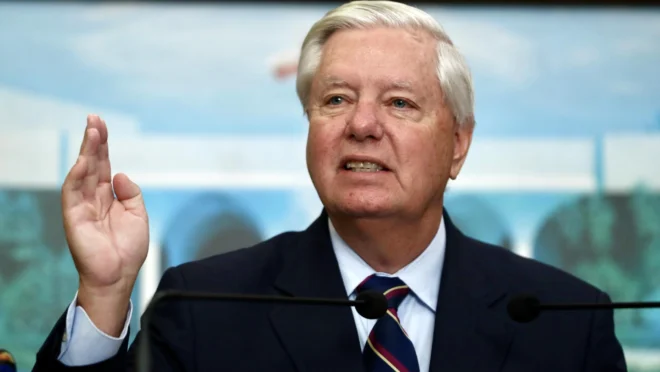
    Official U.S. Senate portrait of Sen. Lindsey Graham, namesake of the Russia and Iran sanctions law
    Sen. Lindsey Graham, shown in his official Senate portrait, championed the sanctions bill that now carries his name.

    Graham, the South Carolina Republican, spent more than a year pushing the package through Congress. He died unexpectedly in July, shortly after returning from a trip to Ukraine. Senator Richard Blumenthal, a Connecticut Democrat, helped draft the bill. The Senate approved it 86-11 in August, and the House followed 262-159 on Wednesday, sending a 61-page bill to the president’s desk.

    What the law actually does

    According to the official summary on Congress.gov, the act stacks several pressure points on Moscow at once. It requires the president to impose visa and property-blocking sanctions on named targets, including the Russian president and certain military commanders. It bars US energy and energy products from being exported, re-exported or transferred to or within Russia.

    The financial provisions go further. American persons can no longer make new investments in Russia or buy Russian sovereign debt, and securities of Russian government-owned, controlled or affiliated entities cannot trade on US national exchanges. The law also aims at the machinery that keeps Russian energy flowing, including the so-called shadow fleet of tankers, along with the owners, operators, managers and insurers behind it. Major Russian LNG projects, among them Yamal LNG and Arctic LNG, are named as targets.

    Iran gets a shorter but significant mention. The act extends the Iran Sanctions Act of 1996 through 2031. Tucked into the same bill is an unrelated tax change that widens a deduction for educator expenses to cover early-childhood teachers, a reminder of how Congress often carries unrelated provisions on larger legislation.

    The legislation is the most significant Russia-related sanctions law to reach the books since the 2017 Countering America’s Adversaries Through Sanctions Act. It also arrives while the war in Ukraine grinds on. Ukrainian officials reported fresh Russian missile and drone strikes on September 19, the day after the signing.

    The tariff clause that reaches Beijing and New Delhi

    The provision likely to matter most beyond Russia’s borders is the tariff mechanism. The president must raise tariffs by up to 100 percent on goods from any country that ranked among the five biggest importers of Russian crude oil or natural gas in the 12 months before enactment, if that country knowingly makes new purchases after the law takes effect.

    China and India are the two largest buyers of Russian crude, which is why the clause carries so much diplomatic weight. It also lands in a complicated moment for energy policy. The administration recently allowed purchases of Russian oil already at sea to continue, during a global oil crunch tied to the separate US-Iran conflict. A law that penalizes Russian energy buyers sits uneasily beside that earlier flexibility, and how the two reconcile is a question for the coming weeks in the world of global energy and trade.

    Nothing has changed at any border yet. No new tariffs are in force on Chinese or Indian goods as a result of the signing.

    Discretion is built into the law

    The law hands Congress a stated objective and hands the president the switch. He can waive its provisions by certifying to Congress that doing so serves the national interest. The administration must also reassess every 180 days which countries fall under the tariff provisions, creating a recurring checkpoint on enforcement.

    That design shapes how analysts read the moment. Luke Coffey, a senior fellow at the Hudson Institute, told RFE/RL that the law’s symbolism and timing are among its most important features, then added a caution: “I would not expect major new sanctions or tariffs to be implemented overnight as a result of this legislation.”

    Kerri Bitsoff, a former senior official at the Treasury Department’s Office of Foreign Assets Control, pointed to a more practical test. She noted that Treasury has shown no movement on existing Russia sanctions in almost eleven months. In her words, “Enforcement on those from Treasury will be a good indication of whether Trump will use this new authority or let it sit.”

    Reaction: relief in Kyiv, frustration over the silence

    Ukrainian President Volodymyr Zelenskyy responded on X, recalling Graham’s repeated message during his visits to Ukraine that pressure on Russia must not ease. He framed the law as a memorial that demands action: “The best way to honor Lindsey’s memory will be to implement the provisions of this law fully and swiftly.”

    Daniel Fried, a former State Department sanctions coordinator, welcomed the signature but questioned the way it happened. Speaking to RFE/RL, he said the absence of a public statement means Trump “has missed a chance to send a message to Putin that he needs to end the war.” Bitsoff, for her part, called the wide bipartisan votes an encouraging signal for Ukraine, evidence that support for pressure on Putin still crosses party lines in Congress.

    What to watch next

    The first real test comes quickly. Trump is scheduled to host Chinese President Xi Jinping at the White House on September 24, a visit reported by multiple wire services since May. China is one of the biggest buyers of Russian crude, so the new tariff authority now hangs over that meeting. Whether Trump raises it, leans on it or quietly sets it aside is an open question. As with any scheduled summit, the date could still shift, so the timing is worth confirming as the week develops.

    The longer arc will play out inside the executive branch. Treasury’s handling of the sanctions already on the books, the first 180-day review of which countries are covered, and any decision to use or waive the 100 percent tariff will show whether this law becomes a working instrument or a statement of intent. For readers following defence and security policy, the signature settled the legislative fight, but the harder decisions about enforcement now belong to the administration alone.