
The law carries the name of a man who did not live to see it finished, and the president who signed it said nothing about it. On Friday, Donald Trump signed H.R. 5334, the Lindsey O. Graham Sanctioning Russia and Iran Act of 2026, at the White House. The White House confirmed the signing in a brief written statement, but Trump offered no public remarks on what the measure is meant to achieve, a silence that RFE/RL and Iran International both flagged.
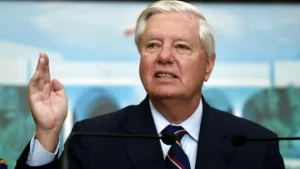
Graham, the South Carolina Republican, spent more than a year pushing the package through Congress. He died unexpectedly in July, shortly after returning from a trip to Ukraine. Senator Richard Blumenthal, a Connecticut Democrat, helped draft the bill. The Senate approved it 86-11 in August, and the House followed 262-159 on Wednesday, sending a 61-page bill to the president’s desk.
What the law actually does
According to the official summary on Congress.gov, the act stacks several pressure points on Moscow at once. It requires the president to impose visa and property-blocking sanctions on named targets, including the Russian president and certain military commanders. It bars US energy and energy products from being exported, re-exported or transferred to or within Russia.
The financial provisions go further. American persons can no longer make new investments in Russia or buy Russian sovereign debt, and securities of Russian government-owned, controlled or affiliated entities cannot trade on US national exchanges. The law also aims at the machinery that keeps Russian energy flowing, including the so-called shadow fleet of tankers, along with the owners, operators, managers and insurers behind it. Major Russian LNG projects, among them Yamal LNG and Arctic LNG, are named as targets.
Iran gets a shorter but significant mention. The act extends the Iran Sanctions Act of 1996 through 2031. Tucked into the same bill is an unrelated tax change that widens a deduction for educator expenses to cover early-childhood teachers, a reminder of how Congress often carries unrelated provisions on larger legislation.
The legislation is the most significant Russia-related sanctions law to reach the books since the 2017 Countering America’s Adversaries Through Sanctions Act. It also arrives while the war in Ukraine grinds on. Ukrainian officials reported fresh Russian missile and drone strikes on September 19, the day after the signing.
The tariff clause that reaches Beijing and New Delhi
The provision likely to matter most beyond Russia’s borders is the tariff mechanism. The president must raise tariffs by up to 100 percent on goods from any country that ranked among the five biggest importers of Russian crude oil or natural gas in the 12 months before enactment, if that country knowingly makes new purchases after the law takes effect.
China and India are the two largest buyers of Russian crude, which is why the clause carries so much diplomatic weight. It also lands in a complicated moment for energy policy. The administration recently allowed purchases of Russian oil already at sea to continue, during a global oil crunch tied to the separate US-Iran conflict. A law that penalizes Russian energy buyers sits uneasily beside that earlier flexibility, and how the two reconcile is a question for the coming weeks in the world of global energy and trade.
Nothing has changed at any border yet. No new tariffs are in force on Chinese or Indian goods as a result of the signing.
Discretion is built into the law
The law hands Congress a stated objective and hands the president the switch. He can waive its provisions by certifying to Congress that doing so serves the national interest. The administration must also reassess every 180 days which countries fall under the tariff provisions, creating a recurring checkpoint on enforcement.
That design shapes how analysts read the moment. Luke Coffey, a senior fellow at the Hudson Institute, told RFE/RL that the law’s symbolism and timing are among its most important features, then added a caution: “I would not expect major new sanctions or tariffs to be implemented overnight as a result of this legislation.”
Kerri Bitsoff, a former senior official at the Treasury Department’s Office of Foreign Assets Control, pointed to a more practical test. She noted that Treasury has shown no movement on existing Russia sanctions in almost eleven months. In her words, “Enforcement on those from Treasury will be a good indication of whether Trump will use this new authority or let it sit.”
Reaction: relief in Kyiv, frustration over the silence
Ukrainian President Volodymyr Zelenskyy responded on X, recalling Graham’s repeated message during his visits to Ukraine that pressure on Russia must not ease. He framed the law as a memorial that demands action: “The best way to honor Lindsey’s memory will be to implement the provisions of this law fully and swiftly.”
Daniel Fried, a former State Department sanctions coordinator, welcomed the signature but questioned the way it happened. Speaking to RFE/RL, he said the absence of a public statement means Trump “has missed a chance to send a message to Putin that he needs to end the war.” Bitsoff, for her part, called the wide bipartisan votes an encouraging signal for Ukraine, evidence that support for pressure on Putin still crosses party lines in Congress.
What to watch next
The first real test comes quickly. Trump is scheduled to host Chinese President Xi Jinping at the White House on September 24, a visit reported by multiple wire services since May. China is one of the biggest buyers of Russian crude, so the new tariff authority now hangs over that meeting. Whether Trump raises it, leans on it or quietly sets it aside is an open question. As with any scheduled summit, the date could still shift, so the timing is worth confirming as the week develops.
The longer arc will play out inside the executive branch. Treasury’s handling of the sanctions already on the books, the first 180-day review of which countries are covered, and any decision to use or waive the 100 percent tariff will show whether this law becomes a working instrument or a statement of intent. For readers following defence and security policy, the signature settled the legislative fight, but the harder decisions about enforcement now belong to the administration alone.