
Tag: MiddleEast

  • Herzog Picks Eisenkot Over Netanyahu to Try to Form Israel’s Next Government

    Herzog Picks Eisenkot Over Netanyahu to Try to Form Israel’s Next Government

    On Saturday evening, Israel’s president told Gadi Eisenkot that the job of building the country’s next government was his. Isaac Herzog passed over Prime Minister Benjamin Netanyahu, whose Likud party won more seats than any other, and chose the leader of the Yashar party instead. The formal handover was scheduled for Sunday at 5 p.m. local time at the President’s Residence in Jerusalem.

    The decision comes at the end of a tense stretch that began with an election neither side won and has since turned bitter.

    Why Herzog chose Eisenkot

    The choice followed consultations with every Knesset faction. According to Al Jazeera’s report, factions representing 67 lawmakers recommended Eisenkot, while factions representing 46 backed Netanyahu. One seven-seat faction, United Torah Judaism, named no one.

    Herzog had said on Thursday that the decision was his to make, and that it was far from obvious because of what he described as “the mutual vetoes between the blocs and within the blocs themselves.” In other words, many parties had ruled out sitting with others, and the president had to weigh recommendations that did not add up to a workable coalition.

    Eisenkot responded on X, saying that “now is the time for the formation of a national emergency government.”

    The arithmetic is the problem

    Being handed the mandate and being able to use it are different things. A government needs 61 of the Knesset’s 120 seats, and the October 27 election did not give either camp that number.

    The final results published by the Central Elections Committee on October 30 (see the Israel National News report) put Likud on 27 seats and Yashar on 21. B’Yachad won 12, the Joint List 11, the Democrats 8, Ra’am 8, Yisrael Beytenu 7, Otzma Yehudit 7, United Torah Judaism 7, Shas 6 and the Religious Zionist Party 6.

    Grouped by camp, the outgoing coalition holds 53 seats, Eisenkot’s change bloc holds 48, and the two Arab-led parties hold 19 between them. Eisenkot cannot reach 61 from his own bloc alone.

    Adding the Arab-led parties would take him to 67, the same number that recommended him to Herzog. But Al Jazeera reports that Eisenkot has ruled out a government with those parties. He could still govern with fewer than 61 seats if he wins a confidence vote in the Knesset, which leaves the ultra-Orthodox parties and parts of the current coalition as the obvious places to look for support.

    What Eisenkot says he will and will not accept

    Yashar has set out four principles that any partner would have to accept:

    • Recognizing Hamas as a terrorist organization and committing to destroy its military and governing power.
    • Recognizing Israel as a Jewish and democratic state.
    • Accepting the values of the Declaration of Independence.
    • Backing mandatory service for all.

    Eisenkot has also said he will not partner with Netanyahu, and that anyone who held major power on October 7, 2023 must leave public life.

    The fourth principle goes straight to the issue most likely to decide the outcome: military conscription for ultra-Orthodox men. The brief identifies three sticking points for the coming negotiations, namely conscription for Haredi men, the role of the Arab parties, and Netanyahu’s own future. Yashar has invited “Likud and its friends” to join a government without “extremists,” while Netanyahu has called for a unity government that includes all his current allies.

    A bitter backdrop

    The mandate arrives after an unusually sour post-election fortnight. Between October 28 and 30, Likud claimed the election had been “stolen” by Arab parties and demanded a police and Shin Bet investigation. These are Likud’s allegations, and they should be read as such. The Times of Israel reports that the foreign-funding claims have not been substantiated, and the Jerusalem Post notes that no evidence of systematic manipulation has been made public.

    On October 29, the elections committee chairman, Justice Noam Sohlberg, instructed Shin Bet director David Zini to look into intelligence suggesting foreign entities may have financed improper election activity. That inquiry is reported as ongoing.

    On November 4, Sohlberg rejected Likud’s request to delay certification, writing that the committee has no authority to withhold it. Presenting the results, he said: “It is the voters, through their ballots, who determine the election results.” Likud’s lawyer has said the party is preparing to appeal the results in part or in whole and has not yet decided how far to take it.

    Netanyahu’s reaction to the president’s decision was sharp. In a video statement on November 7, he accused Eisenkot of intending to “hurriedly swear in a government with supporters of terrorism.” That is Netanyahu’s characterization, and it sits uneasily with Eisenkot’s reported refusal to rely on the Arab parties.

    What happens now

    Netanyahu remains prime minister until a new government wins a Knesset confidence vote. Eisenkot has 28 days to assemble one, and Herzog may grant an extension of up to 14 days. Details of the timetable are laid out in the Times of Israel’s coverage.

    If Eisenkot fails, Herzog has three days to decide whether to assign another Knesset member or to tell the Speaker that no one appears capable of forming a government. A second candidate would get 14 days. If every attempt fails, the Knesset is dissolved and Israelis go back to the polls. Netanyahu could also get another chance to form a government if Eisenkot comes up short.

    Several signals are worth watching in the coming days. Yisrael Beytenu’s leader has indicated he could accept “painful compromises” on enlistment, and United Torah Judaism has voiced openness to discussing a partnership. Whether either of those openings becomes something concrete, and whether any part of Likud is willing to deal with a prime minister who has vowed not to work with its leader, will say more about Eisenkot’s chances than the 67 recommendations did.

    Eisenkot holds the mandate, but not yet a majority. The next four weeks will show whether a bloc built mostly on opposition to the status quo can agree on anything else.
  • US Orders Diplomats Out of Saudi Arabia as Houthi Strikes Hit Airports and Oil Field

    US Orders Diplomats Out of Saudi Arabia as Houthi Strikes Hit Airports and Oil Field

    The US State Department has ordered some of its diplomats and their families to leave Saudi Arabia. The decision came as Houthi attacks reached the country’s airports and energy sites, and a strike on a major Gulf airport on Wednesday evening has made the move look prescient.

    What happened in Dammam

    Saudi Arabia’s civil aviation authority said an attack by the Iranian-backed Houthis on King Fahd International Airport in Dammam killed one person and injured eight. The Hill reported the authority’s account. Separately, two people died in a drone attack on an oil field.

    The cause of the Dammam strike has not been established. No confirmed information has emerged on how it was carried out, so any claim about the weapon used should be treated with caution until Saudi authorities say more.

    The departure order, and what it covers

    The State Department’s order applies to non-emergency US government employees and their family members in Saudi Arabia. It was issued before the Dammam attack, which suggests Washington was already reading the trajectory of the conflict as dangerous. According to the Japan Times, which carried Reuters reporting, the department also plans to pull family members from several other missions in the region.

    The scope of that wider withdrawal is disputed. An AFP diplomatic source said families of US embassy staff were also being withdrawn in the UAE, Jordan, Qatar and Bahrain. State Department spokesperson Tommy Pigott pushed back on X, saying the order covered “non-emergency U.S. government employees and their family members in Saudi Arabia only”.

    ABC News, citing officials, reported smaller posture changes at other embassies, and those officials said the changes are not tied to any plan to resume combat against Iran. Talk of renewed US action against Iran remains unverified speculation.

    An ordered departure is the second-highest step on the State Department’s scale, one rung short of suspending operations altogether. A department spokesperson told The Hill that “the hostilities have the potential to escalate rapidly, including beyond that immediate area”. That is a notably open-ended warning from an institution that usually words such notices conservatively.

    A campaign that has been building for weeks

    Dammam is the latest in a run of attacks, not an isolated incident. On Oct 8, the Houthis said they had hit airports in Riyadh and Najran, along with King Khalid Air Base. A few days later, Al Jazeera reported that King Khalid airport in Riyadh remained closed after a Saturday attack that killed at least 13 people and wounded more than 300.

    The Houthi spokesperson gave different figures for the Riyadh attack, 12 killed and 309 injured. Where figures diverge, official Saudi numbers are the safer reference, and they should be preferred as they are released.

    The Saudi-led coalition, for its part, says it destroyed 82 Houthi military sites in Yemen. That figure is the coalition’s own claim and has not been independently confirmed.

    Why the timing matters

    The Houthi attacks on Saudi infrastructure followed a major offensive by Yemen’s government to retake territory near the Bab el-Mandeb Strait. The strait is a narrow chokepoint, and fighting around it raises the stakes for anyone with an interest in regional shipping and security.

    The danger to US personnel in Saudi Arabia is also not new. The US embassy in Riyadh and a CIA station there came under drone attack in early March, as Iran began launching attacks across the region. Seen against that history, the latest order reads less like a sudden reaction and more like the product of a long accumulation of risk.

    Saudi Arabia is the Gulf’s largest economy and a key US partner, which is why the damage to civilian infrastructure carries weight beyond the casualty counts. Attacks on airports and oil facilities threaten aviation, energy supply and the wider security of the Gulf.

    What to watch next

    No schedule has been confirmed for further US steps. ABC’s source said the US military is repositioning personnel at bases across the Middle East, though what that amounts to in practice has not been spelled out.

    Three things will clarify the picture quickly. The first is the Saudi damage assessment from Dammam. The second is whether the Houthis claim responsibility for the strike. The third is whether more airports close, which would show how far the campaign has disrupted daily life and commerce inside the kingdom.

    For now, the most telling signal is the one Washington sent before the latest strike landed. When a government moves families out ahead of an attack, it is usually because it expects more to follow.


  • UN Investigators Say US Strikes on Iranian School, Sports Center Amounted to War Crimes

    UN Investigators Say US Strikes on Iranian School, Sports Center Amounted to War Crimes

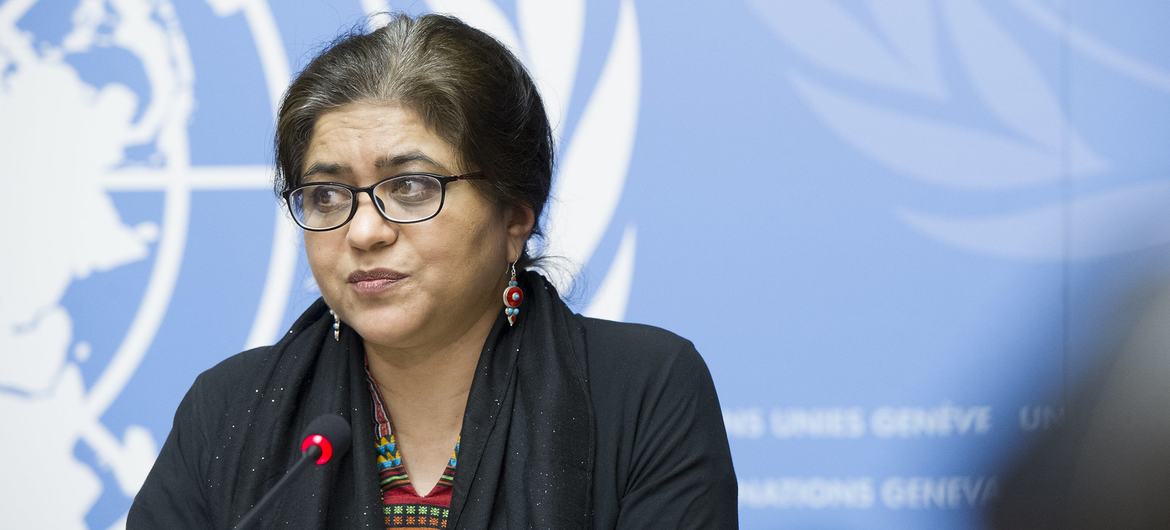
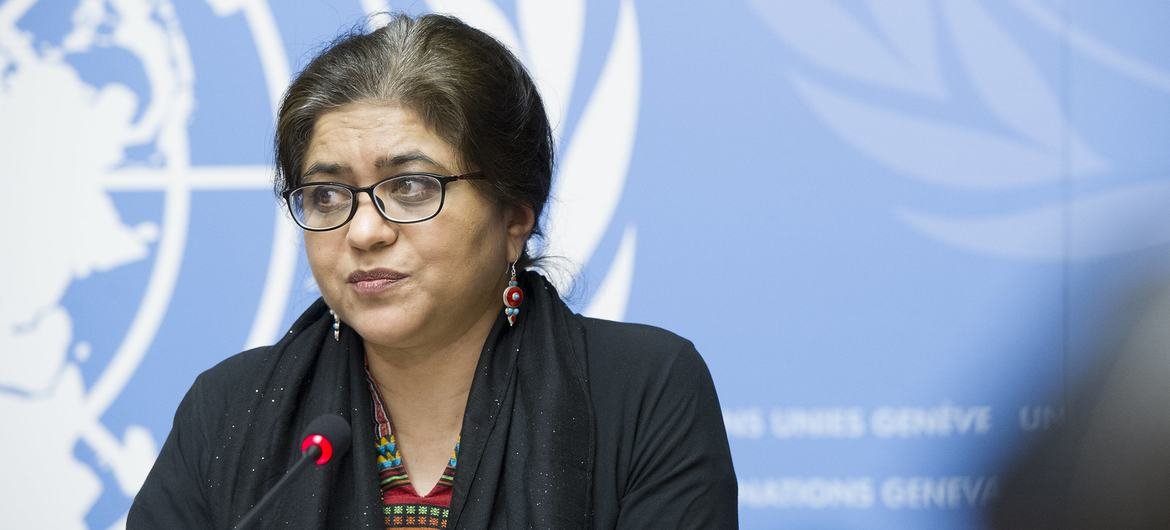
    Photo by Violaine Martin / UN Photo, via UN News

    More than 150 people, including roughly 120 children, died when Tomahawk missiles struck an elementary school in southern Iran on February 28, according to a new United Nations report that also documents a separate American strike, this one dispersing tungsten pellets over a sports complex and nearby homes, killing 22 civilians. Seven months later, the Pentagon still has not released its own account of how either target was chosen.

    The findings come from the UN Independent International Fact-Finding Mission on Iran, an independent panel created by the Human Rights Council, in an 18-page report published as an advance version ahead of the Council’s 63rd session in Geneva. The mission concluded there are “reasonable grounds” to believe the United States committed a war crime by carrying out indiscriminate attacks on the Tayyiba Elementary School in Minab and on a sports facility and residential area in Lamerd, both of which the report describes as “clearly identifiable” civilian sites at the time they were hit.

    What the Mission Found

    The panel, chaired by Bangladeshi jurist Sara Hossain alongside fellow commissioners Shaheen Sardar Ali and Viviana Krsticevic, was not investigating a hypothetical. The strikes it examined followed the joint military campaign the United States and Israel launched against Iran in February 2026, and the mission’s language is unusually direct for a body more often tasked with scrutinizing authoritarian governments than a NATO-aligned power.

    According to the report, cited by UN News, the mission concluded that the United States committed a war crime by launching indiscriminate attacks that killed or injured civilians and damaged civilian property. A legal analysis published by Opinio Juris, drawing on specific paragraphs of the report, put the Minab toll at 157 dead, including 120 children and 26 school staff, with 95 more wounded, and the Lamerd toll at 20 killed and more than 100 injured. Other outlets, including NBC News and NPR, cited a combined figure of “at least 178” civilian deaths, while Democracy Now’s summary put it at 177. The variation appears to reflect differences in how each outlet aggregated the two incidents rather than any real dispute over what happened, and readers should treat any single combined number as an approximation drawn from a specific source rather than a settled count.

    The Minab findings echo earlier reporting: an Associated Press investigation had separately identified at least one US missile strike on the school, then referred to as Shajareh Tayyebeh. The mission’s report is the first to formally attach a war crimes designation to it.

    A Report That Cuts Both Ways

    The mission’s mandate was never limited to scrutinizing the United States. It was originally established by the Human Rights Council in November 2022 to investigate Iran’s crackdown on protesters following the death of Mahsa Amini, and its mandate was renewed last year to cover ongoing violations inside the country. That original focus dominates much of the new report.

    Investigators found that Iranian security forces carried out killings “on a massive scale in all provinces” during the government’s response to mass protests that began in late 2025 and continued into this year. At least 221 children, some as young as two, were among the dead, the mission said. It also documented tens of thousands of arbitrary detentions marked by torture, prolonged solitary confinement, and denial of access to legal counsel, along with at least 29 executions connected to the unrest. More than 70 people, including five women and three boys, remain at risk of execution over their alleged involvement in the protests, according to the report.

    Taken together, the mission concluded these actions amount to crimes against humanity, including murder, imprisonment, and torture. Iran’s government disputes the scale of that accounting entirely. Tehran has released its own figure of 3,038 people killed and 25,000 injured during the crackdown, framing most of the dead as “rioters” it alleges were directed by exiled opposition groups working with the United States and Israel. The mission said it could not verify an exact death toll but believes the real number exceeds what the government has acknowledged.

    Washington’s Response

    The reaction from the United States was immediate and unequivocal in its rejection. Anna Kelly, a White House spokesperson, told the Associated Press, in a statement reported by CNBC, that Iran’s government is “the only party in this conflict that has committed war crimes.” A broader White House statement, reported by Democracy Now, dismissed the Human Rights Council itself, saying it “has accomplished nothing for human rights while spouting unserious nonsense for decades.”

    A State Department official separately told CNBC that the department does not consider the report credible, and accused the Council of anti-American bias and of going easy on repressive governments elsewhere. That characterization was paraphrased by CNBC rather than presented as a verified direct quote from a named official, and should be read with that caveat.

    What Washington has not done, as the report itself notes, is release its own military investigation into how the Minab school and the Lamerd sports complex came to be targeted. That leaves the American side of the story, at least officially, largely unaddressed nearly seven months after the strikes.

    Why a UN Body Naming the US Matters

    Fact-finding missions convened by the Human Rights Council have, in recent years, mostly turned their attention toward governments in Syria, Myanmar, and similar settings, places without the diplomatic weight to shape the Council’s own membership. A body using that same evidentiary process to allege war crimes by the United States, a permanent member of the international system’s most powerful institutions, tests how far UN human rights mechanisms can reach when the country in question pushes back as forcefully as Washington has here.

    It also arrives at an awkward moment. The US-Israel-Iran conflict that produced these strikes remains unresolved, and a possible meeting between Gulf Arab states, the United States, and Iran has been floated around next week’s UN General Assembly session in New York, according to CNBC. Whether that diplomacy proceeds, and whether the Pentagon ever makes its targeting review public, will likely shape how much practical weight this report carries beyond Geneva.

    For now, the findings sit alongside each other awkwardly but deliberately: a UN panel accusing a global power of war crimes in the same document where it accuses the Iranian government of crimes against humanity against its own people. Both governments have rejected the parts of the report aimed at them. Neither has offered the kind of independent accounting that might settle the questions the mission raised. The Human Rights Council’s full 47-member body was expected to take up the report formally as its 63rd session continues in Geneva through October 7, and how member states respond, particularly whether any push for further investigation or referral, is the next thing worth watching.