
Tag: NATO

  • Zelensky Says the US Asked Whether Ukraine Would Leave Donbas in Exchange for NATO Membership

    Zelensky Says the US Asked Whether Ukraine Would Leave Donbas in Exchange for NATO Membership

    Volodymyr Zelensky says American negotiators put a question to him that Kyiv had not heard before: if Ukraine were offered a path into NATO, would it pull out of Donbas? The Ukrainian president described it to reporters on Friday, in remarks held until Saturday, and said it was the first time anyone had linked the two.

    His own words were plain: “This was the first time this had been raised.” What is not plain yet is whether Washington sees the exchange the way he does. The US has not commented on his account.

    What Zelensky Says He Was Asked

    Zelensky stressed that this was a question, not a formal proposal. He said no specifics have been put on the table, telling reporters “we need specifics, which are not yet available.” The distinction matters, because some headlines have called it an offer, and he has not.

    He also made clear that the areas of Donbas the Americans asked about are ones Russia does not currently control. In other words, the idea would have Ukraine give up ground it still holds, and he said flatly that he refuses to cede territory.

    There is one narrow condition under which he would let Ukrainians decide. He said he would put the question of ceding parts of Donbas to a national referendum, but only if the United States and NATO partners first confirmed a complete package. That package would include security guarantees, military and reconstruction funding, and a plan for recovery. Even then, he said, it would not amount to recognizing occupied land as Russian.

    He also turned down the idea of writing neutrality into Ukraine’s law. That, he noted, would require changing the constitution.

    Silence in Washington, a Careful Note From Kushner

    The US has not responded to the substance of Zelensky’s account. Jared Kushner, one of the American envoys involved, posted on X on Saturday without mentioning the Donbas question at all. He wrote that new ideas are being explored and that NATO remains a critical pillar of European security. The BBC reports that he also urged confidentiality around a sensitive process.

    That reply neither confirms nor denies what Zelensky described, so everything above rests on his word alone. Readers should weigh it accordingly, particularly because the setting is murky. Zelensky did not say when or where the question was raised, and reports differ on the venue.

    Why the Question Is So Loaded

    The reported question cuts against what US officials had said earlier. They had previously indicated that Ukrainian NATO membership was off the table, while suggesting that comparable security guarantees could still be possible. A question that ties membership to a territorial withdrawal reopens a door that had apparently been closed.

    For Moscow, NATO enlargement is one of the reasons it gives for the 2022 invasion. For Kyiv, handing over the small part of Donbas it still holds would carry heavy symbolic weight, whatever the military reality on the ground.

    None of this is entirely new ground. In Berlin on 14 December 2025, Zelensky said he was ready to drop the NATO bid in return for Western security guarantees, while rejecting any cession of territory. At that time he said the US had floated a withdrawal from Donetsk paired with a demilitarized free economic zone. That history is why his “first time” claim should be read narrowly. He is describing NATO membership tied to withdrawal, not the idea of withdrawal itself, which surfaced nearly a year ago without NATO membership attached.

    The Diplomacy Around It

    The remarks come days after talks in Abu Dhabi on 10 and 11 November, the first face-to-face negotiations between Russia and Ukraine since February, with the United States also taking part. Kushner and Steve Witkoff afterward met Putin and Zelensky separately. The round ended without a breakthrough, though the sides agreed in principle to a large prisoner exchange.

    The exchange has no confirmed date. Russian general Alexander Zorin, speaking through TASS, said more than 1,000 people on each side would be involved and that it could happen within two to three weeks. No official figure or date has been published.

    Europe is also working out its place. The team for future talks would include Britain, France, Germany, Italy and Poland, along with EU officials, and it would meet American and Ukrainian counterparts rather than Russian ones. The Kremlin has not fully backed European participation.

    Fighting Has Not Paused

    The war has carried on regardless. Russian officials said about 1,200 Ukrainian drones were fired at Russia on Friday, a figure that has not been independently verified and comes from a party to the war. Ukraine, for its part, reported strikes on a hospital and on the port of Odesa. Reports of civilian casualties, including children, have come from several regions, and Ukrainian and Russian claims alike should be treated with caution.

    What to Watch Next

    The calendar is crowded. The APEC summit opens in Shenzhen on 18 November, and a first three-way meeting of Donald Trump, Vladimir Putin and Xi Jinping is set for 19 November. Officials say Ukraine is not on its agenda, and a White House spokeswoman said the topics are nuclear arms and Iran. Even so, the meeting will show where the US-mediated process stands. CBS News has more on the trilateral.

    Three things will reveal whether Zelensky’s account turns into policy. One is whether Washington, NATO or the Kremlin responds publicly. Another is whether anything concrete follows the Abu Dhabi round, starting with the prisoner exchange. The third is whether the question of NATO membership for territory comes back in writing. For background on the framing of Donbas, NATO and Russia’s demands, see RFE/RL’s reporting, and for the Abu Dhabi outcome, Al Jazeera’s report from 11 November.

    For now, Zelensky has said what he was asked and what it would take for him to even consider an answer. The people who asked have not yet said anything on the record, and that silence will shape what happens next.
  • Switzerland Votes on Whether to Lock “Perpetual, Armed” Neutrality Into Its Constitution

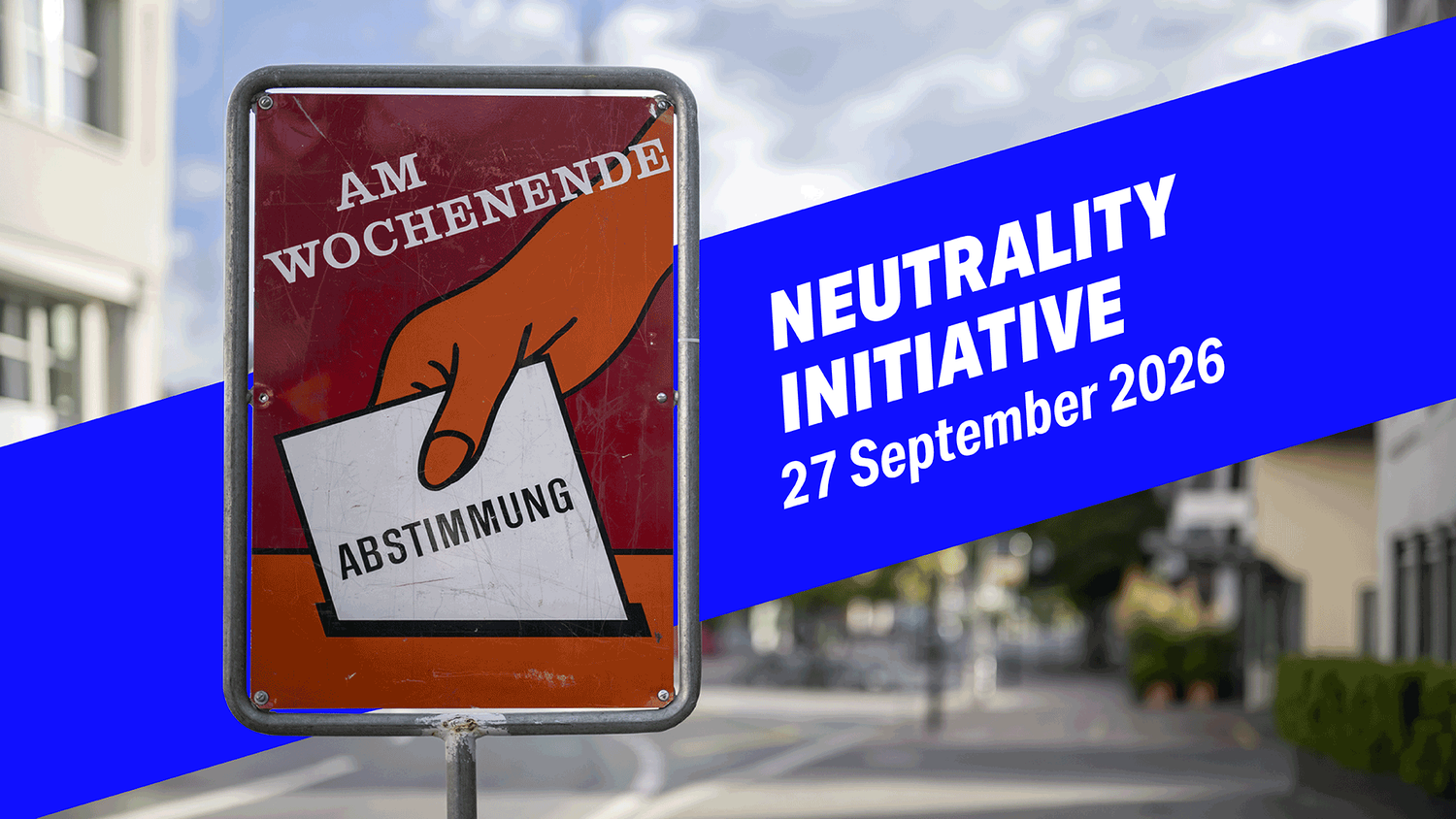
    Switzerland Votes on Whether to Lock “Perpetual, Armed” Neutrality Into Its Constitution

    Swiss voters went to the polls on Sunday to decide something that sounds almost quaint on paper and is anything but: whether their country’s centuries-old neutrality should be written into the constitution in far stricter terms than it has ever known. The question, on the ballot as the “Safeguard Swiss Neutrality” initiative, has turned into the sharpest referendum yet on how Switzerland should behave in a world that has grown considerably less neutral around it.

    At its core, the initiative would add a new article to the Federal Constitution defining Swiss neutrality as “perpetual and armed.” That single phrase carries real consequences. Under the proposed rule, the federal government could no longer join or cooperate with any military or defense alliance, NATO included, unless Switzerland itself came under direct attack or one was clearly imminent. It could not take part in armed conflicts between other countries, which is already standard practice. And it could not impose economic sanctions on warring states on its own initiative, only sanctions ordered by the United Nations Security Council, where Russia holds a permanent veto, or measures aimed at stopping sanctions evasion.

    A Question Born in the Weeks After Ukraine

    To understand why this vote matters, it helps to go back to February 2022. Within days of Russia’s invasion of Ukraine, Switzerland, after considerable internal debate, decided to largely adopt the European Union’s sanctions package against Moscow. For a country whose neutrality dates to 1848 and has always been left deliberately loose in its application, that decision landed as a genuine departure for some. Members of the Swiss People’s Party, or SVP, and allied groups saw it as a country drifting from a principle that had defined it for nearly two hundred years.

    Later that same year, in November 2022, the Egerkingen Committee, led by former SVP National Councillor Walter Wobmann and backed by figures including former Federal Councillor Christoph Blocher and Pro Switzerland president Stephan Rietiker, launched the initiative that put the question to voters. The signature drive collected somewhere between 130,000 and 140,000 signatures, well clear of the 100,000 required, and the text was formally submitted in April 2024.

    From there, the initiative met almost uniform resistance in official Bern. The Federal Council recommended rejection in June 2024, arguing that the country’s existing, more flexible approach to neutrality already served its interests. Both chambers of Parliament agreed, and in March 2026 the Council of States voted 29 to 11, with four abstentions, to abandon the idea of offering voters a counter-proposal at all. That left a straight yes-or-no question, with the SVP standing as the only major party in favor.

    “Our Neutrality Has Proved Its Worth”

    When Foreign Minister Ignazio Cassis formally opened the government’s campaign against the initiative in Bern on August 11, he framed the debate not as a referendum on whether Switzerland stays neutral, but on how rigidly that neutrality should be defined. “Switzerland has been and is neutral, and it will remain neutral,” he told reporters, before turning to the substance of the government’s objection. “Does Switzerland need a new form of neutrality? No,” he said. “Not because we want less neutrality, but because our existing neutrality has proved its worth.”

    Cassis went further, arguing that flexibility has been the source of the policy’s durability rather than a weakness in it. “Neutrality in its current form has stood the test of time for over 180 years,” he said. “It is precisely the ability to respond appropriately to new challenges that has made neutrality so strong.”

    On the other side, Wobmann has cast the vote in far larger terms than party politics. Speaking at the launch of the “yes” campaign in August, he told Swiss broadcaster RTS, “This is not about party politics, but about Switzerland’s future.” For the initiative’s backers, the 2022 sanctions decision was not a footnote but a warning sign, evidence that a country famous for staying above the fray had started taking sides.

    What the Polling Showed Going In

    However this vote lands, it will not have been for lack of warning from the pollsters. A Leewas Institute survey for Tamedia and 20 Minuten, fielded in mid-June and drawing on more than 26,000 respondents, found 54 percent opposed to the initiative against 34 percent in favor. By mid-September, a gfs.bern poll commissioned by the Swiss Broadcasting Corporation put opposition at 63 percent, with support down to 34 percent and just 3 percent undecided, a shift that suggests the “no” campaign gained real ground as the vote approached rather than simply holding steady.

    None of that guarantees an outcome, and Switzerland’s system is built to make sure of it. Passage requires a double majority: more than half of the national popular vote, and a majority of the country’s 26 cantons voting yes. Roughly 5.6 million of Switzerland’s nine million residents, its citizens aged 18 and over, were eligible to cast a ballot, with turnout for federal referendums over the past decade typically landing somewhere between 41 and 57 percent.

    Why the Rest of the World Is Watching

    The stakes extend beyond Swiss borders. Switzerland hosts the United Nations’ European headquarters in Geneva and the International Committee of the Red Cross, and it has long styled itself as a country whose good offices, its capacity to mediate and host talks that other nations cannot, depend on being seen as genuinely above the conflicts of the moment. A constitutional rule barring sanctions outside UN Security Council action would tie the country’s hands the next time a major power invades a neighbor, given that Russia and China both sit on that council with veto power. It would also foreclose any deepening of the three-decade, non-alliance cooperation Switzerland already maintains with NATO. Russia’s government has publicly praised the initiative, a detail its opponents have not let voters forget, and the vote has increasingly played out as a proxy fight over the direction Swiss foreign policy has taken since 2022.

    What Happens From Here

    If the polling trend holds and the initiative fails, the status quo continues largely untouched: Switzerland keeps participating in EU-aligned sanctions regimes on a case-by-case basis and keeps its existing, non-alliance relationship with NATO intact. But a rejection would not settle the underlying argument. The SVP and its allies in the Pro Switzerland committee have made clear they view this as one battle in a longer campaign over what neutrality should mean for a country that has avoided major war for five centuries and has no intention of explaining that streak away.

    If the initiative instead clears both thresholds, popular vote and cantons alike, the harder work begins. Lawmakers would need to draft implementing legislation spelling out exactly how a government bound by “perpetual and armed” neutrality handles everything from existing sanctions against Russia to future crises nobody has anticipated yet. Either way, Sunday’s vote will not be the last word on a debate that Ukraine’s war reopened and that Switzerland, for all its practiced neutrality, has not yet managed to close.

  • US Approves $2.68 Billion Air Defense Sale to Ukraine as Interceptor Shortage Bites

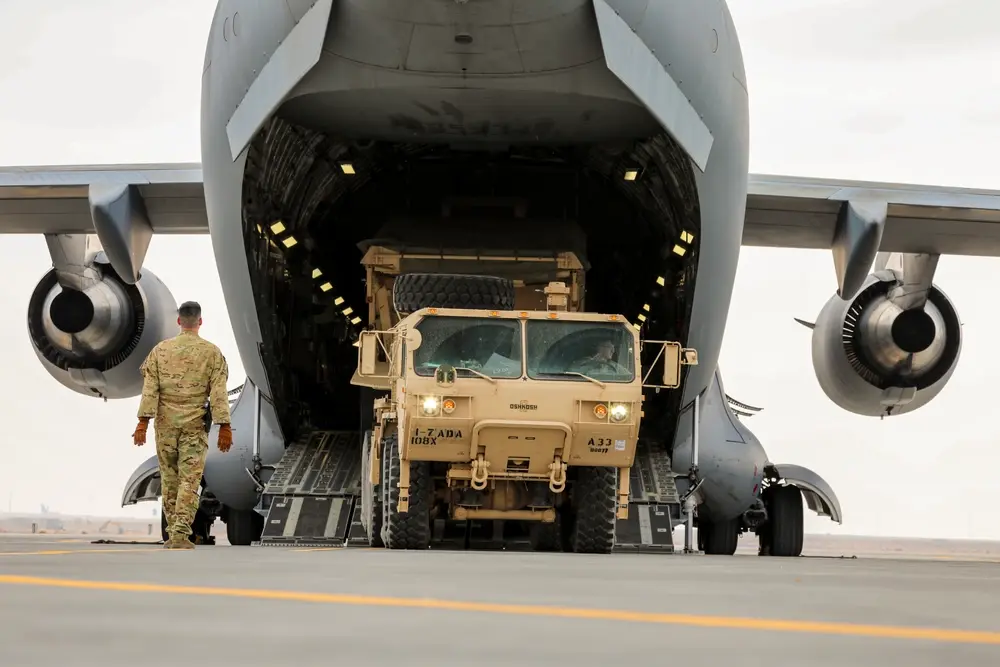
    US Army soldiers load Patriot air defense equipment onto C-17 amid $2.68B Ukraine sale
    U.S. Army Patriot air defense equipment being prepared for deployment, the same weapons category at the center of the new $2.68 billion Ukraine sale. Photo by Sgt. Christopher Neu / U.S. Army, via DVIDS

    Hours after Russian forces sent 174 drones and two Zircon anti-ship missiles across Ukraine in a single overnight barrage, the United States cleared the way for one of the largest air defense packages of the year: a proposed $2.68 billion sale that could reshape how Ukraine defends its skies through the winter ahead.

    The State Department’s Bureau of Political-Military Affairs notified Congress on September 18 of the possible Foreign Military Sale, formally titled an “Air Defense Development Upgrade.” The notification is not a signed contract. It is the required first step that clears a deal to move forward, and it lands at a moment when Ukraine’s air defenses are stretched thinner than at almost any point in the war.

    A Package Built for Layered Defense

    The proposed sale reads less like a single weapons purchase and more like an attempt to rebuild an entire defensive architecture. It includes S-300 Clone missiles, GAM-67 missiles, Range-Extended Air Defense Laser Guided Rocket systems, Improvised Transporter Erector Launcher 1.5 units, mobile launching system modification kits, RPS 202 counter-drone radars, erectable mast trailers, and the software, spare parts, and logistics support needed to keep it all running.

    That mix matters. Rather than concentrating resources on one interceptor type, the package spans missile systems, radar, and counter-drone technology, suggesting a shift toward redundancy across multiple layers of defense instead of dependence on any single platform. Given how visible Ukraine’s dependence on one system has become in recent months, that shift is not incidental.

    The U.S. Embassy in Kyiv framed the deal in similar terms, saying in a statement posted to X on September 19 that the equipment would help Ukraine “conduct self-defense and regional security missions with a more robust air defense capability.”

    Why the Timing Matters

    The notification did not arrive in a vacuum. Ukraine’s stock of Patriot interceptors, the only system in its arsenal capable of reliably shooting down Russian ballistic missiles, has been running critically low for months, and the shortage has already changed how the war is being fought and reported.

    President Volodymyr Zelensky told CNN in mid-August that Ukraine needed roughly 5 percent of the U.S. Patriot interceptor stockpile to survive the winter but had access to closer to 1 percent. Reuters reported around the same time that interceptor deliveries to Ukraine in 2026 had fallen to about a third of what they were the year before. By early August, Bloomberg reported that Ukraine’s air force had quietly stopped publishing nightly missile-count data altogether, following nights when its defenses failed to intercept a single incoming ballistic missile. Part of that squeeze traces back to the parallel conflict involving Iran, which drew heavily on the same shared pool of U.S. and allied Patriot stock, leaving less available for Kyiv even as Russian strikes continued.

    Against that backdrop, the overnight barrage that preceded this notification was a stark illustration of the stakes. Regional officials in Ukraine reported eight confirmed deaths from the attack, with Kharkiv region Governor Oleh Syniehubov citing five deaths and 15 injuries across 14 settlements, and Kherson region Governor Oleksandr Prokudin reporting three deaths and five injuries from shelling across 25 communities. Ukraine’s air force said on Telegram that the two Zircon anti-ship missiles launched in the barrage were intercepted, stating simply that the “[Zircon antiship] missiles did not reach the targets.”

    The attack also rippled beyond Ukraine’s borders. Poland’s military scrambled fighter jets and placed its air-defense systems on heightened alert as a precaution, a step it has now taken repeatedly in response to Russian activity near its frontier. The Polish Armed Forces Operational Command confirmed on X that “military aviation operations have begun in Polish airspace,” though officials later clarified that no actual violation of Polish airspace had occurred. NeuralWired has tracked this pattern of precautionary NATO responses closely as it has become a near-routine feature of the war’s later phases.

    The Money Behind the Deal

    If the sale is finalized, Ukraine would pay for it through a blend of European financial contributions and U.S. Foreign Military Financing funds that were appropriated under the prior administration. The structure is notable in its own right. The State Department specified that the FMF portion will count as a U.S. capital contribution to the Ukraine Reconstruction Investment Fund, applied through a one-to-one reimbursement arrangement.

    That financing model has become the standard route for U.S.-approved arms sales to Ukraine since the current administration curtailed new direct aid packages, relying instead on previously appropriated funds paired with European money. The notification itself was careful to state that the sale “will not alter the basic military balance in the region,” requires no additional American personnel on the ground in Ukraine, and carries “no adverse impact on U.S. defense readiness,” language typical of how the State Department frames sales of this scale.

    For readers following the broader trajectory of Western support, NeuralWired’s continuing coverage of Ukraine’s air defense gap offers more detail on how the interceptor shortfall developed over the course of 2026.

    What Happens Next

    A congressional notification is a procedural gate, not a finished deal. It opens a standard review period before any contract can be finalized, though the specific timeline for this particular review has not been made public. Once that stage clears, principal contractors will be selected through competitive procurement under Federal Acquisition Regulation rules, and the State Department’s notice indicates no offset agreement has been proposed at this point.

    A larger and unresolved question looms alongside this sale: Ukraine’s long-running push to secure a domestic license to produce Patriot interceptors with U.S. contractors, an ambition that would reduce its dependence on foreign stockpiles entirely. The White House has said no decisions or guarantees have been made on that front, and it remains, for now, aspirational rather than actual.

    What is clear is that the interceptor math has not fundamentally changed with this single notification. A $2.68 billion package, even if it clears every remaining hurdle, will take time to manufacture, deliver, and integrate, while the barrages are happening now. The gap between the two timelines, procurement measured in months and Russian strikes measured in nights, is likely to remain the defining tension of Ukraine’s air war through the winter, regardless of what Congress ultimately approves.