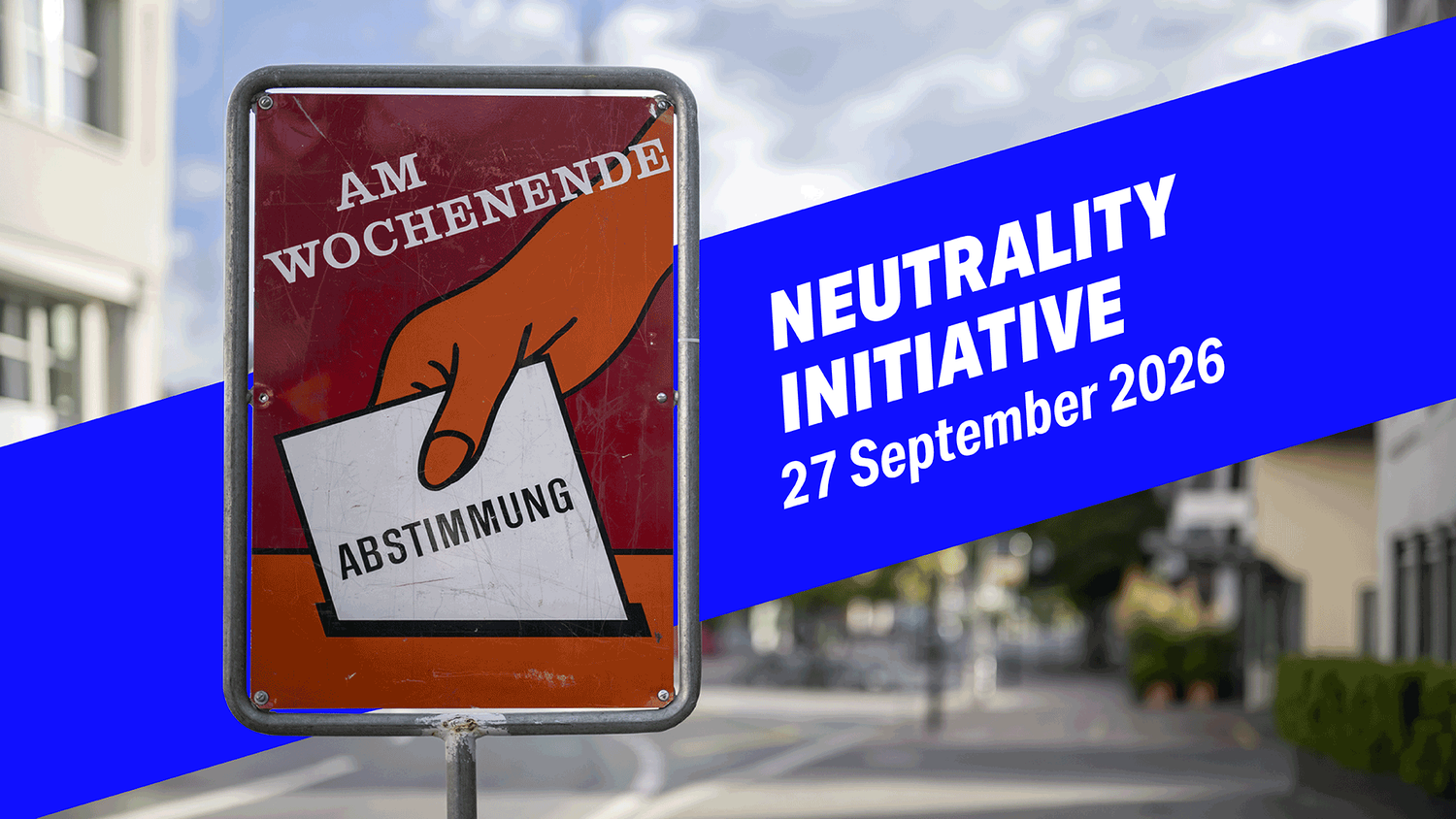
Swiss voters went to the polls on Sunday to decide something that sounds almost quaint on paper and is anything but: whether their country’s centuries-old neutrality should be written into the constitution in far stricter terms than it has ever known. The question, on the ballot as the “Safeguard Swiss Neutrality” initiative, has turned into the sharpest referendum yet on how Switzerland should behave in a world that has grown considerably less neutral around it.
At its core, the initiative would add a new article to the Federal Constitution defining Swiss neutrality as “perpetual and armed.” That single phrase carries real consequences. Under the proposed rule, the federal government could no longer join or cooperate with any military or defense alliance, NATO included, unless Switzerland itself came under direct attack or one was clearly imminent. It could not take part in armed conflicts between other countries, which is already standard practice. And it could not impose economic sanctions on warring states on its own initiative, only sanctions ordered by the United Nations Security Council, where Russia holds a permanent veto, or measures aimed at stopping sanctions evasion.
A Question Born in the Weeks After Ukraine
To understand why this vote matters, it helps to go back to February 2022. Within days of Russia’s invasion of Ukraine, Switzerland, after considerable internal debate, decided to largely adopt the European Union’s sanctions package against Moscow. For a country whose neutrality dates to 1848 and has always been left deliberately loose in its application, that decision landed as a genuine departure for some. Members of the Swiss People’s Party, or SVP, and allied groups saw it as a country drifting from a principle that had defined it for nearly two hundred years.
Later that same year, in November 2022, the Egerkingen Committee, led by former SVP National Councillor Walter Wobmann and backed by figures including former Federal Councillor Christoph Blocher and Pro Switzerland president Stephan Rietiker, launched the initiative that put the question to voters. The signature drive collected somewhere between 130,000 and 140,000 signatures, well clear of the 100,000 required, and the text was formally submitted in April 2024.
From there, the initiative met almost uniform resistance in official Bern. The Federal Council recommended rejection in June 2024, arguing that the country’s existing, more flexible approach to neutrality already served its interests. Both chambers of Parliament agreed, and in March 2026 the Council of States voted 29 to 11, with four abstentions, to abandon the idea of offering voters a counter-proposal at all. That left a straight yes-or-no question, with the SVP standing as the only major party in favor.
“Our Neutrality Has Proved Its Worth”
When Foreign Minister Ignazio Cassis formally opened the government’s campaign against the initiative in Bern on August 11, he framed the debate not as a referendum on whether Switzerland stays neutral, but on how rigidly that neutrality should be defined. “Switzerland has been and is neutral, and it will remain neutral,” he told reporters, before turning to the substance of the government’s objection. “Does Switzerland need a new form of neutrality? No,” he said. “Not because we want less neutrality, but because our existing neutrality has proved its worth.”
Cassis went further, arguing that flexibility has been the source of the policy’s durability rather than a weakness in it. “Neutrality in its current form has stood the test of time for over 180 years,” he said. “It is precisely the ability to respond appropriately to new challenges that has made neutrality so strong.”
On the other side, Wobmann has cast the vote in far larger terms than party politics. Speaking at the launch of the “yes” campaign in August, he told Swiss broadcaster RTS, “This is not about party politics, but about Switzerland’s future.” For the initiative’s backers, the 2022 sanctions decision was not a footnote but a warning sign, evidence that a country famous for staying above the fray had started taking sides.
What the Polling Showed Going In
However this vote lands, it will not have been for lack of warning from the pollsters. A Leewas Institute survey for Tamedia and 20 Minuten, fielded in mid-June and drawing on more than 26,000 respondents, found 54 percent opposed to the initiative against 34 percent in favor. By mid-September, a gfs.bern poll commissioned by the Swiss Broadcasting Corporation put opposition at 63 percent, with support down to 34 percent and just 3 percent undecided, a shift that suggests the “no” campaign gained real ground as the vote approached rather than simply holding steady.
None of that guarantees an outcome, and Switzerland’s system is built to make sure of it. Passage requires a double majority: more than half of the national popular vote, and a majority of the country’s 26 cantons voting yes. Roughly 5.6 million of Switzerland’s nine million residents, its citizens aged 18 and over, were eligible to cast a ballot, with turnout for federal referendums over the past decade typically landing somewhere between 41 and 57 percent.
Why the Rest of the World Is Watching
The stakes extend beyond Swiss borders. Switzerland hosts the United Nations’ European headquarters in Geneva and the International Committee of the Red Cross, and it has long styled itself as a country whose good offices, its capacity to mediate and host talks that other nations cannot, depend on being seen as genuinely above the conflicts of the moment. A constitutional rule barring sanctions outside UN Security Council action would tie the country’s hands the next time a major power invades a neighbor, given that Russia and China both sit on that council with veto power. It would also foreclose any deepening of the three-decade, non-alliance cooperation Switzerland already maintains with NATO. Russia’s government has publicly praised the initiative, a detail its opponents have not let voters forget, and the vote has increasingly played out as a proxy fight over the direction Swiss foreign policy has taken since 2022.
What Happens From Here
If the polling trend holds and the initiative fails, the status quo continues largely untouched: Switzerland keeps participating in EU-aligned sanctions regimes on a case-by-case basis and keeps its existing, non-alliance relationship with NATO intact. But a rejection would not settle the underlying argument. The SVP and its allies in the Pro Switzerland committee have made clear they view this as one battle in a longer campaign over what neutrality should mean for a country that has avoided major war for five centuries and has no intention of explaining that streak away.
If the initiative instead clears both thresholds, popular vote and cantons alike, the harder work begins. Lawmakers would need to draft implementing legislation spelling out exactly how a government bound by “perpetual and armed” neutrality handles everything from existing sanctions against Russia to future crises nobody has anticipated yet. Either way, Sunday’s vote will not be the last word on a debate that Ukraine’s war reopened and that Switzerland, for all its practiced neutrality, has not yet managed to close.