Tag: WorldNews

  • Can Britain Rejoin the EU? What Andy Burnham Actually Said, and What Happens Next

    Can Britain Rejoin the EU? What Andy Burnham Actually Said, and What Happens Next

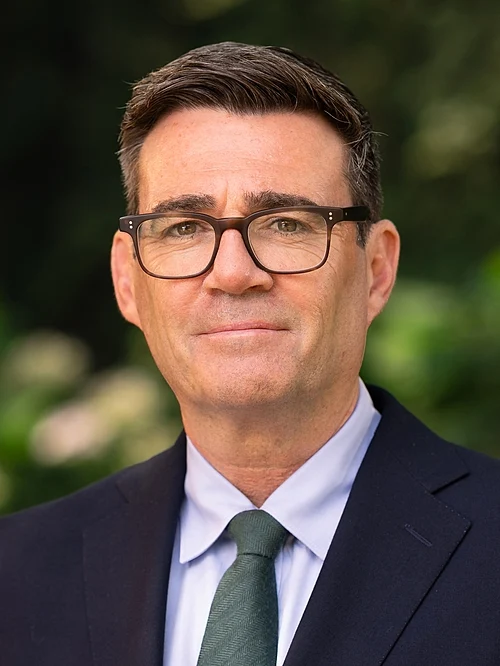
    Andy Burnham never said the word “rejoin” from the stage in Liverpool. It took a morning radio interview the next day, and a question he chose not to dodge, for a British prime minister to say aloud that going “all the way” back into the European Union was one of the options on the table.

    The distinction matters, because the reaction since has outrun the facts. Paris and Madrid have already offered their welcome. London has announced no application, no referendum and no change in government policy.

    Two events, not one

    On Tuesday 29 September, Burnham delivered his Labour conference speech. Video of the speech shows a leader edging toward the subject without crossing the line. He said Brexit had done more harm than good, and he said an EU-UK summit later this year would be the moment to lay out the choices facing the country.

    The sharper remarks came on Wednesday 30 September, on BBC Radio 4’s Today programme. Asked whether the options could include full membership, Burnham set out a menu of four. “We could stay as we are,” he said. “We could look at what George Osborne has said about a customs union, we could look at what the Liberal Democrats said about the (EU) single market, or we could go all the way.”

    That is a list of possibilities, not a plan. Burnham has not announced a bid to rejoin. He says he will set out the models around the UK-EU summit expected in November.

    A shift in tone, if not yet in policy

    Even so, the language marks a change. Labour’s 2024 manifesto ruled out returning to the Single Market, the Customs Union and freedom of movement. Burnham’s own position has also moved: in May, he said he was not proposing that Britain consider membership.

    His past statements are not entirely consistent either. Reuters reported in June that he had once said he wanted Britain to rejoin in his lifetime, then later described membership as not a priority.

    AFP characterised the moment as the breaking of a taboo for a sitting prime minister. The New Union Post went further, calling him the first post-Brexit PM to put rejoining back on the table at Downing Street, but that is one outlet’s framing and should be read as such.

    Europe leans in

    The warmest response came from Madrid. At a joint press conference on 30 September, French President Emmanuel Macron and Spanish Prime Minister Pedro Sánchez both welcomed the prospect.

    “If the British want to come back and if the prime minister is moving in that direction, I think that is very good news both for his country and for Europeans,” Macron said. He then added two words: “Come back.” Sánchez said Spain would “applaud it and open its arms again to a brotherly people.”

    The European Commission was more guarded. Chief spokesperson Paula Pinho responded cautiously on 1 October, and the briefing is available in the Commission’s video archive. Brussels, in other words, is waiting to see whether the signal turns into a proposal.

    The politics at home

    The domestic fallout is already forming. The Conservatives are accusing Burnham of reopening Brexit divisions, and the argument looks set to become a dividing line at the next general election.

    The public mood gives the debate some weight. Polling reported this year puts support for rejoining at 55 or 56 percent, though outlets disagree on the pollster, with some attributing the figure to Survation and others to YouGov. Those numbers sit against a 2016 referendum that produced 51.9% for Leave and 48.1% for Remain, on a turnout of 72.2%.

    Burnham’s rise to this point has been fast. Keir Starmer announced his resignation on 22 June 2026. Burnham became Labour leader on 17 July and prime minister on 20 July, the seventh PM in a decade. In July he told European Council President António Costa he wanted a closer relationship with the bloc, and in September he met Commission President Ursula von der Leyen at the UN General Assembly. The UK government says the two discussed the next EU-UK summit, which was postponed earlier because of the July change of government.

    What rejoining would actually take

    Burnham’s four options are not equal in difficulty. The first three are variations on negotiation between London and Brussels. The fourth is a different order of undertaking.

    Under Article 49 of the Treaty on European Union, rejoining would require a formal application, unanimous approval from the Council, the consent of the European Parliament, and ratification by every member state. No application has been announced, and the research so far has found no statement on a referendum, cabinet endorsement or official government line.

    Meanwhile, the existing relationship is still being worked on. The Commission says technical talks continue on defence, migration, Ukraine and AI. Three negotiating strands remain open: sanitary standards, linking emissions trading systems, and youth mobility. Any of those could produce a concrete result before the larger question is settled.

    What to watch

    The November summit is the next test, though no date has been confirmed. Burnham has promised to present the models then, which means the vague menu he offered on the radio will have to become something sharper.

    The real question is which of the four options he chooses to champion, and whether his party follows him there. A prime minister who raises the possibility of rejoining has opened a debate. Whether he is willing to lead it is a separate matter, and the answer will be clearer by the end of the year.
  • Switzerland Votes on Whether to Lock “Perpetual, Armed” Neutrality Into Its Constitution

    Switzerland Votes on Whether to Lock “Perpetual, Armed” Neutrality Into Its Constitution

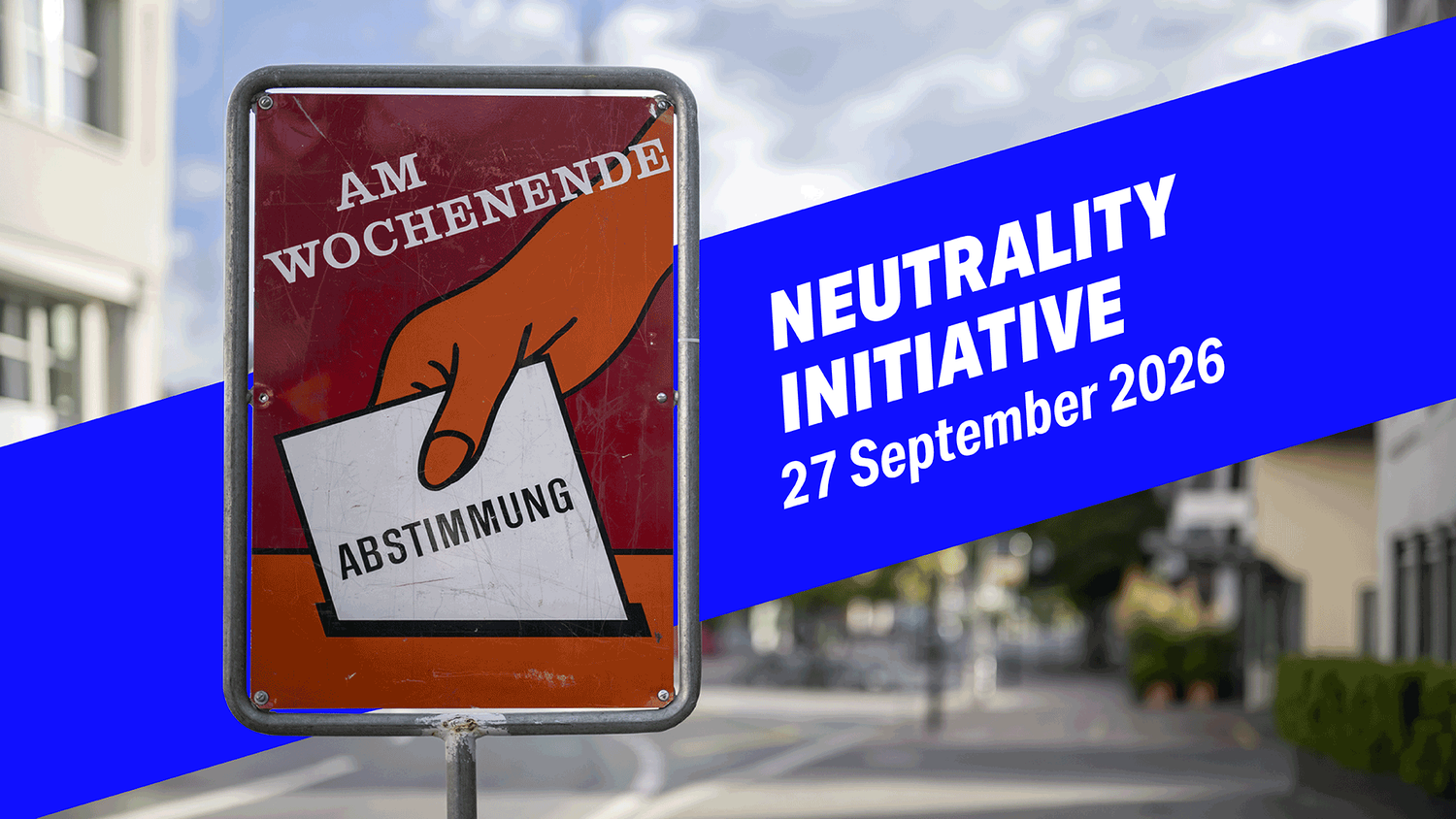
    Swiss voters went to the polls on Sunday to decide something that sounds almost quaint on paper and is anything but: whether their country’s centuries-old neutrality should be written into the constitution in far stricter terms than it has ever known. The question, on the ballot as the “Safeguard Swiss Neutrality” initiative, has turned into the sharpest referendum yet on how Switzerland should behave in a world that has grown considerably less neutral around it.

    At its core, the initiative would add a new article to the Federal Constitution defining Swiss neutrality as “perpetual and armed.” That single phrase carries real consequences. Under the proposed rule, the federal government could no longer join or cooperate with any military or defense alliance, NATO included, unless Switzerland itself came under direct attack or one was clearly imminent. It could not take part in armed conflicts between other countries, which is already standard practice. And it could not impose economic sanctions on warring states on its own initiative, only sanctions ordered by the United Nations Security Council, where Russia holds a permanent veto, or measures aimed at stopping sanctions evasion.

    A Question Born in the Weeks After Ukraine

    To understand why this vote matters, it helps to go back to February 2022. Within days of Russia’s invasion of Ukraine, Switzerland, after considerable internal debate, decided to largely adopt the European Union’s sanctions package against Moscow. For a country whose neutrality dates to 1848 and has always been left deliberately loose in its application, that decision landed as a genuine departure for some. Members of the Swiss People’s Party, or SVP, and allied groups saw it as a country drifting from a principle that had defined it for nearly two hundred years.

    Later that same year, in November 2022, the Egerkingen Committee, led by former SVP National Councillor Walter Wobmann and backed by figures including former Federal Councillor Christoph Blocher and Pro Switzerland president Stephan Rietiker, launched the initiative that put the question to voters. The signature drive collected somewhere between 130,000 and 140,000 signatures, well clear of the 100,000 required, and the text was formally submitted in April 2024.

    From there, the initiative met almost uniform resistance in official Bern. The Federal Council recommended rejection in June 2024, arguing that the country’s existing, more flexible approach to neutrality already served its interests. Both chambers of Parliament agreed, and in March 2026 the Council of States voted 29 to 11, with four abstentions, to abandon the idea of offering voters a counter-proposal at all. That left a straight yes-or-no question, with the SVP standing as the only major party in favor.

    “Our Neutrality Has Proved Its Worth”

    When Foreign Minister Ignazio Cassis formally opened the government’s campaign against the initiative in Bern on August 11, he framed the debate not as a referendum on whether Switzerland stays neutral, but on how rigidly that neutrality should be defined. “Switzerland has been and is neutral, and it will remain neutral,” he told reporters, before turning to the substance of the government’s objection. “Does Switzerland need a new form of neutrality? No,” he said. “Not because we want less neutrality, but because our existing neutrality has proved its worth.”

    Cassis went further, arguing that flexibility has been the source of the policy’s durability rather than a weakness in it. “Neutrality in its current form has stood the test of time for over 180 years,” he said. “It is precisely the ability to respond appropriately to new challenges that has made neutrality so strong.”

    On the other side, Wobmann has cast the vote in far larger terms than party politics. Speaking at the launch of the “yes” campaign in August, he told Swiss broadcaster RTS, “This is not about party politics, but about Switzerland’s future.” For the initiative’s backers, the 2022 sanctions decision was not a footnote but a warning sign, evidence that a country famous for staying above the fray had started taking sides.

    What the Polling Showed Going In

    However this vote lands, it will not have been for lack of warning from the pollsters. A Leewas Institute survey for Tamedia and 20 Minuten, fielded in mid-June and drawing on more than 26,000 respondents, found 54 percent opposed to the initiative against 34 percent in favor. By mid-September, a gfs.bern poll commissioned by the Swiss Broadcasting Corporation put opposition at 63 percent, with support down to 34 percent and just 3 percent undecided, a shift that suggests the “no” campaign gained real ground as the vote approached rather than simply holding steady.

    None of that guarantees an outcome, and Switzerland’s system is built to make sure of it. Passage requires a double majority: more than half of the national popular vote, and a majority of the country’s 26 cantons voting yes. Roughly 5.6 million of Switzerland’s nine million residents, its citizens aged 18 and over, were eligible to cast a ballot, with turnout for federal referendums over the past decade typically landing somewhere between 41 and 57 percent.

    Why the Rest of the World Is Watching

    The stakes extend beyond Swiss borders. Switzerland hosts the United Nations’ European headquarters in Geneva and the International Committee of the Red Cross, and it has long styled itself as a country whose good offices, its capacity to mediate and host talks that other nations cannot, depend on being seen as genuinely above the conflicts of the moment. A constitutional rule barring sanctions outside UN Security Council action would tie the country’s hands the next time a major power invades a neighbor, given that Russia and China both sit on that council with veto power. It would also foreclose any deepening of the three-decade, non-alliance cooperation Switzerland already maintains with NATO. Russia’s government has publicly praised the initiative, a detail its opponents have not let voters forget, and the vote has increasingly played out as a proxy fight over the direction Swiss foreign policy has taken since 2022.

    What Happens From Here

    If the polling trend holds and the initiative fails, the status quo continues largely untouched: Switzerland keeps participating in EU-aligned sanctions regimes on a case-by-case basis and keeps its existing, non-alliance relationship with NATO intact. But a rejection would not settle the underlying argument. The SVP and its allies in the Pro Switzerland committee have made clear they view this as one battle in a longer campaign over what neutrality should mean for a country that has avoided major war for five centuries and has no intention of explaining that streak away.

    If the initiative instead clears both thresholds, popular vote and cantons alike, the harder work begins. Lawmakers would need to draft implementing legislation spelling out exactly how a government bound by “perpetual and armed” neutrality handles everything from existing sanctions against Russia to future crises nobody has anticipated yet. Either way, Sunday’s vote will not be the last word on a debate that Ukraine’s war reopened and that Switzerland, for all its practiced neutrality, has not yet managed to close.

  • UN Investigators Say US Strikes on Iranian School, Sports Center Amounted to War Crimes

    UN Investigators Say US Strikes on Iranian School, Sports Center Amounted to War Crimes

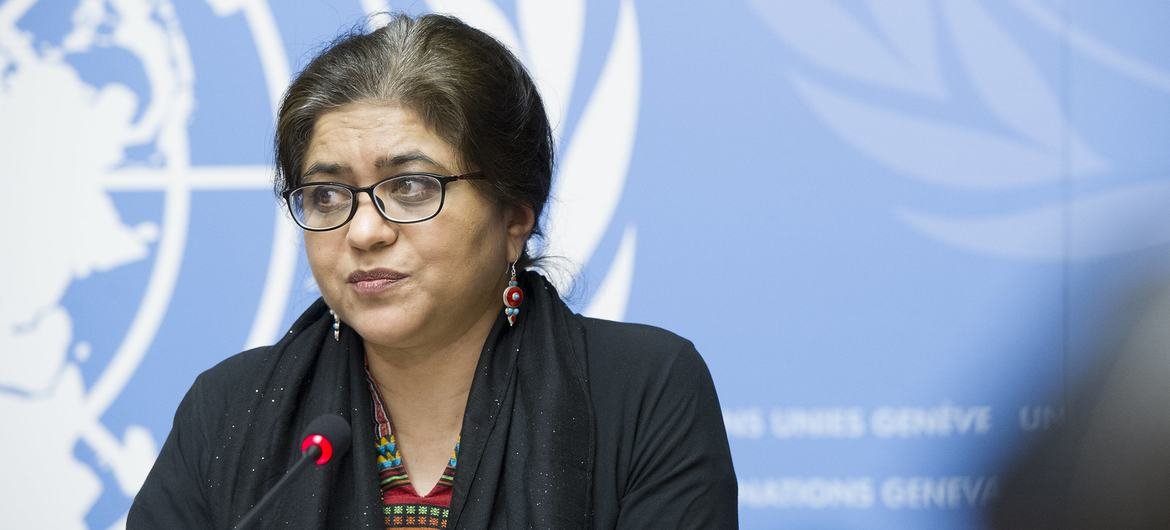
    Photo by Violaine Martin / UN Photo, via UN News

    More than 150 people, including roughly 120 children, died when Tomahawk missiles struck an elementary school in southern Iran on February 28, according to a new United Nations report that also documents a separate American strike, this one dispersing tungsten pellets over a sports complex and nearby homes, killing 22 civilians. Seven months later, the Pentagon still has not released its own account of how either target was chosen.

    The findings come from the UN Independent International Fact-Finding Mission on Iran, an independent panel created by the Human Rights Council, in an 18-page report published as an advance version ahead of the Council’s 63rd session in Geneva. The mission concluded there are “reasonable grounds” to believe the United States committed a war crime by carrying out indiscriminate attacks on the Tayyiba Elementary School in Minab and on a sports facility and residential area in Lamerd, both of which the report describes as “clearly identifiable” civilian sites at the time they were hit.

    What the Mission Found

    The panel, chaired by Bangladeshi jurist Sara Hossain alongside fellow commissioners Shaheen Sardar Ali and Viviana Krsticevic, was not investigating a hypothetical. The strikes it examined followed the joint military campaign the United States and Israel launched against Iran in February 2026, and the mission’s language is unusually direct for a body more often tasked with scrutinizing authoritarian governments than a NATO-aligned power.

    According to the report, cited by UN News, the mission concluded that the United States committed a war crime by launching indiscriminate attacks that killed or injured civilians and damaged civilian property. A legal analysis published by Opinio Juris, drawing on specific paragraphs of the report, put the Minab toll at 157 dead, including 120 children and 26 school staff, with 95 more wounded, and the Lamerd toll at 20 killed and more than 100 injured. Other outlets, including NBC News and NPR, cited a combined figure of “at least 178” civilian deaths, while Democracy Now’s summary put it at 177. The variation appears to reflect differences in how each outlet aggregated the two incidents rather than any real dispute over what happened, and readers should treat any single combined number as an approximation drawn from a specific source rather than a settled count.

    The Minab findings echo earlier reporting: an Associated Press investigation had separately identified at least one US missile strike on the school, then referred to as Shajareh Tayyebeh. The mission’s report is the first to formally attach a war crimes designation to it.

    A Report That Cuts Both Ways

    The mission’s mandate was never limited to scrutinizing the United States. It was originally established by the Human Rights Council in November 2022 to investigate Iran’s crackdown on protesters following the death of Mahsa Amini, and its mandate was renewed last year to cover ongoing violations inside the country. That original focus dominates much of the new report.

    Investigators found that Iranian security forces carried out killings “on a massive scale in all provinces” during the government’s response to mass protests that began in late 2025 and continued into this year. At least 221 children, some as young as two, were among the dead, the mission said. It also documented tens of thousands of arbitrary detentions marked by torture, prolonged solitary confinement, and denial of access to legal counsel, along with at least 29 executions connected to the unrest. More than 70 people, including five women and three boys, remain at risk of execution over their alleged involvement in the protests, according to the report.

    Taken together, the mission concluded these actions amount to crimes against humanity, including murder, imprisonment, and torture. Iran’s government disputes the scale of that accounting entirely. Tehran has released its own figure of 3,038 people killed and 25,000 injured during the crackdown, framing most of the dead as “rioters” it alleges were directed by exiled opposition groups working with the United States and Israel. The mission said it could not verify an exact death toll but believes the real number exceeds what the government has acknowledged.

    Washington’s Response

    The reaction from the United States was immediate and unequivocal in its rejection. Anna Kelly, a White House spokesperson, told the Associated Press, in a statement reported by CNBC, that Iran’s government is “the only party in this conflict that has committed war crimes.” A broader White House statement, reported by Democracy Now, dismissed the Human Rights Council itself, saying it “has accomplished nothing for human rights while spouting unserious nonsense for decades.”

    A State Department official separately told CNBC that the department does not consider the report credible, and accused the Council of anti-American bias and of going easy on repressive governments elsewhere. That characterization was paraphrased by CNBC rather than presented as a verified direct quote from a named official, and should be read with that caveat.

    What Washington has not done, as the report itself notes, is release its own military investigation into how the Minab school and the Lamerd sports complex came to be targeted. That leaves the American side of the story, at least officially, largely unaddressed nearly seven months after the strikes.

    Why a UN Body Naming the US Matters

    Fact-finding missions convened by the Human Rights Council have, in recent years, mostly turned their attention toward governments in Syria, Myanmar, and similar settings, places without the diplomatic weight to shape the Council’s own membership. A body using that same evidentiary process to allege war crimes by the United States, a permanent member of the international system’s most powerful institutions, tests how far UN human rights mechanisms can reach when the country in question pushes back as forcefully as Washington has here.

    It also arrives at an awkward moment. The US-Israel-Iran conflict that produced these strikes remains unresolved, and a possible meeting between Gulf Arab states, the United States, and Iran has been floated around next week’s UN General Assembly session in New York, according to CNBC. Whether that diplomacy proceeds, and whether the Pentagon ever makes its targeting review public, will likely shape how much practical weight this report carries beyond Geneva.

    For now, the findings sit alongside each other awkwardly but deliberately: a UN panel accusing a global power of war crimes in the same document where it accuses the Iranian government of crimes against humanity against its own people. Both governments have rejected the parts of the report aimed at them. Neither has offered the kind of independent accounting that might settle the questions the mission raised. The Human Rights Council’s full 47-member body was expected to take up the report formally as its 63rd session continues in Geneva through October 7, and how member states respond, particularly whether any push for further investigation or referral, is the next thing worth watching.