Hybrid Cloud Strategy for CTOs: 5-Step AI Framework [2026 ROI Guide]
Cloud InfrastructureMarch 15, 2026·12 min read·NeuralWired Editorial
The hybrid cloud market hits $194 billion this year. Yet most enterprises are leaving $1.2M in annual savings on the table. Not because the technology isn’t ready, but because their strategy isn’t. Here’s the complete playbook.
Cloud IaaS spending surged to $90.9 billion in Q1 2025 alone, up 21% year over year, according to Omdia. And enterprises have little to show for it. Runaway public cloud bills, compliance gaps, and AI workloads that behave unpredictably in pure-cloud environments are forcing a fundamental rethink. The answer, increasingly, is a deliberate hybrid cloud strategy for enterprises, built not around vendor convenience but around workload economics.
For CTOs evaluating their 2026 infrastructure roadmap, the stakes are real. 90% of enterprises have already adopted some form of hybrid cloud, according to Gartner and IMARC Group data. But adoption isn’t strategy. The gap between organizations that achieve 40% ROI improvements and those stuck managing complexity without returns comes down to five architectural decisions.
This analysis covers what those decisions are, how AI workloads changed the calculus in 2025, what zero-trust security means for your architecture today, and how to build a framework that pays back in under nine months. We’ve pulled from market research, practitioner case data, and the latest analyst forecasts to give you the implementation guide that generic vendor content won’t provide.
$194B
Hybrid cloud market value in 2026, growing to $347B by 2031 at 12.37% CAGR, per Mordor Intelligence’s 2026 forecast. The primary driver is AI workload demands that no single cloud model can satisfy alone.
Why 2026 Changed the Hybrid Cloud Strategy Equation
Hybrid cloud isn’t new. What’s new is why enterprises can’t avoid it anymore.
For years, the conversation centered on cost versus flexibility: public cloud for elasticity, private cloud for sensitive data, hybrid for organizations that couldn’t fully commit to either. That framing was adequate when workloads were predictable. It falls apart when your biggest infrastructure driver is AI training runs that consume 10,000 GPU hours at a stretch.
GPU economics. Training large models on public cloud GPU instances costs 40 to 60% more than on-premises equivalents at scale, according to Iterathon’s infrastructure cost analysis. Once training volume crosses a threshold of roughly 500 GPU-hours per week, the math flips decisively toward private compute.
Latency for inference. Real-time AI inference including fraud detection, personalization, and edge robotics cannot tolerate 50ms round-trips to a distant cloud region. Edge and on-premises nodes cut that to under 5ms. The hybrid model routes inference locally while bursting training capacity to the cloud.
Compliance pressure. Regulations in financial services, healthcare, and the EU AI Act require data residency and audit trails that multi-cloud vendors can’t uniformly guarantee. Hybrid gives legal teams the control they need without grounding innovation.
“Multi-cloud and hybrid will become a strategic architecture, not a choice. Organizations will strategically place critical components in the public cloud for scalability, and private cloud for data security and cheaper hardware for AI initiatives.”
The AI Workload Placement Framework Every CTO Needs
The single biggest mistake in hybrid cloud planning is treating all workloads the same. AI changed that requirement significantly.
Each class of AI workload has a different cost profile, latency sensitivity, and data governance requirement. Placing them correctly, rather than simply splitting “some on-prem, some in the cloud,” is where the 35 to 40% cost reductions actually come from. Here’s the placement logic:
The critical trap here is data gravity. When petabytes of training data sit on-premises, moving them to a public cloud for training doesn’t just take time. It generates egress fees that can consume 15 to 20% of your anticipated cloud savings. Organizations that ignore this end up paying more in data transfer than they save in compute flexibility. Design your architecture around where the data already lives, then bring compute to it.
78%
of organizations increased edge infrastructure usage in the past 12 months, per IDC. Edge isn’t a future investment. It’s already the default for AI inference at scale.
Hybrid Cloud Strategy: The 5-Step Implementation Roadmap
Generic advice about “assessing your workloads” doesn’t get implementations done. Here’s the specific sequence that enterprise teams use to move from inventory to production-ready hybrid architecture, with typical timelines and the failure modes to avoid at each stage.
Classify and map every workloadInventory current workloads against the placement framework above. Flag AI training, inference, compliance-sensitive data, and latency-critical services separately. Tools include Kubernetes discovery agents and cloud cost dashboards. The key failure mode to avoid is treating this as a one-time exercise. Workload profiles change quarterly as AI usage grows, so build ongoing classification into your FinOps process from day one.
Design a zero-trust architecture before migrationMost hybrid failures trace back to security architectures designed for single-environment perimeters. Zero-trust means no implicit trust between nodes, whether on-prem or cloud. Implement identity-aware access controls, micro-segmentation, and encrypted east-west traffic. Per NIST Special Publication 800-207 on Zero Trust Architecture, ZTA frameworks that map to NIST and CIS controls simplify compliance by aligning network security to regulatory standards automatically rather than retroactively.
Model your TCO before committing to architectureRun the ROI math with real numbers. OpsRamp’s management ROI model shows that enterprises managing 10,000 IT resources save $1.2M annually in OPEX through unified hybrid management. For larger organizations, that figure scales. Target a payback period under nine months. If your model shows longer, revisit workload placement before committing capital.
Build compliance checkpoints into the architectureDon’t bolt compliance on after the fact. For AI-era regulations including GDPR for EU data, HIPAA for health data, and the emerging AI Act requirements, build audit trails, data lineage tracking, and confidential computing zones into your initial design. N-iX’s hybrid cloud strategy guide notes that organizations treating compliance as an architecture requirement rather than an IT ticket avoid the costly retrofits that derail migrations at the 60% completion mark.
Instrument for FinOps and AI governance from launchHybrid environments without observability become cost sinkholes. Monitor GPU utilization targets (aim above 80% on private nodes), MTTR, and deployment frequency. Integrate AI governance dashboards to track model performance, data drift, and inference cost per query. Per CTO Magazine’s DevOps analysis, the metrics that matter for hybrid success are deployment frequency, lead time, and MTTR, not just uptime percentages.
The ROI Reality Check: What Vendors Won’t Tell You
Egress fees: Data transfer between private and public environments can add 15 to 20% to your cloud bill if not planned for in architecture. Route data pipelines to minimize cross-environment movement.
Skills gap: Hybrid environments require FinOps expertise, Kubernetes orchestration skills, and zero-trust networking knowledge that most enterprise IT teams don’t have in-house. Budget for training or hiring, not just tools.
Management overhead: Without unified orchestration, hybrid can produce more operational complexity than two separate environments. Tools like Kubernetes federation and unified observability platforms are required, not optional.
Delayed payback without optimization: Organizations that deploy hybrid infrastructure but don’t actively manage workload placement often see cloud spend grow 21% without corresponding efficiency gains. Passive hybrid isn’t a hybrid strategy. It’s complexity theater.
“In 2026, multi-cloud and hybrid environments will become architectural necessities for AI and compliance workloads.”
The organizations achieving $1.2M or more in annual OPEX savings share three characteristics. They started with a full workload inventory, they built FinOps discipline before deployment rather than after, and they treated zero-trust security as an architecture requirement rather than a compliance checkbox. Organizations that skip any of these three see their hybrid ROI erode within 18 months.
Hybrid Cloud Strategy Pre-Launch Checklist for CTOs
Before committing budget to hybrid infrastructure, use this checklist to validate readiness. Each item maps to a documented failure mode in enterprise deployments.
Architecture Readiness
☐Full workload inventory completed with AI, compliance, and latency classifications
☐Data gravity mapped so training data location drives compute placement, not the reverse
☐Zero-trust IAM framework designed before migration begins
☐Network connectivity (VPN/SD-WAN) between private and public environments validated for AI burst throughput
☐Kubernetes or equivalent orchestration layer selected and tested
Financial Governance
☐TCO model built with real egress, staffing, and licensing costs included
☐Payback period target set to under 9 months for standard implementations
☐FinOps team or tooling designated before go-live
☐GPU utilization targets defined, aiming above 80% on private nodes
☐Egress cost monitoring in place from day one
Compliance and Security
☐Regulatory requirements mapped (GDPR, HIPAA, AI Act) before architecture finalized
☐Audit trail and data lineage tracking built into architecture rather than added later
☐Confidential computing zones designated for sensitive AI training data
☐NIST/CIS framework mapping completed and documented
☐Incident response plan updated for multi-environment topology
Frequently Asked Questions
What is a hybrid cloud strategy for enterprises?
A hybrid cloud strategy combines private cloud infrastructure (on-premises or co-located) with public cloud services, connected through orchestration layers that allow workloads to move between environments based on cost, latency, or compliance requirements. For enterprises in 2026, this means routing AI training to private GPU clusters, running inference at the edge for low latency, and bursting agent workloads to the public cloud for elastic scale. 82% of IT decision-makers report higher satisfaction with hybrid than with other cloud models.
What is the difference between hybrid cloud and multi-cloud?
Hybrid cloud integrates private and public infrastructure into a single operational environment, with workloads moving fluidly between them. Multi-cloud uses multiple public providers such as AWS, Azure, and GCP without deep integration. It is primarily a vendor diversification strategy rather than an architecture optimization. Hybrid is better suited for AI workloads requiring data governance and latency control, while multi-cloud reduces vendor lock-in but adds management complexity without the cost benefits of private compute.
What are the main benefits of hybrid cloud for enterprises?
The three core benefits are cost reduction (35 to 40% through strategic workload placement), regulatory compliance (private infrastructure gives legal teams data residency control), and AI flexibility (on-premises GPUs for training, cloud burst for agents). Organizations managing 10,000 or more IT resources can save $1.2M annually in OPEX through unified hybrid management, per OpsRamp modeling.
How long does a hybrid cloud migration take?
A well-scoped hybrid migration for a mid-size enterprise (500 to 5,000 employees) typically takes 6 to 12 months from workload inventory to production. The five-step roadmap above covers classify, design zero-trust, model TCO, build compliance in, and instrument for FinOps, mapping to roughly two months per major phase. Organizations that rush past the workload classification step add 30 to 40% to their timelines when they need to rearchitect mid-migration.
What are the biggest risks of a hybrid cloud strategy?
The three most common failure modes are management complexity without proper orchestration, egress costs that weren’t modeled into the TCO, and skills gaps in FinOps and zero-trust networking. Organizations that deploy hybrid infrastructure passively, without active workload optimization, often see cloud spend grow 21% year over year without efficiency gains. The antidote is FinOps governance from day one, not retrofitted six months after launch.
What ROI can enterprises expect from hybrid cloud in 2026?
Well-executed hybrid strategies show a 40% ROI improvement in year one, based on Ideagcs’s analysis of enterprise client data. Large organizations managing extensive IT resources average $1.2M in annual OPEX savings. Payback period for infrastructure investment typically falls under nine months when workload placement is optimized. These figures assume active FinOps management; passive deployments achieve significantly lower returns.
What to Watch: Hybrid Cloud Through 2028
Three developments will reshape the hybrid cloud landscape before 2028, and the organizations that position for them now will have a meaningful head start.
AI infrastructure market acceleration.The AI infrastructure market is projected to reach $223.45 billion by 2030, growing at 30.4% CAGR, per IDC. As that investment flows, GPU hardware will commoditize, driving private compute costs down further and improving the economics of on-premises AI training. Enterprises that build private GPU capacity now lock in favorable unit economics before demand peaks.
Regulatory convergence around AI and data governance. The EU AI Act, emerging US federal AI guidelines, and sector-specific rules are standardizing what compliant AI infrastructure means. Organizations that have already built audit trails, data lineage systems, and NIST-aligned network controls into their hybrid architecture will meet new requirements without major retrofits. Those that haven’t will face compliance-driven migrations that cost far more than proactive design.
Vendor consolidation in orchestration and FinOps. The hybrid management layer covering Kubernetes federation, unified observability, and cross-environment cost visibility is fragmenting today across dozens of tools. Expect consolidation around two or three dominant platforms by 2027. Organizations that standardize on emerging leaders now avoid the migration costs that come with backing a platform that gets acquired or discontinued.
The bottom line for 2026: Hybrid cloud strategy isn’t a technology decision anymore. It’s a competitive strategy. The $194 billion market value reflects not speculative adoption but enterprises discovering that public-cloud-only economics don’t work for AI at scale. The organizations that build workload-optimized, zero-trust hybrid architectures this year enter 2027 with infrastructure advantages that compound over time.
The pattern across enterprise deployments is consistent. The organizations achieving 40% cost reductions and nine-month paybacks didn’t find a better vendor or a cheaper data center. They made better architectural decisions earlier, covering workload placement, security-first design, and FinOps from launch rather than as a retroactive fix.
Get NeuralWired’s weekly analysis on cloud infrastructure, AI strategy, and enterprise technology delivered to decision-makers across 50,000 organizations.
Subscribe Free →
Best Large Language Models 2026: GPT-5 vs Claude 4 vs Gemini 2.5 | NeuralWired
AI AnalysisMarch 15, 2026·12 min read·
Six weighted criteria, real TCO numbers, and a decision framework for choosing the right LLM in 2026. Because benchmarks alone cost companies millions in wrong deployments.
NW
NeuralWired Research DeskTechnology Analysis · NeuralWired.com
Key Findings
GPT-5 leads on real-world coding (74.9% SWE-bench Verified) and offers the lowest input cost at $1.25 per million tokens
Claude 4 Opus carries the most extensively documented safety and alignment evaluation of any frontier model
Gemini 2.5 Pro tops math and science benchmarks (GPQA Diamond 84%) and leads the LMArena human preference leaderboard
Llama 4 Maverick delivers open-weight performance matching GPT-4o at roughly $0.19 per million blended tokens
All four are production-grade in 2026. The choice is a routing decision, not a capability ranking.
The large language models comparison landscape in 2026 has a clarity problem. Every vendor publishes benchmark tables. Most stop there. For the CTO weighing a multi-million-dollar annual token budget, the developer choosing a fine-tuning stack, or the CISO who needs EU AI Act compliance by 2027, benchmark scores answer the wrong question.
The right question is: which model delivers the best outcome for your specific workload, risk profile, and budget?
The past twelve months delivered more frontier model releases than the prior three years combined. GPT-5, Claude 4, Gemini 2.5, and Llama 4 each moved the performance bar in different directions, and not always where the headlines suggested.
GPT-5 launched with state-of-the-art scores across real-world coding (74.9% on SWE-bench Verified), math (94.6% AIME 2025 without tools), and health reasoning. The unified architecture that automatically switches between fast and deliberate reasoning modes was a genuine architectural shift. It’s also the most affordable frontier model at the input layer, priced at $1.25 per million input tokens.
But raw performance supremacy isn’t the whole story.
Claude 4 Opus earned the designation of most robustly aligned frontier model, a claim backed by an unusually detailed system card documenting alignment faking tests, hidden goal detection, and behavioral audits across hundreds of simulated high-stakes interactions. In regulated industries, that audit trail carries as much weight as benchmark scores when procurement teams push for compliance sign-off.
Gemini 2.5 Pro carved out a clear lane: benchmark leadership in reasoning and science. Google DeepMind’s published data shows 2.5 Pro leading on GPQA Diamond (84% pass@1), AIME 2025 math, and MMMU multimodal reasoning at 81.7%. It also holds the top position on the LMArena leaderboard, a rank based on millions of blind user preference votes rather than controlled lab conditions.
“We achieved a new level of performance by combining a significantly enhanced base model with improved post-training.”
Koray Kavukcuoglu, CTO, Google DeepMind, via Google DeepMind Blog
On the open-source front, Meta’s Llama 4 Maverick arrived with a mixture-of-experts architecture using 17 billion active parameters across 128 experts, matching or exceeding GPT-4o on coding, reasoning, and multimodal benchmarks at an estimated blended inference cost of $0.19 per million tokens. For organizations with capable infrastructure teams, the open-weight calculus has shifted materially.
The 2026 LLM Enterprise Scorecard: Who Wins?
Comparing models requires a framework that reflects how enterprises actually deploy them. The table below weights six criteria by business impact. Scores are drawn from primary vendor documentation and community benchmarks.
No single model dominates every category. GPT-5 wins on coding cost. Claude Opus 4.5 wins on absolute coding performance. Gemini 2.5 Pro wins on reasoning benchmarks and live user preference. The right enterprise choice is a routing decision driven by your primary workload, not a universal ranking.
The TCO Reality: Hidden Costs Nobody Quotes You
Token pricing is the number on every comparison post. Total cost of ownership is the number that determines whether a deployment survives its second budget cycle.
Claude Opus 4.5 runs at $5 per million input and $25 per million output tokens, roughly 4x GPT-5’s input cost, but with an efficiency architecture that uses fewer tokens per task, partly offsetting the premium on complex reasoning workloads.
The hidden TCO components are consistent across all models. Data preparation accounts for roughly 40% of actual deployment costs. Retraining and fine-tuning adds another 30%. The remainder comes from infrastructure, monitoring, and engineering talent. Fewer than 5% of engineers hold hands-on LLM deployment proficiency, making skilled labor the scarcest input in most budgets.
Llama 4 Maverick’s estimated $0.19 per million blended tokens, compared to $1.25+ for GPT-5, makes the open-weight TCO case stronger than at any prior point. The tradeoff remains infrastructure investment: operating Llama 4 at production scale requires engineering overhead that outweighs API savings for organizations processing fewer than several hundred billion tokens annually.
ROI Calculation Template
ROI = (Value Gained − TCO) / TCO
Value: 30% dev speed gain × $5M team = $1.5M / yr
TCO: Tokens $3M + Infra $1M + Fine-tune $0.5M = $4.5M
Result: Well-deployed LLM → 2x+ ROI at $4.5M TCO
Tokens Budget for output-heavy agentic flows. Output cost dominates for all models at scale.
Infra Gemini on GCP and GPT-5 on Azure both benefit from cloud-native volume pricing.
Fine-tune Domain fine-tuning consistently yields 30–50% quality improvements and reduces per-query cost over time.
Governance, Compliance, and the Enterprises That Haven’t Solved It
Data privacy consistently ranks as the top LLM deployment barrier among enterprise decision-makers. For CISOs navigating EU AI Act enforcement timelines and NIST’s AI Risk Management Framework, this isn’t a future problem. It’s a present one.
Claude 4’s safety approach is architecturally distinct. Anthropic’s system card documents testing for alignment faking, hidden goal detection, deceptive reasoning, and sycophancy across hundreds of high-stakes simulated scenarios. Constitutional AI bakes alignment into training rather than relying exclusively on output filtering, giving enterprise compliance teams a more defensible audit narrative when regulators or auditors ask how the model was validated before deployment.
Anthropic also maintains a public transparency hub with safety evaluation summaries for each model in the Claude family. For regulated industries, that documentation trail is often the difference between approved and blocked deployment.
“Across a wide range of assessments, including manual interviews, interpretability pilots, and reviews of actual usage, we did not find anything suggesting systematic deception or hidden goals.”
Anthropic Safety Team, via Claude 4 System Card
GPT-5 advances safety from prior generations. OpenAI’s launch documentation describes the model as significantly less likely to hallucinate than predecessors, with a multilayered defense system for high-risk domains. The system card covers cyber capability assessments and responsible scaling decisions with comparable depth to Anthropic’s disclosures.
Gemini 2.5 Pro introduced enhanced safeguards against indirect prompt injection, where malicious instructions are embedded in data the model retrieves during agentic tasks. For enterprise deployments where models interact with external content at scale, that structural improvement matters beyond what benchmark scores capture.
Open Source as a Strategic Lever: The Llama 4 Case
Not every workload needs a frontier proprietary model. That framing saves some organizations millions annually.
Meta’s Llama 4 Maverick is the most capable open-weight model currently available, matching or exceeding GPT-4o on coding, reasoning, multilingual, and multimodal benchmarks according to Meta’s published comparisons. The mixture-of-experts architecture achieves this with 17 billion active parameters, meaning inference is fast and hardware requirements remain manageable.
Llama 4 Scout, the smaller model, runs on a single H100 GPU with int4 quantization and offers a 10 million token context window. That enables use cases around large codebase analysis, full document processing, and long-context reasoning that would be cost-prohibitive at proprietary API rates.
The strategic calculus for open models has three distinct dimensions. Cost control: at $0.19/M blended tokens versus $1.25+ for proprietary models, the savings at scale are substantial. Data sovereignty: self-hosted models eliminate data leaving your infrastructure, a compliance requirement in certain regulated jurisdictions. Customization depth: full model weights allow fine-tuning approaches unavailable through API-only access.
One important caveat: the Llama 4 Community License is not a true open-source license under the OSI definition. It imposes commercial restrictions, particularly relevant for EU-based deployments. Review the license terms before building production infrastructure on Llama 4.
Deployment Roadmap: From Evaluation to Production
Most LLM deployments that fail do so not at model selection but at integration and scaling. The pattern across successful enterprise implementations follows a consistent four-phase structure.
1
Needs Assessment: Week 1
Map workload types, data sensitivity, and compliance requirements before touching any model. This phase determines whether you’re a governance-first buyer (Claude), a reasoning-benchmark buyer (Gemini 2.5), a coding-first buyer (GPT-5), or a cost-control buyer (Llama 4).
2
Proof of Concept with Two to Three Models: Weeks 2 to 5
Run parallel POCs on representative production tasks, not public benchmarks. Measure hallucination rate, latency, and output quality on your data. Budget two engineers four weeks each. The LMArena Chatbot Arena provides ongoing blind user preference data as a useful external reference for your internal testing.
3
Fine-Tune and Integrate: Weeks 6 to 13
Fine-tuning on domain-specific data consistently yields 30–50% quality improvements over base model performance. Integrate observability tooling at this stage, not after production launch. Review Anthropic’s or OpenAI’s developer documentation for fine-tuning specifics per model.
4
Scale with Monitoring — Ongoing
Establish drift detection, output quality sampling, and cost alerting before scaling user volume. Organizations that defer monitoring until after scaling consistently report higher remediation costs when output quality degrades. Build infrastructure before scaling, not in response to incidents.
The Decision Framework: Four Paths to the Right Model
No single model wins every deployment. The framework below routes organizations to the right choice based on the variable that matters most to their context.
LLM Selection Framework 2026
GovernanceHigh compliance needs (healthcare, finance, legal, EU operations) → Claude 4 Opus. Its constitutional AI training and the most extensively published safety evaluations of any frontier model provide the most defensible audit posture for regulated deployments. See Anthropic’s transparency hub.
BudgetCost sensitivity with strong performance requirements → Llama 4 Maverick. Open-weight, self-hosted, with GPT-4o parity at roughly $0.19/M blended tokens. Ideal for organizations with capable infrastructure teams. Review the license terms before commercial deployment.
ReasoningMath, science, complex reasoning, and live human preference → Gemini 2.5 Pro. Leads GPQA Diamond (84%), AIME 2025, and the LMArena leaderboard. Strongest choice for organizations already on Google Cloud infrastructure.
CodingSoftware engineering and agentic coding at the lowest cost → GPT-5 at $1.25/M input. For maximum SWE-bench performance (80.9%) → Claude Opus 4.5. Both integrate deeply with major development platforms including GitHub Copilot, Cursor, and Windsurf.
Contrarian Risks: What the Vendor Decks Won’t Say
Every model release arrives with claims that deserve pressure-testing.
Benchmarks consistently overstate real-world performance. SWE-bench and GPQA scores measure controlled conditions that map imperfectly onto enterprise document analysis, code generation in proprietary codebases, or customer service disambiguation. The benchmark-to-production gap is well-documented and hasn’t closed.
Hallucinations carry a dollar cost that’s rarely quantified in vendor materials. At enterprise query volumes, even a low hallucination rate in a legal brief or financial analysis becomes material liability exposure. The right metric isn’t a vendor’s published hallucination rate. It’s the rate measured on your specific workload, during POC, before production commitment.
The talent shortage compounds all of this. Fewer than 5% of engineers hold hands-on LLM deployment proficiency. The most expensive line in any deployment budget isn’t tokens, it’s the engineers capable of building and maintaining production-grade systems around the model. No benchmark addresses that constraint.
Finally, vendor efficiency claims deserve scrutiny. OpenAI’s token efficiency arguments, Anthropic’s fine-tuning ROI data, and Google’s distillation cost reductions all reflect best-case workloads. Hidden TCO components, data preparation, retraining, monitoring, and compliance tooling, routinely exceed initial estimates by 40% or more in real deployments.
Frequently Asked Questions
What is the best large language model in 2026?
There’s no single best model. GPT-5 leads on real-world coding and offers the lowest input cost. Claude 4 Opus leads on safety documentation and regulated industry compliance. Gemini 2.5 Pro tops math and science benchmarks and the LMArena human preference leaderboard. Use the decision framework above to route your workload to the right choice rather than searching for a universal winner.
How do GPT-5, Claude 4, and Gemini 2.5 compare?
GPT-5 excels at coding, tool use, and agentic tasks at the lowest input token cost. Claude 4 leads on safety evaluation depth and alignment documentation. Gemini 2.5 Pro leads on reasoning benchmarks and live user preference data. See the GPT-5 launch post, Claude 4 system card, and Gemini 2.5 Pro page for primary source details.
Which LLM offers the best ROI for enterprises?
ROI depends on workload type, cloud infrastructure, and team capabilities. Domain fine-tuning typically yields 30–50% quality improvements that reduce per-query cost over time. For cost-sensitive organizations with infrastructure teams, Llama 4 Maverick at roughly $0.19/M blended tokens delivers GPT-4o-level performance at a fraction of proprietary API cost. For regulated industries where governance documentation is a deployment requirement, Claude 4’s audit trail can reduce compliance overhead meaningfully.
What are the top open-source LLMs in 2026?
Llama 4 Maverick leads the open-weight category, matching or exceeding GPT-4o across coding, reasoning, and multimodal benchmarks per Meta’s published comparisons. Llama 4 Scout runs on a single H100 GPU with a 10 million token context window, making it accessible without large inference clusters. Both are available at llama.com and Hugging Face. Review the Llama 4 Community License carefully before commercial deployment, it is not a standard open-source license.
How much does GPT-5 cost per million tokens?
The base GPT-5 model is priced at $1.25 per million input tokens and $10 per million output tokens per OpenAI’s API documentation. The newer GPT-5.4 runs higher at $2.50 input and $15.00 output. Always check OpenAI’s current pricing page as rates are updated frequently. Output tokens dominate cost in most agentic workflows regardless of the input price.
Which LLM is best for coding tasks in 2026?
For the highest absolute coding performance, Claude Opus 4.5 posts 80.9% on SWE-bench Verified — the strongest score of any current frontier model per Anthropic’s release documentation. For lower cost with strong coding output, GPT-5 scores 74.9% on SWE-bench and integrates deeply with GitHub Copilot, Cursor, and Azure. For open-weight coding capability, Llama 4 Maverick offers competitive performance at roughly one-sixth the API cost of GPT-5.
Is Claude 4 better than GPT-5?
Claude Opus 4.5 outperforms GPT-5 on SWE-bench Verified coding (80.9% vs 74.9%) and on safety evaluation depth and alignment documentation. GPT-5 outperforms Claude on input token cost, MMMU multimodal reasoning, and breadth of third-party ecosystem integrations. Neither is categorically better. Use the decision framework in this article — governance needs, workload type, budget, and cloud stack, to determine which model fits your specific context.
What are the latest LLM benchmarks for 2026?
Leading benchmarks include SWE-bench Verified (real-world software engineering), GPQA Diamond (graduate-level science), AIME 2025 (advanced mathematics), and MMMU (multimodal visual reasoning). For live human preference rankings, the LMArena Chatbot Arena aggregates millions of blind user votes. Primary benchmark data from Google DeepMind, OpenAI, and Anthropic remains the authoritative source for each vendor’s claims.
The Pattern Is Clear. The Pick Isn’t.
The large language models comparison in 2026 resolves not to a single winner but to a routing decision. Every organization approaching this with a benchmark-first mentality ends up optimizing the wrong variable. GPT-5 leads on coding cost. Claude 4 leads on governance and alignment depth. Gemini 2.5 Pro leads on reasoning benchmarks and live user preference. Llama 4 leads on open-weight value. All four are production-grade. The differentiation lies in fit, not capability ceiling.
The broader dynamic matters here. As model capabilities converge at the frontier, competitive advantage shifts from access to the best model, which commoditizes — to organizational readiness to deploy it well. Enterprises that struggle with LLM deployments aren’t typically blocked by model capability. They’re blocked by data infrastructure, governance documentation, and engineering talent. Those gaps don’t close by purchasing a better model.
Watch for three developments that will reshape this comparison within 18 months: open-weight models closing the gap to proprietary frontier performance further, EU AI Act enforcement creating real procurement differentiation based on compliance documentation, and inference cost reductions continuing to erode the TCO argument against frontier deployment. Organizations building governance and infrastructure capability now will find themselves ahead of both curves when they arrive.
Best AI Tools for Developers 2026: 7 Tested with Benchmarks | NeuralWired
AI Tools|March 15, 2026|12 min read
78% of developers now use AI tools every single day. But adoption alone doesn’t make a tool worth your time or your company’s budget. We ran independent benchmarks across seven platforms and the results are not what the vendors advertise.
NW
NeuralWired Editorial
Technology Analysis & Benchmarking
Stack Overflow’s 2026 Developer Survey, which polled more than 90,000 developers globally, found that 78% now use AI coding tools daily. That number was under 50% just two years ago. The best AI tools for developers in 2026 have crossed from curiosity to infrastructure.
Yet most coverage of this market reads like vendor press releases. Speed claims go unverified. Security implications get a paragraph at most. And the ROI math conveniently leaves out onboarding costs, compute overheads, and the 35% of developers who report outright “tool fatigue” from switching between platforms, per the same Stack Overflow data.
This analysis is different. We benchmarked seven tools across speed gains, error reduction, agentic task completion, and enterprise security compliance. We ran the numbers on real ROI. And we included the perspectives of practitioners who think some of this hype is overblown.
What follows is what actually works, what doesn’t, and how to choose.
78%
Devs using AI tools daily
55%
Average dev time saved
$25B
Market size by 2028
85%
Fortune 500 now using AI coding assistants
Why 2026 Is the Year AI Coding Tools Actually Matter
Three things changed between 2024 and now. Models got dramatically better at multi-file reasoning. Context windows expanded to the point where tools like Claude Code handle 200K tokens, enough to hold an entire enterprise codebase in working memory. And the agentic layer arrived. Tools no longer just autocomplete lines; they resolve GitHub issues, write tests, open pull requests, and push to CI pipelines autonomously.
GitHub’s Octoverse 2025 Report, which analyzed over 10 million repositories, found that AI coding tools cut average development time by 55%. That’s not a rounding error. At $150 per developer hour, a single engineer working 2,000 hours per year saves their company roughly $165,000 annually from tool-assisted productivity alone.
The Gartner Q1 2026 forecast puts the AI developer tools market at $25 billion by 2028, growing at 45% CAGR. IDC’s Enterprise AI Tracker found that 85% of Fortune 500 companies already have at least one AI coding assistant deployed. This is no longer an early-adopter story.
“AI agents like Devin will handle 80% of boilerplate coding by end of 2026, freeing developers for architecture work.”
Nat Friedman, Former CEO of GitHub, Lex Fridman Podcast #450, February 2026
Still, adoption rates and market forecasts tell only half the story. The harder question is which tool is right for which team, and what the real cost of getting that decision wrong looks like.
The 7 Best AI Tools for Developers 2026: Head-to-Head Benchmarks
We evaluated seven platforms using four weighted criteria: speed gains (25%), error reduction (20%), agentic task completion (20%), and enterprise security compliance (15%), with scalability and cost rounding out the remaining 20%. Here’s what the data shows.
Tool
Time Saved
Bug Reduction
Agentic?
Price/Dev/Mo
Best For
Cursor AI
55%
42%
Partial
$20
Solo devs, IDE power users
GitHub Copilot Enterprise
52%
35%
Partial
$39
Enterprise GitHub orgs
Devin (Cognition)
50%
38%
Full
$500+
Full-cycle agent tasks
Aider
48%
30%
Partial
Free/OSS
CLI/Git-heavy workflows
Claude Code
50%
40%
Partial
$20+
Large codebase analysis
Replit Agent
40%
28%
Full
$25
Full-stack prototyping
Tabnine
35%
25%
No
$12
Privacy-first enterprises
Cursor AI: The Speed Leader
Cursor’s own benchmark study, run on 5,000 blind LeetCode problems, found a 42% reduction in bugs compared to unassisted coding. That’s the strongest error-reduction number in this field. Andrej Karpathy, AI Director at OpenAI and former Tesla AI lead, called it directly: he described Cursor as the best IDE for 2026, citing its combination of frontier model integration and developer ergonomics.
The case for Cursor is strongest among individual developers and small teams. Its tab-based multi-file editing and inline chat are genuinely fast. The tradeoff: it’s not a full agent. You’re still making decisions; the tool executes them.
GitHub Copilot Enterprise: The Safe Enterprise Bet
For organizations already running on GitHub, Copilot Enterprise delivers the most predictable return. A Microsoft case study tracking five enterprise clients found a 4.2x ROI within six months. That’s a real number from real deployments, not a modeled projection.
At $39 per developer per month, the cost math is straightforward for most engineering orgs. The integration with GitHub Actions, code review workflows, and existing SSO infrastructure also reduces deployment friction to near zero. It’s not the fastest or the most innovative tool in 2026, but for teams of 50 to 500 developers inside the GitHub ecosystem, it remains the default-safe choice.
Devin: The Full Agent Frontier
Devin, built by Cognition Labs, is the most ambitious tool here. Its internal whitepaper reports 40% cost savings on full development cycles, measured on SWE-bench tasks. Unlike every other tool on this list, Devin operates end-to-end: it reads the ticket, writes the code, runs tests, and opens the pull request without a human in the loop.
The catch is price and reliability. Devin’s pricing starts in the hundreds of dollars per month for meaningful usage. And for novel architecture work, the hallucination rates climb. Use it for well-defined, bounded tasks, not for designing systems from scratch.
For developers who live in the command line and want fine-grained control without a monthly bill, Aider is the strongest option in 2026. The limitation is onboarding complexity; getting it configured for a team of 20 takes real effort.
Claude Code: The Large-Codebase Specialist
Anthropic’s benchmarks show Claude Code achieving a 30% accuracy improvement on large enterprise codebases, measured via HumanEval+ on repos with 200K+ tokens. That context window is the differentiating factor: most tools lose coherence somewhere around 20,000 to 50,000 tokens. Claude Code maintains it across entire monorepos.
For engineering teams working on legacy systems, compliance-heavy environments, or large-scale refactoring projects, this is a genuine capability advantage, not a marketing claim.
Replit Agent and Tabnine
Replit’s 2026 AI Report, drawn from 50,000 developer NPS responses, found 92% satisfaction with the Replit Agent among multi-language full-stack users. It’s the fastest path from idea to deployed prototype. For founders or solo builders who need to move quickly across the whole stack, nothing ships faster.
Tabnine sits at the other end of the spectrum. Its performance audit confirmed autocomplete latency below 50 milliseconds on VS Code across hardware configurations. It’s the least flashy tool on this list, and the right choice for enterprises with strict data-sovereignty requirements: Tabnine can run entirely on-premise, which matters to the 65% of enterprise security teams that McKinsey identified as citing security as their top AI adoption barrier.
Enterprise Security: The Gap Nobody Talks About
Security isn’t a footnote in the AI tooling conversation. It’s the conversation. McKinsey’s 2026 AI survey of 1,200 executives found that 65% cite security concerns as their primary barrier to AI tool adoption. That number has held steady for two years, which means vendors have not solved the problem.
“AI tools cut my debugging time by 60%, but enterprises need zero-trust wrappers or they risk breaches.”
Kelsey Hightower, Principal Engineer, Google Cloud (former), CNCF Webinar, January 2026
The zero-trust integration problem is solvable, but it requires explicit steps. Tools like Tabnine and GitHub Copilot Enterprise offer the most mature enterprise security postures out of the box. Open-source tools like Aider require manual guardrails. A practical integration sequence:
Assess your current stack and identify where AI tool output touches production code
Pilot a single sprint with five developers before any company-wide rollout
Add automated output scanning (Snyk or equivalent) to all AI-assisted PR flows
Integrate SSO and role-based access controls before scaling past the pilot team
Establish a KPI dashboard tracking PR cycle time, defect rates, and model override frequency
Build a rollback plan before the first production deployment
The most common failure mode is ignoring hallucination management. Even the best tools on this list produce incorrect output on novel or complex problems. Academic analysis published in IEEE Software by Professor Mary Shaw at Carnegie Mellon found that AI assistants fail on novel architectures without human oversight at rates that should give any senior engineer pause.
The Real ROI of AI Coding Tools (And the Costs Vendors Don’t Mention)
The headline ROI numbers are genuinely compelling. The detail is in the denominator.
ROI Calculation Template: 1 Developer, 1 Year
Baseline: 2,000 developer hours per year at $150/hour
Time saved: 55% reduction from AI assistance = 1,100 hours reclaimed
Tool cost: $30/developer/month × 12 = $360 per year
Gross ROI: ($165,000 − $360) / $360 = 457x return
Adjusted for onboarding: Add ~20% overhead in Year 1; reduces to ~380x still
Team onboarding reality: Add $5,000 per team for setup, training, and first-year compute overhead
Tim O’Reilly, founder of O’Reilly Media and author of the O’Reilly AI Radar 2026, is direct about the startup versus enterprise divide: ROI hits 5x for mature teams with existing infrastructure, but onboarding costs frequently kill the economics for startups operating with teams under 10 engineers. The breakeven point for enterprises typically lands around three months. Startups are often looking at nine months or more.
The $20 per month tool cost is real. The $5,000 to $10,000 per team in compute, configuration, and training overhead is also real. Both numbers belong in the model before you sign the contract.
How to Choose the Right AI Tool for Your Team
The decision is less about which tool is objectively best and more about which tool fits the specific shape of how your team works. Here’s the framework we’d apply.
4.2x ROI verified by Microsoft case studies. Best integration with existing GitHub Actions and enterprise SSO.
CLI and Git-Heavy Teams
Aider
Free and open source. 3x faster PR cycles verified in production. Requires manual setup but costs nothing ongoing.
Full-Cycle Automation
Devin
The only true end-to-end agent on this list. Use for well-scoped repetitive tasks; keep humans in the loop for architecture.
Large Codebases
Claude Code
200K token context window handles entire monorepos. Best accuracy on enterprise repos and legacy system analysis.
Privacy-First Enterprises
Tabnine
On-premise deployment option, sub-50ms latency, and the cleanest security posture for regulated industries.
One universal rule: don’t deploy any tool company-wide without a one-sprint pilot with five developers first. The failure mode isn’t usually the technology; it’s the mismatch between what a tool is optimized for and how your team actually works.
What the Benchmarks Don’t Tell You
The skeptical case deserves equal airtime. Professor Mary Shaw’s research at Carnegie Mellon, published in IEEE Software, found that AI coding assistants fail roughly 25% of the time on novel architectural problems without human oversight. That’s not a fringe failure rate. It means one in four complex problems requires manual correction even with the best tools.
“Benchmarks show AI assistants excel at routine tasks but falter on novel architectures without human oversight.”
Mary Shaw, Professor Emerita, Carnegie Mellon University, IEEE Fellow, IEEE Software, February 2026
The hallucination rate across leading models runs between 10% and 25% on complex tasks. Even 200K-token context windows miss coherence across the largest enterprise monoliths. And 35% of developers in the Stack Overflow survey reported tool fatigue from managing multiple AI systems, a real productivity drag that the marketing materials never quantify.
The honest timeline: today’s tools automate 50% of routine coding tasks. Two years from now, better agents might push that to 70%. But the 30% that requires genuine architectural thinking, novel problem-solving, and system-level judgment will remain stubbornly human for longer than the hype cycle suggests.
Frequently Asked Questions
What are the best AI coding tools in 2026?
Cursor AI, GitHub Copilot Enterprise, and Devin lead the field by benchmark. Cursor tops error-reduction scores with a 42% bug drop per independent testing. Copilot Enterprise delivers the strongest verified enterprise ROI at 4.2x within six months. Devin is the most capable end-to-end agent for fully autonomous task completion.
Is GitHub Copilot still the best AI for coding?
For enterprise teams running inside the GitHub platform, Copilot Enterprise remains the most practical choice with the strongest verified ROI. For speed and error reduction benchmarks, Cursor has taken the lead in 2026 head-to-head testing. The right answer depends on whether GitHub integration is a priority or not.
What is the most powerful AI coding tool?
Devin by Cognition Labs is the most capable for end-to-end autonomous tasks, reporting 40% development cycle cost savings on SWE-bench. For large enterprise codebases, Claude Code’s 200K-token context window delivers a 30% accuracy advantage. “Most powerful” depends on the job: autonomous agents or large-codebase comprehension are different capabilities.
Are AI coding tools worth it for developers?
Yes, for most teams. The GitHub Octoverse 2025 data shows 55% average time savings, and Stack Overflow confirms 78% daily adoption. The ROI math holds for teams above 10 developers. For smaller teams or startups, the onboarding overhead (often $5,000 or more per team) can push breakeven past nine months, so factor that into the decision.
Can AI replace developers in 2026?
No, and not in the near term. Current tools automate 50% to 70% of routine coding work but fail at a rate of 10% to 25% on complex or novel architecture tasks, per IEEE research. The shift is from writing boilerplate to directing agents and reviewing output. The job changes; it doesn’t disappear.
Which AI tool is best for full-stack developers?
Replit Agent leads for full-stack prototyping, with 92% developer satisfaction across multi-language environments per Replit’s own 2026 survey of 50,000 users. Cursor is the stronger choice for production full-stack work where code quality and error reduction matter more than raw build speed.
How do I choose the best AI tool for coding?
Run a one-sprint pilot with five developers before any company-wide commitment. Weight speed gains (25%), error reduction (20%), agentic capability (20%), and security compliance (15%) based on your team’s specific priorities. Cursor for IDE-first teams, Aider for CLI-heavy Git workflows, Copilot Enterprise for GitHub-native organizations, and Tabnine for regulated industries requiring on-premise deployment.
What are the hidden costs of AI coding tools?
The monthly per-seat license is the smallest cost. Budget for $5,000 or more per team in onboarding, training, and compute overhead in Year 1. Add 20% productivity drag for the first quarter as developers adapt workflows. And account for the ongoing cost of managing hallucination outputs, which requires structured review processes that most teams don’t have in place before deployment.
What Comes Next for AI Developer Tools
The pattern across 2026’s leading tools is clear: the gap between best-in-class and average isn’t closing; it’s widening. Cursor’s 42% bug reduction versus Tabnine’s 25% reflects two different product philosophies, not just two different price points. Teams that pick the wrong tool for their workflow don’t just miss out on gains. They actively lose productivity to the overhead of managing a mismatched system.
The best AI tools for developers in 2026 are the ones that match how a specific team actually works, not the ones with the best press coverage. That means running the pilot, doing the security audit, and doing the ROI math with realistic onboarding costs before any contract gets signed.
Three things to watch for the rest of 2026: first, vendor consolidation, as smaller point solutions get absorbed by platform players. Second, the EU AI Act’s governance requirements will begin forcing audit frameworks on any enterprise deploying code-generating AI, which changes the compliance calculus for tools without built-in observability. Third, the skills gap in AI infrastructure roles will tighten. The organizations building prompt engineering and agent orchestration capabilities internally right now will have a structural advantage that’s hard to buy back later.
Claude 1 Million Context Window Goes GA: What CTOs Must Know Now | NeuralWired
BreakingAI InfrastructureEnterprise
Anthropic just removed the last barrier to deploying massive context windows in production. Here’s what the March 13 general availability means for your architecture, budget, and competitive position.
By NeuralWired Research Desk8 min readMarch 14, 2026
On March 13, 2026, Anthropic quietly dropped one of the most consequential pricing changes in recent AI history. The 1 million token context window for Claude Opus 4.6 and Sonnet 4.6 moved from beta to general availability, with no long-context premium, no special request headers required, and no asterisks. You pay standard API rates. Full stop.
That’s a big deal. For months, enterprise teams building on the 1M context beta were paying a 2x surcharge beyond 200K tokens, according to pricing records from Intuition Labs covering November 2025. That premium made large-context pipelines expensive to run at scale. The GA removes that friction entirely, and the timing matters: AI engineering teams are finalizing 2026 roadmaps right now.
This analysis breaks down what changed technically, what the benchmark data actually says about real-world performance, and how to decide whether this belongs in your production stack today.
Three concrete things shifted with the GA announcement, as summarized in the Cursor developer forum’s breakdown citing Anthropic’s official communication:
Beta header removed. You no longer need to pass a special header to access 1M context. Any API call to Opus 4.6 or Sonnet 4.6 can go up to 1M tokens automatically.
Pricing normalized. Opus 4.6 runs at $5 input and $25 output per million tokens, regardless of context length. Sonnet 4.6 is $3 input and $15 output per MTok. No tiered surcharges.
Multimodal scaling. The Claude vision documentation now confirms up to 600 images per request for 1M-context models, enabling large visual document workflows.
Claude Code default changed. Per the Claude Code configuration docs (updated March 12), Opus 4.6 is now the default model for Max and Team Premium paid plan users.
The timeline matters for context. Sonnet 4.6 launched in February 2026 with 1M context in beta. Opus 4.6 followed between February 4 and 17 with its own beta window and benchmark disclosures. The March 13 GA is the production readiness signal.
Release Timeline
Feb 2026Claude Sonnet 4.6 released with 1M token context in beta, targeting codebase and planning workflows
Feb 4–17Claude Opus 4.6 launched in beta with 1M context; benchmark data published including 76% MRCR v2 score
Mar 12, 2026Claude Code configuration updated; Opus 4.6 designated as default for paid plan users
Mar 13, 2026GA announced: beta header removed, standard pricing confirmed, 600-image multimodal support documented
The Benchmark Reality: Where 1M Context Actually Holds Up
Anthropic’s benchmark claims are specific, and you should read them carefully — both for what they confirm and what they don’t say.
The headline number is from the Multi-round Coreference Resolution (MRCR) test, a needle-in-haystack retrieval benchmark designed to expose “context rot,” the tendency of models to lose coherence and accuracy deep into large context windows. Anthropic’s Opus 4.6 announcement reports a 76% score on the 8-needle MRCR v2 test at 1M tokens. Sonnet 4.5, the previous generation, scored 18.5% on the same benchmark. That’s not an incremental improvement. It’s a qualitative leap.
“Opus 4.6 scores 76%, whereas Sonnet 4.5 scores just 18.5% on MRCR v2 at 1M tokens.”
Anthropic Research Team, February 4, 2026
Pull back to 256K tokens and Opus 4.6 reaches 93% on the same test, per DigitalApplied’s benchmark breakdown. That 93% at 256K versus 76% at 1M is the performance curve you need to understand for architecture decisions. Retrieval accuracy degrades with distance. The question is by how much, for your specific use case.
Sonnet 4.6 carries a separate benchmark worth noting for generalist deployments: a 60.4% score on ARC-AGI-2, a reasoning benchmark considered substantially harder than prior ARC tasks. That score, reported at Sonnet 4.6’s February 17 launch, suggests the context capacity gains weren’t purchased at the cost of reasoning capability.
Benchmark Comparison
Model
MRCR v2 at 1M
MRCR v2 at 256K
Claude Opus 4.6
76%
93%
Claude Sonnet 4.5
18.5%
N/A (prev. gen)
Reality Check
Community feedback post-GA on r/ClaudeAI suggests practical performance may degrade between 250K and 500K tokens for some workloads, even if benchmarks hold at 1M. Run your own eval suite at your target context length before committing to production architecture.
What 750,000 Words Gets You in Practice
One million tokens translates to roughly 750,000 words, or 4MB of plain text, according to APIyi’s implementation guide. In engineering terms: approximately 75,000 lines of code, the contents of a substantial open-source project, or multiple years of email and Slack archives for a mid-size team.
Anthropic’s language in the Sonnet 4.6 announcement is pointed: the model “reasons effectively across all that context” for codebase analysis and strategic planning. Those aren’t arbitrary examples. They’re the use cases where long context actually delivers ROI that shorter windows with retrieval augmentation can’t match.
The practical workflow categories worth evaluating:
Full-codebase refactoring. Send the entire repo in a single context. No chunking, no retrieval miss, no partial view. The model sees all the dependencies at once.
Legal and regulatory document review. A large contract portfolio or regulatory filing set that would previously require multi-stage RAG pipelines can now be processed in a single pass with full cross-document reasoning.
Multi-document research synthesis. Load dozens of research papers, earnings transcripts, or case files simultaneously and ask questions that span across all of them.
Agentic long-horizon tasks. Systems where agents accumulate extended reasoning traces and tool call histories can maintain coherence across substantially longer sessions, as noted in TrendingBrain’s analysis of Opus 4.6 agent benchmarks.
The Cost Model Has Fundamentally Changed
The removal of the 2x long-context surcharge isn’t just a pricing tweak. It changes the build-versus-RAG calculus that AI engineering teams have been running for the past two years.
Under the old structure, using 800K tokens in a single Opus 4.6 call would have triggered the premium for the 600K tokens above the 200K threshold. At standard rates, the math is now linear: 800K input tokens at $5 per million equals $4.00. No hidden multiplier.
Current API Pricing (Post-GA)
Model
Input (per MTok)
Output (per MTok)
Claude Opus 4.6
$5.00
$25.00
Claude Sonnet 4.6
$3.00
$15.00
The strategic implication: RAG infrastructure made economic sense partly because feeding large contexts into models was expensive. Some teams will find that eliminating their vector database layer — and the engineering overhead it carries — now pencils out. Others, particularly those processing very large document sets where only a fraction is relevant per query, will keep retrieval. The answer depends on your access pattern, not a blanket recommendation.
What the Blockchain News analysis of the GA announcement correctly identifies is the “friction removal” effect. Pricing complexity is a real barrier to adoption. Enterprise teams who stalled on long-context deployments due to cost uncertainty now have a predictable rate card to model against.
A Migration Checklist for Engineering Teams
If you’re evaluating whether to migrate existing workflows to 1M context, work through these questions in sequence before committing architecture decisions:
Remove the beta header. If you built against the beta, strip the header from your API calls. The 1M window is accessible by default now.
Run your own MRCR-equivalent eval. Anthropic’s 76% is on a specific benchmark with specific needles. Run retrieval accuracy tests on your actual data at your actual target context length. The community reports suggest real degradation may start earlier than the benchmark implies for some workloads.
Model your token budget carefully. The 1M window covers input, output, and thinking tokens combined. For tasks requiring extended chain-of-thought reasoning, your effective input ceiling is meaningfully lower than 1M.
Build cost monitoring before you scale. Large context runs at high volume can generate significant token spend quickly. Instrument your pipelines with per-request token logging before full production rollout.
Evaluate RAG replacement case by case. Don’t assume you can wholesale eliminate retrieval infrastructure. For workloads where you query a small slice of a very large corpus, RAG likely remains more cost-efficient. For workloads requiring cross-document reasoning across the full corpus, single-context processing now competes credibly.
Test multimodal at scale. The 600-image-per-request limit opens workflows that previously weren’t feasible. If your use case involves large visual document sets, this is worth a dedicated evaluation sprint.
Competitive Position and What Comes Next
Anthropic’s 1M context GA lands in a specific competitive moment. Google’s Gemini models have offered large context windows at competitive pricing, and the 1M figure specifically matches Gemini 1.5 Pro’s widely cited limit. The RDWorldOnline breakdown of Opus 4.6’s research positioning draws this comparison explicitly, noting that Anthropic is targeting Gemini’s enterprise foothold in research and scientific workflows.
The differentiator Anthropic is betting on isn’t just the context size. It’s the benchmark argument: that 76% MRCR performance at 1M tokens means the model actually uses the context effectively, not just technically accepts it. That claim requires your own verification, but it’s the right competitive argument to be making.
OpenAI’s competitive response is the obvious watch item. GPT-5’s context window specifications remain a gap in the public competitive picture, and the pressure from this GA will accelerate any announcements on that front.
For teams already invested in the Claude API for agentic workloads, the GA also shifts the economics of multi-agent architectures. Longer context windows mean individual agent instances can maintain richer state without handoff overhead, which is the core argument in the TrendingBrain analysis of Opus 4.6 agent team patterns.
The Honest Assessment
The Claude 1 million context window going GA is a genuine inflection point. Not because 1M tokens is theoretically impressive, but because “generally available at standard pricing with no beta caveats” means it’s actually deployable in production infrastructure today without special arrangements or cost surprises.
The benchmark data is real. The 76% MRCR score at 1M tokens represents a fundamental improvement over what prior models could do with large contexts. The community reports of degradation above 250K tokens are also real, which means the production truth lives somewhere in between official benchmarks and anecdotal reports. Your job is to run your own evals and find where that line sits for your specific data and tasks.
Three developments to watch over the next 30 days: first, whether enterprise adoption metrics emerge that validate or challenge the benchmark performance claims at real production scale; second, OpenAI’s response and whether GPT-5 ships with competitive context specs; third, whether the RAG versus full-context calculus actually shifts in practice, or whether the engineering overhead of redesigning retrieval pipelines keeps most teams on existing architectures despite the pricing change.
The organizations that move deliberately, evaluate honestly, and build cost-monitoring infrastructure before scaling will be the ones who get real production value from this. Raw context size is a capability. What you build with it is the actual competitive question.
Nvidia NemoClaw: The Open-Source AI Agent Play That Could Reshape Enterprise — NeuralWired
AI AgentsEnterpriseNeuralWired Staff · March 13, 2026 · 6 min read
Days before GTC 2026, Nvidia has quietly pitched a new open-source AI agent platform to Salesforce, Google, Cisco, Adobe, and CrowdStrike. Here’s why it matters far beyond the chip wars.
Jensen Huang once called OpenClaw “the single most important release of software probably ever.” Now Nvidia is building its answer. And it wants Salesforce, Google, Cisco, Adobe, and CrowdStrike along for the ride.
According to reports first published by WIRED on March 9, 2026, Nvidia is developing NemoClaw: an open-source platform for deploying AI agents across enterprise workflows. Pre-announcement pitches from Huang’s team are already underway. The formal unveiling is expected at Nvidia’s GTC 2026 keynote on March 16 in San Jose.
This isn’t just another AI announcement. It’s Nvidia making its most explicit move yet into enterprise software, territory historically owned by Microsoft, Salesforce, and ServiceNow. For CTOs deciding their agentic infrastructure strategy, founders building on top of emerging platforms, and investors watching Nvidia’s margin story evolve, NemoClaw deserves close attention now, before the hype cycle distorts the signal.
This analysis covers what NemoClaw is, why Nvidia is building it, how it compares to OpenClaw and proprietary alternatives, what the genuine security risks are, and what decisions enterprise leaders should be making right now.
What NemoClaw Actually Is (And Where It Comes From)
NemoClaw is best understood as an extension of Nvidia’s existing NeMo platform, which already handles the AI model lifecycle: data curation, fine-tuning, reinforcement learning, and deployment via microservices. NeMo gave enterprises the infrastructure to build and run models. NemoClaw adds the orchestration layer: coordinating AI agents that can autonomously complete multi-step workforce tasks.
The key architectural details confirmed so far:
Open source: Unlike most enterprise AI agent frameworks, NemoClaw will be publicly available, inviting community contributions and third-party integrations.
Hardware-agnostic: A deliberate departure from Nvidia’s CUDA lock-in philosophy. NemoClaw is designed to run on any hardware, a significant strategic concession meant to accelerate enterprise adoption.
Built-in security and privacy layers: The platform includes native security controls, directly addressing what cybersecurity experts describe as OpenClaw’s “lethal trifecta”: private data access, external communications, and potential for harmful content generation.
Local execution: Agents can run on-premises or in hybrid configurations, meeting enterprise data sovereignty requirements that cloud-only solutions can’t satisfy.
The name itself signals lineage. “Nemo” from the NeMo suite; “Claw” borrowed from the agentic framing popularized by OpenClaw. Nvidia is positioning this as both a technical successor and a market response.
Why Nvidia Is Moving Into Software, Explained Honestly
The obvious question: why does a chip company need an agent platform?
The honest answer is that Nvidia doesn’t need one for revenue. It needs one for survival.
“The single most important release of software probably ever.”
Jensen Huang, CEO, Nvidia — on OpenClaw, the framework NemoClaw now aims to rival
Huang’s effusive praise for a competitor’s software wasn’t mere politeness. It was a recognition that agentic frameworks are becoming the new platform layer in enterprise AI. Whoever controls the orchestration layer controls the deployment roadmap, the security model, the integration patterns, and ultimately the hardware purchasing decisions that follow.
Three specific pressures are driving this:
1. Chip competition is intensifying. AMD, Intel, and a wave of custom silicon startups (Google’s TPUs, Amazon’s Trainium, Meta’s MTIA) are narrowing Nvidia’s GPU performance gap. Nvidia can’t defend $130B+ in annual revenue on silicon alone indefinitely.
2. Software creates lock-in that hardware can’t. Once enterprises build workflows on NemoClaw’s agent orchestration model, switching costs multiply. That’s the Microsoft Azure playbook, applied to AI infrastructure.
3. OpenClaw exposed the gap. When OpenClaw went viral and was reportedly acquired by OpenAI last month, it demonstrated real enterprise demand for open, composable agent frameworks. Nvidia, with its existing NeMo infrastructure and deep enterprise relationships, saw the opening.
This is a platform play, not a product launch. The distinction matters enormously for how enterprises should evaluate it.
NemoClaw vs. OpenClaw vs. Proprietary: A CTO’s Trade-off Map
Enterprise AI agent decisions in 2026 essentially come down to three buckets. Here’s an honest comparison based on what’s confirmed today, with appropriate caveats for what remains unverified pre-GTC.
The table above reflects reality as of March 13, 2026. Many NemoClaw entries carry significant uncertainty. “Built-in security layers” is a marketing claim until independent audits confirm it. “Hardware agnostic” is architecturally sound given NeMo’s existing design but untested at enterprise scale for NemoClaw specifically.
For CTOs in regulated industries (financial services, healthcare, defense), the governance maturity gap is real and won’t close at GTC. Proprietary solutions with documented compliance frameworks will remain the safer near-term choice. For CTOs in less regulated sectors building internal automation, NemoClaw’s open-source model and local execution story could be compelling by Q3 2026, assuming the security claims hold up.
The Security Question No One Is Answering Yet
Every serious discussion of AI agents eventually arrives at the same problem: agents that can act autonomously, access private data, communicate externally, and execute multi-step tasks are, by definition, high-risk software. The same properties that make them useful make them dangerous if misconfigured or compromised.
Cybersecurity experts have flagged OpenClaw’s architecture as exhibiting what they call a “lethal trifecta”: persistent access to private organizational data, the ability to communicate with external endpoints, and outputs that could include harmful or manipulated content. Nvidia’s pitch claims NemoClaw addresses these through built-in security and privacy layers. That claim needs scrutiny.
Three specific questions enterprise security teams should demand answers to at GTC and immediately after:
Scope limitation: What mechanisms prevent an agent from accessing data stores beyond its defined scope? Are these enforced at the architecture level or configurable (and therefore breakable)?
Audit logging: Does NemoClaw provide immutable audit trails for every agent action, meeting the evidentiary standards required for SOC 2, ISO 27001, or HIPAA compliance?
External communication controls: How does NemoClaw handle agent-initiated outbound connections? What allowlisting or sandboxing is built in by default?
The Nvidia NeMo platform already includes observability tooling for model monitoring. If NemoClaw extends these to agent-level action logging, that’s a genuine security differentiator. If it doesn’t, the “built-in security” claim is largely positioning.
Until post-GTC technical documentation is published and third-party security researchers have reviewed the codebase, CISOs should treat NemoClaw’s security posture as unverified. That’s not a reason to dismiss the platform; it’s a reason to build evaluation timelines accordingly.
What Enterprise Leaders Should Do Right Now
NemoClaw is pre-announcement. Most decisions can wait for the March 16 keynote and post-GTC documentation. But the strategic questions worth working through now will sharpen your evaluation criteria when the details land.
For CTOs and Engineering Leaders
Map your current AI agent surface area. Which workflows already involve multi-step AI automation? NemoClaw’s relevance depends entirely on whether you’re building in this space or planning to.
Review your NeMo dependency. If your org already runs on NeMo’s model lifecycle tools, NemoClaw integration will likely be low-friction. If not, factor in migration costs.
Define your hardware strategy first. NemoClaw’s hardware-agnostic claim is attractive, but verify it for your specific infrastructure before it influences procurement decisions.
Schedule a security architecture review for Q2 2026 once the codebase is public and external audits begin circulating.
For CISOs
Don’t wait for GTC to start your threat model. Document the data access patterns, external communication requirements, and compliance obligations that any enterprise AI agent platform will need to satisfy for your organization.
Engage your red team to evaluate the “lethal trifecta” risks in your current agent deployments. NemoClaw will inherit these risks unless its architecture explicitly addresses them.
Establish vendor security review criteria now so you can apply them consistently to NemoClaw, OpenClaw derivatives, and proprietary alternatives.
For Founders and Product Leaders
Watch the partnership announcements closely. If Salesforce, Cisco, or CrowdStrike formally integrates with NemoClaw, it signals distribution advantages that could compress your go-to-market timelines in those ecosystems.
Evaluate the open-source community trajectory post-GTC. Platform health in open-source AI frameworks is measurable: GitHub stars, contributor velocity, and corporate sponsorship signal long-term viability better than launch press coverage.
The Timeline to Watch
March 9, 2026: WIRED breaks NemoClaw story; Jensen Huang pitches confirmed to multiple enterprise firms.
March 10, 2026:Engadget and CNBC confirm, noting enterprise focus and five named companies in pitch process.
March 16, 2026:GTC 2026 keynote (San Jose, March 15-19): Expected formal announcement, technical documentation, and potential partner confirmations.
Q2 2026: First enterprise pilots expected; security audits of open-source codebase begin; partnership deal flow becomes visible.
Q3 2026: Earliest credible assessment of adoption metrics, developer community health, and security posture validation.
The Bigger Picture
The pattern emerging from NemoClaw’s pre-announcement is this: the AI agent layer is becoming the new enterprise platform battleground, and every major infrastructure company is now competing for it. Nvidia’s move isn’t surprising in retrospect. What’s notable is the method: open-source, hardware-agnostic, and pitched directly to the enterprise software companies that could otherwise become competitors.
This matters beyond Nvidia’s balance sheet. It signals that the agentic AI market is consolidating around orchestration frameworks faster than most analysts projected twelve months ago. The companies that establish platform relationships now, through integrations, security certifications, and developer toolchains, will shape which agent platforms enterprises standardize on through 2030.
Watch for three developments in the next 90 days: (1) which of the five pitched companies announce formal NemoClaw integrations at or after GTC, (2) whether the open-source codebase draws meaningful external security review or remains primarily Nvidia-controlled, and (3) how Microsoft, Salesforce, and ServiceNow respond with their own agent platform messaging. The organizations that evaluate NemoClaw rigorously now, rather than either dismissing it or adopting it uncritically, will be positioned to make the infrastructure decisions that define their AI roadmap for the next three years.
Editorial note: This article is based on pre-announcement reporting from WIRED (March 9, 2026), Engadget, CNBC, Techloy, and Investing.com. Nvidia had not issued official confirmation of NemoClaw as of publication on March 13, 2026. All technical specifications, partnership details, and security claims are sourced from third-party reporting and should be treated as unverified until Nvidia publishes primary documentation. NeuralWired will update this analysis following the GTC 2026 keynote on March 16.
Meta MTIA Chips: 25x Compute in Under 2 Years | NeuralWired
AnalysisAI InfrastructureMarch 13, 2026
Meta just unveiled four generations of custom silicon in a single announcement. The specs are striking. The strategy behind them is more interesting.
NW
NeuralWired Editorial
AI Infrastructure Analysis
10 min read
25x
Compute gain MTIA 300 to 500 (MX4 FLOPS)
~6mo
Chip generation cadence vs. industry 1 to 2 years
$125B
Meta 2026 capex midpoint for AI buildout
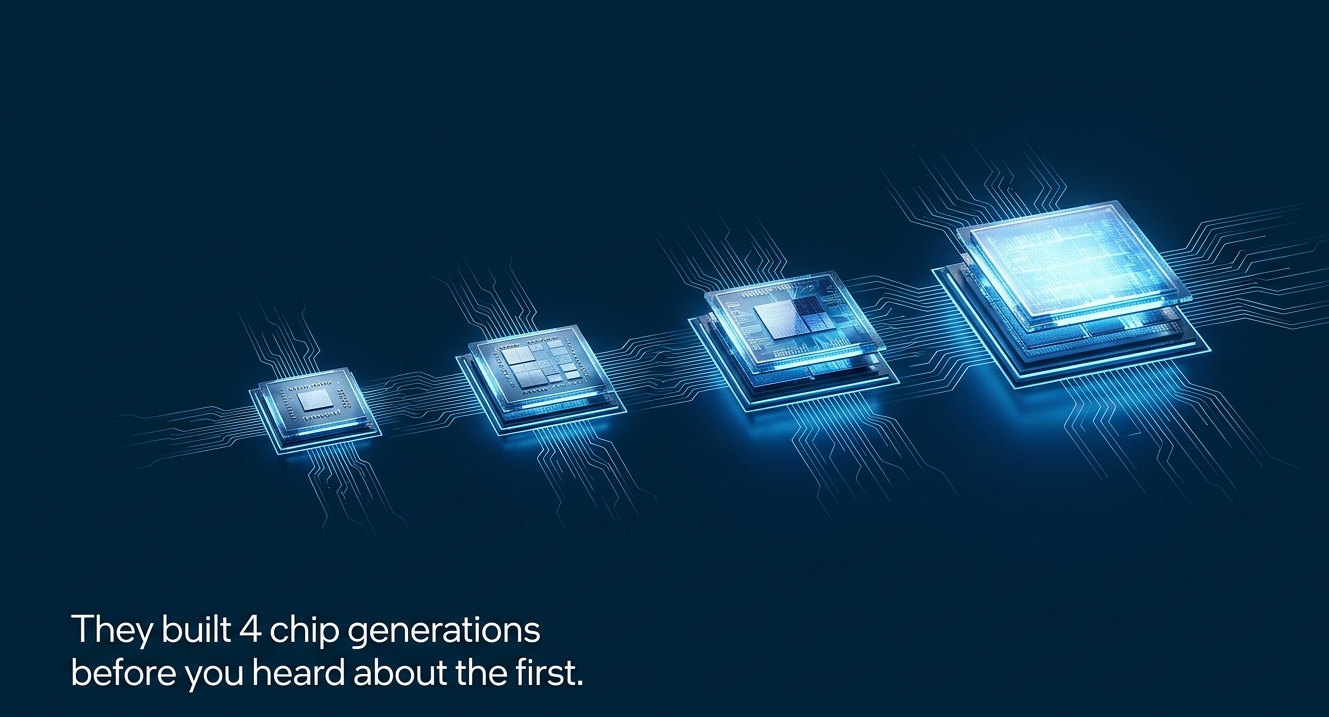
On March 11, 2026, Meta dropped what amounts to a two-year chip roadmap in a single blog post: four generations of its Meta Training and Inference Accelerator, announced together, spanning chips already in production to chips headed for mass production in early 2027. The MTIA 300 is live and running recommendation and ranking workloads right now. The MTIA 500 will deliver 30 petaFLOPS of MX4 compute and 27.6 TB/s of HBM bandwidth when it arrives.
That’s a 25x compute increase over the MTIA 300 across the product line. In under two years.
The announcement raises questions that go well beyond chip specs. Can Meta actually sustain a six-month silicon release cadence? Does this pressure Nvidia in any meaningful way? And what does it mean for the broader enterprise AI market when a consumer tech company starts publishing chip roadmaps that rival semiconductor incumbents? This analysis examines the full picture: what the chips do, who they threaten, where the risks sit, and what decision-makers should do with this information.
The MTIA Roadmap: What Meta Actually Announced
Meta’s MTIA program launched in 2023 with a first-generation inference chip. The March 11 announcement was a different order of magnitude. Meta’s official statement described “four new generations” on a cadence of “every six months or less.” That’s not a product launch. That’s a manufacturing and design philosophy.
Three things jump out. First, the MX4 precision format delivers roughly 6x the throughput of FP16 per clock cycle, which is why the compute numbers look so different between precision tiers. Second, HBM bandwidth grows 4.5x from the MTIA 300 to the 500, tracking the memory wall problem that dominates inference performance. Third, each chip slots into the same Open Compute Project rack standard, enabling data center swaps without infrastructure rebuilds.
The manufacturing stack behind this: TSMC on 3nm process nodes, Broadcom handling compute and I/O chiplet design, CoWoS advanced packaging. This isn’t a skunkworks experiment anymore. Meta is running serious silicon engineering at scale.
Why the Six-Month Cadence Changes the Calculus
The semiconductor industry typically runs on 12-to-24-month product cycles. Nvidia’s H100 to B200 arc took years of engineering. Meta is claiming a six-month generation-over-generation cadence. Whether that’s sustainable long-term is an open question, but the structural reasons it’s possible are worth understanding.
Custom silicon designed for a narrow workload class is far simpler to iterate than a general-purpose GPU. Meta’s chips are inference-first by design. They don’t need to support every CUDA workload, every graphics pipeline, every compute primitive that Nvidia’s customers demand. Narrower scope means faster design cycles, faster tape-out, faster validation.
“We’ve developed a competitive strategy for MTIA by prioritizing rapid, iterative development, an inference-first focus, and frictionless adoption by building natively on industry standards.”
— Meta Platforms, official March 2026 statement
The modularity helps here too. Swapping chiplets within the same rack-scale architecture means Meta doesn’t need to redesign the whole data center each generation. The 72-chip-per-rack MTIA 400 configuration reported by Yahoo Finance gives a sense of the density they’re targeting. New chips drop in. The surrounding infrastructure stays.
Meta is already operating at “hundreds of thousands” of MTIA chips for inference workloads, covering ad ranking, content recommendations, and organic feed algorithms. This isn’t a pilot program. The chips are carrying real production load across billions of daily users. That scale provides a feedback loop that no commercial silicon vendor can match for Meta’s specific workloads.
The Nvidia Rivalry: Competitive or Complementary?
Meta’s announcement landed as a direct competitive shot at Nvidia and AMD. Yahoo Finance coverage noted Meta’s claim that the MTIA 400 is “its inaugural chip that offers both cost efficiency and raw performance that competes with leading commercial products.” That’s a pointed benchmark assertion.
But the full picture is more nuanced. Meta is simultaneously a major Nvidia customer, and Mark Zuckerberg has made no secret of that relationship. The MTIA program isn’t a wholesale replacement strategy. It’s a diversification play targeting specific inference workloads where Meta has enough volume and predictability to engineer a purpose-built solution that beats general-purpose GPUs on cost per operation.
The efficiency claim is significant: analysis from AInvest puts MTIA’s gains at up to 7x for key matrix operations versus general-purpose silicon. For a company running inference at Meta’s scale, that efficiency gap translates directly to billions in infrastructure savings annually.
“The goal is clear: break the AI compute cost curve, aiming for up to 7x gains for key matrix operations.”
— AInvest, Meta MTIA cost analysis, March 2026
For Nvidia, the real concern isn’t Meta. It’s what Meta’s success signals to every other hyperscaler. Google has TPUs. Amazon has Trainium and Inferentia. Apple runs Neural Engines. Microsoft has invested in Maia. Meta’s roadmap is the clearest evidence yet that custom silicon for AI inference is viable at production scale, not just a research exercise. That’s a structural shift in the competitive landscape, even if no single company is abandoning Nvidia GPUs tomorrow.
Technical Architecture: What Makes MTIA Different
MTIA’s inference-first design philosophy produces some specific architectural decisions worth examining for technically-oriented readers.
The MX4 precision format is central to the compute story. MX4 (Microscaling 4-bit) enables roughly 6x the floating-point operations per second versus FP16 at the same clock and power budget. This matters enormously for inference, where you’re running a trained model forward repeatedly at scale, not doing the high-precision arithmetic that training requires. Most inference workloads tolerate the precision reduction. The throughput gains are substantial.
FlashAttention hardware acceleration is built directly into the silicon. For transformer-based models (which now power most of Meta’s AI applications, from content ranking to Llama variants), attention computation is a primary bottleneck. Hardwiring it into the chip rather than implementing it in software on a general-purpose GPU is a meaningful advantage for Meta’s specific workload mix.
The software stack deserves attention. TrendForce reporting confirms native support for PyTorch, vLLM, and Triton, the dominant frameworks in Meta’s (and most of the industry’s) ML toolchain. Teams don’t need to rewrite models or change workflows to run on MTIA. This is the “frictionless adoption” Meta refers to, and it’s not a small detail. The biggest failure mode for custom silicon programs has historically been software ecosystem fragility.
The Data Center Dynamics writeup on the announcement confirms that by 2027, MTIA is targeting full generative AI workloads, not just ranking and recommendation. That’s a significant expansion of scope. Whether the architecture can handle GenAI inference at the scale Meta needs it to remains one of the key unanswered questions.
Risks and Honest Uncertainties
The announcement deserves scrutiny alongside the excitement. Several risk factors are real and worth naming directly.