Cryptocurrency analysis beyond price charts: market structure, regulatory developments, institutional adoption, tokenomics, and the technology reshaping digital finance and assets.
Determining the most overrated players is subjective and can vary based on individual opinions. However, during the 2019-20 Premier League season, some players received mixed reviews or were considered by some as overrated. Keep in mind that opinions may have changed since then, and these assessments were made at that specific time. Here are a few players who faced varying opinions during the 2019-20 season:
Paul Pogba (Manchester United):
Pogba has been a polarizing figure with some questioning if his performances justified the hype and price tag.
Mesut Özil (Arsenal):
Özil has been a talented player, but there were debates about his consistency and work rate during the 2019-20 season.
Dele Alli (Tottenham Hotspur):
Alli’s performances were inconsistent during the 2019-20 season, leading to discussions about his form and impact on the pitch.
Jesse Lingard (Manchester United):
Lingard faced criticism for his lack of goals and assists during the 2019-20 season, which led to discussions about his role in the team.
Nicolas Pépé (Arsenal):
Pépé, despite being a big-money signing, had moments of inconsistency during his debut season in the Premier League, leading to questions about his overall impact.
It’s important to note that opinions on players can change rapidly based on their performances, and these assessments may not reflect the current sentiments towards these players.
Artificial Intelligence (AI) is revolutionizing various industries, and cybersecurity is no exception. In 2025, we can expect AI to play an even larger role in safeguarding our digital lives. Here’s how:
AI-Powered Threat Detection
AI can analyze vast amounts of data in real-time, identifying potential threats faster and more accurately than traditional methods. By learning from previous attacks, AI can predict and neutralize new, unknown threats before they even occur.
Automated Incident Response
Instead of waiting for a human to step in, AI can autonomously take action during a security breach, isolating affected systems, blocking malicious traffic, and minimizing damage. This reduces response times and improves overall security efficiency.
Predictive Analytics
AI can analyze patterns in data to predict potential vulnerabilities or security breaches before they happen. By using historical data and machine learning algorithms, AI can provide proactive recommendations to organizations on how to bolster their security infrastructure.
Improved Authentication Systems
AI is advancing biometric authentication methods, such as facial recognition, fingerprint scanning, and voice identification. In the future, expect highly secure, multi-factor authentication systems powered by AI to become standard practice.
Advanced Phishing Detection
AI-powered systems are becoming better at identifying phishing emails and fake websites, helping users avoid scams. AI can examine the structure, content, and sender details to detect malicious intent that would be difficult for humans to catch.
As AI continues to evolve, its role in cybersecurity will only become more crucial. Stay safe and stay informed about the latest tech advancements!
“Mega city” generally refers to a large metropolitan area characterized by significant population density, economic activity, and urbanization. Here’s a comprehensive overview covering various aspects of mega cities:
(more…)
Designing and constructing roads with safety and protection in mind is a crucial aspect of urban planning. Roads are essential elements of any metropolitan area, and incorporating safety features can significantly enhance the well-being of both pedestrians and motorists. Here are several considerations for building roads with protection in mind:
Pedestrian Infrastructure:
Sidewalks:
Ensure well-maintained and spacious sidewalks separated from the road to provide a safe walking environment.
Crosswalks:
Implement marked crosswalks at intersections to guide pedestrians safely across the road. Pedestrian Overpasses/Underpasses: Consider constructing overpasses or underpasses in areas with high pedestrian traffic to minimize the risk of accidents.
Cyclist-Friendly Design:
Bike Lanes: Incorporate dedicated bike lanes separated from vehicular traffic to promote cycling safety. Bike Racks: Install bike racks at strategic locations to encourage cycling and provide secure places for parking.
Traffic Calming Measures:
Speed Bumps: Use speed bumps in residential areas and near schools to reduce vehicle speeds. Roundabouts: Implement roundabouts instead of traditional intersections to slow down traffic and improve safety.
Accessible Infrastructure:
ADA Compliance:
Ensure that road infrastructure is compliant with the Americans with Disabilities Act (ADA) to accommodate individuals with disabilities. Accessible Crossings: Install ramps and accessible crossings to facilitate the movement of people with mobility challenges.
Road Lighting:
Streetlights:
Adequate street lighting enhances visibility, reducing the risk of accidents and improving overall safety. Pedestrian Crosswalk Lighting: Install additional lighting at crosswalks to increase visibility for both pedestrians and drivers. Green Spaces and Landscaping:
Roadside Greenery:
Incorporate green spaces and landscaping along roads, providing aesthetic value while also promoting a sense of safety.
Tree Planting:
Plant trees strategically to provide shade and improve air quality. Advanced Traffic Management Systems:
Traffic Signals:
Implement modern traffic signal systems to optimize traffic flow and enhance safety.
Smart Crosswalks:
Use technologies such as smart crosswalks that provide signals or warnings to both pedestrians and drivers.
Emergency Services Access:
Emergency Lanes:
Designate lanes or routes for emergency vehicles to ensure quick and unobstructed access during emergencies.
Public Awareness and Education:
Signage:
Install clear and visible signage to communicate speed limits, pedestrian crossings, and other important information.
Educational Campaigns:
Conduct public awareness campaigns to educate residents about road safety and proper usage of infrastructure. By incorporating these elements into road design, metropolitan areas can create safer and more sustainable environments for their residents. Collaborative efforts between urban planners, engineers, and the community are essential to ensuring that road infrastructure prioritizes protection and safety.
Google Post-Quantum Cryptography 2029 Deadline Explained
Enterprise Security · Post-Quantum Cryptography
Google Just Moved Its Quantum Deadline to 2029
By NeuralWired Staff | Published June 21, 2026 | Last updated June 21, 2026
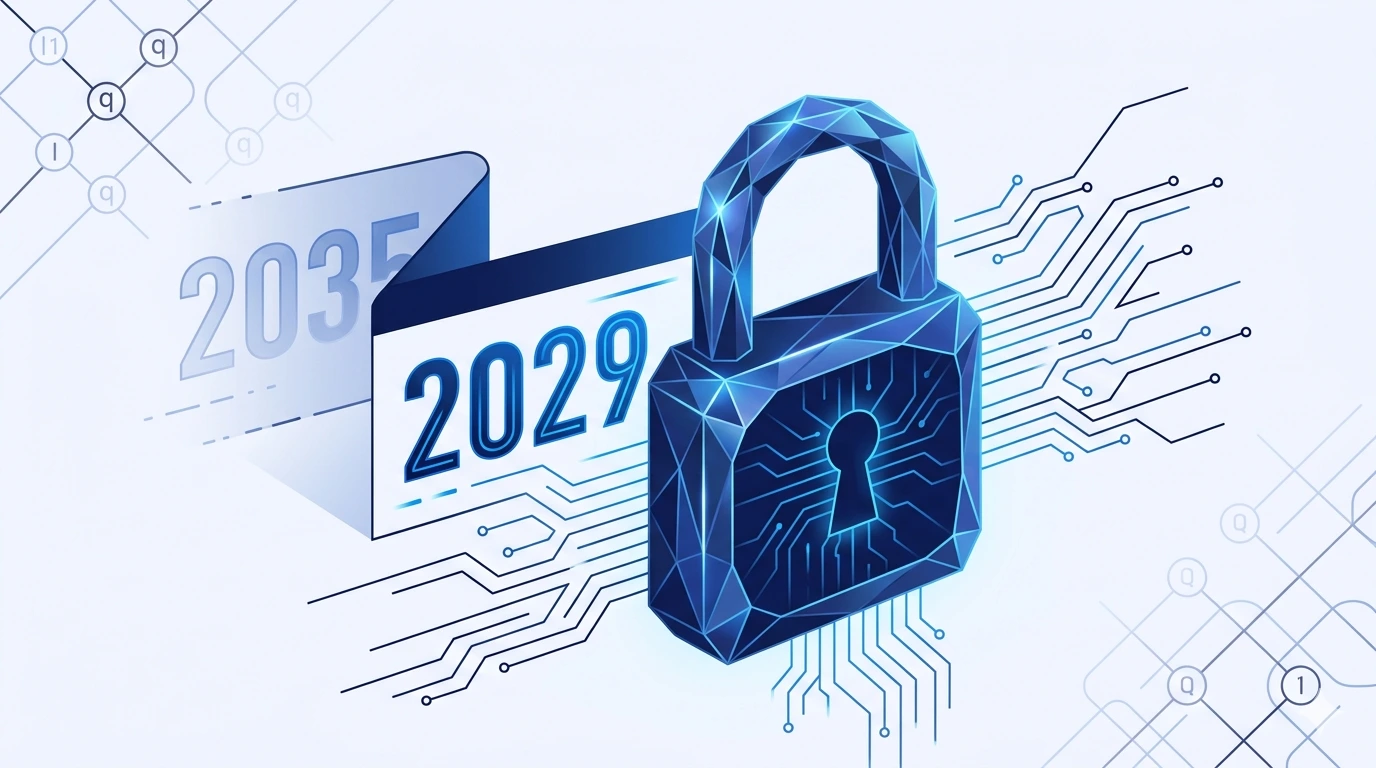
Your cryptography migration roadmap probably says 2035. Google’s doesn’t anymore. On March 25, 2026, Google set a new post-quantum cryptography 2029 deadline for its own systems, six years ahead of the federal backstop most enterprise security teams have been planning around for the past two years.
That’s not a marketing decision. It’s a response to math. Six days later, Google Research published the resource estimates behind it, and they’re the kind of numbers that make a CISO reread an email twice (and then forward it straight to the budget committee).
If you’re responsible for cryptographic risk at your organization, here’s exactly what happened, what the new research means and doesn’t mean, and what NIST’s separate, still-unfinished post-quantum cryptography deadline requires of you in the meantime.
“We’re setting a timeline for post-quantum cryptography migration to 2029.”
Heather Adkins & Sophie Schmieg, Google Security Engineering
That’s a specific, internal, engineering-driven deadline, not a regulatory mandate. Google ties it directly to faster than expected progress in quantum hardware, error correction, and updated estimates of what it actually takes to break current encryption standards.
The first concrete product step: Android 17 is integrating ML-DSA-based digital signature protection, on top of post-quantum support already shipping in Chrome and Google Cloud. Google is treating signature and authentication migration as the more time-sensitive half of the problem, ahead of encryption. The logic is straightforward once you sit with it: forging a signature only requires the attacker to break the math at the moment of the attack, so there’s no advance window. Encrypted data, by contrast, can be captured and stored today, then decrypted years later once the hardware catches up, which is the harvest-now, decrypt-later risk we’ll come back to in a moment. Both problems are urgent. They’re just urgent on different clocks.
The Math That Convinced Google to Move Early
Six days after the deadline announcement, on March 31, 2026, Google Research published the paper that explains why. Ryan Babbush, Director of Research for Quantum Algorithms, and Hartmut Neven, VP of Engineering at Google Quantum AI, laid out two optimized quantum circuits for solving the elliptic curve discrete logarithm problem at the 256-bit security level, the math underneath ECDSA, the signature scheme securing most TLS connections, SSH sessions, code signing, and the majority of cryptocurrency wallets, including Bitcoin and Ethereum.
The numbers: one circuit uses fewer than 1,200 logical qubits and roughly 90 million Toffoli gates. The second uses fewer than 1,450 logical qubits and about 70 million Toffoli gates. Run on a superconducting quantum computer, Google estimates either circuit could complete the attack with fewer than 500,000 physical qubits in a matter of minutes, an approximately 20-fold reduction from prior estimates of what the attack would require.
It’s not an isolated revision either. Craig Gidney, also at Google Quantum AI, updated his RSA-2048 factoring estimate in 2025 to under 1 million physical qubits and less than a week of runtime, down from his own 2019 estimate of 20 million qubits and roughly eight hours. Same researcher, same category of algorithm, same order-of-magnitude drop. Two separate 20-fold reductions in attack-resource estimates, from the same research group, inside a single decade, is arguably more significant than either individual number. That’s the trend that moved Google’s internal calendar, not one paper.
One more detail worth knowing: Google didn’t publish the actual attack circuits. It used a zero-knowledge proof, developed in coordination with the U.S. government, that lets outside researchers verify the resource estimate without releasing a usable attack blueprint, an approach modeled on standard coordinated vulnerability disclosure practice.
NIST’s Slower, Still-Unfinished Deadline
Google’s 2029 timeline is the freshest news, but the post-quantum cryptography schedule most compliance teams actually have to plan against still comes from NIST. NIST finalized its first three post-quantum standards back in August 2024: FIPS 203 (ML-KEM, for key encapsulation), FIPS 204 (ML-DSA, for digital signatures), and FIPS 205 (SLH-DSA, a hash-based signature scheme). A fourth standard, FIPS 206, based on the Falcon algorithm, is still in draft and isn’t expected to finalize until late 2026 or early 2027. A fifth, HQC, selected as a backup key-encapsulation method in March 2025, won’t see a final standard until 2027 at the earliest.
The 2030 and 2035 dates you’ve probably seen cited everywhere actually come from a separate document, NIST Internal Report 8547, which proposes deprecating 112-bit-security algorithms like RSA-2048 and ECC P-256 by 2030, and disallowing all quantum-vulnerable public-key algorithms by 2035. Here’s the part that doesn’t get repeated often enough: IR 8547 is still an initial public draft. It was released in November 2024, public comment closed in January 2025, and it has not been finalized as of this writing. Treat the 2030 and 2035 dates as the most likely outcome of an open process, not as settled law, especially if your organization sits outside direct U.S. federal scope.
National security systems run on a separate, tighter clock. The NSA’s CNSA 2.0 guidance sets preference dates as early as 2025 for some categories, required adoption between 2030 and 2033, and full quantum resistance by 2035, with ML-KEM-1024 and ML-DSA-87 specified as the mandated parameter sets. If you’re a defense contractor or anywhere in that supply chain, this is the schedule that actually governs you, not IR 8547.
Where Other Governments Stand
Canada, the EU, and the UK are each running parallel post-quantum cryptography tracks, on slightly different clocks. If your organization operates across any of these jurisdictions, the deadline that matters is whichever one applies to your weakest-governed system, not the most generous one.
Authority
Key Deadline(s)
Status
NIST (U.S. civilian federal)
Deprecate by 2030, disallow by 2035
Draft (IR 8547), not finalized
NSA CNSA 2.0 (U.S. national security systems)
Required adoption 2030 to 2033, full by 2035
Active guidance
Google (internal corporate policy)
2029
Announced March 2026
Canada (federal departments)
Migration plans due April 2026
Active mandate
European Union (NIS Cooperation Group)
Critical infrastructure by end of 2030, medium-risk systems by end of 2035
Endorsed by 18 member states, June 2025
United Kingdom (NCSC)
Map dependencies by 2028, complete migration by 2035
Phased guidance, March 2025
Not Everyone Is Convinced This Is Urgent
Worth saying plainly: no quantum computer capable of breaking today’s public-key encryption exists yet. CISA’s own Post-Quantum Cryptography Initiative says so directly, while still flagging harvest-now-decrypt-later as a present-tense risk for long-lived data. Both statements are true at the same time, which is exactly why the expert debate over urgency hasn’t settled.
Scott Aaronson, the Schlumberger Centennial Chair of Computer Science at the University of Texas at Austin and one of quantum computing’s most consistent public skeptics, wrote in comments reported in early May 2026 that people whose hardware judgment he trusts more than his own now think a fault-tolerant, attack-scale quantum computer “ought to be possible by around 2029.” That’s a notable shift for Aaronson. It’s also worth knowing his own caveat: an earlier prediction of his would technically count as fulfilled even by a trivial demonstration, like factoring 15 into 3 times 5, a calculation a human can do faster by hand than any quantum computer currently running. Most headline coverage drops that part.
Matthew Green, a cryptography professor at Johns Hopkins University, takes a more grounded stance. In comments reported by CyberScoop in April 2026, Green called the recent research a useful precautionary exercise, but questioned whether quantum computing has enough near-term, lucrative applications to accelerate past foundational research into deployed attacks on the timeline implied by recent coverage. He raises a sharper point too: several of NIST’s own earlier post-quantum candidates turned out to have classical, non-quantum vulnerabilities. SIKE, one of the standardization process’s later-round finalists, was broken in 2022 using ordinary computers. Calling something “post-quantum” doesn’t automatically make it secure against everything else.
Adam Back, CEO of Blockstream and one of the cypherpunk movement’s earliest figures, pushed back specifically on cryptocurrency alarm following Google’s paper, telling Bloomberg the practical threat to Bitcoin remains decades off.
“The biggest calculation it’s performed is factoring 21 into 7 times 3.”
Adam Back, CEO, Blockstream
Back still thinks Bitcoin and other chains relying on the same elliptic curve signatures, the kind of dependency that also shows up in cross-chain bridge designs, should start migrating to quantum-resistant signatures now. He just doesn’t think anyone should be panicking about it this month.
The research group a16z crypto goes further, arguing the field isn’t close to a cryptographically relevant quantum computer by any reasonable reading of public progress data. Even reporting on Google’s own resource-estimate reduction tends to include the same caveat: shrinking the qubit count on paper doesn’t solve the unsolved systems-engineering problem of running hundreds of thousands of physical qubits with real-time error correction at scale. Reducing one bottleneck just exposes the next one.
What This Actually Means for Your Organization
Strip out the deadline debate and the actual post-quantum cryptography adoption gap is the unglamorous part. A Propeller Insights survey of 1,042 senior cybersecurity managers, commissioned by DigiCert and published in 2025, found that 69% of respondents recognize the quantum risk to current encryption, but only 5% have actually implemented quantum-safe encryption anywhere in their environment. Nearly half, 46.4%, believe a substantial share of their own encrypted data could eventually be compromised.
A separate Ponemon Institute study of 1,426 IT and security practitioners across the U.S., EMEA, and Asia-Pacific found 61% don’t expect to be ready, only 30% have allocated budget, and just 52% have even started a cryptographic inventory, the mandatory first step in any migration. A more recent Omdia survey of over 400 senior IT leaders, published in early June 2026, puts the share who’ve fully assessed their systems for cryptographic risk at just 22%.
None of that requires believing a quantum computer will exist next year. It requires believing harvest-now-decrypt-later is real today. Adversaries can capture encrypted traffic now and simply wait. Anything with a confidentiality requirement stretching into the mid-2030s, financial records, legal archives, government communications, long-lived intellectual property, is exposed under today’s encryption the moment it’s intercepted, regardless of when the decryption key eventually becomes breakable.
The takeaway isn’t “panic.” It’s “inventory now.” You can’t migrate what you haven’t found. NIST’s own migration methodology treats the inventory phase alone as a six-to-twelve-month project for a complex enterprise, before remediation even starts, which is exactly why most organizations need to begin before they feel ready.
This is the same regulator setting the clock on zero trust security architecture, so if your team is already mapping NIST-aligned controls for that initiative, cryptographic inventory belongs on the same project plan rather than a separate one.
A Practical Migration Checklist
Here’s the post-quantum cryptography migration sequence security teams are actually using, in order:
Run a cryptographic inventory. Find every system, certificate, library, and hardcoded dependency using RSA, ECDSA, ECDH, DSA, or Diffie-Hellman. Most teams underestimate how many places this math is buried.
Prioritize by data lifespan, not system criticality. A low-priority system with 20-year data retention requirements is a higher quantum risk than a high-priority system that only handles short-lived sessions.
Deploy hybrid cryptography first. Pairing a classical algorithm with a post-quantum one means you stay protected even if one half is later broken, which matters given Matthew Green’s point about unproven new candidates.
Treat signatures as time-sensitive on their own clock. Migrate authentication and signing separately from encryption, since forged signatures become possible the moment a capable quantum computer exists, with no advance-harvest grace period.
Wait on unfinished standards. Hold off building production dependencies on FIPS 206 (Falcon) or HQC until they’re finalized, expected sometime between 2026 and 2027.
Budget against the four-year window. Use Gartner’s “unsafe by 2029, fully breakable by 2034” framing as a planning heuristic for budget approval, not a precise countdown.
The Real Timeline vs. the Headlines
So which date should actually go on your roadmap? Probably more than one. Google’s 2029 is the most concrete forcing function available right now, especially since it comes from the organization that’s done the most original research on how hard this attack actually is. NIST’s 2030 and 2035 dates remain the closest thing to a regulatory backbone, even in draft form, and they’re the dates auditors, cyber insurers, and procurement teams will most likely reference once IR 8547 finalizes. The skeptics aren’t wrong that no cryptographically relevant quantum computer exists today. They’re just answering a different question than “when should my migration start.”
Our read: the binding constraint here isn’t compute, it’s organizational inertia. Most enterprises won’t miss the 2029 or 2030 deadlines because the cryptography isn’t ready. They’ll miss it because the inventory phase alone quietly eats two of the four years they thought they had.
The Y2K comparison shows up constantly in coverage of this story, and it’s useful shorthand with one real flaw: Y2K had a single, fixed, universally agreed date. Q-Day doesn’t. The Global Risk Institute’s seventh annual Quantum Threat Timeline Report, built from structured input from 26 named quantum-computing experts, puts a full-scale cryptographically relevant quantum computer at “quite possible” within 10 years and “likely” within 15. That’s a probability distribution, not a deadline. Plan accordingly.
Frequently Asked Questions
When will quantum computers be able to break encryption?
No cryptographically relevant quantum computer exists yet. The Global Risk Institute’s expert survey puts a full-scale version at “quite possible” within 10 years and “likely” within 15. Google’s own internal deadline targets 2029, six years ahead of NIST’s 2035 federal backstop.
What is NIST’s deadline for RSA-2048?
NIST’s draft document IR 8547 proposes deprecating RSA-2048 and ECC P-256 by 2030 and disallowing all quantum-vulnerable public-key algorithms by 2035. The document remains an unfinalized draft as of mid-2026, so treat the dates as a likely outcome, not finished law.
Why did Google move its quantum deadline to 2029?
Google cited faster than expected progress in quantum hardware and error correction, plus new research showing elliptic curve cryptography could be broken with roughly 20 times fewer qubits than previously estimated, published alongside its March 2026 deadline announcement.
What is harvest now, decrypt later?
It is an attack pattern where adversaries capture encrypted data today and store it, planning to decrypt it once a powerful enough quantum computer exists. It makes long-lived encrypted data vulnerable right now, even though no quantum computer can currently break it.
Is Bitcoin vulnerable to quantum computers?
Bitcoin’s signature scheme relies on the same elliptic curve math Google’s research targeted, so it is theoretically exposed long term. Most cryptographers, including Bitcoin advocate Adam Back, consider the practical threat years to decades away, but support migrating gradually now.
What to Watch Next
Here’s what you didn’t know a few minutes ago: the urgency in this post-quantum cryptography story isn’t coming from a finished government deadline. It’s coming from a trend line, two separate 20-fold reductions in attack-resource estimates from the same Google research group inside a decade, that’s compressing every other timeline built around it.
Over the next 6 to 18 months, watch three things. First, whether NIST finally finalizes IR 8547 or pushes the date again, the way an earlier proposed target was already revised once before. Second, whether other major infrastructure operators follow Cloudflare’s reported move to align with Google’s 2029 date, which would turn one company’s internal policy into something closer to an industry standard. Third, whether FIPS 206 and HQC actually land in their projected 2026 to 2027 window, since both are needed before several hybrid deployment strategies can fully mature.
None of this requires belief in an imminent Q-Day. It requires an honest inventory, a realistic budget conversation, and a migration plan that survives whichever date turns out to be the right one.
Building and maintaining a positive, fulfilling relationship takes effort, communication, and mutual respect. Here are some general tips for fostering a kind and loving relationship in the context of the USA or any cultural setting:
Communication is Key:
Open and honest communication is crucial. Share your thoughts, feelings, and concerns with your partner, and encourage them to do the same. Active listening is equally important to understand each other better.
Quality Time Together:
Spend quality time with your partner. Whether it’s going for a walk, enjoying a meal together, or engaging in shared hobbies, creating moments of connection strengthens your bond.
Express Gratitude:
Regularly express gratitude for the little things your partner does. Appreciation and acknowledgment can go a long way in making your partner feel valued and loved.
Kindness and Respect:
Treat your partner with kindness and respect. Simple acts of kindness, such as saying “please” and “thank you,” contribute to a positive and respectful atmosphere.
Shared Goals and Values:
Discuss and establish common goals and values. Knowing that you are working towards a shared future can strengthen your connection and sense of unity.
Celebrate Milestones:
Celebrate important milestones and achievements together. Whether it’s an anniversary, personal accomplishment, or a shared success, take the time to acknowledge and celebrate each other.
Support Each Other:
Be supportive during both good and challenging times. Knowing that you have each other’s back creates a sense of security and trust in the relationship.
Maintain Independence:
While spending time together is essential, it’s also important to maintain individual identities and interests. Encourage each other to pursue personal goals and hobbies.
Resolve Conflicts Constructively:
Disagreements are a natural part of any relationship. When conflicts arise, address them calmly and constructively. Seek solutions together and avoid blame or resentment.
Cultural Sensitivity:
Be aware of cultural differences and sensitivities, especially in a diverse country like the USA. Understanding and respecting each other’s cultural backgrounds can enhance your connection.
Professional Support:
If needed, consider seeking professional support through couples counseling. A neutral third party can provide guidance and facilitate communication.
Adventure and Fun:
Keep the relationship dynamic by introducing new experiences and having fun together. This can range from trying new activities to traveling to different places. Remember that every relationship is unique, and these tips can be adapted to fit the specific dynamics of you and your partner. The key is to invest time and effort into nurturing a strong and positive connection.
Paris is a city renowned for its rich cultural heritage, artistic ambiance, and historical significance. Numerous events held in Paris showcase beautiful and amazing things across various domains. Here are some examples:
Fashion Week:
Paris is a global fashion capital, and Fashion Week in Paris is a highly anticipated event. Renowned designers and fashion houses unveil their latest collections, showcasing cutting-edge designs and trends.
Art Exhibitions at the Louvre:
The Louvre Museum, one of the world’s largest and most visited museums, hosts art exhibitions that feature masterpieces from different periods and cultures. The sheer beauty and historical significance of the artworks make these events captivating.
Paris Air Show:
This prestigious aerospace event takes place at Le Bourget Airport. It’s a platform for showcasing the latest advancements in aviation and aerospace technology, featuring breathtaking air displays and demonstrations.
Paris Jazz Festival:
Held in the Parc Floral de Paris, this annual festival celebrates the beauty of jazz music. Musicians from around the world gather to perform, creating an enchanting atmosphere for music lovers.
Paris Opera Ballet Performances:
The Opéra Garnier and Opéra Bastille host ballet performances by the Paris Opera Ballet, known for its world-class dancers and captivating productions. The choreography, costumes, and music contribute to the beauty of these performances.
Paris Fashion and Design Festival:
This event celebrates the intersection of fashion and design. It includes exhibitions, workshops, and installations, showcasing the creativity and innovation of designers.
Christmas Lights and Markets:
During the holiday season, Paris transforms into a magical winter wonderland. The city’s iconic landmarks are adorned with festive lights, and Christmas markets offer beautiful crafts and seasonal treats.
Paris Marathon:
The Paris Marathon is not only a sporting event but also an occasion where thousands of participants run through the city’s iconic streets, providing a unique and visually stunning experience.
These events contribute to the vibrant tapestry of Paris, highlighting the city’s commitment to art, culture, innovation, and celebration. The beauty and amazement found in these events reflect the city’s enduring appeal as a global cultural hub.