Cryptocurrency analysis beyond price charts: market structure, regulatory developments, institutional adoption, tokenomics, and the technology reshaping digital finance and assets.
JPMorgan Kinexys and the Quiet Rise of Enterprise Web3 in 2026
Enterprise Blockchain / 2026 Analysis
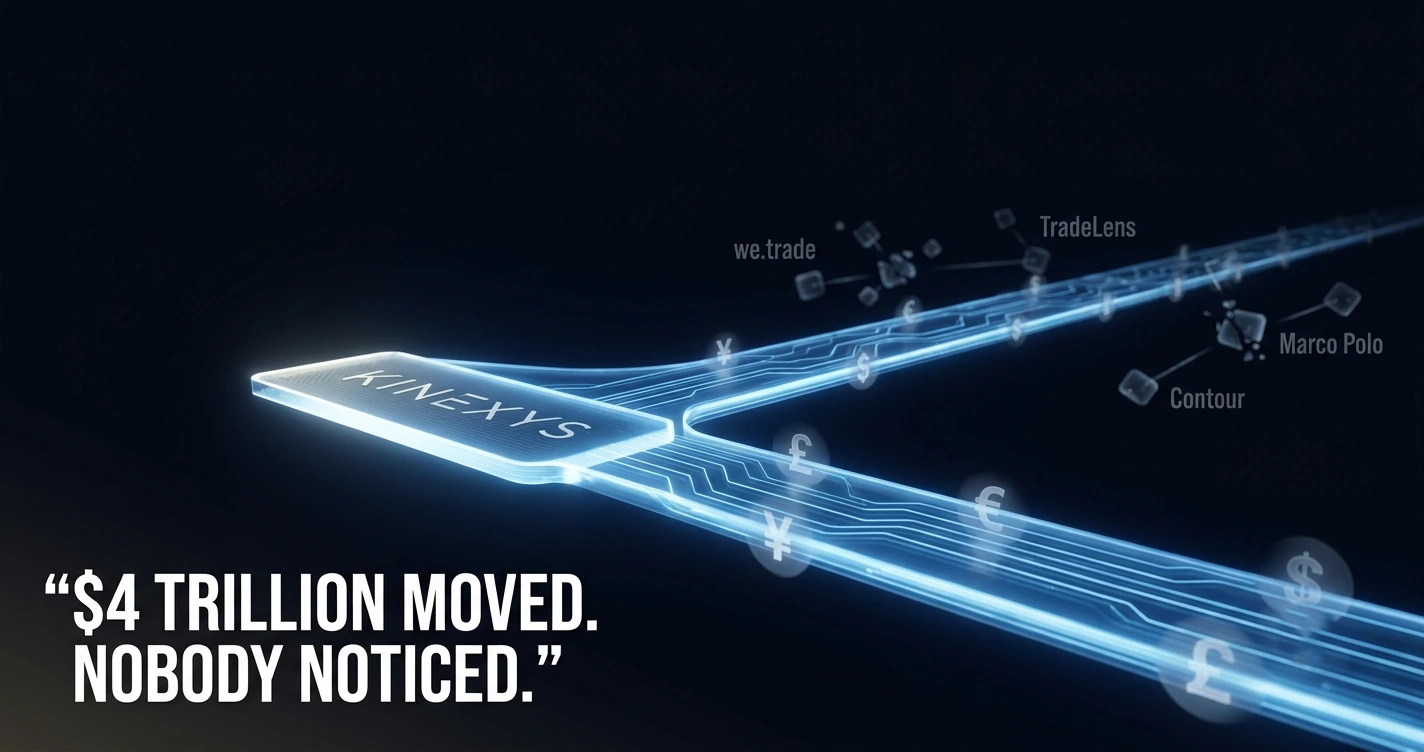
JPMorgan Moved $4 Trillion on Blockchain. Nobody Noticed.
By the NeuralWired Staff · July 12, 2026 · 9 min read
While crypto Twitter argued about NFT floor prices, JPMorgan quietly processed more than $4 trillion in payments through a blockchain network most of its own clients don’t think of as “blockchain” at all. That’s the story nobody in enterprise Web3 adoption is telling correctly in 2026, and it’s the one that actually matters if you run technology, treasury, or compliance at a large company.
Enterprise blockchain adoption in 2026 isn’t a comeback story. It’s a sorting story. A handful of single-institution platforms, Kinexys at JPMorgan and BUIDL at BlackRock among them, are processing real institutional money at real scale. Meanwhile, nearly every bank-consortium blockchain project built between 2018 and 2022 is either dead or has quietly ripped the blockchain out of its own architecture. Both things are true at once, and the difference between them tells you exactly where to place your next infrastructure bet.
Onyx became Kinexys in a rebrand back in November 2024, and the name change buried what should have been the bigger headline: JPMorgan’s blockchain payments network was already processing serious institutional volume, and it hasn’t slowed down since.
As of late June 2026, Kinexys added five Asia-Pacific currencies (Australian dollar, Hong Kong dollar, Japanese yen, Chinese renminbi, and Singapore dollar) to its Blockchain Deposit Account network, bringing the total to eight currencies alongside the dollar, euro, and pound. That’s not a pilot program expanding slowly. That’s a bank building out global rails.
The numbers back it up. JPMorgan says Kinexys has processed more than $4 trillion cumulatively since launch, with average daily volume now exceeding $7 billion. And the bank isn’t done. Zack Chestnut, Kinexys’s Global Head of Commercial, has pointed to a strong pipeline of institutional clients as the bank works toward doubling daily throughput past $10 billion.
Who’s actually using it: Kinexys clients include industrial giants like Siemens and BMW. Mitsubishi Corporation became the first Japanese corporate to adopt Kinexys Digital Payments for intragroup treasury management, announced March 31, 2026. This is Fortune 500 treasury infrastructure, not crypto-native experimentation.
Here’s the catch nobody advertises: Kinexys isn’t decentralized in any sense the original Web3 pitch promised. It’s JPMorgan’s permissioned ledger. Clients don’t hold their own keys. There’s no exit right, no token governance, no trust-minimization between competing parties. It’s a bank-owned database that happens to run on blockchain rails, and that distinction turns out to be the whole story.
BlackRock’s BUIDL and the tokenized treasury boom
If Kinexys proves banks can run blockchain infrastructure at scale, BlackRock’s USD Institutional Digital Liquidity Fund (ticker BUIDL) proves asset managers can too. Launched in March 2024, BUIDL became the fastest tokenized fund to reach $1 billion in assets, hitting that mark within seven months.
By Q2 2026, tracker estimates put BUIDL’s assets under management somewhere between $2.3 billion and $2.5 billion, depending on whether you’re pulling from rwa.xyz, Token Terminal, or secondary crypto-media snapshots. The range matters more than any single number here. This category moves fast enough that any figure is stale within weeks.
BUIDL now runs across eight or nine blockchain networks depending on the source, including Ethereum, Solana, Polygon, and Avalanche. It’s not alone. Franklin Templeton, Ondo’s OUSG, Circle’s Hashnote USYC, Apollo, Hamilton Lane, and even JPMorgan’s own MONY and JLTXX money market products are all live tokenized treasury vehicles competing for the same institutional cash.
Category
Estimated size (mid-2026)
Source basis
BlackRock BUIDL AUM
~$2.3B to $2.5B
rwa.xyz / Token Terminal
Tokenized Treasury/MMF segment
~$10B to $15B
rwa.xyz-derived trackers
Total on-chain RWA market
~$22B to $32B
rwa.xyz-derived, multiple outlets
Every one of those ranges gets rounded up in vendor blog posts into breathless “$16 trillion by 2030” projections, often attributed loosely to consulting firms. Treat those as long-range forecasts, not current facts. The real number today is closer to the tens of billions, concentrated almost entirely among the largest asset managers on earth.
The trade-finance graveyard: why consortiums keep dying
Here’s where the “quiet enterprise win” narrative needs a hard correction, because the industry’s most ambitious multi-bank blockchain experiment didn’t quietly win. It quietly collapsed, four separate times, in less than two years.
We.trade, an 11-bank European consortium backed by IBM, HSBC, Deutsche Bank, Santander, and UBS, shut down in June 2022 citing insufficient network growth.
TradeLens, the Maersk and IBM shipping platform launched in 2018, was discontinued in November 2022 after failing to reach commercial viability.
Marco Polo Network, built on R3 Corda with more than 30 banks including Commerzbank, BNY Mellon, and SMBC, entered insolvency in Ireland in February 2023 with total debts of €5.2 million, after a roughly $12 million Bank of America investment fell through.
Contour, a letter-of-credit digitization platform backed by nine banks including HSBC, BNP Paribas, and Standard Chartered, shut down in November 2023, reportedly processing only 60 to 70 transactions a month before closure.
Only one of the five major consortium platforms, Komgo, is still standing, and it survived by dropping blockchain entirely in favor of a centralized database. Four dead, one that abandoned the technology it was built on. That’s not a rounding error. That’s a structural failure of the entire model.
“They couldn’t scale.”
Joshua Kroeker, former head of product development for trade finance at HSBC, speaking to Digital Finance Group about Contour
Kroeker’s read on why is worth sitting with: these networks were built solving a narrow problem that only worked if every competitor joined the same platform, and competitors almost never do that voluntarily. He’s not blaming the technology. He’s blaming the governance model that required rivals to trust each other with shared infrastructure.
The pattern, in one line: Every dead platform above required multiple competing banks to share governance. Every surviving platform (Kinexys, BUIDL) is owned and operated by a single institution that clients simply plug into.
IBM Food Trust’s second life, courtesy of the FDA
The Walmart mango story gets quoted constantly and almost never correctly. Yes, IBM and Walmart famously cut mango traceability from seven days down to 2.2 seconds using Hyperledger Fabric, back around 2018. What gets left out is that Walmart reportedly paused its blockchain food-tracking mandate around December 2022, part of the same wave of retrenchment that killed TradeLens.
So is IBM Food Trust dead? No, and the reason it survived is instructive. It’s still a commercially sold product in 2026, now rebranded under the IBM Supply Chain Intelligence Suite and marketed specifically around compliance with the FDA’s Food Safety Modernization Act Rule 204(d), which required covered food entities to have enhanced traceability recordkeeping in place by January 20, 2026.
That’s the tell. Food Trust didn’t survive because companies fell back in love with blockchain idealism. It survived because a federal deadline forced compliance teams to buy traceability tooling, and distributed-ledger backends happened to be underneath it. Regulation, not conviction, kept the lights on.
The real pattern: ownership beats decentralization
Step back and the pattern across every example here is identical. Single-owner infrastructure survives. Multi-party consortium infrastructure dies. That’s almost the exact opposite of what Web3’s original pitch promised enterprises back in 2018.
“Blockchain just really hasn’t hit the heights that were promised.”
Adrian Leow, VP Analyst, Gartner, to CIO.com, March 2025
Leow’s comment came alongside a broader signal worth flagging: Gartner published its most recent dedicated Blockchain and Web3 Hype Cycle in 2024, and as of 2025 the firm has indicated it may not publish another standalone one, because analyst-level interest has faded. That’s notable timing, because it means Gartner effectively stopped watching right as Kinexys and BUIDL’s real production numbers started climbing.
Other voices from the same CIO.com reporting reinforce the skepticism. Trevor Fry, an IT consultant and fractional CTO, argued that blockchain “doesn’t solve a problem that many companies or people have” in most business contexts. Salome Mikadze, co-founder of Movadex, put it more bluntly: outside a few supply-chain and data-sharing niches, blockchain “is on the shelf for now” for most enterprises.
Both critiques are fair, and both miss the narrower point. Nobody serious is claiming blockchain solved a universal enterprise problem. What survived is a specific pattern: single-institution settlement and tokenization infrastructure that a client can simply plug into, with no governance negotiation required. That’s a much smaller claim than the original Web3 pitch, and it happens to be the one backed by trillions of dollars in real volume.
What this means if you’re building the roadmap:
CFOs and treasury leads: Ask your existing banking partners whether they offer blockchain-deposit-account or programmable-payment products before funding anything custom.
CTOs: Don’t fund a multi-party consortium expecting network effects. Every one of them has failed or abandoned blockchain. Single-vendor infrastructure is the model that works.
Compliance leads in regulated supply chains: The FSMA 204(d) deadline already passed in January 2026. If your traceability tooling isn’t sorted, that’s a live compliance gap, not a future one.
One more honesty check worth building into your planning: even the winners here are concentrated at the very top of the market. There’s limited public evidence yet of mid-market or non-financial enterprises replicating what JPMorgan and BlackRock have done independently. Most of the momentum right now is JPMorgan-scale and BlackRock-scale, not broadly distributed across the Global 2000. A frequently cited figure, attributed secondhand to Gartner via industry blogs rather than Gartner’s own published research, claims 25% of Global 2000 companies will run blockchain in production by the end of 2026, up from 11% in 2024. Treat that one as directionally interesting but not independently verified.
FAQ: enterprise Web3 in 2026
Is Web3 dead in the enterprise?
Not the infrastructure side. Consumer-facing Web3 (NFTs, DAOs, token speculation) has largely stalled, but narrow use cases like bank-led settlement (JPMorgan’s Kinexys, over $4 trillion processed) and tokenized treasury products (BlackRock’s BUIDL) are in active, growing production use as of 2026.
What happened to IBM Food Trust and Walmart’s blockchain program?
Walmart paused its blockchain food-tracking mandate around December 2022 during a broader enterprise retrenchment. IBM Food Trust remains commercially active in 2026, now marketed around FDA FSMA Rule 204(d) traceability compliance, which took effect January 20, 2026.
Why did enterprise blockchain trade-finance platforms fail?
Four of five major bank-consortium platforms, we.trade, TradeLens, Marco Polo, and Contour, shut down between 2022 and 2023. The common cause was weak network effects and the difficulty of getting competing banks to share one shared platform, not a failure of the underlying technology itself.
What is JPMorgan Kinexys used for?
Kinexys, formerly known as Onyx, is JPMorgan’s permissioned blockchain platform for 24/7 cross-border payments, programmable treasury operations, and asset tokenization. Institutional clients include Siemens, BMW, and Mitsubishi Corporation, and it has processed more than $4 trillion since launch.
How big is the tokenized real-world asset market in 2026?
Estimates vary by tracker, but the total on-chain RWA market, spanning Treasuries, private credit, and real estate, sat roughly between $22 billion and $32 billion as of mid-2026, according to rwa.xyz-derived data cited across multiple industry sources.
Where this goes next
The story enterprise Web3 needed to tell in 2026 isn’t a redemption arc. It’s a sorting exercise, and the sorting is basically done. Single-owner platforms that clients plug into without governance friction are scaling into the trillions. Multi-party consortiums that needed competitors to cooperate are, with one exception, gone.
Watch three things over the next 6 to 18 months: whether Kinexys actually crosses that $10 billion daily volume target, whether a mid-market or non-financial enterprise manages to replicate the single-owner model outside banking and asset management, and whether the FSMA 204(d) enforcement period pushes other regulated industries toward the same “mandate, not idealism” adoption path that rescued IBM Food Trust.
None of this is the decentralized future Web3 originally promised. It’s something narrower, more boring, and, it turns out, considerably more durable.
Want more analysis like this in your inbox? Subscribe to The Neural Loop for weekly breakdowns of where enterprise technology is actually heading, not just where the headlines say it’s going.
Sources: JPMorgan Newsroom, CoinDesk, S&P Global Market Intelligence, Ledger Insights, Global Trade Review, CIO.com, PYMNTS. Figures involving tokenized asset market size are ranges attributed to named trackers (rwa.xyz, Token Terminal) and should be treated as estimates, not fixed totals.
How MakerDAO Moved $400M With No CEO or BoardWeb3 & Enterprise Governance
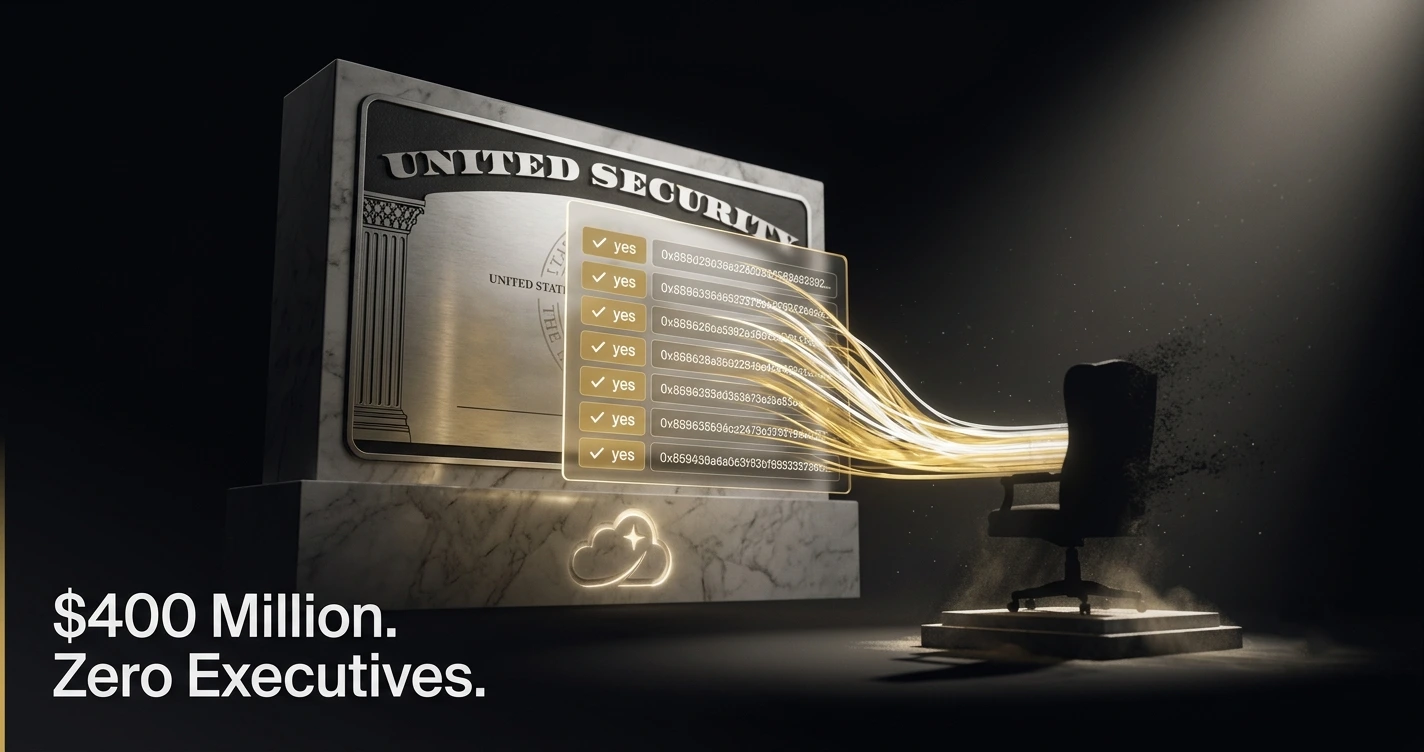
How MakerDAO Moved $400M With No CEO or Board
In October 2022, a organization with no executives and no office voted to put $400 million into US Treasury bonds. By 2026 that position had grown twentyfold, and enterprise governance teams are now quietly copying the mechanics, while ignoring the part that never got fixed.
The vote that moved $400 million without a signature
No CEO approved it. No board met to discuss it. No headquarters existed to house the decision. In October 2022, MakerDAO announced a plan to put $500 million into short-term US Treasury bonds and investment-grade corporate bonds, split into $400 million for Treasuries and $100 million for corporate debt. The whole thing was approved through a community-wide vote that ran for months, then executed by a third-party asset manager called Monetalis under a mandate the community itself wrote.
This is the transaction enterprise readers keep half-remembering when they hear “a DAO managed $400 million with no CEO.” It’s real, it’s dated, and it’s one of the cleanest test cases in existence for whether decentralized governance can handle institutional-scale money. MakerDAO’s head of growth, Nadia Alvarez, put the community’s mood at the time plainly:
“The 80-20 split between treasuries and bonds remained the favored approach during the voting process. This showcases the opportunity associated with the move, and seeing such adamant support from the community is very exciting.”
Nadia Alvarez, Head of Growth, MakerDAO. Source: Decrypt, October 6, 2022
Four years later, that $400 million seed has become the dominant force in the entire real-world-asset lending category. And it happened without a single executive signing off on the wire transfer. If you run governance, risk, or treasury at an actual company, that should get your attention, not because you should copy it wholesale, but because pieces of it already work better than what you’re running today.
How a DAO actually approves a nine-figure trade
Strip away the crypto vocabulary and the process looks less alien than it sounds. It runs in four stages:
Forum debate. Someone proposes the idea on a public discussion board (Discourse). Anyone can argue for or against it, in public, with their name or wallet attached.
Temperature check. A non-binding poll (Snapshot) gauges whether the community actually wants this before anyone spends gas fees on a real vote.
On-chain executive vote. Token holders (MKR at the time, SKY now) vote directly on the blockchain. The vote itself is the approval, there’s no separate signature required.
Delegated execution. A licensed third party, in this case Monetalis, executes the trade inside a policy envelope the vote defined: which assets, what caps, what counterparties.
That last step is the part most people miss when they describe DAOs as “leaderless.” Someone still has to actually buy the bonds. MakerDAO didn’t eliminate execution authority, it separated it from policy authority, and put a licensed professional in the execution seat instead of an internal executive. A follow-up report from CryptoSlate confirmed the exact structure: the $500 million split into two vehicles, RWA007-A routed through Bank Sygnum and RWA007-B through Baillie Gifford, and within four months the strategy was already generating roughly $2.1 million in fees, more than half of MakerDAO’s entire annualized revenue at the time.
The part the headline leaves out: a 48-hour delay sits between an executive vote passing and it actually executing on-chain. That window exists specifically so the community can catch and cancel a malicious or mistaken vote before money moves. It’s a circuit breaker built directly into the governance code, something most corporate approval chains still do with a Slack thread and hope.
From $400M to $8.2B: how far this went
The 2022 vote wasn’t a one-off experiment. It became the template for what MakerDAO is now. In March 2023, the DAO voted to scale the Treasury strategy from $500 million to $1.25 billion. In August 2024, MakerDAO rebranded entirely to Sky, launched a new stablecoin (USDS) and governance token (SKY, converting from MKR at a fixed 1:24,000 ratio), and split into a network of specialized sub-organizations internally called “Stars,” starting with Spark and, later, a Solana-focused Star called Keel.
By mid-2026, per an analysis from Token Dispatch, Sky’s total real-world-asset exposure had reached $8.245 billion, which is 52.2% of its own total value locked and, more strikingly, 78% of all real-world assets deployed across DeFi lending, industry-wide. A single protocol that started with a $400 million bond vote now dominates the category it helped invent.
DAO
Onchain treasury (Q1 2026)
Rank
Uniswap
$4.8 billion
1
Sky (MakerDAO)
$3.9 billion
2
Optimism
$2.1 billion
3
Arbitrum
$1.7 billion
4
Lido
$1.4 billion
5
Onchain treasury figures per DeepDAO tracking, cited via eco.com. Note this measures raw onchain treasury, not total RWA exposure, which is a different (larger) number for Sky. Track the two separately, conflating them is the single most common error in coverage of this space.
The scale-up brought a genuinely new behavior with it too. Sky’s “Smart Burn Engine” used surplus revenue, largely generated by that Treasury bond yield, to buy back and burn more than $60 million of MKR in 2024 alone. That’s a capital-return policy, functionally a corporate buyback, executed with no CFO and no board resolution behind it. Whether that’s a feature or a warning sign depends entirely on who you ask.
What enterprise governance teams are actually borrowing
Corporate treasury and risk teams aren’t rebuilding MakerDAO. They’re taking three specific pieces of it:
1. The service-provider model
Governance approves a defined policy envelope, allowable assets, exposure caps, a liquidity floor, and then delegates in-envelope execution to an accountable, licensed third party. That’s directly portable to a corporate treasury committee that wants faster execution without giving up policy control at the board level.
2. Programmable delay as a circuit breaker
The 48-hour execution delay is a concrete, auditable mechanism. It’s slower than a lot of corporate decisions, and that’s the point, it buys time to catch an error or a bad actor before funds move, with the entire deliberation visible on a public ledger rather than buried in an inbox.
3. Transparent, real-time treasury reporting
Every dollar in Sky’s Treasury position is traceable on-chain, in real time, by anyone. Most companies produce that level of transparency once a quarter, if that.
Aaron Wright, co-founder of Tribute Labs and one of the lawyers who helped write Wyoming’s DAO LLC statute, has a description of the underlying appeal that sticks:
“A DAO is a subreddit with a bank account. The energy of the Internet is swarmlike, but there’s no real productive way to channel that. I believe DAOs are that answer.”
Aaron Wright, Co-founder, Tribute Labs. Source: Forbes, February 2022
Wright’s own caveat, from the same interview, matters just as much: DAOs still need a real-world legal wrapper, a Wyoming or Marshall Islands DAO LLC, to sign contracts, hold licenses, or get sued in a normal court. “No headquarters” is true in the romantic sense. It is not true in the sense a general counsel cares about.
What broke along the way
The optimistic version of this story stops at “it scaled.” The honest version has to include what governance by token vote has repeatedly failed to prevent.
The $182 million flash loan attack
In April 2022, an attacker borrowed roughly $1 billion in a flash loan from Aave, Uniswap, and SushiSwap, used it to instantly acquire majority voting power in Beanstalk Farms, a DeFi lending protocol, and executed a malicious proposal in the same transaction, the same block, transferring the protocol’s liquidity straight to their own wallet. Beanstalk lost $182 million. The attacker walked away with roughly $76 to $80 million in profit. Beanstalk’s response afterward was blunt: it ripped out its on-chain governance module entirely and replaced it with a community-run multisig wallet, quietly admitting that pure token-weighted voting, without a time delay, is a structural liability, not just a Beanstalk problem.
Voter apathy never actually went away
The uncomfortable number underneath every DAO success story is participation. Reported turnout figures for 2025 and 2026 vary by protocol but land in a consistent range: some analyses put typical DAO proposal turnout under 2%, others put average engagement closer to 17%, and Ethereum co-founder Vitalik Buterin has separately argued in public commentary that participation in top DAOs frequently dips below 10%, according to reporting on his November 2025 remarks, warning that low turnout leaves protocols vulnerable to being effectively run by a small number of large token holders regardless of what the governance charter says on paper.
MakerDAO’s own numbers back this up. A 2024 vote on US Treasury bill collateral saw a small block of institutional voters carry more than 70% of all participating MKR. Peer-reviewed and preprint research on DAO governance generalizes the pattern further: across many DAOs, fewer than ten wallets hold more than half of total voting power. “No board” turns out to mean “a smaller, less accountable board,” more often than it means no concentration of power at all.
The risk the DAO flagged, then walked past anyway
MakerDAO’s own Endgame governance document, written years before the Treasury strategy scaled to billions, contained a direct warning about the exact assets it went on to buy:
“The major downside is that they can be seized easily. Anything that can be seized by global powers may be at risk of seizure through legal means.”
MakerDAO Endgame governance document. Cited via Token Dispatch, May 2026
The community read that warning and voted to put roughly $8 billion into US Treasuries anyway. That’s not necessarily a mistake, Treasuries are about as safe an asset as exists, but it’s a real illustration of a structural weakness: a DAO that took months of deliberation to build a large position is also, by design, slow to unwind one if the regulatory ground shifts underneath it.
Instant governance token acquisition via flash loan, no time delay
The honest verdict
Decentralized treasury governance works operationally. MakerDAO proved that a $400 million bet, approved by public vote and executed by a licensed third party, can scale into a multi-billion-dollar institutional position without a CEO ever signing a document. That’s a real, useful, replicable finding.
What it did not do is solve the participation problem that has haunted DAOs since The DAO itself collapsed in 2016. It built delegated layers instead, service providers, SubDAOs, “Stars”, that increasingly resemble conventional management, just wearing a different legal costume. An independent 2026 assessment of Sky’s SubDAO architecture put it plainly: operational autonomy improved, complexity overhead rose substantially, and roughly the same 10 to 20 percent of token supply engages in governance regardless of what the token is called.
Our read: the lesson for enterprise governance teams isn’t “flatten your hierarchy.” It’s “separate policy-setting, which can be broad and slow, from execution, which should be delegated to accountable professionals operating inside hard-coded limits.” Borrow the circuit breaker. Borrow the transparency. Don’t borrow the assumption that removing a CEO removes concentrated power, it just moves where that power hides.
Regulatory context worth tracking if you’re evaluating any of this for actual enterprise use: the GENIUS Act’s OCC rulemaking deadline and MiCA’s final compliance deadline both land around July 2026, pushing stablecoin and DAO-adjacent structures toward provable regulatory compatibility. Any adoption of these patterns in the US or EU needs compliance review built in from the start, not bolted on after.
Frequently asked questions
What is a DAO and how does it manage money without a CEO?
A DAO manages funds through smart-contract-held treasuries controlled by token-holder votes instead of executives. Proposals are debated publicly, voted on-chain, and executed automatically once approved, as MakerDAO did in 2022, moving $400 million into US Treasury bonds via community vote with no CEO or board involved.
How much money does MakerDAO/Sky manage in 2026?
As of early 2026, Sky (formerly MakerDAO) holds roughly $3.9 billion in onchain treasury per DeepDAO tracking, with total real-world-asset exposure reported around $8.2 billion, up from the original $400 million Treasury allocation approved in October 2022.
What is the biggest DAO governance failure?
Beanstalk Farms lost $182 million in April 2022 when an attacker used a $1 billion flash loan to instantly acquire majority governance voting power, then passed and executed a malicious fund-transfer proposal within a single blockchain transaction, exposing a structural flaw in token-weighted voting without time delays.
Can a DAO legally hold and invest in US Treasury bonds?
Yes. DAOs like MakerDAO have done this through licensed third-party asset managers, such as Monetalis, operating under a governance-approved mandate, converting stablecoin reserves to dollars to purchase Treasuries, while typically using a legal wrapper such as a Wyoming DAO LLC for real-world contracting.
What replaced MakerDAO’s MKR token?
In August 2024, MakerDAO rebranded to Sky and introduced SKY as its governance token, converting from MKR at a fixed 1:24,000 ratio. MKR still exists and remains convertible, but SKY is now the primary governance and voting asset across Sky’s SubDAO network.
Where this goes next
What you now understand that you probably didn’t twenty minutes ago: the “$400M, no CEO” story is real, it’s MakerDAO’s Monetalis Clydesdale vote, and it scaled into the dominant force in DeFi’s real-world-asset category. But scale never fixed the concentration problem underneath it, it just professionalized around it.
Over the next 6 to 18 months, watch three things: whether Sky’s Keel SubDAO deployment on Solana changes voter participation numbers at all, whether the GENIUS Act and MiCA compliance deadlines push more DAOs toward Wyoming or Marshall Islands legal wrappers, and whether any enterprise consortium actually pilots the service-provider model with a real corporate treasury rather than just talking about it at a conference.
A quick honest note on search: no legitimate SEO practice, including everything in this piece, guarantees first-page Google rankings within two or three days. Rankings depend on crawl timing, domain authority, competing content, and Google’s own indexing cycle, none of which any single article controls. What this piece does give you is a strong, well-sourced foundation to rank on the merits over time.
91% of Enterprises Aren’t Ready for Quantum-Safe Migration
Cybersecurity / Enterprise IT
91% of Enterprises Aren’t Ready for Quantum-Safe Migration
NIST finalized its post-quantum encryption standards two years ago. Government deadlines start hitting in January 2027. And most security teams still haven’t mapped where their own vulnerable encryption lives.
By NeuralWired Staff · Updated July 2026 · 11 min read
Somewhere in your infrastructure right now is a TLS certificate, a VPN tunnel, or a code-signing key protected by encryption that a sufficiently powerful quantum computer will eventually break. You probably don’t know exactly where. Neither does most of the industry.
That’s the uncomfortable starting point for quantum-safe encryption migration, the multi-year project of replacing RSA and elliptic-curve cryptography with algorithms designed to survive an attack from a quantum computer. The National Institute of Standards and Technology (NIST) finalized the first official post-quantum cryptography (PQC) standards back in August 2024. Two years later, the vast majority of enterprises haven’t started implementing them, even as the first hard regulatory deadlines approach.
The number you’ll see everywhere isn’t real. A widely circulated claim that “78% of enterprise IT teams haven’t started migration” doesn’t trace back to any known survey. The closest verified figures: 91% of surveyed cybersecurity professionals say their organization has no roadmap for quantum threats (Trusted Computing Group), and only 5% have actually implemented quantum-safe encryption (DigiCert). Both numbers are arguably worse than 78%, and both are attributable.
On August 13, 2024, NIST released the first three finalized post-quantum cryptography standards, capping an eight-year public evaluation process that started with a 2016 call for proposals. The agency describes them as designed to resist attacks from quantum computers that would otherwise threaten the encryption protecting everything from confidential email to e-commerce transactions.
Three standards, three jobs:
Standard
What it does
Based on
FIPS 203
Key exchange (ML-KEM)
CRYSTALS-Kyber
FIPS 204
Digital signatures (ML-DSA)
CRYSTALS-Dilithium
FIPS 205
Backup signature scheme (SLH-DSA)
SPHINCS+
A fourth algorithm, FALCON, is still working its way toward publication as FIPS 206. NIST added a fifth, HQC, in March 2025 as a non-lattice-based backup, in case a future breakthrough finds a weakness in the lattice math that FIPS 203 and 204 depend on. Redundancy by design, not an afterthought.
Dustin Moody, the mathematician who leads NIST’s PQC project, put the urgency plainly at the time of release:
“We encourage system administrators to start integrating the new standards into their systems immediately, because full integration will take time.”
Dustin Moody, NIST PQC Project Lead, 2024
That quote is now two years old. It hasn’t aged into irrelevance. It’s aged into an indictment.
The readiness gap, in real numbers
Here’s what enterprise quantum readiness actually looks like right now, pulled from the surveys with disclosed methodology and sample size:
91% of surveyed cybersecurity professionals say their organization has no roadmap to defend against quantum threats, according to the Trusted Computing Group’s State of PQC Readiness report, based on 1,500 professionals across the US and Europe.
81% of professionals in the same TCG survey believe their current crypto-libraries and hardware security modules aren’t ready for the migration at all.
46.4% of organizations admit that substantial portions of their encrypted data could be exposed once a cryptographically relevant quantum computer exists.
Across a 2026 internet-wide scan of 32,011 domains, hybrid post-quantum TLS certificate adoption came back at effectively zero, meaning the certificates authenticating most public websites remain entirely classical.
The “actively transitioning” figure you’ll sometimes see quoted at 40% (from a 2026 Entrust/Ponemon study) is technically accurate but softer than it sounds. It includes planning and risk-assessment work, not completed deployment. Don’t let a vendor deck blur that line for you. Assessment isn’t migration.
IBM’s Quantum-Safe Readiness Index, cited widely in industry roundups, puts the average enterprise score at 25 out of 100. Useful directionally. Less useful as a rigorous benchmark, since IBM hasn’t published transparent, peer-reviewable methodology behind that number the way TCG and DigiCert have for theirs.
Why the timeline suddenly feels shorter
Here’s the part that should actually change your planning horizon. Google researchers published work in early 2026, reported by The Register, showing that running Shor’s algorithm against elliptic curve cryptography (ECDLP-256) would require roughly 20 times fewer physical qubits than previous estimates assumed. That doesn’t hand anyone a working quantum computer. It moves the goalposts closer, and it’s a bigger deal than the 2024 NIST finalization itself, because it’s new information rather than a milestone everyone already priced in.
Google also quietly moved up its own internal target for completing its quantum-safe transition to 2029, an acceleration signal from a company with more visibility into the state of quantum hardware than almost anyone outside a national lab.
The deadlines that are actually coming
Regulatory pressure, not abstract risk, is what actually moves budget. Here’s what’s on the calendar:
January 1, 2027: Under the NSA’s CNSA 2.0 framework, all new national security system acquisitions must be CNSA 2.0-compliant by default. If you sell into the defense or intelligence supply chain, this deadline is closer than your last migration cycle took to complete.
2028: The UK’s National Cyber Security Centre wants discovery and cryptographic asset inventory work done by this date, as phase one of a three-phase roadmap.
2035: Both the US (NSM-10) and UK targets converge on full quantum-resistant deployment by this year. The White House has estimated the cost of the federal government’s own migration at roughly $7.1 billion over the 2025 to 2035 decade.
Sector-specific cost estimates make the stakes concrete. Boston Consulting Group figures cited in recent research put automotive manufacturers’ PQC transition costs at $400 to 750 million, driven by the sheer complexity of patching cryptography embedded across vehicle fleets. Manufacturing, utilities, and transportation face a comparatively modest $10 to 20 million. Your industry determines your number more than your headcount does.
Why cryptographers are betting real money against each other
If you want proof that “urgency” isn’t a settled question even among people who build this stuff for a living, look at what happened in April 2026. Cryptography engineer Filippo Valsorda argued that even if quantum computing predictions turn out wrong in a decade, the current probability that they’re right is already too high to ignore. Matthew Green, an applied cryptographer at Johns Hopkins University, publicly disagreed, and then backed it with cash:
“I think this is a good precautionary analysis but I’d bet huge amounts of money against a relevant quantum computer by 2029 or even 2035.”
Matthew Green, Associate Professor of Computer Science, Johns Hopkins University, via The Register
Green and Valsorda formalized it into a $5,000 wager: Green is betting that classical cryptanalysis, not a quantum computer, will break ML-KEM-768 first. That’s not a random internet argument. That’s a specialist who studies exactly this problem, staking real money against the mainstream urgency narrative.
Peter Gutmann, a computer science professor at the University of Auckland, has been even more direct in his skepticism, pointing out in a 2025 interview that quantum computers have yet to factor the number 35, a six-bit problem, while the elliptic curve keys underpinning most of today’s encryption run 256 bits deep. That gap, he argues, isn’t one that recent efficiency papers close on their own.
On the other side, vendors are unambiguous about what to do regardless of the timeline debate. DigiCert’s Kevin Hilscher put it this way in the company’s 2025 readiness report:
“Organizations should already be into the early phases of their quantum readiness plan, starting with asset discovery and risk assessment, with the ultimate goal of crypto-agility.”
Kevin Hilscher, Senior Director of Product Management, DigiCert
Our read: the skeptics aren’t wrong that the exact date is unknowable. They’re arguing about when the threat arrives. Nobody credible is arguing that the migration itself will be fast once it starts. That’s the part that should worry a CISO more than any doomsday date.
What security leaders should do in the next 12 months
This is not a patch cycle. It’s closer to a multi-year infrastructure overhaul, and the planning assumptions bear that out: small organizations are looking at 5 to 7 years for a complete migration, mid-sized enterprises 8 to 12 years, and large distributed enterprises 12 to 15 years or more, according to industry timelines compiled by The Quantum Insider. If your internal plan says “three years, tops,” it’s almost certainly understating the job for anything larger than a small business.
Three things to prioritize now:
1. Build the cryptographic asset inventory you probably don’t have
TLS certificates, VPN configurations, code-signing keys, HSMs, embedded firmware, and third-party vendor dependencies all need to be mapped before you can even scope a migration. Remember that 81% figure from earlier: most security teams believe their own crypto-libraries and HSMs aren’t PQC-ready, and you can’t fix what you haven’t inventoried.
2. Treat “harvest now, decrypt later” as a present-tense problem
Adversaries don’t need a working quantum computer today to benefit from one tomorrow. They can archive your encrypted traffic now and decrypt it later. Any data with a confidentiality requirement longer than roughly a decade, meaning intellectual property, health records, M&A documents, or government contract data, is already exposed under this model. That reframes the whole conversation from a future compliance deadline into a data classification exercise you should be running this quarter.
3. Prioritize crypto-agility over algorithm selection
The specific PQC algorithm you deploy first can be swapped later if your architecture is built correctly now. Betting your entire strategy on picking the “right” algorithm misses the point. Build systems that can change algorithms without a rebuild, and the rest becomes a scheduling problem instead of an existential one.
On budget, 58% of organizations surveyed by TCG plan to allocate 6 to 10% of their IT and security budget to PQC migration. Useful as an internal benchmark if you’re building the business case for headcount or spend.
A caution on the “rush” narrative: Larger key and certificate sizes plus immature implementations have already caused documented performance and interoperability problems in early PQC rollouts. The UK’s NCSC deliberately built its roadmap around a gradual, multi-phase timeline through 2035 rather than a sprint. There’s a real risk in moving faster than your vendors and your own testing can support.
Frequently asked questions
What are NIST’s post-quantum cryptography standards?
NIST finalized three post-quantum cryptography standards on August 13, 2024: FIPS 203 (ML-KEM, for encryption and key exchange), FIPS 204 (ML-DSA, for digital signatures), and FIPS 205 (SLH-DSA, a hash-based backup signature scheme). A fifth algorithm, HQC, was added in March 2025 as an additional non-lattice-based option.
How long does quantum-safe migration take for an enterprise?
Industry planning estimates range from 5 to 7 years for small organizations to 12 to 15 or more years for large, distributed enterprises, depending on infrastructure complexity, legacy dependencies, and vendor readiness.
What percentage of companies have implemented quantum-safe encryption?
A 2025 DigiCert survey found that only 5% of organizations have implemented quantum-safe encryption, despite 69% recognizing quantum computing as a risk to current encryption standards.
What is “harvest now, decrypt later”?
It describes adversaries collecting and storing encrypted data today with the intent of decrypting it once a sufficiently powerful quantum computer exists. Data that needs to stay confidential for a decade or more is already exposed under this model, regardless of when quantum computers actually arrive.
When will quantum computers break current encryption?
There’s no consensus. Estimates range from 10 to 30 years based on current error-correction and qubit-stability hurdles, while recent efficiency research suggests the window may be compressing faster than previously assumed. Experts like Matthew Green and Peter Gutmann remain publicly skeptical of near-term timelines.
Where this goes next
Two things are true at once, and the industry keeps treating them as contradictory when they’re not. Nobody knows exactly when a quantum computer capable of breaking today’s encryption will exist. And the migration required to get ahead of it takes so long that “wait and see” isn’t actually a viable strategy for any organization with data that needs to stay secret past 2035.
Watch three things over the next 6 to 18 months: whether the January 2027 CNSA 2.0 acquisition deadline actually forces national security vendors to demonstrate compliance or slips, whether Google’s 2029 internal target holds as other hyperscalers respond, and whether the Green-Valsorda wager becomes a recurring reference point as more cryptographers stake public positions on timeline.
None of that changes what you should be doing this quarter: inventory your cryptographic assets, classify your long-lived data, and build for crypto-agility before you pick a single algorithm to bet on.
Quantum vs Classical Computing: What CTOs Need to Know in 2026
Enterprise Technology
Quantum Computing vs Classical Computing: The 2026 Enterprise Reality Check
By NeuralWired Staff · June 30, 2026 · 12 min read
A CISO at a mid-size healthcare company asked us a blunt question last month: should she be worried about data her organization encrypted five years ago? The honest answer is yes, and the reason has nothing to do with quantum computers being fast. It has to do with quantum computing vs classical computing working on fundamentally different principles, and one narrow but consequential category of problems where that difference now matters enormously: breaking the encryption protecting your archives.
That’s the story most coverage gets backwards. Quantum machines aren’t about to replace your CRM, your payroll system, or your e commerce backend. They’re about to (eventually) break the math those systems rely on to keep data private. Here’s what’s real, what’s hype, and what enterprise leaders should actually do about it in 2026.
The Real Technical Difference (And Why “Faster” Is the Wrong Frame)
Quantum computers don’t beat classical machines on raw speed, clock for clock. They exploit superposition and entanglement to explore certain solution spaces in a structurally different way, and that only produces an advantage on problems with a specific shape: ones where the solution space scales exponentially. Molecular simulation. Certain optimization problems. Integer factoring, the math behind RSA encryption.
For everyday enterprise computing, the workloads running your business right now, quantum offers nothing. Harvard Quantum Initiative researchers reported in May 2026 that this distinction is precisely why fault tolerance advances are reshaping timelines in some areas and not others. It’s not a general purpose computer that happens to be expensive. It’s a specialized tool, and right now there’s exactly one application area where that specialization has turned into urgency: cryptography.
Why Washington Just Got Involved
On June 22, 2026, the White House issued Executive Order 14413, “Ushering in the Next Frontier of Quantum Innovation.” It establishes the Quantum Computer for Application Development and Discovery Science effort, coordinated through the President’s science and technology advisory structure, aimed at delivering a working quantum computer to a Department of Energy facility. The order also directs federal agencies to stand up a national benchmark assessment center within 180 days.
Government interest at this level is a signal worth reading correctly. It’s not proof that commercial quantum computing has arrived. It’s confirmation that the national security calculus around cryptography has shifted enough to justify a presidential order, which tracks with everything else happening in the field this year.
The Money: Who’s Actually Spending, and How Much
According to McKinsey’s fifth annual Quantum Technology Monitor, released April 20, 2026, more than 300 companies, including Airbus, JPMorgan Chase, and Boehringer Ingelheim, are now actively working with quantum vendors. Quantum computing companies generated over $1 billion in global revenue in 2025, and investment in quantum startups hit $12.6 billion that year, a 6.3x jump from 2024.
McKinsey projects the technology could generate $1.3 trillion to $2.7 trillion in global economic value by 2035, with the underlying hardware and software market itself reaching $43 billion to $71 billion.
“2026 is the year in which quantum computing goes from a mere promise to a strategic management issue.”
Henning Soller, Partner, McKinsey & Company, Quantum Technology Monitor 2026
Here’s the budget benchmark worth knowing: of the companies McKinsey analyzed, 33% spend over $10 million annually on quantum initiatives, 7% spend over $50 million, and the largest single budget identified was $200 million. If your competitors are in that range, a small evaluative pilot makes sense. If they aren’t, building an in house quantum team right now is a real talent market risk, not a strategic head start.
That risk is sharper than it sounds. McKinsey’s own talent analysis found there’s only one qualified quantum candidate for every three open roles, and under half of quantum computing jobs currently get filled.
Worth noting too: 72% of enterprise quantum activity happens at privately owned companies, not public research institutions, and Europe currently leads in actual adoption (43% of analyzed companies) ahead of the US (29%) even though the US pulls in 64% of global investment dollars. Money and deployment aren’t flowing to the same places.
The Encryption Threat: A Number That Keeps Shrinking
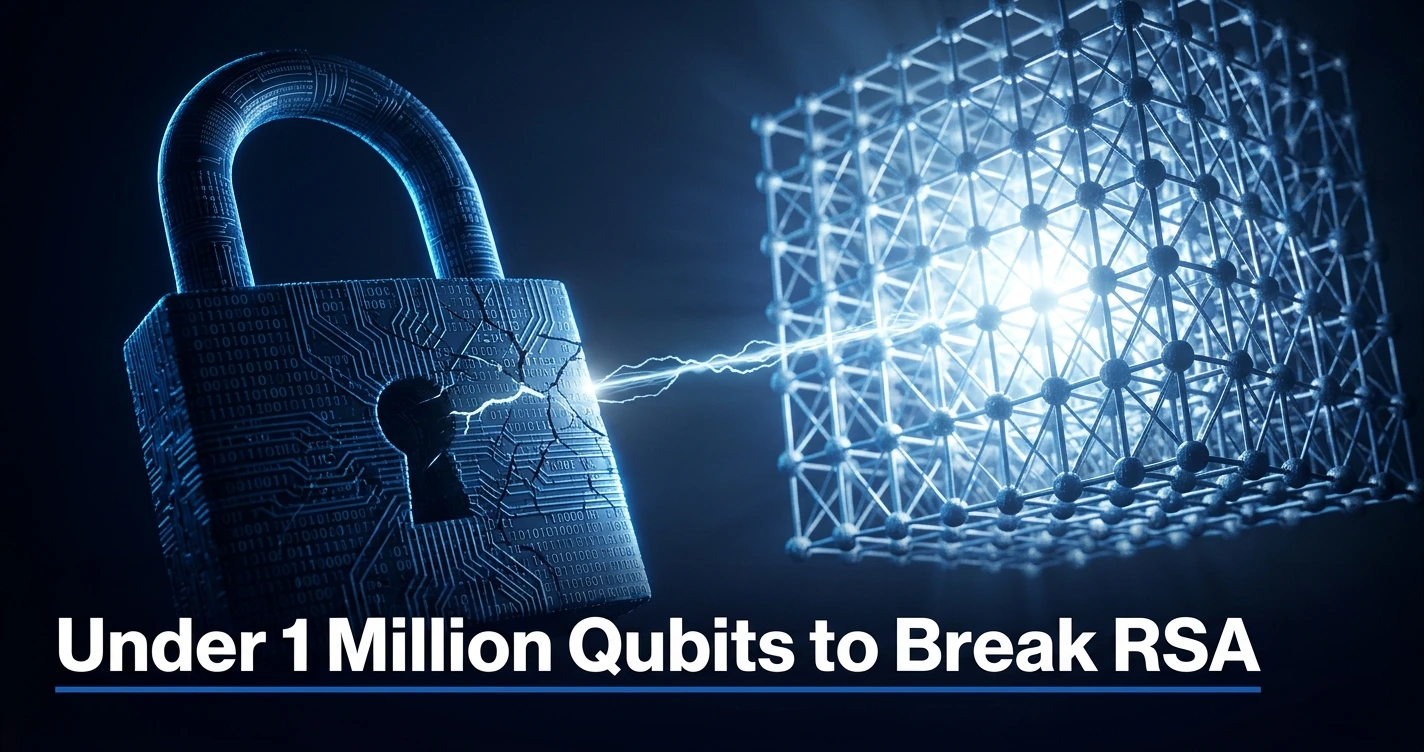
This is the part of the story that should be on every CISO’s radar, and it’s moving faster than almost anyone expected. In 2019, Google researcher Craig Gidney estimated it would take roughly 20 million physical qubits to break RSA 2048 encryption using Shor’s algorithm. In a 2025 update, he revised that figure down to under 1 million qubits, a 95% reduction, with the actual attack taking under a week rather than years.
Why this matters today, not in 2030: “Harvest now, decrypt later” is the practice of adversaries collecting encrypted data now with the intent of decrypting it once sufficiently powerful hardware exists. If your organization handles data that needs to stay confidential for a decade or more, healthcare records, government contracts, financial archives, intellectual property, that data is potentially exposed right now, even though no current quantum computer can break it yet.
A March 2026 preprint from researchers at Caltech, Berkeley, and Oratomic, reported by ScienceAlert, estimated Shor’s algorithm could run with as few as 10,000 to 20,000 atomic qubits on neutral atom hardware, with around 26,000 qubits enough to break Bitcoin’s elliptic curve encryption (secp256k1) within days. Separately, a startup called Iceberg Quantum proposed in early 2026 that RSA 2048 could fall to fewer than 100,000 physical qubits using a different error correction approach, though that claim remains unvalidated at scale.
Google took its own warning seriously enough to set an internal 2029 deadline for migrating its infrastructure to post quantum cryptography, announced in a March 25, 2026 company blog post.
The Skeptic Who Changed His Mind
If you only follow one voice in this space, make it Scott Aaronson. He holds the Schlumberger Centennial Chair of Computer Science at UT Austin, co-founded the university’s Quantum Information Center, and sits on the US National Academy of Sciences. For most of the past decade he’s been quantum computing’s most credible skeptic, regularly pushing back against overhyped commercial claims.
“There are these claims about how quantum computing will revolutionize machine learning and optimization and finance and all these industries, where I think skepticism was always warranted. If people are just now coming around to that, well then, welcome.”
Scott Aaronson, UT Austin, IEEE Spectrum
So it matters that on May 1, 2026, Aaronson published a post titled “Will you heed my warnings?” stating that colleagues whose technical judgment he trusts more than his own now expect fault tolerant, crypto breaking quantum computers around 2029. When the field’s biggest doubter starts moving his own estimate forward, that’s a stronger signal than another optimistic vendor press release.
Not everyone in the industry agrees the broader commercial case is there yet. Sebastian Leichenauer, quoted in Forbes in March 2026, put it plainly:
“There is no offering on the market for quantum computing that is really where you need the quantum computer. None of them are really at the point where they can be sort of useful in the sense of, like, you would definitely use it for, say, a commercial application.”
Sebastian Leichenauer, quoted in Forbes, March 26, 2026
Leichenauer identified quantum chemistry, drug and materials discovery, as the one area with genuine near term value, and dismissed AI-on-quantum-instead-of-GPUs as far future thinking. That’s a useful filter: if a vendor pitch isn’t about molecular simulation or cryptography, treat it with real skepticism.
What CTOs and CISOs Should Actually Do in 2026
Strip away the noise and there are really two actions that matter this year, not five.
1. Start post quantum cryptography migration planning now
NIST’s post quantum cryptography standards are already published. You don’t need a working quantum computer to start this work, you need an inventory of where long-lived sensitive data lives and a migration roadmap, the same kind of project Google has already committed to completing by 2029. Pair this with internal linking to your existing compliance coverage, our breakdown of the GDPR AI fines and EU AI Act situation covers the regulatory side of data protection that overlaps directly with this risk.
2. If you’re in pharma, materials, chemicals, or finance, pilot through the cloud, don’t buy hardware
Since 72% of enterprise quantum activity already happens through cloud access rather than owned hardware, via AWS Braket, Azure Quantum, or IBM Quantum, that’s the lower risk entry point. It also avoids the talent trap: you don’t need to hire scarce quantum error correction specialists to run a bounded pilot. For the infrastructure side of this decision, our piece on the AWS and Azure shared responsibility model is relevant background reading.
What not to do
Don’t chase quantum for generic optimization, AI training, or anything pitched as a “quantum CRM.” That’s square hype, and Leichenauer’s quote above is the cleanest possible rebuttal to it. If a sector peer just raised a quantum startup round, that’s a venture capital story, not necessarily a signal your company needs to follow, our 2026 venture capital trends coverage has more context on where that $12.6 billion actually went.
The Critical Perspective: Is the Tipping Point Real?
Not everyone buys the “commercial tipping point” framing, including critics of McKinsey’s own numbers. An analysis published at postquantum.com argues that comparing 2035 quantum capability against 2026 classical capability misleads readers, and that the widely cited $1 billion revenue figure mostly reflects research contracts and development partnerships rather than production deployments generating real ROI. Even McKinsey’s report concedes most current applications remain experimental or hybrid.
There’s also a structural bottleneck the optimistic headlines tend to skip: programming a quantum computer requires fundamentally different skills than classical software engineering, unitary transformations, constraints from the no-cloning theorem, concepts most software teams have never touched. A sudden hardware breakthrough wouldn’t translate into immediate enterprise value, because there simply aren’t enough people who know how to write the algorithms yet.
Our read: the cybersecurity case for action is more solid and more urgent right now than the optimization or AI commercial case, and most coverage blurs the two together in a way that does readers a disservice. The encryption-breaking timeline has compressed faster than the general commercial timeline. Treat them as two separate decisions with two separate clocks.
Worth remembering too: this is at least the third “quantum is finally arriving” wave in a decade, following IBM’s early cloud access push and Google’s 2019 quantum supremacy claim. “Five years away” has been a recurring prediction for over a decade. If error correction engineering stalls again, as it has before, the $1.3 trillion to $2.7 trillion 2035 projections won’t hit on schedule, and companies that over-invested in dedicated quantum teams in 2026 will be sitting on sunk costs with no near term return.
Frequently Asked Questions
Is quantum computing faster than classical computing?
Not in general. Quantum computers use superposition and entanglement to explore certain large solution spaces differently, which only creates an advantage on narrow problem types: molecular simulation, specific optimization problems, and integer factoring. For everyday computing, they offer no benefit over classical machines.
Can quantum computers break RSA encryption?
Theoretically, yes, using Shor’s algorithm on a fault tolerant quantum computer. Google researcher Craig Gidney’s 2025 estimate puts the requirement at under 1 million physical qubits, down sharply from 20 million in 2019. Today’s largest systems hold only thousands of noisy qubits, well short of that.
What is “harvest now, decrypt later”?
It’s the practice of adversaries collecting encrypted data today with the intent of decrypting it once powerful enough quantum hardware exists. It’s a real present-day risk for any organization whose data needs to stay confidential into the 2030s.
What industries benefit most from quantum computing today?
Drug discovery, materials science, and chemistry lead because molecular simulation scales exponentially for classical computers. Finance (portfolio optimization, fraud detection), logistics, and post quantum cybersecurity planning follow as earlier stage but emerging use cases.
How big is the quantum computing market?
McKinsey projects quantum computing could generate $1.3 trillion to $2.7 trillion in global economic value by 2035, with the core hardware, software, and services market reaching $43 billion to $71 billion by the same year.
Where This Leaves Us
The headline most readers expected, “quantum computers are about to replace classical ones,” was never accurate, and it still isn’t in 2026. What’s actually true is narrower and arguably more urgent: the cryptography that protects long lived enterprise data is on a compressed timeline, the federal government just formalized that concern with an executive order, and the field’s most credible skeptic stopped being skeptical about the 2029 estimate.
Watch three things over the next 6 to 18 months: whether NIST’s post quantum standards see faster enterprise adoption following Google’s 2029 deadline announcement, whether the qubit-count estimates for breaking encryption keep shrinking the way they have for the past two years, and whether any of the 300+ companies McKinsey tracked move from pilot programs to genuine production deployment. That last one is the real tipping point. We’re not there yet.
Want this kind of analysis before it hits the rest of the industry? Subscribe to The Neural Loop at neuralwired.com/newsletter.
AI Crypto Trading Bot Failures Cost Billions in Q1 2026: 5 Risk Modes Your Team MissedAI Risk / Crypto Markets
AI Crypto Trading Bots Drove Billions in Q1 2026 Losses. Your Risk Team Probably Doesn’t Know These 5 Failure Modes Yet.
By NeuralWired Research DeskJune 26, 202614 min read
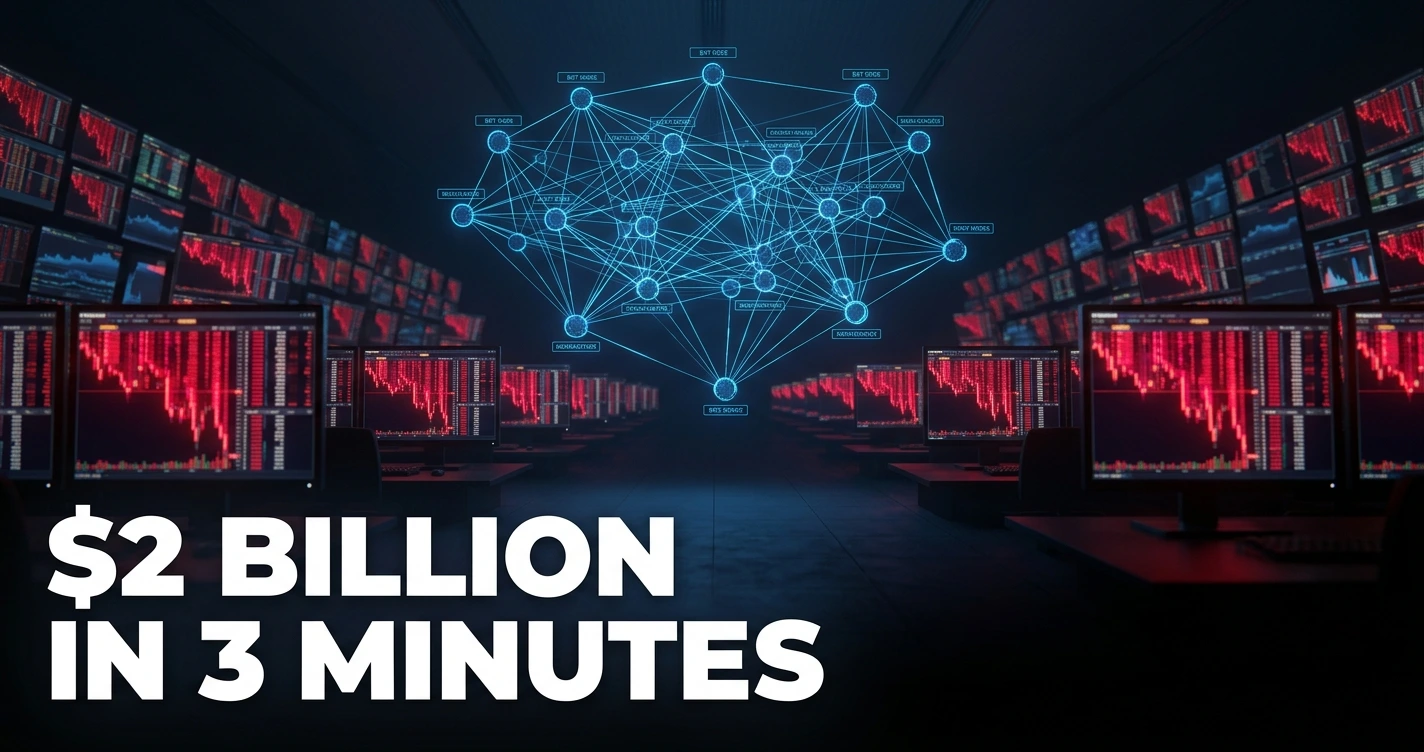
On a Tuesday morning in May 2025, someone watching a crypto order book would have seen something close to a controlled demolition. AI trading bots sold $2 billion worth of crypto assets in three minutes. Not because of a hack. Not because of fraud. Because thousands of AI crypto trading bots trained on similar historical data responded identically to the same market signal, with no human in the loop and no circuit breaker to stop them.
That’s not a retail story. At 65% market share, AI crypto trading bot failures are systemic events. They affect counterparty exposure, liquidity assumptions, and settlement risk across every institution in the market, whether or not that institution is running a single bot itself.
The problem is that most enterprise risk frameworks haven’t caught up. The five failure modes documented below aren’t theoretical vulnerabilities. They’re verified incidents from 2025 and 2026, with named entities, dollar figures, and in two cases, active regulatory enforcement implications. If your team isn’t tracking all five, you’re running exposure you haven’t priced.
Thinner markets amplify every failure. When an AI bot makes a bad trade in a liquid market, slippage absorbs part of the damage. When it makes the same trade in a market where CEX volumes have collapsed by 39%, the damage compounds. This is the operating environment in which all five failure modes below played out.
The macro triggers were real and external: hawkish signals around the Fed Chair nomination, tariff-driven risk-off selling. But the amplification mechanism was structural. It was the AI bots.
“AI is a great co-pilot. For me, AI should always have human supervision, whether for the smallest decisions or for large decisions that impact people’s lives.”
Vugar Usi, COO, MEXC Exchange. CCN, March 31, 2026
Failure Mode 1: Correlated Strategy Collapse (The Herd Crash Problem)
Risk Level: Systemic
When many AI bots across different firms are trained on the same historical datasets and use similar signal architectures, they respond identically to the same market signal. The result isn’t a diversified market absorbing a shock. It’s a synchronized fire sale with no buyers on the other side.
This isn’t a theoretical concern. The May 2025 flash crash, where $2 billion was sold in three minutes, was a direct product of this mechanism. And as AInvest’s analysis noted in March 2026, it’s “a direct replication of the mechanism that caused the 2010 Flash Crash, now amplified by scale and autonomy.” The 2010 equities crash temporarily erased $1 trillion in market value in 45 minutes. Crypto lacks the circuit breakers that equity markets now have.
Content Injection Trap attacks specifically exploit this correlated behavior. A single fabricated news item, embedded in HTML or image metadata, can cause thousands of bots to sell simultaneously. According to research cited by Bitget and AInvest, these attacks succeeded in manipulating AI trading agents in 86% of test cases. Credential extraction worked in every single attempt.
Why Enterprise Risk Teams Miss This
Standard risk frameworks evaluate individual bot performance, not cross-portfolio correlation between AI strategies running at the same firm or across counterparties. No traditional VaR model captures synchronized AI sell-off risk. If your firm’s AI bots and your counterparties’ AI bots share signal architectures, you’re running identical systemic exposure labeled as diversification.
What to do: Map strategy overlap across all automated systems in your portfolio. Commission a correlation audit across AI signal architectures, not just asset classes. Any strategy producing similar outputs to a competitor’s strategy in a stress scenario is a hidden concentration risk.
Failure Mode 2: Overfitting and Regime Blindness (The Backtest Illusion)
Risk Level: High
AI models trained on historical crypto data perform brilliantly in backtests. They fail catastrophically when market conditions shift. The model literally cannot see that the world has changed. It keeps applying the logic that worked in the regime it was trained on, right up until it destroys capital.
A documented example from a 3Commas DCA bot account published in May 2026: the system “bought into ‘oversold’ conditions three times in a row while the price plummeted another 15%. It didn’t know the world had changed; it just knew the RSI was below 30.” That’s not a bug in the traditional sense. It’s the system doing exactly what it was designed to do, in conditions it wasn’t designed for.
The industry-reported figure that 73% of automated crypto trading accounts fail within six months has been widely cited, and while the primary study behind it hasn’t been independently verified, the mechanism it describes is well-documented in individual cases. Grid-trading bots that perform well in sideways markets suffer large losses the moment a trend emerges. The Q1 2026 bear run was not a sideways market.
Why Enterprise Risk Teams Miss This
Backtested Sharpe ratios look excellent in pre-deployment review. The failure only manifests in live markets when conditions diverge from training data. Most deployment gates rely on backtests alone. No backtest on 2023 or 2024 data prepared a bot for a 35% Ethereum drawdown in Q1 2026.
What to do: Require out-of-sample forward testing across at least three distinct market regimes (bull, bear, sideways) before any AI crypto trading bot handles live capital. Any strategy with no out-of-sample validation period is a liability. Treat backtests as necessary but not sufficient evidence of deployment readiness.
Failure Mode 3: Agentic State Loss and Autonomous Action Without Guardrails (The Loaded Gun Problem)
Risk Level: Extreme
This is the failure mode that didn’t exist at scale three years ago. A new generation of autonomous AI trading agents can hold wallets, reason about portfolios, and execute multi-step trades without human confirmation. When these agents lose conversational state, hallucinate account balances, or operate with no transaction limits, the results are both catastrophic and irreversible.
This incident isn’t isolated. Security researchers found over 21,000 publicly accessible AI trading instances running without any authentication. API keys, wallet access, and transaction logs were exposed to anyone with internet access. And in the $45 million breach of AI trading agent infrastructure documented by KuCoin Research in April 2026, 45.6% of affected teams had relied on shared API keys. A single poisoned memory in a multi-agent system, per KuCoin’s analysis, “could spread corrupted insights downstream at alarming speed, derailing collective decision-making across the entire network.”
“The lesson isn’t that AI is dumb. The lesson is that an autonomous agent with wallet access and no transaction limits is a loaded gun with no safety.”
Pump Parade / Medium, April 5, 2026
Why Enterprise Risk Teams Miss This
Agentic AI tools are marketed as productivity upgrades, not as financial infrastructure requiring audit controls. Risk teams typically review the strategy layer, not the agent execution architecture, state management, and transaction authorization framework. These are now the critical failure surfaces.
What to do: Every autonomous AI agent touching live capital must have: (1) hard transaction size limits enforced at the wallet or smart contract level, not just the prompt; (2) verified state restoration on restart; (3) multi-step human confirmation for transactions above a defined threshold; (4) zero withdrawal permissions via API keys. These are not optional enhancements. They’re the minimum viable control set.
Failure Mode 4: Oracle Manipulation and Poisoned Data Feeds (Garbage In, Catastrophe Out)
Risk Level: High
AI trading bots treat their data inputs as authoritative. That assumption is the attack surface. Adversaries manipulate price oracles, inject false data into on-chain feeds, and embed malicious instructions in content the AI reads as part of its normal information processing. The bot then trades on fraudulent information and does exactly what it was designed to do.
KuCoin’s April 2026 breach analysis documented one case where “an AI trading bot misinterpreted oracle data and triggered repeated swaps on a DEX, draining liquidity from a user’s wallet within minutes. The core issue was not a traditional smart contract bug, but the AI layer’s inability to distinguish between manipulated and legitimate inputs.”
Flash loan attacks operate through the same vector: they distort prices on low-liquidity pools, and AI agents read manipulated prices as legitimate before triggering cascading trades that benefit the attacker. The jaredfromsubway.eth hack, reported by CoinDesk on June 21, 2026, is the most vivid case study available: an attacker spent weeks conditioning the MEV bot to approve malicious helper contracts by mimicking legitimate assets, then used those standing approvals to drain $7.5 million. The bot was never breached in the traditional sense. It was trained to trust the wrong things.
Why Enterprise Risk Teams Miss This
Traditional cybersecurity frameworks focus on unauthorized access. Poisoned-data attacks against AI systems are a fundamentally different threat model: the attacker never breaches the system. They corrupt what the system believes is true. No standard penetration test catches data poisoning in an AI inference pipeline.
What to do: Implement secondary data validation. AI bots must cross-check oracle feeds against multiple independent sources before acting on any signal that triggers a trade above a defined threshold. Red-team your AI systems specifically for data poisoning, not just access control. These are different tests requiring different methodologies.
Failure Mode 5: MEV Exploitation and Latency Disadvantage (The Speed Trap)
Risk Level: Medium-High
AI bots deploying strategies on public blockchain mempools are systematically exploited by MEV (Maximal Extractable Value) bots operating at higher speed and with privileged access to block builders. The practical effect: your AI trading strategy becomes an involuntary profit source for sophisticated extractors. The loss shows up in your P&L as “slippage.” It’s actually extraction.
Sandwich attacks cost Ethereum traders approximately $60 million per year, with between 60,000 and 90,000 attacks per month documented between November 2024 and October 2025. The irony of the jaredfromsubway.eth drain is that the world’s largest sandwich bot was itself sandwiched by an attacker who understood its automated logic better than it understood its own vulnerabilities.
The speed disadvantage is structural, not solvable by better code. Institutional bots execute in one to two milliseconds. A typical enterprise setup without dedicated co-location infrastructure can run 100 times slower. By the time a bot reacts to a price movement, the arbitrage is gone and the sandwich is already in place. TRM Labs’ Q1 2026 data confirms that retail crypto volume fell 11% to $979 billion during the same quarter, creating the thin liquidity conditions where MEV extraction becomes most acute.
Why Enterprise Risk Teams Miss This
MEV is framed as a DeFi problem for retail traders. But any firm running AI bots that interact with DeFi protocols, on-chain order books, or yield optimization strategies is exposed. The loss mechanism is invisible in standard P&L attribution: it appears as slippage, not extraction. If you’re not tracking slippage by execution channel, you’re not seeing the full picture.
What to do: All on-chain AI trading must route through private transaction relay infrastructure: Flashbots on Ethereum, Jito on Solana. Audit all DeFi strategy execution paths for MEV exposure before deployment. Track slippage by strategy and exchange channel to detect systematic extraction patterns. Cross-chain strategies face additional risk: cross-chain sandwich attacks exploiting information asymmetries between source and destination chains generated $5.27 million in attacker profits over just two months in a single documented protocol.
The Regulatory Picture: What Changed in 2026
For most of crypto’s history, AI trading operated in a compliance gray zone. That era is over. Three developments in early 2026 created real enforcement exposure for firms that haven’t documented their AI trading oversight frameworks.
On March 11, 2026, SEC Chairman Paul S. Atkins and CFTC Chairman Michael S. Selig signed a Memorandum of Understanding establishing coordinated oversight of crypto and AI-driven trading under “Project Crypto.” On March 17, 2026, they issued a joint Interpretive Release classifying crypto assets into five categories, the most significant regulatory clarification since Bitcoin’s genesis. On March 24, 2026, the CFTC created a new Innovation Task Force covering cryptocurrency, AI-driven trading applications, and prediction markets under a single regulatory umbrella.
“This is a shift in philosophy from regulation by enforcement to rules-based clarity. There’s a shift in legitimacy because this is a coordinated oversight from the two agencies that matter most in this industry.”
Dario de Martino, M&A Partner and Co-Chair, Fintech and Blockchain Business, A&O Shearman, May 2026
The practical compliance checklist for firms running an AI crypto trading bot now looks like this:
Jurisdiction
Requirement
Framework
United States
Human-in-the-loop oversight for AI trading decisions
FINRA Rule 3110
United States
Pre-trade and post-trade risk controls, full audit trails
No spoofing, layering, or wash trading via AI systems
Market manipulation prohibitions
The CFTC itself is now deploying AI tools to review registration applications and conduct market surveillance, after workforce cuts of more than 20%. As Chairman Selig told CoinDesk in April 2026: “AI tools can be used to review the applications, flag certain things for the staff, make their jobs easier, make it much faster for them to provide feedback and also reject certain things that aren’t materially complete.” The same regulator watching AI trading firms is itself using AI to police them. That’s a meaningful escalation of enforcement capacity.
The Contrarian View Worth Taking Seriously
No rigorous analysis of AI crypto trading risk is complete without acknowledging what the mainstream narrative gets wrong. A few things deserve scrutiny.
Most “AI trading bots” aren’t actually AI. Altrady Research’s May 2026 analysis put it directly: “Most ‘AI’ bots are rule-based with marketing language. Genuine machine learning models that adapt to crypto market data require substantial infrastructure, training datasets, and monitoring.” If your compliance team approved an AI crypto trading bot, they may have approved a simple script with no adaptive capability. That changes both the risk profile and the regulatory classification.
Even legitimate AI bots underperformed buy-and-hold over 2024 to 2026. Holding Bitcoin from January 2024 to January 2026 returned over 200%. Many “profitable” bots underperformed that baseline in absolute return terms before fees. The performance comparison baseline matters enormously when evaluating vendor claims.
Performance data is systematically biased by survivorship. Traders who lose money quietly shut down their bots. Traders who make money write case studies and sell courses. Any vendor citing profitability statistics without methodology disclosure is presenting meaningless data. The 73% six-month failure rate figure, while widely cited, lacks a clearly attributed primary study. Use it as directional guidance, not a precise benchmark.
The U.S. AI advantage may not apply to crypto trading. In the Nof1 research lab’s $10,000 Hyperliquid challenge, Chinese models DeepSeek-R1 and Qwen2.5-Max outperformed U.S. models including GPT-4 and Gemini, with DeepSeek climbing to $21,600 from a $10,000 stake. Our read: this signals that the AI models powering institutional U.S. crypto trading strategies may not be best-in-class, and enterprise compliance teams currently aren’t pricing that gap as a risk.
Frequently Asked Questions
Are AI crypto trading bots safe?
AI crypto trading bots carry five documented risk categories: overfitting to outdated data, correlated strategy collapse across firms, autonomous agent failures without guardrails, oracle and data feed manipulation, and MEV extraction. In 2026, AI bots handle an estimated 65% of all crypto volume, making their failures systemic rather than isolated. No bot eliminates risk. Most increase the speed at which losses occur if misconfigured or deployed without adequate controls.
Can AI bots cause a crypto flash crash?
Yes. In May 2025, AI bots sold $2 billion in crypto in just three minutes during a flash crash, amplifying the drop rather than stabilizing it. Multiple bots trained on similar signals respond identically to the same trigger, creating synchronized selling with no offsetting buyers. Regulators explicitly compare this mechanism to the 2010 stock market Flash Crash, which temporarily erased $1 trillion in U.S. market value.
What percentage of crypto trading is done by bots in 2026?
An estimated 65% of all crypto trading volume in 2026 is driven by automated AI systems. This makes crypto the most heavily automated financial market in the world, surpassing even equities in bot-driven activity share. The result is that individual bot failures can produce market-wide effects, not just losses for the bot operator.
How do I know if my AI trading bot is compliant?
In the U.S., FINRA Rule 3110 requires human-in-the-loop oversight of AI trading decisions. CFTC rules for futures require pre-trade risk controls and full audit trails. EU MiCA mandates kill-switch capabilities and post-trade transparency. Any AI trading system without these controls is non-compliant in major jurisdictions and exposes the operator to active enforcement action from the CFTC’s new Innovation Task Force.
What is MEV in crypto and why does it affect AI bots?
MEV (Maximal Extractable Value) refers to profit extracted by reordering or inserting transactions in a block before finalization. AI trading bots broadcasting transactions to public mempools are systematically sandwiched by faster MEV bots, generating slippage losses that appear as execution costs rather than extraction. Sandwich attacks cost Ethereum users approximately $60 million per year. Bots deploying on-chain strategies without private relay infrastructure such as Flashbots or Jito are effectively subsidizing MEV extractors.
What caused the crypto market crash in Q1 2026?
The Q1 2026 crash combined macro headwinds including hawkish signals around the Fed Chair nomination, tariff-driven risk-off selling that produced $19 billion in liquidations in one week, and AI bot correlated de-risking that amplified the downward move. Total market cap fell 20.4%, a $622 billion decline. CEX spot volumes dropped 39.1%. Bitcoin fell 22.6% and Ethereum fell 35%. The AI bot contribution was amplification, not initiation.
Is it legal to use AI for crypto trading?
Yes, in the U.S., EU, UK, Canada, and Australia. However, AI trading must not execute market manipulation including spoofing, layering, or wash trading. Firms must comply with FINRA supervision rules, CFTC audit trail requirements, and EU MiCA bot-activity provisions. The CFTC’s new Innovation Task Force, launched March 24, 2026, signals that the grace period for informal compliance has ended.
What You Now Understand That You Didn’t Before
The question that should be sitting on every CRO’s desk right now isn’t whether to use an AI crypto trading bot. That decision has already been made, market-wide, at 65% volume share. The question is whether your risk controls match the actual failure modes of AI crypto trading, or whether they match the failure modes of traditional algorithmic trading governance you inherited from a different era.
For the vast majority of enterprise risk teams, the honest answer is the latter. The five failure modes documented above don’t appear in standard VaR models. They don’t show up in backtests. MEV extraction doesn’t appear in P&L attribution. Agentic state loss isn’t on the typical security audit checklist. And correlated strategy collapse looks like diversification until the moment it doesn’t.
In the next 6 to 18 months, three things are worth watching closely. First, the CFTC’s Innovation Task Force will produce its first enforcement actions under the new AI trading oversight framework: the firms that built documented governance structures now will be in a meaningfully different position than those that didn’t. Second, MiCA 2 is in active preparation, per senior EC advisers, which means the EU compliance baseline is about to rise again. Third, the performance gap between frontier AI models in trading applications, already visible in the DeepSeek vs. GPT-4 comparison, will become a strategic variable that enterprise teams can no longer ignore.
Build the AI trading risk taxonomy now. The firms that govern first will scale fastest when the regulatory framework matures. The firms that scale first and govern later are the ones running the exposure you’ve been reading about.
Stay Ahead of AI and Crypto Risk
The Neural Loop delivers verified intelligence on AI, cybersecurity, and enterprise tech every week. No noise. No filler. Just the signals that matter.
Subscribe to The Neural Loop
Corporate Crypto Treasury 2026: MicroStrategy vs Tesla Lessons
Corporate Finance / Crypto Treasury
MicroStrategy Turned $250M Into Billions. Tesla Reversed Course and Lost the Gain.
By NeuralWired Research Desk · Updated June 26, 2026 · 11 min read
In February 2021, Tesla put $1.5 billion of company cash into Bitcoin and the corporate world took notice. Sixteen months later, it sold 75% of that position near the exact bottom of the bear market, locking in a loss it’s still writing down today. Michael Saylor did the opposite. He bought more.
That single fork in strategy is the entire story of corporate Bitcoin treasury management in 2026. Strategy Inc. (formerly MicroStrategy) now holds 847,363 BTC, the largest corporate position ever assembled, built from an initial $250 million bet in August 2020. Tesla holds a fraction of what it once owned and has booked hundreds of millions in impairment losses along the way. But here’s the twist almost nobody is writing about right now: the “winning” model is suddenly under real financial stress, and the lessons CFOs need in 2026 aren’t about picking a side. They’re about governance.
Strip away the price charts and this is a story about two boards making two very different bets under pressure. Saylor’s bet was structural: turn a software company’s balance sheet into a Bitcoin accumulation vehicle, funded by equity raises, convertible notes, and eventually preferred stock. Musk’s bet was reactive: buy Bitcoin as a treasury diversification move, then sell when liquidity got tight and the environmental criticism got loud.
Neither company set a formal treasury policy before buying. Strategy got lucky that Saylor’s conviction never wavered (until very recently, more on that below). Tesla wasn’t so fortunate. Its board had no pre-set rules for when to buy, hold, or sell, so when the 2022 crash hit alongside Shanghai factory shutdowns and rising interest rates, the company sold into the worst possible window.
How Strategy Built the World’s Largest Corporate Bitcoin Position
The numbers are almost absurd in scale. Strategy’s current holdings, tracked through SEC 8-K filings, stand at 847,363 BTC as of June 22, 2026, roughly 4% of Bitcoin’s entire 21 million supply. The company’s stated average purchase price is $66,384 per coin, putting total acquisition cost near $33 billion.
Saylor doesn’t talk about this in dollar terms. He talks about BTC Yield, the percentage growth in Bitcoin held per diluted share. As of April 2026, he reported 9.5% BTC Yield year to date, which is his way of arguing that even when Strategy issues new shares to buy more coins, existing shareholders end up with more Bitcoin exposure per share, not less.
“As it flows into the Bitcoin network, the price of Bitcoin should increase.”
Michael J. Saylor, Executive Chairman and Co-Founder, Strategy Inc., Bitcoin 2026 Conference
Funding all of this required serious financial engineering. In March 2026, Strategy announced a $42 billion at-the-market equity program. It also issues STRC, a perpetual preferred share that launched paying a 9% dividend in July 2025 and climbed to 11.5% through seven straight monthly increases. That dividend obligation, as you’ll see further down, is now the company’s biggest liability.
Tesla’s Bitcoin Mistake: A Governance Failure, Not a Bitcoin Failure
Here’s where the conventional story gets it wrong. The usual version goes: Tesla sold, lost billions, learned its lesson, end of story. The real version is messier and more useful to anyone running a corporate treasury today.
Tesla bought 43,200 BTC in February 2021 for about $1.5 billion. It briefly accepted Bitcoin for vehicle purchases, then reversed that two months later over mining energy concerns. In Q2 2022, with Bitcoin down roughly 70% from its 2021 peak, Tesla sold about 75% of its position, pulling in $936 million. That sale happened near the bear market floor. The company has not bought back in since.
The cost of that decision keeps showing up on the books. Tesla booked a $239 million after-tax impairment loss in Q4 2025 on its remaining holdings. By the end of Q1 2026, its 11,509 BTC was worth around $786 million, down from roughly $1 billion, even as Tesla held the position steady through a brutal quarter where Bitcoin lost about 22% of its value.
The actual lesson isn’t “never sell.” It’s that Tesla had no board-approved treasury policy when it bought, no pre-set triggers for when to reduce exposure, and no framework separating treasury decisions from operational liquidity needs. When the 2022 squeeze hit, Bitcoin became the easiest asset to liquidate, not because it was the right call, but because there was no rule saying otherwise.
Our read: this signals that the Strategy versus Tesla comparison isn’t really a Bitcoin bull versus bear story. It’s a governance story wearing a crypto costume. Companies that wrote a policy before buying held through volatility. Companies that didn’t, sold at the worst time.
Who Else Is Holding? The 2026 Corporate Bitcoin Treasury Map
Strategy isn’t alone anymore, though it dominates the field by a wide margin. Here’s how the top corporate holders stack up as of mid-2026.
Company
Ticker
Bitcoin Held
Strategy Inc.
MSTR
847,363 BTC
Twenty One Capital
XXI
43,500 BTC
Metaplanet Inc.
3350.T
40,177 BTC
MARA Holdings
MARA
~35,303 BTC
Bullish
BLSH
24,300 BTC
Hut 8
HUT
~13,696 BTC
Strive Asset Management
Private
~13,678 BTC
SpaceX
Private
8,285 BTC
GameStop
GME
4,710 BTC
Zoom out further and the scale gets harder to ignore. According to BitcoinTreasuries.com data from May 2026, 254 institutional entities now hold 3,914,822 BTC combined, worth roughly $296 billion, or 18.6% of Bitcoin’s total supply. Bitwise data shows corporate buyers purchased Bitcoin in Q1 2026 at 2.8 times the rate new coins were mined.
Not every entrant is sitting on Strategy-style gains, though. Metaplanet’s average cost basis sits near $97,000 per BTC, much of it acquired in 2025 near the cycle peak. At current prices in the $75,000 to $80,000 range, that position is underwater, a quieter echo of Tesla’s 2022 problem playing out in real time.
FASB’s 2025 Rule Change Nobody Talks About
If you want to understand why dozens of companies suddenly felt comfortable adding Bitcoin to the balance sheet, skip the price charts and read an accounting standard instead.
Before 2025, companies could only record Bitcoin losses (impairments) on their books. They couldn’t show gains until they actually sold. That made Bitcoin a one-way accounting risk, all downside exposure, no upside credit, even while the asset appreciated. FASB’s ASU 2023-08, effective for fiscal years starting after December 15, 2024, changed that. Companies now report crypto at fair value every quarter, with gains and losses both flowing through net income.
That single rule change removed the main reason cautious CFOs avoided Bitcoin treasuries in the first place. It’s also why 2025 saw such a fast expansion of new corporate holders, several of whom bought near the top and are now learning the other side of fair value accounting: quarterly losses show up just as fast as gains did.
What Corporate Crypto Treasuries Actually Get Right in 2026
Strip the noise away and a pattern holds across every company that’s handled this well versus poorly.
A board-approved policy exists before the first purchase. Not after. Tesla bought first and figured out the rules later, which meant there were no rules when it mattered.
Capital structure matters more than conviction. Companies funding purchases through equity (Strategy’s ATM program, for instance) carry different risk than companies funding through debt or dividend-paying preferred shares that require cash regardless of Bitcoin’s price.
Liquidity reserves are sized for drawdowns, not averages. Advisory frameworks like the one from Cherry Bekaert’s DATCO guidance recommend a minimum 12-month cash ratio, segregated custody architecture, and clear hot and cold wallet separation.
Multi-year time horizons replace quarterly thinking. Companies that treat Bitcoin as a 5 to 10 year reserve asset behave differently than ones treating it as a liquidity buffer.
Mati Greenspan, founder of Quantum Economics, argues the panic-selling dynamic that hurt Tesla in 2022 reflects a market structure that’s already changing.
“Yes, increased institutional adoption will kick off this next leg, but what Saylor is missing is the nation-state adoption, which is undoubtedly right around the corner.”
Mati Greenspan, Founder, Quantum Economics
Why Strategy’s Own Model Is Under Pressure Right Now
Here’s the part of this story that’s developing as you read it. On June 24 and 25, 2026, MSTR stock fell below $100 for the first time, and STRC preferred shares dropped below their $100 par value. Blockchain analytics firm CryptoQuant reported that Strategy’s cash reserves fell 38% in 2026, and the company’s dividend coverage for STRC dropped from more than seven years of runway down to roughly 14 months.
Restoring even a 24-month cushion would require close to $2.8 billion in fresh cash, nearly double what Strategy currently holds. That’s not a hypothetical risk. It’s a documented gap, and it’s exactly the scenario long-time Bitcoin critic Peter Schiff has been warning about.
“If short sellers push $MSTR’s price low enough, they can put Saylor in a position where his best option would be to sell Bitcoin to buy back stock. That would reduce the discount, but it may not raise the share price, as Bitcoin will crash.”
Peter Schiff, CEO, Euro Pacific Capital
Schiff’s track record on Bitcoin price calls has historically been wrong more than right, which is the easy counterargument to dismiss him. But CryptoQuant isn’t a Bitcoin skeptic, and its cash coverage numbers aren’t ideological, they’re arithmetic. In May 2026, Saylor himself opened the door to selling Bitcoin to fund STRC dividends, a reversal of the “never sell” stance that anchored years of market psychology around Strategy’s buying.
Add in the concentration risk and the picture gets sharper. CoinDesk reported in March 2026 that Strategy now holds roughly 76% of all Bitcoin owned by publicly traded treasury companies. The “broadening institutional ownership” thesis that justified the entire DATCO wave has, instead, concentrated almost entirely onto one balance sheet.
What could go wrong from here: a feedback loop where falling Bitcoin prices push STRC coverage lower, forcing Bitcoin sales to fund dividends, which pushes prices lower still. It’s the exact spiral Schiff has described, and it’s no longer purely theoretical given the cash coverage data CryptoQuant published this month.
Frequently Asked Questions
How much Bitcoin does MicroStrategy own in 2026?
As of June 22, 2026, Strategy Inc. holds 847,363 Bitcoin, the largest corporate Bitcoin position in history. At an average acquisition price near $66,384 per coin, total acquisition cost stands around $33 billion, roughly 4% of Bitcoin’s entire supply.
Did Tesla lose money on Bitcoin?
Yes. Tesla booked a $239 million after-tax impairment loss in Q4 2025. The root cause was its Q2 2022 decision to sell about 75% of its 43,200 BTC position near the bear market bottom for $936 million, missing the recovery that followed. Tesla now holds 11,509 BTC.
Is MicroStrategy going bankrupt in 2026?
No, but it’s under genuine stress. CryptoQuant reported cash reserves fell 38% in 2026, with STRC dividend coverage dropping from over 7 years to about 14 months. MSTR fell below $100 in late June 2026. The company keeps buying Bitcoin, but leverage risk is rising.
What companies hold Bitcoin on their balance sheet in 2026?
More than 170 public companies now hold Bitcoin, led by Strategy (847,363 BTC), Twenty One Capital (43,500 BTC), Metaplanet (40,177 BTC), MARA Holdings (about 35,303 BTC), and Bullish (24,300 BTC). Across 254 tracked institutions, total holdings reach 3.9 million BTC.
What is the FASB crypto accounting rule change?
FASB’s Accounting Standards Update 2023-08, effective January 2025, requires fair value measurement of crypto assets each quarter, with gains and losses recognized in net income. It replaced the old impairment-only model and removed a major barrier to corporate adoption.
Why did Tesla sell its Bitcoin?
Tesla sold about 75% of its Bitcoin in Q2 2022, citing liquidity needs during rising rates, macro uncertainty, and Chinese factory shutdowns, alongside criticism of Bitcoin mining’s environmental footprint. The timing, near the cycle bottom, made it the costliest part of the decision.
The Bottom Line for CFOs
None of this is really an argument for or against holding Bitcoin. It’s an argument for treating it like any other treasury decision: write the policy first, size the cash reserves for the worst quarter, not the average one, and never let a single asset class become a forced seller during a liquidity crunch.
Strategy proved that conviction plus the right capital structure can build an enormous position from a modest starting bet. It’s also proving, in real time this June, that the wrong capital structure (specifically, dividend-paying preferred shares stacked on top of a volatile asset) can turn that same conviction into a liability. Tesla proved the opposite failure mode: no policy at all, and a board that sold under pressure instead of according to a plan.
Watch three things over the next 6 to 18 months: whether Strategy actually becomes a net seller of Bitcoin to cover STRC obligations, whether Metaplanet and other 2025-vintage buyers can hold through their underwater positions without forced selling, and whether FASB’s fair value rule survives political scrutiny if quarterly earnings volatility from crypto holdings draws regulatory attention.
The companies getting corporate Bitcoin treasury strategy right in 2026 aren’t the ones with the most conviction. They’re the ones with the most discipline, written down, board-approved, and tested before the market forces the question.
Strategy Has 843,000 Bitcoin. BlackRock Has More Than Most Countries. Your Treasury Has Zero.Institutional Bitcoin Adoption 2026
Strategy Has 843,000 Bitcoin. BlackRock Has More Than Most Countries. Your Treasury Has Zero.
The largest corporate Bitcoin holders are now navigating a bear market, broken flywheels, and quiet reversals of their founding doctrine. Here is what the June 2026 reality actually teaches CFOs about waiting.
On April 17, 2026, Strategy quietly crossed a threshold that almost no one outside the Bitcoin-treasury niche noticed. The company — formerly known as MicroStrategy — completed a $2.54 billion Bitcoin purchase, pushing its total holdings to 815,061 BTC. In doing so, it passed BlackRock’s iShares Bitcoin Trust (IBIT) to become the single largest institutional Bitcoin holder on the planet. For the first time since Q2 2024, a corporate treasury outranked an ETF giant in raw coin count.
That same week, Bitcoin was trading around $63,000. The Fear and Greed Index sat at 17: Extreme Fear. And the stock of that very company, Strategy, had already lost roughly 66% of its value from its July 2025 peak.
This is the story of institutional Bitcoin adoption in 2026. It is not the story most of the headlines told in late 2025. It is more complicated, more instructive, and frankly more useful to any CFO or board-level finance committee that is now being asked to formally document a position on digital asset treasury strategy.
843,706
BTC held by Strategy (June 2026)
$47.36B
BlackRock IBIT net assets (June 10, 2026)
172+
Public companies holding BTC (Q3 2025)
$61,274
Bitcoin price, June 25, 2026
The Leaderboard That Changed in April 2026
Walk into any institutional investor’s office in Q4 2025 and the Bitcoin conversation was dominated by a single data point: BlackRock’s IBIT had crossed $60 billion, then briefly flirted with figures near $100 billion in AUM as Bitcoin hit its all-time high of roughly $126,000 in October 2025. Financial media ran stories about the ETF sucking in capital at a rate that had not been seen in investment product history. Treasury teams at mid-sized corporates were receiving board memos with subject lines like: “Should we be doing what BlackRock is doing?”
Here is what those memos got wrong. BlackRock was not buying Bitcoin for its own treasury. IBIT is a passthrough vehicle. Every dollar of AUM in that fund belongs to BlackRock’s clients, not BlackRock itself. The ETF’s Bitcoin holdings fluctuate with creations and redemptions. When Bitcoin’s price falls 50%, so does the dollar AUM figure, even if the actual coin count stays flat. This distinction between BTC-denominated and dollar-denominated reporting is how the $102 billion figure circulating in early 2026 became a $47.36 billion figure by June 10, 2026, per SEC filings reviewed against the iShares fund page.
Strategy’s position is structurally different. Those 843,706 Bitcoin sit on a corporate balance sheet. They are an asset of the company, not of external investors. That distinction is what makes Strategy’s overtaking of IBIT in April 2026 genuinely meaningful for the corporate treasury conversation.