Category: Technology

NeuralWired’s Technology section covers the developments reshaping how the world builds, deploys, and regulates digital innovation. We report daily on the stories driving global conversation in artificial intelligence, big technology companies, startups and venture funding, cybersecurity, consumer gadgets and devices, and blockchain and cryptocurrency.

Our technology coverage goes beyond product announcements. When a major AI model launches, we explain what it can actually do and where its claims are overstated. When a startup raises a large funding round, we look at whether the business behind it can sustain that valuation. When a cybersecurity breach hits the news, we explain who is affected and what comes next, not just what happened. Each article is built from original research into primary sources, including company statements, technical documentation, regulatory filings, and verified data, and is written by our editorial team rather than generated automatically.

Readers come to this section for daily updates on the technology stories that matter globally, from shifts inside major technology companies to emerging tools changing how people work, communicate, and build. Whether you are a founder, an investor, an engineer, or simply someone trying to understand where technology is heading next, NeuralWired’s Technology coverage is built to keep you informed without wasting your time on hype.

  • Go For Western Economy With These Pioneering

    Go For Western Economy With These Pioneering

    It seems like your request is a bit unclear. If you are interested in ideas or strategies to contribute to the development of a Western economy, here are some pioneering approaches that could be considered:

    Technology and Innovation Hub:
    Invest in research and development to foster innovation in technology.
    Establish tech hubs or innovation centers to attract startups and entrepreneurs.
    Develop policies that encourage the growth of emerging technologies like artificial intelligence, blockchain, and green tech.

    Green and Sustainable Initiatives:
    Focus on sustainable development and green technologies to address environmental concerns.
    Invest in renewable energy sources and promote energy efficiency.
    Implement policies that support sustainable practices in industries.

    Education and Skill Development:
    Prioritize education and skill development programs to create a highly skilled workforce.
    Collaborate with industries to tailor educational programs to meet the demands of the job market.
    Embrace lifelong learning initiatives to adapt to a rapidly changing economic landscape.

    Entrepreneurship and Small Business Support:
    Foster a culture of entrepreneurship by providing support for small businesses and startups.
    Create incubators and accelerators to nurture new businesses.
    Streamline regulations to make it easier for small businesses to thrive.

    Infrastructure Development:
    Invest in modern and efficient infrastructure to support economic growth.
    Focus on transportation, digital connectivity, and sustainable urban planning.
    Implement smart city initiatives to enhance overall quality of life.

    Diversification of Industries:
    Encourage diversification of industries to reduce dependency on specific sectors.
    Attract a range of businesses, from tech companies to manufacturing, to create a resilient economy.
    Support the growth of service-oriented industries such as healthcare, finance, and tourism.

    Global Trade and Collaboration:
    Foster international trade partnerships to expand market access.
    Negotiate and strengthen trade agreements to benefit the local economy.
    Encourage foreign direct investment (FDI) while protecting national interests.

    Inclusive Economic Policies:
    Develop policies that address income inequality and promote social inclusivity.
    Implement fair labor practices and regulations to ensure worker rights.
    Provide social safety nets to support vulnerable populations.

    Health and Well-being Initiatives:
    Prioritize public health to create a healthy and productive workforce.
    Invest in healthcare infrastructure and preventive measures.
    Promote mental health and well-being in the workplace.

    Digital Transformation:
    Embrace digital transformation across industries.
    Develop a digital infrastructure to support e-commerce, online services, and remote work.
    Invest in cybersecurity measures to protect digital assets.
    These approaches aim to create a dynamic and resilient Western economy by leveraging technology, sustainability, education, and a diverse economic base. Implementing a combination of these strategies with careful planning and collaboration can contribute to long-term economic success.

  • Where to travel asia Kind Mid Spirit

    Where to travel asia Kind Mid Spirit

    If you’re looking for a travel destination in Asia with a kind and mid-spirit vibe, there are many places that could offer a welcoming and positive experience. Here are a few suggestions:

    Bhutan:
    Known for its Gross National Happiness Index, Bhutan is a country that values well-being over material wealth.
    The people are friendly, and the stunning landscapes, including the Himalayan mountains, make it a serene destination.

    Ubud, Bali, Indonesia:
    Ubud is known for its spiritual and artistic community.
    The lush landscapes, rice terraces, and a variety of temples create a peaceful atmosphere.
    Engage in yoga and meditation practices or explore the vibrant arts scene.

    Chiang Mai, Thailand:
    Chiang Mai offers a blend of cultural richness and a laid-back atmosphere.
    Explore historic temples, visit the local markets, and enjoy the beautiful surrounding nature.

    Hoi An, Vietnam:
    This ancient town is known for its well-preserved architecture and lantern-lit streets.
    The locals are friendly, and the town has a calm and charming atmosphere.

    Pokhara, Nepal:
    Nestled in the Himalayas, Pokhara is surrounded by stunning lakes and mountains.
    It’s a great place for trekking, relaxation, and connecting with the local culture.

    Luang Prabang, Laos:
    This UNESCO World Heritage city is known for its well-preserved architecture and Buddhist temples.
    The slow pace of life and the welcoming locals make it a peaceful destination.

    Sapporo, Japan:
    Sapporo, located in Hokkaido, offers a mix of modernity and natural beauty.
    Enjoy the local cuisine, visit parks, and experience the unique cultural aspects of Japan.

    Galle, Sri Lanka:
    Galle’s historic fort area and charming streets create a relaxed atmosphere.
    Explore the local markets, enjoy the coastline, and experience the warmth of the people.

    Malacca, Malaysia:
    Malacca’s historic city center is a UNESCO World Heritage site with a mix of cultures.
    The city is known for its friendly locals and delicious food.

    Sihanoukville, Cambodia:
    Sihanoukville offers beautiful beaches and a laid-back atmosphere.
    Explore nearby islands, enjoy fresh seafood, and experience the local hospitality.
    Before planning your trip, it’s always a good idea to check for any travel advisories or entry requirements, especially considering any potential changes in the global travel landscape. Additionally, respecting local customs and being open to new experiences will enhance your journey and contribute to a positive travel experience.

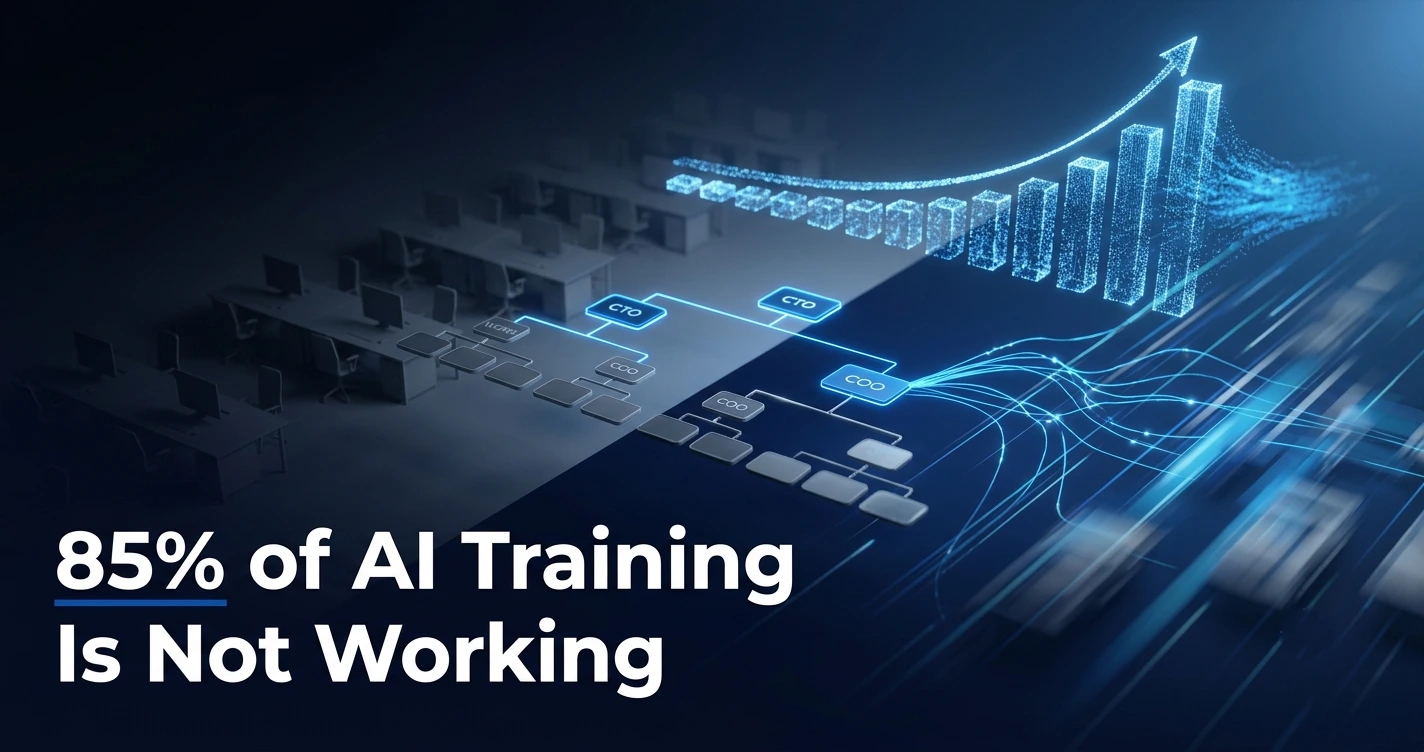
  • Enterprise AI Skills Gap 2026: Why CTOs Are Falling Behind

    Enterprise AI Skills Gap 2026: Why CTOs Are Falling Behind

    Enterprise AI Skills Gap 2026: Why 66% Faster Skill Change Is Breaking CTO Roadmaps
    Enterprise AI · Workforce Strategy · CTO Intelligence

    Your AI Tool Is Ready. Your Workforce Isn’t. The Skills Gap Data That’s Making CTOs Reconsider Their 2026 Roadmaps

    Published: June 16, 2026 Reading time: ~12 min Audience: CTOs, CIOs, CHROs, Enterprise Strategy Leaders

    The CTO stood at the all-hands meeting and showed the slide everyone expected: 94% of employees now have access to the company’s generative AI platform. Licenses deployed. Pilots completed. The board was happy. Six months later, the COO quietly shared a different number with the CEO: productivity in three core departments had not moved. At all.

    That gap between what technology leaders believe is happening and what operations leaders actually measure is now one of the most expensive blind spots in enterprise strategy. The enterprise AI skills gap in 2026 is no longer a theoretical risk. It is the single most documented failure mode in enterprise AI deployment, backed by the largest workforce datasets ever assembled.

    And the freshest data just landed. PwC published its 2026 Global AI Jobs Barometer on June 15, 2026, analyzing more than one billion job advertisements across 27 countries. The finding that should stop every CTO mid-roadmap: skills required in the most AI-exposed roles are now changing more than twice as fast as those in the least AI-exposed roles. That rate is 75% faster than the gap measured just 12 months prior.

    No training program can keep pace with that velocity. Not yours. Not anyone’s. The question facing every enterprise technology leader right now is not whether to deploy AI. It’s whether their workforce can actually use it before the competitive window closes.

    Key Findings at a Glance

    • 85% of enterprise employees say AI training does not help them use AI in their actual role (Docebo, April 2026, 2,000 respondents)
    • 12% of senior leaders say their workforce is truly AI-ready (Grant Thornton, April 2026, 1,000 U.S. business leaders)
    • 39% vs. 7%: CIOs/CTOs who say workforce is AI-ready versus COOs who agree (Grant Thornton)
    • $5.5 trillion in projected global economic losses from the AI skills gap (IDC, 2026)
    • 90%+ of global enterprises expected to face critical AI skills shortages in 2026 (IDC)
    • 2x faster rate of skill change in AI-exposed roles versus non-exposed roles (PwC, June 2026)
    • 50% of enterprises without a people-centric AI strategy predicted to lose top AI talent by 2027 (Gartner, May 2026)
    • 80% of organizations piloting autonomous AI report workforce reductions. ROI does not follow (Gartner, May 2026)

    The Deployment Illusion

    Enterprise AI adoption has followed a remarkably consistent pattern since late 2022. Phase one was a race to deploy: who could license the most tools, touch the most departments, and announce the most AI initiatives before competitors. Workforce readiness was treated as an afterthought, a change management checkbox to handle after the tech was live.

    By 2025, the consequences were undeniable. McKinsey data showed 88% of organizations were using AI in at least one business function. Only 1% had reached what McKinsey defines as “AI maturity,” where AI is systematically embedded across the enterprise rather than siloed in a handful of pilots. S&P Global reported that 42% of companies abandoned most of their AI initiatives in 2025, up from 17% the year before. The culprit was almost never the technology. It was the human layer.

    The pattern has a historical precedent that should make every CTO uncomfortable. In the 1990s, SAP and Oracle ERP implementations failed at rates above 70% when organizations skipped workforce change management. The tools worked. The people weren’t ready. AI deployment is repeating that curve at roughly five times the speed.

    “AI adoption is no longer the question. Nearly every organization we surveyed has it running somewhere. The question is whether people can actually use it to change how work gets done. Right now, most can’t, and that gap is the defining challenge for enterprises in 2026.” Alessio Artuffo, CEO, Docebo Inc. (Nasdaq: DCBO) — BusinessWire, April 7, 2026

    The Skills Gap Data That Actually Matters

    Docebo’s AI Readiness Gap: 2026 Enterprise Learning Wake Up Call surveyed 2,000 enterprise respondents across the U.S., UK, Canada, France, Germany, and Italy. The headline is brutal: 85% of employees say the AI training they receive does not help them use AI in their actual role. Not marginally. Not in edge cases. In the vast majority of organizations running formal AI upskilling programs today, the training isn’t connecting with the work.

    The failure modes are consistent. Training is generic rather than role-specific. It prioritizes AI literacy (what AI is) over AI fluency (how to use it on Tuesday morning when a real decision needs making). Seventy-nine percent of respondents report training is not personalized to their function. And critically, it’s delivered without carving out real time in the workday to complete it, which means motivated employees are squeezing it into gaps rather than applying it immediately.

    Grant Thornton’s 2026 AI Impact Survey surveyed 1,000 U.S. business leaders across C-suite functions and found something that captures the scope of the problem: only 12% of those leaders say their workforce is truly AI-ready. Not “mostly ready.” Not “on the way.” Genuinely, demonstrably ready. Just 12%.

    IDC’s analyst brief “Closing the Gap: Verifying AI Skills in the Enterprise” puts the economic cost on the table: over 90% of global enterprises face critical AI skills shortages by 2026, with the gap projected to cost the world economy up to $5.5 trillion through product delays, quality failures, missed revenue, and weakened competitive positioning. That’s a board-level number, not an HR metric.

    Metric Figure Source Date
    Employees saying AI training doesn’t help them use AI 85% Docebo April 2026
    Leaders saying workforce is truly AI-ready 12% Grant Thornton April 2026
    Enterprises facing critical AI skills shortages 90%+ IDC 2026
    Projected global economic losses from skills gap $5.5T IDC 2026
    Enterprises that have reached “AI maturity” 1% McKinsey 2025–2026
    Leaders offering AI training who still report a skills gap 82% / 59% DataCamp 2026
    Rate of skill change: AI-exposed vs. non-exposed roles 2x faster PwC June 2026
    One DataCamp figure from 2026 deserves particular attention: 82% of organizations say they offer AI training, yet 59% still report a significant AI skills gap. Having a program is not the same as closing the gap. The training industry has a solution. It is just frequently the wrong one.


    The CTO-COO Disconnect: A Five-Times Gap in the Same Room

    Here is the most operationally dangerous finding in all of the 2026 data. Grant Thornton’s AI Impact Survey asked the same question to different members of the same executive teams: “Is your workforce ready to adopt AI?” Among CIOs and CTOs, 39% said yes. Among COOs, the number was 7%.

    Five times more likely. Same organization. Different answer.

    This isn’t a perception gap. It’s a measurement gap with real consequences. CTOs and CIOs evaluate success by deployment metrics: tools deployed, platforms integrated, pilots launched, APIs connected. COOs evaluate success by operational output: throughput, quality, efficiency, error rates. When the tools go live but the workflows don’t change, technology leaders see a win and operations leaders see a flatline.

    “Companies are making tremendous investments into AI and yet, we’re not seeing that correlate with an increase in AI accountability. Our report found that while most organizations have implemented AI solutions, many teams cannot measure its impact or respond effectively when initiatives fail.” Tom Puthiyamadam, Managing Partner, Advisory Services, Grant Thornton Advisors LLC — BusinessWire, April 13, 2026
    The same Grant Thornton survey found that 44% of CIOs and CTOs say AI is accelerating innovation at their organization. Only 20% of COOs and 22% of CFOs agree. That is not a communications problem. It is a structural accountability gap: CTOs are evaluated on deployment, not on the human outcomes downstream. Until performance metrics for technology leaders include workforce proficiency rates and AI-enabled productivity (not just AI coverage), this divergence will not close regardless of what surveys show.

    Our read: this is the most important organizational design problem in enterprise AI right now. And almost no one is talking about it at the governance level.

    The accountability problem in one line: More than half (55%) of CIOs and CTOs surveyed by Grant Thornton report that the majority of their core applications are not yet AI-ready, yet those same leaders remain far more optimistic than COOs about workforce readiness. The technology layer and the human layer are both behind, but only one group of leaders is measuring it accurately.


    What PwC’s 2026 AI Jobs Barometer Actually Shows

    The PwC 2026 Global AI Jobs Barometer, published June 15, 2026, is the most current and comprehensive labor market dataset available. It analyzed more than one billion job advertisements across 27 countries and its findings reshape the skills gap conversation in several important ways.

    Skills in the most AI-exposed occupations are now changing more than twice as fast as those in the least AI-exposed roles. That acceleration itself has accelerated by 75% compared to PwC’s 2025 measurement. The pace of required skill change is not slowing. It is compounding.

    What’s changing inside those roles is equally significant. New tasks added to AI-exposed positions are 2.5 times more likely to require empathy, judgment, and creativity than new tasks added to less AI-exposed roles. AI is not simplifying jobs at the top of the skills distribution. It is raising the floor on what every role requires.

    The entry-level dimension of this finding should concern every organization focused on building AI talent pipelines. AI-exposed entry-level roles are now seven times more likely to require traditionally senior-level skills (leadership, cross-functional judgment, complex decision-making) than comparable roles from five years ago. Those roles grew 35% since 2019. Non-AI-exposed entry-level roles declined 10% over the same period. The junior pipeline for AI-era talent is being squeezed out of existence at the moment organizations need it most.

    PwC’s Global Chief AI Officer framed the consequence clearly in commentary accompanying the report: “Across the global economy, we’re beginning to see a new divide emerge between different models for talent and value creation. The companies seeing the greatest returns on AI are using it to amplify human expertise, accelerate innovation and create entirely new sources of value.” The implicit warning: companies not doing that are on the wrong side of a widening divide.

    What does the winning side look like in financial terms? Grant Thornton found that organizations with fully integrated AI are nearly four times more likely to report revenue growth compared to those still piloting: 58% versus 15%. The cost of the skills gap is not abstract. It is the difference between those two numbers.


    Agentic AI Is Making This Worse, Faster

    The enterprise AI skills gap would be a serious problem even if the technology were standing still. It isn’t. The shift from generative AI tools (which assist human tasks) to agentic AI systems (which execute sequences of tasks autonomously) is compressing an already tight timeline.

    Gartner projects that enterprise generative AI applications with task-specific AI agents will jump from less than 5% to 40% of the market in a single year. More than 40% of agentic AI projects will be canceled by 2027, Gartner also predicts, and Forrester independently confirms that three out of four companies attempting to build agentic architectures on their own will fail.

    The governance risk is specific and urgent. Grant Thornton found 54% of COOs are concerned about regulatory and compliance uncertainty related to agentic AI. Only 20% of CIOs and CTOs share that level of concern. When autonomous systems are making consequential decisions at scale, the 34-point gap in concern between technology leaders and operations leaders is not a communications problem. It is a liability exposure.

    The ROI math that doesn’t work: Gartner’s survey of 350 global business executives found that approximately 80% of organizations piloting autonomous AI report workforce reductions as a result. Those reductions do not correlate with ROI gains. Reduction rates were nearly equal among respondents reporting higher ROI and those experiencing negative or flat outcomes. Cutting headcount to fund AI deployment is not a strategy. It is a budget rotation that doesn’t pay off.

    “Employees with a positive outlook toward AI are 3.4 times more likely to be highly productive. The most effective drivers of positive AI adoption are employee confidence in their current and future roles, and transparent, ongoing communication about how AI will be used and its impact on jobs.” Swagatam Basu, Senior Director Analyst, Gartner HR Practice — Gartner Press Release, May 13, 2026
    Gartner’s Global Labor Market Survey (12,004 employees and managers across 40 countries, Q1 2026) found that 19% of employees reported no time savings at all from AI, despite organizational investment. Employees who use AI proficiently across multiple use cases are twice as likely to be highly productive and 2.3 times more likely to deliver high-quality work. The payoff from AI is real. It just requires actual workforce proficiency, not just tool access.

    Gartner’s May 2026 prediction is the clearest warning of second-order consequences: by 2027, 50% of enterprises without a people-centric AI strategy will lose their top AI talent to competitors who prioritize workforce enablement. The organizations that most need skilled AI workers are actively building the conditions that push those workers out the door.


    What Actually Closes the AI Workforce Readiness Gap

    Grant Thornton’s data contains a finding that gets less attention than the scary numbers: organizations with fully integrated AI are nearly four times more likely to report revenue growth. That gap exists. The question is what separates the 58% from the 15%.

    1. Audit Actual Proficiency, Not Training Completion

    The 82% of organizations that offer AI training while still reporting a skills gap are measuring the wrong thing. Completion rates and licenses assigned are inputs. What matters is depth of use: can employees apply AI to their specific role tasks, reduce error rates, accelerate decision cycles? That requires role-by-role proficiency mapping, not a company-wide “AI literacy” course completion dashboard.

    2. Redesign Workflows Before Deploying AI Into Them

    The most common deployment failure mode is layering AI onto existing broken or inefficient workflows. AI amplifies the workflow it’s placed into, including its dysfunction. Organizations seeing the strongest productivity gains from AI have redesigned the underlying task sequence first, then built AI into the redesigned version. The order matters enormously.

    3. Close the CTO-COO Perception Gap With Shared Measurement

    If a CTO is measuring AI success by deployment coverage and a COO is measuring it by operational output, they will never agree on whether the investment is working. Shared measurement frameworks that include workforce proficiency depth, AI-enabled cycle time, and quality metrics (not just adoption rates) create a common language for AI ROI. Without that, the 5x perception gap compounds into 5x misaligned investment decisions.

    4. Invest in Depth, Not Breadth

    Deloitte’s 2026 Global Human Capital Trends data shows that 85% of leaders say building organizational adaptability is critical. Only 7% believe they’re leading on it. The gap between aspiration and execution typically traces back to a training investment strategy built around reaching everyone with a shallow introduction rather than making a subset of roles deeply proficient and letting expertise spread organically from there.

    5. Build Transparent Communication Into the AI Deployment Plan

    Gartner’s Swagatam Basu is explicit: the most effective drivers of positive AI adoption are employee confidence in their future roles and transparent communication about how AI will affect their work. The organizations burning AI budget on headcount reduction rather than role evolution are simultaneously destroying the psychological safety that makes AI adoption work. That’s not a people problem. It’s a leadership decision with a measurable productivity cost.


    The Critical View: Three Arguments Worth Taking Seriously

    The Training Industry Has a Conflict of Interest

    The most alarming skills gap figures come from organizations with products to sell: Docebo (an AI learning platform), Workera (a skills verification platform), and analyst reports cited by training vendors. Their commercial interest in dramatizing the gap is real. The Grant Thornton and PwC data corroborates the core findings without that bias, which lends them credibility. But specific severity figures from vendor-funded research deserve skepticism, and the 85% and 90% numbers should be read with that in mind.

    The Gap May Be a Measurement Problem

    Gartner makes a point that rarely makes headlines: “Most leaders are mistaking basic access or adoption metrics for transformation.” Organizations tracking hours of training completed, licenses deployed, or pilots initiated are measuring inputs. They may be finding a “gap” that exists primarily because they’re measuring the wrong things. Shifting to output metrics could reveal that proficiency is higher than surveys suggest, while also identifying exactly where the real gaps are.

    Geoffrey Hinton’s Warning: Reskilling Has Structural Limits

    “We’re going to see AI get even better. It’s already extremely good. It’s already able to replace jobs in call centers, but it’s going to be able to replace many other jobs.” Geoffrey Hinton, Turing Award Winner, former VP and Engineering Fellow, Google — CNN “State of the Union,” 2026
    Hinton’s implicit argument is more structurally challenging than any survey finding: if AI capability is advancing faster than any training program can be designed, funded, approved, and deployed at scale, the “train your workforce” strategy has limits that no amount of investment can fully overcome. The skills gap may not be primarily a training failure. It may be a pace-of-change problem that reskilling alone can’t solve.

    Deloitte’s data suggests organizations know this but aren’t acting on it: 85% of leaders say organizational adaptability is the critical capability for 2026. Only 7% believe they’re actually building it. If the answer to accelerating AI capability is organizational adaptability rather than static skills training, the entire training industry may be solving the wrong problem.


    Frequently Asked Questions

    What is the AI skills gap in 2026?

    The AI skills gap in 2026 is the measurable distance between enterprise AI tool deployment and employees’ ability to use those tools to change how work gets done. IDC projects over 90% of global enterprises face critical AI skills shortages, risking $5.5 trillion in economic losses. Only 12% of senior leaders report their workforce is truly AI-ready, according to Grant Thornton’s April 2026 survey of 1,000 U.S. business leaders.

    How many companies are ready for AI in 2026?

    Just 12% of senior leaders say their workforce is genuinely AI-ready, according to Grant Thornton’s 2026 AI Impact Survey. McKinsey data narrows the definition further: only 1% of enterprises have reached “AI maturity,” where AI is systematically embedded across all functions rather than limited to isolated pilots.

    Why is AI training failing employees in 2026?

    According to Docebo’s 2026 Enterprise Learning Wake Up Call (2,000 respondents across six countries), 85% of employees say AI training does not help them use AI in their actual job. The primary failures are: training is generic rather than role-specific, not personalized (79% report this), and delivered without sufficient time in the workday for immediate application. Having a training program is not the same as closing the skills gap.

    What is the cost of the AI skills gap?

    IDC estimates the global AI skills gap could cost the world economy up to $5.5 trillion by 2026, driven by product delays, quality failures, missed revenue, and weakened competitive positioning. This figure is corroborated by independent data from PwC and Gartner showing massive productivity divergence between AI-ready and AI-lagging organizations.

    How fast are AI job skills changing?

    Skills required in the most AI-exposed jobs are now changing more than twice as fast as those in the least AI-exposed roles, per PwC’s 2026 Global AI Jobs Barometer (analysis of over one billion job ads across 27 countries, published June 15, 2026). That gap in pace has grown 75% compared to PwC’s measurement from just 12 months earlier, signaling accelerating disruption of existing competency models.

    Will AI replace workers in 2026?

    AI is reshaping jobs rather than eliminating them wholesale, though the pace is uneven. PwC’s 2026 Barometer shows AI-exposed companies grew their workforces 52% since 2018, compared to 36% for less AI-intensive peers. However, Geoffrey Hinton warns AI will replace many jobs beyond call centers in 2026. The clearest pattern: routine tasks automate, while human judgment roles grow but now require senior-level skills from day one.

    What are the biggest barriers to AI adoption in 2026?

    The top barriers to enterprise AI adoption in 2026 are lack of skilled talent (46%), data privacy concerns (43%), poor data quality (40%), high implementation costs (40%), and unclear ROI (26%), according to IDC. Grant Thornton adds a C-suite misalignment dimension: CTOs are five times more likely than COOs to say their workforce is ready, creating systematically misaligned investment decisions across the same organizations.


    What You Now Know That Changes the Roadmap

    The enterprise AI skills gap in 2026 is not a future problem. It is the reason 85% of current AI training isn’t working, the reason 80% of autonomous AI pilots are cutting headcount without generating ROI, and the reason only 12% of leaders believe their organizations are genuinely ready for what they’ve already deployed.

    The central insight from this data is uncomfortable: the organizations measuring AI success by deployment coverage are not measuring the right thing, and most CTOs are doing exactly that. The COO in your organization, if you have one, probably has a more accurate read on actual AI-driven productivity than you do. That 5x perception gap is not a data problem. It is a metrics design problem with real budget consequences.

    In the next 12 to 18 months, watch for three developments that will force this issue into board-level visibility. First, the boardroom ROI reckoning. As AI budgets face scrutiny in H2 2026 and H1 2027, organizations that can’t demonstrate workforce-level productivity gains (not just tool deployment) will face significant budget cuts. Second, the talent exodus. Gartner’s prediction that 50% of enterprises without people-centric AI strategies will lose their top AI talent by 2027 will begin registering as a competitive threat when it starts happening visibly. Third, the agentic AI liability event. With agentic AI scaling to 40% of enterprise applications, a consequential failure at an organization with inadequate human oversight is increasingly likely. It will reframe the governance conversation overnight.

    Three things to act on now: audit actual workforce AI proficiency by role, not training completion rates; create a shared AI measurement framework that CTOs and COOs both sign off on; and stop funding headcount reduction as an AI ROI strategy before the next Gartner survey captures your organization in the 80% that did it and found it didn’t work.

    Stay Ahead of Enterprise AI

    Get The Neural Loop: NeuralWired’s weekly briefing for CTOs, CIOs, and enterprise technology leaders. No noise. Just the signal that matters.

    Subscribe to The Neural Loop

  • Chainlink CCIP 2026: Blockchain Interoperability Rules

    Chainlink CCIP 2026: Blockchain Interoperability Rules

    Blockchain Interoperability Standards 2026: ISO’s New Rules
    Enterprise Blockchain

    Blockchain Interoperability Standards 2026: ISO’s New Rules

    Your supply chain team just finished moving inventory provenance onto Hyperledger Fabric. Your banking partner’s tokenized bond pilot runs on a private Ethereum fork. Neither system can confirm a transaction from the other without a custom integration that took most of a year to build and now costs six figures annually to keep running. Sound familiar?

    That gap is exactly what blockchain interoperability standards in 2026 are finally built to close, and the timing isn’t an accident. In March 2026, the International Organization for Standardization published ISO/TS 23516:2026, listed under standard number 82098, the first globally ratified interoperability framework for distributed ledger technology. Around the same time, Chainlink’s Cross-Chain Interoperability Protocol (CCIP) crossed $30 trillion in cumulative transaction value, and hackers stole $328.6 million from cross-chain bridges in the first five months of the year alone.

    Three things are true right now, all at once: the standards exist, institutional money is already moving through them, and the attack surface is expanding faster than most security teams can patch it. If you run an enterprise blockchain roadmap, the question isn’t whether any of this matters. It’s which standard you build around, and what it costs if you pick wrong.


    ISO 82098 Is Published, and It Changes Procurement

    Here’s what actually happened. ISO Technical Committee 307, the body responsible for blockchain and distributed ledger standards, formally published ISO/TS 23516:2026 in March 2026. It’s a 24-page framework that specifies how DLT systems connect to each other and to systems outside the DLT world entirely, covering the relationships, interactions, and cross-cutting pieces that make that possible. The document sits at Stage 60.60 on ISO’s status scale, meaning it’s fully published, not a draft, and a copy is available directly from ISO for CHF 135.

    The path here took almost ten years. Gilbert Verdian, CEO and founder of Quant Network, established the Blockchain ISO Standard TC307 initiative back in 2015 and served as convenor of Working Group 7, the specific group tasked with the interoperability framework. He partnered with Standards Australia to push the work through the national standards bodies of more than 57 countries.

    “an internet of trust, where value can be securely transferred between global partners” Gilbert Verdian, CEO and Founder, Quant Network
    Why should an enterprise architect care about a 24-page ISO document? Because “is your platform aligned with ISO 82098” just became a fair line item on a vendor RFP, something it genuinely wasn’t before March 2026. The standard’s core idea is a multi-gateway architecture: any DLT can connect to another without requiring protocol changes on either side. Quant’s own Overledger platform was reportedly built on the same architectural principles (Quant clearly has a stake in this being a big deal, but the architecture itself is now documented in an international standard, not just a product pitch).

    Blockchain Interoperability Standards 2026: The Field Is Multiplying, Not Converging

    Here’s the part the celebratory headlines tend to skip. ISO 82098 is a framework, a way of thinking about interoperability. It is not a protocol you install on Monday morning. And in 2026, enterprises are choosing from a wider field of competing standards than they were twelve months ago, not a narrower one.

    Standard Governing body Published What it covers 2026 status
    ISO/TS 23516:2026 (82098) ISO/TC 307 March 2026 Architectural framework for DLT interoperability Published, Stage 60.60
    IEEE Std 3221.01-2025 IEEE 2025 Cross-chain transaction consistency protocol (notary, HTLC, relay-chain models) Active
    ERC-7683 Across Protocol, Uniswap Labs, Ethereum Foundation 2024 to 2025 Intent-based cross-chain value transfer 30+ teams via Open Intents Framework
    Chainlink CCIP / CCT Chainlink Labs July 2023 Oracle-secured cross-chain messaging and token standard 60+ networks, on AWS since June 2026
    Cosmos IBC Interchain Foundation Ongoing Sovereign chain-to-chain messaging via light clients 115+ networks
    Polkadot XCM Web3 Foundation / Parity Ongoing Shared-security parachain messaging Phased rollout, partial HRMP reliance
    IEEE Std 3221.01-2025, published on IEEE Xplore as document 11039181, takes a different approach entirely. It defines a cross-chain transaction consistency protocol built around three technical models: centralized or multi-signature notary-based systems, HTLC-based (hashed time-lock contract) systems, and relay-chain-based systems. None of those three models matches ISO 82098’s multi-gateway framework, and the two standards bodies aren’t coordinating on a shared spec.

    On the Ethereum side, ERC-7683 (built by Across Protocol and Uniswap Labs) introduces something genuinely different: an intent-based model. Instead of choosing a specific bridge route, a user states the outcome they want, and a network of competing solvers figures out how to deliver it. The Ethereum Foundation backed this direction with its Open Intents Framework, supported by more than 30 teams including Arbitrum, Optimism, Polygon, and zkSync. Uniswap has already wired Across’s intent infrastructure into its main interface and wallet, so this isn’t theoretical. Millions of people are using it without knowing the standard’s name.

    Then there’s the Cosmos versus Polkadot question, which has been running for years and isn’t close to resolved. Cosmos IBC (Inter-Blockchain Communication) is live across 115+ networks, including Osmosis, dYdX, and Celestia, each running as a fully sovereign chain on the Cosmos SDK. IBC Eureka, which launched in April 2025, connects Ethereum directly to Cosmos chains with no asset wrapping required, and expansion to Solana and major Ethereum Layer 2 networks is planned through the rest of 2026. Polkadot, meanwhile, approved a hard supply cap of 2.1 billion DOT in March 2026, cutting annual issuance by 53.6%, a move some in the community nicknamed the “Polkadot Halving.” Polkadot ranks first in developer commits for 2026, yet its total DeFi value locked still sits under $300 million, and its XCM messaging protocol was still completing a phased rollout as of May 2026, with plenty of chains still relying on the older HRMP protocol underneath it.

    If you’re still deciding which base chain to build on before you even get to the interoperability question, NeuralWired’s recent comparison of Ethereum, Solana, and Hyperledger for enterprise deployments is a useful starting point.

    Where the Institutional Money Already Moved

    Standards bodies move slowly. Money moves fast, and in 2026, the money has already picked some early favorites.

    Chainlink’s CCIP launched on mainnet in July 2023 and now connects more than 60 blockchain networks. As of June 2026, it has processed over $30 trillion in cumulative transaction value and handles roughly $18 billion in monthly volume. Cross-chain transfers through CCIP surged 1,972% to $7.77 billion over 2025. In June 2026, Chainlink’s AWS Marketplace integration went live, which matters more than it sounds: enterprises can now provision cross-chain capability through the same cloud procurement process they already use for everything else, with no separate crypto-native onboarding required. CCIP is also the only data and interoperability oracle platform with SOC 2 Type 2, SOC 2 Type 1, and ISO/IEC 27001:2022 certification, validated by Deloitte & Touche LLP. Projects building on Chainlink’s Cross-Chain Token standard, including ElizaOS, The Graph, Maple Finance, and Zeus Network, have unlocked access to more than $19 billion in assets through CCIP. In Fortune’s 2026 Crypto 100 ranking, Chainlink came in fourth, behind only Bitcoin, Ethereum, and Solana.

    On the traditional finance side, Swift completed a digital asset interoperability trial on January 19, 2026, with BNP Paribas Securities Services, Intesa Sanpaolo, and Societe Generale’s blockchain arm, SG-Forge. The trial demonstrated coordinated exchange and settlement of tokenized bonds, covering delivery-versus-payment settlement, interest payouts, and bond redemptions, with SG-Forge providing EURCV stablecoin support for the settlement leg. It’s one of the first times a tokenized asset transaction was orchestrated end to end across multiple separate infrastructures, not just inside one bank’s sandbox.

    “Interoperability is at the heart of everything we are doing at Swift” Tom Zschach, Chief Innovation Officer, Swift
    Put those two data points together. CCIP gives enterprises a cloud-procurable, certified cross-chain pipe. Swift gives them a path to plug that pipe into the existing network of more than 11,000 banks. That combination is the actual bridge the headlines keep promising, not a future roadmap item.

    For more on how banks are weighing this against traditional risk models, see NeuralWired’s recent look at JPMorgan, DeFi vs. banks: the real risk comparison for 2026.

    The Bridge Security Crisis Nobody’s Pricing In

    Now for the part that should make every CTO pause before signing a cross-chain integration contract.

    As of mid-May 2026, there had been eight major cross-chain bridge attacks in the year, with hackers stealing approximately $328.6 million, according to PAShield’s monitoring data. The single largest 2026 incident hit on April 18, when Kelp DAO lost $292 million after attackers forged a fake LayerZero message. In May 2026 alone, bridge exploits accounted for roughly $28.6 million of about $70 million in total crypto losses, that’s 42% of the month’s damage coming from a category of protocol that holds only a small slice of total value locked across DeFi. April 2026 was even worse industry-wide: total DeFi breaches exceeded $606 million. And in January 2026, attackers stole nearly $400 million across more than 40 separate incidents tracked by CertiK.

    Zoom out further and the pattern gets starker. 2025 was the worst year on record for crypto theft, with losses exceeding $1 billion. Cross-chain bridges specifically have been hacked for more than $2.8 billion to date, roughly 40% of every dollar ever stolen from Web3. And private key compromises, not exotic smart contract bugs, accounted for 88% of stolen funds in Q1 2025 alone, a trend that continued into 2026.

    The Hyperbridge incident on April 13, 2026, is the one worth studying closely, because the actual loss ($237,000) massively understates how bad it could have been. A vulnerability in Hyperbridge’s Token Gateway, specifically in the validation logic of its EthereumHost contract, let an attacker mint $1 billion worth of DOT on Ethereum out of thin air. They only cashed out a fraction of that before the exploit was caught, but the architecture briefly allowed for a nine-figure theft from a single contract bug. Hyperbridge’s own team, in their incident write-up, put the broader context bluntly.

    “more than $2 billion in cumulative bridge losses across the industry” Hyperbridge team, incident report via Cryptonomist
    None of this is new, exactly. The Ronin Bridge hack ($624 million, March 2022) and the Wormhole exploit ($320 million, February 2022) already proved that bridges relying on small validator sets or multisig approvals are structurally fragile. What’s new in 2026 is the scale of total value flowing through these systems. Researchers at Yellow.com made the uncomfortable point that even if the percentage of bridged funds stolen stays flat, the absolute dollar amount stolen keeps climbing as total bridge value grows faster than security practices mature.

    Key insight If your cross-chain architecture depends on a validator set or multisig that can mint or release funds based on a single incoming message, you’re running the exact pattern that has cost the industry over $2.8 billion since 2022. ISO 82098’s multi-gateway model and CCIP’s oracle-secured design exist specifically to break that pattern. Ask your vendor, in writing, which model they actually use, before the contract is signed, not after the postmortem.
    Zero-knowledge proofs are emerging as one alternative to validator-based bridge security, and NeuralWired covered what that shift means for enterprise privacy in Zero-Knowledge Proofs: Enterprise Privacy Guide 2026.

    What This Means for Your Stack, Starting Now

    All of this is interesting in the abstract. Here’s what it actually changes on your roadmap.

    If you’re a CTO or architect

    ISO 82098 alignment is now a fair question to put in front of any blockchain vendor. CCIP’s arrival on AWS Marketplace means cross-chain capability can be provisioned through procurement channels you already have approved, removing what used to be a real organizational barrier, a separate crypto vendor onboarding process that could take months on its own. The decision in front of you isn’t whether to enable interoperability anymore. It’s which standard to build around, and what a migration looks like in two years if that bet doesn’t pan out.

    If you’re running an existing deployment

    Hyperledger Fabric, R3 Corda, and single-chain Ethereum setups all have a credible upgrade path through ISO 82098’s multi-gateway architecture, without requiring protocol changes to your existing chain. CCIP’s SOC 2 Type 2 and ISO/IEC 27001:2022 certifications also give compliance teams in regulated industries, banking, insurance, healthcare, documented evidence they can point to during procurement reviews, instead of relying on a vendor’s word.

    If you’re building

    The practical 2026 stack looks like this: ERC-3643 (T-REX) for regulated assets, which already underpins more than $32 billion in tokenized real-world assets, ERC-4626 for yield-bearing products, EIP-7702 for user-facing wallets, and ERC-7683 for cross-chain operations. For the connective layer, that means Cosmos SDK and ibc-go for IBC-native apps, Polkadot SDK with Cumulus for XCM parachain integrations, and Chainlink’s CCIP documentation for Router contract setup on EVM-compatible chains. These aren’t interchangeable. Network fit, security model, and performance profile differ in ways that matter for production systems. One concrete number: CCIP execution latency runs roughly 15 minutes on Ethereum routes, 17 minutes on Arbitrum, and 20 minutes on Solana. If your use case needs near-real-time settlement, that’s a planning constraint, not a footnote.

    If your enterprise use case leans more toward supply chain than finance, NeuralWired’s deep dive on Walmart, TradeLens, and blockchain supply chain management in 2026 covers the non-financial side of this same interoperability question.

    The Contrarian Case: Why Not to Bet the Stack Yet

    Everything above paints 2026 as the year interoperability finally arrived. Here’s the case for slowing down.

    First, the framework-versus-protocol distinction matters more than most coverage admits. ISO 82098 tells you how to think about interoperability architecture. It doesn’t make ISO 82098, IEEE 3221.01-2025, ERC-7683, Chainlink’s CCT standard, Cosmos’s IBC interchain standards, and Polkadot’s XCM format talk to each other. None of those six are fully interoperable with each other today, despite all of them sitting under the broad “interoperability standard” label.

    Second, a peer-reviewed analysis published in MDPI’s Systems journal in April 2026 found that most current interoperability approaches still focus primarily on cryptocurrency-based use cases rather than the broader, data-driven applications enterprises actually need, and that platform-specific solutions like IBC and XCM remain limited to their own networks rather than working across genuinely different blockchain types.

    Third, the security math doesn’t close. The 2026 bridge attack tally exists despite years of claimed security improvements following Ronin and Wormhole. If anything, the dollar exposure keeps growing precisely because adoption is outpacing the security work.

    Fourth, the gap between developer activity and actual enterprise transaction volume is real. Polkadot leads in developer commits but sits under $300 million in DeFi TVL. That’s a network where a lot of building is happening and not much enterprise money has shown up yet, at least not at the scale CCIP or IBC can claim.

    One prediction circulating in industry commentary, attributed to Delphi Digital, claims 60% of interoperability protocols will disappear by 2027 as the field consolidates around standards like IEEE 3221.01-2025 and ERC-7683. We couldn’t independently verify the original source for that figure, so take it as a read on industry anxiety rather than confirmed research. Either way, the direction of travel it describes lines up with everything else in this section.

    Our read: the consolidation pressure is real even if that specific 60% figure isn’t verifiable. When Cosmos IBC has 115+ networks and CCIP has 60+, and Polkadot’s own roadmap hasn’t kept pace with its developer activity, somebody’s interoperability bet is going to look expensive within the next 18 months. The honest answer for most enterprises in 2026 is to build to ISO 82098’s principles, multi-gateway, no required protocol changes, while choosing an execution layer, CCIP, IBC, or otherwise, based on where your actual counterparties already are, not on which standard has the loudest marketing budget.

    FAQ: Blockchain Interoperability Standards 2026

    Here are the questions enterprise teams are actually asking about blockchain interoperability standards in 2026, answered directly.

    What is blockchain interoperability?

    It’s the ability for separate blockchain networks, public or private, to exchange data and assets directly without a middleman translating between them. Most networks have operated as closed systems. ISO/TS 23516:2026 is the first internationally ratified framework for how that connection should actually work.

    What is ISO 82098?

    ISO/TS 23516:2026, also listed as standard 82098, is a 24-page framework published in March 2026 by ISO Technical Committee 307. It defines how distributed ledger systems can connect to each other and to outside systems, using a multi-gateway model that doesn’t require changing the underlying chains.

    What is Chainlink CCIP?

    CCIP is Chainlink’s cross-chain protocol for moving tokens and data across more than 60 blockchain networks. Live since July 2023, it has processed over $30 trillion in cumulative transaction value and is the only interoperability platform with SOC 2 Type 2 and ISO/IEC 27001:2022 certification.

    What are the risks of cross-chain bridges?

    Cross-chain bridges remain the most exploited part of crypto infrastructure, responsible for roughly $2.8 billion in losses to date, about 40% of all Web3 hacks. In 2026 alone, eight major attacks cost $328.6 million through mid-May, including a $292 million theft from Kelp DAO using a forged message.

    What is the difference between Cosmos IBC and Polkadot XCM?

    Cosmos IBC lets each connected chain keep its own validator set and security, verifying cross-chain transfers through light clients, no wrapped assets needed, across 115+ networks. Polkadot’s XCM routes messages through a shared Relay Chain for unified security, but its rollout was still incomplete as of mid-2026.

    What is ERC-7683?

    ERC-7683, built by Across Protocol and Uniswap Labs, lets users state the outcome they want for a cross-chain transfer, then leaves competing solvers to find the best execution path. The Ethereum Foundation backs it through the Open Intents Framework, supported by more than 30 teams including Arbitrum and Optimism.

    Which blockchain interoperability protocol is best for enterprises?

    It depends on your compliance needs and existing chain. Regulated firms generally lean toward Chainlink CCIP for its SOC 2 and ISO 27001 certification. Teams building sovereign application chains tend to pick Cosmos IBC. ISO 82098 gives every option a common framework to evaluate against.


    Blockchain Interoperability Standards 2026: What to Watch Next

    Here’s what’s different now that you’ve read this. “Blockchain interoperability standard” in 2026 isn’t one thing, it’s a stack of overlapping standards: an ISO framework for architecture, an IEEE protocol spec for transaction consistency, Ethereum’s intent-based standards for user-facing swaps, Chainlink’s CCIP for institutional-grade messaging, and Cosmos IBC or Polkadot XCM depending on which chain network you’re already in. All of them are competing for the same enterprise budgets in 2026, and none of them talk to each other yet.

    Over the next 6 to 18 months, expect three things to play out. CCIP’s planned Q4 2026 production launch for securities post-trade settlement, the closest thing to a DTCC-equivalent on-chain, will be the real stress test for whether institutional money trusts this infrastructure at scale. IBC Eureka’s expansion to Solana and major Ethereum Layer 2 networks should give Cosmos a credible foothold outside its own network for the first time. And if the consolidation pressure described above is real, expect at least a handful of smaller interoperability protocols to get acquired, fold into a larger standard, or quietly stop development.

    Three things worth tracking on your own calendar:

    • Whether the Q4 2026 CCIP/Swift production settlement launch ships on schedule or slips into 2027.
    • Whether any vendors start advertising formal ISO 82098 alignment in procurement materials by early 2027.
    • Whether bridge hack totals for the second half of 2026 come in above or below the $328.6 million recorded through mid-May. That single number is the cleanest signal of whether the security gap is closing or widening.
    So where does that leave you? With a framework, ISO 82098, that’s worth building toward regardless of which execution layer you choose, a security crisis that isn’t slowing down despite the standards work, and a 12 to 18 month window where picking the wrong execution layer is an expensive mistake, not a fatal one. That’s a workable position. Use it.

    Want this kind of enterprise blockchain analysis in your inbox every week?

    Subscribe to The Neural Loop
  • BlackRock, Goldman Sachs & the RWA Tokenization Playbook 2026

    BlackRock, Goldman Sachs & the RWA Tokenization Playbook 2026

    BlackRock BUIDL Hit $2.5B. Goldman Sachs Is Using Tokenized Treasuries as Collateral. Your Board Is About to Ask Why You Haven’t: The RWA Tokenization Playbook for 2026
    Enterprise Blockchain / Capital Markets

    BlackRock Did It. Goldman Sachs Did It. Your Board Is About to Ask Why You Haven’t: The RWA Tokenization Playbook for 2026

    By NeuralWired Editorial June 14, 2026 14 min read
    Your CFO is going to walk into the next board meeting with a printout. It will reference BlackRock’s $2.5 billion tokenized Treasury fund. It will mention that Goldman Sachs is now using tokenized U.S. Treasuries as collateral in live derivatives transactions. It will ask, with genuine urgency, what your organization’s position is on RWA tokenization in 2026. You need an answer before that meeting happens.

    The tokenized real-world assets market has grown from roughly $85 million in 2020 to over $33 billion by mid-2026. That is a 300-fold increase in six years. The institutions driving this growth are not startups. They are BlackRock, JPMorgan, Goldman Sachs, Franklin Templeton, and BNY Mellon. RWA tokenization has moved from a crypto-native experiment into load-bearing infrastructure at the world’s largest financial firms, and the window for treating it as a “watch and wait” technology is closing.

    This is not a “what is tokenization” explainer. You already know what it is. This is the operating playbook for enterprise boards and CFOs who need to understand what the leading institutions have actually built, what the regulatory runway looks like through 2027, and what specific actions make sense right now.

    $33B+ Tokenized RWA market, mid-2026
    $2.5B BlackRock BUIDL AUM
    300x Market growth since 2020
    6 Asset classes above $1B onchain

    The Board Question Has Already Arrived

    In March 2024, BlackRock launched the BUIDL fund on Ethereum and crossed $520 million in assets within 40 days. That single product proved institutional demand for tokenized assets existed at scale and wasn’t theoretical. What followed was a cascade of production-grade deployments from the firms that run global capital markets.

    By Q1 2026, six categories of tokenized assets had each surpassed $1 billion in on-chain value: private credit, commodities, U.S. Treasuries, corporate bonds, non-U.S. government debt, and institutional alternative funds. Private credit tokenization grew 180% year-over-year, with Centrifuge, Maple Finance, and Goldfinch originating over $3.2 billion in on-chain loans. Tokenized gold spot trading volume hit $90.7 billion in Q1 2026 alone, already surpassing the $84.6 billion traded across all of 2025.

    Larry Fink, whose annual chairman’s letters function as boardroom blueprints for institutional investors globally, was unambiguous in his 2025 letter to investors:

    “Every stock, every bond, every fund, every asset, can be tokenized. If they are, it will revolutionize investing.”

    Larry Fink, Chairman and CEO, BlackRock | BlackRock 2025 Annual Chairman’s Letter
    Fink elaborated with a comparison that cuts through the complexity: if SWIFT is the postal service, tokenization is email itself. Assets move directly and instantly, bypassing intermediaries. That framing is how the world’s largest asset manager is explaining this technology to its clients. Your board will hear it. The question is whether you have a substantive response ready.


    What BlackRock Actually Built

    BUIDL: The Institutional Benchmark

    The BlackRock USD Institutional Digital Liquidity Fund, known as BUIDL, is managed through Securitize (in which BlackRock has invested $47 million) and is now live on nine separate blockchain networks. It holds approximately $2.5 billion in assets as of mid-2026 and is built on short-term U.S. Treasury bills. It is, by any measure, the single largest tokenized Treasury product in existence.

    What makes BUIDL operationally significant for enterprise treasury teams is not just the yield. In late April 2026, Standard Chartered, BlackRock, and OKX launched a framework allowing qualified investors to use BUIDL as trading collateral. This created what practitioners are calling a “yield stack”: a single asset that simultaneously generates yield, supports collateral requirements, and enables market access. No traditional money market fund does that.

    On May 9, 2026, BlackRock filed with the SEC for two additional tokenized fund structures. BlackRock’s own 8-K filing explicitly positions digital assets and tokenization as one of “the largest new growth channels across the industry.” This is not a side project. It is a named strategic growth pillar in a filing that goes to shareholders.

    Enterprise Implication Tokenized money market funds like BUIDL now return 4 to 5% APY with same-day liquidity, operationally comparable to prime brokerage but on-chain. If your idle cash sits in T+2 settlement cycles while institutional peers earn yield on on-chain Treasuries, your CFO has an efficiency gap that needs an explanation.

    What Goldman Sachs Is Actually Doing

    From Pilot to Production

    Mathew McDermott, Goldman Sachs’ Global Head of Digital Assets, described the internal shift at the Digital Asset Summit in London in October 2025 as moving from “if” to “how” regarding tokenization. That framing is precise. Goldman is no longer evaluating whether to participate in tokenized asset markets. It is executing across multiple production systems simultaneously.

    On June 4, 2026, Goldman teamed with Apex and Archax to launch a tokenized real estate fund. McDermott stated in connection with the launch:

    “Issuing blockchain native fund units on GS DAP enables investment in real estate assets with precision while unlocking more seamless transferability in the future.”

    Mathew McDermott, Global Head of Digital Assets, Goldman Sachs | CoinDesk, June 4, 2026
    Goldman has also crossed a threshold that should capture every derivatives desk’s attention: the firm is now using tokenized U.S. Treasuries as collateral in live derivatives transactions. It is pursuing 24/7 tokenized Treasury and money market fund trading in the U.S. and is preparing to launch a euro-denominated digital bond alongside its first U.S. fund tokenization. The GS DAP platform is being spun out as a standalone entity with strategic partners, which means Goldman is not just building internal infrastructure. It is building an infrastructure business.

    The Dissent Worth Knowing

    Sharmin Mossavar-Rahmani, Chief Investment Officer of Goldman Sachs Wealth Management, has stated publicly that she does not view crypto as an investment asset class and had not seen meaningful client demand from Goldman’s wealth clients. She works at the same firm actively building tokenization infrastructure. McDermott acknowledged this directly: “The nice thing is, about an institution of our size, there are differing views.”

    This internal tension at Goldman reflects a broader reality at large enterprises. Technology leadership is bullish on tokenized infrastructure. Wealth and investment management leadership is skeptical of crypto as an asset class. These are not the same debate. Boards need to separate them.


    Six Asset Categories Now Above $1 Billion

    The RWA tokenization conversation used to center almost entirely on Treasuries and stablecoins. That is no longer accurate. Six distinct asset categories have each crossed $1 billion in on-chain value, and the composition of the market reflects a genuine diversification of institutional use cases.

    Asset Category Notable Developments (2025-2026) Enterprise Relevance
    U.S. Treasuries ~45% of total RWA market; BUIDL at $2.5B; JPMorgan MONY at $100M launch Highest liquidity; direct treasury management application
    Private Credit 180% YoY growth; $3.2B+ originated onchain Lower cost of capital; faster settlement for loan originators
    Commodities (Gold) $90.7B Q1 2026 spot volume; PAXG and XAUT dominant Commodity treasury diversification with on-chain auditability
    Corporate Bonds Goldman euro-denominated digital bond in development; Citi and HSBC pilots Reduced issuance cost; fractional distribution
    Real Estate Goldman x Apex x Archax fund (June 2026); Deloitte projects $1T by 2035 Illiquid asset with highest enterprise balance sheet exposure
    Institutional Alternatives MakerDAO holds $2B+ RWA collateral backing DAI DeFi-native demand for tokenized fund units as collateral
    JPMorgan’s Onyx platform has processed over $900 billion in tokenized repo transactions, though most settle on private chains. The firm’s My OnChain Net Yield Fund (MONY) launched in January 2026 with an initial $100 million seed. JPMorgan, alongside BlackRock, Franklin Templeton, Fidelity, State Street, UBS, Goldman Sachs, BNY Mellon, HSBC, and Citi, is actively driving the institutional adoption of tokenized RWAs.

    For context on what the 2030 trajectory looks like: BCG and ADDX describe their $16 trillion by 2030 figure as a highly conservative forecast, with a best-case scenario of $68 trillion. McKinsey is more cautious, projecting $2 trillion as the base case. For board-level planning, the McKinsey base case is the appropriate conservative scenario. BCG’s figure should be treated as an opportunity ceiling, not a probability.


    The Regulatory Window: GENIUS Act and What Comes Next

    The passage of the GENIUS Act in July 2025 established the first U.S. federal regulatory framework for payment stablecoins. It does not directly regulate tokenized securities, but it does formalize the settlement infrastructure that most tokenized RWA products depend on. By creating standardized stablecoin licensing, capital requirements, custody rules, and AML obligations, the GENIUS Act gave institutional treasury teams a compliance surface they could actually evaluate.

    The broader digital asset market structure package, anticipated as the Clarity Act, is expected to advance through Congress in 2026 after Senate delays in 2025. SEC and CFTC rulemakings could take up to 18 months, with primary rules likely effective in late 2026 or 2027. The GENIUS Act’s prohibition on interest-bearing stablecoins is already pushing institutional yield-seekers toward tokenized Treasury and money market products, which is one reason why that category dominates at 45% of the total RWA market.

    Critical Timeline for Enterprise Legal Teams GENIUS Act stablecoin licensing, capital, custody, and AML rules have key 2026 compliance deadlines. Your general counsel needs to be in the room before your CTO signs a vendor contract. The legal structure of a tokenized product determines what rights your organization actually holds, and those rights vary considerably across different tokenization architectures.
    The regulatory feedback loop is worth understanding. More regulatory clarity attracts more institutional participation, which creates more secondary market liquidity, which draws more regulatory attention and standardization. This cycle is the primary reason RWA tokenization is growing faster than almost every other sector in the digital asset space in 2026. The sector has grown approximately 66% in 2026 alone, per Finextra analysis cited by MEXC Crypto Pulse in May 2026.


    The Enterprise Decision Framework

    What to Tokenize

    Not every asset is a candidate for tokenization. Artem Tolkachev, featured in the DWF Labs 2026 RWA Tokenization Trends Report, made the constraint explicit: if there is no price discovery, it may not be worth tokenizing. Assets without consistent market-based price discovery, such as bespoke private real estate in low-volume markets, collectible cars, or non-standard commodities, do not become liquid just because they are wrapped in a token. The token does not create liquidity if the underlying asset has none.

    Assets that work well for tokenization share three characteristics: they have an established price discovery mechanism, they carry significant friction in traditional settlement (long holding periods, high minimum investments, intermediary fees), and they have identifiable institutional buyer pools. U.S. Treasuries, money market instruments, investment-grade bonds, large-scale commercial real estate, and investment-grade private credit all meet this bar.

    Which Platform

    The tokenization platform vendor landscape has matured beyond the demo stage. Three production-grade options are currently handling institutional volume. Securitize, backed by BlackRock with a $47 million investment, manages BUIDL and has processed billions in tokenized securities. Tokeny, backed by Apex Group, handled the Goldman Sachs real estate fund launch in June 2026. Goldman’s GS DAP platform is being spun out as a standalone entity and is being positioned as infrastructure for third-party issuers, not just Goldman’s own products.

    On blockchain infrastructure, Ethereum hosts over 60% of all tokenized RWAs by value. Stellar, Polygon, and Avalanche hold meaningful secondary share. Enterprise-grade permissioned alternatives include Hyperledger Besu, R3 Corda, and JPMorgan’s Quorum, which remain relevant for organizations that cannot expose settlement infrastructure to public chain risk. Selecting the right blockchain infrastructure for enterprise tokenization is a decision that shapes interoperability, compliance, and cost for years.

    What Legal Structure

    This is the most important technical-legal reality that boards are not yet grasping: the token is not the asset.

    In many tokenization implementations, holding a token means holding a beneficial interest in a special purpose vehicle (SPV) that holds the asset, a debt obligation from the issuer secured by the asset, or a contractual right to receive payments derived from the asset. These are legally distinct from direct ownership of the underlying asset. In a bankruptcy scenario, token holders may have significantly different seniority and recourse than the “ownership” framing implies. Your legal team needs to review the specific structure, not just the token standard, before signing.


    The Honest Risks Your Board Needs to Hear

    The gap between projection and reality is currently around 1,300 times. The actual tokenized RWA market sits at approximately $12 billion excluding stablecoins, against BCG’s $16 trillion projection. Trillion-dollar forecasts assume multiple structural bottlenecks will be resolved simultaneously. Enterprise boards should understand each of those bottlenecks before committing capital or operational resources.

    Counterparty Risk Exceeds Smart Contract Risk

    The trust or SPV holding the underlying asset must remain solvent, honest, and legally compliant. If the entity managing a tokenized Treasury fund misappropriates assets or fails to maintain proper reserves, token holders could lose principal regardless of what the blockchain ledger shows. Smart contract risk exists but is secondary to this. An enterprise smart contract audit checklist is necessary but not sufficient protection.

    Secondary Market Liquidity Has Not Materialized

    A 2025 academic analysis published on arXiv found that despite over $25 billion in tokenized RWAs brought on-chain, most continue to exhibit low trading volumes, long holding periods, and limited secondary-market activity. The liquidity benefit that is the central promise of tokenization has not yet appeared in observable trading behavior. For CFOs modeling cost savings from T+2 to T+0 settlement, this is a critical variable. The efficiency gains are real in theory and in production for high-volume products like BUIDL. They are not universal across asset classes or platforms yet.

    Cross-Chain Fragmentation Erodes Efficiency Gains

    The State of RWA Tokenization 2026 report from RWA.io documents 1 to 3% pricing gaps for identical assets across different chains and 2 to 5% friction when moving capital cross-chain. BUIDL being live on nine blockchain networks is a feature for BlackRock’s institutional clients. For an enterprise treasury team, it means nine reconciliation problems without new infrastructure investment. The question of how Layer 2 scaling solutions reduce these costs is actively evolving, but fragmentation costs must be modeled against advertised savings.

    Operational Readiness Gap at Custodians and Administrators

    The IA-IMAS report from November 2025 found that many fund administrators, custodians, and distributors remain unable to process tokenized transactions within existing infrastructure. Survey respondents cited insufficient training across legal, compliance, and middle-office teams. If your custodian cannot settle tokenized assets natively, the operational benefits of tokenization disappear at the institutional layer where they matter most.

    Specific Scenarios That Could Go Wrong

    • Regulatory reversal: The Clarity Act stalls or passes with unfavorable provisions. Enterprises that have built tokenized collateral infrastructure face stranded-asset risk if transfer restrictions or tax treatment changes materially.
    • SPV insolvency: A tokenized fund’s underlying SPV fails. Token holders discover their on-chain position has no bankruptcy seniority and legal recourse is ambiguous across jurisdictions.
    • Oracle failure: Chainlink-dependent RWA pricing is exploited, causing cascading liquidations across DeFi protocols using tokenized RWAs as collateral. The intersection of RWA infrastructure with DeFi versus traditional banking risk is not well-understood at most enterprise risk committees.
    • Interoperability stalls: Nine chains for BUIDL becomes an enterprise management problem rather than a feature if standardization across networks does not arrive on the timeline that institutional infrastructure requires.

    The 3-Step Action Plan for Enterprises in 2026

    The first-mover advantage in RWA tokenization is not the technology itself. It is the regulatory relationships, custody infrastructure, and investor onboarding flows that take 12 to 18 months to build. Organizations that begin scoping now will be operational when the Clarity Act creates additional regulatory certainty in late 2026 or 2027. Those who wait for full regulatory clarity will be entering a market already structured by their competitors.

    Jesse Knutson, Head of Operations at BitFinex, captured the timing risk precisely:

    “The total market capitalization of tokenized RWAs could swell to several trillion dollars over the next decade, but this growth depends on major issuers moving beyond pilot programs and test environments to full-scale commercial products.”

    Jesse Knutson, Head of Operations, BitFinex | BitcoinKE, December 2025
    Our read: Knutson is describing the precise moment enterprises are in right now. The window between “pilot” and “full-scale commercial” is where competitive advantage is built or missed.

    Step 1: Assess Your Treasury Exposure

    Identify where your organization holds idle cash, short-term Treasuries, or money market instruments. Map these against available tokenized alternatives (BUIDL, FOBXX, JPMorgan MONY) to quantify the yield differential and operational comparison. This is not a technology project. It is a treasury management analysis that any CFO can commission within 30 days.

    Step 2: Engage Your Custodian on Tokenization Readiness

    Ask your primary custodian directly: can they settle tokenized assets natively? What blockchain networks do they support? What is their timeline for full tokenized asset custody capabilities? The answer will determine whether your tokenization strategy is constrained by vendor readiness or market readiness, and those have different solutions.

    Step 3: Involve Legal Before Signing Anything

    The GENIUS Act compliance clock is running. Have your general counsel review the specific legal structure (not just the marketing materials) of any tokenized product under consideration. Understand the SPV structure, bankruptcy seniority, and jurisdiction of enforcement before any capital commitment. Consider whether zero-knowledge proof compliance architecture is relevant to your KYC and transfer restriction obligations.


    FAQ: RWA Tokenization 2026

    What is RWA tokenization?

    RWA tokenization converts ownership rights of real-world assets, such as U.S. Treasuries, real estate, private credit, or commodities, into digital tokens on a blockchain. Each token represents a legal claim on the underlying asset, enabling fractional ownership, 24/7 trading, and near-instant settlement without traditional intermediaries.

    What is BlackRock’s BUIDL fund?

    BUIDL (BlackRock USD Institutional Digital Liquidity Fund) is the world’s largest tokenized money market fund, with approximately $2.5 billion in assets under management as of mid-2026. Managed through Securitize and live on nine blockchain networks, it tokenizes short-term U.S. Treasury bills and is increasingly used as on-chain collateral by institutional investors.

    How big is the RWA tokenization market in 2026?

    The on-chain tokenized RWA market reached approximately $33 billion in mid-2026, up from $5 billion at the start of 2025. Projections for 2030 range from McKinsey’s conservative $2 trillion baseline to BCG’s $16 trillion estimate. For board-level planning, McKinsey’s base case is the appropriate conservative scenario.

    Is Goldman Sachs doing RWA tokenization?

    Yes. Goldman Sachs is using tokenized U.S. Treasuries as collateral in live derivatives transactions, launched a tokenized real estate fund with Apex and Archax in June 2026, and is spinning out its GS DAP digital asset platform as a standalone entity. Its Global Head of Digital Assets is actively pursuing 24/7 tokenized Treasury trading.

    What are the risks of RWA tokenization?

    Key risks include counterparty risk (the SPV holding the underlying asset may fail), limited secondary market liquidity despite on-chain availability, cross-chain fragmentation creating 1 to 3% pricing gaps across networks, unclear legal enforceability of token ownership in bankruptcy scenarios, and regulatory frameworks that can change asset classification and transfer restrictions.

    What is the GENIUS Act and how does it affect tokenization?

    The GENIUS Act, passed in July 2025, established the first U.S. federal regulatory framework for payment stablecoins. It formalizes the settlement infrastructure that most tokenized RWA products depend on, creates standardized compliance requirements, and its prohibition on interest-bearing stablecoins is pushing institutional yield-seekers toward tokenized Treasury and money market products.

    What assets can be tokenized?

    Assets suitable for tokenization include U.S. and foreign government bonds, money market funds, private credit, real estate, commodities (gold, carbon credits), private equity, and corporate equities. As of 2026, six categories have each crossed $1 billion in on-chain value: private credit, commodities, U.S. Treasuries, corporate bonds, non-U.S. government debt, and institutional alternative funds.

    What blockchain is used for RWA tokenization?

    Ethereum dominates with over 60% of tokenized RWA value, using ERC-20 and ERC-3643 token standards. Avalanche, Stellar, Polygon, Solana, and BNB Chain hold meaningful secondary share. Enterprise-grade permissioned alternatives include Hyperledger Besu, R3 Corda, and JPMorgan’s Quorum. BlackRock’s BUIDL fund is live on nine separate blockchain networks.


    What You Now Know That You Didn’t Before

    RWA tokenization in 2026 is not a crypto story. It is a capital markets infrastructure story that has been validated by the world’s largest asset managers operating production systems at scale. The three things that aligned simultaneously to make this the defining 2026 enterprise technology question were regulatory clarity from the GENIUS Act, institutional proof points beyond pilots, and the “yield stack” innovation that made the economic case undeniable.

    The gap between where the market is today ($33 billion) and where the most aggressive forecasts point ($16 trillion by 2030) is a multiple of roughly 470 times. That gap is where the risk and the opportunity both live. Not all of it will close on the timeline proponents project. But enough of it will close, fast enough, to make inaction a position your board will need to defend rather than a default.

    In the next 6 to 18 months, watch three things: the Clarity Act’s progress through Congress and its final treatment of tokenized securities, whether major custodians (BNY Mellon, State Street, JPMorgan custody) announce native tokenized asset settlement capabilities, and whether secondary market liquidity in non-Treasury RWA categories begins to show up in observable trading volume data. Those three signals will tell you whether the trillion-dollar projections are compressing or extending.

    The board question has already arrived. The organizations with an answer ready built that answer 12 months before the question was asked.

    Stay Ahead of What’s Moving Markets

    The Neural Loop delivers enterprise technology intelligence every week, without the noise. Join senior technology and finance leaders who read it first.

    Subscribe to The Neural Loop
  • Ethereum vs Solana vs Hyperledger: Enterprise 2026

    Ethereum vs Solana vs Hyperledger: Enterprise 2026

    Ethereum vs Solana vs Hyperledger: What Enterprise Dev Teams Actually Choose in 2026
    Enterprise Blockchain

    Ethereum Chose Safety. Solana Chose Speed. Enterprise Dev Teams Are Choosing Something Else Entirely.

    Enterprise development teams have quietly abandoned the Ethereum-versus-Solana debate. While public discourse frames blockchain as a binary between Ethereum’s security and Solana’s speed, the teams actually shipping production infrastructure in 2026 are choosing a third category: purpose-built, permissioned, and subnet-based architectures that offer compliance controls, data privacy, and governance models that neither public chain can deliver. JPMorgan, Walmart, BlackRock, and FIS Global have all deployed on non-Ethereum, non-Solana infrastructure. And the data is damning: 77% of enterprise blockchain projects never make production, with wrong platform selection cited as the primary reason.

    In December 2025, JPMorgan arranged a $50 million commercial paper issuance for Galaxy Digital, settled entirely in USDC on Solana. The headline wrote itself: Wall Street has chosen its blockchain. The reality is considerably more complicated.

    JPMorgan runs its primary daily tokenized transactions on Onyx, a permissioned blockchain that runs on private infrastructure. It pilots on Avalanche for Project Guardian. It experiments on Solana for settlement. It doesn’t have a single blockchain. It has a portfolio. And so does every other Tier 1 institution making production decisions in 2026.

    This is the conversation the Ethereum-versus-Solana debate has been crowding out. The enterprise blockchain platform decision in 2026 is not a coin flip between two public chains. It’s a multi-layer architectural question with a $500,000 to $2 million penalty if you get it wrong, per Deloitte’s 2025 Global Blockchain Survey.

    77% of enterprise blockchain PoCs never reach production (Gartner, 2025)
    $2M average cost to migrate platforms mid-stream (Deloitte, 2025)
    589% growth in tokenized RWA market, early 2025 to June 2026 (Binance Research)

    Ethereum: The Institutional Trust Play

    Ethereum commands approximately 75% market share in decentralized applications and holds roughly 60% of total DeFi total value locked, which stood at $160 billion globally as of early 2025, according to Chainalysis. Its developer ecosystem is the largest in blockchain: 31,869 total active developers as of September 2025, adding over 16,000 new contributors in that year alone, per Electric Capital data cited by the Ethereum Foundation.

    BlackRock’s tokenized fund BUIDL launched on Ethereum in March 2024 and surpassed $1 billion by 2025. That was the landmark: the world’s largest asset manager building directly on a public chain at institutional scale. Visa, PayPal, and BlackRock all actively use Ethereum for settlement experiments, stablecoin issuance, and tokenized fund products. Average gas fees dropped roughly 70% since 2022 peaks, landing around $0.05 on mainnet by 2025.

    Ethereum’s value proposition for enterprise is not speed. It’s legitimacy. When Vitalik Buterin described his platform’s design philosophy in a January 2026 public debate, he articulated exactly what risk-averse enterprise architects want to hear:

    “Ethereum should be designed to eventually be self-sustaining, eventually needing little developer input, prioritizing stability, decentralization, and long-term security over constant protocol upgrades.” Vitalik Buterin, Co-founder, Ethereum Foundation (January 2026 public debate, MEXC News)
    That stability-first philosophy is Ethereum’s biggest enterprise advantage and its biggest enterprise limitation simultaneously. Teams building compliance-heavy applications need platforms that evolve with regulatory requirements. A protocol that explicitly aims for minimal developer input is a feature for conservative institutional investors. It’s a risk for CTOs building on top of it.

    The L2 ecosystem partially addresses the scalability gap. Ethereum’s Layer 2 network, including Arbitrum, Optimism, and Polygon zkEVM, provides lower fees and higher throughput while inheriting mainnet security. For enterprise teams with existing Solidity skills, the enterprise CTO guide to Layer 2 scaling is the most important piece of reading before any platform decision. Deploying on an L2 does not require rewriting existing smart contract logic, which is a material consideration when your Solidity development team is already built out.

    Solana: Speed with Strings Attached

    Solana’s raw performance numbers are genuinely impressive. Theoretical maximum throughput reaches 65,000 TPS, with real-world performance confirmed at 3,400-plus TPS in production conditions and average transaction fees under $0.01 per Landbase’s 2026 data. Solana attracted 7,625 new developers in 2024, the largest share of new blockchain developer talent that year, and grew its developer base 83% year-over-year by 2025.

    But Ethereum remains nearly double Solana’s total size: 31,869 developers versus approximately 17,708 on Solana. That gap matters for enterprise hiring. Rust, the language required for Solana program development, carries a steeper learning curve and a narrower available talent pool than Solidity. Every CTO building a Solana-native stack is building a specialized hiring requirement into their technical debt.

    Anatoly Yakovenko, Solana’s co-founder and CEO, directly countered Buterin’s stability argument in the same January 2026 debate:

    “Stopping blockchain development would eventually lead to its failure. Solana has to constantly develop to be relevant and address the needs of developers and users. Constant updates to the protocol are necessary. They will help address the real-world challenges.” Anatoly Yakovenko, Co-founder and CEO, Solana Labs (MEXC News, January 18, 2026)
    For enterprise decision-makers, this framing introduces a specific governance risk: who controls the roadmap of the infrastructure you’re building on, and can they change it under you? That is not a rhetorical question. It is a board-level risk assessment item.

    The reliability picture is more complicated than Solana’s official communications suggest. The Solana Foundation’s June 2025 Network Health Report confirmed the network achieved its longest streak without a major officially confirmed outage: 16-plus consecutive months since the February 6, 2024 incident, which ran for nearly five hours. That’s real progress. But an SEC Crypto Task Force filing from July 2025 put an important qualifier on that achievement:

    “The network has had degraded performance as recently as February of this year [2025] as well as during the release of the TRUMP memecoin, where we saw severe network congestion. I believe it is in the best interest of the public to wait for the new validator client, Fire Dancer’s, full release to ensure diversity in validator clients to prevent potential network outages.” Kimber/Courage, Crypto Education Research (SEC CTF Written Input, July 9, 2025)
    Third-party monitoring firm StatusGator detected at least nine distinct disruptions between October 2024 and February 2025 that were never officially acknowledged by the Solana team. From an enterprise SLA perspective, unacknowledged downtime is categorically worse than acknowledged outages. A 16-month streak without a “major officially confirmed outage” is not the same as 16 months of 99.99% uptime, and enterprise contracts require precise language around exactly that distinction.

    The Firedancer client from Jump Crypto is expected to significantly improve validator client diversity when it reaches full production, addressing the single-client failure risk. Until that release is battle-tested at institutional scale, Solana’s reliability record carries a genuine asterisk for compliance-critical enterprise deployments. Any enterprise team navigating smart contract security and audit requirements needs to account for this directly in their platform risk assessment.


    The Third Path Enterprises Are Actually Taking

    Here’s what the Ethereum-versus-Solana narrative systematically ignores: the enterprise blockchain market has had a completely separate ecosystem for over a decade, and it’s the dominant one.

    Hyperledger Fabric was launched in 2015 under the Linux Foundation with IBM as a primary contributor. R3 Corda was built in 2016 specifically for regulated financial services. Both were battle-tested in production enterprise environments before Solana’s whitepaper existed. According to Hyperledger Foundation data from 2025, Fabric accounts for roughly 55% of enterprise Hyperledger deployments, with Hyperledger Besu at 35% and growing. Broader market estimates from Autheo (April 2026) place Fabric at 80% of all permissioned enterprise blockchain deployments.

    As TechTarget’s enterprise blockchain guide summarized in April 2026:

    “For enterprise use, the decision typically comes down to four options: Hyperledger Fabric for consortium networks with complex privacy requirements, R3 Corda for financial services and regulated industries, private Ethereum networks (Besu or Quorum) for teams wanting the largest tooling ecosystem, and Avalanche Subnets for high-performance customizable blockchain instances.” Enterprise architect consensus, TechTarget Enterprise Guide, April 2026

    Hyperledger Fabric: The Supply Chain and Consortium Standard

    Walmart mandates that suppliers use IBM Food Trust, built on Hyperledger Fabric, for leafy greens tracking. The result is a reduction in food safety investigation time from weeks to seconds. That’s not a pilot. That’s operational infrastructure for one of the world’s largest retailers, running on a blockchain the crypto press rarely covers. The full context of Walmart’s deployment, including how it compares to TradeLens and what it means for supply chain teams, is covered in Walmart’s Hyperledger Fabric supply chain deployment.

    Fabric’s core architectural advantage for enterprise is its private channels model. In a Fabric network, participants are known and credentialed. Data sharing is enforced via private channels, meaning counterparties only see the transactions relevant to them. Governance is enterprise-controlled, not determined by a decentralized validator set that can vote to change protocol rules.

    The tradeoffs are real. Fabric requires substantial implementation time, specialized expertise, and persistent infrastructure investment. Its developer ecosystem is significantly smaller than Ethereum’s. The open-source model means enterprise support typically requires IBM or a certified implementation partner, which adds cost. The theoretical 100,000 TPS figure for Fabric-X is a controlled-environment benchmark, not a production-verified number at scale.

    R3 Corda: Financial Services and CBDC Infrastructure

    R3 Corda holds approximately 30% market share in private ledger deployments, according to Sparkco.ai’s blockchain disruption report. SWIFT chose Corda for its CBDC sandbox specifically because Corda’s transaction privacy model aligns with banking regulatory requirements: transactions are only shared between the parties involved in a given contract, not broadcast to the network.

    In May 2025, R3 announced a strategic partnership with the Solana Foundation to bridge permissioned and public blockchain networks. In December 2025, R3 revealed the Corda protocol would launch on Solana in H1 2026 as a yield vault platform for tokenized real-world assets. That bridge architecture is exactly what the hybrid enterprise model demands: private, compliant internal infrastructure connecting to public chain liquidity when needed.

    Avalanche Evergreen Subnets: The Enterprise Bridge

    For enterprise teams that need EVM compatibility (existing Solidity talent, established tooling) combined with compliance controls (KYC, restricted validator sets, permissioned access), Avalanche Evergreen Subnets are the most architecturally specific answer available in 2026.

    Evergreen Subnets are compliance-ready, permissioned blockchain networks built within the Avalanche ecosystem. They support KYC verification, restricted validator sets, and enterprise-grade governance while remaining EVM-compatible and interoperable with the broader Avalanche network. The Avalanche9000 upgrade in January 2025 cut subnet fees by 75%, making institutional subnet deployment economically viable rather than theoretically possible. The Granite upgrade activated in November 2025 introduced dynamic block times and enhanced Interchain Messaging verification for cross-chain security.

    The institutional momentum is concrete. BlackRock tokenized $500 million into its BUIDL fund on Avalanche in March 2025 (it also runs on Ethereum). FIS Global, which processes $9 trillion in annual transactions, partnered with Avalanche in November 2025. JPMorgan participated in Avalanche’s Project Guardian pilots. Over 100 testnet institutional chains are already running, with projections of 200 institutional chains by 2026. Active Avalanche addresses grew 242% since January 2026 to approximately 1.6 to 1.7 million addresses.

    The honest caveat: those 200 institutional chains are a forward projection, not a realized figure. The AVAX token price dropped roughly 93% from its all-time high, which directly affects subnet economics for validators posting AVAX collateral. Institutional deployments from BlackRock and JPMorgan are live but early-stage relative to their traditional infrastructure scale.


    RWA Tokenization: The Forcing Function

    The catalyst that turned “enterprise blockchain TBD” into urgent platform decisions is real-world asset tokenization. The tokenized RWA market surged 589% from early 2025 to June 2026, reaching $32 to $37 billion depending on measurement methodology, according to Binance Research’s June 2026 analysis. Boston Consulting Group projects the sector could reach $16 trillion by 2030. Citi’s “Money, Tokens and Games” report estimates $4 to $5 trillion in tokenized securities alone.

    BlackRock, Franklin Templeton, and JPMorgan have all launched live tokenized fund products. RWA tokenization was the central theme at Davos 2026, where discussions explicitly defined 2026 as the turning point for institutional digital assets. You can’t keep deferring platform decisions when you’re tokenizing $500 million in assets on a chain you haven’t fully committed to.

    RWA tokenization forces a three-part compliance requirement that no single public chain currently satisfies alone:

    • Compliance: KYC/AML verification, restricted transfer rights, and investor accreditation requirements baked into the token itself.
    • Privacy: Counterparty confidentiality, meaning not every participant on the network sees your fund’s cap table or transaction history.
    • Public liquidity: Secondary market trading accessible to institutional investors via public chains or regulated exchanges.
    This three-part requirement is precisely why production RWA deployments use hybrid stacks: a permissioned internal chain (Fabric, Corda, or Evergreen Subnet) for compliance and privacy, connected to a public chain (Ethereum mainnet or Avalanche C-Chain) for settlement and liquidity. The enterprise blockchain platform decision in 2026 is not “which chain.” It’s “which combination of chains, and how do they connect.”

    Our read: The $16 trillion BCG projection for tokenized RWAs by 2030 assumes regulatory clarity, legal enforceability across jurisdictions, custodial standardization, and cross-chain interoperability. None of those four preconditions is fully resolved. The gap between $37 billion today and $16 trillion in 2030 requires regulatory tailwinds that are far from guaranteed globally. Build for the regulatory environment you have, not the one projected at Davos.

    Enterprise Blockchain Platform Comparison 2026

    The table below reflects production-verified characteristics, not marketing specifications. Use it as a starting framework, not a final decision matrix. Your compliance requirements, developer talent availability, and interoperability needs will determine the actual selection.

    Platform Type Real-World TPS Privacy EVM Compatible Best For Notable Enterprise Users
    Ethereum Mainnet Public L1 ~1.5M txn/day None Yes (native) Token issuance, public DeFi, institutional liquidity BlackRock BUIDL, Visa, PayPal
    Ethereum + L2 Public L2 Thousands/sec Limited Yes Scaled dApps, lower-cost enterprise settlement JPMorgan JPMD network
    Solana Public L1 3,400+ real-world None No (Rust/Anchor) High-frequency apps, payments, DeFi JPMorgan commercial paper (Dec 2025), Galaxy Digital
    Hyperledger Fabric Permissioned Up to 100K TPS (Fabric-X, lab conditions) High (private channels) No (Go/Java) Supply chain, consortium networks, regulated data Walmart, IBM Food Trust
    R3 Corda Permissioned Enterprise-grade High (need-to-know basis) No (Kotlin/Java) Financial services, CBDC, trade finance SWIFT CBDC sandbox, major global banks
    Hyperledger Besu Permissioned or Public Ethereum-equivalent Configurable Yes EVM teams wanting privacy controls JPMorgan (Quorum successor)
    Avalanche C-Chain Public L1 Thousands/sec Limited Yes DeFi, tokenization, enterprise-facing dApps BlackRock BUIDL, FIS Global
    Avalanche Evergreen Subnets Permissioned + Interoperable Custom/configurable High (KYC, validator controls) Yes Compliance-sensitive institutional RWA deployments JPMorgan Project Guardian, institutional RWA

    What the Hype Gets Wrong

    The enterprise blockchain market reached $12.77 billion in 2025 and is projected to hit $29.29 billion by 2033, according to Autheo’s April 2026 market report. Separately, IDC projects enterprise blockchain spending could reach $36 billion by 2026. These numbers are real. So is the context that makes them less reassuring than they look.

    The 77% Failure Rate Is the Real Story

    Gartner’s data showing 77% of enterprise blockchain proofs of concept never reaching production is not a caveat. It’s the headline. Enterprise blockchain has been “about to take off” since 2017. The structural failure rate has remained stubbornly high because most projects fail due to governance complexity, not technical limitations. No blockchain platform solves a bad governance model. The platform comparison table above is irrelevant if your consortium partners can’t agree on who controls the validator set.

    The “60% of Fortune 500” Figure Is Misleading

    TokenMinds’ 2026 data showing 60% of Fortune 500 companies “active in at least one blockchain project” includes proofs of concept, internal research studies, and vendor evaluations. It does not mean 60% of Fortune 500 companies have production blockchain deployments generating revenue. Conflating exploration with production is how blockchain hype sustains itself through multiple market cycles. The number that matters is how many of those projects cleared the Gartner 77% wall.

    TradeLens: The Template Everyone Should Study

    Maersk and IBM launched TradeLens on Hyperledger Fabric in 2018. At its peak, it processed 50% of global container shipments. It shut down in 2022. The reason was not a technical failure. It was insufficient adoption beyond the pilot partner network. No platform choice prevents that outcome. The lesson for enterprise architects is that blockchain consortium failures are almost always governance failures dressed up as technology failures.

    Migration risk: According to Forrester Research guidance cited by ChainLaunch, expect to spend 40 to 60% of your original development budget and 6 to 12 months on a full platform migration. The only easier path is moving between Hyperledger Besu and Quorum, since both share EVM compatibility. Every other migration is a near-full rebuild. The Deloitte 2025 Global Blockchain Survey puts the average cost at $500,000 to $2 million. Platform selection is not a sprint decision.
    For enterprise teams building on any of these platforms, the security layer is non-negotiable regardless of which chain they select. The smart contract audit checklist for enterprise deployments and JPMorgan’s approach to evaluating DeFi versus traditional banking risk are both required reading before any production deployment.


    Frequently Asked Questions

    Is Ethereum or Solana better for enterprise development?

    Neither is a complete enterprise solution on its own. Ethereum offers the largest developer ecosystem and the deepest institutional trust, while Solana provides high throughput at low cost. Most enterprises in 2026, however, choose permissioned alternatives like Hyperledger Fabric or Avalanche Subnets that deliver compliance controls, data privacy, and governance models that public chains cannot provide natively.

    What blockchain do enterprises actually use in production?

    Hyperledger Fabric powers 40 to 80% of permissioned enterprise blockchain deployments, depending on methodology. R3 Corda dominates regulated financial services. Avalanche Subnets are gaining ground for hybrid compliance-ready deployments. Ethereum is used for public-facing settlement and tokenized asset issuance. Most production enterprise systems use a combination rather than any single platform.

    Why do enterprise blockchain projects fail at such high rates?

    According to Gartner’s 2025 data, 77% of enterprise blockchain proofs of concept never reach production, with wrong platform selection as the primary cited reason. Governance complexity, unmet compliance requirements, and underestimated migration costs averaging $500,000 to $2 million per the Deloitte 2025 Global Blockchain Survey are the most common compounding failure factors.

    Is Solana reliable enough for enterprise use?

    Solana has not experienced a major officially confirmed outage since February 2024, achieving 16-plus consecutive months of uptime by mid-2025. However, third-party monitoring by StatusGator detected at least nine unacknowledged disruptions through early 2025. The Firedancer client from Jump Crypto is expected to significantly improve reliability through validator client diversity. Until it reaches full production and battle-testing, single-client risk remains an enterprise SLA concern.

    What is the difference between Hyperledger Fabric and Ethereum for enterprise use?

    Ethereum is a public blockchain optimized for open participation, liquidity, and composability. Hyperledger Fabric is a permissioned blockchain where participants are known, data privacy is enforced via private channels, and governance is enterprise-controlled. Fabric suits internal consortium networks and regulated data sharing. Ethereum suits public-facing token issuance and settlement requiring open market liquidity.

    What is an Avalanche Evergreen Subnet?

    Avalanche Evergreen Subnets are compliance-ready, permissioned blockchain networks built within the Avalanche ecosystem. They support KYC verification, restricted validator sets, and enterprise-grade governance while remaining EVM-compatible and interoperable with the broader Avalanche network. BlackRock and JPMorgan have both piloted Avalanche in tokenized asset contexts through Project Guardian.

    What blockchain does JPMorgan use?

    JPMorgan uses multiple blockchain platforms. Its Onyx platform runs daily tokenized transactions on permissioned blockchain infrastructure. In December 2025, JPMorgan arranged a $50 million commercial paper issuance on Solana, settled in USDC. JPMorgan has also participated in Avalanche’s Project Guardian pilots. This multi-chain approach is standard practice for Tier 1 financial institutions in 2026.

    Can Ethereum scale for enterprise applications?

    Yes, through Layer 2 solutions. Ethereum’s L2 ecosystem including Arbitrum, Optimism, and Polygon zkEVM provides lower fees and higher throughput while inheriting Ethereum’s security model. Hyperledger Besu, an EVM-compatible enterprise client, enables private Ethereum deployments. Enterprise teams with Solidity expertise can deploy on L2 networks without rewriting existing smart contract logic, which is a significant cost advantage.


    The Bottom Line for CTOs

    The best blockchain for enterprise development in 2026 is not a single platform. It’s a stack. And the enterprise teams that understood this two years ago are now shipping production infrastructure. The ones that ran a pilot on Ethereum or Solana and expected it to solve their compliance requirements are currently absorbing the $500,000 to $2 million migration bill Deloitte documented.

    Here’s what the data actually tells enterprise decision-makers heading into 2026:

    • If your primary requirement is compliance and data privacy: Hyperledger Fabric or R3 Corda. Accept the smaller developer ecosystem and higher implementation cost as the price of the control you need.
    • If your team has Solidity skills and you need compliance plus interoperability: Avalanche Evergreen Subnets are architecturally built for this. The FIS Global and BlackRock deployments validate the institutional trajectory.
    • If you’re tokenizing assets for public markets: Ethereum mainnet or Avalanche C-Chain for liquidity, with a permissioned layer handling the compliance controls.
    • If you’re experimenting with high-frequency settlement on a public chain: Solana’s performance is real. Its enterprise reliability record warrants contractual caution until Firedancer reaches full production.
    The forcing function for the next 6 to 18 months is RWA tokenization. With $32 to $37 billion in tokenized assets already live and BCG projecting $16 trillion by 2030, platform decisions that were deferred through the pilot phase are now consequence-laden. Three things to watch closely: the Firedancer client’s production readiness timeline and its effect on Solana enterprise SLA viability; the Corda-on-Solana launch in H1 2026 and whether it delivers on the permissioned-to-public bridge at institutional scale; and whether Avalanche’s 200 institutional subnet projection materializes as realized deployments or remains a forward target.

    The Ethereum-versus-Solana debate was always a retail investor narrative. Enterprise development teams moved past it before most of the crypto press noticed. The question in 2026 is not which public chain wins. It’s whether your architecture is built to handle the moment when regulators, counterparties, and auditors ask you to prove your compliance controls exist at the infrastructure level.

    Stay current on enterprise blockchain and digital infrastructure: Subscribe to The Neural Loop at neuralwired.com/newsletter for weekly briefings built for technical decision-makers, not crypto speculators.
  • Zero-Knowledge Proofs: Enterprise Privacy Guide 2026

    Zero-Knowledge Proofs: Enterprise Privacy Guide 2026

    Zero-Knowledge Proofs: The Enterprise Privacy Technology Your Regulator Already Understands | NeuralWired
    Enterprise Cryptography & Compliance

    Zero-Knowledge Proofs: The Enterprise Privacy Technology Your Regulator Already Understands (But Your Engineering Team Probably Doesn’t)

    By NeuralWired Editorial June 13, 2026 15 min read
    Here is an uncomfortable fact for enterprise technology leaders: the EU’s eIDAS 2.0 regulation, which entered into force in May 2024, explicitly encodes zero knowledge proof enterprise privacy technology into the architecture of European Digital Identity Wallets. The European Data Protection Board has cited zero-knowledge proofs by name in its guidance on privacy-enhancing technologies for blockchain. FATF has issued guidance on ZKP-compatible Travel Rule solutions.

    Meanwhile, most enterprise engineering teams are still debating whether ZKPs are production-ready.

    That gap is institutional. It is embarrassing. And it is closing fast, whether you lead that closure or not.

    This article is for CTOs, chief compliance officers, and senior architects in finance, healthcare, and any regulated industry where “we collect the data to verify the data” is still the default architecture. Zero-knowledge proofs don’t just improve that architecture. In several jurisdictions, they are becoming the architecture regulators expect.


    What a Zero-Knowledge Proof Actually Is

    Strip away the cryptography and the concept is almost comically simple. A zero-knowledge proof lets one party (the prover) convince another party (the verifier) that a statement is true, without revealing anything beyond the fact that it is true.

    The classic illustration: you want to prove to a bank that your account balance exceeds $10,000 to qualify for a loan. With traditional verification, you hand over your full bank statement. With a ZKP, you generate a cryptographic proof that says “this balance threshold is met” and the bank cryptographically verifies it. Your actual balance, your transaction history, your account number: none of it crosses the wire.

    This is not theoretical cleverness. It is a direct technical implementation of GDPR’s data minimisation principle. You prove what needs to be proven and nothing else leaves your possession.

    The concept was formalized in a 1985 paper by Goldwasser, Micali, and Rackoff, who won the Turing Award partly for this work. The journey from that mathematical abstraction to production enterprise systems took about four decades. That journey is now complete.

    $1.7B ZKP market size in 2025 (Fact.MR)
    22.1% CAGR projected through 2036
    97% Reduction in exposed user data vs. traditional KYC
    $28B+ TVL locked in ZK-based rollups (2025)

    Why Your Regulator Knows More Than Your CTO

    This isn’t a provocation. It is a description of how policy adoption timelines work. Regulatory bodies run multi-year consultation processes. By the time a technology appears in binding legislation, it has already survived years of scrutiny from government cryptographers, privacy lawyers, and technical advisors. ZKPs cleared that bar some time ago.

    The eIDAS 2.0 Regulation (EU 2024/1183) doesn’t mention ZKPs as a future option. It builds them into the required architecture for the European Digital Identity Wallet, which all EU Member States must deploy by end of 2026. The regulation explicitly requires ZKPs to implement GDPR’s data minimisation principle in digital identity transactions. Every enterprise that wants to interoperate with EU digital identity infrastructure needs to be ZKP-compatible. That deadline is not moving.

    The FATF Travel Rule, which requires transmission of originator and beneficiary information for virtual asset transfers, creates a structural collision with GDPR on public blockchains. Put raw PII on an immutable ledger and you immediately violate the right to erasure. ZKP-based identity architectures solve this by allowing financial institutions to prove Travel Rule compliance cryptographically without transmitting or storing personally identifiable information. Research published at the IEEE International Symposium on Privacy Enhancing Technologies in Berlin (June 2025) demonstrates this approach in production financial environments.

    In the United States, the January 2026 effective dates for comprehensive privacy laws in Indiana, Kentucky, and Rhode Island, combined with California’s expanded CCPA regulations mandating formal risk assessments and cybersecurity audits, have created immediate compliance pressure for any enterprise processing personal data across state lines.

    The regulatory timeline is not waiting for your engineering roadmap. eIDAS 2.0 wallets: end of 2026. New US state privacy laws: already in force. EU privacy coin ban enforcement: July 2027. EDPB binding guidance on blockchain GDPR compliance: expected 2027. Each of these creates architectural requirements that a ZKP-ignorant stack will fail to meet.
    The FBI reported that 2024 internet crime losses exceeded USD 16 billion. The FTC received 6.5 million consumer reports related to fraud, identity theft, and privacy violations in the same year. These numbers give regulatory bodies the political mandate to enforce hard. An enterprise deploying ZKP-based verification is eliminating the attack surface entirely: you cannot breach data that was never collected.


    zk-SNARK vs. zk-STARK: The Enterprise Decision That Matters

    Most introductions to ZKPs spend three paragraphs explaining the mathematics and skip the one question your architecture team actually needs to answer. Here it is plainly: do you need quantum resistance or proof size efficiency?

    Property zk-SNARK zk-STARK
    Proof size ~128 bytes (Groth16) Larger (kilobytes range)
    Trusted setup Required (security risk) Not required
    Quantum resistance No (ECC-based) Yes (hash-based)
    Proof generation speed Fast Faster in benchmarks
    Primary enterprise use Consumer DeFi, gas-optimized chains Enterprise, long-term infrastructure
    NIST post-quantum alignment At risk Aligned
    The trusted setup issue with zk-SNARKs is not theoretical. During the ceremony where cryptographic parameters are generated, if any participating party retains the “toxic waste” from the process, they can forge proofs undetected. Multi-party computation ceremonies have been designed to mitigate this (Zcash’s Powers of Tau involved hundreds of participants), but the attack surface exists. zk-STARKs eliminate it entirely by using public randomness and hash functions.

    The quantum question matters more than most enterprise architects currently weigh it. NIST finalized its first three post-quantum cryptography standards in August 2024 (FIPS 203, 204, and 205). zk-SNARKs rely on elliptic curve cryptography, which is vulnerable to quantum computers. NIST has set a 2030 deadline for RSA migration, and that timeline has real teeth. If you’re building infrastructure that will run for a decade, the cryptographic primitive underneath it matters. zk-STARKs use hash functions and are considered quantum-resistant under current NIST frameworks.

    Our read: for any enterprise deployment being designed in 2026, the default choice should be zk-STARKs unless you have a specific, justified requirement for the smaller proof sizes zk-SNARKs provide. The security trade-off doesn’t favor legacy choices here.


    Real Enterprise Use Cases That Are Live Right Now

    EY Nightfall_4: Private Transactions on Public Ethereum

    Ernst & Young’s Nightfall program is the most important proof point for enterprise ZKP adoption, precisely because EY is not a crypto startup. In April 2025, EY released Nightfall_4, replacing the prior optimistic rollup with a full ZK version on Ethereum mainnet. The architectural significance: near-instant transaction finality without a challenge period, and institutional-grade privacy on a public chain.

    “This update to version 4 represents a major update to Nightfall, providing the same privacy and scaling that version 3 enabled, but now with near-instant finality and a simplified architecture. We believe we will see accelerating adoption of this technology in the coming year by enterprise users.” Paul Brody, Global Blockchain Leader, Ernst & Young. April 2025.
    In March 2026, COTI announced it will deploy Nightfall on testnet with mainnet rollout later in 2026, expanding the ZK enterprise privacy infrastructure across Ethereum-compatible networks. As JPMorgan’s pivot toward public Ethereum infrastructure illustrates, the reason institutions are making this move is that ZKPs have made privacy on public chains viable in a way private chains could never deliver interoperability.

    “We are really pleased to be working with COTI. Adding the Ethereum Mainnet to the set of networks where Nightfall is available is a huge positive step, and COTI already understands the importance of building infrastructure for privacy for enterprise users.” Clare Adelgren, Global Interim Blockchain Leader, Ernst & Young. March 2026.

    Google Wallet: ZKP Age Verification at Consumer Scale

    In July 2025, Google open-sourced its “Longfellow” ZKP library in partnership with Sparkasse, Germany’s network of public savings banks. The library enables privacy-preserving age verification using zero-knowledge proofs. Google had already integrated ZKPs into Google Wallet in May 2025, allowing users to verify age for apps without exposing full identity documents.

    When Google open-sources production cryptographic infrastructure and partners with a European banking network to deploy it, the technology has cleared the “research curiosity” threshold. Full stop. The signal to enterprise architects is unambiguous.

    ZK-KYC: The Compliance Use Case With the Clearest ROI

    The ZK-KYC market is projected to grow from USD 83.6 million in 2025 to USD 903.5 million by 2032, at a 40.5% CAGR. That growth rate reflects how directly ZKP-based KYC solves a real regulatory problem that traditional architectures create.

    Empirical research published on SSRN in March 2025 by researcher Nicolin Decker, using Monte Carlo simulations and real financial datasets, produced three numbers that compliance teams should put in front of their CFOs:

    • ZKP-based KYC verification reduces exposed user data by 97% compared to conventional centralized KYC architectures.
    • AI-enhanced ZKP fraud detection achieves 96.7% accuracy, outperforming conventional rule-based AML systems.
    • ZKP-based liquidity verification reduces compliance costs by 28% by eliminating redundant data collection, verification overhead, and breach liability exposure.
    “ZKP-based KYC verification reduces exposed user data by 97%, while AI-enhanced ZKP fraud detection achieves 96.7% accuracy, significantly outperforming conventional rule-based AML systems.” Nicolin Decker, “Proof Without Exposure,” SSRN Working Paper 5170329, March 2025.
    The 28% compliance cost reduction addresses the most common executive objection before it is raised. ZKP adoption is not a cost center. It is a breach liability reduction program that pays for itself.

    zkML: Proving AI Decisions Without Revealing the Model

    The emerging frontier is zero-knowledge machine learning. In 2025, Lagrange Labs shipped DeepProve-1, described as the first production zkML system to generate cryptographic proofs over a full LLM inference. This means an AI system can prove that a decision was made correctly by its model without revealing the model weights or the input data. For regulated industries where algorithmic accountability is becoming a compliance requirement (finance, healthcare, insurance), this is not a research curiosity. It is the compliance architecture for AI-driven decisions in the next three years.


    What Implementation Actually Costs

    Enterprise ZKP conversations stall most often at this question. The honest answer is: less than a data breach, more than your team currently budgets for cryptography work.

    According to ChainLaunch’s enterprise ZKP implementation analysis (March 2026):

    • A focused single-use-case pilot costs between $50,000 and $150,000 depending on complexity.
    • Circuit design and implementation requires 2 to 4 months of specialized engineering time.
    • Ongoing per-proof compute cost runs approximately $0.01 to $0.10 on standard cloud hardware.
    • ZKP engineers command $150,000 to $250,000 in annual compensation, and the supply is severely constrained.
    On the performance question (which was the dominant objection through 2022): GPU- and FPGA-accelerated systems now produce basic ZKPs in milliseconds rather than minutes. That is an orders-of-magnitude improvement. Proof generation time is no longer the bottleneck for identity verification, KYC, or single-transaction compliance workflows. It remains a real constraint for complex computational statements, which is addressed in the critical perspective section below.

    Integration note for architects: ZKP integration is additive, not a platform replacement. It can be layered onto existing Hyperledger Fabric or Hyperledger Besu deployments without changing consensus mechanisms. If your team is evaluating Layer 2 scaling for enterprise workloads, ZK-rollups are already the dominant scaling mechanism. The decision may already be made for you.
    ZKP-as-a-service platforms (Aleo, Aztec Network, StarkWare) have lowered the entry point substantially. You don’t need to hire a cryptographer who can write R1CS constraints from scratch. You need an architect who understands what ZKPs can and cannot prove, and an integration team that can work with existing proving systems. Higher-level ZKP languages like Noir and Circom have reduced the barrier further, though they have not eliminated it.


    The Case Against Moving Fast on ZKPs

    Any technology briefing that doesn’t present the strongest counterarguments is advocacy dressed as analysis. Here are the five arguments ZKP proponents consistently underweight.

    The Incentive Structure Problem

    The most underreported barrier is not technical. It is organizational. Companies that monetize data collection have zero economic incentive to adopt ZKPs. Regulatory pressure has not yet reached the level where the cost of non-compliance exceeds the revenue from data harvesting. As CoinDesk’s November 2025 analysis of AI agent identity put it plainly: “companies that profit from collecting data have little incentive to adopt the technology.” ZKP advocates consistently underestimate this structural resistance. The technology’s elegance does not overcome misaligned incentives.

    The Regulatory Gray Zone Is Real

    The EDPB’s position that blockchain is not GDPR-exempt creates the compliance problem. It does not certify the ZKP solution. No major jurisdiction has issued explicit, binding guidance that a specific ZKP-based compliance architecture satisfies data protection law. An enterprise that deploys ZKP-based KYC and later faces a regulatory challenge needs to defend the cryptographic architecture in court. That gray zone is real and it will exist until EDPB binding guidance arrives, which most analysts expect in 2027.

    Developer Talent Scarcity

    Circuit design for ZKPs requires expertise in algebraic constraint systems, finite field arithmetic, and proof system internals. This skill set is genuinely rare. Any enterprise timeline that includes “hire a ZKP engineer next quarter” as a dependency is probably wrong. The talent pipeline is limited and compensation expectations are high. Plan for 6 to 9 months of hiring or upskilling time, not 6 to 9 weeks.

    Performance Limits at Complex Scale

    Proof generation is fast for simple statements (age verification, KYC status, single transaction compliance). For complex computational statements, the cost rises substantially. Full LLM inference verification via Lagrange Labs DeepProve-1 is described as thousands of times slower than unverified computation. Enterprises should scope ZKP use cases carefully. Not everything should be wrapped in a proof, and the performance profile of complex ZKP statements is not solved by current hardware acceleration.

    Cross-Chain Identity Remains Unsolved

    Current ZKP-based identity systems work robustly within a single-chain environment. Cross-chain identity verification remains an open challenge in academic and practitioner literature as of 2025. For enterprises operating across multiple blockchain networks (which is the real-world architecture for most large financial institutions), this is a meaningful limitation that current product roadmaps have not resolved.

    Hannah Garvey, Senior Privacy Counsel at Binance, put the implementation friction in useful terms in her March 2026 regulatory analysis: “the computational overhead remains significant, and integrating them into existing protocols requires substantial development resources.” That assessment is accurate and the ZKP community’s tendency to wave it away with benchmarks for simple use cases does not serve enterprise decision-makers well.


    Frequently Asked Questions

    What is a zero-knowledge proof in simple terms?

    A zero-knowledge proof is a cryptographic method that lets one party prove a statement is true (such as “I am over 18” or “My balance exceeds $10,000”) without revealing the underlying data itself. The verifier learns only that the statement is true, nothing more. No personal data is transmitted or stored.

    What is zero-knowledge proof used for in enterprise?

    Enterprises use zero-knowledge proofs for KYC and AML compliance without data exposure, privacy-preserving identity verification, private transactions on public blockchains such as EY’s Nightfall on Ethereum, supply chain confidentiality, and satisfying GDPR data minimisation requirements without redesigning existing data architectures.

    Are zero-knowledge proofs GDPR compliant?

    Zero-knowledge proofs support GDPR compliance by enabling the data minimisation principle. The European Data Protection Board has cited ZKPs as a privacy-enhancing technology. However, no binding regulatory guidance certifies a specific ZKP architecture as definitively GDPR-compliant. Implementation must be assessed case-by-case until EDPB binding guidance arrives, expected in 2027.

    What is the difference between zk-SNARK and zk-STARK?

    zk-SNARKs produce very small, fast-to-verify proofs but require a trusted setup ceremony that introduces a potential security vulnerability. zk-STARKs require no trusted setup, use hash-based cryptography making them quantum-resistant, and generate proofs faster in benchmarks, but produce larger proof sizes. Enterprises building long-term infrastructure should favour zk-STARKs given the NIST post-quantum timeline.

    How do zero-knowledge proofs work with KYC?

    In ZKP-based KYC, a trusted identity provider issues a cryptographic credential to a user. The user then proves specific attributes (such as “I am KYC-verified” or “I am not a sanctioned entity”) to a financial institution using a ZKP, without transmitting their passport, address, or date of birth. The institution receives cryptographic proof of compliance, not personal data. Research demonstrates this reduces exposed user data by 97% compared to traditional KYC architectures.

    Is zero-knowledge proof the same as blockchain?

    No. Zero-knowledge proofs are a cryptographic primitive, a mathematical technique, that can be used with or without blockchain. They are commonly used in blockchain contexts such as ZK-rollups and private transactions, but enterprises also deploy ZKPs for non-blockchain identity verification, database query privacy, and regulatory compliance reporting.

    What are the limitations of zero-knowledge proofs?

    Key limitations include high computational cost for complex statements, significant developer talent scarcity with ZKP engineers earning $150,000 to $250,000 annually, trusted setup vulnerability in zk-SNARKs, no binding regulatory certification for ZKP compliance architectures, and unresolved cross-chain identity verification for multi-network enterprise deployments.


    What to Watch in the Next 18 Months

    Zero knowledge proof enterprise privacy adoption is not a 2030 story. The hard deadlines are now. Here is where the inflection points are.

    The EU Digital Identity Wallet deployment mandate expires at end of 2026. Every EU member state must have at least one wallet available. Every enterprise system that wants to interoperate with national digital identity infrastructure needs to be ZKP-compatible before that date. This is the most concrete near-term forcing function for enterprise architects outside the crypto sector.

    The EU’s privacy coin and anonymous wallet ban is scheduled for enforcement in July 2027. The EDPB binding guidance on GDPR and blockchain is expected around the same window. Together, these represent a 12-month period where the regulatory gray zone narrows considerably. Enterprises that have run ZKP pilots by then will have architecture validation before the rules crystallize. Those that haven’t will be retrofitting under time pressure.

    On the technology side, watch zkVM maturation (Risc0, StarkWare’s Cairo VM, early zkEVMs) closely. These allow developers to write ZKP circuits in Rust or Solidity rather than hand-crafted algebraic constraints. As zkVM tooling matures, the developer talent bottleneck loosens. That is the single lever most likely to accelerate enterprise adoption timelines beyond what current hiring constraints would suggest.

    Three specific actions for compliance and architecture teams this quarter: evaluate ZKP-as-a-service providers (Aleo, Aztec Network, StarkWare) for your highest-priority compliance use case; run a cost comparison between your current KYC architecture’s breach liability exposure and a ZKP-based alternative using the 97% data reduction figure as your baseline; and confirm whether your enterprise blockchain stack (Fabric, Besu, or any EVM-compatible chain) already supports ZK-rollup integration via existing vendor roadmaps before building a custom procurement process.

    The performance objection is obsolete. The talent objection is real but manageable. The regulatory uncertainty is narrowing on a published timeline. The only enterprise ZKP strategy that is clearly wrong right now is waiting for someone else to go first.

    Stay ahead of enterprise cryptography and compliance shifts

    The Neural Loop delivers NeuralWired’s most important analysis directly to senior technology leaders every week. No noise. No filler.

    Subscribe to The Neural Loop