NeuralWired’s Technology section covers the developments reshaping how the world builds, deploys, and regulates digital innovation. We report daily on the stories driving global conversation in artificial intelligence, big technology companies, startups and venture funding, cybersecurity, consumer gadgets and devices, and blockchain and cryptocurrency.
Our technology coverage goes beyond product announcements. When a major AI model launches, we explain what it can actually do and where its claims are overstated. When a startup raises a large funding round, we look at whether the business behind it can sustain that valuation. When a cybersecurity breach hits the news, we explain who is affected and what comes next, not just what happened. Each article is built from original research into primary sources, including company statements, technical documentation, regulatory filings, and verified data, and is written by our editorial team rather than generated automatically.
Readers come to this section for daily updates on the technology stories that matter globally, from shifts inside major technology companies to emerging tools changing how people work, communicate, and build. Whether you are a founder, an investor, an engineer, or simply someone trying to understand where technology is heading next, NeuralWired’s Technology coverage is built to keep you informed without wasting your time on hype.
Cerebras Files $3.5B IPO at $115-$125 — NeuralWired
AI HardwareMay 4, 2026 · 9 min read
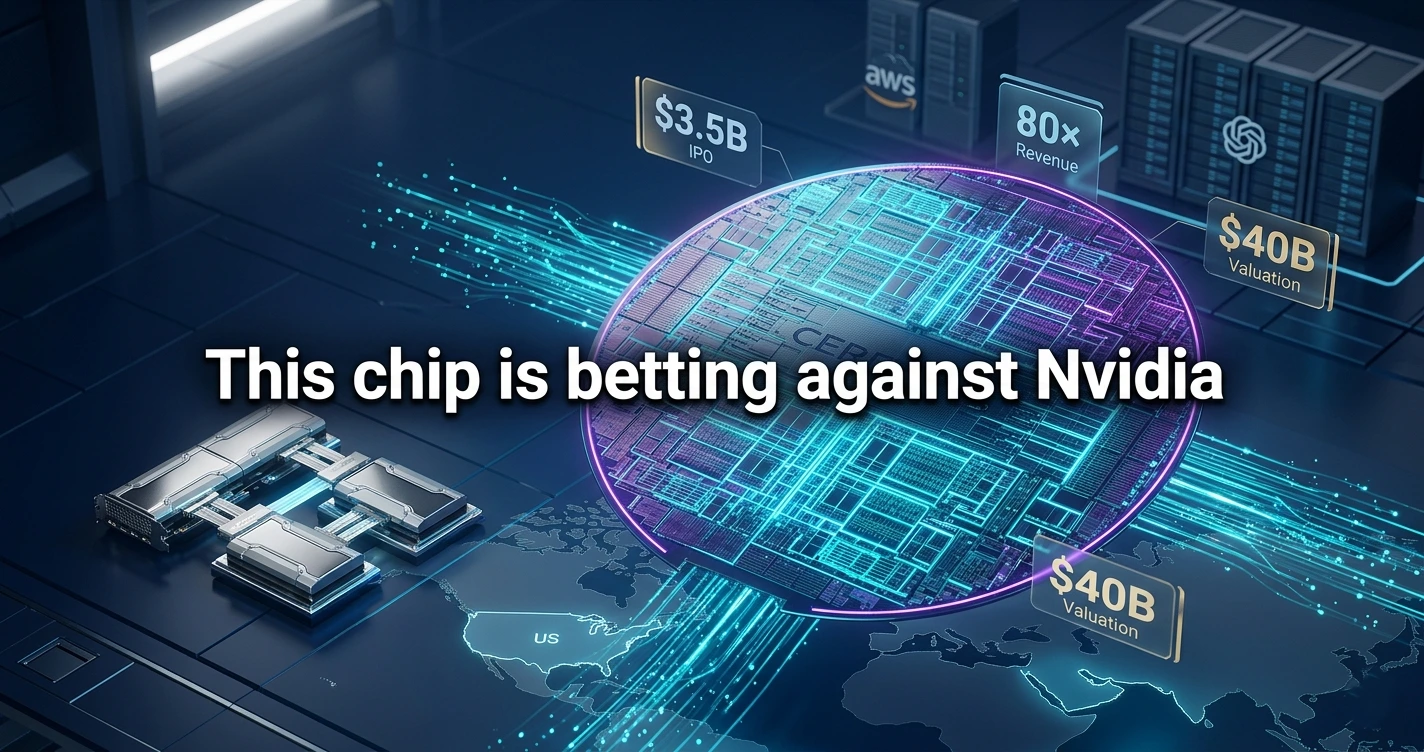
Cerebras Targets $3.5B IPO at $115-$125 — and 80x Revenue
The wafer-scale chip company launched its Nasdaq roadshow Monday with a price range that puts it squarely in Nvidia’s crosshairs and asks investors to pay a premium that few hardware companies have ever justified.
Nine years after Andrew Feldman co-founded Cerebras Systems in a Sunnyvale garage with a single audacious idea, building one processor across an entire silicon wafer, the company is asking public markets to value that idea at up to $40 billion. On Monday, Cerebras officially launched its IPO roadshow, setting a price range of $115 to $125 per share for 28 million Class A shares on the Nasdaq under ticker CBRS. At the top of that range, the offering raises $3.5 billion outright. If underwriters exercise their overallotment option in full, total proceeds climb past $4 billion.
The timing is deliberate. AI infrastructure spending hit an inflection point in early 2026 as hyperscalers committed to combined capital expenditure budgets exceeding $300 billion. Demand for specialized compute has never been higher, and Cerebras spent the past 18 months signing deals that would have seemed implausible two years ago. But the company is also walking into a market that scrutinizes AI hardware with more skepticism than it did during the 2023 frenzy. The roadshow has roughly two weeks to close the gap between a $125 ask and the proof of durable, scalable economics investors need.
This is Cerebras’ second attempt at a public listing. The first, filed in late 2024, was withdrawn after national security concerns emerged around the company’s heavy reliance on Abu Dhabi-based technology firm G42. That history hasn’t disappeared. It’s now a known risk factor baked into the S-1, and how convincingly management addresses it on the roadshow will shape where the deal ultimately prices.
The Deal in Numbers
The structure of the offering is straightforward. Cerebras is selling 28 million newly issued Class A shares, with an underwriter option for an additional 4.2 million shares. Morgan Stanley, Citigroup, Barclays, and UBS are leading the transaction, with Mizuho and TD Cowen acting as co-bookrunners.
Key offering figures: 28 million Class A shares at $115-$125 per share. Gross proceeds of up to $3.5 billion (up to $4.03 billion if overallotment exercised in full). Market cap of up to $26.6 billion on an outstanding-share basis. Pricing expected during the week of May 11, 2026. Nasdaq ticker: CBRS.
The valuation math depends on which denominator you use. Renaissance Capital notes that on a fully diluted basis the midpoint of the range implies a $35.7 billion market cap, while the outstanding-share figure sits at $26.6 billion. Bloomberg has separately reported a $40 billion target based on sources familiar with the company’s valuation ambitions. Whatever figure anchors the conversation, the price-to-revenue multiple is extreme: roughly 55x to 80x trailing sales, depending on which valuation you cite against the $510 million in 2025 revenue.
That premium isn’t unprecedented in AI-adjacent hardware. Arm Holdings priced its 2023 IPO at a similarly eye-watering multiple and has since rewarded patient holders with strong gains. But Arm supplies intellectual property to the entire semiconductor industry. Cerebras sells a single, proprietary architecture with a narrow customer base. That distinction matters to long-only funds still digesting the post-2021 tech repricing.
“The proposed range is a stress test for how far the market will stretch for differentiated AI hardware outside Nvidia’s orbit.”
NAI 500 Market Analysis, May 4, 2026 — NAI 500
One data point in the bulls’ corner: early demand signals have been exceptionally strong. According to Bloomberg, indications of interest communicated to the underwriting banks have already exceeded $10 billion in potential orders, more than double the size of the deal at the high end of the range.
The Chip That Changes the Math
The entire Cerebras investment thesis rests on a single architectural bet: that the bottleneck in AI computing isn’t raw transistor count, it’s the cost of moving data between chips. Conventional AI accelerators, including Nvidia’s H100 and B200, are discrete dies connected by high-speed interconnects. Those interconnects consume power and add latency. Cerebras eliminates them by etching its Wafer-Scale Engine across an entire 300mm silicon wafer.
The result is a processor unlike anything else in production. The WSE-3, manufactured on TSMC’s 3nm process, contains roughly 4 trillion transistors and activates approximately 900,000 AI cores out of a total 970,000 (defect tolerance is built in via routing redundancy). On-chip memory sits at 44GB of SRAM with 20 petabytes per second of memory bandwidth. For reference, the company claims its chip is 58x larger than Nvidia’s B200 and delivers 2,625x more memory bandwidth than Nvidia’s B200 package.
🧠
WSE-3 Cores
~900,000 active AI cores out of 970,000 total, with built-in defect tolerance via routing redundancy on 3nm TSMC silicon.
💾
On-Chip Memory
44GB of SRAM on a single die, with 20 petabytes per second of bandwidth, eliminating off-chip data movement latency.
⚡
Inference Speed
Company benchmarks show 1,800 tokens per second for Llama 3.1 8B inference, claimed 21x faster than Nvidia Blackwell at 32% lower cost.
📐
Wafer Scale
Full 300mm wafer integration means 4 trillion transistors on a single die — no multi-chip interconnect overhead, no NVLink required.
The practical claim is speed. Cerebras says its systems train large language models up to 10x faster than GPU clusters and run inference at a fraction of the energy cost. Those figures come from internal benchmarks and third-party tests, and Nvidia hasn’t sat still with its own performance roadmap. Still, the OpenAI deal and the AWS partnership give Cerebras real-world validation that independent analysts can’t simply dismiss.
Wafer yield risk: Building chips at wafer scale means a single manufacturing defect that would discard a small GPU die can affect a far larger area. Cerebras routes around defective cores algorithmically, but yield rates remain a closely watched variable that could affect production economics as the company scales.
Revenue, Profit and the OpenAI Factor
The financial story Cerebras is telling in 2026 is materially different from 2024. Two years ago, the company posted $290 million in revenue alongside a $485 million net loss. For the full year ended December 31, 2025, revenue reached $510 million, up 76% year over year, and the company swung to profitability, reporting $87.9 million in net income and earnings of $1.38 per share. That profitability inflection is the headline the company wants dominating roadshow conversations.
Two landmark deals underpin that growth. In December 2025, Cerebras announced a multi-year agreement with OpenAI valued at over $20 billion, under which OpenAI would consume 750 megawatts of Cerebras computing capacity through 2028. OpenAI also extended a $1 billion working capital loan to Cerebras, a vote of confidence that carries more weight than almost any analyst endorsement. Then, in March 2026, Amazon Web Services signed a binding term sheet to become the first major cloud provider to deploy Cerebras systems inside its own data centers.
Metric
2024
2025
Change
Annual Revenue
$290 million
$510 million
+76% YoY
Net Income / (Loss)
($485 million)
$87.9 million
Profitability swing
EPS
Significant loss
$1.38
First profitable year
Company Valuation
~$4B (Series F)
$23B (Jan 2026 round)
+475%
Key Customer Deals
G42/UAE partnerships
OpenAI ($20B+), AWS term sheet
Major diversification
CEO Andrew Feldman has positioned the AWS partnership as direct evidence of customer diversification. The G42 concentration that spooked regulators in 2024 still accounted for a substantial share of 2025 revenue, a figure that will be scrutinized line by line during the roadshow. But the OpenAI and AWS announcements give Cerebras a credible answer to the concentration question that it simply didn’t have 18 months ago.
Feldman is also declining to sell any of his personal shares in the offering, a signal that institutional investors tend to read as confidence. His 10.3 million post-IPO shares would be worth up to $1.28 billion at the high end of the range, meaning his incentives are tightly aligned with public shareholders from day one.
The Risks Investors Can’t Ignore
No AI hardware company goes public in 2026 without a geopolitics section in the risk factors. For Cerebras, that section is longer than most. The company’s first IPO filing collapsed partly because its revenue concentration in the UAE, specifically through G42, triggered national security reviews in Washington. Export control restrictions on advanced AI chips to certain Middle Eastern and Asian markets remain fluid policy territory, and any tightening could directly affect existing contracts.
Customer concentration: G42 and affiliated UAE entities accounted for an estimated 86% of 2025 revenue according to S-1 analysis. Even with the OpenAI and AWS deals announced, the forward revenue mix will be a critical roadshow focus.
Export control exposure: US restrictions on advanced chip exports remain subject to executive action, and Cerebras’ architecture qualifies as a controlled technology under multiple categories.
Wafer yield scalability: Single-wafer manufacturing is complex. Defect-tolerant design works at current volumes, but scaling to meet hyperscaler demand without yield degradation remains unproven at full production intensity.
In-house chip programs: Google’s TPU, Amazon’s Trainium, and Meta’s MTIA all represent direct efforts by the largest potential customers to build proprietary AI silicon that doesn’t require outside vendors.
Ecosystem maturity: Nvidia’s CUDA software stack has a decade-long head start. Developers write AI code for CUDA by default. Cerebras has its own programming tools, but switching costs are real and the ecosystem is comparatively nascent.
“The roadshow will need to convince long-only funds that wafer-scale silicon is not just clever engineering but a sustained economic moat that can compound beyond early wins.”
NAI 500 Market Analysis, May 4, 2026 — NAI 500
None of these risks are disqualifying on their own. But stacked together, they explain why the $115-$125 range isn’t a slam dunk even against a backdrop of $10 billion in early interest. The deal sizes that matter most aren’t the book-building indications from hedge funds angling for a first-day pop. They’re the long-only allocations from pension funds and growth equity managers who need to own the stock for years.
Nvidia’s Shadow and the Competition Ahead
Cerebras has spent years framing its technology as a direct challenge to Nvidia. In some narrow workloads, that framing holds up: for large language model inference at scale, the WSE-3’s on-chip memory bandwidth gives it a genuine structural advantage. You don’t have to move activations across NVLink bridges if everything lives on one die. That matters enormously when generating tokens at commercial speed and volume.
But Nvidia isn’t standing still. The Blackwell architecture, and whatever follows it, continues compressing the performance gap in inference while defending Nvidia’s dominance in training. Nvidia’s ecosystem advantage is arguably its most durable asset: CUDA-native tooling, a decade of developer familiarity, and deep integrations with every major ML framework. Cerebras can out-benchmark Nvidia on specific tests. Replacing Nvidia in production deployments is a different kind of challenge entirely.
Dimension
Cerebras WSE-3
Nvidia B200 Cluster
Architecture
Single wafer-scale die
Multi-GPU cluster with NVLink
On-chip memory
44GB SRAM
~192GB HBM per GPU (multiple units)
Memory bandwidth
20 PB/s (on-chip)
~8 TB/s per GPU (HBM)
Interconnect overhead
None (single die)
NVLink/NVSwitch required
Software ecosystem
Proprietary (Cerebras SDK)
CUDA (decade-long head start)
Claimed inference speed
1,800 tokens/sec (Llama 8B)
Benchmark-dependent
Primary customers
OpenAI, AWS (term sheet), G42
All major hyperscalers and cloud providers
The more immediate competitive threat may not come from Nvidia but from the hyperscalers themselves. Google’s TPU v5 series, Amazon’s Trainium2, and Meta’s MTIA chips are all designed to run specific AI workloads internal to those companies. If any of the three largest potential Cerebras customers decides its in-house chip meets the need, a major revenue runway disappears. The AWS term sheet is an encouraging signal. It’s not yet a purchase order at scale.
Where Cerebras has a credible story is in inference for large models and in markets where speed-per-dollar matters more than ecosystem familiarity. Startups building real-time AI products, research labs that don’t want to manage multi-node GPU clusters, and sovereign AI programs in countries that can legally access the hardware are all plausible expansion markets. Whether those segments can sustain the growth rate implied by an $80x revenue multiple is the central question of this IPO.
Frequently Asked Questions
What is Cerebras Systems’ IPO price range?
Cerebras set its IPO price range at $115 to $125 per share, offering 28 million Class A shares on the Nasdaq under the ticker CBRS. At the top of the range, the offering raises $3.5 billion, or up to $4.03 billion if underwriters exercise their overallotment option in full. Pricing is expected during the week of May 11, 2026.
What is Cerebras’ valuation at IPO?
On an outstanding-share basis, the $125 high end of the range implies a market cap of $26.6 billion. On a fully diluted basis, Renaissance Capital calculates roughly $35.7 billion at the midpoint. Bloomberg has separately reported that the company is targeting a valuation near $40 billion based on sources familiar with internal projections.
How much revenue does Cerebras make?
Cerebras reported $510 million in revenue for the full year ended December 31, 2025, up 76% from $290 million in 2024. The company also turned profitable in 2025, reporting $87.9 million in net income and earnings of $1.38 per diluted share, compared with a significant net loss in 2024.
What is the Cerebras Wafer-Scale Engine?
The Wafer-Scale Engine (WSE-3) is a single processor etched across an entire 300mm silicon wafer, containing approximately 4 trillion transistors and 900,000 active AI cores. It eliminates the multi-chip interconnect bottlenecks that limit GPU cluster performance by keeping all compute and 44GB of on-chip SRAM on one die, enabling extremely high memory bandwidth.
What is the Cerebras and OpenAI deal?
In December 2025, OpenAI signed a multi-year agreement valued at over $20 billion, under which it would consume 750 megawatts of Cerebras computing capacity through 2028. OpenAI also provided Cerebras with a $1 billion working capital loan as part of the arrangement, representing one of the largest AI infrastructure commitments to any non-Nvidia vendor.
When will Cerebras stock start trading?
Cerebras launched its roadshow on May 4, 2026, and pricing is expected during the week of May 11, 2026, according to Renaissance Capital. Trading would begin on the Nasdaq the following day under the ticker symbol CBRS, subject to market conditions and successful completion of the offering.
Why did Cerebras withdraw its first IPO?
Cerebras filed for an IPO in 2024 but withdrew the paperwork amid national security concerns in Washington tied to the company’s heavy revenue concentration in Abu Dhabi-based technology firm G42. The company has since worked to diversify its customer base, announcing the OpenAI and AWS partnerships, and refiled for a public listing in April 2026.
Bottom Line
Cerebras is a genuinely unusual company attempting a genuinely unusual IPO. Its core technology solves a real problem, and the contracts it signed in the past 18 months with OpenAI and AWS are the kind of validation that money can’t buy on a roadshow. The profitability swing from a $485 million loss in 2024 to $87.9 million in net income in 2025 reframes the story from a money-burning moonshot to something that at least rhymes with a business model.
The tension is the valuation. Paying 55x to 80x revenue for a hardware company with significant customer concentration, active geopolitical risk, and an unproven production scaling curve requires a conviction that the WSE-3 architecture is not just faster today but defensibly faster at scale for the next five to ten years. That conviction is possible. It demands a long horizon and a tolerance for binary outcomes that most institutional investors will price carefully.
Watch the book-building closely. The $10 billion in early interest is a headline, not a closing. The real signal will come when long-only funds announce their final allocations, and whether Cerebras prices at the top, the middle, or below the range of $115 to $125 per share.
Watch For
01Final IPO pricing during the week of May 11, whether Cerebras prices at the top of its $115-$125 range, above it, or below, will signal how institutional investors weigh the concentration risk versus the OpenAI and AWS deals.
02G42 revenue concentration in the first post-IPO quarterly earnings filing, the Q1 2026 10-Q will be the first public look at whether customer diversification is accelerating faster than the S-1 implied.
03AWS binding term sheet conversion, the March 2026 agreement with Amazon Web Services has not yet been converted into a full deployment contract; that milestone, or lack of it, will determine whether the hyperscaler thesis holds.
04US export control policy, any new restrictions on advanced AI chip exports to the Middle East or other regions could directly affect existing Cerebras contracts and reshape the company’s addressable market overnight.
Stay ahead of the curve.
More on AI Hardware, semiconductors, and the future of compute at NeuralWired.
DeFi’s $292M Bridge Crisis: How One Validator Flaw Drained a Protocol in 46 Minutes
The Kelp DAO exploit wasn’t a smart contract bug. It was an attack on the invisible plumbing beneath DeFi, and the fix requires the industry to rethink bridge security from the ground up.
At 17:35 UTC on April 18, 2026, 116,500 rsETH tokens left Kelp DAO’s bridge contract on Ethereum and landed in an attacker’s wallet. That transfer, worth roughly $292 million at the time, represented about 18 percent of rsETH’s entire circulating supply. The bridge held reserves backing the token across more than 20 blockchains. With the reserve gone, hundreds of millions in rsETH on Arbitrum, Base, Linea, and a dozen other L2s were suddenly backed by nothing.
Within hours, the attacker deposited the stolen tokens into Aave as collateral and borrowed over $190 million in real ETH against assets that were effectively counterfeit. Aave froze rsETH markets across its V3 and V4 deployments within the same afternoon. SparkLend and Fluid followed. Total DeFi TVL fell by over $13 billion in the 48 hours after the drain, as users raced to withdraw from protocols they no longer trusted.
The most troubling part? The vulnerability had been flagged publicly in an Aave governance forum post fifteen months earlier. The attack didn’t exploit a novel zero-day. It exploited a known configuration flaw that nobody fixed. Here’s exactly how it happened, and what the industry can actually do about it.
Anatomy of the Attack: Not a Contract Bug
To understand what went wrong, you first need to understand what cross-chain bridges actually do. When rsETH moves from Unichain to Ethereum, some piece of software on Ethereum has to verify that the corresponding tokens were locked or burned on Unichain. That verification is the entire security model. Get it wrong, and you can mint tokens on the destination chain that don’t correspond to anything real on the source chain.
Kelp DAO’s rsETH bridge used LayerZero’s OFT (Omnichain Fungible Token) standard across more than 20 networks. LayerZero’s architecture uses Decentralized Verifier Networks, or DVNs, to attest that a cross-chain message is valid before the destination chain acts on it. The critical variable is how many DVNs must agree before a message is accepted. Kelp’s rsETH bridge was configured with a 1-of-1 setup: one DVN, one required signature, no second check.
The 1/1 problem in plain terms: A 1-of-1 DVN configuration means that if the single verifier can be convinced something happened on the source chain, the destination chain will act on it, regardless of whether that thing actually occurred. There is no independent party to catch the error.
The attackers knew this. According to LayerZero’s incident statement, they gained access to the list of RPC nodes the LayerZero Labs DVN used to read source-chain state. RPC nodes are the servers that let off-chain software query blockchain data. The attackers then swapped the binary software on two of those nodes with malicious versions. The malicious nodes told the DVN a specific fraudulent transaction had occurred, while simultaneously returning accurate data to every other system that queried them, including LayerZero’s own monitoring infrastructure. That selective lying was the heart of the attack.
Compromising two nodes alone wasn’t enough. The DVN also used external RPC nodes for redundancy. So the attackers launched a DDoS attack against those external nodes, forcing the DVN to fail over onto the poisoned ones. Once failover triggered, the DVN confirmed a cross-chain burn event that never happened. The Ethereum contract released 116,500 rsETH. The malicious node software then self-destructed, wiping binaries and logs. The entire operation unfolded between 10:20 and 11:40 AM Pacific Time.
“This was not a smart contract hack. There was no reentrancy bug, no missing access check, no price oracle sleight-of-hand. The KelpDAO incident is something arguably more dangerous: an attack on the off-chain verification layer on which many cross-chain protocols depend.”
Chainalysis Investigation Team, Chainalysis, Inc. — Inside the KelpDAO Bridge Exploit
Kelp’s emergency pause multisig activated 46 minutes after the drain, at 18:21 UTC. Two follow-up attempts by the attacker at 18:26 and 18:28 UTC, each trying to pull an additional 40,000 rsETH worth roughly $100 million, both reverted because of the freeze. Without that pause mechanism, total losses could have approached $490 million. The attacker was later linked by LayerZero and Chainalysis to North Korea’s Lazarus Group, specifically the TraderTraitor subunit responsible for a string of DeFi attacks throughout 2025 and 2026.
Why This Attack Is More Dangerous Than a Smart Contract Bug
Smart contract vulnerabilities are findable. Auditors scan for reentrancy, missing access controls, integer overflows, and the other known failure modes. The industry has spent years building audit checklists, formal verification tools, and bug bounty programs oriented around on-chain code. This attack bypassed all of that. The smart contracts worked exactly as written. Every transaction on-chain looked completely valid.
What the attack targeted was the off-chain infrastructure layer: the RPC nodes that verifiers depend on to read chain state. That layer sits outside the scope of typical smart contract audits. No Solidity audit would catch a configuration that leaves a bridge with a single off-chain verifier, because the configuration isn’t in the contract code. It’s a deployment parameter chosen by the protocol team.
The configuration audit gap: The fault in the Kelp exploit was not in any line of smart contract code. It was in the deployment configuration, which sits outside the usual scope of a Solidity audit. Configuration reviews are a newer and less common discipline in DeFi security, and this incident is likely to accelerate demand for them considerably.
The blame dispute that followed the attack illustrated just how structural the problem is. LayerZero’s post-mortem said Kelp chose 1-of-1 despite recommendations to use multi-DVN redundancy. Kelp fired back that the 1/1 configuration appears in LayerZero’s own V2 OApp Quickstart, where the sample configuration file wires every pathway with one required DVN and no optional DVNs, and that no specific recommendation to change the rsETH DVN configuration was ever communicated through the direct channel between the two teams, open since July 2024. Security researchers backed Kelp’s reading: Yearn Finance developer Artem K pointed out that LayerZero’s public deployment code uses single-source verification defaults across Ethereum, BSC, Polygon, Arbitrum, and Optimism. Kelp wasn’t an outlier. According to sources cited by CoinDesk, roughly 40% of protocols on LayerZero run the same 1/1 configuration. A Dune Analytics review of approximately 2,665 active LayerZero OApp contracts found 47% using 1/1 setups.
LayerZero’s response to the exploit was swift: the company announced it would stop signing messages for any application running a 1-of-1 configuration, forcing a protocol-wide migration. That’s a meaningful response. But it also implicitly confirms that the default behavior of a $166 billion-volume cross-chain messaging protocol had, until April 2026, been compatible with the exact configuration that enabled this attack.
The Scale of DeFi’s Bridge Problem
The Kelp DAO exploit didn’t arrive in isolation. It was the largest single incident in a sustained wave. Drift Protocol, a Solana-based perpetuals exchange, lost approximately $285 million on April 1 in an attack also attributed to Lazarus Group. April 2026 ended with total DeFi losses estimated at around $647 million across 28 to 30 documented incidents, making it one of the most damaging months in DeFi history.
Incident
Date
Loss
Attack Type
Attribution
Kelp DAO (rsETH bridge)
April 18, 2026
~$292M
Off-chain RPC poisoning + DDoS
Lazarus Group (DPRK)
Drift Protocol
April 1, 2026
~$285M
Social engineering
North Korea-affiliated actors
Remaining April exploits
April 2026
~$70M
Various
Multiple
The pattern across years is damning. Bridges and cross-chain infrastructure have accounted for some of the largest individual DeFi losses since 2022, from the $625 million Ronin Bridge hack (5 of 9 validator keys compromised via spear phishing) through the Wormhole and Nomad exploits, and now to Kelp DAO. The specific attack vectors shift, but the underlying dynamic stays the same: cross-chain verification requires trusting off-chain actors or infrastructure, and when that trust is misplaced, the consequences are catastrophic and instantaneous.
The contagion from Kelp extended well beyond the $292 million direct loss. Bad debt on Aave from rsETH collateral reached into the hundreds of millions. Aave, SparkLend, and Fluid all froze rsETH markets. The broader DeFi ecosystem saw TVL decline sharply as users withdrew from lending protocols they associated with rsETH exposure. The event exposed how tightly coupled DeFi lending markets have become with cross-chain assets, and how a single bridge failure can transmit losses through the entire stack.
The Path Forward: What Actually Fixes This
There’s no single solution that eliminates cross-chain bridge risk. The problem is architectural: you’re asking one blockchain to verify the state of another, without a shared execution environment. But there are concrete steps that meaningfully reduce the attack surface, and the good news is that several of them are available today.
Multi-DVN consensus: the immediate fix
The most direct lesson from Kelp is that 1/1 verifier configurations should be treated as insecure by default. LayerZero’s V2 architecture supports X-of-Y-of-N configurations, where multiple independent DVNs must agree before a message is accepted. Under a 2/3 or 3/5 configuration, compromising one DVN’s RPC infrastructure isn’t enough. A second independent verifier would read from different nodes, see the discrepancy, and reject the forged message. The Kelp exploit would have failed.
LayerZero’s DVN ecosystem now includes major independent operators including Google Cloud, Chainlink, and Polyhedra Network, each running separate infrastructure. A multi-DVN configuration requiring consensus across two or more of these independent operators is available today and doesn’t require waiting for research to mature. The cost is slightly higher latency and fees. For a bridge holding hundreds of millions in user funds, that tradeoff isn’t a close call.
ZK-light clients: the cryptographic long game
The deeper fix is to eliminate the need to trust verifiers entirely. Berkeley’s zkBridge research demonstrates that zero-knowledge proofs can be used to verify cross-chain state without any external trust assumptions. Rather than asking a validator to attest that something happened on Chain A, a ZK-light client generates a cryptographic proof that a specific state transition occurred on Chain A, verifiable on Chain B using only mathematics.
“With succinct proofs, zkBridge not only guarantees strong security without external assumptions, but also significantly reduces on-chain verification cost. We propose novel succinct proof protocols that are orders-of-magnitude faster than existing solutions for workload in zkBridge.”
UC Berkeley RDI Center Research Team — zkBridge: Trustless Cross-chain Bridges Made Practical
The catch is that ZK proving remains computationally expensive, and building ZK-light clients for chains with complex consensus mechanisms (like EVM chains with large validator sets) is still an active research problem. Polyhedra Network’s zkBridge DVN, which uses zkSNARKs to verify cross-chain state, is already available as a LayerZero DVN option and has processed over 20 million cross-chain transactions. It’s not the default configuration for most protocols. It should be.
Cross-chain invariant monitoring
One reason the Kelp exploit succeeded for 46 minutes is that traditional monitoring tools only read from a single chain. They saw valid on-chain transactions and raised no alerts. What would have caught the attack much faster is cross-chain invariant monitoring: continuously comparing the total supply of a token on the destination chain against the total locked on the source chain. If those numbers diverge by more than a rounding error, something is wrong.
This type of monitoring doesn’t require waiting for ZK proofs to mature. It requires reading state from two chains, comparing numbers, and triggering an alert when they don’t match. Chainalysis noted in its post-mortem that spotting this class of exploit requires exactly this approach: continuously verifying that tokens released on a destination chain mathematically match tokens burned on the source chain. Protocols moving significant value across chains should treat this as non-optional infrastructure, not an optional add-on.
Canonical bridges for high-value assets
For the very highest-value transfers, canonical bridges (the bridges built directly into L2 rollup protocols, secured by Ethereum L1 consensus itself) offer a security guarantee that no third-party bridge can match. Arbitrum Bridge, Optimism Gateway, and Base Bridge inherit Ethereum’s validator set with no additional trust assumptions. The tradeoff is a seven-day withdrawal window on optimistic rollups and limited flexibility. For large institutional transfers or reserve-backing of major assets, that tradeoff is worth making.
🔒
Multi-DVN Consensus
Require 2+ independent verifiers to approve every cross-chain message. Available today on LayerZero V2. Eliminates single-point-of-failure. Highest immediate impact.
🧮
ZK-Light Clients
Cryptographic proofs verify source-chain state without trusting any validator. Polyhedra’s zkBridge DVN is live. Strongest security model; proving cost declining rapidly.
📊
Cross-Chain Monitoring
Continuously compare token supply across source and destination chains. Catches invariant violations before they become catastrophic losses. No new infrastructure required.
🛡
Canonical Bridges
For maximum-value transfers, use L1-secured canonical bridges. Seven-day withdrawal window is the cost. Ethereum validator security is the benefit.
What Builders Must Do Now
The Kelp incident makes clear that a smart contract audit is not a security audit for a cross-chain protocol. If your protocol bridges assets, you need a different and more expansive review process. Here’s what that looks like in practice.
Audit your DVN configuration, not just your contracts. Review what configuration your bridge deployment is actually using, not what your documentation says it should use. If you’re on a 1/1 setup, treat that as a critical vulnerability and migrate before you’re targeted.
Require at least two independent DVNs from different operators. Google Cloud, Chainlink, and Polyhedra are all live LayerZero DVN operators with independent infrastructure. A 2-of-3 requiring any two of them is materially more secure than a 1/1 setup at minimal additional cost.
Add Polyhedra’s zkBridge as an optional DVN. Even as an optional rather than required verifier, a ZK-proof-based DVN adds a mathematically grounded check that targeted RPC poisoning can’t defeat.
Deploy cross-chain supply monitoring on day one. Any bridge that issues tokens on destination chains should maintain a real-time comparison of locked supply on the source chain against circulating supply on all destination chains. Automate alerts and automatic pausing on significant divergence.
Test your emergency pause mechanism under realistic conditions. Kelp’s pause multisig worked. It fired 46 minutes in and prevented an additional $200 million in losses. Not every protocol that has a pause mechanism has verified it actually works under the conditions where it would be needed.
Harden your RPC infrastructure independently of your bridge vendor’s recommendations. Use multiple RPC providers from different geographic regions and organizational structures. Implement RPC consistency checking that alerts when different providers return materially different state for the same query.
The documentation default problem: LayerZero’s own V2 OApp Quickstart, at the time of the Kelp exploit, showed a sample configuration with one required DVN and no optional DVNs. Default configurations in developer tooling become de facto standards. Infrastructure providers have a responsibility to make the secure configuration the default, not an advanced option that teams have to discover separately.
Frequently Asked Questions
What is a DVN (Decentralized Verifier Network) in LayerZero?
A DVN is an independent off-chain network that reads source-chain state and attests that a cross-chain message is valid before the destination chain accepts it. LayerZero’s architecture lets each protocol choose which DVNs must confirm a message and how many must agree. A 1/1 configuration requires only one DVN’s attestation; a 2/3 configuration requires two of three to agree before any action is taken.
How did the Kelp DAO exploit actually work?
Attackers compromised the RPC nodes that LayerZero’s single DVN used to read source-chain state, installing malicious software that reported a fake token burn event to the DVN while returning accurate data to all other systems. They simultaneously DDoS’d the backup external RPC nodes, forcing the DVN to rely on the poisoned infrastructure. The DVN validated the fake message, and Kelp’s Ethereum contract released 116,500 rsETH to the attacker. The exploit took roughly 80 minutes from start to finish.
Would a standard smart contract audit have caught this vulnerability?
No. The Kelp DAO smart contract code was correct and performed as designed. The vulnerability was in the deployment configuration, specifically the decision to use a 1-of-1 DVN setup, which sits outside the scope of a typical Solidity audit. This is a significant gap in how DeFi security reviews are currently structured, and it’s driving demand for dedicated bridge configuration audits.
What is zkBridge and how does it improve cross-chain security?
zkBridge uses zero-knowledge proofs to verify that a specific state transition occurred on a source chain, without relying on any external validator to attest to it. The proof can be checked on the destination chain using only cryptographic math. This eliminates the need to trust any off-chain infrastructure, making the class of attack that hit Kelp DAO impossible. UC Berkeley’s RDI Center published the foundational research; Polyhedra Network has deployed a production implementation.
Is LayerZero itself compromised after this attack?
No. LayerZero’s incident post-mortem confirmed zero contagion to other applications on the protocol. Every application using multi-DVN configurations was unaffected. The attack targeted one specific application’s single-verifier deployment, not a flaw in LayerZero’s protocol code. LayerZero has since announced it will stop signing messages for any application using a 1/1 DVN configuration.
What is the safest type of cross-chain bridge for large asset transfers?
For the highest-value transfers, canonical bridges secured by Ethereum L1 consensus (Arbitrum Bridge, Optimism Gateway, Base Bridge) offer the strongest security guarantees, since they inherit Ethereum’s full validator set with no additional trust assumptions. The tradeoff is a seven-day withdrawal window on optimistic rollups. Third-party bridges using multi-DVN configurations with ZK-proof verifiers are the next-best option when speed and flexibility are required.
Who was behind the Kelp DAO attack?
LayerZero and Chainalysis attributed the attack with preliminary confidence to North Korea’s Lazarus Group, specifically the TraderTraitor subunit. The same group was linked to the Drift Protocol exploit earlier in April 2026 and a series of DeFi attacks going back several years. Lazarus Group has developed expertise in both technical infrastructure attacks and social engineering of crypto teams.
The Bridge Problem Isn’t Going Away
Multi-chain DeFi isn’t a temporary phase. Users and capital will continue to move across chains, and bridges will remain the critical infrastructure that makes that movement possible. The question isn’t whether to use cross-chain bridges. It’s whether the industry will build them with the security rigor their role demands.
The Kelp DAO exploit exposed two overlapping failures. The first is technical: a 1/1 verifier configuration is not an appropriate security model for a bridge holding hundreds of millions in user funds, and that configuration was both a common default and underaudited across the industry. The second is systemic: DeFi’s lending markets have grown deeply entangled with cross-chain assets, meaning a bridge failure no longer stays in the bridge. It transmits instantly to lending protocols, stablecoin markets, and the broader TVL of the entire ecosystem.
The good news is that the technical tools to build materially more secure bridges exist today. Multi-DVN configurations, ZK-proof-based verifiers, and real-time cross-chain invariant monitoring aren’t research concepts. They’re deployable options that the Kelp incident will likely force into mainstream adoption far faster than any industry working group ever could. Fifteen months of ignored governance forum warnings accomplished nothing. A $292 million loss is already reshaping how protocols configure their bridges. That’s not how security lessons should have to be learned. But at least they’re being learned.
Watch For
01LayerZero’s forced migration off 1/1 DVN configurations: the protocol announced it will stop signing messages for single-verifier apps, driving a wave of bridge reconfigurations across dozens of protocols through mid-2026.
02DeFi United’s rsETH recovery plan: a coalition of protocols has proposed using Aave to systematically unwind bad debt tied to the exploit and restore rsETH’s backing. The outcome will shape how DeFi handles post-exploit socialized losses going forward.
03ZK-proof DVN adoption rates: Polyhedra’s zkBridge DVN is live on LayerZero. Watch whether major protocols add it as a required or optional verifier in the months following this incident, signaling an industry shift toward cryptographic rather than validator-based bridge security.
04Aave’s LRT collateral policy: this is the second 2026 incident where liquid restaking token collateral on Aave produced nine-figure bad debt from a non-Aave failure. A policy overhaul on how Aave handles cross-chain or bridge-dependent assets is increasingly likely.
Stay ahead of DeFi security.
More analysis on blockchain infrastructure and protocol security at NeuralWired.
Congress Is About to Redraw the Lines on Stablecoin Yield | NeuralWired
Crypto PolicyMay 3, 2026 · 10 min read
Congress Is About to Redraw the Lines on Stablecoin Yield
A Senate compromise banning passive stablecoin interest while permitting activity-based rewards is heading toward a committee vote, and the DeFi ecosystem’s entire reward architecture may need to change before the ink dries.
For two years, the most contentious phrase in Washington crypto policy wasn’t “securities” or “commodity.” It was “yield.” Can a stablecoin issuer pay interest to holders? The banking lobby said no. DeFi developers said the question misunderstands how blockchains work. Now Congress is trying to split the difference with a framework that draws a hard line between passive interest and activity-triggered rewards, and the distinction will reshape how hundreds of billions of dollars in stablecoin value actually function.
The setup traces back to June 2025, when the Senate passed the GENIUS Act, establishing the first federal stablecoin regulatory framework in U.S. history. The law set a firm baseline: stablecoin issuers can’t pay interest directly to holders. It was a concession to bank regulators worried about deposit substitution, but it left the crypto industry hunting for workarounds. That hunt ended, at least provisionally, when Senators Thom Tillis and Angela Alsobrooks announced an agreement in principle in late March 2026 to resolve the yield dispute inside broader market-structure legislation.
The mechanics of that compromise will determine which business models survive, which protocols have to rebuild their reward logic from scratch, and whether U.S.-regulated stablecoins can compete with offshore alternatives that face none of these constraints. The committee markup was still pending as of early May, with Galaxy Research flagging unresolved DeFi provisions and a possible delay into the second half of the month. But the direction is clear. And the industry is already moving.
The GENIUS Act: What the Baseline Actually Says
The GENIUS Act created two categories of stablecoin issuer: federally licensed “permitted payment stablecoin issuers” and state-chartered alternatives that must meet federal standards. Both are subject to 1:1 reserve requirements, monthly public attestations, and prohibitions against commingling reserves with operating funds. Clean rules on the asset side. But the yield prohibition was the clause that stuck.
The law treats direct interest payments from issuers to holders as a feature that would make stablecoins functionally indistinguishable from bank deposits, triggering the same systemic risk concerns that deposit insurance regimes are meant to contain. The Federal Reserve and the FDIC had been pushing this position in comment letters for years. Congress gave them what they asked for.
Context: As of early 2026, dollar-pegged stablecoins account for roughly 99% of the stablecoin market by volume. USDT and USDC together hold the dominant share. Any yield restriction that applies to dollar stablecoins therefore touches the vast majority of the on-chain dollar economy.
The immediate effect was predictable. Issuers like Circle stopped discussing any direct yield-sharing product for U.S. retail customers. DeFi protocols, which earn yield by deploying stablecoin reserves into money markets and treasury instruments, continued operating but with growing regulatory ambiguity about whether their reward distributions constituted “issuer” interest or something else. That ambiguity is exactly what the Tillis-Alsobrooks framework attempts to resolve.
The Tillis-Alsobrooks Compromise: Passive vs. Active
The deal announced in late March 2026 doesn’t lift the ban on passive yield. It codifies it. What it adds is an explicit carve-out for rewards that are triggered by verifiable user activity, specifically payments, transfers, and platform usage, rather than simply holding a balance. The distinction sounds simple. The implementation is not.
“The proposed framework bans yield paid solely on passive stablecoin balances while permitting a narrower set of rewards tied to payments, transfers, or platform usage.”
Coinbase Institutional Commentary, April 2026 — Coinbase Institutional
The key word in that framing is “solely.” Regulators and legislative staff are effectively drawing a line between a savings account, where your money earns interest by sitting still, and a loyalty program, where your activity earns rewards. Banks have run loyalty programs for decades without triggering deposit-substitution concerns. The Tillis-Alsobrooks approach borrows that logic and applies it to on-chain tokens.
What this means in practice is that a stablecoin holder who makes five payments through a compliant wallet app might qualify for a rewards distribution. A holder who simply parks USDC in a wallet and waits would not. The legislative text, still in draft form as of the first week of May, needs to define what counts as “bona fide” activity. That definition will be the most litigated clause in the entire bill.
Status Alert: As of May 3, 2026, the relevant Senate committee markup had not yet occurred. Galaxy Research reported that Senator Tillis was pushing to delay the vote into May, citing unresolved language on DeFi provisions and stablecoin yield. Any analysis of the deal’s final form is therefore preliminary.
How Activity-Based Yield Actually Works in Code
Building a compliant reward system under this framework requires three distinct technical layers working together. Get any one wrong and you’ve either built something legally unusable or something that fails to capture genuine usage.
Event Capture
The system needs a reliable record of user activity. On-chain transfers and contract interactions are the cleanest source: every transaction is timestamped, signed, and permanently recorded. Wallet apps can supplement this with off-chain activity logs, but off-chain data introduces custodial questions about who controls the record and whether it can be audited. For DeFi protocols, on-chain events are the obvious starting point.
Eligibility Logic
Once activity data exists, a rewards smart contract needs to evaluate whether a given address meets the threshold. This is similar to how existing DeFi liquidity-mining programs work, but with a crucial difference: the qualifying action is user behavior rather than capital deployment. A protocol might distribute rewards to addresses that completed at least three on-chain transfers in a 30-day window, for example, rather than to addresses that simply hold a governance token.
Proof and Attestation
The hardest layer. “Usage” is not a native blockchain primitive the way balance or transfer history are. Proving that a given on-chain action represents genuine economic behavior, rather than a wash transaction designed to game the eligibility logic, requires either oracle services that attest to external context, signed off-chain attestations from counterparties, or privacy-preserving proofs if users shouldn’t expose their full transaction history. None of these are fully standardized. All of them introduce new trust assumptions.
📡
Event Capture
On-chain transfers, contract calls, and wallet interactions logged as eligibility evidence. Cleanest when fully on-chain; messier when mixing off-chain data.
⚙️
Eligibility Logic
Smart contracts evaluate activity thresholds and compute reward entitlements. Must be auditable and resistant to wash-transaction gaming.
🔐
Proof Layer
Oracles, signed attestations, or ZK proofs verify that activity is genuine. The least mature layer technically and the one regulators will scrutinize most.
📋
Governance
Defining what counts as qualifying activity is ultimately a policy decision encoded in protocol parameters, not a purely technical one. Expect ongoing legal review cycles.
Chain-by-Chain: Who Wins This Transition
The regulatory change doesn’t land equally across the blockchain ecosystem. Settlement architecture, transaction throughput, and existing user behavior patterns all determine which chains are positioned to adapt quickly and which face structural disadvantages.
Chain
Stablecoin Position
Activity-Reward Fit
Key Risk
Ethereum Mainnet
Deepest stablecoin and DeFi settlement layer; USDC and USDT primary venue
Strong: dense contract interaction history; first mover for compliance standards
High gas costs make small-value activity rewards economically unviable for retail users
Solana
Growing payments and consumer transfer use case; low-fee native environment
Excellent: high-throughput payment flows map cleanly to activity-gating logic
Ecosystem still maturing on compliance tooling; fewer institutional-grade oracle providers
Ethereum L2s (Arbitrum, Base, Optimism)
Rapidly growing stablecoin TVL; cheap, auditable transfer history
Very strong: low fees mean micro-transactions are viable eligibility events
Sequencer centralization raises questions about activity-record integrity
Other L1s (Avalanche, Cosmos)
Smaller stablecoin pools; niche use cases
Moderate: activity exists but scale is insufficient for broad reward programs
Risk of being skipped entirely if issuers focus compliance spend on top-three venues first
Ethereum faces the most immediate structural pressure because its existing DeFi yield products, particularly money-market protocols like Aave and Compound, route stablecoin deposits into yield-generating instruments and distribute returns to depositors. Whether that constitutes passive balance yield or something different under the new framework is genuinely uncertain. The protocols argue that depositing into a lending pool is an active decision that generates economic activity. Regulators may or may not agree.
Solana’s positioning is more straightforward. Its consumer payment infrastructure, designed for high-frequency, low-value transfers, maps almost directly onto what the activity-based framework is trying to reward. A merchant rebate program where users earn rewards for completing five USDC payments per month requires exactly the kind of verifiable, frequent on-chain activity that Solana’s fee structure makes practical at scale.
Winners, Losers, and the Pivots Already Underway
For Circle and other major issuers, the practical outcome is a shift from balance-based incentives to payment utility programs. Merchant rebates, partner network rewards, and usage-linked distribution mechanisms all become viable. Direct savings products do not. That’s a meaningful product constraint, but it’s not fatal for issuers whose core business is payment infrastructure rather than yield generation.
DeFi lending protocols face a harder adjustment. Their growth during 2022-2025 was partly driven by headline APYs that attracted passive capital. A tighter reward environment removes easy deposit growth and forces protocols to compete on actual capital efficiency, collateral quality, and liquidation safety rather than distribution rates. For well-run protocols with genuine utility, this is a competitive moat. For those that were essentially paying depositors with treasury tokens to mask mediocre fundamentals, it’s a reckoning.
Tokenized real-world assets and tokenized treasuries may actually benefit from the shift. Products like tokenized T-bills clearly generate yield from underlying assets rather than from the issuer’s own balance sheet, and they leave an auditable on-chain trail of economic activity. Regulators have shown more comfort with this category precisely because the yield source is transparent and the operational evidence is verifiable.
“The state of onchain yield in 2026 is defined less by who offers the highest rate and more by who can prove that rate is backed by genuine, auditable economic activity.”
Galaxy Research, “The State of Onchain Yield,” May 2026 — Galaxy Research Insights
The Strongest Counterarguments
Not everyone thinks the activity-based framework solves the problem it’s supposed to solve. There are three serious criticisms worth taking seriously before declaring this a workable compromise.
First, the semantics critique. If platforms can route yield economics through loyalty programs, fee rebates, and wallet-side incentives that function exactly like interest, then the ban on passive yield is a form restriction, not a substance restriction. Users who want yield will get it; they’ll just have to click a “transfer” button to trigger the distribution. Regulators who pushed for the ban may find they’ve achieved little beyond increasing compliance costs for legitimate issuers while leaving the underlying behavior unchanged.
Second, the data problem. Proving “bona fide” activity requires collecting evidence. For fully on-chain activity, that evidence is public by default, which means it’s also available to blockchain analytics firms, law enforcement, and anyone else running a node. For activity that includes off-chain components, issuers need to collect and store user data, which creates privacy obligations under state and federal law that most DeFi protocols have never had to navigate. The compliance infrastructure required to run an activity-based rewards program may be too expensive for smaller protocols to build.
Third, the fragmentation risk. U.S.-compliant stablecoins that follow these rules will be more expensive to operate and potentially less composable with DeFi protocols that don’t want the compliance overhead. Offshore alternatives with no yield restrictions will remain available to non-U.S. users and, in many cases, to U.S. users willing to accept the legal risk. The result could be a two-tier stablecoin market: a regulated onshore tier with activity-gated rewards and a less supervised offshore tier with unrestricted yield.
Honest Limitation: The bill text that will govern all of this is still being negotiated as of early May 2026. Analysis of the deal’s final impact is necessarily conditional on language that hasn’t been finalized. Watch the committee markup closely, not just the headline vote.
Frequently Asked Questions
What is the GENIUS Act and what does it say about stablecoin yield?
The GENIUS Act, passed by the Senate in June 2025, established the first federal U.S. stablecoin regulatory framework. Its core restriction prohibits stablecoin issuers from paying direct interest to holders, treating such payments as functionally equivalent to bank deposits and therefore subject to the same regulatory concerns.
What is activity-based stablecoin yield and how is it different from interest?
Activity-based yield is a reward distribution triggered by verifiable user behavior, such as completing payments or transfers, rather than simply holding a balance. The legislative distinction treats passive holding like a savings account (prohibited) and activity-triggered rewards like a loyalty program (potentially permitted under the proposed framework).
Which stablecoin issuers are most affected by the proposed yield rules?
Circle (USDC) and Tether (USDT) face the most immediate impact given their dominant market share. Both issuers already earn yield on their reserves; the question is whether they can share any of that yield with holders, and under what conditions. Circle has been more active in U.S. regulatory engagement and is likely to adapt its product roadmap first.
How does the Tillis-Alsobrooks compromise differ from the original GENIUS Act?
The GENIUS Act bans passive stablecoin yield outright. The Tillis-Alsobrooks framework keeps that ban but adds an explicit carve-out for rewards tied to payments, transfers, and platform usage. It’s not a relaxation of the yield prohibition but rather a definition of a narrower category of distributions that don’t count as “yield” under the law.
Will DeFi lending protocols like Aave and Compound be affected?
Potentially yes. These protocols earn yield by deploying stablecoin deposits into money markets and distributing returns to depositors. Whether that constitutes passive balance yield or activity-based distribution is legally ambiguous under the proposed framework and is likely to require guidance from regulators or litigation to resolve definitively.
What happens to stablecoin products for U.S. consumers under these rules?
U.S. retail users are unlikely to see direct interest-bearing stablecoin products from regulated issuers. They may gain access to activity-gated reward programs tied to payments and transfers. The practical yield available to passive holders through regulated channels would remain near zero, while active users in compliant ecosystems could earn rewards.
Could offshore stablecoins undermine U.S. stablecoin yield rules?
This is the most credible structural risk in the framework. Offshore stablecoin issuers operating outside U.S. jurisdiction face none of these yield restrictions. If the compliance cost of activity-based reward systems is too high or the resulting products are too limited, some users and liquidity pools may migrate to less regulated alternatives, reducing the effectiveness of the rules.
What Comes Next and Why the Markup Vote Is the Real Moment
The Senate compromise, if it reaches a final vote, will not end the debate over stablecoin yield. It will move the debate from Washington to protocol governance forums, legal teams at stablecoin issuers, and smart contract audit shops. The question stops being “should activity-based rewards be legal?” and becomes “what specific implementation is compliant, and who decides?”
That second question is harder. Regulatory guidance on what counts as bona fide activity will take months or years to develop through the standard notice-and-comment process. In the meantime, issuers and protocols will make product decisions based on incomplete information. Some will build conservative systems that clearly qualify but leave yield on the table. Some will push the boundary and wait for enforcement action to clarify the line. The protocols that get the calibration right, capturing genuine user activity without triggering the passive-yield prohibition, will define the compliance template for everyone who follows.
The broader implication for the on-chain dollar economy is a structural shift toward payment utility over savings behavior. Stablecoins that work hard, facilitating commerce, enabling transfers, powering DeFi interactions, will accrue more economic value to their users than stablecoins that simply sit in wallets. That’s not necessarily a bad outcome for a technology that was designed to be money in motion rather than money at rest.
Watch For
01The Senate committee markup vote, expected in May 2026. The specific definition of “bona fide activity” in the final bill text will determine the practical scope of the framework for every issuer and protocol in the U.S. market.
02Circle’s product announcements in the 60 days following any final bill passage. As the most U.S.-regulated major issuer, Circle’s first compliant reward product will set an industry benchmark others will either follow or challenge.
03DeFi lending protocol responses, particularly from Aave and Compound, on whether their deposit-reward structures require restructuring. A formal legal opinion from either protocol’s governance forum would be a significant market signal.
04Offshore stablecoin market-share data on Dune and DefiLlama through Q3 2026. Any meaningful shift toward non-U.S. stablecoin products would be an early indicator that the compliance cost is driving liquidity out of regulated venues.
Stay ahead of the curve.
More crypto policy and DeFi infrastructure coverage at NeuralWired.
After months of Senate stalemates and banking-lobby pressure, a compromise on stablecoin yield rewards has unlocked what could become the most sweeping U.S. crypto legislation ever passed.
For nearly a year, one sentence in a Senate bill held the entire U.S. crypto regulatory framework hostage. On May 1, 2026, that sentence finally got rewritten. Coinbase announced a deal had been reached on the stablecoin yield provision inside the CLARITY Act, the Digital Asset Market Clarity Act that passed the House back in July 2025 but had been grinding through Senate opposition ever since. The compromise, brokered by Senators Thom Tillis (R-N.C.) and Angela Alsobrooks (D-Md.) with White House involvement, clears the path for the most consequential digital asset legislation the United States has ever attempted.
The stablecoin market now sits at $322 billion in total capitalization as of May 2026. That’s the number that explains why Coinbase spent $1.07 million lobbying in Q1 2026 alone, why the American Bankers Association fought the White House’s own economists, and why Senate Banking Committee Chairman Tim Scott spent months trying to hold together a fragile Republican coalition. The fight over who gets to profit from idle stablecoin reserves isn’t just a technical policy dispute. It’s a battle over who controls the next generation of financial infrastructure.
Here’s what the deal actually says, who wins, who’s still uneasy, and what happens now.
The Deal That Broke the Logjam
The compromise text, first disclosed by Punchbowl News, has three components. First, a broad prohibition on rewards that are “economically or functionally equivalent to interest on bank deposits.” Second, a directive to regulators to create a new stablecoin disclosure regime. Third, a list of permissible reward activities that stablecoin issuers can offer without tripping the prohibition.
That third piece is the one Coinbase needed. The exchange had described earlier draft language as “overly limiting” and, in March, informed Senate offices it “cannot support latest compromise” after rejecting a prior proposal. The new framework draws a distinction between passive interest payments and activity-based rewards, a line the crypto industry pushed hard to establish.
What the compromise covers: The finalized text bans yield paid solely for holding a stablecoin, treating it like a deposit interest product. It permits rewards tied to specific user activity or services, and it requires stablecoin issuers to disclose reserve compositions and yield mechanics to regulators under a new framework.
The White House’s involvement signals administration buy-in that wasn’t guaranteed. In April, the Council of Economic Advisers published a report arguing that allowing stablecoin yield “would have almost no effect on bank lending,” a finding that directly contradicted the banking lobby’s core objection. Getting the White House to co-author the political cover helped Tillis and Alsobrooks close the gap.
“Could be in a good final position by next week.”
Sen. Thom Tillis (R-N.C.), Senate Banking Committee, announcing progress on March 18, 2026 — Bloomberg
That optimism took six more weeks to materialize. But it did.
$322 Billion at Stake
The numbers behind this fight explain why it took so long to resolve. Tether’s USDT alone holds roughly $184 billion in market cap, representing about 58% of the entire stablecoin ecosystem. Circle’s USDC sits at $78 to $79 billion, with its reserves structured so that 80% sits in the Circle Reserve Fund, a BlackRock-managed government money market vehicle. The interest income those reserves generate is Circle’s primary revenue stream. In 2024, that came to $1.68 billion.
That’s the economics the yield provision was threatening. When stablecoin issuers hold short-term Treasuries and money market funds, they earn yield on reserves that users don’t see. The crypto industry’s argument was simple: let us share some of that yield with users. Banks heard something different: let them compete directly with deposit accounts.
💵
Stablecoin Market Cap
$322 billion total as of May 2026, up from $316B in March. Tether holds 58% of that market.
📈
2028 Forecast
Bank analysts project stablecoin market cap could reach $2 trillion by 2028, a roughly 6x expansion from today.
🏛️
Treasury Impact
Growth to $2T could drive an additional $1 trillion in U.S. Treasury bill purchases as stablecoin issuers hold reserves.
🔒
Coinbase Lobbying Spend
$1.07 million in Q1 2026 alone, making the yield provision one of the most aggressively lobbied items in the bill.
The transaction volume at stake makes those reserve figures look modest. In January 2026 alone, stablecoin networks moved over $10 trillion in a single month. This isn’t a niche asset class. It’s infrastructure, and the rules around who profits from it matter enormously.
Banks vs. Crypto: The Yield Battle
The banking industry’s opposition was not purely self-interested theater. It rested on a coherent, if contested, economic argument. Citi’s head of Future of Finance research put the fear plainly.
“Stablecoin yields could trigger massive outflows from traditional banks, potentially draining $6.6 trillion from the banking system.”
Ronit Ghose, Future of Finance Head, Citigroup — Bloomberg, August 2025
PwC’s banking advisory practice echoed the concern in operational terms.
“Banks may face higher funding costs by relying more on wholesale markets or raising deposit rates, which could make credit more expensive for households and businesses.”
Sean Viergutz, Banking and Capital Markets Advisory Leader, PwC — PwC Analysis, August 2025
The banks drew parallels to the 1981 to 1982 money market fund surge, when $32 billion in net withdrawals moved from bank deposits into higher-yielding alternatives in roughly 18 months. The Kansas City Federal Reserve estimated that allowing stablecoin yield could drain $1.5 trillion in lending capacity from the system.
The White House pushed back hard on those projections. Its April 8 CEA report concluded that banning stablecoin yield would boost traditional lending by only 0.02%, or about $2.1 billion, and that most of that benefit would flow to large banks rather than the community lenders the banking lobby was positioning as the primary victims.
Banking lobby response: The American Bankers Association dismissed the White House study on April 12, arguing economists had asked “the wrong question.” The Bank Policy Institute and Bank Policy Forum also rejected its framing. Neither group has endorsed the final compromise as of publication.
Circle’s CEO called the bank-run fears “exaggerated.” The compromise, to a degree, splits that difference. It caps passive yield while creating regulatory space for activity-based rewards, a structure that doesn’t entirely satisfy either side but gives each something to work with.
Legislative Timeline
The CLARITY Act has been moving, stalling, and lurching since the House passed it in July 2025. It established a three-category framework: securities fall under SEC jurisdiction, digital commodities under the CFTC, and stablecoins under shared oversight. The Senate inherited it with no consensus on the yield question, which became the bill’s main fault line almost immediately.
Date
Event
Key Players
Status
July 2025
CLARITY Act passes the House
House of Representatives
Confirmed
Jan. 11, 2026
Coinbase escalates pressure on yield restrictions
Coinbase Global Inc.
Confirmed
Jan. 2026
Senate Banking Committee postpones markup
Senate Banking Committee
Confirmed
Mar. 18, 2026
Tillis signals deal is close
Sen. Tillis, Sen. Moreno
Confirmed
Mar. 24-25, 2026
Coinbase rejects earlier compromise proposal
Coinbase, Senate offices
Confirmed
Apr. 8, 2026
White House CEA publishes stablecoin yield report
White House CEA
Confirmed
Apr. 14, 2026
Chairman Scott identifies three remaining issues
Sen. Tim Scott
Confirmed
May 1, 2026
Deal finalized; Coinbase confirms compromise
Coinbase, Tillis, Alsobrooks
Confirmed
May 2, 2026
Scott eyes May markup for CLARITY Act
Sen. Tim Scott
Reported
Before July 4 recess
Target window for Senate floor vote
Senate Majority Leader John Thune
Reported, unconfirmed
Senate Banking Committee Chairman Tim Scott is now eyeing a May markup for the full bill. That’s contingent on securing all 13 Republican votes on the 24-member committee, a hurdle Scott identified as one of three remaining issues as recently as mid-April alongside DeFi provisions and yield language. The yield issue is now resolved. DeFi and committee unity aren’t confirmed.
“Three issues remain: stablecoin yield language, DeFi provisions, and securing all Republican votes on the committee.”
Sen. Tim Scott (R-SC), Senate Banking Committee Chairman — Yahoo Finance, April 14, 2026
Market Signals and Forecasts
Prediction markets as of May 2 show roughly a 55% probability that the CLARITY Act text gets released on schedule, according to data from Binance Square. That’s a thin majority, and it reflects genuine uncertainty about whether the remaining committee issues get resolved in time for Majority Leader John Thune to find floor space before the July 4 recess.
The stablecoin market itself has been shifting in ways that complicate the bill’s assumptions. Tokenized treasury products grew faster than stablecoins in Q1 2026 for the first time, with $2.12 billion in tokenized treasury market cap added versus $1.19 billion in new stablecoin supply. That trend, eight consecutive quarters of tokenized treasury expansion, suggests institutional investors are already finding yield-bearing alternatives to plain stablecoins without waiting for Congress.
DeFi yields in context: Protocols like Aave, Maple, Curve, and Pendle currently offer 4 to 14% APY on stablecoin-adjacent products. That range illustrates the gap between what regulated stablecoins could offer under the new framework and what users can already access through decentralized channels, a gap the CLARITY Act’s DeFi provisions still need to address.
For Coinbase specifically, the deal matters beyond its lobbying costs. The exchange’s core stablecoin business depends on being able to offer competitive products as USDC’s issuer, Circle, prepares for its anticipated IPO. Circle’s $1.68 billion in 2024 revenue came almost entirely from reserve interest income. The new disclosure regime built into the compromise will require Circle to be more transparent about that structure, adding compliance costs but also potentially legitimizing the business model for institutional investors evaluating the IPO.
Tether’s USDT holds 58-59% of the stablecoin market, making its compliance posture under any final rules a systemic question, not just a Tether one.
The $7.7 trillion U.S. money market fund industry, cited by Circle’s CEO as the real yield competitor for deposits, gives context to why banks fear stablecoin yield more than they admit publicly.
Galaxy Research’s April 29 CLARITY Act update flagged the DeFi provisions as the most technically complex remaining obstacle, one that the yield deal doesn’t resolve.
Senate floor scheduling under Thune remains the wild card; even a successful markup doesn’t guarantee a pre-recess vote.
Frequently Asked Questions
What is the CLARITY Act?
The Digital Asset Market Clarity Act is U.S. legislation that creates a three-category regulatory framework for digital assets. It assigns SEC oversight to securities, CFTC oversight to digital commodities, and shared oversight to stablecoins. It passed the House in July 2025 and is now working through the Senate.
What does the stablecoin yield compromise actually do?
It bans rewards on stablecoins that are “economically or functionally equivalent to interest on bank deposits,” while allowing activity-based rewards and creating a new regulator-led disclosure framework. Passive yield for simply holding a stablecoin is prohibited; rewards tied to user activity or services can be permitted.
Why did the banking industry oppose stablecoin yield?
Banks feared that competitive yields on stablecoins would pull deposits away from traditional accounts, raising their funding costs and shrinking their lending capacity. Citi estimated a worst-case scenario of $6.6 trillion in deposit outflows if stablecoin yields were allowed without restriction.
What did the White House CEA report find?
The April 8 report argued that banning stablecoin yield would only boost traditional lending by about 0.02%, or $2.1 billion, and that the banking lobby overstated the risks. It concluded that allowing yield would have “almost no effect on bank lending,” directly challenging the ABA’s core argument.
How large is the current stablecoin market?
The total stablecoin market cap reached $322 billion as of May 2026. Tether’s USDT dominates with approximately $184 billion (58% market share), followed by Circle’s USDC at $78 to $79 billion. Forecasts project growth to $2 trillion by 2028.
What are the remaining obstacles to the CLARITY Act passing?
As of early May 2026, the main hurdles are resolving DeFi provisions, securing unified Republican support on the Senate Banking Committee, and finding Senate floor time before the July 4 recess. The stablecoin yield issue is now resolved, but committee markup timing remains unconfirmed.
What happens if the CLARITY Act doesn’t pass before the July 4 recess?
The bill would not die, but momentum would stall significantly. Congress would return in September with a compressed legislative calendar ahead of budget deadlines. Prediction markets currently give the bill roughly a 55% chance of advancing on its current timeline.
How does this affect Circle’s upcoming IPO?
The compromise includes a new disclosure regime that requires stablecoin issuers to be more transparent about reserve compositions and yield mechanics. For Circle, whose 2024 revenue of $1.68 billion came almost entirely from reserve interest, this adds compliance requirements but also legitimizes its business model for public market investors.
What Comes Next
The stablecoin yield deal is significant precisely because it was the most intractable piece of the CLARITY Act puzzle. Coinbase, banks, the White House, and two bipartisan Senate negotiators all had to move to reach it. That kind of convergence doesn’t happen often on financial regulation, and it signals that the political coalition for the bill is real, if still fragile.
What it doesn’t do is guarantee passage. Tim Scott still needs his full committee behind him, the DeFi provisions remain genuinely complex, and Senate floor time is a finite resource in a pre-recess sprint. The July 4 deadline is a target, not a commitment. But for the first time since the bill left the House, the path is clearer than the obstacles.
For the $322 billion stablecoin market, the implications extend beyond legislation. The deal’s framework, banning passive yield while permitting activity-based rewards, will shape product design across every major issuer regardless of when or whether the full bill passes. Exchanges, DeFi protocols, and custodians are already building to the probable regulatory contours. The compliance industry is already hiring. The lobbying spend was a preview of the infrastructure cost that comes next.
American crypto policy has spent a decade in legal limbo. This deal doesn’t end that story. But it does suggest the next chapter gets written sooner than most people expected.
Watch For
01Senate Banking Committee markup date in May 2026 — Tim Scott has signaled intent but no confirmed date. Full Republican committee unity is the bottleneck, and any defection pushes the timeline past July 4.
02DeFi provisions resolution — Galaxy Research flagged this as the most technically complex remaining obstacle. Watch for a separate negotiation track or a compromise amendment that mirrors the yield deal’s structure.
03Circle IPO and the new disclosure regime — Circle’s public offering will be the first major test of how capital markets value a business model now subject to the CLARITY Act’s transparency requirements. Timing likely contingent on bill progress.
04Tokenized treasury market vs. stablecoins — The eight-quarter growth streak in tokenized Treasuries outpacing stablecoin supply growth signals institutional appetite for yield that the compromise framework won’t fully satisfy. Watch whether product innovation accelerates outside the stablecoin category.
Stay ahead of crypto policy.
More on digital assets, regulation, and market structure at NeuralWired.
Pentagon Inks AI Deals with 7 Tech Giants for Classified Networks, Sidelines Anthropic | NeuralWired
Defense AIMay 2, 2026 · 12 min read
Pentagon Inks AI Deals with 7 Tech Giants for Classified Networks, Sidelines Anthropic
The U.S. Department of Defense has formalized classified-network AI agreements with OpenAI, Google, Nvidia, Microsoft, Amazon, SpaceX’s xAI, and Reflection AI, openly excluding the one company that refused to strip its safety guardrails.
On May 1, 2026, the U.S. Department of Defense announced it had secured AI agreements with seven leading technology companies, granting their models access to Impact Level 6 and 7 classified networks covering everything from intelligence analysis to weapons targeting. One name was conspicuously absent: Anthropic, maker of the Claude models that, until recently, held the only frontier AI authorization on those same networks.
The exclusion didn’t come quietly. It followed a two-month standoff over what the Pentagon demanded and what Anthropic refused to accept: the removal of contractual safeguards against using AI for autonomous kill decisions and mass domestic surveillance of American citizens. When negotiations collapsed in February, the DoD took the extraordinary step of designating Anthropic a “supply-chain risk”, a label typically reserved for foreign adversaries like Huawei.
The announcement marks a decisive turn in how the U.S. military intends to field AI in warfighting operations. Seven companies have now agreed, in writing, to provide access for what DoD contracts describe as “any lawful governmental purpose.” The question of what that phrase actually permits, and who decides, sits at the center of a federal lawsuit, a temporary court injunction, and a growing split inside the AI industry itself.
The Seven Companies and What They’re Providing
The agreements cover AI deployments on the Pentagon’s most sensitive networks. Impact Level 6 handles secret-classified data, operational planning, intelligence feeds, logistics modeling. Impact Level 7 reaches into top-secret territory: mission-critical command and control, weapons targeting, and battlefield data fusion. The companies now authorized at those levels are:
🤖
OpenAI
GPT series models, including agentic capabilities for autonomous task execution across classified pipelines.
🔷
Google
Gemini models, building on a prior $200M baseline contract signed April 28. Google signed a separate classified deal first among the seven.