NeuralWired’s Technology section covers the developments reshaping how the world builds, deploys, and regulates digital innovation. We report daily on the stories driving global conversation in artificial intelligence, big technology companies, startups and venture funding, cybersecurity, consumer gadgets and devices, and blockchain and cryptocurrency.
Our technology coverage goes beyond product announcements. When a major AI model launches, we explain what it can actually do and where its claims are overstated. When a startup raises a large funding round, we look at whether the business behind it can sustain that valuation. When a cybersecurity breach hits the news, we explain who is affected and what comes next, not just what happened. Each article is built from original research into primary sources, including company statements, technical documentation, regulatory filings, and verified data, and is written by our editorial team rather than generated automatically.
Readers come to this section for daily updates on the technology stories that matter globally, from shifts inside major technology companies to emerging tools changing how people work, communicate, and build. Whether you are a founder, an investor, an engineer, or simply someone trying to understand where technology is heading next, NeuralWired’s Technology coverage is built to keep you informed without wasting your time on hype.
Meta MTIA Chips: 25x Compute in Under 2 Years | NeuralWired
AnalysisAI InfrastructureMarch 13, 2026
Meta just unveiled four generations of custom silicon in a single announcement. The specs are striking. The strategy behind them is more interesting.
NW
NeuralWired Editorial
AI Infrastructure Analysis
10 min read
25x
Compute gain MTIA 300 to 500 (MX4 FLOPS)
~6mo
Chip generation cadence vs. industry 1 to 2 years
$125B
Meta 2026 capex midpoint for AI buildout
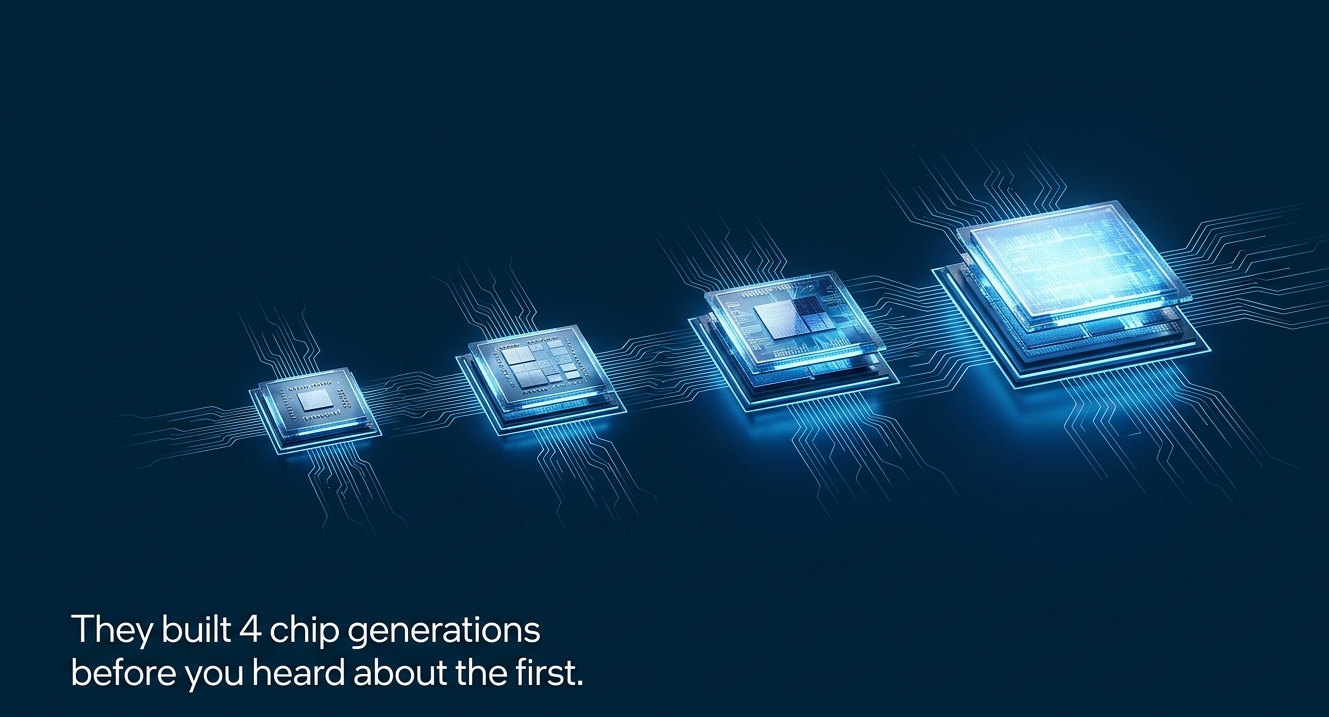
On March 11, 2026, Meta dropped what amounts to a two-year chip roadmap in a single blog post: four generations of its Meta Training and Inference Accelerator, announced together, spanning chips already in production to chips headed for mass production in early 2027. The MTIA 300 is live and running recommendation and ranking workloads right now. The MTIA 500 will deliver 30 petaFLOPS of MX4 compute and 27.6 TB/s of HBM bandwidth when it arrives.
That’s a 25x compute increase over the MTIA 300 across the product line. In under two years.
The announcement raises questions that go well beyond chip specs. Can Meta actually sustain a six-month silicon release cadence? Does this pressure Nvidia in any meaningful way? And what does it mean for the broader enterprise AI market when a consumer tech company starts publishing chip roadmaps that rival semiconductor incumbents? This analysis examines the full picture: what the chips do, who they threaten, where the risks sit, and what decision-makers should do with this information.
The MTIA Roadmap: What Meta Actually Announced
Meta’s MTIA program launched in 2023 with a first-generation inference chip. The March 11 announcement was a different order of magnitude. Meta’s official statement described “four new generations” on a cadence of “every six months or less.” That’s not a product launch. That’s a manufacturing and design philosophy.
Three things jump out. First, the MX4 precision format delivers roughly 6x the throughput of FP16 per clock cycle, which is why the compute numbers look so different between precision tiers. Second, HBM bandwidth grows 4.5x from the MTIA 300 to the 500, tracking the memory wall problem that dominates inference performance. Third, each chip slots into the same Open Compute Project rack standard, enabling data center swaps without infrastructure rebuilds.
The manufacturing stack behind this: TSMC on 3nm process nodes, Broadcom handling compute and I/O chiplet design, CoWoS advanced packaging. This isn’t a skunkworks experiment anymore. Meta is running serious silicon engineering at scale.
Why the Six-Month Cadence Changes the Calculus
The semiconductor industry typically runs on 12-to-24-month product cycles. Nvidia’s H100 to B200 arc took years of engineering. Meta is claiming a six-month generation-over-generation cadence. Whether that’s sustainable long-term is an open question, but the structural reasons it’s possible are worth understanding.
Custom silicon designed for a narrow workload class is far simpler to iterate than a general-purpose GPU. Meta’s chips are inference-first by design. They don’t need to support every CUDA workload, every graphics pipeline, every compute primitive that Nvidia’s customers demand. Narrower scope means faster design cycles, faster tape-out, faster validation.
“We’ve developed a competitive strategy for MTIA by prioritizing rapid, iterative development, an inference-first focus, and frictionless adoption by building natively on industry standards.”
— Meta Platforms, official March 2026 statement
The modularity helps here too. Swapping chiplets within the same rack-scale architecture means Meta doesn’t need to redesign the whole data center each generation. The 72-chip-per-rack MTIA 400 configuration reported by Yahoo Finance gives a sense of the density they’re targeting. New chips drop in. The surrounding infrastructure stays.
Meta is already operating at “hundreds of thousands” of MTIA chips for inference workloads, covering ad ranking, content recommendations, and organic feed algorithms. This isn’t a pilot program. The chips are carrying real production load across billions of daily users. That scale provides a feedback loop that no commercial silicon vendor can match for Meta’s specific workloads.
The Nvidia Rivalry: Competitive or Complementary?
Meta’s announcement landed as a direct competitive shot at Nvidia and AMD. Yahoo Finance coverage noted Meta’s claim that the MTIA 400 is “its inaugural chip that offers both cost efficiency and raw performance that competes with leading commercial products.” That’s a pointed benchmark assertion.
But the full picture is more nuanced. Meta is simultaneously a major Nvidia customer, and Mark Zuckerberg has made no secret of that relationship. The MTIA program isn’t a wholesale replacement strategy. It’s a diversification play targeting specific inference workloads where Meta has enough volume and predictability to engineer a purpose-built solution that beats general-purpose GPUs on cost per operation.
The efficiency claim is significant: analysis from AInvest puts MTIA’s gains at up to 7x for key matrix operations versus general-purpose silicon. For a company running inference at Meta’s scale, that efficiency gap translates directly to billions in infrastructure savings annually.
“The goal is clear: break the AI compute cost curve, aiming for up to 7x gains for key matrix operations.”
— AInvest, Meta MTIA cost analysis, March 2026
For Nvidia, the real concern isn’t Meta. It’s what Meta’s success signals to every other hyperscaler. Google has TPUs. Amazon has Trainium and Inferentia. Apple runs Neural Engines. Microsoft has invested in Maia. Meta’s roadmap is the clearest evidence yet that custom silicon for AI inference is viable at production scale, not just a research exercise. That’s a structural shift in the competitive landscape, even if no single company is abandoning Nvidia GPUs tomorrow.
Technical Architecture: What Makes MTIA Different
MTIA’s inference-first design philosophy produces some specific architectural decisions worth examining for technically-oriented readers.
The MX4 precision format is central to the compute story. MX4 (Microscaling 4-bit) enables roughly 6x the floating-point operations per second versus FP16 at the same clock and power budget. This matters enormously for inference, where you’re running a trained model forward repeatedly at scale, not doing the high-precision arithmetic that training requires. Most inference workloads tolerate the precision reduction. The throughput gains are substantial.
FlashAttention hardware acceleration is built directly into the silicon. For transformer-based models (which now power most of Meta’s AI applications, from content ranking to Llama variants), attention computation is a primary bottleneck. Hardwiring it into the chip rather than implementing it in software on a general-purpose GPU is a meaningful advantage for Meta’s specific workload mix.
The software stack deserves attention. TrendForce reporting confirms native support for PyTorch, vLLM, and Triton, the dominant frameworks in Meta’s (and most of the industry’s) ML toolchain. Teams don’t need to rewrite models or change workflows to run on MTIA. This is the “frictionless adoption” Meta refers to, and it’s not a small detail. The biggest failure mode for custom silicon programs has historically been software ecosystem fragility.
The Data Center Dynamics writeup on the announcement confirms that by 2027, MTIA is targeting full generative AI workloads, not just ranking and recommendation. That’s a significant expansion of scope. Whether the architecture can handle GenAI inference at the scale Meta needs it to remains one of the key unanswered questions.
Risks and Honest Uncertainties
The announcement deserves scrutiny alongside the excitement. Several risk factors are real and worth naming directly.
Where the Skeptics Have a Point
3nm yields are hard. TSMC’s 3nm process is advanced but not without yield challenges. Meta’s cost projections depend on yields at scale that haven’t been publicly validated. TrendForce notes the manufacturing dependency without quantifying the risk.
Development costs are real.Bloomberg reports Meta has spent millions on this program. The ROI case is built on scale that only a handful of companies globally can match.
The six-month cadence is untested at this scope. Claiming it and executing it across four generations while managing yield, packaging, and software integration simultaneously is operationally demanding.
Scope creep risk. Expanding from ranking/recommendation to full GenAI inference means more complex workloads with less predictable access patterns. MTIA’s architecture may face surprises.
No independent benchmarks. All performance comparisons to Nvidia and AMD are Meta’s own assertions. Third-party validation at production scale hasn’t been published.
Meta’s $115 to 135 billion 2026 capex commitment, reported by TrendForce, gives the program a financial buffer that smaller organizations can’t replicate. But it also means the stakes on execution are enormous. A sustained yield problem or software integration failure on MTIA 450 or 500 doesn’t just affect a product line. It affects a quarter of a trillion dollars in planned infrastructure.
A Decision Framework for Enterprise Leaders
Most organizations reading this won’t be designing custom silicon. But this announcement has direct implications for infrastructure decisions being made right now.
Questions to Ask Before Your Next GPU Procurement
What’s your inference-to-training ratio? If you’re running more inference than training (most production AI teams are), the efficiency argument for inference-optimized silicon is directly relevant to your cost model.
Are your workloads predictable enough for custom silicon? MTIA works because Meta’s ranking and recommendation workloads are stable and high-volume. Diverse or experimental workloads still favor general-purpose GPUs.
Do you have the volume to justify it? The economics of custom silicon require scale. For most enterprises, the relevant action is negotiating harder on Nvidia and AMD pricing, not designing chips.
What’s your dependency concentration? If your AI infrastructure is 90%+ Nvidia, this announcement is evidence that diversification is both feasible and strategically important, even if you use commercial alternatives rather than custom silicon.
Can your software stack absorb a hardware swap? Meta’s PyTorch-native approach lowers switching costs dramatically. If your team is framework-agnostic, inference hardware alternatives (Google TPUs, Amazon Inferentia) deserve fresh evaluation against your current Nvidia contracts.
What This Signals for AI Infrastructure Through 2027
The pattern emerging from this announcement isn’t just about Meta MTIA chips. It’s about a fundamental restructuring of how AI compute gets built and procured.
We’re moving from a world where “AI infrastructure” meant “buy Nvidia GPUs” to a world where the compute layer is fragmenting. Custom silicon programs at Google, Amazon, Microsoft, and now Meta are all heading in the same direction: inference workloads, which represent the majority of production AI compute by volume, are increasingly handled by purpose-built accelerators rather than general-purpose GPUs. Training still depends on Nvidia for most organizations, but inference is becoming a contested market.
For investors, the implications for Nvidia’s margins are worth watching. Nvidia’s dominance has historically come from a combination of hardware performance and CUDA ecosystem lock-in. Meta’s PyTorch-native approach for MTIA, and Google’s JAX stack for TPUs, are both evidence that the software moat is more crossable than it looked three years ago. Pressure on inference revenue could emerge as these programs mature.
Watch for three developments in the next 18 months. First, independent benchmarks comparing MTIA 400 to H100 and B200 on real inference workloads. Meta’s internal numbers will eventually face external validation or scrutiny. Second, whether the MTIA 450 and 500 timelines hold, specifically whether the six-month cadence survives the complexity jump to full GenAI workloads. Third, whether any other hyperscalers accelerate their own custom silicon announcements in response.
Meta has published a roadmap. Now comes the harder part: executing it.
The AI coding startup just crossed $2B in annualized revenue. Now it’s in talks to nearly double its valuation in months. Here’s what the numbers reveal, what experts are debating, and what it means for the engineers and CTOs living with this software every day.
By NeuralWired Staff·March 13, 2026··8 min read
$50BTarget Valuation (Talks)
$2B+Annualized Revenue (Feb 2026)
39%More PRs Merged (UChicago Study)
On March 11, Bloomberg broke a story that stopped many engineering floors mid-commit: Cursor is targeting a $50 billion valuation in new funding talks. Not in a few years. Now. Less than four months after closing a $2.3 billion Series D at a $29.3 billion valuation.
The speed of that trajectory is the story. Cursor’s annualized revenue crossed $2 billion by February 2026, doubling in roughly three months. Sixty percent of that revenue now flows from enterprise clients, a notable pivot away from the indie developer base that drove early adoption. The AI coding tools market that Cursor operates in is already valued at $9.46 billion in 2026 and is projected to hit $22.2 billion by 2030.
These aren’t abstract venture capital numbers. They reflect a real shift in how software gets written, reviewed, and shipped. Understanding what’s behind Cursor’s valuation surge matters, because the forces driving it are coming for every engineering organization one way or another.
From Zero to $29B in Three Years: The Cursor AI Valuation Timeline
Cursor was founded in 2022 as part of the Anysphere lab in San Francisco. The AI coding tool itself launched in 2023, arriving in a market already crowded with GitHub Copilot and a wave of LLM-powered autocomplete experiments. What differentiated Cursor early was context-aware editing that worked across files, not just at the cursor position, and an agentic mode that could execute multi-step refactors with minimal instruction.
2022
Anysphere founded in San Francisco. Total early funding: $173M.
2023
Cursor IDE launched. Builds developer base on context-aware autocomplete and inline editing.
Nov 2025
$2.3B Series D closes at $29.3B valuation. Backers include Coatue, Thrive Capital, a16z, Accel, DST, Google, and Nvidia. Revenue at $1B ARR.
Feb 2026
Revenue hits $2B ARR, doubled in roughly 3 months. Enterprise now drives 60% of revenue.
Mar 11, 2026
Bloomberg reports $50B valuation talks. Preliminary discussions. No close confirmed yet.
The investor list from the Series D alone is a signal. When Nvidia, Google, and Andreessen Horowitz all commit to the same cap table, it’s less a sign of FOMO and more a sign that three different categories of sophisticated capital have independently concluded the same thing: Cursor is infrastructure, not a feature.
“This funding will enable us to invest significantly in our research and create the next magical moments for Cursor.”
Cursor (Anysphere) — Official Statement, November 2025
Jensen Huang, CEO of Nvidia and a Cursor backer, went further. He called Cursor his “favorite enterprise AI service” in an October 2025 appearance. When the person running the most important chip company on earth volunteers that endorsement unprompted, CTOs take note.
The Enterprise Pivot: Why 60% of Revenue Now Comes from Corporations
The shift from individual developer subscriptions to enterprise contracts is the most strategically significant fact buried in Cursor’s recent numbers. Enterprise revenue is stickier, higher margin per seat, and expands naturally as teams onboard more engineers. It also insulates Cursor from the churn that plagues consumer SaaS when a new, cheaper competitor emerges.
The enterprise pull appears driven partly by productivity data. A University of Chicago study analyzing over 1,000 organizations and 10,000 developers found that companies using Cursor’s agent merge 39% more pull requests than those that don’t, with no reported drop in code quality. That’s a quantified velocity improvement at a scale that can change a product roadmap.
For a CFO trying to quantify AI spend, that number is unusually concrete. Most AI productivity claims are directional and anecdotal. A peer-reviewed study measuring a 39% increase in shipping cadence across 1,000 organizations isn’t.
Research Finding
Organizations using Cursor’s agentic features merged 39% more pull requests than non-users. Study tracked 1,000+ organizations and 10,000+ developers. No measurable drop in code quality was detected. Source: University of Chicago, November 2025.
Cursor AI Coding Performance: The Benchmarks Behind the Hype
Raw valuation and revenue figures only matter if the product delivers. The benchmarks on Cursor are more nuanced than either advocates or critics tend to admit.
On new feature development and agentic tasks, Cursor performs well. Independent AI coding agent benchmarks show Cursor leading on code quality, deployment readiness, and setup tasks like Docker configuration. For an engineering team shipping new surface area fast, the gains are real and measurable.
For experienced engineers on complex debugging work, the picture changes. The METR study, surfaced prominently by Gergely Orosz at The Pragmatic Engineer, found that developers using Cursor for bugfixes ran approximately 19% slower than those using no AI assistance at all. Engineers follow the tool’s suggestions rather than tracing the root cause, then spend more time unwinding incorrect fixes than they would have spent on the original bug.
“Devs who use Cursor for bugfixes are around 19% slower than devs who use no AI.”
Gergely Orosz — The Pragmatic Engineer, citing METR study
There’s also a perception gap of roughly 40%: developers consistently believe they’re more productive with Cursor than the actual output data shows. Teams that adopt AI coding tools without measuring before-and-after throughput will likely misattribute the results.
Context
Productivity Impact
Source
Signal
New feature development
+39% PR merge rate
UChicago, 1,000+ orgs
Strong Positive
Agentic setup tasks
Leads vs Claude / OpenAI
Render.com benchmark
Positive
Expert bugfix work
19% slower vs no-AI baseline
METR study (Orosz)
Negative
Perceived productivity
40% overestimation gap
METR study
Caution
The practical takeaway: Cursor accelerates forward-facing development work and slows diagnostic, root-cause investigation. Engineering leaders who deploy it without distinguishing between those two modes are likely to get mixed results and won’t understand why.
Cursor vs Competitors: Where the $50B Valuation Sits in the Market
Cursor doesn’t operate alone. The AI coding tools market has three rough tiers: enterprise-grade proprietary tools (Cursor, GitHub Copilot), mid-tier challengers (Claude Code, OpenAI Codex), and a growing open-source layer including Cline, Tabnine, and Zed.
The AI code tools market overall stands at $9.46 billion in 2026 with a 23.7% compound annual growth rate, expanding toward $22.2 billion by 2030 according to ResearchAndMarkets analysis. Cursor’s current revenue run rate represents meaningful share of that market, giving it category-defining leverage.
The legitimate competitive pressure comes from two directions. First, Anthropic’s Claude Code and OpenAI’s updated Codex are advancing quickly. Both have been closing the feature gap on agentic workflows while benefiting from direct model ownership that Cursor doesn’t have. Cursor currently runs on Claude Sonnet as its primary model, meaning its core inference depends on Anthropic continuing to offer competitive pricing and access.
Second, the open-source challengers address something enterprise buyers increasingly flag: vendor lock-in and data privacy. Tools like Cline run locally or on self-hosted infrastructure, which matters in regulated industries where sending proprietary code through a cloud API simply isn’t an option.
Risk Factor
Cursor’s core inference runs on third-party models (primarily Claude Sonnet). Its competitive position depends partly on Anthropic pricing and access remaining stable. As Anthropic’s own Claude Code product grows, that relationship becomes more complex.
CTO Decision Framework: Should Your Organization Deploy Cursor in 2026?
The enterprise shift in Cursor’s revenue base means this decision is landing on engineering leadership desks at scale. Here’s a framework grounded in the available data rather than the valuation hype.
Start by mapping where your team’s work actually falls. Is the majority of active engineering effort on new feature surface area, or on maintaining, debugging, and refactoring existing systems? The productivity data suggests a clear answer: Cursor adds velocity on net-new work and can subtract it on complex diagnostic work.
✓Pilot on new feature work first. Run a structured 30-day pilot on one team building new surface area. Measure PR merge rate and review cycle time before and after. Don’t rely on developer self-reporting.
✓Evaluate data privacy requirements. If your organization handles regulated data or proprietary code, assess whether sending that context to a cloud inference API is acceptable. If not, evaluate Cline or Tabnine as on-premise alternatives.
!Don’t deploy as a universal productivity tool. Senior engineers doing complex debugging work may see output quality decline. Differentiate deployment by role and task type, not organization-wide mandates.
!Quantify before you scale. The 40% perception gap between how productive developers feel and how productive they actually are is consistent across studies. Build measurement infrastructure before you expand seats.
✓Negotiate on enterprise terms, not individual pricing. With 60% of Cursor’s revenue now enterprise-sourced, the company has incentives to offer SOC 2 compliance, data residency options, and SLAs to close deals. Ask for them.
A hybrid stack, pairing Cursor for agentic new-feature work with a local tool like Tabnine for sensitive or legacy codebase work, is often more defensible than a single-vendor commitment. The vendor lock-in risk is real given Cursor’s model dependencies, and engineering platforms tend to have long half-lives.
What the $50B Bet Actually Signals
The Cursor AI valuation story isn’t really about whether preliminary talks at $50 billion close this quarter or next. The deeper signal is that enterprise AI coding adoption has crossed the threshold from experimental to operational. Sixty percent of Cursor’s revenue coming from companies rather than individual developers means procurement, compliance, and security teams are now in the room. That’s a different category of commitment than a $20 monthly subscription.
The productivity data anchors the investment thesis on both sides. A 39% increase in PR merge rate is the kind of ROI that survives CFO scrutiny. The 19% slowdown on expert bugfix work is the kind of caveat that responsible CTO deployments have to account for. Both numbers are real, and organizations that engage seriously with both will capture the gains without the regressions.
Watch for three developments through the rest of 2026: first, whether the $50B round closes or stalls, which would signal whether even the most aggressive VC market has limits on AI infrastructure multiples at current revenue. Second, how aggressively Anthropic and OpenAI accelerate their own coding tools now that Cursor has demonstrated the enterprise revenue model. Third, whether an open-source challenger reaches the feature parity needed to offer regulated industries a credible alternative. The organizations that build measurement discipline now, before they’re locked into a vendor stack, will be the ones with real options when that competition intensifies.
Meta’s In-House AI Chips: The $100B Strategy Reshaping Enterprise AI in 2026
AI Hardware · Enterprise Analysis
On March 11, Meta rolled out four new MTIA-series chips and locked in $100B worth of GPU deals. For enterprise leaders, the implications go far beyond one company’s hardware roadmap.
NeuralWired Staff·March 11, 2026·8 min read
Nvidia controls roughly 80 to 90 percent of the AI accelerator market. That number has been cited so often it feels like a law of physics. Meta just started stress-testing it.
On March 11, 2026, Meta announced four new chips in its Meta Training and Inference Accelerator series, known as MTIA, deploying them across its data centers to handle both training and inference workloads. The announcement came fewer than three weeks after Meta signed a $100 billion, six-gigawatt partnership with AMD for custom MI450 GPUs, and less than a month after locking in a separate multi-year agreement with Nvidia for Blackwell and Rubin GPUs.
The sequence is deliberate. Meta in-house AI chips are the keystone of what analysts at Introl are already calling “the most aggressive multi-vendor GPU strategy in the industry.” For CTOs, CFOs, and infrastructure leaders reassessing their own AI hardware decisions for 2026 and 2027, this is not a spectator-sport moment. The decisions Meta is making now will reshape pricing, supply chains, and procurement strategy across the enterprise market.
This analysis breaks down the full MTIA rollout, the strategic logic behind Meta’s three-chip approach, the real numbers behind the AMD deal, and what a practical decision framework looks like for organizations that won’t be building their own silicon anytime soon.
What Meta Actually Announced: The MTIA Timeline
The chip announcements landing on March 11 didn’t materialize from nowhere. Meta has been building toward custom silicon for years, with the first MTIA version handling inference workloads beginning in 2025. The new generation extends that footprint significantly and adds training to the mandate.
Feb 17, 2026
Meta signs multi-year agreement with Nvidia covering Blackwell and Rubin GPUs alongside Grace CPUs.
Meta rolls out four new MTIA-series chips, with some already deployed in data centers and others scheduled through 2026 to 2027. The announcement covers both training and inference use cases on shared infrastructure.
H2 2026 onward
First AMD MI450 gigawatt goes live. MTIA training workloads ramp. Full six-gigawatt AMD deployment follows across a multi-year horizon.
The four MTIA chips include the MTIA 450, which features faster memory bandwidth than its predecessor, and the MTIA 500, which adds expanded memory capacity and speed. Both are purpose-built to optimize Meta’s Llama model family, sharing a common infrastructure to allow seamless hardware upgrades without application-layer rearchitecting.
The AMD partnership deserves its own examination because the headline number, $100 billion, obscures a more interesting structure underneath. This isn’t a purchase order. It’s a multi-year supply commitment with equity-linked incentives that align AMD’s business trajectory with Meta’s infrastructure ambitions.
Deal Mechanics
Total estimated value: $100B over the deal lifetime (Reuters pegged a conservative estimate at $60B; the AMD press release supports the higher figure)
Capacity committed: 6 gigawatts of AMD Instinct MI450 GPUs
First deployment: 1GW scheduled for H2 2026
Equity component: 160 million AMD share warrants at $0.01 per share, vesting up to $600 per share against performance milestones
Fabrication node: AMD MI450 built on TSMC’s 2nm process
Integration architecture: Open Compute Project Helios rack-scale design for plug-and-play multi-vendor deployment
The warrant structure is particularly notable. Meta holds the right to acquire up to 160 million AMD shares at essentially zero cost, with full vesting contingent on AMD hitting performance milestones tied to the deal. That makes Meta a de facto strategic investor in AMD’s success, and it explains why analysts at Nasdaq are treating this as a stock story as much as a hardware story.
“Meta now operates the most aggressive multi-vendor GPU strategy in the industry.”
Introl Analysts, February 27, 2026
The Helios architecture, developed under the Open Compute Project framework, is the technical enabler that makes the multi-vendor strategy practical. By standardizing rack-scale interfaces, Meta can slot Nvidia Blackwell GPUs, AMD MI450s, and its own MTIA chips into the same physical infrastructure without major integration overhead. That’s the real moat here: plug-and-play flexibility at hyperscaler scale.
Meta’s Custom Silicon Strategy: Why It Works for Meta and Maybe Not for You
Meta’s vertical integration play makes sense at its scale. With $115 to $135 billion in 2026 capital expenditure and 6.6 gigawatts of nuclear energy contracted to power data centers, Meta is one of maybe five organizations on the planet that can absorb the fixed costs of custom silicon development and amortize them meaningfully across deployed infrastructure.
The strategic logic runs three ways. First, purpose-built chips for a known workload distribution (Llama inference and training, recommendation models, content ranking) can outperform general-purpose GPUs on the metrics that matter: tokens per second per dollar, memory bandwidth per workload type, thermal efficiency per rack. Second, reducing dependence on any single vendor gives Meta leverage in pricing negotiations and insulation against supply disruptions. Third, owning the full stack from model to accelerator creates a feedback loop: hardware teams optimize chips for specific model behaviors, and model teams design architectures knowing what the hardware favors.
What this doesn’t mean is that custom silicon is suddenly viable for enterprises below hyperscaler scale. Chip design cycles run three to five years minimum. Fabrication partnerships with TSMC require committed volume. Toolchain development, driver optimization, and the opportunity cost of diverting engineering talent from application-layer work are all real costs that don’t appear on the chip purchase order.
For everyone outside the Google, Microsoft, Meta tier, the more relevant question is what Meta’s moves do to the market they’re buying into.
What Meta’s In-House AI Chips Mean for Enterprise Procurement
The clearest near-term effect on the broader market is pricing pressure on Nvidia. When a customer representing this volume of GPU spend diversifies to AMD and in-house silicon, Nvidia’s pricing power on future contracts weakens at the margin. That’s good news for any organization currently negotiating for H100 or B200 access.
The second-order effect is AMD’s credibility. The MI450 deal, built on the earlier MI300 deployments that began in 2024, gives AMD a flagship reference customer for its custom GPU program. For CTOs evaluating AMD as a Nvidia alternative, Meta’s commitment removes some of the technology risk argument. If AMD’s silicon can handle Meta’s Llama training workloads at six gigawatt scale, it can handle most enterprise inference deployments.
Enterprise Decision Framework: AI Hardware for 2026 to 2027
→Training workloads at scale: Nvidia Blackwell and Rubin remain the lowest-risk choice given CUDA ecosystem depth and toolchain maturity. AMD MI450 is a credible alternative for organizations willing to invest in ROCm optimization.
→Inference at volume: Evaluate AMD MI450 seriously for custom inference deployments. The 2nm fabrication node and Helios-style rack integration reduce long-term TCO for organizations running predictable, high-volume inference.
→Hybrid strategy: The multi-vendor approach Meta is pioneering reduces supply chain concentration risk. For organizations with procurement leverage, a Nvidia-plus-AMD split across workload types is worth modeling now.
→Custom silicon: Only realistic for organizations with a five-plus-year horizon, a defined and stable workload distribution, and engineering resources to sustain a dedicated chip team. Don’t mistake Meta’s path for a generalizable template.
→Negotiating leverage: Meta’s AMD deal and the $100B commitment will ripple through GPU pricing in 2026. Organizations with upcoming contract renewals should push harder on terms. The vendor landscape is more competitive than it was twelve months ago.
The Skeptical View: What Could Go Wrong
A fair analysis of Meta’s in-house AI chips has to include the reasons this might not unfold as cleanly as the March 11 announcements suggest.
Custom silicon has a complicated history at Meta. The original MTIA program encountered setbacks before finding its footing in inference workloads in 2025. Early deployments showed that purpose-built chips sacrifice generality, and Meta’s model mix will continue to evolve. MTIA chips optimized for Llama 4 architectures may require significant re-engineering when Llama 5 arrives with different memory access patterns and operator distributions.
The AMD deal’s $100 billion figure also carries some uncertainty. Reuters reported a more conservative estimate of $60 billion at the time of the February 24 announcement. The higher number appears in the AMD press release and analysis informed by the full warrant structure, but it remains an estimated lifetime value for a multi-year, milestone-linked agreement rather than a hard purchase commitment.
The generalization risk is also real. MTIA’s performance-per-dollar advantages are calibrated for Meta’s specific workloads. The improvements Song cited at the March 11 announcement don’t yet have public benchmark support, such as independent TFLOPS figures, perf-per-watt comparisons against H100, or memory bandwidth measurements under real inference conditions. Until those numbers are available, the TCO case for MTIA outside Meta’s own data centers rests on inference rather than evidence.
Full multi-vendor impact on Nvidia’s market position will take time to manifest. Nvidia’s approximately 80 to 90 percent AI accelerator share won’t shift materially through 2026. The CUDA ecosystem, existing developer tooling, and the sunk-cost dynamics of existing GPU fleets mean Nvidia’s position remains durable in the near term. The more realistic timeline for meaningful share erosion is 2027 and beyond, as AMD MI450 deployments scale and other hyperscalers watch Meta’s results before making their own moves.
What Comes Next
The pattern emerging from Meta’s moves is clear: hyperscalers that once accepted Nvidia’s dominance as a given are now actively engineering around it. That doesn’t mean Nvidia is about to lose its position. It means the conditions that created near-total dependency are being systematically dismantled by the largest buyers in the market, and that process will compress margins, improve alternatives, and change negotiating dynamics for everyone in the procurement chain.
For enterprise leaders, the more immediate significance isn’t in Meta’s custom silicon itself but in what AMD’s $100 billion endorsement and Helios-style rack architecture mean for non-hyperscaler deployments. If AMD delivers on the MI450’s 2nm node performance and Helios integration ships as described, 2026 and 2027 become the first years where a Nvidia-only AI infrastructure strategy has a genuinely competitive alternative at production scale.
Watch for three developments in the months ahead: first, independent benchmark results for the MTIA 450 and MTIA 500 that test the performance-per-dollar claims under real inference loads; second, AMD MI450 deployment milestones as the first gigawatt comes online in H2 2026; and third, whether any other large-scale AI operators, particularly Microsoft or Google, announce comparable multi-vendor shifts after watching Meta’s results. The organizations that build procurement flexibility into their 2026 infrastructure contracts now will be better positioned when that second wave arrives. Those still treating Meta in-house AI chips as a curiosity story will find themselves explaining the decision in their next budget cycle.
OpenAI Buys Promptfoo: The $236B Security Bet | NeuralWired
NeuralWired IntelligenceMarch 11, 2026
Acquisition Analysis
OpenAI Buys Promptfoo: The $236B Security Bet
OpenAI’s acquisition of the AI red-teaming startup signals a pivotal shift. Enterprise AI is no longer just about capability. Safety testing is now the competitive battleground.
NeuralWired Staff·March 11, 2026·AI Security9 min read
More than 25% of Fortune 500 companies were already running Promptfoo inside their AI pipelines before OpenAI announced it was buying the startup on March 9, 2026. That’s not a coincidence. It’s the entire acquisition thesis.
TechCrunch broke the news that OpenAI is acquiring Promptfoo, the open-source AI security testing platform founded in 2024 by Ian Webster and Michael D’Angelo. Financial terms weren’t disclosed, but PitchBook data cited by TechCrunch places Promptfoo’s last valuation at $86 million following a July 2025 funding round that brought total raised capital to $23 million. The deal is pending customary closing conditions, with integration into OpenAI’s Frontier enterprise platform planned post-close.
The timing isn’t subtle. OpenAI launched Frontier just weeks earlier in early February 2026. Promptfoo, with its 350,000 developers and teams and deep Fortune 500 penetration, drops into that platform as an instant security layer. For CISOs wrestling with agentic AI deployments, this changes the calculus.
This analysis examines why OpenAI made this move, what Promptfoo actually does under the hood, and what the acquisition means for enterprises building on AI agents in 2026. You’ll get a technical breakdown of the red-teaming architecture, a framework for evaluating your own security posture, and an honest look at what this deal won’t solve.
350KDevelopers & Teams Using Promptfoo
25%+Fortune 500 Already Adopted
$236BAI Agents Market by 2034
What Promptfoo Actually Does (And Why It Matters Now)
Red-teaming sounds abstract until you’re debugging why your customer service agent leaked a competitor’s pricing document or authorized a fraudulent transaction. Promptfoo addresses that problem programmatically before it reaches production.
At its core, Promptfoo is a declarative, open-source testing library. Engineers write configuration files in YAML that define which prompts to test, which providers to run them against, and what success and failure look like. The platform supports over 60 AI providers including OpenAI’s own GPT-4o, Anthropic’s Claude, and dozens of others, running adversarial inputs across all of them in parallel. The goal is finding vulnerabilities like prompt injections, context leakage, and unauthorized capability escalation before deployment.
The founders built it from a specific frustration. Ian Webster, formerly an AI engineering lead at Discord, and Michael D’Angelo, with deep ML scaling experience, described the genesis simply: they set out to create a toolkit that removes guesswork from prompt engineering. What emerged was something more significant. By June 2025, Promptfoo had cleared 100,000 users. By the time of the acquisition, that number had more than tripled.
The real innovation is the shift from manual to automated adversarial testing. Traditional security teams probe AI systems one prompt at a time. Promptfoo turns that into a continuous, systematic process integrated directly into CI/CD pipelines. You don’t test before you ship; you test on every commit.
“Promptfoo specializes in evaluating and securing large-scale AI systems. By incorporating the technology into Frontier, organizations will be able to develop and manage reliable AI applications more easily.”
Srinivas Narayanan, CTO for B2B Applications, OpenAI — via Techzine
OpenAI’s Frontier and the Security Gap It Needs to Close
Frontier is OpenAI’s answer to a specific enterprise complaint: you can’t build production-grade AI agents without better tooling around evaluation, compliance, and workflow management. The platform provides context and execution layers for agents to operate across business systems. But agents operating across business systems create exactly the attack surface that security teams fear most.
Autonomous agents that can read emails, write code, query databases, and book meetings also have the potential to do all those things in ways their operators didn’t intend. Research from MintMCP puts the scope of concern in sharp relief: 73% of CISOs report concerns about agentic AI security, but only 30% have mature safeguards in place. That gap, between concern and capability, is exactly where Promptfoo sits.
The strategic logic becomes clear when you trace OpenAI’s enterprise ambitions. The company isn’t just selling API access anymore. It’s building an end-to-end platform where enterprises design, deploy, and manage AI agents at scale. For that platform to command premium enterprise contracts, it needs to answer the security question with something more credible than a white paper.
Buying a tool that 25% of Fortune 500 companies already trust is a much faster path to that credibility than building one from scratch.
2024
Promptfoo founded by Ian Webster (ex-Discord AI lead) and Michael D’Angelo (ML scaling expert)
June 2025
Platform reaches 100,000 users; $23M raised across funding rounds at $86M valuation
Early February 2026
OpenAI launches Frontier, its enterprise agent platform
March 9, 2026
OpenAI announces the OpenAI Promptfoo acquisition; Frontier integration planned post-close
Read this acquisition in isolation and it looks like a modest security tuck-in. Read it alongside OpenAI’s broader enterprise moves and a different picture emerges: a deliberate effort to lock in the security toolchain before rivals can.
The AI agents market was valued at $7.92 billion in 2025 and is projected to reach $236.03 billion by 2034 at a 45.82% compound annual growth rate. Every major AI lab is fighting for the enterprise portion of that market. The differentiator won’t be raw model capability for long; as base models commoditize, the security, governance, and compliance layer becomes the enterprise buying criterion.
Anthropic is building safety into its Constitutional AI training methodology. Google is positioning Gemini’s enterprise security around its existing cloud compliance frameworks. OpenAI’s answer is native red-teaming baked directly into the development workflow. Each approach is a bet on what enterprises will ultimately require, and OpenAI is betting they want testing tools over safety training philosophy.
As TechCrunch noted in its coverage of the deal, this acquisition underscores how frontier labs are scrambling to prove their technology can be used safely in critical business operations. That urgency is real. The speed of the Frontier launch followed weeks later by this security acquisition suggests reactive necessity more than a carefully sequenced product roadmap.
What This Means for Enterprise AI Security Right Now
For CTOs and CISOs deciding what to do with this news today, there are three distinct positions you might be in. You’re already using Promptfoo. You’re evaluating it. Or you haven’t started systematic AI red-teaming at all.
If you’re already using Promptfoo, the acquisition changes your vendor risk profile. Promptfoo is now an OpenAI product. If your organization has sensitivities around vendor concentration or competitive concerns about OpenAI accessing your testing data, you need to revisit your architecture. The team has committed to keeping the tool open-source, but post-close product direction will follow OpenAI’s priorities.
If you haven’t started systematic red-teaming yet, the acquisition is a forcing function. The fact that OpenAI found it necessary to buy a red-teaming company to make its own platform enterprise-ready tells you something about the baseline requirement. Systematic AI security testing is no longer optional for production agentic deployments.
Pre-Deployment AI Agent Security Checklist
Configure automated prompt injection testing across all agent entry points before shipping to production
Map every external system your agent can access and define explicit authorization boundaries in your test suite
Integrate red-teaming into your CI/CD pipeline so adversarial tests run on every model or prompt update
Test against multiple LLM providers if your architecture is provider-agnostic; vulnerabilities differ by model
Establish a baseline for acceptable failure rates on adversarial tests, then set alerts for regressions
Document compliance-relevant test cases mapped to NIST AI RMF or ISO 42001 for audit readiness
Review your vendor dependency posture if Promptfoo is in your stack, given the change in ownership
The acquisition announcement generated uniformly positive coverage. That uniformity should make you skeptical.
Promptfoo is a testing tool. It finds known classes of vulnerabilities through systematic prompting. What it can’t do is protect against novel attack vectors that haven’t been modeled yet. The adversarial AI security space is young, and new attack categories emerge faster than testing frameworks can incorporate them. Buying Promptfoo gives OpenAI the current state of the art, not a permanent defense.
There’s also a timeline reality check needed here. The deal hasn’t closed yet. Integration into Frontier is planned post-close, which means the actual product enhancement for Frontier customers is likely three to six months away at minimum. Enterprises making deployment decisions now shouldn’t assume native Promptfoo integration is already in the platform.
A more structural concern: a 23-person firm acquired at what appears to be a relatively modest premium raises questions about how much internal investment OpenAI plans to make in growing the team and capability. The existing 350,000 users represent real demand. Whether OpenAI’s enterprise priorities align with the open-source community’s needs remains an open question.
Capability
Promptfoo (Automated)
Manual Red-Teaming
AI provider coverage
60+ providers
Typically 1–3
CI/CD integration
Native support
Manual scheduling
Test reproducibility
Declarative YAML config
Inconsistent
Novel attack detection
Limited to modeled classes
Human creativity applied
Scale at low marginal cost
Fully automated
Linear cost with coverage
Compliance documentation
Automated reporting
Manual audit trail
Three Signals to Watch as the Deal Closes
The OpenAI Promptfoo acquisition closes a chapter in the “AI is moving too fast for safety to keep up” narrative, but it opens several new ones. The next 90 days will reveal whether OpenAI’s bet was strategic foresight or a reactive patch.
The pattern is visible across the enterprise AI market: safety and governance tooling is becoming a first-class product requirement, not an afterthought. OpenAI is choosing to own that layer rather than depend on third-party integrations. That’s a meaningful signal about where enterprise AI product competition is heading.
This matters beyond OpenAI’s competitive positioning. It signals that the enterprise AI market is maturing past the capability-first phase into one where infrastructure, compliance, and trust are buying criteria. Every platform competing for Fortune 500 contracts will need a credible answer to the security question, whether through acquisition, partnership, or internal development.
Watch for three developments. First, how Anthropic and Google respond, whether with comparable security tooling partnerships or acquisitions of their own. Second, how the Promptfoo open-source community reacts as product direction shifts toward Frontier integration. Third, whether NIST AI RMF and emerging EU AI Act compliance requirements accelerate enterprise demand for native testing tools, potentially rewarding OpenAI’s early move with a governance-ready moat that’s difficult to replicate quickly.
Organizations building production AI agents today shouldn’t wait for the deal to close. The underlying need for systematic red-teaming is real regardless of who owns the tool. Start there.