
Tag: TreasuryYields

  • Weak September Jobs Report Puts a Fed Rate Hike on the Back Foot as Treasury Yields Hover Near 19-Year Highs

    Weak September Jobs Report Puts a Fed Rate Hike on the Back Foot as Treasury Yields Hover Near 19-Year Highs

    American employers added just 29,000 jobs in September, a number so small it has traders rethinking whether the Federal Reserve will keep tightening. The Friday report arrived at an awkward moment for central bankers, barely two weeks after they raised interest rates for the first time since 2023 and signaled more increases were coming.

    The jobs data did not settle the argument. It sharpened it.

    A Number Far Below Expectations

    The Bureau of Labor Statistics reported that nonfarm payrolls rose by 29,000 last month, according to its Employment Situation release. That compares with an average monthly gain of 45,000 over the previous year. Economists surveyed by Dow Jones had expected 84,000, and a Reuters poll had pencilled in 90,000, so the miss was wide whichever forecast you prefer.

    The unemployment rate came in at 4.2%, which the BLS called little changed. It has stayed in a narrow band between 4.1% and 4.3% since March. CNBC reported that the uptick owed largely to an influx of people into the labor force rather than a wave of layoffs, a distinction that matters for how worried anyone should be.

    Revisions added to the soft tone. July was cut from a gain of 21,000 to a loss of 10,000, and August was trimmed from 162,000 to 133,000. Together, the two months now show 60,000 fewer jobs than first reported.

    Where the Hiring Is, and Isn’t

    Health care, usually the steadiest engine of job growth, added 17,000 positions, about half its 12-month average of 33,000. Construction contributed 11,000 and manufacturing 9,000. Financial activities shed 7,000 jobs and have fallen by 129,000 since May 2025, with most of the losses at insurance carriers.

    Pay offered little relief. Average hourly earnings rose 5 cents, or 0.1%, to $37.81, leaving annual wage growth at 3.0%. NBC News reported that wages again lagged inflation, which means paychecks are losing ground even for those who have jobs.

    Why the Fed Is in an Uncomfortable Spot

    On September 16, the Federal Open Market Committee voted 12-0 to lift its target range by a quarter point, to 3.75% to 4%. Kevin Warsh chaired the meeting. The decision followed a stronger August jobs report and a statement pointing to elevated inflation. According to J.P. Morgan Asset Management’s summary, sixteen of eighteen participants projected at least one more hike this year, and the median forecast put the year-end rate at 4.1%.

    September’s report is the first major labor reading since that signal, and it does not obviously support it. Reuters quoted one economist arguing that the soft data cuts against the notion that the labor market is tightening again. Seema Shah of Principal Asset Management said in a statement carried by The Hill that the report “should put an October Fed hike firmly on the back foot.” Ken Mahoney, CEO of Mahoney Asset Management, told CBS News that “these numbers do not make a case for a rate increase in October.”

    Not everyone is ready to pivot. Chris Hodge, chief economist at Natixis, argued in Yahoo Finance’s live coverage that “inflation remains the supreme concern.” The latest inflation data gives him material. The Bureau of Economic Analysis reported on September 30 that August PCE prices rose 0.3% on the month and 3.4% on the year, with core prices up 0.2% and 3.0%. Two outlets noted, however, that BEA changed how it measures certain categories, including portfolio management fees, software and legal services, and applied the changes back to 2021. Some of the apparent cooling therefore reflects methodology rather than genuine disinflation.

    The Hill also reported that Warsh said last month that unemployment is running consistent with full employment. How the Fed reads a labor market that analysts variously call stable, weak or “low-hire, low-fire” may decide what happens next.

    Markets Exhale, but Borrowing Costs Stay High

    Reuters reported that stocks and bonds bounced after the release as expectations for an October hike retreated further. The 10-year Treasury yield stood at 5.18% early Friday, down about 5 basis points, and Bloomberg reported the two-year yield fell as much as 10 basis points to 4.69%. CME’s FedWatch tool showed an 84% probability that the Fed holds rates steady in October, according to QZ. CNBC reported that odds of a December hike remained above 75%.

    Even after the dip, yields sit near levels not seen in nearly two decades. The 10-year closed at 5.24% on September 28, just short of its June 2007 closing peak of 5.26%, and touched 5.274% intraday that day. Because that yield helps set the cost of mortgages, auto loans and business borrowing, CNN noted, the pressure reaches well beyond bond desks. Coverage has tied the surge to oil prices pushed higher by the Iran conflict as well as to expectations of Fed tightening.

    What to Watch Next

    The calendar now matters more than usual. The Fed releases minutes from its September meeting on October 7 at 2:00 p.m. ET, which should show how divided officials were about further hikes. The Beige Book follows on October 14, along with the BLS’s September real earnings data.

    The next FOMC meeting runs October 27 to 28, with a decision expected on the 28th at 2:00 p.m. ET and a press conference from Warsh. The October jobs report lands on November 6.

    The central question is whether September was a blip or the start of a trend. If hiring stays this weak while inflation stays near 3%, the Fed will face a harder choice than it did two weeks ago: keep tightening to defend its credibility on prices, or accept that its own forecasts may have outrun the economy.
  • Trump and Xi Extend US-China Trade Truce to January, But Summit Produces Pandas Before Policy

    Trump and Xi Extend US-China Trade Truce to January, But Summit Produces Pandas Before Policy

    Xi Jinping spent three days in Washington this week, the first visit by a Chinese leader to the U.S. capital in more than a decade. By the time he left, the two governments had agreed to buy themselves two more months to figure out what comes next.

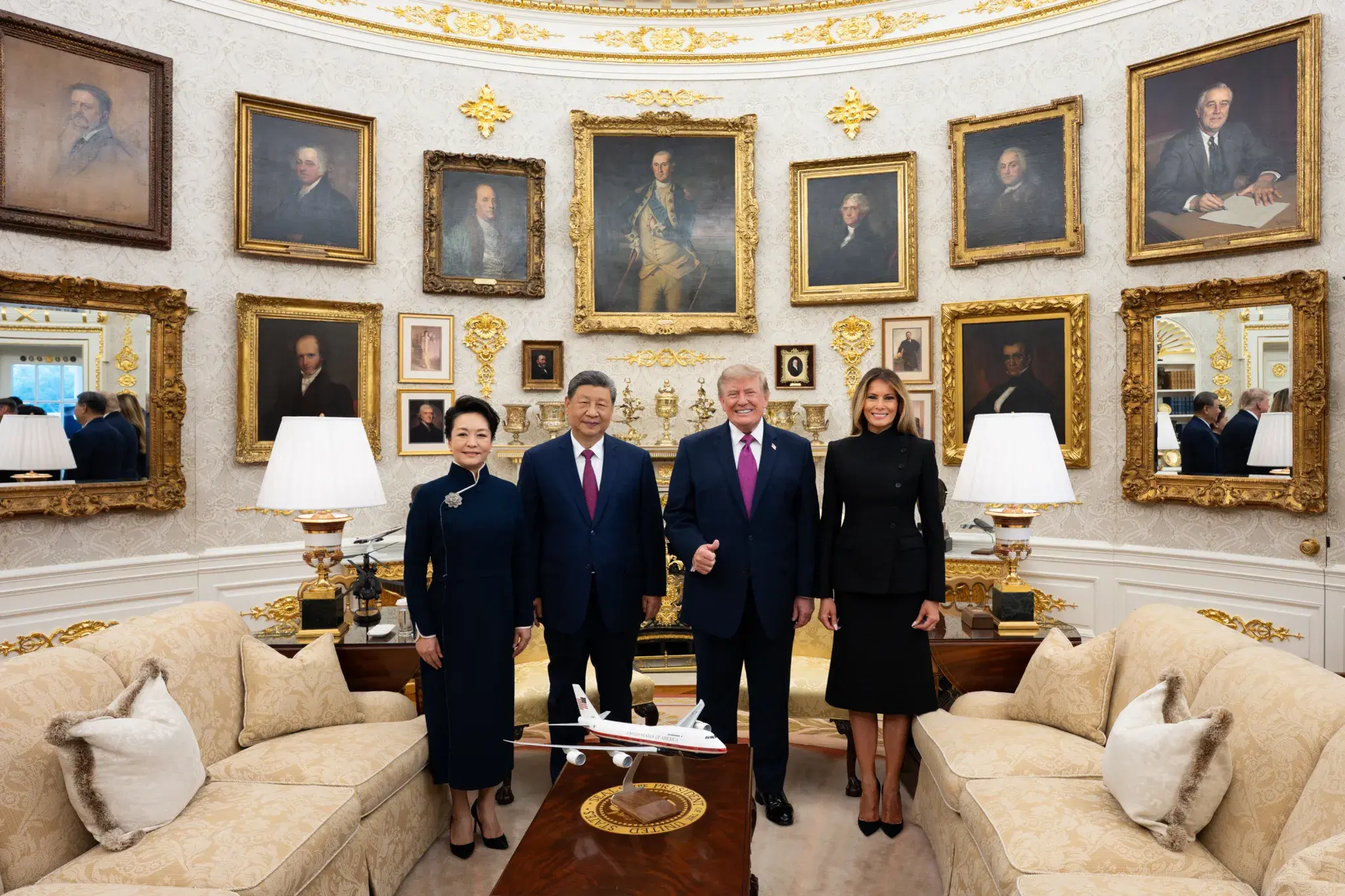
    Trump and Xi Jinping with First Ladies Melania Trump and Peng Liyuan at White House, Sept. 2026

    Treasury Secretary Scott Bessent announced on September 23, ahead of the formal summit, that the trade truce between Washington and Beijing would be extended from its November 10 expiration to January 10, 2027. It is not a new deal. It is a pause on an old one, and it leaves the two largest economies in the world exactly where they have been for the better part of a year: negotiating around the edges of a bigger confrontation neither side seems ready to resolve.

    A Warm Welcome, A Short Extension

    The optics were hard to miss. Trump personally met Xi at Joint Base Andrews when his plane landed, a tarmac greeting the White House has not extended to a visiting foreign leader in over a decade. A state dinner followed on September 24, drawing a guest list that read like a roll call of American tech power: Nvidia’s Jensen Huang, Tesla’s Elon Musk, Apple’s Tim Cook, and OpenAI’s Sam Altman all attended. The next day brought a tea session and a joint stop at the National Archives.

    Underneath the pageantry, the actual policy work had already been done in preparatory meetings. Bessent and U.S. Trade Representative Jamieson Greer met with Chinese Vice Premier He Lifeng in the days before Xi’s arrival, and it was from those sessions that the two month extension emerged. Bessent framed the goal as something larger than what had already been achieved, saying the two sides had convened to see whether they could reach “a bigger deal as opposed to just a series of smaller things.”

    He was notably unwilling to promise that outcome. Asked about the odds of something more substantial, Bessent told reporters, “I don’t know whether a bigger deal can be done. I don’t know whether we will just roll the current deal.” That kind of hedging from the administration’s lead trade negotiator is itself a signal. Nearly a year after the original truce was struck, Washington still is not certain it wants, or can get, anything more permanent.

    What The Truce Actually Protects

    The mechanics matter more than the ceremony. The extension keeps a 10 percent U.S. tariff on Chinese and Hong Kong imports tied to fentanyl enforcement, rather than letting it snap back to 20 percent. It also preserves China’s suspension of rare earth export controls and keeps Beijing’s soybean purchase commitments in place, three pieces of the relationship that touch semiconductor manufacturing, defense supply chains, and American agriculture all at once.

    None of it is automatic past January 10. If the two governments do not act again before that date, the tariff threat, a paused Section 301 investigation into Chinese shipbuilding, and the rare earth export controls all become live again. That is the arrangement in plain terms: not a resolution, but a countdown clock that both sides have agreed to reset for now.

    China’s follow-through on its existing commitments has also been uneven. Bessent said Beijing was running behind on $17 billion in agricultural purchases it had already committed to, even as roughly 1 million tons of soybeans moved in the run-up to the summit against a multi-year commitment reported at around 25 million metric tons. The exact scale and timeframe of that soybean pledge is described inconsistently across the reporting NeuralWired reviewed, and should be treated as approximate until an official U.S. or Chinese trade figure clarifies it.

    Pandas, Not Policy

    Ask what was actually announced at the summit itself, separate from the trade extension negotiated beforehand, and the list gets short fast. Xi pledged to send two giant pandas to Zoo Atlanta, which has had none since 2024, and to invite 100,000 American students to China for academic exchanges. Those are the concrete deliverables from three days of meetings between the leaders of the world’s two largest economies.

    There was no new agreement on artificial intelligence governance, no breakthrough on Taiwan, and no expanded trade package beyond the two month extension. Xi did address AI directly in remarks at the White House, telling the room that “we have both the capability and responsibility to develop and manage AI for good and ensure that the development of AI is always under human control and serves the well-being of the people.” Trump’s own response to questions about AI oversight, posted afterward on Truth Social, was considerably shorter: “Our guardrail is the DOJ.”

    Taiwan surfaced only through China’s own account of the talks. Beijing’s official readout said Xi called on the United States to handle the issue with caution and to oppose Taiwanese independence, but as of this reporting Trump had not addressed Taiwan publicly around the summit. That readout comes from China’s state news agency, not an independently verified transcript, and Washington’s own messaging around the visit emphasized trade and the panda pledge instead.

    Boeing remains the clearest example of a deal that still is not a deal. A framework for 200 aircraft, first floated during Trump’s May visit to Beijing, remained unfinished heading into this summit, and nothing in the reporting through September 26 indicates it was finalized here. Boeing shares slipped roughly 2 to 4 percent in the days before Xi’s arrival as hopes for a larger, newly signed order faded.

    Markets Are Watching a Bigger Number

    While the summit dominated headlines, bond markets moved on something else entirely. The 10 year Treasury yield touched 5.225 percent on September 25, its highest level since 2007, according to market coverage reviewed for this report, though one separate recap put Friday’s close closer to 5.18 percent. Either figure describes the same underlying story: borrowing costs climbing to territory investors have not had to price in for nearly two decades, in the same week the administration was staging its most high profile diplomatic event of the year with China.

    That juxtaposition is worth sitting with. A trade truce extension is, by design, a short term fix. A multi-decade high in Treasury yields is not something a summit dinner resolves.

    What Comes Next

    The January 10 deadline is now the date that matters most, but it is not the only one on the calendar. Trump and Xi are expected to meet again at the APEC summit in Shenzhen this November, and a further meeting is reportedly planned at the G20 Leaders’ Summit in Miami in December. U.S. Ambassador to China David Perdue has also described an informal, still nonbinding dialogue between the two countries on AI safety and incident alerts, something officials are calling a crisis mechanism without yet putting a formal agreement behind it.

    Taken together, the pattern is unmistakable. This is a relationship being managed in two month increments, propped up by tariff suspensions and soybean purchases rather than settled by any lasting framework. The pandas will make for good photographs when they arrive at Zoo Atlanta. The tariffs, the export controls, and the shipbuilding investigation currently held in suspension will decide whether the next ninety days bring something more durable, or simply another extension.


  • Fed Raises Interest Rates for the First Time Since 2023 as Chair Kevin Warsh Breaks With Trump

    Fed Raises Interest Rates for the First Time Since 2023 as Chair Kevin Warsh Breaks With Trump

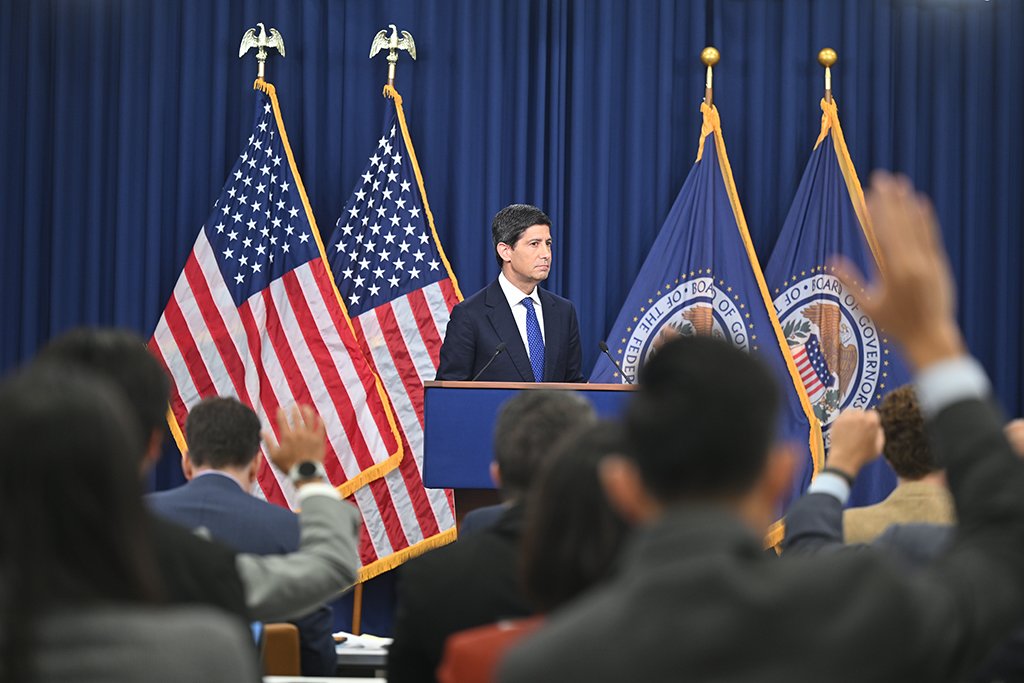
    Official portrait of Federal Reserve Chair Kevin Warsh, who led the Fed's September 2026 rate hike to 3.75-4 percent
    Image credit: Board of Governors of the Federal Reserve System, via federalreserve.gov

    For months, Kevin Warsh promised that the Federal Reserve would move when the data demanded it and not a moment before. On Wednesday, the data won. The Fed chair that Donald Trump handpicked cast a vote the president did not want, and eleven of his colleagues voted right along with him.

    The Federal Open Market Committee raised its target range for the federal funds rate by a quarter point, to 3.75 percent and 4 percent, in a unanimous 12-0 decision. It is the first rate increase since July 2023 and the first of Warsh’s tenure as chair. Trump, who nominated Warsh in January, said within hours that rates should be far lower, and later told reporters he had spoken to Warsh before the vote. Warsh, at his press conference, would not discuss it.

    A Short Statement With a Blunt Message

    The FOMC’s statement ran to just four paragraphs, unusually brief for a decision of this weight. It described an economy expanding at a solid pace, with resilient spending, strong productivity and job gains keeping pace with the workforce, even as uncertainty stayed elevated because of geopolitical developments. Inflation, the Committee said plainly, remains too high.

    Warsh put it in his own words when he opened the press conference. “But inflation remains elevated. Today’s policy action will support a timelier return to the Committee’s 2 percent goal. This Committee will deliver price stability,” he said, according to the Fed’s own transcript of his remarks, released marked preliminary.

    The mechanics moved in step with the headline number. The Fed lifted interest on reserve balances to 3.90 percent and raised the primary credit rate a quarter point to 4 percent, a request that came from the boards of the Cleveland, Richmond, Atlanta, Chicago, Minneapolis, Kansas City and Dallas regional banks. The standing overnight repo rate rose to 4 percent and the reverse repo offering rate to 3.75 percent, with a $160 billion daily cap per counterparty. The Fed’s trading desk was also told to keep rolling maturing Treasury holdings into new auctions and to shift agency-security proceeds into Treasury bills, full details laid out in the Fed’s implementation note.

    The Case for Acting Now

    Warsh has been building toward this decision since the summer. At last month’s Jackson Hole symposium, he set the bar for himself in public, saying he would be “hard-pressed to describe broad financial conditions as restrictive” and warning that “price stability is not self-executing, nor is inflation necessarily mean-reverting.” On Wednesday he said the Committee judged that standard had not been met, calling the state of inflation a “plain fact” that had persisted too long and adding that this summer’s readings gave him no comfort that underlying price pressure was actually easing.

    The numbers behind that judgment had been piling up for two weeks. The August jobs report, released September 4, showed nonfarm payrolls up 162,000, nearly triple the roughly 53,000 to 56,000 economists expected, with June and July revised higher by a combined 55,000 and unemployment steady at 4.1 percent. A week later, August inflation data showed headline CPI up 0.4 percent for the month and 3.4 percent over the year, with core inflation, which strips out food and energy, running at 2.4 percent annually. Energy prices alone were up 16.3 percent year over year, and gasoline had jumped nearly 28 percent. Both reports are detailed in the Bureau of Labor Statistics’ August CPI release.

    Warsh cited his own estimate that total personal consumption inflation, the Fed’s preferred gauge, likely ran near 3.6 percent in August, with core PCE closer to 3.2 percent, figures he derived ahead of the official release. Asked afterward to characterize the vote, he told reporters, as relayed by Reuters, that it was “a sober decision, serious decision, responsible decision.”

    An Inflation Story Complicated by Oil

    Much of the price pressure the Fed is fighting did not originate in the domestic economy at all. An escalating conflict involving the United States and Iran has disrupted oil flows through the Gulf for months, and on September 11 drones launched from Iraq struck a pumping station on Saudi Arabia’s East-West pipeline, a roughly 750-mile link with capacity to move about 7 million barrels a day of crude to the Red Sea without passing through the Strait of Hormuz. Riyadh shut the line down.

    Brent crude traded between roughly $105 and $108 a barrel in the days that followed, and the futures market flashed real alarm: the spread between the front-month contract and the next one out widened to $4.44 a barrel, up from under a dollar just a month earlier, a classic sign traders feared an immediate supply crunch. Prices eased after U.S. Energy Secretary Chris Wright told CNBC the outage was a “brief and temporary interruption” that would be measured in days, and after Saudi officials signaled they could restore roughly half the pipeline’s capacity within days and full service in about six weeks. Independent analysts reviewing satellite imagery of the damaged site have been less certain, warning the repair could stretch into weeks rather than days.

    That uncertainty sits underneath one of the more contested questions in macroeconomics right now: whether a central bank should tighten policy at all in response to a shock that originates in energy prices rather than domestic demand. Treasury Secretary Scott Bessent made the case publicly before the meeting that supply shocks typically pass through the economy without requiring a policy response. Warsh’s own reasoning is different. He has argued the Fed cannot control the price of oil, but it can and must stop a shock in one part of the economy from spreading into broader, stickier inflation. Which view proves right will not be settled this week, and Wednesday’s decision is effectively the test case.

    Markets Whipsaw, Then Steady

    Stocks were calm ahead of the announcement and turned sharply lower once Warsh began taking questions. The Dow Jones Industrial Average closed down about 1.2 percent, the S&P 500 fell 0.4 percent and the Nasdaq Composite finished roughly flat. The 10-year Treasury yield, which had already touched its highest level since 2007 earlier in the week, climbed back above 5 percent, and the more rate-sensitive 2-year yield rose seven basis points to 4.738 percent.

    By Thursday, some of that move had reversed. The 10-year yield fell more than six basis points to 4.943 percent, snapping an eight-session climb, while the 30-year eased to 5.301 percent and the 2-year to 4.675 percent. The S&P 500 was up roughly 1 percent in Thursday trading and a closely watched index of chipmakers gained 3 percent, as Brent slipped back toward $102 to $103 a barrel on easing fears about the Saudi outage. Gold rose as well.

    The Fed’s own projections suggest Wednesday was not a one-off. The median policymaker now expects the federal funds rate to end both this year and next at 4.1 percent, which implies one more quarter-point increase before the year is out. Eighteen participants submitted projections for the Summary of Economic Projections; Warsh, as he has done all year, declined to submit one of his own. Of those eighteen, sixteen see at least one more rate increase in 2026.

    A President Overruled by His Own Pick

    The politics of the vote are as unusual as the economics. Trump nominated Warsh in January after souring on then-Chair Jerome Powell, and as recently as February said publicly that he would not have picked Warsh had he known Warsh wanted to raise rates. On Wednesday, Warsh voted for exactly that.

    Trump responded on Truth Social within hours, writing that “Interest Rates in the United States should be 1%, or less, because we are the Best Credit in the World” and demanding the Fed act fast to bring them down. Speaking to reporters that evening before leaving for a campaign event in North Carolina, he said he had told Warsh “you might as well vote with the board because it’s not going to matter,” and described the Fed’s board as hostile and political. Asked directly whether he believed Warsh’s vote was shaped by that conversation, Trump said he did not think so. Warsh, for his part, told reporters he had “got nothing for you on a discussion with the president.”

    The administration’s criticism was not limited to the president. White House Senior Deputy Press Secretary Kush Desai told Fox News the decision was unfortunate and not backed by a compelling economic case, and Vice President JD Vance had said in the days before the meeting that the Fed should be cutting rates, not raising them. The episode lands in an already strained institutional moment for the Fed: Governor Lisa Cook’s position remains contested in ongoing litigation, the Justice Department has closed but reserved the right to reopen an inquiry into Powell pending an inspector general’s report, and a separate outside review of the 2023 Silicon Valley Bank failure is still underway. None of those matters has been resolved.

    What Comes Next

    The Fed’s next scheduled decision lands October 28, just days before the midterm elections, a meeting that will carry an inescapable political charge regardless of the outcome. Administration officials have already argued the central bank should hold off acting so close to a vote. The following meeting, December 8 and 9, comes with a fresh round of economic projections and is the point at which Goldman Sachs Asset Management has publicly said it expects the next rate increase to land, consistent with the Fed’s own dot plot.

    Minutes from this week’s meeting are due in early October and should show how contested the unanimous vote actually was behind closed doors. Between now and then, the single biggest variable is likely to be oil: whether Saudi Arabia gets the East-West pipeline back to full capacity in six weeks, as officials say, or whether the damage proves more stubborn, as independent analysts reviewing the site currently suspect.

    What Wednesday’s vote did not do is settle the argument underneath it. Whether a central bank should tighten policy into a shock that started in the price of oil rather than in domestic demand remains a live and legitimate dispute among economists, one that Bessent and Warsh have now staked out in public on opposite sides. That debate, not any single data point, is what the Fed will be litigating in real time over the next six weeks, with mortgage rates, corporate borrowing costs and a president’s patience all riding on the answer.