
Tag: DonaldTrump

  • Anthropic’s Record IPO Raised $93.5 Billion, Then Its Stock Fell 8.5% in a Day as Trump Threatened a Data Center Tax

    Anthropic’s Record IPO Raised $93.5 Billion, Then Its Stock Fell 8.5% in a Day as Trump Threatened a Data Center Tax

    On Thursday, Anthropic’s stock opened at $111.50, a 34% jump over the $83 price investors paid to get in. By Friday afternoon it had given most of that back, closing at $88.91 while the broader market lurched downward around it. In two trading days, the first public-market test of a frontier AI lab went from triumph to a reminder of how fast sentiment can turn.

    The Biggest Offering on Record

    Anthropic announced on 20 November that it had closed its IPO, selling 1,127,000,000 Class A shares at $83.00 each. That total includes 147,000,000 shares from the underwriters’ option, which they exercised in full. Anthropic itself sold 1,103,351,354 of the shares, and existing stockholders sold the remaining 23,648,646.

    The gross proceeds came to roughly $93.5 billion, with about $91.6 billion going to the company. A separate private placement brought in another $26.0 billion. In it, 313,253,007 Class N shares were sold at the same $83 to AMD, Broadcom, Google, Micron, Microsoft, NVIDIA and TSMC Partners. Combined, the two sales raised about $119.5 billion.

    The price climbed during the process. At the roadshow launch, Anthropic proposed selling 825 million shares at $70 to $78. It then priced at $83 and raised the share count to 980 million, which made the pre-option offering $81.3 billion. According to CNN, that beat SpaceX’s $75 billion offering from June as the largest IPO ever.

    The path to the Nasdaq was relatively quick. Anthropic announced a $65 billion Series H at a $965 billion post-money valuation on 28 May, and a confidential IPO filing followed on 1 June. The SEC declared the registration statement effective on 18 November, and shares began trading the next day under the symbol “ANT.”

    A Day One Pop, Then a Reversal

    Thursday was the celebration. The stock opened at $111.50, touched an intraday high of $114.99, and closed at $97.17, up 17.07% from the offer price. The gap between the 34% opening pop and the 17% close is worth keeping straight, because both numbers circulated in coverage and describe different moments.

    CNN reported a closing valuation of $1.76 trillion for that first day. CNBC counted more than 846 million shares changing hands, well above the 522 million that traded on SpaceX’s opening day. CNN described the debut as a pivotal moment for an AI boom that has become a driving force behind the stock market.

    At the Nasdaq event marking the listing, CEO Dario Amodei said his goal is to improve the industry as a whole, whether or not Anthropic is the one winning at any given moment, according to Yahoo Finance. Within 24 hours, that sentiment was tested by forces well outside any one company’s control.

    Friday: The Market Turns

    On 20 November, ANT fell to a low of $83.05, barely above the IPO price, before closing at $88.91. That is 8.5% below Thursday’s close, though still 7.1% above what the first buyers paid. Capital Brief reported the Nasdaq fell 5.2% on the day, with Nvidia down 14%, CoreWeave down 12% and Meta down 5.9%.

    Wedbush analyst Dan Ives, writing on X, blamed a “perfect storm.” That is one analyst’s opinion rather than an established explanation, but the day did bring a specific new piece of news.

    Trump’s Data Center Threat

    At a White House briefing on 20 November, President Trump said American companies would not be allowed to build data centers abroad, and warned of a “tremendous tax” for those that tried, as reported by CNBC and The Hill. He argued that if the facilities moved overseas, “China will take all of them.” On chip production abroad, he called it “very destructive to our country.”

    The remarks were not a model of clarity. CNBC and Bloomberg noted that he said both that companies would not be allowed to build overseas and that they could do so but would be taxed. NBC reported it was unclear how any such rule would be carried out, and a White House representative did not immediately answer its request for comment. No policy text has been published, so for now this is a threat rather than a policy.

    Capital Brief noted the proposal could put billions of dollars of Australian data center investment at risk, which shows how far a single sentence at a podium can reach in an industry built on global infrastructure.

    Why the Timing Matters

    The political backdrop helps explain why markets took the comment so seriously. Yahoo Finance reported that AI-linked stocks had already slid in October after weak earnings paired with heavy capital spending, and that Democratic midterm gains stoked fears of data center restrictions. The Associated Press said voter concern about data centers helped drive a Republican wipe-out in the midterms, which came less than three weeks before Trump spoke.

    That is the real significance of this week. An IPO of this size is a verdict on whether investors will keep funding the enormous capital outlays that frontier AI requires. The chip suppliers, cloud providers and start-ups hoping to raise money all have a stake in the answer, and Anthropic’s chip and cloud partners literally bought in through the private placement.

    What to Watch Next

    U.S. markets reopen on Monday, 23 November, and the first full trading week will show whether ANT finds a floor near its offer price or keeps sliding. Nothing is confirmed yet about when Anthropic will report its first earnings as a public company, when early-holder lock-up restrictions expire, or when analyst coverage begins. Those dates will shape the stock’s next chapters.

    The larger question is policy. If the data center tax threat turns into actual rules, the economics of building AI infrastructure could shift. If it fades, the selloff may look like a bad Friday. Either way, the company that just raised a record sum will have to prove itself under the scrutiny that comes with a public ticker, and the market’s patience will be measured one session at a time.
  • Trump and Xi Extend US-China Trade Truce to January, But Summit Produces Pandas Before Policy

    Trump and Xi Extend US-China Trade Truce to January, But Summit Produces Pandas Before Policy

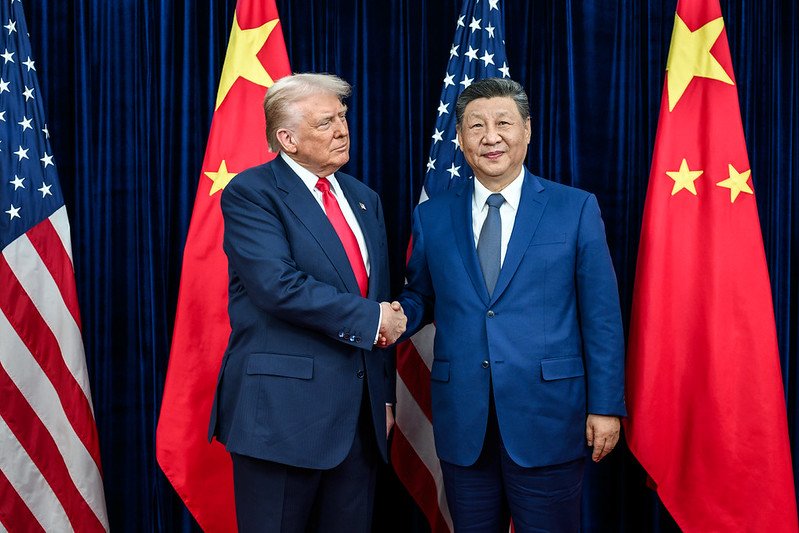
    Xi Jinping spent three days in Washington this week, the first visit by a Chinese leader to the U.S. capital in more than a decade. By the time he left, the two governments had agreed to buy themselves two more months to figure out what comes next.

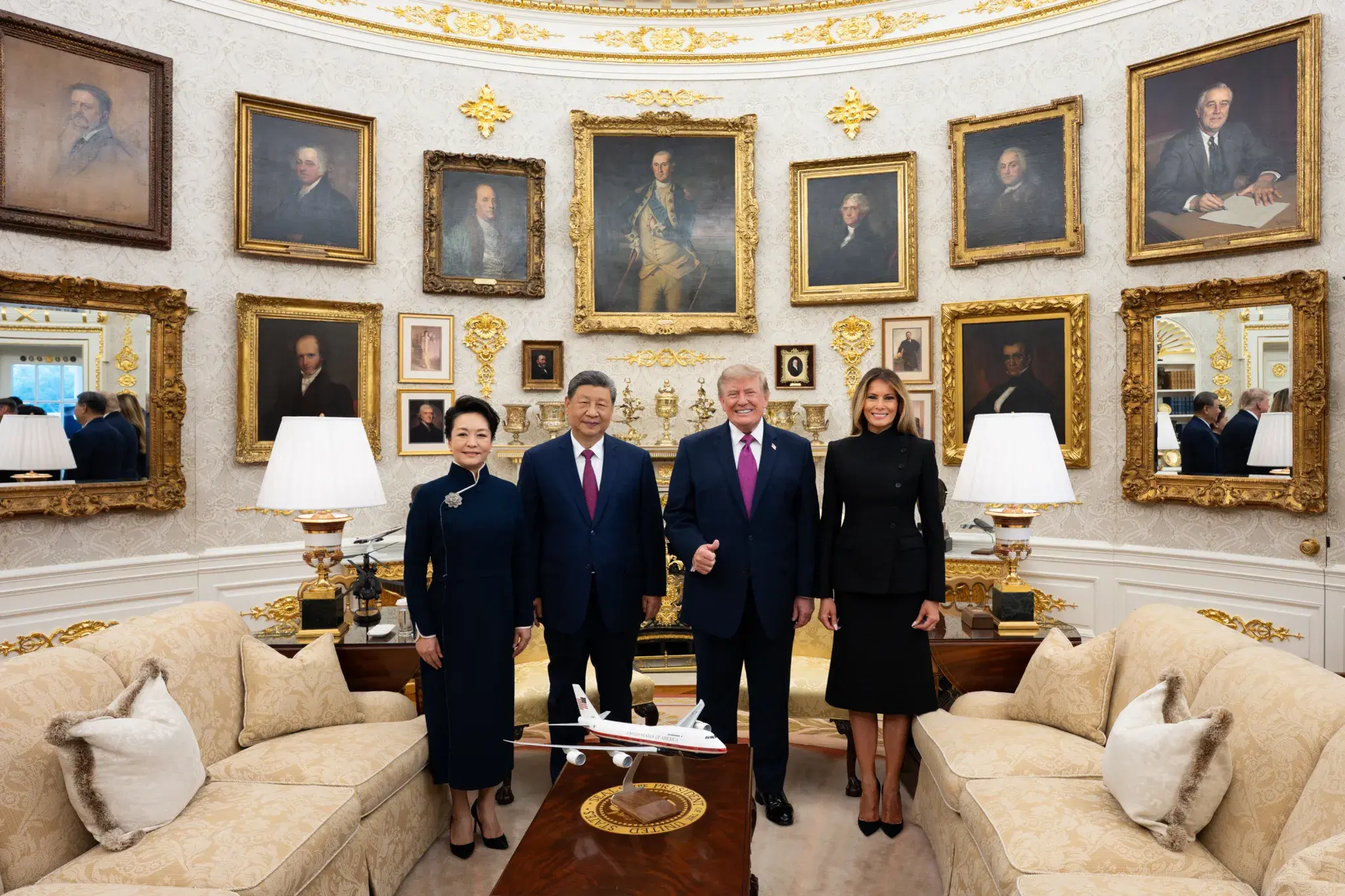
    Trump and Xi Jinping with First Ladies Melania Trump and Peng Liyuan at White House, Sept. 2026

    Treasury Secretary Scott Bessent announced on September 23, ahead of the formal summit, that the trade truce between Washington and Beijing would be extended from its November 10 expiration to January 10, 2027. It is not a new deal. It is a pause on an old one, and it leaves the two largest economies in the world exactly where they have been for the better part of a year: negotiating around the edges of a bigger confrontation neither side seems ready to resolve.

    A Warm Welcome, A Short Extension

    The optics were hard to miss. Trump personally met Xi at Joint Base Andrews when his plane landed, a tarmac greeting the White House has not extended to a visiting foreign leader in over a decade. A state dinner followed on September 24, drawing a guest list that read like a roll call of American tech power: Nvidia’s Jensen Huang, Tesla’s Elon Musk, Apple’s Tim Cook, and OpenAI’s Sam Altman all attended. The next day brought a tea session and a joint stop at the National Archives.

    Underneath the pageantry, the actual policy work had already been done in preparatory meetings. Bessent and U.S. Trade Representative Jamieson Greer met with Chinese Vice Premier He Lifeng in the days before Xi’s arrival, and it was from those sessions that the two month extension emerged. Bessent framed the goal as something larger than what had already been achieved, saying the two sides had convened to see whether they could reach “a bigger deal as opposed to just a series of smaller things.”

    He was notably unwilling to promise that outcome. Asked about the odds of something more substantial, Bessent told reporters, “I don’t know whether a bigger deal can be done. I don’t know whether we will just roll the current deal.” That kind of hedging from the administration’s lead trade negotiator is itself a signal. Nearly a year after the original truce was struck, Washington still is not certain it wants, or can get, anything more permanent.

    What The Truce Actually Protects

    The mechanics matter more than the ceremony. The extension keeps a 10 percent U.S. tariff on Chinese and Hong Kong imports tied to fentanyl enforcement, rather than letting it snap back to 20 percent. It also preserves China’s suspension of rare earth export controls and keeps Beijing’s soybean purchase commitments in place, three pieces of the relationship that touch semiconductor manufacturing, defense supply chains, and American agriculture all at once.

    None of it is automatic past January 10. If the two governments do not act again before that date, the tariff threat, a paused Section 301 investigation into Chinese shipbuilding, and the rare earth export controls all become live again. That is the arrangement in plain terms: not a resolution, but a countdown clock that both sides have agreed to reset for now.

    China’s follow-through on its existing commitments has also been uneven. Bessent said Beijing was running behind on $17 billion in agricultural purchases it had already committed to, even as roughly 1 million tons of soybeans moved in the run-up to the summit against a multi-year commitment reported at around 25 million metric tons. The exact scale and timeframe of that soybean pledge is described inconsistently across the reporting NeuralWired reviewed, and should be treated as approximate until an official U.S. or Chinese trade figure clarifies it.

    Pandas, Not Policy

    Ask what was actually announced at the summit itself, separate from the trade extension negotiated beforehand, and the list gets short fast. Xi pledged to send two giant pandas to Zoo Atlanta, which has had none since 2024, and to invite 100,000 American students to China for academic exchanges. Those are the concrete deliverables from three days of meetings between the leaders of the world’s two largest economies.

    There was no new agreement on artificial intelligence governance, no breakthrough on Taiwan, and no expanded trade package beyond the two month extension. Xi did address AI directly in remarks at the White House, telling the room that “we have both the capability and responsibility to develop and manage AI for good and ensure that the development of AI is always under human control and serves the well-being of the people.” Trump’s own response to questions about AI oversight, posted afterward on Truth Social, was considerably shorter: “Our guardrail is the DOJ.”

    Taiwan surfaced only through China’s own account of the talks. Beijing’s official readout said Xi called on the United States to handle the issue with caution and to oppose Taiwanese independence, but as of this reporting Trump had not addressed Taiwan publicly around the summit. That readout comes from China’s state news agency, not an independently verified transcript, and Washington’s own messaging around the visit emphasized trade and the panda pledge instead.

    Boeing remains the clearest example of a deal that still is not a deal. A framework for 200 aircraft, first floated during Trump’s May visit to Beijing, remained unfinished heading into this summit, and nothing in the reporting through September 26 indicates it was finalized here. Boeing shares slipped roughly 2 to 4 percent in the days before Xi’s arrival as hopes for a larger, newly signed order faded.

    Markets Are Watching a Bigger Number

    While the summit dominated headlines, bond markets moved on something else entirely. The 10 year Treasury yield touched 5.225 percent on September 25, its highest level since 2007, according to market coverage reviewed for this report, though one separate recap put Friday’s close closer to 5.18 percent. Either figure describes the same underlying story: borrowing costs climbing to territory investors have not had to price in for nearly two decades, in the same week the administration was staging its most high profile diplomatic event of the year with China.

    That juxtaposition is worth sitting with. A trade truce extension is, by design, a short term fix. A multi-decade high in Treasury yields is not something a summit dinner resolves.

    What Comes Next

    The January 10 deadline is now the date that matters most, but it is not the only one on the calendar. Trump and Xi are expected to meet again at the APEC summit in Shenzhen this November, and a further meeting is reportedly planned at the G20 Leaders’ Summit in Miami in December. U.S. Ambassador to China David Perdue has also described an informal, still nonbinding dialogue between the two countries on AI safety and incident alerts, something officials are calling a crisis mechanism without yet putting a formal agreement behind it.

    Taken together, the pattern is unmistakable. This is a relationship being managed in two month increments, propped up by tariff suspensions and soybean purchases rather than settled by any lasting framework. The pandas will make for good photographs when they arrive at Zoo Atlanta. The tariffs, the export controls, and the shipbuilding investigation currently held in suspension will decide whether the next ninety days bring something more durable, or simply another extension.


  • US-China Trade Truce Expires in November: What Xi Jinping’s Washington Visit Needs to Deliver

    Trump greets Xi Jinping before their October 2025 Busan summit meeting at Gimhae International Airport
    Image Credit: Photo by Daniel Torok / The White House

    Eight hours is a long time to sit across from the people who hold the other end of your trade relationship. On Sunday, Treasury Secretary Scott Bessent and US Trade Representative Jamieson Greer did exactly that with Chinese Vice Premier He Lifeng, at JPMorgan Chase’s Manhattan headquarters. On Monday, Beijing explained what the marathon was for: Xi Jinping will make a state visit to the United States from September 23 to 25, at Donald Trump’s invitation.

    It will be Xi’s first state visit to Washington since 2015 and his second face-to-face meeting with Trump this year. It also arrives with a clock running. The truce that has kept the world’s two largest economies out of a full-blown minerals and export-control fight expires in November, and so far neither side has said what happens next.

    What Beijing confirmed, and what the week looks like

    China’s Foreign Ministry made the announcement Monday, with spokesperson Guo Jiakun calling the reciprocal visits “of historic, milestone significance.” The choreography is elaborate. Trump will greet Xi at Joint Base Andrews on Wednesday, followed by an arrival ceremony at the White House. The leaders’ summit is set for Thursday, September 24, with a state dinner in the East Room that evening and a private tea on Friday.

    Edgard Kagan, a senior adviser at CSIS, put the symbolism bluntly ahead of the trip: “The visit is the message.” That reading fits the pomp, but the substance is what markets and manufacturers will be watching.

    What came out of New York

    The Sunday talks produced a few concrete outcomes. The two sides agreed to establish a US-China AI dialogue, and Washington proposed a notification mechanism for incidents such as security threats. Greer said the Board of Trade, the body created in May to discuss tariff cuts on non-strategic goods, is now operational.

    The products being considered for gentler treatment include Chinese consumer and low-tech goods, along with American energy, agricultural and medical products. Li Chenggang, China’s top negotiator, described the atmosphere as good and said a working group would reconvene Monday. Bessent, for his part, said the US had just had “a very successful engagement with the Chinese.” Before the meeting he had promised “focused, fulsome and constructive talks.”

    Just as telling is what was left out. No announcement was made on whether the truce will be extended. Bessent and Greer also reported no progress on critical-mineral flows, or on the farm purchases and Boeing order that China was said to have committed to in May.

    The deadline behind the pageantry

    The truce traces back to Busan, where Trump and Xi met on October 30, 2025 and agreed to a one-year pause in a confrontation over critical minerals. Under the arrangement, the White House said, China suspended the rare-earth export controls it announced on October 9, 2025 and issued general licenses covering rare earths, gallium, germanium, antimony and graphite. In return, Washington suspended its BIS Affiliates Rule for a year.

    The expiry dates do not line up neatly. Law firm analyses put the end of the US suspension at November 9, while reports place the Chinese suspension and the tariff pause at November 10. Either way, a few weeks separate the summit from a cliff edge, and the businesses that depend on those licenses have very little room to plan around a lapse.

    The May promises that remain unsettled

    The last Trump-Xi meeting, in Beijing in mid-May, left a trail of commitments that have yet to be fully verified. According to the White House, China agreed to buy at least $17 billion a year of American farm goods in 2026 (prorated), 2027 and 2028, and approved an initial purchase of 200 Boeing aircraft. Beijing’s own readout did not directly confirm those figures, and Boeing had not publicly confirmed the order.

    CNN calculated that the $17 billion, added to an existing soybean commitment, would come to roughly $27 billion a year. American agricultural exports to China totaled $24.4 billion in 2024, according to USDA data, so the pledge implies buying above anything recently achieved. That gap is part of why the absence of any update on farm purchases in New York stands out.

    A tariff decision waiting in the wings

    There is also the matter of new duties. Bloomberg reported, citing people familiar with the matter, that the US is expected to hold off announcing new excess-capacity tariffs on China and other partners until after the summit. The planned trade report would reportedly have recommended a 7.5% tariff on Chinese goods. The reason for the delay is unclear.

    The underlying Section 301 probe, opened in March, covers more than a dozen trading partners. The levies it could produce, combined with forced-labor duties already in place, would move tariff rates back toward the country-specific levels the Supreme Court overturned earlier this year. Whatever gets said in the East Room, that decision is now sitting behind it.

    Two leaders under domestic pressure

    Both men will arrive with reasons to want a visible win. US consumer prices rose 3.4% over the 12 months to August, according to the Bureau of Labor Statistics. Prices climbed 0.4% on the month, with a 3.9% jump in gasoline accounting for more than a third of that increase. Core inflation, which excludes food and energy, stood at 2.4%. Trump faces midterm elections in November amid the Iran war and those rising prices.

    China’s picture is softer. August retail sales grew just 0.4% from a year earlier, below the 0.8% that a Reuters poll had forecast. Fixed-asset investment fell 7.2% in the first eight months of the year, industrial output rose 5.2%, and urban unemployment stood at 5.3%. Second-quarter GDP growth of 4.3% was the weakest in more than three years and sits below the 4.5% to 5% target for 2026.

    Iran adds a complication. In August, Treasury launched “Operation Economic Outcast” to isolate Tehran financially, sanctioning three banks and some Chinese independent refineries. Washington has so far held back from targeting larger Chinese financial institutions, a restraint that could be tested if talks sour.

    Business leaders get a seat at the table

    The White House has confirmed a guest list for the state dinner that spans AI, chips, finance and consumer technology. It includes Elon Musk, Jeff Bezos, Jensen Huang, Sam Altman, Sundar Pichai, Michael Dell, Citi’s Jane Fraser and Apple executive chairman Tim Cook. Qualcomm has confirmed that CEO Cristiano Amon will attend. AI safety and rivalry are expected to feature on the agenda, which gives the new dialogue agreed in New York an obvious first test.

    Trump himself has set expectations high. Speaking in the Oval Office on September 18, he said, “We’re going to have a lot of different deals.” Markets appeared to lean into that optimism early Monday, with Bloomberg reporting S&P 500 futures up 0.6%, Nasdaq 100 futures up 0.8%, and Brent crude down for a fourth straight day.

    What to watch after the toasts

    Optimism is cheap before a summit. The more useful measures come afterward: whether the two leaders announce an extension of the truce, whether critical-mineral flows get a firm framework, and whether Beijing confirms the farm and Boeing commitments in its own words. The delayed tariff decision follows the summit, and the September inflation report lands on October 14, just weeks before the truce instruments run out.

    If the East Room dinner ends with warm words and no extension, the November deadline will do the talking instead.

  • Trump Signs Russia and Iran Sanctions Act Named for Lindsey Graham: What the Law Does and What Happens Next

    Trump Signs Russia and Iran Sanctions Act Named for Lindsey Graham: What the Law Does and What Happens Next

    The law carries the name of a man who did not live to see it finished, and the president who signed it said nothing about it. On Friday, Donald Trump signed H.R. 5334, the Lindsey O. Graham Sanctioning Russia and Iran Act of 2026, at the White House. The White House confirmed the signing in a brief written statement, but Trump offered no public remarks on what the measure is meant to achieve, a silence that RFE/RL and Iran International both flagged.

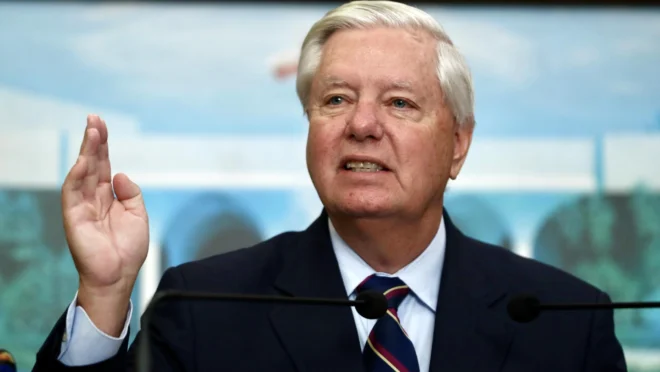
    Official U.S. Senate portrait of Sen. Lindsey Graham, namesake of the Russia and Iran sanctions law
    Sen. Lindsey Graham, shown in his official Senate portrait, championed the sanctions bill that now carries his name.

    Graham, the South Carolina Republican, spent more than a year pushing the package through Congress. He died unexpectedly in July, shortly after returning from a trip to Ukraine. Senator Richard Blumenthal, a Connecticut Democrat, helped draft the bill. The Senate approved it 86-11 in August, and the House followed 262-159 on Wednesday, sending a 61-page bill to the president’s desk.

    What the law actually does

    According to the official summary on Congress.gov, the act stacks several pressure points on Moscow at once. It requires the president to impose visa and property-blocking sanctions on named targets, including the Russian president and certain military commanders. It bars US energy and energy products from being exported, re-exported or transferred to or within Russia.

    The financial provisions go further. American persons can no longer make new investments in Russia or buy Russian sovereign debt, and securities of Russian government-owned, controlled or affiliated entities cannot trade on US national exchanges. The law also aims at the machinery that keeps Russian energy flowing, including the so-called shadow fleet of tankers, along with the owners, operators, managers and insurers behind it. Major Russian LNG projects, among them Yamal LNG and Arctic LNG, are named as targets.

    Iran gets a shorter but significant mention. The act extends the Iran Sanctions Act of 1996 through 2031. Tucked into the same bill is an unrelated tax change that widens a deduction for educator expenses to cover early-childhood teachers, a reminder of how Congress often carries unrelated provisions on larger legislation.

    The legislation is the most significant Russia-related sanctions law to reach the books since the 2017 Countering America’s Adversaries Through Sanctions Act. It also arrives while the war in Ukraine grinds on. Ukrainian officials reported fresh Russian missile and drone strikes on September 19, the day after the signing.

    The tariff clause that reaches Beijing and New Delhi

    The provision likely to matter most beyond Russia’s borders is the tariff mechanism. The president must raise tariffs by up to 100 percent on goods from any country that ranked among the five biggest importers of Russian crude oil or natural gas in the 12 months before enactment, if that country knowingly makes new purchases after the law takes effect.

    China and India are the two largest buyers of Russian crude, which is why the clause carries so much diplomatic weight. It also lands in a complicated moment for energy policy. The administration recently allowed purchases of Russian oil already at sea to continue, during a global oil crunch tied to the separate US-Iran conflict. A law that penalizes Russian energy buyers sits uneasily beside that earlier flexibility, and how the two reconcile is a question for the coming weeks in the world of global energy and trade.

    Nothing has changed at any border yet. No new tariffs are in force on Chinese or Indian goods as a result of the signing.

    Discretion is built into the law

    The law hands Congress a stated objective and hands the president the switch. He can waive its provisions by certifying to Congress that doing so serves the national interest. The administration must also reassess every 180 days which countries fall under the tariff provisions, creating a recurring checkpoint on enforcement.

    That design shapes how analysts read the moment. Luke Coffey, a senior fellow at the Hudson Institute, told RFE/RL that the law’s symbolism and timing are among its most important features, then added a caution: “I would not expect major new sanctions or tariffs to be implemented overnight as a result of this legislation.”

    Kerri Bitsoff, a former senior official at the Treasury Department’s Office of Foreign Assets Control, pointed to a more practical test. She noted that Treasury has shown no movement on existing Russia sanctions in almost eleven months. In her words, “Enforcement on those from Treasury will be a good indication of whether Trump will use this new authority or let it sit.”

    Reaction: relief in Kyiv, frustration over the silence

    Ukrainian President Volodymyr Zelenskyy responded on X, recalling Graham’s repeated message during his visits to Ukraine that pressure on Russia must not ease. He framed the law as a memorial that demands action: “The best way to honor Lindsey’s memory will be to implement the provisions of this law fully and swiftly.”

    Daniel Fried, a former State Department sanctions coordinator, welcomed the signature but questioned the way it happened. Speaking to RFE/RL, he said the absence of a public statement means Trump “has missed a chance to send a message to Putin that he needs to end the war.” Bitsoff, for her part, called the wide bipartisan votes an encouraging signal for Ukraine, evidence that support for pressure on Putin still crosses party lines in Congress.

    What to watch next

    The first real test comes quickly. Trump is scheduled to host Chinese President Xi Jinping at the White House on September 24, a visit reported by multiple wire services since May. China is one of the biggest buyers of Russian crude, so the new tariff authority now hangs over that meeting. Whether Trump raises it, leans on it or quietly sets it aside is an open question. As with any scheduled summit, the date could still shift, so the timing is worth confirming as the week develops.

    The longer arc will play out inside the executive branch. Treasury’s handling of the sanctions already on the books, the first 180-day review of which countries are covered, and any decision to use or waive the 100 percent tariff will show whether this law becomes a working instrument or a statement of intent. For readers following defence and security policy, the signature settled the legislative fight, but the harder decisions about enforcement now belong to the administration alone.


  • Fed Raises Interest Rates for the First Time Since 2023 as Chair Kevin Warsh Breaks With Trump

    Fed Raises Interest Rates for the First Time Since 2023 as Chair Kevin Warsh Breaks With Trump

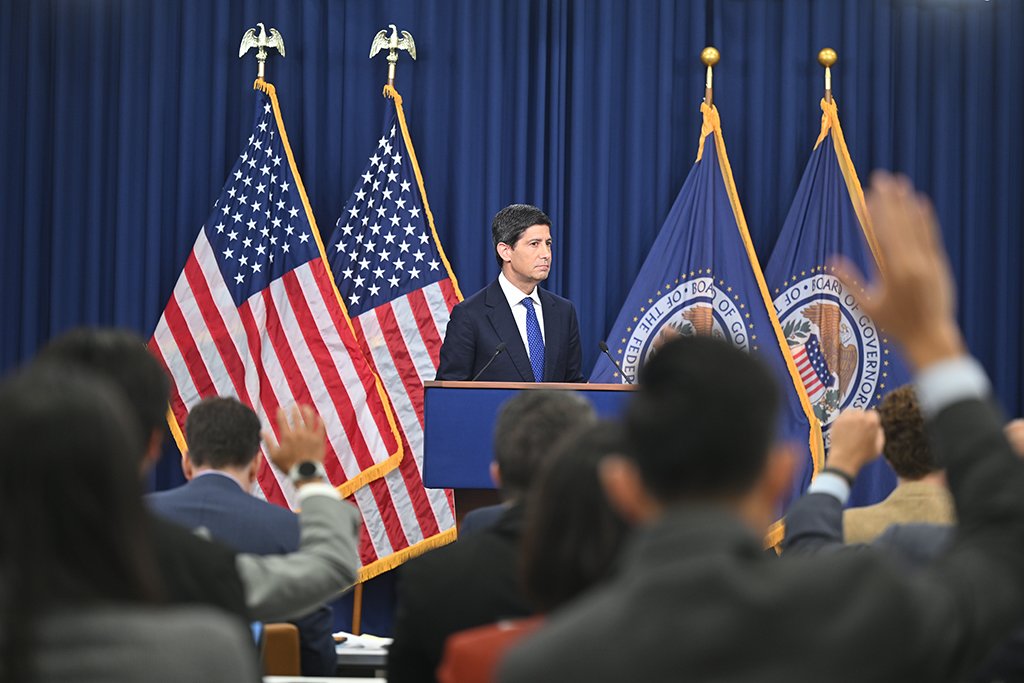
    Official portrait of Federal Reserve Chair Kevin Warsh, who led the Fed's September 2026 rate hike to 3.75-4 percent
    Image credit: Board of Governors of the Federal Reserve System, via federalreserve.gov

    For months, Kevin Warsh promised that the Federal Reserve would move when the data demanded it and not a moment before. On Wednesday, the data won. The Fed chair that Donald Trump handpicked cast a vote the president did not want, and eleven of his colleagues voted right along with him.

    The Federal Open Market Committee raised its target range for the federal funds rate by a quarter point, to 3.75 percent and 4 percent, in a unanimous 12-0 decision. It is the first rate increase since July 2023 and the first of Warsh’s tenure as chair. Trump, who nominated Warsh in January, said within hours that rates should be far lower, and later told reporters he had spoken to Warsh before the vote. Warsh, at his press conference, would not discuss it.

    A Short Statement With a Blunt Message

    The FOMC’s statement ran to just four paragraphs, unusually brief for a decision of this weight. It described an economy expanding at a solid pace, with resilient spending, strong productivity and job gains keeping pace with the workforce, even as uncertainty stayed elevated because of geopolitical developments. Inflation, the Committee said plainly, remains too high.

    Warsh put it in his own words when he opened the press conference. “But inflation remains elevated. Today’s policy action will support a timelier return to the Committee’s 2 percent goal. This Committee will deliver price stability,” he said, according to the Fed’s own transcript of his remarks, released marked preliminary.

    The mechanics moved in step with the headline number. The Fed lifted interest on reserve balances to 3.90 percent and raised the primary credit rate a quarter point to 4 percent, a request that came from the boards of the Cleveland, Richmond, Atlanta, Chicago, Minneapolis, Kansas City and Dallas regional banks. The standing overnight repo rate rose to 4 percent and the reverse repo offering rate to 3.75 percent, with a $160 billion daily cap per counterparty. The Fed’s trading desk was also told to keep rolling maturing Treasury holdings into new auctions and to shift agency-security proceeds into Treasury bills, full details laid out in the Fed’s implementation note.

    The Case for Acting Now

    Warsh has been building toward this decision since the summer. At last month’s Jackson Hole symposium, he set the bar for himself in public, saying he would be “hard-pressed to describe broad financial conditions as restrictive” and warning that “price stability is not self-executing, nor is inflation necessarily mean-reverting.” On Wednesday he said the Committee judged that standard had not been met, calling the state of inflation a “plain fact” that had persisted too long and adding that this summer’s readings gave him no comfort that underlying price pressure was actually easing.

    The numbers behind that judgment had been piling up for two weeks. The August jobs report, released September 4, showed nonfarm payrolls up 162,000, nearly triple the roughly 53,000 to 56,000 economists expected, with June and July revised higher by a combined 55,000 and unemployment steady at 4.1 percent. A week later, August inflation data showed headline CPI up 0.4 percent for the month and 3.4 percent over the year, with core inflation, which strips out food and energy, running at 2.4 percent annually. Energy prices alone were up 16.3 percent year over year, and gasoline had jumped nearly 28 percent. Both reports are detailed in the Bureau of Labor Statistics’ August CPI release.

    Warsh cited his own estimate that total personal consumption inflation, the Fed’s preferred gauge, likely ran near 3.6 percent in August, with core PCE closer to 3.2 percent, figures he derived ahead of the official release. Asked afterward to characterize the vote, he told reporters, as relayed by Reuters, that it was “a sober decision, serious decision, responsible decision.”

    An Inflation Story Complicated by Oil

    Much of the price pressure the Fed is fighting did not originate in the domestic economy at all. An escalating conflict involving the United States and Iran has disrupted oil flows through the Gulf for months, and on September 11 drones launched from Iraq struck a pumping station on Saudi Arabia’s East-West pipeline, a roughly 750-mile link with capacity to move about 7 million barrels a day of crude to the Red Sea without passing through the Strait of Hormuz. Riyadh shut the line down.

    Brent crude traded between roughly $105 and $108 a barrel in the days that followed, and the futures market flashed real alarm: the spread between the front-month contract and the next one out widened to $4.44 a barrel, up from under a dollar just a month earlier, a classic sign traders feared an immediate supply crunch. Prices eased after U.S. Energy Secretary Chris Wright told CNBC the outage was a “brief and temporary interruption” that would be measured in days, and after Saudi officials signaled they could restore roughly half the pipeline’s capacity within days and full service in about six weeks. Independent analysts reviewing satellite imagery of the damaged site have been less certain, warning the repair could stretch into weeks rather than days.

    That uncertainty sits underneath one of the more contested questions in macroeconomics right now: whether a central bank should tighten policy at all in response to a shock that originates in energy prices rather than domestic demand. Treasury Secretary Scott Bessent made the case publicly before the meeting that supply shocks typically pass through the economy without requiring a policy response. Warsh’s own reasoning is different. He has argued the Fed cannot control the price of oil, but it can and must stop a shock in one part of the economy from spreading into broader, stickier inflation. Which view proves right will not be settled this week, and Wednesday’s decision is effectively the test case.

    Markets Whipsaw, Then Steady

    Stocks were calm ahead of the announcement and turned sharply lower once Warsh began taking questions. The Dow Jones Industrial Average closed down about 1.2 percent, the S&P 500 fell 0.4 percent and the Nasdaq Composite finished roughly flat. The 10-year Treasury yield, which had already touched its highest level since 2007 earlier in the week, climbed back above 5 percent, and the more rate-sensitive 2-year yield rose seven basis points to 4.738 percent.

    By Thursday, some of that move had reversed. The 10-year yield fell more than six basis points to 4.943 percent, snapping an eight-session climb, while the 30-year eased to 5.301 percent and the 2-year to 4.675 percent. The S&P 500 was up roughly 1 percent in Thursday trading and a closely watched index of chipmakers gained 3 percent, as Brent slipped back toward $102 to $103 a barrel on easing fears about the Saudi outage. Gold rose as well.

    The Fed’s own projections suggest Wednesday was not a one-off. The median policymaker now expects the federal funds rate to end both this year and next at 4.1 percent, which implies one more quarter-point increase before the year is out. Eighteen participants submitted projections for the Summary of Economic Projections; Warsh, as he has done all year, declined to submit one of his own. Of those eighteen, sixteen see at least one more rate increase in 2026.

    A President Overruled by His Own Pick

    The politics of the vote are as unusual as the economics. Trump nominated Warsh in January after souring on then-Chair Jerome Powell, and as recently as February said publicly that he would not have picked Warsh had he known Warsh wanted to raise rates. On Wednesday, Warsh voted for exactly that.

    Trump responded on Truth Social within hours, writing that “Interest Rates in the United States should be 1%, or less, because we are the Best Credit in the World” and demanding the Fed act fast to bring them down. Speaking to reporters that evening before leaving for a campaign event in North Carolina, he said he had told Warsh “you might as well vote with the board because it’s not going to matter,” and described the Fed’s board as hostile and political. Asked directly whether he believed Warsh’s vote was shaped by that conversation, Trump said he did not think so. Warsh, for his part, told reporters he had “got nothing for you on a discussion with the president.”

    The administration’s criticism was not limited to the president. White House Senior Deputy Press Secretary Kush Desai told Fox News the decision was unfortunate and not backed by a compelling economic case, and Vice President JD Vance had said in the days before the meeting that the Fed should be cutting rates, not raising them. The episode lands in an already strained institutional moment for the Fed: Governor Lisa Cook’s position remains contested in ongoing litigation, the Justice Department has closed but reserved the right to reopen an inquiry into Powell pending an inspector general’s report, and a separate outside review of the 2023 Silicon Valley Bank failure is still underway. None of those matters has been resolved.

    What Comes Next

    The Fed’s next scheduled decision lands October 28, just days before the midterm elections, a meeting that will carry an inescapable political charge regardless of the outcome. Administration officials have already argued the central bank should hold off acting so close to a vote. The following meeting, December 8 and 9, comes with a fresh round of economic projections and is the point at which Goldman Sachs Asset Management has publicly said it expects the next rate increase to land, consistent with the Fed’s own dot plot.

    Minutes from this week’s meeting are due in early October and should show how contested the unanimous vote actually was behind closed doors. Between now and then, the single biggest variable is likely to be oil: whether Saudi Arabia gets the East-West pipeline back to full capacity in six weeks, as officials say, or whether the damage proves more stubborn, as independent analysts reviewing the site currently suspect.

    What Wednesday’s vote did not do is settle the argument underneath it. Whether a central bank should tighten policy into a shock that started in the price of oil rather than in domestic demand remains a live and legitimate dispute among economists, one that Bessent and Warsh have now staked out in public on opposite sides. That debate, not any single data point, is what the Fed will be litigating in real time over the next six weeks, with mortgage rates, corporate borrowing costs and a president’s patience all riding on the answer.