
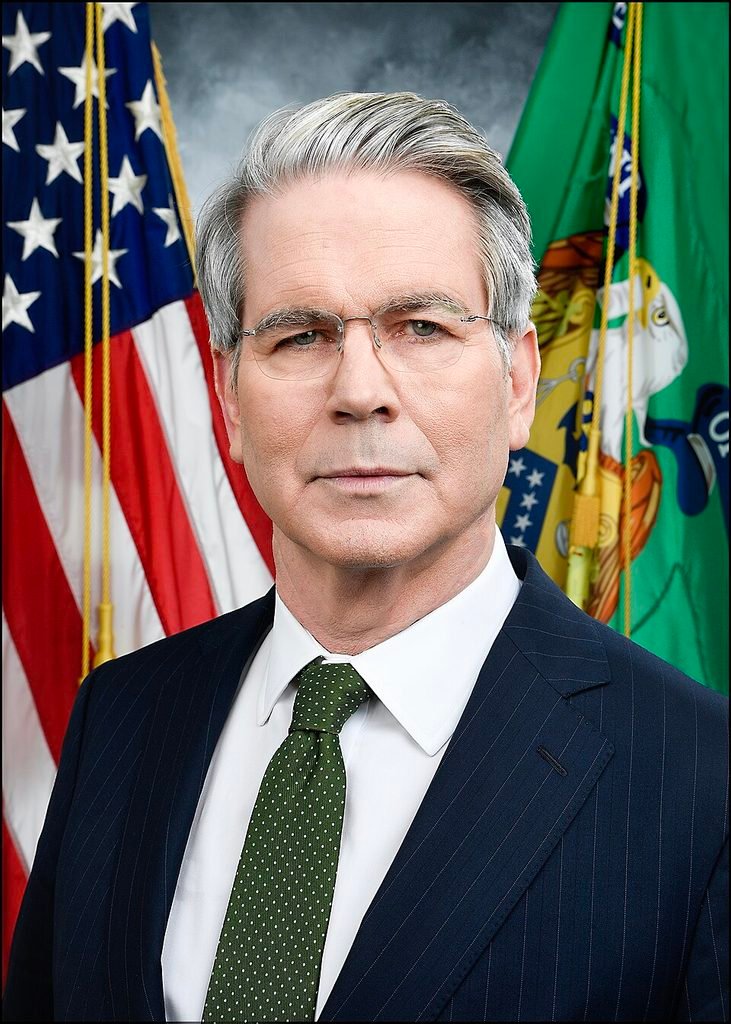
The venue is the Manhattan headquarters of JPMorgan Chase, but the bank has no role in the talks. It is only supplying the building, at a moment when security around the UN General Assembly is already heightened. Inside, Treasury Secretary Scott Bessent and Chinese Vice Premier He Lifeng are meeting for a session scheduled to start around 10:30 a.m. Eastern and run through the day, with US Trade Representative Jamieson Greer also in attendance.
Working-level talks could carry into Monday, according to an unnamed person familiar with the plans. As of this writing, neither government had published a readout of Sunday’s meeting. What is already clear is what the two sides came to argue over, and how much rides on a state visit that US officials say begins on Wednesday.
Three items on the table
The reported agenda has three parts: the trade truce between the two countries, which expires on November 10; the flow of Chinese rare-earth magnets and critical minerals; and possible guardrails on artificial intelligence. On minerals, a senior US official said Friday that China’s performance has fallen short of expectations, as reported by Reuters.
China’s Ministry of Commerce announced Saturday that He will lead a delegation to the United States from Sept. 19 to 23, and that Chinese companies are part of it. The ministry described the purpose as “economic and trade issues of mutual concern,” a phrase broad enough to cover nearly anything.
Washington’s language is similarly guarded. Greer’s office spoke of “optimizing trade in non-sensitive goods,” while Bessent told Axios on Sept. 16 that the goal was “avoiding bifurcation of our two systems.” Together, the phrases sketch a US position that wants ordinary commerce to keep flowing while strategic sectors stay fenced off.
A truce standing on rebuilt legal ground
The current truce traces to the November 2025 meeting in Busan, which, according to Reuters, capped US tariffs on Chinese goods at about 20%. Then the legal footing moved. On Feb. 20, the Supreme Court held that the emergency-powers law behind many of those tariffs, IEEPA, does not authorize them. The administration has been rebuilding its tariff structure under other authorities ever since.
One of those is a forced-labor tariff. The US Trade Representative finalized the action on July 23, effective July 24, with rates of 10% or 12.5% across economies that account for about 99.4% of US imports. Chinese goods face the 12.5% rate.
A second pillar is still being finished. In March, the USTR opened an investigation into structural excess capacity in 16 economies, China among them. Bloomberg, citing people familiar with the matter, reports that the resulting tariffs are expected to be held until after the summit. Its reporting also puts the expected rate on China at 7.5%, which would bring total duties back to roughly 20%, though that figure rests on Bloomberg alone.
There is a wrinkle to keep in mind as November 10 approaches. The Supreme Court ruling struck down the tariffs the truce originally suspended, and coverage so far does not spell out what exactly lapses when the truce ends. The deadline’s practical bite is harder to gauge than the date suggests.
What Washington may give, and what it won’t
The talks are timed around the summit. Senior US officials told AP that Xi lands at Joint Base Andrews on Wednesday, greeted by Trump, and that the two presidents meet at the White House on Sept. 24. Thursday brings an arrival ceremony, a troop review, closed-door talks and a state dinner, followed on Friday by a private tea and a tour of the National Archives. The date comes from the US side. Beijing’s own confirmation, delivered by Wang Yi in May, said only that the visit would happen in autumn.
Those same officials said the two sides may ease some tariffs on a narrow band of non-strategic goods, but that the US is not expected to loosen export controls in exchange for rare earths. That is a firm limit, since rare earths are central to advanced chipmaking.
Unfinished business from Trump’s May trip to Beijing also hangs over the week. The White House said China agreed to buy at least $17 billion a year in US farm goods through 2028 and approved an initial 200 Boeing aircraft, its first Boeing commitment since 2017. China’s Commerce Ministry described those agreements as still under consultation, so they are best read as US-announced commitments until Beijing says otherwise.
Where the friction is sharpest: cars and AI
Autos offer a live example of how far apart the positions inside Washington can sit. Trump told Fox News he would be open to Chinese automakers building plants in the US if they employ American workers. A coalition of US auto trade groups has written to the White House urging it to keep that door shut, and Greer has said the rules restricting Chinese vehicle technology are not changing.
AI is the newest item and the most tangled. Bessent has said he expects the talks to cover both open-weight and closed-weight models. The backdrop is a joint advisory from the NSA, CISA and the FBI, issued Sept. 8, which accuses six Chinese firms, including Alibaba, DeepSeek and Moonshot AI, of extracting capabilities from US models on an industrial scale since at least late 2024. The document names models from four US developers.
Reuters adds a complicating detail: Chinese open-weight models are gaining popularity with US companies because they can be cheaper than closed US models. A country accused of copying American systems is also offering models that American businesses find attractive. Those two facts sit uneasily inside the same negotiation.
What to watch next
Analysts are not promising fireworks. Anna Ashton, founder of Ashton Intelligence, told Reuters, “I don’t feel like we’re on the verge of some sort of breakthrough.” Investors seem to expect at least a mild lift. A Goldman Sachs survey found that 46% of offshore investors and 38% of onshore investors expect Chinese stocks to rise after the summit, according to Bloomberg.
The signals that will matter are concrete ones:
- Any tariff cuts on non-strategic goods
- Confirmation or expansion of the Boeing and farm purchases
- Commitments on rare earths
- A joint statement on AI safety
- Movement on the auto-plant question
The harder tests come after the summit. The delayed excess-capacity tariff decision is still waiting, and the November 10 expiry is approaching with its consequences unspecified. AP reports that the two leaders could meet twice more this year, which suggests that today’s session in a bank’s building, and the White House summit that follows, are the opening moves of a longer negotiation rather than its conclusion.