Month: June 2026

  • What Is a Crypto Wallet? Ledger, MetaMask & Types 2026

    What Is a Crypto Wallet? Ledger, MetaMask & Types 2026

    What Is a Crypto Wallet? The Complete 2026 Guide for Beginners | NeuralWired
    Crypto · Beginner Guide · June 2026

    What Is a Crypto Wallet? The Complete 2026 Guide (Types, Risks & How to Choose)


    On February 21, 2025, a security team at the Dubai-based exchange Bybit watched $1.5 billion in Ethereum vanish in minutes. The funds moved to wallets controlled by North Korea’s Lazarus Group. The terrifying part? Bybit had a cold wallet. They had multisig approvals. They did everything the security textbooks say to do. It still wasn’t enough.

    If a billion-dollar exchange with professional security engineers can lose everything in one transaction, what chance does a first-time crypto buyer have? The honest answer is: a better chance than you think, but only if you understand what a crypto wallet actually is, how it works, and which type belongs in your hands right now.

    This guide covers all of it. No jargon without explanation. No generic advice. By the end, you’ll understand the single most important concept in crypto security, one that more than half of active crypto users still get wrong.


    What a Crypto Wallet Actually Is

    Here is the most important sentence in this entire article: a crypto wallet does not store your cryptocurrency.

    Read that again. Your Bitcoin, Ethereum, and any other token you own never leave the blockchain. They live there permanently, recorded in a public ledger that no single person or company controls. What your wallet stores are the private keys that prove you own those assets and authorize you to move them.

    The word “wallet” is technically a misnomer. It stuck because it made the concept feel familiar. A better analogy is a key ring. The key ring doesn’t contain your house or your car. It holds the keys that give you access to them. Lose the key ring and you’re locked out. Hand the key ring to someone else and they own everything attached to it.

    Key Concept
    Crypto assets live on the blockchain. A wallet stores the private keys that prove ownership of those assets. The wallet is the key ring, not the safe.

    The U.S. Securities and Exchange Commission confirmed this in its December 2025 investor bulletin: crypto wallets store private keys, not crypto assets, and losing keys or seed phrases means irreversible loss of crypto access. This was the first formal SEC guidance document explicitly addressing crypto wallet custody for retail investors, and it drove home a point the industry had been making for years: the key is the asset.


    How a Crypto Wallet Works

    Understanding the mechanics of a crypto wallet doesn’t require a computer science degree. It requires understanding three things: private keys, public keys, and seed phrases.

    The Private Key

    A private key is a randomly generated number, enormous in size, typically represented as a string of letters and numbers. It is the master credential. Using asymmetric cryptography, specifically an algorithm called Elliptic Curve Cryptography (ECC) on Bitcoin’s secp256k1 curve, the private key mathematically generates a public key. This is a one-way street. You can go from private to public, but you cannot reverse-engineer a private key from a public key. That mathematical impossibility is the entire foundation of crypto security.

    The Public Key and Your Wallet Address

    Your public key goes through a hashing and encoding process (Base58 encoding) to produce the shorter string you share with others when you want to receive crypto. This is your wallet address, the equivalent of an account number. It’s safe to share publicly because, even knowing your address, nobody can derive your private key from it.

    When you send crypto, your wallet uses your private key to create a digital signature. The receiving network verifies that signature against your public key without ever seeing the private key itself. The transaction confirms. The blockchain records it. Your private key stays private.

    The Seed Phrase: The One Thing You Must Never Lose

    Most modern wallets generate a 12-word or 24-word recovery phrase when you first set them up. This is called a seed phrase, a mnemonic, or a recovery phrase. It encodes your private key in a format a human can write down. Every single wallet and its private keys can be fully reconstructed from this phrase on any compatible device.

    Critical Warning
    A 2025 academic study presented at the CHI conference found that only 43.4% of surveyed crypto users could correctly identify a seed phrase. That means more than half of active crypto holders are making security decisions without understanding the one backup mechanism that controls everything they own.

    Anyone who has your seed phrase has your wallet. They don’t need your device. They don’t need your password. They don’t need your email address. Write it down, store it offline, and never type it into any website or app that asks for it unprompted.


    Types of Crypto Wallets in 2026

    Crypto wallets divide along two axes: who holds the keys, and whether the wallet connects to the internet. Understanding both axes determines which wallet is right for your situation.

    Axis 1: Hot Wallets vs. Cold Wallets

    Hot wallets are internet-connected. They include browser extensions like MetaMask, mobile apps like Trust Wallet and Coinbase Wallet, and web-based wallets accessed through a browser. Hot wallets are convenient for frequent transactions and ideal when you’re actively using crypto for trading or interacting with decentralized applications. The trade-off is exposure: because they’re online, they face a wider attack surface from phishing, malware, and software vulnerabilities.

    Cold wallets stay offline. Your private keys are generated and stored on a device that never connects to the internet. Hardware wallets from Ledger, Trezor, and Tangem are the dominant examples. They’re designed for long-term storage of holdings you don’t plan to move frequently. Ledger confirmed over 8 million devices sold with zero hardware hacks across a decade of operation as of March 2026. Cold wallets reduce online attack risk substantially, but they introduce physical risk: lose the device and the backup seed phrase, and your funds are gone.

    78% of all crypto wallets are hot wallets (2025)
    31% increase in hardware wallet sales in 2025
    820M unique active crypto wallets globally (2025)

    Axis 2: Custodial vs. Non-Custodial

    This distinction matters more than hot vs. cold for most beginners. It determines who actually controls your crypto.

    A custodial wallet means a third party, typically a centralized exchange like Coinbase or Binance, holds your private keys on your behalf. You have a claim on the assets. You do not have direct cryptographic ownership. This is convenient. It also means that if the exchange is hacked, goes insolvent, or freezes withdrawals, your access to your funds is at their discretion.

    A non-custodial wallet means you hold your own private keys. You have complete control. Nobody can freeze your assets, block a withdrawal, or lose your keys for you. The phrase “not your keys, not your coins” was coined specifically to describe what happens when you leave that control with someone else. As of 2025, non-custodial wallets are preferred by 59% of crypto users, with custodial arrangements still used by 41%.

    Wallet Type Internet Connected Key Control Best For Main Risk
    Custodial (Exchange) Yes Third party Absolute beginners, active traders Exchange insolvency or hack
    Software Hot Wallet Yes You Frequent transactions, DeFi users Phishing, malware, browser exploits
    Hardware Cold Wallet No You Long-term holders, significant balances Physical loss, seed phrase exposure
    Smart Contract Wallet Yes Programmable Advanced users, institutional use Smart contract bugs, operational complexity

    Smart Contract Wallets: The Emerging Category

    In May 2025, Ethereum’s Pectra upgrade introduced EIP-7702, which allows standard wallets to temporarily execute smart contract code. This opened the door to features like batch transactions and sponsored gas fees without requiring users to fully migrate to a new account type. Safe, the leading smart account provider, reached 41.6 million total smart accounts after deploying 7.1 million new accounts in Q1 2025 alone. Smart contract wallets are growing fast, but they’re still an advanced category. Beginners don’t need to start here.


    Custodial vs. Non-Custodial: The Decision That Matters Most

    The crypto culture’s dominant answer to the custody question is simple: self-custody is always better. Own your keys. Be your own bank. This is a powerful principle. It is also, for many beginners, genuinely dangerous advice without the full context.

    “People who have a material investment in bitcoin absolutely need to be thinking differently about how to protect it.”

    Nick Neuman, Co-founder and CEO, Casa — via CNBC
    Neuman runs Casa, a multisig security company built specifically to make self-custody safer. He is philosophically committed to self-sovereignty. And even he acknowledges the reality: “Not everyone wants to be a sovereign individual right now.” Bitcoin self-custody demands high personal responsibility. That’s not a reason to avoid it. It’s a reason to approach it correctly.

    The practical framework for most beginners looks like this:

    • Holdings under $1,000: A reputable custodial wallet on a regulated exchange (Coinbase, Kraken) is a reasonable starting point. Not because it’s more secure in absolute terms, but because the number one risk for a beginner is human error. Losing a seed phrase permanently destroys more beginner portfolios than exchange hacks.
    • Holdings between $1,000 and $10,000: Start transitioning to a non-custodial software wallet. Learn how to store your seed phrase offline. Practice recovery with a small amount first.
    • Holdings above $10,000: A hardware wallet is strongly advisable. This is the threshold at which the cost of a Ledger or Trezor device becomes negligible compared to what you’re protecting.
    Our Read
    The custody decision is the most consequential choice a crypto holder makes, not which token to buy. A 10x return in a coin held on a hacked exchange is worth zero. A hardware wallet that costs $80 protecting $10,000 in Bitcoin is the best investment in that portfolio.

    The SEC’s December 2025 bulletin made the institutional position clear: under self-custody, all security responsibility rests entirely with the investor. The agency strongly advises storing seed phrases offline and never sharing them with anyone. Neither hot nor cold wallets are risk-free, and the SEC does not endorse any single type. What it does confirm is that both choices carry distinct, real risks that every investor must actively understand.


    Security: Real Threats, Real Numbers

    In 2025, Chainalysis reported $3.4 billion stolen across all crypto hacks. This was the highest figure since 2022. The Bybit breach alone accounted for $1.4 to $1.5 billion of that total. Private key breaches drove 88% of all stolen amounts in Q1 2025.

    The Bybit Breach: What It Actually Means for You

    The specifics of the Bybit incident are important because they’re widely misunderstood. Bybit didn’t get hacked because they used weak security. They used cold storage. They used multisig approvals. The exploit targeted the operational handoff between cold storage and a warm wallet during a routine transfer.

    “It was made to appear that a transfer from cold storage to a warm wallet was being completed, but the funds were exploited to a wallet controlled by North Korea without the awareness of those doing the signing on the Bybit side.”

    Andrew Fierman, Head of National Security Intelligence, Chainalysis — via CoinTelegraph
    The attacker compromised a third-party vendor, SafeWallet, which Bybit used to manage that transfer process. The cold wallet itself wasn’t broken. The process around it was. This distinction matters enormously for how you think about your own wallet security.

    The Threat That Actually Targets Beginners: Phishing

    State-sponsored hackers targeting billion-dollar exchanges are not your primary threat. Phishing is. Phishing accounted for approximately $410.75 million in losses in H1 2025 alone. Phishing attacks against individual wallet holders look like this in practice: a fake MetaMask website that captures your seed phrase when you “restore” your wallet; a browser extension that mimics a real wallet and intercepts transaction approvals; a social media DM from “support staff” asking you to verify your recovery phrase.

    Personal wallet compromises grew from 7.3% of total stolen crypto value in 2022 to 44% in 2024. Individual holders are increasingly the target precisely because exchanges have hardened their defenses. Attackers go where the resistance is lowest.

    “This trend of big game hunting seems to be continuing, and there’s no reason to believe hacks will decline next year.”

    Andrew Fierman, Head of National Security Intelligence, Chainalysis — via CoinTelegraph

    The Trust Wallet Incident: December 2025

    On December 25, 2025, hundreds of Trust Wallet browser extension users had their wallets drained within hours. Trust Wallet confirmed the incident affected Browser Extension version 2.68 only, suggesting a supply-chain compromise in the update mechanism rather than a breach of the app’s core architecture. The incident reinforced a critical point: even brand-name, reputable hot wallets carry operational risk from their own update pipelines.

    Physical Risk Is Underappreciated

    Hardware wallets protect against online attacks. They do not protect against house fires, floods, or earthquakes. Nick Neuman of Casa noted that physical disasters are an opportunity to revisit how Bitcoin security works and examine the common security lapses embedded in most users’ practices. After the California wildfires in early 2025, social media posts appeared from users who had lost hardware wallets and seed phrase backups simultaneously. Self-custody creates a single point of failure in physical space, not just digital space. Secure, off-site seed phrase backup is not optional if you’re serious about self-custody.

    Security Checklist
    Write your seed phrase on paper. Store it in two separate physical locations. Never photograph it. Never type it into any website. Never share it with anyone, including “support agents.” Verify every transaction signing request before approving it. Only download wallet apps from official sources.


    How to Choose the Right Wallet

    The wallet market is projected to grow from $18.96 billion in 2025 to $69.02 billion by 2034 at a 30.4% CAGR, according to The Business Research Company’s Crypto Wallet Global Market Report 2026. That growth means more options, more marketing noise, and more decisions to navigate. Here’s how to cut through it.

    Questions to Ask Before You Choose

    • How much are you holding? Amount determines risk tolerance. More holdings require more security friction.
    • How often will you transact? Daily DeFi users need hot wallet accessibility. Long-term holders need cold storage.
    • Which blockchains do you use? Not all wallets support all chains. MetaMask supports Ethereum and EVM-compatible chains natively; it added Bitcoin support in 2025. Trust Wallet supports over 100 blockchains.
    • Are you comfortable managing a seed phrase? If the answer is no, and you’re holding a small amount, a custodial exchange wallet is the honest starting point while you learn.
    • Do you need DeFi access? Hardware wallets can connect to DeFi through companion apps, but hot wallets offer a smoother experience.

    Wallets Worth Knowing in 2026

    MetaMask remains the dominant Ethereum-ecosystem wallet with over 30 million active users and native Bitcoin support added in 2025. Trust Wallet reached the top download ranking among mainstream crypto wallets in March 2025, capturing 35.09% of download share. Ledger Nano X and Trezor Model T are the hardware wallet gold standards. Tangem offers a card-format hardware wallet that eliminates seed phrase management via NFC. For users who need institutional-grade multisig, Safe (formerly Gnosis Safe) is the reference implementation.

    If you’re just starting out, read our guide on how to buy cryptocurrency safely in 2026 before you decide which wallet to set up. The sequence matters: understand what you’re buying before you decide how to store it.

    For those considering exchange-based alternatives that don’t require direct wallet management, our Bitcoin ETF explainer covers custodial alternatives worth understanding alongside self-custody options.


    Frequently Asked Questions

    Does a crypto wallet actually store your crypto?
    No. A crypto wallet does not store your cryptocurrency. Your coins always remain on the blockchain. The wallet stores your private keys, the cryptographic codes that prove you own the assets at a specific blockchain address and authorize you to send them. Think of it as a key ring, not a safe.

    What is the difference between a hot wallet and a cold wallet?
    A hot wallet is connected to the internet. Examples include MetaMask and Trust Wallet, and they offer easy access for frequent transactions but carry a larger attack surface. A cold wallet such as a Ledger or Trezor hardware device stays offline, keeping your private keys air-gapped from the internet and dramatically reducing hacking risk.

    What happens if I lose my crypto wallet?
    Losing access to the wallet application itself is recoverable. You can restore your wallet on any device using your seed phrase (recovery phrase). But if you lose your seed phrase AND access to the wallet, your funds are permanently inaccessible. No company, exchange, or government can recover them. This is irreversible.

    Is it safe to keep crypto on an exchange?
    Keeping crypto on an exchange is a custodial arrangement, meaning the exchange holds your private keys, not you. While regulated exchanges use cold storage and insurance, the Bybit hack ($1.4 to $1.5 billion stolen in February 2025) proved even top-tier platforms are vulnerable. Most experts recommend a personal hardware wallet for any holdings you don’t intend to trade actively.

    What is a seed phrase and why does it matter?
    A seed phrase is a sequence of 12 or 24 randomly generated words that encodes your private key in a human-readable format. It is the master key to your wallet. Anyone with your seed phrase can access all your funds from any device. Store it offline, never digitally, and never share it with anyone.

    What is a non-custodial wallet?
    A non-custodial wallet is one where you, not a third party, hold the private keys and seed phrase. You have complete control over your assets without relying on any company. Examples include MetaMask, Trust Wallet, and Ledger. The trade-off: if you lose your seed phrase, there is no recovery option.

    Can a crypto wallet be hacked?
    Yes. Hot wallets (internet-connected) are vulnerable to phishing, malware, and extension exploits. Cold wallets reduce online risk but can be compromised through physical theft or seed phrase exposure. In 2025, phishing alone caused $410 million in losses; personal wallet compromises tripled in incident count year-over-year, per Chainalysis data.

    What is the best crypto wallet for beginners?
    For absolute beginners, Coinbase Wallet or Trust Wallet offer guided setup and multi-chain support with recovery options. For beginners ready to take self-custody seriously, Ledger hardware wallets provide cold storage with a user-friendly app interface. The best choice depends on your holdings, technical comfort, and how frequently you need access to your funds.


    What You Now Understand

    A crypto wallet is not a bank account. It is a key management interface. Your crypto lives on the blockchain. Your wallet holds the keys that prove you control it. Lose the keys, lose access forever. Hand the keys to someone else, and they own everything.

    The custody decision is the most consequential choice in crypto, more important than which asset you buy. Hot wallets trade security for convenience. Cold wallets trade convenience for security. Custodial arrangements trade control for ease. None of these is wrong in isolation. All of them are wrong for the wrong person in the wrong situation.

    The next 12 to 18 months will accelerate the complexity. EIP-7702 is already blurring the line between standard wallets and smart contract accounts. Account abstraction will eventually deliver the UX of a custodial wallet with the security of self-custody. But “eventually” is not today. Today, the fundamentals covered in this guide are what protect your assets.

    Three things to watch or do right now:

    1. Verify your seed phrase storage today. If it’s in a cloud drive, a notes app, or only in your memory, fix this immediately. Write it down, store it in two physical locations, and never digitalize it.
    2. Watch how wallet regulation evolves in your jurisdiction. The SEC’s December 2025 bulletin was a first step. More guidance, and potentially more requirements for wallet providers, is coming.
    3. Monitor the EIP-7702 rollout. Smart account features are migrating to standard wallets. As the definition of a “wallet” evolves technically, your security assumptions may need to evolve with it.

    Stay Ahead of Every Development in Crypto and Tech

    The Neural Loop is NeuralWired’s weekly briefing on the technologies and decisions that matter. No noise. No filler. Just what you need to know.

    Subscribe to The Neural Loop
  • How to Become a Cybersecurity Analyst in 2026

    How to Become a Cybersecurity Analyst in 2026

    How to Become a Cybersecurity Analyst in 2026 | NeuralWired
    Cybersecurity Career Guide · June 2026

    How to Become a Cybersecurity Analyst in 2026: The Complete Career Guide

    The old roadmap is broken. AI is eliminating the exact entry-level jobs most career guides tell you to target. Here’s the path that actually works — built on 2026 data, not 2022 assumptions.

    By NeuralWired Research Division  ·  Updated June 6, 2026  ·  18-min read

    Median U.S. Salary
    $124,910
    Job Growth (2024–2034)
    29%
    Top Entry Cert
    Security+
    Time to First Role
    1–4 Years
    Junior Postings Drop
    –53%
    Active U.S. Openings
    514,359
    Picture this: a security operations center at 2 a.m. An alert fires in Splunk. A tier-one analyst eyes the log, correlates it against threat intelligence feeds, and within eight minutes determines it’s a genuine intrusion attempt targeting the company’s payment infrastructure. By 2:14 a.m., they’ve escalated, initiated containment, and the incident is logged. Damage: zero. That’s the job on a good night.

    Cybersecurity analysts are the people standing between functioning organizations and the kind of breaches that cost companies an average of $4.88 million per incident — a record high in 2024. It’s one of the most consequential jobs in technology. It’s also one of the most misunderstood career paths in 2026, because the market has shifted sharply from what most guides written in 2022 or 2023 still describe.

    This guide is built on primary data from the BLS, ISC2, CyberSN, ISACA, and the 2026 SANS/GIAC Workforce Report presented at RSAC in April 2026. It tells you what the field actually looks like right now — opportunity, friction, and all — so you can make a real decision.


    What a Cybersecurity Analyst Actually Does

    A cybersecurity analyst is responsible for protecting an organization’s digital assets, networks, computer systems, and data from cyberthreats and security breaches. They work both reactively (responding to incidents after they’re detected) and proactively (hunting threats before they detonate).

    Day-to-day responsibilities vary by seniority and specialization, but core duties include monitoring SIEM systems for alerts, triaging and investigating incidents, conducting vulnerability assessments, implementing security frameworks like NIST and ISO 27001, threat intelligence analysis, incident response and forensics, and reporting to leadership and compliance teams.

    The tools of the trade in 2026: Wireshark for network protocol analysis, Kali Linux for penetration testing, Splunk as the dominant SIEM, CrowdStrike for endpoint detection and response, Palo Alto Networks for network security, and the MITRE ATT&CK framework as the shared language for describing adversary behavior.

    Ransomware response has become a core competency, not an edge case. The scale of recent attacks documented in the FBI’s IC3 2026 ransomware guide and the campaigns detailed in 2026’s largest data breaches make clear that this is now baseline job knowledge, not a specialty skill.

    Our Read
    The job description hasn’t changed dramatically. What has changed is the tooling. Analysts who aren’t comfortable working alongside AI-powered threat detection platforms — not just knowing they exist but actively using them — are already at a disadvantage versus candidates who are.


    The 2026 Market Reality: What Nobody’s Telling You

    Most cybersecurity career content is built on a simple narrative: massive workforce shortage, millions of unfilled jobs, get certified and you’re in. That narrative contains truth, but it also contains a specific kind of optimism that can cost you $13,000 in bootcamp fees and six months of your life.

    Here’s the actual picture in mid-2026.

    4.76M
    Global cybersecurity workforce gap (ISC2 2024)
    514K+
    Active U.S. job postings (CyberSeek 2025)
    –53%
    Drop in junior security analyst postings since 2022
    50%
    SOC Tier 1 tasks Gartner projects AI will handle by 2028
    Those four numbers coexist. There is a real, structural workforce gap. There are over half a million actual U.S. job openings. And at the same time, the specific entry point most people are aiming for — the junior Security Operations Center (SOC) analyst role — is being automated at a meaningful pace.

    “Decreases in Security Engineer, Security Analyst, and DevSecOps job postings are signaling an industry-wide shift toward AI-powered security automation and internal security operations optimizations.”

    Dom Glavach, Chief Security and Technology Officer, CyberSN — analyzing 2022–2024 data across 30+ job boards

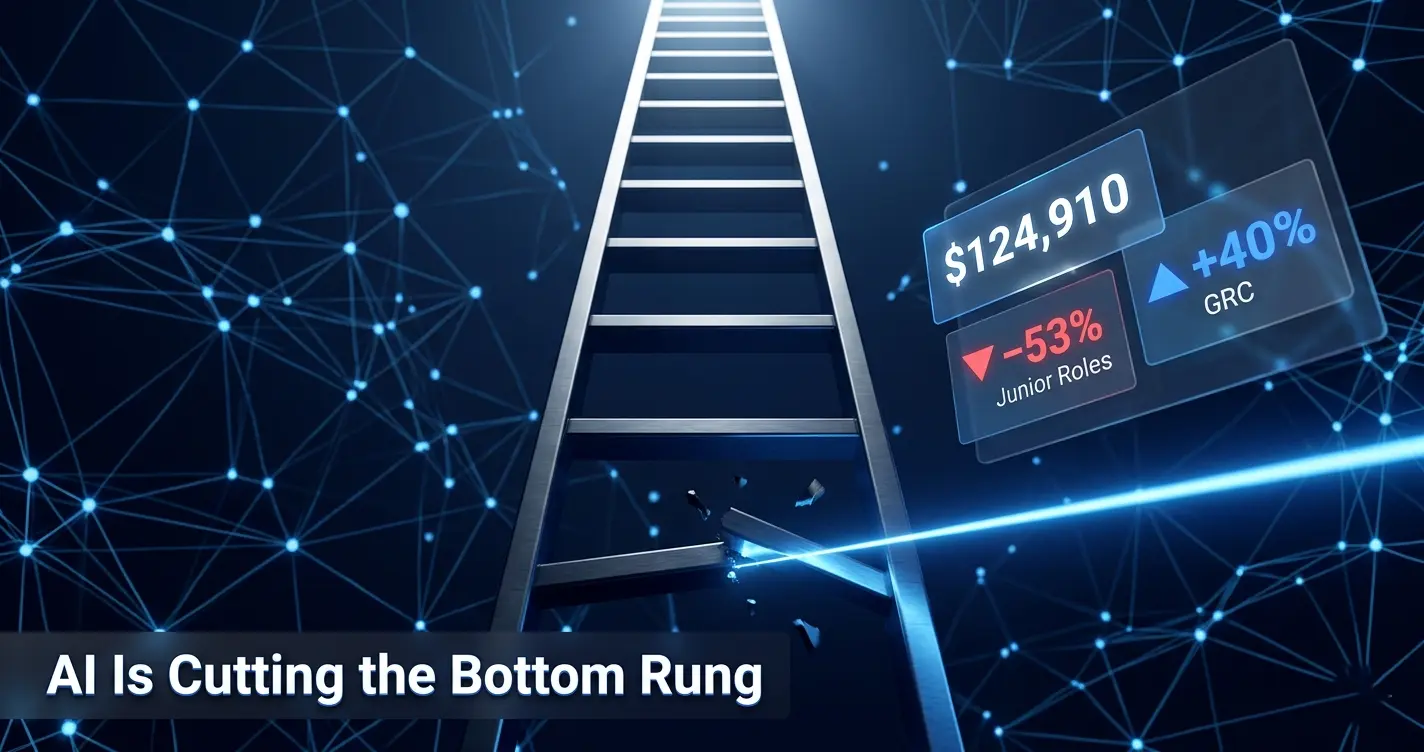
    CyberSN’s job posting data shows a 25.88% decline in Security Analyst postings from 2022 to 2024. For junior roles specifically, Deidre Diamond, CyberSN’s founder and CEO, told CSO Online that postings have fallen by close to 53% since 2022. That’s not a rounding error. That’s a structural contraction at the very rung of the ladder most career guides tell you to step onto first.

    “AI isn’t replacing cyber professionals, instead it is shifting what we need from them. We’re seeing demand for people who can work with AI systems, interpret complex data, and make strategic decisions.”

    Brian, Executive, CyberSN — CyberSN 2025 Cybersecurity Job Market Analysis

    The 2026 SANS/GIAC Cybersecurity Workforce Research Report, unveiled at RSAC 2026 in April, put a sharp point on this. SANS CEO James Lyne and Chief AI Officer Rob Lee found that only 4% of organizations report entry-level roles as hard to fill. The crisis isn’t at the bottom — it’s in the middle. Mid-to-senior roles with AI expertise and specialized knowledge are chronically understaffed. Entry-level is actually the most congested segment of the market right now.

    Critical Context for Career Planners
    In 2025, ISC2 notably dropped its numeric workforce gap estimate from its flagship annual study for the first time — a signal that the “4.8 million gap” headline figure is being revised internally. Career guides still citing that number without qualification are working from outdated framing. The real scarcity is in skilled, AI-literate, cloud-capable mid-level professionals.

    The upside in all of this? GRC (Governance, Risk, and Compliance) roles grew 40.74% in postings from 2023 to 2024. Cyber threat intelligence, cloud security, and AI-adjacent cybersecurity roles are expanding. The opportunity is real. It just isn’t evenly distributed across role types.


    Cybersecurity Analyst Salary: What You Can Actually Earn

    The compensation picture is one of the most compelling arguments for this career — if you stay honest about where in the range you’ll realistically land and on what timeline.

    Entry Level
    $62K–$75K
    BLS Median (2024)
    $124,910
    Senior (6–10 yrs)
    $120K–$165K
    Top 10%
    $186,420+
    The U.S. Bureau of Labor Statistics puts the 2024 median annual wage for information security analysts at $124,910 — surveyed from employer payroll records across U.S. industries. The bottom 10% earn $69,660 or less. The top 10% clear $186,420.

    Specialization multiplies compensation substantially. AWS Certified Security Specialty holders average approximately $159,000. California security specialists average $176,616. CISSP holders in management tracks routinely exceed $150,000 in total compensation in major markets.

    The honest entry-level picture: a first SOC analyst role or junior cybersecurity analyst position typically pays $50,000 to $80,000 depending on geography, company size, and your certification stack. Bootcamp marketers often cite median salary increase figures of 48 to 56% for graduates, but those figures are computed against low-baseline prior careers and don’t reflect the competitive hiring landscape in 2026.

    Geography Matters More Than Many Guides Admit
    San Francisco, New York, Washington D.C. (federal contractor market), and Seattle are the highest-paying markets. Government and defense contractors specifically — where Zero Trust architecture mandates drive continuous hiring — tend to offer stable, well-compensated positions for certified professionals. Remote roles have normalized somewhat, expanding geographic access, but top-end salaries still cluster in high-cost metros.


    How Long Does It Take to Become a Cybersecurity Analyst?

    Industry consensus, backed by data from Springboard (May 2025) and EC-Council, puts the range at 2 to 4 years from start to first analyst role. But path matters enormously.

    Path Time to First Role Cost Range Market Competitiveness (2026)
    Bachelor’s Degree 4 years $40,000–$150,000+ High — preferred by 70–80% of postings
    Bootcamp 6–12 months $5,000–$20,000 (avg. $13,584) Moderate — tougher than 2022–2023 for pure bootcamp grads
    Self-Study + Certs 12–24 months $500–$3,000 High if paired with home lab portfolio and relevant prior IT experience
    IT Career Pivot 6–18 months $349–$2,000 (cert costs) Very high — prior IT experience is a genuine competitive advantage
    Google Cybersecurity Cert 3–6 months (cert only) ~$50/month on Coursera Growing employer recognition; strong entry signal when paired with lab work
    One data point worth sitting with: ISACA’s 2025 survey of 3,800+ cybersecurity professionals found that 65% of organizations say it takes 3 to 6 months to hire even for entry-level roles. The pipeline from application to offer is long. Plan your runway accordingly — financially and psychologically.


    Education: Degree vs. Certifications vs. Bootcamp

    The degree question generates more heat than it deserves. Here’s what the data actually shows.

    Roughly 70 to 80% of cybersecurity job listings require or strongly prefer a bachelor’s degree in computer science, cybersecurity, or a related field, according to SQ Magazine’s October 2025 analysis of job postings. About 20 to 30% now accept equivalent experience. Master’s degrees appear in roughly 15% of senior role listings.

    The uncomfortable truth for students: only 27% of employers believe university graduates are well-prepared for cybersecurity roles (ISACA 2025). A degree gets you through the door of the applicant tracking system. What gets you the job is demonstrable, hands-on technical competency.

    This creates an interesting opportunity. A student who earns a degree AND stacks certifications AND completes an internship AND builds a documented home lab will outcompete 73% of their credentialed peers. The degree is necessary but not sufficient. The extras are what actually differentiate.

    For career switchers without a degree: certifications and demonstrated skills can open roughly a quarter to a third of available roles. The Google Cybersecurity Professional Certificate on Coursera has quickly gained employer recognition as a legitimate entry credential, covering Python, Linux, SQL, and SIEM tools in about 3 to 6 months at approximately $50 per month. It doesn’t replicate a degree, but it’s a credible signal for the right roles.

    “IT leaders identify a lack of security awareness, insufficient IT security skills and training, and missing cybersecurity products as the top three causes of breaches.”

    Fortinet, 2025 Cybersecurity Skills Gap Report


    The Cybersecurity Certifications That Still Matter in 2026

    The certification landscape has matured. Not every cert carries equal weight with hiring managers, and the ones worth your time and money have gotten more specific depending on which track you’re targeting.

    Entry-Level Certifications

    Certification Issuer Cost Best For
    CompTIA Security+ (SY0-701) CompTIA $349–$400 Universal baseline; DoD 8570-approved; 700K+ holders; most widely required entry cert
    CompTIA Network+ CompTIA ~$349 Foundational networking knowledge; strong pre-Security+ if you’re new to IT
    CompTIA CySA+ CompTIA ~$369 Hands-on threat detection, SIEM, and SOC skills; meaningful step up from Security+
    Google Cybersecurity Certificate Google / Coursera ~$50/month No prerequisites; 3–6 months; growing employer recognition; entry signal

    Mid-Level and Specialist Certifications

    Certification Issuer Cost Track
    AWS Certified Security Specialty Amazon Web Services $300 Cloud security; holders average ~$159K; not declining in postings
    Azure Security Engineer (AZ-500) Microsoft $165 Cloud security; Microsoft ecosystem; strong enterprise demand
    OSCP Offensive Security $1,499+ Penetration testing; hands-on lab exam; red team track
    GCIH (GIAC) GIAC / SANS $2,499+ Incident handling; SOC analyst → incident responder progression
    CISM ISACA $575–$760 Management track; GRC; path toward CISO

    The Senior Standard

    CISSP (ISC2) remains the gold-standard senior certification — requiring 5+ years of experience across two security domains and carrying a $749+ exam fee. It’s not an entry credential, but it’s the target for professionals with 4 to 7 years of experience who want to move into senior engineering, architecture, or management roles.

    2026 Certification Priority for Career Switchers
    Security+ is the floor, not the ceiling. Get it, then immediately follow with CySA+ for analyst differentiation. Add a cloud cert (AWS Security Specialty or AZ-500) as your third credential. These three together cover the vast majority of entry-to-mid postings that are actually growing.


    Skills Employers Are Actually Hiring For

    ISACA’s 2025-2026 State of Cybersecurity survey of 3,800+ professionals identifies the specific technical and soft skills that hiring managers flag as missing most often in candidates.

    Technical Skills (In Demand)

    • Network security: TCP/IP, firewalls, VPNs, DNS — still foundational and non-negotiable
    • Operating systems: Linux proficiency and Windows administration — both essential; not either/or
    • SIEM tools: Splunk dominates enterprise; IBM QRadar is common in large organizations
    • Scripting: Python for automation and analysis; Bash for Linux operations
    • Vulnerability assessment: Tools like Nessus, Qualys, and Invicti for web application scanning
    • Incident response and forensics: Evidence handling, chain of custody, memory and disk forensics
    • AI/ML tool literacy: Entered the top 5 most in-demand skills in ISC2’s 2024 study for the first time; approximately 10% of 2025 job postings specifically reference AI skills
    • Cloud security: AWS, Azure, and GCP security configurations; IAM, cloud-native threat detection
    • Zero Trust architecture: NIST Zero Trust frameworks are now a baseline expectation in enterprise and government environments

    Soft Skills (Chronically Underrated)

    • Critical thinking (57%): Most commonly cited skill gap in ISACA’s employer survey
    • Communication (56%): Translating technical findings to non-technical leadership is a specific, trainable skill
    • Adaptability: The threat landscape is evolving faster than any single skill set can track; learning velocity matters
    One data point worth underscoring: the WEF Global Cybersecurity Outlook 2026 found that 87% of respondents identified AI-related vulnerabilities as the fastest-growing cyber risk category. Organizations need people who understand how attackers are exploiting AI systems — not just how defenders use AI tools. That specific knowledge is genuinely scarce right now.


    The Step-by-Step Career Path to Become a Cybersecurity Analyst

    1

    Build Technical Foundations

    Start with networking fundamentals (TCP/IP, DNS, firewalls, the OSI model), operating systems proficiency in both Linux and Windows, and basic scripting in Python and Bash. Free resources worth your time: Cybrary, Coursera, and TryHackMe’s SOC Analyst learning path. Don’t skip this phase in a rush to certifications — the foundational understanding is what separates candidates who can think through a problem from those who’ve only memorized answers.

    2

    Earn Your Entry-Level Certifications

    CompTIA Security+ is the non-negotiable starting point — DoD 8570-approved, globally recognized, and held by over 700,000 professionals. Follow it with CompTIA CySA+ to demonstrate hands-on SIEM and threat detection capability. If budget permits, add the Google Cybersecurity Professional Certificate as a documented learning signal. These three credentials together cover the largest portion of entry and early-mid postings.

    3

    Build Hands-On Experience Before the Job Search

    This is where most people underinvest and then wonder why they’re not getting callbacks. Build a home lab using virtualized environments with pfSense, Splunk, and Kali Linux. Complete Capture the Flag (CTF) competitions on TryHackMe and Hack The Box — these are real, documented proof of hands-on capability. Contribute to OWASP open-source projects. Offer volunteer cybersecurity help to nonprofits or small businesses. Document everything publicly on GitHub and LinkedIn.

    4

    Build a Portfolio and Professional Presence

    Hiring managers in 2026 specifically look for demonstrated, documented technical work. Write about your home lab findings on LinkedIn and Medium. Engage with OWASP chapters, DEF CON Groups, and cybersecurity communities on Discord. Attend SANS, RSA, or DEF CON virtually or in person — the professional network you build is often how roles become available before they’re posted publicly. 55% of organizations consider internships an essential pathway for junior hires; 46% value apprenticeships.

    5

    Specialize Early for Better Positioning

    Generic “cybersecurity analyst” targeting is increasingly competitive. The candidates landing roles fastest are those who specialize in one of three high-growth areas: cloud security (add AWS Security Specialty or AZ-500), GRC (Governance, Risk, and Compliance — postings grew 40.74% from 2023 to 2024), or AI security (threat actors exploiting AI systems, AI-assisted threat detection). Pick your lane early and stack credentials accordingly.

    6

    Target the Right Entry Roles

    Given the contraction in generic SOC Tier 1 postings, consider targeting adjacent entry points: Security Operations Center analyst roles at managed security service providers (MSSPs), GRC analyst positions, junior threat intelligence roles, cloud security analyst positions within companies undergoing cloud migration, and IT security specialist roles within regulated industries (healthcare, finance) where compliance demands are driving continuous hiring. Government and federal contractor roles remain strong given Zero Trust and CMMC compliance mandates.


    Career Progression Tracks

    Cybersecurity isn’t a single escalator. It branches into meaningfully different careers depending on where your interests and aptitudes point.

    Track Progression Target Credential
    SOC / Detection SOC Analyst T1 → T2 → Senior Analyst → SOC Manager CySA+, GCIH
    Security Engineering Analyst → Security Engineer → Security Architect CISSP, CCSP
    Threat Intelligence Analyst → Threat Intel Analyst → CTI Manager GCIA, GCTI
    GRC / Compliance Analyst → GRC Specialist → Risk Manager → CISO CISM, CRISC
    Offensive Security Analyst → Penetration Tester → Red Team Lead OSCP, GPEN
    Cloud Security Analyst → Cloud Security Engineer → Cloud Security Architect AWS Security, CCSP, AZ-500
    The GRC track deserves particular attention in 2026. NIS2 is in active enforcement, with an estimated 19,000 non-compliant companies as of March 2026. CMMC, DORA, and SEC breach reporting requirements are driving a measurable hiring surge in compliance-adjacent roles. Career guides that frame GRC as a less exciting alternative to technical analysis are missing where a significant portion of the new demand actually lives.


    The Contrarian View: What Could Go Wrong

    You deserve a career guide that tells you both sides. Here are the scenarios that don’t appear in most cybersecurity career content.

    Scenario One: The Bootcamp Graduate in a Compressed Market

    A career switcher completes a $13,584 cybersecurity bootcamp targeting SOC Tier 1 analyst roles, enters the market in late 2026, and finds the jobs they trained for have been substantially automated at their target companies. AI-powered SIEM tools now handle alert triage at a volume and speed that has reduced human Tier 1 headcount. They compete against a large pool of similarly-credentialed graduates for fewer openings than existed in 2022.

    Scenario Two: The Undifferentiated Graduate

    A student earns a cybersecurity degree without specializing. They emerge with Security+ but no AI tool literacy, no cloud certifications, and no GRC exposure. Employers’ most in-demand skills in 2026 — AI/ML security, cloud security architecture, compliance expertise for NIS2 and CMMC — don’t match their competency profile. The degree opens doors; the lack of differentiation closes them.

    Scenario Three: The Stagnant Mid-Level Analyst

    An experienced analyst with 4 to 6 years in SOC work hasn’t upskilled in AI-adjacent capabilities. Their role is increasingly augmented by AI tools they don’t know how to configure, interpret, or optimize. Senior roles require demonstrated experience with AI-driven threat detection platforms. They find the path upward blocked by a skills gap they didn’t see accumulating.

    Budget Reality Check
    In 2025, lack of budget surpassed talent scarcity as the leading reason organizations cited for staffing shortages (33%) and skills gaps (39%). 53% of ISACA respondents say cybersecurity budgets are underfunded at their organizations. A strong labor market for top-tier talent does not mean unlimited headcount growth everywhere. Verify demand in your specific target market — government, enterprise, healthcare, and tech have meaningfully different hiring patterns.

    One more factor most guides don’t mention: 44% of cybersecurity professionals surveyed at RSA 2025 described their workplace as having a toxic culture. 66% say their role is more stressful than five years ago (ISACA 2025). 50% of organizations struggle to retain cyber talent. The career has real intrinsic rewards and genuine intellectual challenge. It also has structural burnout risk that’s worth factoring into the decision.


    Frequently Asked Questions

    What does a cybersecurity analyst do?
    A cybersecurity analyst monitors an organization’s networks and systems for threats, investigates security incidents, conducts vulnerability assessments, and implements protective measures. They use SIEM platforms, firewalls, and threat intelligence feeds to detect and respond to cyberattacks before damage occurs. They also write incident reports and develop security policies for leadership teams.

    How long does it take to become a cybersecurity analyst?
    Becoming a cybersecurity analyst typically takes 2 to 4 years depending on the path chosen. A bachelor’s degree takes approximately 4 years. Bootcamp programs take 6 months to 1 year. A self-study path combining entry-level certifications like CompTIA Security+ with documented home lab work typically takes 12 to 18 months before landing an entry role, and longer in competitive markets.

    What certifications do I need to become a cybersecurity analyst?
    The essential starting certification is CompTIA Security+ — the global baseline credential used across DoD and enterprise hiring environments. For analyst roles specifically, CompTIA CySA+ validates hands-on SIEM and threat detection skills. For cloud environments, AWS Certified Security Specialty or Azure AZ-500 are increasingly required. CISSP is the advanced credential for senior and management tracks, requiring 5+ years of experience.

    What is the average salary for a cybersecurity analyst?
    The U.S. median salary for information security analysts is $124,910 per year according to the Bureau of Labor Statistics (May 2024 OEWS data). Entry-level positions typically start at $62,000 to $75,000. Senior analysts with 6 to 10 years of experience earn $120,000 to $165,000. The top 10% earn over $186,420. California security specialists average $176,616.

    Can I get into cybersecurity without a degree?
    Yes. Approximately 20 to 30% of cybersecurity job listings now accept equivalent experience instead of a formal degree. Certifications like CompTIA Security+, CySA+, and the Google Cybersecurity Professional Certificate on Coursera are widely accepted. That said, 70 to 80% of postings still prefer a bachelor’s degree, so the no-degree path is more competitive and narrows the field of available roles, especially at larger enterprises.

    Is cybersecurity a good career in 2026?
    Cybersecurity remains one of the fastest-growing career fields globally, with 29% BLS-projected job growth through 2034 and over 514,000 active U.S. job postings as of 2025. However, AI is automating entry-level analyst tasks, reducing junior postings by roughly 53% since 2022. Candidates who pair security fundamentals with AI literacy, cloud skills, or GRC expertise are significantly better positioned than those targeting traditional SOC Tier 1 roles alone.

    What skills does a cybersecurity analyst need?
    Core technical skills include network security (TCP/IP, firewalls, VPNs), Linux and Windows proficiency, SIEM tools (Splunk, IBM QRadar), scripting in Python and Bash, vulnerability assessment, and incident response. In 2026, AI/ML tool literacy and cloud security fundamentals have entered the top five most in-demand skills for the first time. Employers consistently flag critical thinking and communication as the most frequently missing soft skills.

    How much does it cost to become a cybersecurity analyst?
    Costs vary significantly by path. A 4-year bachelor’s degree runs $40,000 to $150,000 or more depending on institution. Cybersecurity bootcamps average $13,584, with a range of $5,000 to $20,000+. CompTIA Security+ costs $349 to $400; CISSP costs $749+. Free and low-cost resources including Cybrary, TryHackMe, and the Google Cybersecurity Certificate on Coursera provide genuine, employer-recognized alternatives for budget-constrained candidates.


    The Bottom Line on Becoming a Cybersecurity Analyst in 2026

    The opportunity is real and the demand is structural. A 29% growth projection through 2034, over half a million active U.S. job openings, and a global skills gap that organizations can’t close fast enough — these are genuine tailwinds. The career pays well, the work matters, and the field will not be obsolete anytime soon.

    What has changed is the composition of where the demand lives. The bottom rung of the ladder — the generic Tier 1 SOC analyst role — is under AI pressure in a way that wasn’t true three years ago. Candidates who treat Security+ as the destination rather than the starting point will find a more crowded and frustrating job market than the headlines imply.

    The candidates who will win this market are the ones building toward the middle of the skills distribution, not the bottom. Cloud certifications that aren’t declining. GRC expertise that regulatory pressure is actively manufacturing demand for. AI literacy that 90% of working analysts currently lack. Home labs that prove hands-on capability that degrees alone don’t demonstrate.

    In the next 12 to 18 months, watch three things. First, how aggressively AI-native SIEM platforms continue reducing Tier 1 analyst headcount at major enterprises — that will tell you how fast the entry-level compression continues. Second, how NIS2 enforcement activity in Europe and CMMC requirements in U.S. defense contracting translate into GRC hiring. Third, whether the ISC2 2026 Workforce Study (expected Q4 2026) formally reframes the workforce narrative away from headcount gap toward skills gap — that shift will reshape how employers hire and what credentials they prioritize.

    Build toward where the market is going, not where it was.

    Stay Ahead of the Cybersecurity Job Market

    The Neural Loop delivers weekly intelligence on AI, technology careers, and the trends reshaping how we work — direct to your inbox.

    Subscribe to The Neural Loop
  • How to Buy Cryptocurrency Safely in 2026 | Beginner Guide

    How to Buy Cryptocurrency Safely in 2026 | Beginner Guide

    How to Buy Cryptocurrency Safely in 2026: The Complete Beginner Guide
    Crypto & Finance

    How to Buy Cryptocurrency Safely in 2026: The Complete Beginner Guide

    Americans lost $11.4 billion to crypto fraud in 2025 alone. If you’re one of the 560 million people globally who wants to buy cryptocurrency safely in 2026, the single most important decision you’ll make isn’t which coin to pick. It’s which platform to trust and how to not become a statistic.

    Bitcoin is down 32% and Ethereum is down 45% year-to-date. The GENIUS Act just created the first federal stablecoin framework in U.S. history. Scams are now AI-powered and indistinguishable from legitimate platforms. This is a moment that rewards careful buyers and destroys careless ones.

    This guide tells you exactly what to do and, just as critically, what to avoid.


    Why Safety Matters More in 2026 Than Ever Before

    Let’s start with the number that should reframe everything: the FBI’s Internet Crime Complaint Center recorded $11.366 billion in U.S. crypto fraud losses in 2025. That is a 22% jump from the year before. It covers 181,565 complaints. The average victim lost $62,604.

    $11.4B U.S. crypto fraud losses, 2025
    $7.2B Investment scam losses alone
    560M Global crypto owners in 2026
    30% U.S. adults who own crypto
    These aren’t edge cases involving naive grandparents. Adults over 60 accounted for $4.4 billion of those losses, yes. But crypto investment scams hit every age group, with 18,589 individual victims each losing more than $100,000.

    At the same time, 30% of U.S. adults now hold some form of cryptocurrency, up from 27% in 2024. Family offices report a 21-point jump in crypto adoption between 2024 and 2026. Roughly 74% are now exploring or invested in the asset class. This is no longer a fringe experiment. It is mainstream finance, with mainstream fraud risks.

    The good news: the risks are knowable and mostly avoidable. The bad news: the default behavior of a first-time buyer leaves them exposed to almost all of them.


    How to Choose a Safe Crypto Exchange

    Your exchange choice is the most consequential safety decision you will make. Here is how to evaluate one correctly.

    The Non-Negotiable Checklist

    • Regulated and licensed in your jurisdiction. In the U.S.: Coinbase, Kraken, and Gemini are registered with FinCEN and hold relevant state money transmission licenses. In the EU: look for MiCA authorization, mandatory by July 1, 2026. In the UK: FCA registration is the baseline.
    • Full KYC compliance. Any exchange that lets you buy meaningful amounts without ID verification is either unregulated or actively facilitating fraud. Both are problems.
    • Proof of reserves publication. Post-FTX, this is standard practice for trustworthy exchanges. Kraken, OKX, and Crypto.com publish reserves regularly. Coinbase goes further with audited financial statements as a public company.
    • Cold storage ratio. Coinbase holds 98% of assets in cold storage. This is the industry benchmark. Ask this question about any exchange you consider.
    • Insurance coverage details. Coinbase, Crypto.com, and Gemini carry insurance on a portion of crypto assets, plus FDIC coverage on fiat (dollar) balances up to $250,000. Kraken explicitly carries no crypto insurance. Knowing this before a problem is worth infinitely more than learning it after.
    Critical Distinction FDIC insurance protects your dollar balance if the bank holding those funds fails. It does not protect your Bitcoin, Ethereum, or any other crypto holding under any circumstances anywhere. Every exchange that claims “FDIC insured” is referring to cash balances only.

    Exchange Comparison: U.S. Beginners in 2026

    Exchange Regulated (US) Cold Storage Proof of Reserves Crypto Insurance Best For
    Coinbase Yes (Public Co.) 98% Audited Financials Partial First-time buyers, US
    Kraken Yes Not disclosed Regular None Experienced traders
    Gemini Yes (NYDFS) Not disclosed SOC 2 Audited Partial Security-focused US users
    Bitstamp Yes (EU/UK) Not disclosed Regular Partial EU / UK buyers
    Crypto.com Varies by region Not disclosed Regular Partial Mobile-first users
    A note on fees: bank transfers (ACH in the U.S., SEPA in Europe) are consistently the cheapest funding method. Credit card purchases typically carry 2 to 5% fees on top of the spread, and some card issuers classify crypto purchases as cash advances, which triggers immediate interest charges with no grace period.


    Step-by-Step: How to Buy Cryptocurrency Safely

    This is the actual sequence. Do not skip steps. Every shortcut in this list corresponds to a documented failure mode.

    1

    Choose your exchange and verify the URL manually

    Navigate to the exchange’s official website directly. Do not click links in emails, social media posts, or search ads. AI-generated fake exchange sites now clone legitimate platforms pixel-for-pixel. Bookmark the correct URL immediately after your first verified visit.

    2

    Complete KYC verification with real documents

    You will need a government-issued photo ID (passport, national ID, or driver’s license), proof of address from the last three months (utility bill or bank statement), and a biometric selfie or live video. Automated systems now verify most accounts in 5 to 50 seconds. If an exchange skips this step, leave.

    3

    Enable two-factor authentication with an authenticator app

    Download Google Authenticator or Authy. Never use SMS-based 2FA for a crypto exchange. SIM-swapping attacks specifically target crypto accounts because SMS verification can be hijacked through your mobile carrier without your knowledge or consent.

    4

    Fund your account via bank transfer

    Link your bank account and initiate an ACH (U.S.) or SEPA (EU) transfer. Allow 1 to 3 business days for settlement. This is the cheapest and most traceable funding method. Avoid wire transfers for small amounts due to fixed fees.

    5

    Start with Bitcoin or Ethereum

    Both have the deepest liquidity, the longest track records, and regulated ETF equivalents for comparison. Bitcoin holds 57.3% of total crypto market dominance as of Q1 2026. Avoid memecoins, presales, and anything promoted aggressively on social media until you fully understand what you hold.

    6

    Consider dollar-cost averaging rather than a lump sum

    Dollar-cost averaging (DCA) means buying a fixed dollar amount at regular intervals regardless of price. Given that Bitcoin is down 32% and Ethereum down 45% YTD in 2026, a lump sum entry exposes you to continuing downside. Most major exchanges including Coinbase and Bitget support automated recurring purchases.

    7

    Move holdings above $1,000 to a hardware wallet

    See the storage section below. This single step eliminates exchange insolvency risk, the most catastrophic failure mode for buy-and-hold investors.


    Where to Store Your Crypto After Buying

    The phrase “not your keys, not your coins” has been true since 2009. The FTX collapse of 2022 transformed it from a mantra into a documented, court-verified lesson: $8 billion in customer funds disappeared from an exchange that appeared, until its final week, entirely legitimate.

    Hot Wallets vs Cold Wallets

    Your exchange account is a hot wallet. It is connected to the internet. It is convenient. It is also the target of every organized hacking operation in the industry. Crypto hackers stole $3.4 billion in 2025, a 55% rise from the prior year, according to Cointelegraph data.

    A hardware wallet (cold wallet) is a physical device that stores your private keys offline. It signs transactions locally and never exposes your private key to the internet. The two market leaders are Ledger (Ledger Nano X for most users) and Trezor (Trezor Model T). Both retail between $70 and $200.

    The Seed Phrase Rule When you set up a hardware wallet, you receive a 12 or 24-word seed phrase. Write it on paper or metal. Store it in a physical location you control. Never photograph it. Never type it into any website or app. Never share it with any person for any reason. The seed phrase is your crypto. Whoever has it owns everything in that wallet.
    For amounts below $500, keeping funds on a regulated exchange like Coinbase is a reasonable convenience-vs-risk trade-off. Above $1,000, hardware wallet storage is the correct default. Above $10,000, consider multiple hardware wallets in separate locations.

    For risk-averse buyers who want regulated crypto exposure without self-custody responsibility, the U.S. spot Bitcoin ETF landscape is now a genuine option. BlackRock’s IBIT pulled in $25.1 billion in net inflows in 2025 alone. A Bitcoin ETF in a Fidelity or Schwab account offers institutional custody, regulatory oversight, and no seed phrase to manage. See our Bitcoin ETF Explained guide for a full comparison with direct purchase.


    The Scam Landscape in 2026: What’s New and Dangerous

    Crypto investment scams cost Americans $7.228 billion in 2025 alone, a 25% increase from 2024, alongside a 48% jump in complaints. These are not opportunistic phishing emails anymore. They are sophisticated, long-duration operations run by organized criminal networks.

    “These are highly organized, global operations that are getting more sophisticated, including with AI. So I’d expect volumes to keep growing, even if the rate fluctuates year to year as the lawful ecosystem grows in parallel.”

    Alex Redbord, Head of Global Affairs, TRM Labs — Decrypt / Yahoo Finance, April 7, 2026

    The Three Threats That Did Not Exist at Scale Before 2025

    AI-generated fake exchange apps. Clones of Coinbase, Kraken, and Binance now appear in third-party app stores and occasionally the official stores before removal. They look identical to the real app. They are not. Always download from the exchange’s official website link. Verify the developer name in the app store before installing.

    Pig butchering on messaging platforms. A stranger contacts you on WhatsApp, LinkedIn, or a dating app. Over days or weeks, they build rapport and introduce you to a “profitable” crypto investment platform. The platform shows real-looking gains. You deposit more. Eventually, the platform disappears. AI now automates the initial relationship-building stage, dramatically scaling the operation. The $7.2 billion figure for investment scam losses is overwhelmingly driven by this category.

    Voice-cloned impersonation. AI-driven fraud reached $893 million in adjusted losses in 2025, with voice cloning used in schemes where callers impersonate exchange support staff, government officials, or even people you know. Legitimate crypto exchanges will never call you unsolicited and ask for your seed phrase, 2FA codes, or screen access.

    Absolute Red Flags — Stop Immediately If You See Any of These Any platform promising guaranteed crypto returns. Any “exchange” that requires paying a fee to withdraw your own funds. Any contact (email, social media, WhatsApp) directing you to an investment platform. Any request for your seed phrase or 2FA code from anyone claiming to be support. Any celebrity or influencer endorsement of a specific crypto investment opportunity.

    What the GENIUS Act and MiCA Mean for You

    2026 is genuinely different from 2022 in terms of regulatory infrastructure. That context matters, but it requires precision to avoid overstating what protection you actually have.

    The GENIUS Act (U.S.)

    President Trump signed the GENIUS Act into law after the House passed it 308-122 and the Senate passed it 68-30. It is the first federal law to create a comprehensive regulatory framework for payment stablecoins, digital tokens pegged to monetary value and intended for payments.

    Key provisions: federal law now defines who may issue a stablecoin, how it must be backed, and which regulator oversees it. Compliant stablecoins are explicitly classified as neither securities nor commodities. Reserve asset requirements, redemption rights, and custody standards are now federal law rather than guidance.

    The effective date is January 18, 2027, or 120 days after implementing regulations, whichever comes first. Federal agencies must issue those regulations by July 18, 2026. That deadline is weeks away.

    “Most of the regulators are doing a 180 from where they were under the prior administration. ‘Regulation by enforcement’ is likely to disappear, and the SEC now actively works with crypto companies.”

    Chris Rhine, Head of Liquid Active Strategies, Galaxy Asset Management — State Street Global Advisors, 2025

    What this means for you practically: verified stablecoins such as USDC now have enforceable reserve requirements behind them for the first time in U.S. law. Using stablecoins as a holding vehicle between trades carries meaningfully less counterparty risk than it did in 2022.

    What it does not cover: pig butchering operations, fake exchange apps, AI voice cloning scams, or any fraud vector operated outside the U.S. financial system. Our Read The narrative that “regulatory clarity equals lower risk for retail buyers” runs 12 to 24 months ahead of actual enforcement infrastructure. Most consumer protections from the GENIUS Act do not take practical effect until early 2027.

    MiCA (European Union)

    The EU’s Markets in Crypto-Assets Regulation requires all Crypto-Asset Service Providers to hold MiCA authorization by July 1, 2026, with no extension mechanism. The EU Transfer of Funds Regulation, which took effect December 30, 2024, already applies the Travel Rule to all crypto transfers between providers regardless of transaction amount.

    If you are based in the EU: MiCA authorization is your baseline filter. Any exchange operating in the EU without it after July 1 is breaking the law. Some smaller unregistered platforms will cease EU operations around that date, which may freeze user funds temporarily during the transition. Check your exchange’s MiCA status now.

    For AI and technology context around the broader U.S. regulatory shift, see our guide to AI Regulation USA 2026, which covers parallel legislative developments across technology sectors.


    2026 Market Context: Entry Timing and Risk

    Bitcoin is at approximately $61,000 as of June 2026, down from its 2025 cycle high. Ethereum has taken a heavier drawdown at roughly 45% year-to-date. Total crypto market cap closed Q1 2026 at $2.4 trillion, down $622 billion in three months.

    “Bitcoin has shown great resilience in 2026, even after a 40% crash. The rise of institutional adoption shows that Bitcoin has matured to the point where its price is no longer dictated by retail and speculators, but rather by a well-established institutionalized market.”

    Marcel Thiess, CEO, Thiess Invest — GoBankingRates, April 10, 2026

    Historical patterns suggest that post-halving years like 2026 tend to be consolidation phases before the next expansion cycle. U.S. Spot Bitcoin ETFs hold 5.2% of the total circulating Bitcoin supply as of February 2026, providing structural institutional demand that did not exist in previous cycles.

    The contrarian position deserves space. Veteran commodity trader Peter Brandt projected in January 2026 that Bitcoin could still drop to the $60,000 range, a call that has been largely validated by actual price action. The market is not yet showing structural recovery signals. A first-time buyer entering with a lump sum near current prices is taking on real downside risk.

    Dollar-cost averaging is not just a strategy preference in this environment. It is the mechanism by which you average your entry price across a period of continued potential volatility. It is risk management.

    For a granular example of what crypto volatility looks like at the institutional level, our coverage of Trump Media’s $406M Bitcoin loss in Q1 2026 and Morgan Stanley’s E*Trade crypto integration provide useful institutional context for retail buyers evaluating their own risk tolerance.

    The DCA Framework for 2026 Entry Divide your intended investment into 12 equal parts. Buy once per month regardless of price movement. This eliminates the single worst outcome for a new crypto buyer: a large lump-sum purchase that immediately drops 30% and psychologically forces an exit at a loss.

    Frequently Asked Questions

    What is the safest way to buy cryptocurrency in 2026?
    Use a regulated, KYC-compliant centralized exchange such as Coinbase, Kraken, or Gemini. Enable app-based two-factor authentication immediately. Fund your account via bank transfer rather than credit card. Transfer any holdings above $1,000 to a hardware wallet such as a Ledger or Trezor after purchase. Never share your seed phrase with anyone under any circumstances.

    Can you lose all your money buying crypto?
    Yes. Crypto carries no capital guarantee of any kind. Bitcoin fell over 32% year-to-date in 2026 alone. Beyond price drops, exchange hacks, fraud, and irreversible wallet errors cause billions in permanent losses every year. The FBI reported $11.4 billion in U.S. crypto fraud losses in 2025. Treat any crypto investment as money you could lose entirely before entering the market.

    What is the best crypto for beginners in 2026?
    Bitcoin (BTC) and Ethereum (ETH) are the standard recommendation for first-time buyers. Both have decade-long track records, deep liquidity, and regulated U.S. spot ETF equivalents for comparison. Bitcoin holds 57.3% of total market dominance as of Q1 2026. Avoid memecoins, presale tokens, and any coin promoted primarily through social media influencers.

    Do you need ID to buy crypto?
    Yes. All regulated exchanges require KYC identity verification before purchase: a government-issued photo ID, proof of address dated within the last three months, and a biometric selfie or live video. As of 2025, 92% of centralized exchanges globally are fully KYC compliant. Automated systems complete verification in as little as five seconds for most users.

    Is it safe to buy crypto with a credit card?
    It is possible on major exchanges, but it carries unnecessary costs and risks. Fees run 2 to 5% above the transaction. Some card issuers classify crypto purchases as cash advances, which triggers immediate interest with no grace period. Several banks block crypto card purchases outright. Bank transfer (ACH or SEPA) is cheaper, safer, and the standard approach for serious buyers.

    What happens if a crypto exchange goes bust?
    Users may lose some or all of their crypto holdings. Crypto assets are not FDIC-insured under any circumstances. The FTX collapse in 2022 left users waiting years for partial recovery through bankruptcy proceedings. In 2026, Coinbase and Gemini carry partial crypto insurance, but coverage limits apply. Moving holdings to a personal hardware wallet eliminates exchange insolvency risk entirely.

    How do I protect my crypto from hackers?
    Five steps: use a hardware wallet (Ledger or Trezor) for long-term storage. Enable app-based 2FA, never SMS. Store your seed phrase offline on paper or metal, never in cloud storage or a photograph. Verify exchange URLs manually every single time. Never connect your wallet to unverified DeFi sites or sign transactions you don’t fully understand.

    What is dollar-cost averaging in crypto?
    Dollar-cost averaging means buying a fixed dollar amount of cryptocurrency at regular intervals, regardless of the current price. For example, $100 every two weeks. This distributes your entry price across multiple market conditions, preventing a single bad-timed purchase from defining your portfolio performance. Most major exchanges including Coinbase and Bitget support automated recurring purchases.


    What You Now Know That Most Beginners Don’t

    The mainstream “2026 is the best year to buy crypto” narrative skips three things. The GENIUS Act regulates stablecoins. It does not stop pig butchering operations or AI-generated fake exchange apps. The crash is real and may continue, which makes dollar-cost averaging strategy rather than preference. “Regulated exchange” and “insured investment” are entirely different concepts, and conflating them has cost a lot of people a lot of money.

    In the next 12 to 18 months: GENIUS Act enforcement infrastructure will go live in early 2027, meaningfully raising the baseline safety floor for stablecoin users. MiCA implementation will consolidate the EU exchange landscape, removing some platforms and strengthening survivors. AI-augmented scam volumes will continue rising. And Bitcoin’s post-halving cycle, if historical patterns hold, will move from consolidation into its next expansion phase.

    Three things to act on now: verify your exchange’s regulatory status in your jurisdiction before depositing a single dollar. Buy your hardware wallet before you need it, not after. Set up a recurring DCA schedule and let time, not timing, do the work.

    Stay Ahead of Crypto’s Next Move

    The Neural Loop is our weekly briefing covering crypto regulation, market structure, and security intelligence. No noise. No price speculation. Just what actually matters.

    Subscribe to The Neural Loop
  • Bitcoin ETF Explained: What It Is, How It Works, and Why $102 Billion Is Betting on It

    Bitcoin ETF Explained: What It Is, How It Works, and Why $102 Billion Is Betting on It

    Bitcoin ETF Explained: What It Is, How It Works, and Why $102 Billion Is Betting on It
    Finance & Crypto

    Bitcoin ETF Explained: What It Is, How It Works, and Why $102 Billion Is Betting on It

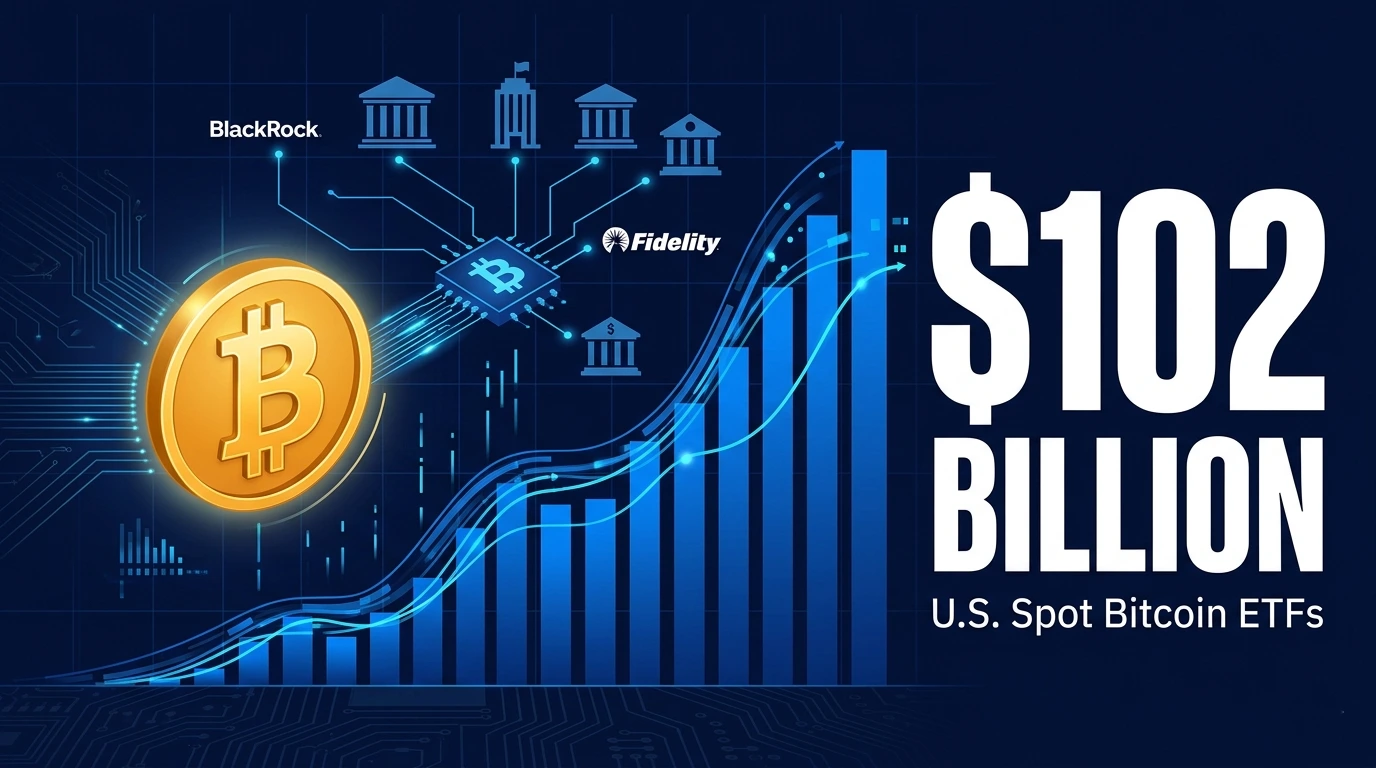
    A Bitcoin ETF is the simplest way to own Bitcoin exposure without ever touching a crypto wallet. In under 30 months since the SEC approved spot Bitcoin ETFs in January 2024, the category has crossed $102 billion in assets under management and rewritten what institutional participation in crypto actually looks like.

    Here’s what’s remarkable about that number. Bitcoin fell 44% from its October 2025 all-time high of roughly $126,198. Institutions kept buying anyway. Net inflows through 2025 reached $47.2 billion, only 3% below the record-setting $48.7 billion absorbed in the launch year. That isn’t panic-buying or momentum chasing. That is a structural shift in how the world’s largest pools of capital think about Bitcoin.

    This article explains exactly what a Bitcoin ETF is, how the mechanics work under the hood, which funds lead the market in 2026, what the risks are that most coverage skips, and who these products actually make sense for. Whether you’re a retail investor considering your first allocation or a financial advisor building a client model, the answers are here.


    What Is a Bitcoin ETF?

    Definition
    A Bitcoin ETF (Exchange-Traded Fund) is a regulated financial product that tracks the price of Bitcoin and trades on a traditional stock exchange, just like shares of Apple or Microsoft. Investors gain exposure to Bitcoin’s price movements through a standard brokerage account, with no need to manage crypto wallets, private keys, or custody.

    Think of it this way: buying Bitcoin directly is like purchasing physical gold bars. You own it outright, but you need somewhere to store it safely and someone to verify it’s real. A Bitcoin ETF is the equivalent of buying shares in a gold vault. The vault holds the asset. You hold a regulated, tradeable claim on it. The price moves with the underlying. You never touch the gold.

    Two distinct types of Bitcoin ETF exist in the U.S. market, and the difference between them is not subtle.

    Spot Bitcoin ETF

    A spot Bitcoin ETF holds actual Bitcoin as its underlying asset. The share price mirrors the live BTC market price in real time. This is the product the SEC approved on January 10, 2024, after more than a decade of rejections. BlackRock’s IBIT and Fidelity’s FBTC are the dominant examples.

    Bitcoin Futures ETF

    A Bitcoin futures ETF doesn’t hold any Bitcoin. It holds futures contracts: agreements to buy or sell BTC at a specified future price. ProShares launched the first U.S. Bitcoin futures ETF (BITO) in October 2021. Because futures contracts expire and must be “rolled” into new ones regularly, futures ETFs can diverge from Bitcoin’s actual spot price over time, especially in trending markets. For serious long-term investors, futures ETFs are the inferior product.


    How a Spot Bitcoin ETF Actually Works

    The internal plumbing of a Bitcoin ETF is more interesting than most explanations give it credit for. Understanding it helps you understand both the product’s strengths and its hidden risks.

    The Creation and Redemption Mechanism

    Spot Bitcoin ETFs maintain accurate price tracking through a system operated by Authorized Participants (APs). These are large financial institutions: JPMorgan, Jane Street, Virtu Financial. Their role is to keep the ETF’s share price in line with Bitcoin’s spot price through continuous arbitrage.

    Creation: When demand for ETF shares rises, an AP delivers Bitcoin to the fund’s custodian. The ETF issues new shares to the AP, who sells them on the exchange. New supply pushes the share price back in line with NAV.

    Redemption: When supply of ETF shares exceeds demand, an AP buys ETF shares on the open market and returns them to the fund. The fund returns Bitcoin to the AP in exchange. Reduced share supply pushes price back up.

    Arbitrage in practice: If IBIT shares trade at a 0.5% premium to Bitcoin’s spot price, APs can buy BTC, deliver it to BlackRock, receive new IBIT shares, and sell them at the inflated price for a risk-free profit. That profit-seeking activity closes the gap almost instantly. This is why spot ETFs track BTC price so tightly, unlike the old Grayscale GBTC trust, which once traded at a 49% discount to NAV.

    Key Update: Mid-2025
    The SEC originally required all ETF-to-AP transactions to occur in cash only. In mid-2025, the SEC approved in-kind creation and redemption, meaning APs now deliver actual Bitcoin directly. This reduced friction, lowered transaction costs, and tightened price tracking accuracy further.

    Custody: Where the Bitcoin Actually Lives

    Most U.S. spot Bitcoin ETFs use Coinbase Custody as their primary custodian. The Bitcoin is held in cold storage at the institutional level, segregated from Coinbase’s operational funds. BlackRock’s IBIT is a notable exception: it uses Coinbase Custody but has a multi-layered custodial agreement that gives it additional protections compared to smaller issuers. This custodian concentration is one of the sector’s underappreciated structural risks. More on that in the risks section.


    Spot vs. Futures: The Difference That Matters

    Feature Spot Bitcoin ETF Bitcoin Futures ETF
    Underlying asset Actual Bitcoin BTC futures contracts
    Price tracking Tight (real-time BTC price) Can diverge (roll costs)
    U.S. approval date January 10, 2024 October 19, 2021
    Best example BlackRock IBIT ProShares BITO
    Long-term suitability Higher (lower tracking error) Lower (compounding roll costs)
    IRA eligible Yes (brokerage dependent) Yes (brokerage dependent)
    For almost every use case, a spot Bitcoin ETF is the better product. Futures ETFs made sense in 2021 and 2022 when spot products weren’t available. At this point, the main reason to hold a futures ETF over a spot ETF is specific options strategy availability, not underlying exposure quality.


    Every Major U.S. Bitcoin ETF in 2026

    The SEC simultaneously approved 11 spot Bitcoin ETFs on January 10, 2024. Two years later, the market has consolidated heavily around the top three by AUM, with a growing fee war creating real separation at the bottom of the table.

    Ticker ETF Name Issuer Expense Ratio AUM (approx. 2026)
    MSBT Morgan Stanley Bitcoin ETF Morgan Stanley 0.14% New entrant (Apr 2026)
    BTC Grayscale Bitcoin Mini Trust Grayscale 0.15% Smaller tier
    BITB Bitwise Bitcoin ETF Bitwise 0.20% Mid-tier
    ARKB ARK 21Shares Bitcoin ETF ARK/21Shares 0.21% Mid-tier
    IBIT iShares Bitcoin Trust BlackRock 0.25% ~$62 billion
    FBTC Fidelity Wise Origin Bitcoin Fund Fidelity 0.25% ~$17-18 billion
    HODL VanEck Bitcoin Trust VanEck 0.20% Smaller tier
    BTCW WisdomTree Bitcoin Fund WisdomTree 0.25% Smaller tier
    BTCO Invesco Galaxy Bitcoin ETF Invesco Galaxy 0.25% Smaller tier
    EZBC Franklin Bitcoin ETF Franklin Templeton 0.19% Smaller tier
    BRRR Valkyrie Bitcoin Fund Valkyrie 0.25% Smaller tier
    GBTC Grayscale Bitcoin Trust (Legacy) Grayscale 1.50% Declining
    Fee Math: Why Expense Ratio Is Not a Rounding Error
    GBTC at 1.50% versus BITB at 0.20% over a 10-year holding period represents roughly a 13% difference in retained Bitcoin exposure. The legacy Grayscale product was designed before competition existed. Investors still holding GBTC for sentimental reasons are quietly donating Bitcoin to Grayscale’s operating budget every year.

    Morgan Stanley’s April 2026 MSBT launch at 0.14% is a signal, not just a product. When one of the largest wealth managers on Earth enters a market and immediately sets a new fee floor, the era of charging investors 0.25% or more for Bitcoin custody is probably ending.


    The Numbers Behind the $102 Billion Story

    $102B Total U.S. spot Bitcoin ETF AUM as of late May 2026
    6.77% Share of all existing Bitcoin held by U.S. ETFs
    $48.7B Net inflows in 2024, the launch year, the most in ETF history
    These numbers deserve context, because “Bitcoin ETF is popular” doesn’t convey the scale of what happened. Gold ETFs, which launched in 2004, took five full years to cross $50 billion in AUM. Bitcoin ETFs crossed $100 billion in under 30 months from a standing start. No financial product has accumulated institutional capital this fast.

    The $47.2 billion in net inflows through 2025 is the number that should get more attention. Bitcoin posted a roughly negative 9.6% return in 2025 by some measures. The funds kept attracting capital anyway. Bloomberg Intelligence ETF analyst Eric Balchunas flagged IBIT specifically as one of the year’s top six ETFs by inflows despite its negative performance, which he described as genuinely unusual behavior.

    “Boomers putting on a HODL clinic. If you can do $25 billion in a bad year imagine the flow potential in a good year.”

    Eric Balchunas, Senior ETF Analyst, Bloomberg Intelligence (December 20, 2025)
    The Q1 2026 pace was even more aggressive: $18.7 billion in net ETP inflows in a single quarter, pushing total AUM past $155 billion at peak before Bitcoin’s price drawdown compressed valuations. Goldman Sachs filed for its own Bitcoin ETF on April 13, 2026, triggering $411.5 million in single-day inflows across the category on the announcement.

    BlackRock’s IBIT now holds approximately $62 billion in Bitcoin, representing roughly 60% of the entire U.S. spot Bitcoin ETF market. That number matters beyond market structure: it means one fund, managed by one company, controls 60% of the regulated Bitcoin investment ecosystem in the world’s largest economy. That concentration has no parallel in commodity ETF markets.


    Who Should (and Shouldn’t) Use a Bitcoin ETF

    Retail Investors

    If you have a Fidelity, Charles Schwab, or Robinhood account, you can buy Bitcoin exposure today, the same way you buy shares of any other company. No crypto exchange registration, no seed phrases, no custody decisions. The ETF handles all of that.

    The tax advantage is real. Bitcoin ETF trades generate standard 1099 forms. Direct BTC ownership requires tracking the cost basis of every individual transaction, which gets complicated fast if you’ve been buying regularly. For Roth IRA holders specifically, a Bitcoin ETF lets you own Bitcoin exposure inside a tax-free account, something you can’t do with direct BTC custody at most providers.

    Financial Advisors and Wealth Managers

    Bitcoin ETFs have moved from fringe to mainstream in the advisory toolkit. Morgan Stanley, which launched MSBT in April 2026, built the product specifically because its own client base was asking for it through existing advisory accounts. The 1% to 5% Bitcoin portfolio allocation is becoming standard in diversified models, not because advisors became crypto believers overnight, but because the ETF structure now fits within existing compliance frameworks.

    Options are now available on IBIT, GBTC, FBTC, ARKB, and others. That opens covered call strategies, protective puts, and collar structures that were previously unavailable to Bitcoin investors. For income-oriented advisors, that matters.

    Institutional Investors

    Wisconsin’s State Investment Board and Michigan’s Retirement System both took documented Bitcoin ETF positions in 2025. They couldn’t hold direct crypto under fiduciary requirements. The ETF structure gave them a regulated, audited, SEC-cleared path to Bitcoin exposure that their compliance teams could approve. That precedent is quietly significant for how pension funds evaluate similar decisions going forward.

    Who Should Skip It

    If you believe in Bitcoin’s original premise, self-custody, censorship resistance, on-chain utility, ETF shares are the wrong product. You can’t use IBIT shares in DeFi. You can’t send them to another wallet. If a fund is suspended or a custodian encounters problems, you have a legal claim on assets, not Bitcoin in your hand. For conviction-level Bitcoin holders, direct ownership remains the philosophically consistent choice.


    The Risks Most Coverage Won’t Tell You

    The $102 billion headline tends to crowd out the inconvenient details. Here are the structural risks that deserve more attention than they get.

    Custodian Concentration

    Most U.S. Bitcoin ETFs use Coinbase Custody as their primary custodian. An operational failure, regulatory seizure, or severe hack at Coinbase wouldn’t destroy the Bitcoin (it’s on-chain), but it could trigger fund suspensions and redemption halts across the majority of the market simultaneously. That single-point-of-failure risk is structurally unlike anything in equity or commodity ETF markets.

    The “Institutional Floor” Hasn’t Been Tested

    The narrative that ETF-driven institutional buyers create a durable price floor for Bitcoin got a stress test in May 2026, when a six-day outflow streak nearly erased all of 2026’s net inflows, with roughly $1.55 billion exiting in a single week. When macro conditions deteriorated, institutions exited as readily as any other risk-off response. The “different type of buyer” thesis remains unproven through a full bear market cycle.

    The Digital Gold Narrative Has a Problem

    NYU professor Nouriel Roubini’s February 2026 Project Syndicate op-ed pointed out something the ETF inflow data can’t answer: Bitcoin fell roughly 6% in 2025 while gold surged more than 60%. During every geopolitical stress event of the past 18 months, Bitcoin has sold off alongside risk assets, not alongside gold. The “inflation hedge” and “digital gold” narratives are still marketing claims, not empirically validated behaviors.

    “Every time gold has spiked in response to trade or geopolitical ructions over the past year, Bitcoin has fallen sharply.”

    Nouriel Roubini, Professor Emeritus, NYU Stern School of Business (February 2026)

    Regulatory Risk Isn’t Priced In

    The current regulatory environment approved these products. Future administrations or SEC leadership can tighten requirements, impose proof-of-reserve mandates, or restrict institutional participation. Congress is actively debating the Digital Asset Market Clarity Act, and its passage is not guaranteed. International divergence, particularly between U.S. rules and the EU’s MiCA framework, creates additional compliance complexity for globally diversified institutional holders.

    Expense Ratio Drag Compounds Invisibly

    A 0.25% annual fee sounds negligible. Over 10 years, compounded, it reduces your Bitcoin exposure by several percentage points relative to direct ownership with no custody fees. GBTC holders at 1.50% are experiencing roughly 6 times the Bitcoin exposure erosion of a Grayscale Mini Trust holder at 0.15%. These numbers don’t appear in performance charts because they’re deducted automatically from the fund’s Bitcoin holdings, not charged to your account visibly.

    Our Read
    Our Read The risks above aren’t arguments against Bitcoin ETFs as a category. They’re arguments for understanding what you’re actually buying. The product solves real access and custody problems. It introduces different risks in return. Knowing both sides is what separates an informed allocation from a momentum trade.


    What the Experts Are Saying

    The most interesting voice in this market isn’t the most bullish. It’s JPMorgan CEO Jamie Dimon, whose bank is a named Authorized Participant in BlackRock’s IBIT while Dimon himself remains vocally skeptical of Bitcoin’s intrinsic value.

    “Our clients are adults. They disagree. That’s what makes markets. So, if they want to have access to buy yourself Bitcoin, we can’t custody it, but we can give them legitimate, as clean as possible, access.”

    Jamie Dimon, CEO, JPMorgan Chase (July 2025)
    Dimon’s position is its own form of validation. The world’s most powerful banker isn’t buying Bitcoin’s value thesis. But he’s facilitating access because his clients are adults making their own decisions, and because refusing to participate would simply send that business elsewhere. That’s the quiet pragmatism driving most of the institutional adoption story.

    From inside the ETF industry, Grayscale’s SVP of ETF Capital Markets Krista Lynch offered the most grounded 2026 outlook available, acknowledging the rocky start to the year while maintaining long-term conviction based on infrastructure tailwinds.

    “It’s a really exciting time with all these tailwinds, and I think it is totally within the realm of possibility to have about $15 billion in inflows this year to Bitcoin ETFs alone.”

    Krista Lynch, SVP ETF Capital Markets, Grayscale Investments (May 2026)
    Her $15 billion 2026 inflow projection is explicitly conditional on macro stabilization and wealth management platforms unlocking ETF access for advised accounts. Neither condition is guaranteed.


    Frequently Asked Questions About Bitcoin ETFs

    What is a Bitcoin ETF?
    A Bitcoin ETF is an exchange-traded fund that tracks Bitcoin’s price and trades on a traditional stock exchange. Investors gain Bitcoin price exposure through a standard brokerage account without managing crypto wallets or private keys. Spot Bitcoin ETFs, approved by the SEC on January 10, 2024, hold actual Bitcoin as their underlying asset.

    How does a Bitcoin ETF work?
    A spot Bitcoin ETF holds real Bitcoin through a regulated custodian. When you buy shares, Authorized Participants (APs) like major banks create new shares by delivering Bitcoin to the fund. This creation and redemption mechanism keeps the ETF’s share price aligned with Bitcoin’s spot price through continuous arbitrage, allowing retail investors to track BTC without owning it directly.

    Is a Bitcoin ETF safe?
    Bitcoin ETFs are regulated by the SEC and held by institutional custodians, offering more protection than unregulated crypto exchanges. However, they carry Bitcoin’s inherent price volatility (BTC fell 44% from its October 2025 high), custodian counterparty risk, and fund expense ratio drag. They are safer from a custody standpoint but not from a price standpoint.

    What is the difference between a Bitcoin ETF and buying Bitcoin directly?
    A Bitcoin ETF provides regulated brokerage access, simple tax reporting, and eligibility for tax-advantaged accounts (IRA/401k), but charges an annual fee (0.14% to 1.50%) and gives no direct BTC ownership. Buying Bitcoin directly means full self-custody, zero ongoing fees, and on-chain utility, but requires managing private keys and handling more complex tax reporting.

    Which Bitcoin ETF has the lowest fees?
    As of 2026, Morgan Stanley’s MSBT charges 0.14%, the lowest of any spot Bitcoin ETF. Grayscale Bitcoin Mini Trust (BTC) charges 0.15%. BlackRock’s IBIT and Fidelity’s FBTC both charge 0.25%. Grayscale’s legacy GBTC charges the highest at 1.50%. For long-term holders, fee differences compound significantly over years of holding.

    How much money is in Bitcoin ETFs?
    As of late May 2026, total assets under management across all U.S. spot Bitcoin ETFs reached approximately $102 billion, with BlackRock’s IBIT holding roughly $62 billion. This represents about 6.77% of all Bitcoin in existence. Total AUM peaked near $155 billion in early 2026 before Bitcoin’s price drawdown reduced valuations.

    Can you buy a Bitcoin ETF in a Roth IRA?
    Yes. Spot Bitcoin ETFs like IBIT and FBTC can be held in Roth IRAs, Traditional IRAs, and 401(k) accounts wherever the brokerage platform allows ETF trading. This is one of the key advantages over direct Bitcoin ownership, which is ineligible for most tax-advantaged retirement accounts.

    What happened when Bitcoin ETFs were approved?
    On January 10, 2024, the SEC simultaneously approved 11 spot Bitcoin ETFs, ending over a decade of rejections. On the first trading day, combined volume across all 11 funds exceeded $4.6 billion. In its launch year, the Bitcoin ETF category absorbed $48.7 billion in net inflows, the largest first-year inflow total in ETF history.

    What is the difference between a spot and futures Bitcoin ETF?
    A spot Bitcoin ETF holds actual Bitcoin, so its price directly tracks BTC’s live market price. A futures Bitcoin ETF holds contracts that bet on Bitcoin’s future price, meaning it may diverge from spot price over time due to roll costs when contracts expire. The U.S. approved spot ETFs in January 2024; futures ETFs like ProShares BITO launched in October 2021.

    Are Bitcoin ETFs available outside the U.S.?
    Yes. Canada launched the world’s first Bitcoin ETF in February 2021 (Purpose Bitcoin ETF, ticker BTCC). Europe has Bitcoin ETPs available on several exchanges. Australia launched its first Bitcoin ETF in 2022. Hong Kong approved spot Bitcoin ETFs in April 2024. The U.S. represents the largest market by far given its institutional investment infrastructure.


    What Comes Next

    The Bitcoin ETF category crossed $100 billion in AUM faster than any financial product in history. It did it during a year when Bitcoin itself posted negative returns. It absorbed $47 billion in 2025 inflows through a 44% drawdown. By any metric of institutional adoption, the product has worked exactly as designed.

    What that means for Bitcoin’s price is a separate question, and anyone who claims certainty about the answer is selling something. What it means for how investors access Bitcoin is clearer: the era of requiring crypto-native infrastructure for Bitcoin exposure is over. The question now is whether that mainstream access drives the kind of long-term institutional accumulation that changes Bitcoin’s market structure permanently, or whether it simply made speculation more convenient.

    Three things worth watching in the next 6 to 18 months:

    • Fee war resolution: Morgan Stanley’s 0.14% MSBT and Goldman Sachs’s pending filing will force a price response from IBIT and FBTC. Watch whether BlackRock cuts its 0.25% fee, which would be the clearest signal that scale advantages no longer justify the premium.
    • Wealth management platform unlocks: A significant share of potential retail inflows remains blocked by wealth management platforms that haven’t yet enabled Bitcoin ETF access for advised accounts. When those platforms open access, it will likely be the single largest catalyst for new net inflows since launch day.
    • The Digital Asset Market Clarity Act: Congressional passage would formalize the regulatory framework under which Bitcoin ETFs operate and potentially unlock sovereign wealth fund participation. Failure to pass would leave current approvals dependent on SEC discretion under future administrations.
    The $102 billion sitting in Bitcoin ETFs right now is either the early innings of a structural shift in global capital allocation, or the high-water mark of a cycle. The honest answer is that neither camp has enough evidence yet to be confident. What’s not in dispute is that the product worked, that institutional capital bought it through a drawdown, and that the fee floor is still falling.

    Stay Ahead of What’s Moving Markets

    The Neural Loop delivers NeuralWired’s weekly briefing on AI, enterprise tech, and the financial infrastructure being rebuilt around it. No noise, no fluff.

    Subscribe to The Neural Loop
  • Nvidia & US Chip Export Controls: Complete 2026 Guide

    Nvidia & US Chip Export Controls: Complete 2026 Guide

    US Chip Export Controls Explained: The 2026 Complete Guide
    Policy & Regulation
    Chip Export Controls

    US Chip Export Controls Explained: The Complete 2026 Guide

    One policy decision cost Nvidia $4.5 billion in a single quarter. Here is everything you need to understand about how chip export controls work, why they matter, and where they are heading next.

    NeuralWired Editorial June 5, 2026 ~14 min read Category: Policy
    $4.5B Nvidia Q1 FY2026 H20 charge
    $8B Projected Q2 H20 revenue loss
    $2.5B Single smuggling case (Super Micro)
    20x Smuggling vs. enforcement budget ratio
    In April 2025, the US government sent Nvidia a letter. It contained no fine, no indictment, no court order. Just a notification that a license would now be required to export its H20 chip to China. Within days, Nvidia disclosed a $4.5 billion charge against earnings. The stock moved billions in market cap in 48 hours. That is what chip export controls look like in 2026: a single bureaucratic decision with the destructive radius of a major earnings miss.

    If you work in enterprise technology, semiconductor supply chains, policy compliance, or investment, chip export controls are no longer a niche regulatory topic you can delegate to legal. They are now a first-order business risk. This guide explains how the system works, what it has achieved, where it is failing, and what the evidence tells us about where it is going.


    What Are Chip Export Controls?

    Chip export controls are US government regulations that restrict which advanced semiconductors, chip-making equipment, and related technology can be sold to specific countries, companies, or individuals. They are administered by the Bureau of Industry and Security (BIS) inside the Department of Commerce, operating under the Export Administration Regulations (EAR) with legal authority rooted in the Export Control Reform Act of 2018 (ECRA).

    The policy logic is straightforward: the most powerful AI chips in the world require billions of dollars in research, highly specialized equipment, and years of manufacturing refinement. The US and a small number of allied companies control each of those inputs. By restricting exports, Washington aims to deny China’s military and intelligence services access to the computing power needed to train frontier AI models, design advanced weapons systems, and run large-scale surveillance.

    Since October 2022, controls have primarily targeted China. But the system’s reach extends far beyond direct US-to-China sales. Through a legal mechanism called the Foreign Direct Product Rule, the US has effectively placed itself as the licensing authority for nearly every advanced chip manufactured anywhere on earth.

    Key Definition
    Chip export controls restrict advanced semiconductor sales to specific countries and end users. Since October 2022, the primary target has been China’s access to AI chips above defined performance thresholds, with Nvidia’s H100 and equivalent GPUs as the central focus.


    The Four Enforcement Mechanisms

    Understanding chip export controls means understanding four distinct tools that BIS uses in combination. Each one does a different job, and each one has a different set of vulnerabilities.

    1. The Commerce Control List and Performance Thresholds

    The Commerce Control List assigns Export Control Classification Numbers (ECCNs) to specific chip types. Chips meeting certain performance thresholds require a BIS export license before they can be sold to restricted destinations. Under the original October 2022 rules, chips capable of more than 300 tera operations per second or an interconnect speed of more than 600 gigabytes per second were restricted.

    Nvidia immediately responded by designing the H800 and A800, stripped-down versions of its most powerful chips that fell just below the thresholds. BIS closed that gap in October 2023 by switching from raw compute metrics to performance density calculations, eliminating the loophole.

    2. The Entity List

    The Entity List is a register of foreign companies, organizations, and individuals that BIS has determined pose national security or foreign policy risks. Any export to an Entity Listed company requires a specific BIS license, and the default presumption is denial. Being listed effectively severs a company from the US technology supply chain.

    Huawei was added in 2019. SMIC subsidiaries followed. By mid-2026, hundreds of Chinese semiconductor and AI companies are listed, including most of the major players in Huawei’s supply chain ecosystem. In March 2025 alone, the Trump administration added 42 additional Chinese entities.

    3. The Foreign Direct Product Rule

    This is the most powerful tool in BIS’s arsenal. The Foreign Direct Product Rule extends US jurisdiction to products made abroad using US equipment, software, or technology. Because virtually every advanced chip manufactured anywhere in the world is produced on machines containing US-origin technology, this means TSMC in Taiwan, Samsung in South Korea, and every other major fab must comply with BIS rules when selling to restricted end users.

    In practical terms, it makes the US the licensing authority for the global semiconductor industry. The FDPR was expanded in 2024 to cover high-bandwidth memory and, in January 2025, was extended to AI model weights, taking US jurisdiction from hardware into software for the first time.

    4. The Validated End-User Program

    The Validated End-User program runs in the other direction. It allows designated entities to receive certain dual-use items without requiring a BIS license for each transaction. In September 2025, BIS removed the named Chinese facilities of Samsung and SK Hynix from the VEU program, effective December 31, tightening controls on Korean-operated fabs operating inside China.


    A Timeline of Key Actions: 2022 to 2026

    The policy has moved faster than most compliance teams have tracked it. Here is the full sequence of major decisions.

    Oct 2022
    The Starting Gun
    BIS restricts export of advanced logic chips including Nvidia’s A100 and H100 GPUs to China. Semiconductor manufacturing equipment exports to advanced Chinese fabs also restricted. This is the foundational action that everything since has built on.

    Oct 2023
    Closing the Workaround
    BIS tightens the original rules. Nvidia’s compliant H800 and A800 chips are swept in. Performance density thresholds replace raw compute metrics, blocking the design-around strategy.

    Jan 2025
    Biden AI Diffusion Framework
    BIS proposes a global three-tier licensing framework. Tier 1 includes 18 US allies exempt from licensing. Tier 2 covers most of the world with per-country compute caps. Tier 3 covers China, Russia, and arms-embargoed nations with presumption of denial.

    Apr 2025
    H20 License Requirement
    Nvidia is informed that a license is required for H20 exports to China. The company discloses a $4.5 billion charge associated with H20 excess inventory and purchase obligations. Sales of H20 products were $4.6 billion in Q1 FY2026 before the requirement took effect.

    May 2025
    Trump Pauses Diffusion Rule
    The Biden-era AI Diffusion Framework is paused pending revision. BIS also assesses that Huawei developed its Ascend chips in violation of US controls and warns that using those chips risks violating export laws.

    Mar 2026
    Super Micro Co-Founder Arrested
    Yih-Shyan Liaw, co-founder of Super Micro Computer, is arrested along with two colleagues for conspiring to violate US export controls on AI chips. The case involves $2.5 billion in allegedly illicit chip transfers.

    Jan 2026
    H200 Policy Reversal
    BIS changes the export license review policy for advanced computing chips to China and Macau. H200 chips shift from presumption of denial to case-by-case review. The White House announces a simultaneous 25% tariff on chips meeting the same performance thresholds.

    May 2026
    Jensen Huang: “We’ve Largely Conceded”
    Nvidia CEO Jensen Huang tells CNBC that Nvidia has “largely conceded” China’s AI chip market to Huawei. Huawei is reported heading toward $12 billion in annual AI chip revenue.


    What Chips Are Actually Banned From Export to China?

    Chip Manufacturer Current Status (June 2026) Key Ruling
    A100 Nvidia Broadly restricted Oct 2022 original rule
    H100 Nvidia Broadly restricted Oct 2022 original rule
    H800 / A800 Nvidia Restricted Oct 2023 tightening
    H20 Nvidia License required, presumption of denial Apr 2025 license requirement
    H200 Nvidia Case-by-case review Jan 2026 policy shift
    Blackwell GPUs Nvidia Broadly restricted Covered under advanced compute thresholds
    MI300X AMD Broadly restricted Meets performance density thresholds
    The technical cutoff is defined by a combination of total processing power (TPP) and interconnect bandwidth. Any chip meeting or exceeding those thresholds requires a license for export to China or Macau. The January 2026 rule change did not lift restrictions broadly. It shifted the H200 specifically from automatic denial to a case-by-case review process, which matters for multinational companies applying for specific customer approvals.


    The Financial Reality: What Controls Are Costing Nvidia

    For years, export control costs were theoretical. The April 2025 H20 decision turned them into SEC-reportable numbers.

    Nvidia disclosed in its Q1 FY2026 SEC 8-K filing that the company incurred a $4.5 billion charge associated with H20 excess inventory and purchase obligations. Sales of H20 products were $4.6 billion in Q1 FY2026 before the new license requirements took effect. The company was unable to ship an additional $2.5 billion of H20 revenue in the first quarter. For Q2 FY2026, guidance reflected an additional $8.0 billion loss in H20 revenue due to export control limitations.

    Put those numbers together: a single policy decision on a single chip SKU targeting a single country is tracking toward more than $30 billion in annualized revenue impact for one company.

    “Huawei is very, very strong. They had a record year, they’ll likely have an extraordinary year coming up, and their local ecosystem of chip companies are doing quite well, because we’ve evacuated that market. We’ve really largely conceded that market to them.”

    Jensen Huang, CEO, Nvidia Corporation. CNBC interview, May 21, 2026.
    The China context is significant. Nvidia recorded $17.1 billion in annual sales to customers with a China or Hong Kong address, making China its fourth-largest market. The H20 alone generated an estimated $12 billion to $15 billion in revenue for Nvidia in 2024. Huang has previously stated that revenue from China dropped to half of pre-export control levels. Huang’s “largely conceded” admission is the clearest public acknowledgment from the semiconductor industry that controls have permanently restructured the competitive landscape, not temporarily disrupted it.

    Our Read
    This signals a structural, not cyclical, shift in Nvidia’s China business. Investors who are modeling a policy reversal and revenue recovery are pricing in political outcomes that the market evidence does not support. BNP Paribas analyst David O’Connor placed Nvidia’s rolling 12-month H20 revenue hit at $15 billion. That is not a timing problem. That is a permanent market transfer to Huawei.


    The Enforcement Crisis No One Wants to Talk About

    Here is the tension at the center of chip export controls: the rules are sophisticated. The enforcement is not.

    In March 2026, US authorities arrested Yih-Shyan Liaw, co-founder of Super Micro Computer, along with two colleagues. The indictment charged them with conspiring to illicitly ship AI servers containing Nvidia chips worth $2.5 billion to Chinese customers between 2024 and 2025. The alleged operation routed hardware through Taiwan, Malaysia, Vietnam, and the UAE before final delivery to Chinese buyers. Shipments allegedly escalated to $150 million in a single two-month window in early 2025.

    That one case is larger than the entire federal enforcement budget. According to reporting by CyberScoop, federal spending on policing export controls amounted to $122 million in all of 2025. The disparity is stark: $2.5 billion in a single documented case versus $122 million to police the entire global system.

    “China is betting that its network of smugglers and shell companies can find the leaks in the BIS export control enforcement barrier.”

    Gregory C. Allen, Senior Adviser, Wadhwani AI Center, CSIS. Former Director of Strategy and Policy, DoD Joint AI Center. December 2024.
    Allen, described by The Economist as “very much at the center of the formulation of current US policy” on chip controls, argues the architecture is correct but structurally underfunded. His view is that the solution is more enforcement resources, not policy relaxation. But the resource gap is not a rounding error. At a 20-to-1 ratio between a single smuggling case and the annual enforcement budget, no amount of marginal funding increases will close it quickly.

    Compliance Alert
    The January 2026 BIS settlement against a European company for an in-country transfer made by its Chinese subsidiary demonstrates that export control liability is extraterritorial. Multinational organizations must audit every third-party data center partner, reseller, and logistics provider for Entity List exposure, not just direct sales channels.


    The Case Against Controls: What the Critics Get Right

    The strongest argument against the current policy architecture is not ideological. It is empirical. And it starts with a chip company you may not have expected to be at the center of the story.

    In May 2024, Chinese AI startup DeepSeek released a best-in-class open-weight model reportedly trained on Nvidia A100 chips stockpiled before the October 2022 controls took effect. Its even more impressive DeepSeek-R1 reasoning model was trained on H800 chips, which were not restricted until October 2023. China built frontier AI capabilities on hardware it had legally acquired before the controls existed.

    The “hardware-only” critique extends beyond DeepSeek. Berkeley researchers Ritwik Gupta, Leah Walker, and Andrew Reddie published peer-reviewed evidence in November 2024 showing that US chip export controls are widely permeable, with Chinese AI labs accessing restricted hardware through circumvention. Their paper examined Tencent and other major Chinese AI labs and found systematic evidence of diversion at scale.

    “US export controls on chips and hardware alone will not prevent China from further developing advanced AI.”

    Chatham House, Digital Society Programme. Published April 29, 2026.
    The Chatham House position, published in April 2026, synthesizes the research: algorithms, open-source model weights, and software innovation can partially decouple AI capability from chip access. If that argument is correct, then the economic costs of controls (lost revenue, accelerated Chinese self-sufficiency, damage to allied relationships) may exceed the strategic benefits.

    The counterargument from policy hawks rests on a time-window thesis. If transformative AI arrives by 2027, then denying China frontier compute today buys decisive advantage. Anthropic CEO Dario Amodei has suggested that “super powerful AI” could emerge by 2026 to 2027, with significant military implications for whichever nation leads. That forecast is the load-bearing assumption for the entire policy framework. If it is wrong, or if the timeline extends by even two or three years, the United States will have permanently ceded a $15 to $17 billion annual market to Huawei and funded the domestic chip self-sufficiency it sought to prevent.

    What the data shows is genuinely mixed. China domestically produces AI chips equivalent to only 1 to 2% of US production in 2026, suggesting controls have maintained a massive compute gap. But Chinese models’ share of global AI token usage grew from approximately 1% in 2025 to approximately 30% in 2026, according to the American Enterprise Institute. Compute access translates to AI market share. China’s inference footprint is growing explosively even under controls. That is not the outcome the 2022 policy architects predicted.


    What to Watch in the Next 6 to 18 Months

    The policy landscape is currently bifurcated and unstable. The Trump administration is simultaneously relaxing export rules (the H200 case-by-case pathway) and intensifying enforcement actions (the Super Micro indictment, additional Entity List additions). Those two directions are not contradictory from a political standpoint but they create serious compliance uncertainty for any organization in the supply chain.

    Three specific developments to monitor:

    • The Chip Security Act. The legislation, advancing through the US House in late April 2026, would require companies to verify that semiconductors used in AI remain in authorized locations. It would add a physical tracking layer to the current paper-based compliance system. If it passes, compliance obligations for cloud providers and data center operators will change materially.
    • The AI OVERWATCH Act. Pushed through the House Foreign Affairs Committee in January 2026 by Chair Brian Mast, this bill would grant Congress veto power over AI chip export licenses, a power that currently belongs to the Department of Commerce. If it advances, executive flexibility on licensing decisions narrows significantly.
    • SMIC’s capacity expansion. SMIC’s advanced node capacity is estimated at approximately 45,000 wafer starts per month in 2025, expanding toward 60,000 wspm through 2026, according to Oplexa’s Global Semiconductor Supply Chain Risk and Forecast Report. SMIC is producing these chips without EUV lithography, validating the argument that controls cannot fully stop Chinese chip development and providing the most direct test of the time-window thesis.
    For investors, the smarter position is to treat BIS rule changes and Entity List updates as leading indicators for semiconductor stock moves, not lagging ones. Companies selling export control compliance infrastructure and KYC tools face direct structural tailwinds regardless of which direction the policy moves.


    FAQ: Chip Export Controls Explained

    What are chip export controls?

    Chip export controls are US government regulations administered by BIS that restrict which advanced semiconductors can be sold to specific countries or companies. Since October 2022, the rules have primarily targeted China’s access to AI chips above defined performance thresholds, preventing companies like Nvidia from selling H100 and equivalent GPUs without a license. Controls also cover chip-making equipment and, since January 2025, AI model weights.

    Why is the US restricting chip exports to China?

    The US restricts chip exports to China to prevent Chinese military and intelligence agencies from using advanced AI computing power for weapons development, nuclear programs, and surveillance. BIS has specifically cited military-intelligence and WMD end-use risks as the policy rationale. The stated goal is to maintain a US lead in frontier AI and deny China the compute needed to match US capabilities.

    What is the Entity List in chip export controls?

    The Entity List is a BIS register of foreign companies and individuals that pose national security risks. Exporting any item to an Entity Listed company requires a specific BIS license with a presumption of denial. As of mid-2026, hundreds of Chinese semiconductor and AI companies are listed, including Huawei (added 2019), SMIC subsidiaries, and major AI firms. Being listed effectively cuts a company off from the US technology supply chain.

    What is the Foreign Direct Product Rule (FDPR)?

    The FDPR extends US export control jurisdiction to products made abroad using US equipment, software, or technology. Because virtually all advanced chips are made on American-origin equipment, it means TSMC, Samsung, and other non-US fabs must comply with BIS rules when selling to restricted end users. It was expanded in 2024 to cover AI model weights, taking US jurisdiction from hardware into software for the first time.

    Has China been able to circumvent chip export controls?

    Yes, extensively. The Super Micro case alone involved $2.5 billion in allegedly illicit chip transfers routed through Southeast Asia and the Middle East. SMIC has produced 7nm-class chips using pre-control DUV equipment, and DeepSeek trained frontier AI models on chips legally acquired before 2022 controls took effect. Federal prosecutions confirm that industrial-scale smuggling networks have operated throughout the control regime.

    What is the AI Diffusion Rule?

    The AI Diffusion Rule was a Biden-era regulation issued January 13, 2025, that created a global three-tier licensing framework for advanced AI chips. Tier 1 included 18 US allies exempt from licensing. Tier 2 covered most of the world with per-country compute caps. Tier 3 covered China and Russia with presumption of denial. The Trump administration paused the rule in May 2025 and replaced it with a narrower H200 licensing pathway in January 2026. A replacement framework remains under development.

    What does the January 2026 policy change mean for H200 chip exports?

    BIS shifted the H200 from a presumption of denial to a case-by-case review standard for exports to China and Macau. This does not open the market broadly. It means companies can apply for specific export licenses for specific customers and expect those applications to be evaluated on their merits rather than automatically rejected. The White House simultaneously announced a 25% tariff on chips meeting the same performance thresholds.

    What You Now Understand

    Chip export controls are not a trade dispute. They are an attempt to use the US position at the chokepoints of global semiconductor supply chains to slow China’s AI development by denying access to the most powerful training hardware on earth. The architecture is sophisticated. The enforcement is structurally underfunded. The policy is producing outcomes its architects did not predict.

    China is domestically producing only 1 to 2% of US chip output. But its models now account for roughly 30% of global AI token usage. Nvidia has conceded the Chinese market to Huawei. Huawei is heading toward $12 billion in annual AI chip revenue. Shipments of one million H200s would increase China’s total installed AI compute by 250% relative to domestic production alone, according to the Council on Foreign Relations. That is the territory into which the January 2026 policy relaxation has stepped.

    Whether you read that as a dangerous concession or a rational acknowledgment of an unenforceable status quo depends on which load-bearing assumption you accept about the AI development timeline. What is not in dispute is the scale of the economic stakes, the inadequacy of current enforcement resources, and the fact that the policy is still being written in real time.

    The three things worth watching closely: the Chip Security Act’s physical tracking provisions, SMIC’s wafer capacity numbers (they will tell you how much the controls have actually delayed China’s timeline), and the next BIS Entity List update, which remains the single most market-moving document in the semiconductor industry.

    Stay Ahead of the Next BIS Decision

    The Neural Loop delivers policy shifts, enforcement actions, and market implications directly to your inbox before they move markets. No noise. Just signal.

    Subscribe to The Neural Loop
  • GDPR Compliance Checklist 2026: 14 Steps Before EDPB Knocks

    GDPR Compliance Checklist 2026: 14 Steps Before EDPB Knocks

    GDPR Compliance Checklist 2026: 14 Steps to Stay Compliant as Enforcement Escalates
    Privacy & Compliance

    GDPR Compliance Checklist 2026: 14 Steps to Stay Compliant as Enforcement Escalates

    On March 19, 2026, the European Data Protection Board launched a simultaneous investigation across 25 national supervisory authorities. Their target: whether your privacy notice actually tells people what you do with their data. If you can’t answer that question clearly, you’re already in scope.

    The GDPR compliance checklist for 2026 is not a documentation exercise. It is a direct response to an active enforcement crisis. Cumulative GDPR fines have crossed €7.1 billion since the regulation took effect in 2018. The EDPB’s Coordinated Enforcement Framework has turned what used to be scattered national investigations into a synchronized sweep. And eight weeks from the date of this publication, the EU AI Act’s full compliance deadline arrives for high-risk AI systems, stacking a second regulatory layer directly on top of GDPR obligations.

    This guide is for compliance officers, developers, legal teams, and product leaders at organizations that process the personal data of EU residents. It covers every step in the GDPR compliance checklist for 2026, with the specific enforcement context that makes each item urgent right now.


    Why 2026 Is the Transparency Reckoning

    GDPR has been in force since May 2018. For the first three years, enforcement was slow, inconsistent, and mostly headline-driven. Large fines were rare. Most organizations updated their cookie banners, published a new privacy policy, and considered the job done.

    That era is over.

    Since January 2023, more than 60% of the total €7.1 billion in cumulative fines has been issued. The EDPB’s Coordinated Enforcement Framework, which aligns all 27+ data protection authorities around a single annual theme, has transformed enforcement velocity. Each year, the CEF selects a compliance area, deploys it across all participating DPAs simultaneously, and publishes findings that then function as binding guidance for future investigations.

    The 2023 CEF focused on DPO roles. The 2024 CEF targeted the right of access. The 2025 CEF examined the right to erasure, with a February 2026 report finding that half of responding data protection authorities reported controllers had no erasure procedures for backup systems. That is not a theoretical gap. That’s a documented, widespread failure that regulators now know how to find.

    For 2026, the EDPB selected transparency. Specifically, Articles 12, 13, and 14 of GDPR: the rules governing how organizations must inform people about how their data is processed. The reason this topic was chosen is straightforward. A privacy notice that doesn’t name processors, doesn’t specify legal bases for each purpose, or doesn’t acknowledge indirect data collection is provably non-compliant. No technical forensics required. An investigator can assess it in minutes.

    Active Enforcement Alert As of March 19, 2026, the EDPB has formally launched a coordinated enforcement action targeting GDPR Articles 12, 13, and 14, with 25 national DPAs participating simultaneously across the EEA. This is not a future threat. Investigations are active now.

    The Enforcement Stakes: By the Numbers

    €7.1B Cumulative GDPR fines since 2018
    €1.2B Fines issued in 2025 alone
    443/day Breach notifications across EEA
    2,685+ Documented fines through March 2026
    €2.27M Average fine across all cases
    33% Organizations that know where all their data resides
    The largest GDPR fine of 2025 went to TikTok: €530 million from Ireland’s DPC for unlawful EU-China data transfers. France’s CNIL hit Free Mobile with a €27 million fine because the company’s security controls didn’t match the actual risk profile of the subscriber data it held. Shein was fined €150 million in September 2025 for unlawful data processing.

    The “only Big Tech gets fined” narrative is factually wrong. Spain, which has issued the most GDPR enforcement decisions of any EU member state, has hundreds of fines against regional businesses, local authorities, and SMEs. The CMS GDPR Enforcement Tracker (7th Edition, March 2026) documents 2,685+ enforcement decisions across the EEA. Most of them are not multinational corporations.

    “Compliance that cannot be proven is, in regulatory terms, non-compliance.”

    Dr. Thiébaut Devergranne, Founder of Legiscope and former adviser on GDPR implementation to the French Prime Minister’s office. His analysis of CNIL enforcement data found that 42% of enforcement actions cited accountability documentation gaps even where substantive compliance existed.
    That finding is the throughline for this entire checklist. You can have data minimization practices in place, a lawful basis for every processing activity, and a functioning breach response plan. If you can’t document and demonstrate all of it, regulators treat it as absent.


    The GDPR Compliance Checklist 2026: All 14 Steps

    Every item below maps to a specific GDPR article. The checklist is organized into five operational phases. Work through them in order: you can’t complete later phases without the foundation the earlier ones establish.

    Phase 1: Data Foundation
    1
    Complete a Data Inventory and Record of Processing Activities (RoPA)
    Article 30 GDPR
    Map every personal data processing activity in your organization. Document what data is collected, the legal purpose, where it is stored, how long it is retained, who has access, and whether it transfers to third parties or third countries. This is the foundation. Every other item on this checklist depends on it.

    The 2026 Thales Data Threat Report found only 33% of organizations can fully account for where their data resides. If you don’t know where your data is, your privacy notices misrepresent your processing, your DSARs are incomplete, and your breach notifications will be late. All three of those are enforcement violations.
    2
    Document a Lawful Basis for Every Processing Activity
    Article 6 GDPR
    Article 6 lists six lawful bases: consent, contract performance, legal obligation, vital interests, public task, and legitimate interests. Each distinct processing activity needs its own documented basis. “We have a privacy policy” is not a lawful basis. Neither is “industry standard.”

    LinkedIn was fined €310 million by Ireland’s DPC in 2024 specifically because it claimed legitimate interests covered behavioral ad targeting when it did not pass the required balancing test. Legal basis errors are among the most heavily fined GDPR violations. Don’t treat consent as a default. It is often the hardest basis to maintain compliantly because it requires genuine choice and easy withdrawal.
    3
    Conduct Data Protection Impact Assessments for High-Risk Processing
    Article 35 GDPR
    A DPIA is required before any processing “likely to result in a high risk” to individuals’ rights and freedoms. Mandatory triggers include: systematic profiling, large-scale processing of special category data, systematic monitoring of public areas, and any deployment of AI systems that process personal data. The DPIA must be completed before the processing starts, not after.

    The EDPB’s April 2025 technical report on LLMs established that deploying third-party AI tools processing personal data requires a full DPIA. This covers AI-powered HR screening, customer service chatbots, analytics tools, and any LLM processing employee or customer data. The August 2, 2026 EU AI Act deadline makes this item critical right now.
    Phase 2: Transparency (The 2026 Enforcement Flashpoint)
    4
    Audit and Rewrite All Privacy Notices Against Articles 12, 13, and 14
    Articles 12, 13, 14 GDPR — 2026 CEF Enforcement Target
    This is the single highest-priority item in 2026. As of March 19, 2026, the EDPB and 25 national DPAs are actively investigating whether organizations comply with these three articles. Article 12 requires information to be concise, transparent, intelligible, and accessible in plain language. Article 13 governs data collected directly from individuals. Article 14 governs data obtained from third-party sources including data brokers, recruitment platforms, analytics vendors, and scraping.

    Most organizations have a generic privacy policy that doesn’t address Article 14 at all, because they’ve never mapped indirect data collection. Regulators are looking for exactly this gap. Your notice must name specific processors (not “third-party service providers”), state legal bases per purpose, identify third-country transfers with the applicable safeguard, and disclose automated decision-making per Article 13(2)(f). Layered notices are the expected format: a short accessible summary with a full-detail version one click away.
    5
    Review and Fix Cookie Consent Mechanisms
    Article 7 GDPR / ePrivacy Directive
    Cookie banners must offer a reject option with equal visual prominence to the accept option. Pre-ticked boxes are non-compliant. Consent bundled with terms of service is non-compliant. Any design that makes rejecting cookies harder than accepting them is a dark pattern and is specifically targeted by multiple DPAs. The standard for valid consent under GDPR Article 7 requires a freely given, specific, informed, and unambiguous action.

    The proposed Digital Omnibus would mandate standardized one-click rejection, but it is not yet law. The current compliance standard already requires functional parity between accept and reject.
    Phase 3: Data Subject Rights
    6
    Build Operational Workflows for Data Subject Access Requests (DSARs)
    Articles 15–22 GDPR
    GDPR grants individuals eight rights: access, rectification, erasure, restriction of processing, data portability, right to object, rights related to automated decision-making, and right to withdraw consent. Each of these rights must be operationally supported, meaning you must have an actual workflow, not just a policy statement, for receiving, verifying, and responding to each type of request.

    Organizations have one calendar month from receipt to respond. Extensions of up to two additional months are permitted for complex cases, but the individual must be notified within the first month. The EDPB’s 2025 CEF report on erasure found that half of responding DPAs noted controllers had no erasure procedures for backup systems. This is the specific blind spot that will be tested in ongoing investigations.
    7
    Implement a 72-Hour Breach Notification Process
    Articles 33 and 34 GDPR
    Article 33 requires notification to your supervisory authority within 72 hours of becoming aware of a breach. The clock starts at awareness, not confirmation. You don’t have to wait until you’ve completed a full investigation. Article 34 requires notification to affected individuals without undue delay if the breach is likely to result in high risk to their rights and freedoms.

    Breach notifications across the EEA are running at 443 per day, a 22% year-over-year increase. Document your incident response process now: who declares a breach, who notifies the DPA, what information must be included in the initial notification, and who manages individual communications. Undocumented processes fail under pressure.
    Phase 4: Governance and Accountability
    8
    Appoint a DPO Where Required and Protect Their Independence
    Articles 37–39 GDPR
    A Data Protection Officer is mandatory for public authorities, organizations whose core activities involve large-scale regular and systematic monitoring of individuals, and organizations processing large-scale special category data. The DPO must report directly to the highest management level, cannot be dismissed or penalized for performing their tasks, and must not hold roles that create conflicts of interest.

    Assigning GDPR responsibilities to a Head of IT, CMO, or Head of Legal who also determines the purposes of data processing is a structural compliance violation. The DPO must have no competing decision-making authority over processing purposes. The EDPB has flagged this specific conflict in multiple enforcement findings.
    9
    Audit Third-Party Processors and Enforce Compliant Data Processing Agreements
    Article 28 GDPR
    Every external party that processes personal data on your behalf requires a written contract with specific mandatory terms: processing only on documented instructions, confidentiality obligations, deletion or return of data at contract end, and obligations to assist with data subject rights requests and breach notifications. “We have a vendor agreement” is not sufficient if it lacks these specific clauses.

    Controller liability for processor failures is actively enforced. DPAs treat inadequate processor management as an aggravating factor in fine calculation. “We outsourced it” has never been a defense under GDPR, and the enforcement record confirms that regulators don’t accept it.
    10
    Establish Compliant International Data Transfer Mechanisms
    Articles 44–49 GDPR
    Personal data can only leave the EEA under one of three mechanisms: an EU adequacy decision (the US Data Privacy Framework was upheld by the General Court in September 2025), Standard Contractual Clauses (2021 versions remain current; 2025 updated versions simplify implementation), or Binding Corporate Rules for intra-group transfers.

    TikTok’s €530 million fine in May 2025 was specifically for unlawful EU-China transfers. Cloud providers hosting EU-region data centers that are owned by US parent companies remain under scrutiny: the US CLOUD Act applies to US subsidiaries regardless of where the servers physically sit. This is not a theoretical exposure.
    11
    Implement Technical Security Measures Calibrated to Risk
    Article 32 GDPR
    Article 32 requires “appropriate technical and organisational measures.” The standard is risk-proportionate. Current DPA enforcement baseline includes: encryption at rest and in transit (TLS 1.2 minimum), multi-factor authentication for all admin accounts and employees with access to sensitive data, role-based access controls with least privilege, quarterly vulnerability scanning, annual penetration testing, centralized integrity-protected logging, and documented backup and restore procedures.

    The CNIL’s €27 million fine against Free Mobile found that the company’s security controls didn’t match the actual risk profile of its subscriber data volume. Generic security policies that aren’t calibrated to your specific data sensitivity and processing scale are exactly what regulators test during enforcement investigations.
    12
    Conduct Regular Staff Training and Privacy Awareness Programs
    Articles 24, 29, 39 GDPR
    GDPR doesn’t specify training frequency, but DPAs expect ongoing education with documented completion records. Training must cover phishing awareness, data handling procedures, how to identify and escalate a DSAR, and personal breach reporting obligations. The 2026 Thales Data Threat Report found human error remains the leading cause of data breaches at 28%.

    Phase 5: AI and Emerging Obligations
    13
    Map All AI Systems Touching Personal Data and Assess GDPR Compliance
    Articles 13(2)(f), 22, 35 GDPR + EU AI Act
    The EU AI Act’s August 2, 2026 compliance deadline for high-risk AI systems creates a direct GDPR obligation stack. AI systems making or assisting with decisions about individuals constitute profiling under Article 4(4). Automated decision-making with legal or significant effects triggers Article 22 rights and Article 13(2)(f) disclosure obligations. LLMs that process personal data carry full GDPR compliance requirements: they rarely meet the regulation’s anonymization standards.

    The EDPB’s April 2025 technical report, authored by external expert Isabel Barbera for the EDPB Support Pool of Experts, formally established that large language models rarely achieve anonymization standards under GDPR. This means any LLM processing employee or customer data is processing personal data, with all associated obligations including DPIA, lawful basis, and transparency disclosure. The European Commission and EDPB published their first-ever joint guidelines on AI Act and GDPR interplay in October 2025.
    14
    Review Retention Schedules and Automate Data Deletion
    Article 5(1)(e) GDPR — Storage Limitation Principle
    Personal data must be deleted when it is no longer necessary for the purpose it was collected. This principle applies equally to live databases, analytics systems, backup archives, and employee records post-termination. The February 2026 EDPB erasure report specifically identified backup systems as the most common blind spot. Automate deletion wherever technically feasible. Document retention periods for every data category in your RoPA.


    The EU AI Act Collision Course

    The GDPR compliance checklist for 2026 doesn’t exist in isolation. The EU AI Act’s full compliance deadline for high-risk AI systems lands on August 2, 2026. That’s eight weeks from publication. Organizations that haven’t begun DPIA processes for their AI deployments are already running late.

    The intersection is specific and practical. Any AI system that processes personal data to make or assist with decisions about EU residents is simultaneously subject to both regulatory frameworks. The GDPR governs the personal data processing. The AI Act governs the risk classification, transparency obligations, and conformity assessment of the AI system itself.

    Large language models “rarely achieve anonymization standards” under GDPR, meaning controllers deploying third-party LLMs must conduct comprehensive Data Protection Impact Assessments and legitimate interests assessments.

    Isabel Barbera, external expert commissioned by the EDPB Support Pool of Experts, from the EDPB’s April 2025 technical report on privacy risks of large language models. This is the EDPB’s formal technical position, not advisory guidance.
    What this means operationally: if you’re using any third-party LLM that processes customer queries, employee data, or any information that could identify an individual, you need a documented DPIA, a lawful basis for the processing, and a privacy notice that discloses the automated decision-making. The fact that the LLM is hosted by a third party doesn’t transfer your obligations as the controller.

    The Kiteworks 2026 Data Security, Compliance and Risk Forecast Report found 100% of surveyed organizations have agentic AI on their roadmap, yet 63% cannot enforce purpose limitations on AI agents. If your AI system can’t be technically constrained to the specific processing purpose described in your privacy notice, that notice is inaccurate. An inaccurate privacy notice is a transparency violation under the exact articles the EDPB is currently investigating.


    The Digital Omnibus: What’s Proposed and What Isn’t Law Yet

    In February 2026, the European Commission published its Digital Omnibus Package, proposing the first substantial amendments to GDPR since it entered into force. The Commission framed it as administrative simplification for SMEs. The most significant GDPR-specific proposals include: expanding the Article 30(5) RoPA exemption from organizations under 250 employees to those under 750 employees for low-risk processing, restricting certain data subject access rights, and redefining what counts as “personal data.”

    The proposal is currently in trilogue negotiations between the European Parliament and the Council. Realistic adoption timeline: late 2026 or 2027.

    Do not adjust your compliance program on the basis of this proposal. The regulation in force today is what you’re accountable to today.

    “The draft is not just extreme, but also very poorly drafted. It is not helping ‘small business,’ as promised, but again mainly benefiting ‘big tech.’”

    Max Schrems, privacy lawyer and co-founder of NOYB (None Of Your Business), published January 8, 2026 via noyb.eu. Schrems is the individual whose legal challenges invalidated both the Safe Harbor (2015) and Privacy Shield (2020) frameworks. His analysis argues the “simplification” framing masks proposals that primarily benefit large technology platforms, not SMEs.
    The EDPB and EDPS issued Joint Opinion 2/2026, welcoming the proposed record-keeping simplification while raising concerns about the personal data redefinition on fundamental rights grounds. Privacy professionals are not uniformly opposed to reform, but there’s significant skepticism about whether this specific draft achieves its stated purpose.


    The Harder Reality: What a Checklist Won’t Fix

    A GDPR compliance checklist is a necessary structure. It’s not sufficient on its own. Several realities need to be stated plainly.

    Data visibility is the root problem

    Only 33% of organizations know where all their data is stored, according to the 2026 Thales Data Threat Report. Without complete data visibility, your RoPA is incomplete, your DPIAs have scope gaps, your privacy notices misrepresent your actual processing, and your breach notifications will be delayed or partial. Every item on this checklist depends on data visibility as its foundation. Most organizations are attempting compliance without it.

    Documentation gaps cost as much as actual violations

    An analysis of CNIL enforcement data found that 42% of enforcement actions cited deficiencies in accountability documentation even where substantive compliance existed. A compliance program that exists only in practice, without documented proof, is treated by regulators as equivalent to a program that doesn’t exist. Compliance you can’t demonstrate is compliance regulators can’t credit.

    AI is creating a purpose-limitation crisis

    63% of organizations cannot technically enforce purpose limitations on AI agents. A privacy notice that says “we process your data for customer service purposes” is factually inaccurate if your AI agent can be directed to use that data for other purposes by a sufficiently creative prompt. This isn’t a future problem. It’s a current technical architecture failure with direct GDPR consequences.

    The enforcement pace is accelerating, not stabilizing

    The claim that regulatory enforcement will plateau is not supported by the data. Fines issued in 2025 totaled approximately €1.2 billion, consistent with prior peak years. The EDPB’s Coordinated Enforcement Framework has increased synchronization across DPAs. The introduction of the AI Act creates entirely new categories of violations that haven’t yet entered the enforcement record. The next five years will see more enforcement, not less.


    FAQ: GDPR Requirements 2026

    What are the GDPR compliance requirements for 2026?
    GDPR compliance in 2026 requires completing a Record of Processing Activities (Article 30), documenting lawful bases for each processing activity (Article 6), maintaining transparent privacy notices meeting Articles 12, 13, and 14, supporting eight data subject rights with one-month response timelines, implementing 72-hour breach notification, appointing a DPO where required, auditing all third-party processors, securing international data transfers, and applying risk-proportionate technical security measures. The EDPB’s 2026 coordinated enforcement action specifically targets transparency obligations under Articles 12, 13, and 14.

    What is the EDPB enforcement focus in 2026?
    The EDPB’s 2026 Coordinated Enforcement Framework action, launched March 19, 2026, focuses on transparency and information obligations under Articles 12, 13, and 14 of GDPR. Twenty-five data protection authorities across the EEA are participating simultaneously, examining whether organizations clearly inform individuals about how their personal data is processed, using plain language and accessible formats.

    What are the GDPR fines in 2026?
    Cumulative GDPR fines have exceeded €7.1 billion since the regulation took effect in 2018, with approximately €1.2 billion issued in 2025 alone. The average fine across all 2,685+ enforcement decisions stands at €2.27 million. Maximum penalties are €20 million or 4% of global annual turnover for Tier 2 violations, whichever is higher. These figures come from the DLA Piper GDPR Fines Survey (January 2026) and the CMS Law Enforcement Tracker (7th Edition, March 2026).

    Do I need a DPO under GDPR in 2026?
    A Data Protection Officer is mandatory under Article 37 for public authorities, organizations whose core activities involve large-scale regular and systematic monitoring of individuals, and organizations whose core activities involve large-scale processing of special category data (health, biometric, criminal records, and similar categories). Even where not legally required, appointing a DPO signals compliance intent to regulators. The DPO must report directly to senior management and cannot be dismissed for performing their role.

    How does the EU AI Act affect GDPR compliance in 2026?
    The EU AI Act’s full compliance deadline for high-risk AI systems falls on August 2, 2026. For GDPR purposes, organizations deploying AI that processes personal data must conduct a DPIA before deployment, disclose automated decision-making in privacy notices under Article 13(2)(f), and ensure any LLM processing personal data has a valid legal basis. The EDPB’s 2025 technical report confirmed that large language models rarely meet GDPR anonymization standards, meaning LLM-processed data is personal data with full obligations.

    What is a DSAR and how must organizations respond?
    A Data Subject Access Request is a formal request from an EU resident to exercise their rights under GDPR Articles 15 to 22, including the right to access their data, have it corrected, erased, or restricted. Organizations must respond within one calendar month of receipt. For complex requests, the deadline can extend by two additional months, but the individual must be notified of the extension within the first month. Failure to meet DSAR deadlines is among the most frequently reported GDPR violations.

    What is the penalty for GDPR non-compliance?
    GDPR penalties operate on two tiers. Tier 1 violations, including breach notification failures and processor contract gaps, carry fines up to €10 million or 2% of global annual turnover. Tier 2 violations, including unlawful processing, transparency failures, and data subject rights violations, carry fines up to €20 million or 4% of global annual turnover. In every case, the higher figure applies. The average fine across all enforcement decisions is approximately €2.27 million.

    What changed in GDPR for 2026?
    The GDPR regulation itself has not been amended for 2026. The key changes are enforcement-driven. The EDPB launched a transparency enforcement sweep targeting Articles 12, 13, and 14. The EU AI Act reaches full enforcement in August 2026, creating direct GDPR obligations for AI deployments. Proposed Digital Omnibus reforms to GDPR are in trilogue negotiations but remain unratified law. Organizations must comply with the existing regulation as written until any amendment is formally enacted.


    What You Now Know and Where This Goes Next

    GDPR compliance in 2026 is not a documentation update. It is an active enforcement environment with a synchronized investigation running across 25 jurisdictions simultaneously, a hard August 2 deadline from a second regulation creating overlapping obligations, and eight years of accumulated enforcement findings that regulators now use as an investigation playbook.

    The organizations most at risk right now are those that completed the initial 2018 compliance exercise, updated their privacy policy once, and haven’t revisited their Article 14 obligations for indirect data collection, their processor agreements, or their data visibility since. Those are exactly the gaps the 2026 CEF transparency action is designed to surface.

    What to watch in the next 6 to 18 months: the EDPB will publish preliminary findings from the 2026 CEF transparency action before year-end, which will function as de facto enforcement guidance for every organization in scope. The EU AI Act enforcement will generate the first GDPR-AI intersection enforcement decisions, setting precedent for how the dual framework is applied in practice. And the Digital Omnibus trilogue will either produce a final text or collapse, clarifying the timeline for any GDPR amendments.

    Three things to act on today: audit your privacy notices against the Article 14 indirect data collection requirement before your DPA does it for you; complete or commission a DPIA for every AI system processing personal data before August 2; and verify that your data processing agreements with all processors contain the Article 28 mandatory clauses, not just a generic data addendum.

    Our Read The €7.1 billion cumulative fine total is not the story. The story is the Coordinated Enforcement Framework, which turns enforcement from a lottery into a near-certainty for organizations with specific documented compliance gaps. Transparency is the 2026 target because it’s the fastest to investigate and the easiest to prove. If your privacy notices can’t pass a 10-minute review by a competent regulator, they won’t pass a formal investigation either.

    Stay Ahead of the Regulatory Curve

    The Neural Loop covers enterprise AI, data privacy, and tech policy every week. No filler. No fluff. Just the signals that matter for practitioners.

    Subscribe to The Neural Loop
  • GDPR & Global Data Privacy Laws by Country 2026

    GDPR & Global Data Privacy Laws by Country 2026

    Data Privacy Laws by Country 2026: Complete Global Compliance Guide
    NeuralWired  ·  Technology Intelligence for Professionals
    Policies  ·  Compliance  ·  Legal

    Data Privacy Laws by Country 2026: The Complete Global Compliance Guide

    144 countries. €7.1 billion in GDPR fines. India live. China complete. And the EU AI Act deadline is weeks away. If your business touches user data anywhere on earth, this is the only reference you need right now.

    144 Countries with privacy laws
    €7.1B Cumulative GDPR fines
    443 GDPR breach reports per day
    19 US states with privacy laws
    A startup in Austin builds an AI hiring tool. It screens resumes for a client in Berlin, trains on data from Indian contract workers, and stores logs on servers in Singapore. Which privacy laws apply? As of June 2026: all of them. Simultaneously. With penalties measured in percentages of global revenue, not flat fees.

    That is the world data privacy laws have built. And 2026 is the year the architecture locked into place.

    The EU’s General Data Protection Regulation has collected over €7.1 billion in fines since it took effect in 2018. India’s Digital Personal Data Protection Rules went live in November 2025, bringing 850 million internet users into a formal compliance framework for the first time. China completed its three-pathway cross-border transfer regime on January 1, 2026. And the EU AI Act’s high-risk system deadline lands on August 2, 2026 — weeks from now — adding a second penalty layer on top of GDPR that can reach €35 million or 7% of global turnover.

    This is not a regulatory wave. It is permanent infrastructure. And for compliance officers, founders, and CTOs making real decisions about real systems, the question is no longer whether to comply. It is how to do it without building a different architecture for every jurisdiction on earth.

    This guide gives you the full picture: the laws, the penalties, the active deadlines, and the honest assessment of what the enforcement data actually shows.


    The 2026 Inflection Point: Why This Year Changes Everything

    Three things are happening at once, and the collision is what makes 2026 genuinely different from any prior year in the history of data protection regulation.

    First: The EU AI Act’s August 2, 2026 deadline for high-risk AI systems is the most consequential AI regulation enforcement moment since GDPR itself launched in 2018. Any company using AI in hiring decisions, credit scoring, educational assessment, or law enforcement applications for EU residents must be compliant. Failure creates dual exposure — AI Act penalties on top of GDPR penalties, from the same regulator, for the same underlying data.

    Second: The US Congress now has two credible federal privacy bills on the table simultaneously for the first time in years. The SECURE Data Act (introduced April 22, 2026) and the Online Privacy Act of 2026 (introduced March 19, 2026) represent the most serious federal privacy legislative activity since the American Privacy Rights Act stalled in 2024. If either advances, it reshapes the compliance calculus for every company operating in the US market.

    Third: India’s Consent Manager Framework deadline lands in November 2026. That is less than six months away. With 850 million internet users now covered by an enforceable data protection law, and with foreign platforms like OneTrust and TrustArc explicitly prohibited from acting as registered Consent Managers under India’s rules, companies serving Indian users need to have built their consent architecture by then.

    Add these three together, and you get the clearest statement of where global data privacy regulation stands: converging in philosophy, fragmenting in mechanics, and accelerating in enforcement.

    “The global privacy landscape in 2026 has crossed a structural threshold. This is no longer an adoption wave. It is permanent global regulatory infrastructure. The penalty architectures vary but share a common principle: fines scale with the organization, not the violation.”

    Patrick Spencer, Director of Content & Communications, Kiteworks — May 20, 2026


    Global Overview: 144 Countries, One Direction

    As of May 2026, 144 countries have enforceable data protection and privacy laws, according to IAPP tracking resources. That is up from approximately 120 in 2023. The countries without comprehensive frameworks are now the exception, concentrated in parts of Sub-Saharan Africa, Central Asia, and the Pacific Islands.

    The surface-level story is convergence: most frameworks share consent requirements, breach notification obligations, data subject rights, and penalties tied to revenue. The GDPR template, for better or worse, became the global reference architecture. Every significant law enacted since 2018 has either been explicitly GDPR-inspired or has been benchmarked against it.

    The deeper story is fragmentation. China’s PIPL serves state security objectives that are structurally incompatible with GDPR’s individual rights philosophy. India’s DPDP Act has no data portability right. Brazil’s LGPD lacks the institutional enforcement muscle of EU data protection authorities. The compliance vocabulary looks similar across jurisdictions. The compliance obligations do not.

    Key Figure
    More than 60% of total GDPR fine value has been imposed since January 2023, according to DLA Piper’s annual GDPR Fines and Data Breach Survey. The enforcement acceleration is not a media narrative. It is a documented trend in the fine data.

    Daily breach notifications to EU data protection authorities now average 443 per day, a 22% year-over-year increase and the first time daily notifications have exceeded 400 since GDPR took effect. That number matters for two reasons: it signals growing organizational awareness of notification obligations, and it tells you that DPAs across Europe are processing a massive volume of incident reports with pattern-recognition capacity that did not exist five years ago.


    European Union: GDPR Enforcement + EU AI Act Collision Course

    GDPR in 2026: The Numbers

    The CMS GDPR Enforcement Tracker (7th Edition) recorded 2,685 documented fines as of March 1, 2026. Cumulative penalties since May 2018 have exceeded €7.1 billion, with €1.2 billion issued in 2025 alone — matching 2024 totals and reversing a prior downward trend.

    Spain leads all countries in enforcement volume, having issued 1,048 of the 2,685 documented fines — 39% of all GDPR enforcement actions from a single country. Ireland issues the largest financial penalties, primarily because the Irish Data Protection Commission (DPC) has jurisdiction over the EU establishments of most major US technology companies.

    The three largest fines in GDPR history:

    • Meta Platforms Ireland: €1.2 billion (Irish DPC, May 2023) for unlawful EU-US data transfers. Under appeal; payment currently suspended.
    • Amazon: €746 million (Luxembourg CNPD, 2021). In March 2026, a Luxembourg Administrative Court annulled this fine on procedural grounds while confirming that underlying GDPR violations occurred. The case was sent back to CNPD for fresh analysis.
    • TikTok: €530 million (Irish DPC, May 2025) for transfer violations. Appealed; the Irish High Court granted a stay in November 2025.
    The Amazon annulment deserves particular attention. It did not mean Amazon was found compliant — the court confirmed violations happened. It meant the procedural mechanism used to issue the fine was flawed. For compliance professionals, this distinction matters: substantive violations plus procedural reversals is not vindication. It is a delay.

    The EU AI Act: August 2, 2026 Deadline

    The EU AI Act (Regulation EU 2024/1689) is the world’s first comprehensive AI regulation. Its most consequential enforcement moment arrives on August 2, 2026, when requirements for high-risk AI systems under Annex III become enforceable. The Annex III categories cover AI used in:

    • Employment and HR decisions (CV screening, performance monitoring, promotion recommendations)
    • Credit and insurance scoring
    • Educational assessment and admission
    • Law enforcement and border control
    • Access to essential public services
    Urgent: August 2, 2026 Deadline
    If your product uses AI in any of the above categories for EU residents, you now have weeks — not months — to complete your conformity assessment. Penalties for AI Act violations can reach €35 million or 7% of global turnover, whichever is higher. GDPR exposure sits on top of that for any data processing violations.

    Transparency obligations under AI Act Article 50 also become enforceable in August 2026. These require disclosure of AI interactions, labeling of AI-generated synthetic content, and deepfake identification mechanisms.

    A note on timing: the European Commission’s “Digital Omnibus” package (late 2025) proposed delaying high-risk AI obligations for some Annex III systems to December 2027. The Council and European Parliament reached a provisional agreement in May 2026 adjusting certain timelines. Our read: companies that build their compliance case around the assumption of a delay are taking a bet with asymmetric downside. Treat August 2, 2026 as the binding date until there is official, jurisdiction-specific confirmation otherwise.

    “We’ve seen the European Commission be weak on enforcement and hesitant to anger the American authorities, but the omnibus changes go much further. American tech monopolies and intelligence agencies are the biggest beneficiaries of the surveillance economy, and these changes strengthen their hand to actively sabotage European businesses and national security.”

    Robin Berjon, Technologist and Fellow, Future of Tech Institute — November 2025

    Berjon represents a credible minority view that the Digital Omnibus rollback reflects political capitulation to US tech interests rather than sound regulatory design. Whether or not you share that view, the underlying point holds: enforcement timelines for major EU digital regulation have historically been subject to political negotiation. Build compliance programs that don’t depend on delays materializing.

    The EDPB’s 2026 Coordinated Enforcement Framework has designated compliance with transparency and information obligations (Articles 12 through 14 GDPR) as its priority focus. If your privacy notices, cookie banners, or data subject information systems have not been audited recently, they are the most likely near-term enforcement target.


    United States: 19 States, No Federal Law, and the SECURE Act Wildcard

    There is still no comprehensive federal data privacy law in the United States as of June 2026. That sentence has been true since GDPR launched in 2018. It remains true today, despite the most active congressional privacy activity in years.

    The State Patchwork: Now 19 Laws and Expanding

    Nineteen US states now enforce comprehensive data privacy laws as of January 2026. Indiana, Kentucky, and Rhode Island all became effective January 1, 2026. Arkansas adds its law in July 2026. The current roster:

    • California (CCPA/CPRA), Virginia, Colorado, Connecticut, Utah
    • Texas, Oregon, Montana, Delaware, Maryland, Minnesota
    • New Jersey, New Hampshire, Indiana, Kentucky, Rhode Island
    • Nebraska, Iowa, Tennessee (and Arkansas from July 2026)
    Connecticut and Oregon joined California, Colorado, Delaware, Maryland, Minnesota, New Jersey, and New Hampshire in requiring recognition of Universal Opt-Out mechanisms (Global Privacy Control signals) beginning January 2026. If your US web properties are not currently honoring GPC signals, you are now exposed in twelve states. This is not a theoretical risk: enforcement agencies actively run automated sweeps that test for GPC recognition failures.

    California’s CPRA carries fines of up to $7,988 per intentional violation with no aggregate cap. For a company with millions of California users, a systematic failure on opt-out recognition is not a compliance paperwork problem. It is a financial exposure problem.

    The Federal Wildcard: SECURE Data Act

    On April 22, 2026, House Republicans introduced the SECURE Data Act, crafted by the House Energy and Commerce Committee’s Privacy Working Group. The bill proposes a single federal privacy framework that would preempt the entire state patchwork.

    For multinationals, the preemption clause is either the bill’s greatest feature or its fatal flaw, depending on whether you have built your compliance stack around California law. For the California Privacy Protection Agency, it is unacceptable.

    “Americans shouldn’t have to settle for a federal privacy law that limits states’ ability to protect their residents.”

    Ashkan Soltani, Executive Director, California Privacy Protection Agency — CPPA Statement

    Soltani’s position represents a structural blocking condition. The American Privacy Rights Act (APRA) failed in 2024 on the same preemption tension. The ADPPA failed before that. The SECURE Data Act faces the same dynamic, and with the 2026 midterm election cycle approaching, legislative bandwidth is limited.

    The Online Privacy Act of 2026 (House Bill 8014, introduced March 19, 2026) takes a rights-based approach and has been referred to the Energy and Commerce Committee. Neither bill has cleared committee as of June 2026.

    Strategic Guidance
    Build your US privacy compliance program modularly. Invest in consent infrastructure and data minimization that ports across frameworks. State-specific technical workarounds become liabilities the moment a federal bill with preemption passes. Modular compliance becomes an asset either way.


    India: The Biggest New Privacy Regime You Need to Understand

    India’s Digital Personal Data Protection Act covers 850 million internet users — the largest population newly brought under a comprehensive data protection framework in history. The implementing rules arrived on November 14, 2025. Full enforcement begins May 13, 2027. And the window between now and then is shorter than it appears.

    The Three-Phase Enforcement Timeline

    November 14, 2025 — Phase 1 (Active Now)
    Data Protection Board established. Penalty framework activated. The Board has investigative authority from this date, even before full enforcement begins. No public enforcement orders have been issued as of May 2026, but that reflects strategic sequencing, not regulatory inactivity.

    November 14, 2026 — Phase 2 (Six Months Away)
    Consent Manager Framework becomes operational. Only India-incorporated entities with minimum ₹2 crore net worth qualify as registered Consent Managers. Foreign platforms like OneTrust and TrustArc cannot serve as registered managers under Indian law — companies serving Indian users may need supplementary India-specific tooling.

    May 13, 2027 — Phase 3 (Full Enforcement)
    Full substantive compliance mandatory. Hard enforcement begins. Maximum penalties: ₹250 crore (approximately $30 million USD) per instance for failure to implement reasonable security safeguards.

    Fisher Phillips describes 2026 as “the primary planning year” for India DPDP compliance. That framing is accurate but potentially misleading. The Data Protection Board is constituted and has investigative authority today. The BFSI (banking, financial services, and insurance), health-tech, and ad-tech sectors are widely identified by analysts as the most likely first enforcement cohort, mirroring the pattern of early GDPR targeting. Companies treating DPDP compliance as a 2027 problem are building a compliance debt that will be expensive to address under active regulatory scrutiny.

    The consent architecture requirement is particularly important for companies operating at scale in India. The Consent Manager Framework creates a structured intermediary layer between users and data fiduciaries that has no direct equivalent in GDPR. Building consent flows that meet both GDPR and DPDP requirements simultaneously is technically feasible but requires deliberate architecture decisions now.


    China: PIPL and the Complete Cross-Border Framework

    China’s Personal Information Protection Law (PIPL) took effect in November 2021. For the first three years of its existence, the cross-border data transfer rules were the primary source of compliance uncertainty — the mechanisms existed on paper but the operational implementation was incomplete.

    That changed on January 1, 2026.

    The Three-Pathway Framework (Complete as of January 1, 2026)

    On October 14, 2025, the Cyberspace Administration of China and the State Administration for Market Regulation jointly issued the Measures for Certification of Cross-Border Personal Information Transfer, effective January 1, 2026. This completed China’s three-pathway framework for lawful cross-border data transfers:

    1. CAC Security Assessment: Required for transfers of personal data of more than 1 million individuals, or sensitive personal data of more than 10,000 individuals in a calendar year. This threshold was significantly relaxed from prior rules.
    2. Standard Contract: The most practical pathway for most organizations below the security assessment threshold. China’s standard contract mechanism is similar in structure to EU Standard Contractual Clauses but includes obligations that are specific to Chinese regulatory requirements.
    3. Personal Information Protection Certification: The newest pathway, now fully operational. China’s GB/T 46068-2025 standard (Security Certification Requirements for Cross-Border Processing) took effect March 1, 2026.
    Compliance Action Point
    If you transfer sensitive personal data of more than 10,000 Chinese individuals annually, you now need CAC certification as of January 1, 2026. Standard contracts remain the most feasible route for most organizations below the 1-million-user threshold. Review your China data flows against the new thresholds now — not at your next annual compliance review.

    Maximum penalties under PIPL reach 5% of annual revenue in China, plus potential suspension of operations. The penalty structure is designed to be materially painful for companies with significant China market exposure. China is not a jurisdiction where PIPL compliance can be delegated to a low-priority compliance backlog.


    Asia-Pacific, Latin America, and Emerging Jurisdictions

    Asia-Pacific

    South Korea (PIPA): One of the world’s strictest frameworks and one of the few non-EU countries with EU adequacy status since 2021. South Korea updated its framework in 2025 with new provisions on AI-driven automated decision-making.

    Japan (APPI): Has EU adequacy and was significantly amended in 2022. Japan’s approach to sensitive personal information and cross-border transfer requirements has become more stringent with each amendment cycle.

    Vietnam: Implemented a new comprehensive Personal Data Protection Decree in mid-2025 that introduced data localization requirements for a broader category of information types.

    Malaysia: Updated its Personal Data Protection Act framework in late 2025, closing gaps that had made Malaysia’s prior framework one of the less rigorous in Southeast Asia.

    Australia: The Australian Privacy Act reform process continues. The government accepted a substantial portion of the 2023 Privacy Act Review Report recommendations, and implementing legislation was introduced in 2025. Australia’s framework is converging toward GDPR-equivalent standards for many categories of data.

    Singapore (PDPA): A relatively mature framework with a mandatory data breach notification regime that has been in place since 2021. Singapore’s position as a major data hub makes its framework particularly relevant for organizations routing Asia-Pacific data through Singapore-based infrastructure.

    Latin America

    Brazil (LGPD): Brazil’s Lei Geral de Proteção de Dados has been in full enforcement since 2021. Cross-border transfers are permitted only to countries with laws deemed adequate by Brazil’s data protection authority (ANPD), or with appropriate contractual safeguards or consent. The ANPD is developing its international adequacy recognition framework, which will shape the data transfer landscape for organizations with significant Brazilian operations.

    Colombia, Chile, and Peru all have active data protection frameworks, with Colombia’s data protection regime among the more mature in the region.

    Middle East and Africa

    Saudi Arabia’s Personal Data Protection Law (PDPL) is now in full enforcement after a phased implementation that began in 2022. The UAE has both a federal data protection law and an Abu Dhabi Global Market framework, creating a dual-layer compliance environment for companies operating in UAE financial services.

    Africa’s data protection landscape remains the most fragmented globally, though South Africa’s POPIA (Protection of Personal Information Act) is the continent’s most mature framework and has served as a reference point for several other African nations developing their own laws.


    Country Comparison Table: Key Data Privacy Laws, Penalties, and Status (2026)

    Jurisdiction Primary Law In Effect Since Max Penalty Cross-Border Transfer Status
    European Union GDPR (+ EU AI Act) May 2018 €20M or 4% global revenue; AI Act adds €35M or 7% Adequacy / SCCs / BCRs Active
    United Kingdom UK GDPR + DPA 2018 Jan 2021 (post-Brexit) £17.5M or 4% global revenue Adequacy / IDTAs Active
    United States 19 State Laws (no federal) Various (CA: 2020) CPRA: $7,988/intentional violation No federal framework Fragmented
    China PIPL + DSL + CSL Nov 2021 5% annual China revenue 3 pathways (complete Jan 2026) Active
    India DPDP Act 2023 Nov 2025 (Phase 1) ₹250 crore (~$30M) per instance Allowlist model (pending) Phase 1 of 3
    Brazil LGPD Aug 2021 2% national revenue; cap R$50M/violation Adequacy / contracts / consent Active
    Canada PIPEDA (federal) + CPPA (pending) 2001 (PIPEDA) Up to CAD $100,000 (PIPEDA); CPPA proposes 5% global revenue Comparable protection standard Reform Pending
    Australia Privacy Act 1988 (amended) 1988; major reform 2025 A$50M or 30% of domestic revenue Accountability-based Active
    South Korea PIPA 2011; updated 2025 3% global revenue EU adequacy since 2021 Active
    Japan APPI 2003; amended 2022 JPY 100M (~$670K) EU adequacy Active
    Singapore PDPA 2014; amended 2021 SGD 1M or 10% annual Singapore turnover Adequacy-equivalent standard Active
    South Africa POPIA Jul 2021 R10M (~$540K) or imprisonment Adequate protection standard Active
    Saudi Arabia PDPL 2022; full enforcement 2023 SAR 5M (~$1.3M) Adequate protection standard Active
    Vietnam PDPD Jul 2023; updated 2025 5% Vietnam revenue Data localization requirements Active
    Iceland National Privacy Law (opt-in model) 2000 GDPR-equivalent (EEA member) EEA / GDPR framework Strictest Opt-in
    Sources: Kiteworks Global Data Privacy Laws 2026; CMS GDPR Enforcement Tracker; DLA Piper GDPR Survey 2026. As of June 4, 2026.


    The Uncomfortable Truths the Compliance Industry Won’t Lead With

    The mainstream compliance narrative around data privacy in 2026 has a few persistent blind spots. They matter because building a compliance program around a misleading picture of enforcement reality is expensive in the wrong ways.

    GDPR Enforcement Is More Concentrated Than the Headlines Suggest

    Spain has issued 1,048 of the 2,685 documented GDPR fines — 39% of all enforcement actions from a single country. Italy, Romania, and Poland together have issued fewer fines than Spain alone. The €7.1 billion cumulative total is overwhelmingly driven by a handful of mega-fines against companies like Meta, Amazon, and TikTok.

    For a mid-market company with European operations, the realistic GDPR risk profile is significantly different from what the aggregate headline figures imply. The enforcement risk is real, but the “any company could face a billion-euro fine” framing that compliance vendors favor overstates the probability distribution considerably.

    The Amazon annulment in March 2026 is also worth examining carefully. A court confirmed GDPR violations occurred. It then annulled the fine on procedural grounds. That outcome tells us that DPA enforcement procedures, not just substantive compliance assessments, are contestable. Companies with resources for extended litigation are operating in a different enforcement environment than smaller organizations.

    “Global Convergence” Is Partly a Myth

    The compliance industry sells the idea that building a GDPR-compliant program gives you a strong foundation for global compliance. That is partially true and partially dangerous. China’s PIPL has data localization and state security dimensions that make a GDPR-focused compliance architecture actively insufficient, not just incomplete. India’s DPDP Act’s Consent Manager Framework creates an infrastructure requirement that has no GDPR parallel. Brazil’s LGPD cross-border transfer rules use a different adequacy recognition mechanism than either GDPR or PIPL.

    The surface-level vocabulary of consent, rights, and breach notification travels across jurisdictions. The operational implementation does not. A “global privacy program” is not a single architecture — it is an architecture that handles at least five structurally different frameworks simultaneously.

    The US Federal Privacy Bill Structural Blocking Problem

    The SECURE Data Act faces the same preemption obstacle that has killed every credible US federal privacy bill for eight years. California — which enforces the most comprehensive state privacy law and whose CPPA has been the most aggressive US privacy regulator — is categorically opposed to federal preemption of its framework. The math does not work without California’s political support. And California’s support requires accepting stronger, not weaker, baseline protections than current state law provides.

    “Speakers stressed that law is about use cases, not technology labels: the same statute can apply to cookies, mobile SDKs, or AI models, depending on what they are used for.”

    Key Takeaway, IAPP 2026 Global Privacy Summit — compiled by Hinshaw & Culbertson LLP, April 2026

    The IAPP Summit framing here is important. AI privacy is not a new regulatory universe requiring entirely new frameworks. Existing laws — GDPR, CCPA, HIPAA, COPPA — already apply to AI systems based on what they process and for what purpose. The compliance question for AI tools is not “which new AI law applies?” It is “which existing laws apply, given what this system actually does with personal data?”


    Compliance Action Checklist by Audience

    For Compliance Officers and Legal Teams

    • Before August 2, 2026: Complete your EU AI Act conformity assessment for any AI system touching EU residents in Annex III categories. Failure creates simultaneous AI Act and GDPR exposure.
    • Before November 14, 2026: Audit your India consent architecture. Foreign consent management platforms cannot act as registered Indian Consent Managers. Determine whether you need supplementary India-specific tooling.
    • Now: Check your US web properties for GPC signal recognition. Twelve states now require it. Automated enforcement sweeps are active.
    • China cross-border: If you transfer sensitive personal data of more than 10,000 Chinese individuals annually, your CAC certification obligation is already active as of January 1, 2026.
    • GDPR transparency audit: The EDPB’s 2026 CEF priority is Articles 12 through 14 compliance. Your privacy notices and data subject information mechanisms are the most likely near-term sweep target.

    For Founders and Product Leaders

    • Build consent infrastructure and data minimization that ports across frameworks. State-specific technical hacks become liabilities if the SECURE Data Act passes with preemption.
    • If you use AI in customer-facing features, document what data those models process. One in four compliance audits in 2026 will include specific AI tool governance inquiries (Gartner).
    • India is a 2026 preparation year, not a 2027 enforcement problem. Full Phase 3 enforcement begins May 13, 2027. The window to build correctly is now, not under regulatory scrutiny.
    • Shadow AI breaches cost an average of $670,000 more than standard breaches (IBM 2025). If you don’t know which AI tools your team is using with production data, that is a measurable financial exposure.

    For CTOs and Engineering Leaders

    • The 72-hour GDPR breach notification requirement is a technical infrastructure requirement. With 443 breach notifications per day industry-wide, your incident detection-to-notification pipeline needs to be automated, not manual.
    • GDPR Article 5 data governance and EU AI Act Article 10 AI data governance overlap significantly. A unified data lineage and documentation system now serves double regulatory duty.
    • India’s DPDP Act will require consent APIs that integrate with India’s registered Consent Manager infrastructure. Begin architecture planning now to avoid a retrofit under active regulatory scrutiny in 2027.
    • Only 33% of organizations have complete data visibility across their environments (Thales 2026). Regulators increasingly expect organizations to know where their data is. If you don’t, that is now a disclosed risk in your compliance posture.

    Frequently Asked Questions About Data Privacy Laws by Country

    How many countries have data privacy laws in 2026?
    As of 2026, more than 144 countries have data protection and privacy laws in effect, according to IAPP tracking resources. Over 140 countries have enacted some form of data privacy legislation, with major new frameworks from India, Vietnam, South Korea, and Malaysia all taking effect between mid-2025 and early 2026.

    What is the strictest data privacy law in the world?
    The EU’s General Data Protection Regulation (GDPR) is widely considered the world’s strictest comprehensive data privacy law, with fines of up to €20 million or 4% of global annual revenue. Iceland’s national privacy law requires opt-in consent rather than opt-out and is considered among the strictest internet data privacy regimes globally. Iceland has operated this opt-in model since 2000.

    Which countries have no data privacy laws?
    As of 2026, approximately 50 or more countries still lack comprehensive data privacy laws. Most are concentrated in parts of Sub-Saharan Africa, Central Asia, and the Pacific Islands. The landscape is rapidly changing: over 140 countries have enacted some form of data protection legislation, up from around 120 in 2023.

    Does the US have a federal data privacy law in 2026?
    No. As of June 2026, the United States still lacks a comprehensive federal data privacy law. Congress has introduced two new bills: the SECURE Data Act (April 22, 2026) and the Online Privacy Act of 2026 (March 19, 2026). Neither has been enacted. 19 US states have their own comprehensive privacy laws currently in effect, with Arkansas adding its law in July 2026.

    What are the GDPR fines in 2026?
    GDPR fines have exceeded €7.1 billion in total since May 2018, with €1.2 billion issued in 2025 alone. The maximum fine is €20 million or 4% of global annual revenue, whichever is higher. The largest single fine remains the €1.2 billion penalty against Meta Platforms Ireland in May 2023, currently under appeal.

    What is India’s data privacy law?
    India’s data privacy law is the Digital Personal Data Protection (DPDP) Act, 2023. Implementing rules were notified on November 14, 2025. Full substantive compliance is mandatory by May 13, 2027 (Phase 3). The law covers 850 million or more internet users and imposes penalties up to ₹250 crore (approximately $30 million USD) per instance for security failures.

    What is China’s data privacy law?
    China’s primary data privacy law is the Personal Information Protection Law (PIPL), effective November 2021. It imposes penalties up to 5% of annual revenue. As of January 1, 2026, China completed its cross-border data transfer framework with three legal transfer pathways: CAC security assessment, standard contract, and personal information protection certification.

    What US states have data privacy laws in 2026?
    As of 2026, 19 US states have comprehensive data privacy laws in effect: California (CCPA/CPRA), Virginia, Colorado, Connecticut, Utah, Texas, Oregon, Montana, Delaware, Maryland, Minnesota, New Jersey, New Hampshire, Indiana, Kentucky, Rhode Island, Nebraska, Iowa, and Tennessee. Arkansas adds its law in July 2026, bringing the total to 20.

    What is the EU AI Act and when does it take effect?
    The EU AI Act (Regulation EU 2024/1689) is the world’s first comprehensive AI law. High-risk AI system requirements under Annex III become enforceable on August 2, 2026, covering AI used in employment, credit, education, and law enforcement. Penalties reach €35 million or 7% of global annual turnover. AI transparency obligations under Article 50 also begin enforcement in August 2026.


    What You Now Understand — and What Comes Next

    The global data privacy regulatory architecture is complete in a way it wasn’t three years ago. Every significant internet market now has an enforceable framework: the EU, the US (at state level), China, India, Brazil, South Korea, Japan, Australia. The gaps that once let multinationals treat privacy compliance as a regional concern for their EU-facing operations are closed.

    What comes next, in the 6 to 18 months ahead:

    August 2, 2026 is the immediate inflection point. The EU AI Act’s high-risk system enforcement deadline will either produce a wave of conformity assessments and a handful of high-profile investigations, or it will reveal — like early GDPR enforcement — that regulators need time to operationalize new penalty frameworks. Either outcome shapes how companies plan for 2027.

    India’s November 2026 Consent Manager deadline will be the first real test of whether the DPDP Act’s novel consent infrastructure architecture works at scale. The foreign-platform exclusion is either a domestic protectionist measure or a genuine privacy design choice — probably both. How the Data Protection Board handles early consent architecture compliance reviews will tell us a great deal about India’s enforcement philosophy.

    The US federal privacy question will likely remain unresolved through the 2026 midterm cycle. If the SECURE Data Act stalls, the state patchwork continues to expand. If it somehow advances, the preemption fight will produce the most significant US privacy litigation since the CCPA’s first enforcement year.

    Three things to watch specifically: the EU AI Act’s first Annex III enforcement actions, India’s first Data Protection Board enforcement orders, and whether the SECURE Data Act survives committee review before the November election cycle consumes all legislative bandwidth.

    The organizations that treat this moment as an infrastructure investment — rather than a compliance cost to minimize — are building durable competitive advantages. Privacy compliance at scale is a product quality signal, a vendor due diligence differentiator, and an insurance policy against breach costs that IBM now calculates average $4.44 million globally and $10.22 million in the US specifically.

    The grace period ended. The infrastructure is here. The only remaining question is whether your organization built for it.

    Stay Ahead of Every Regulatory Deadline

    The Neural Loop delivers weekly intelligence on data privacy, AI regulation, and compliance developments — written for technology professionals who need signal, not noise.

    Subscribe to The Neural Loop